Quick Overview
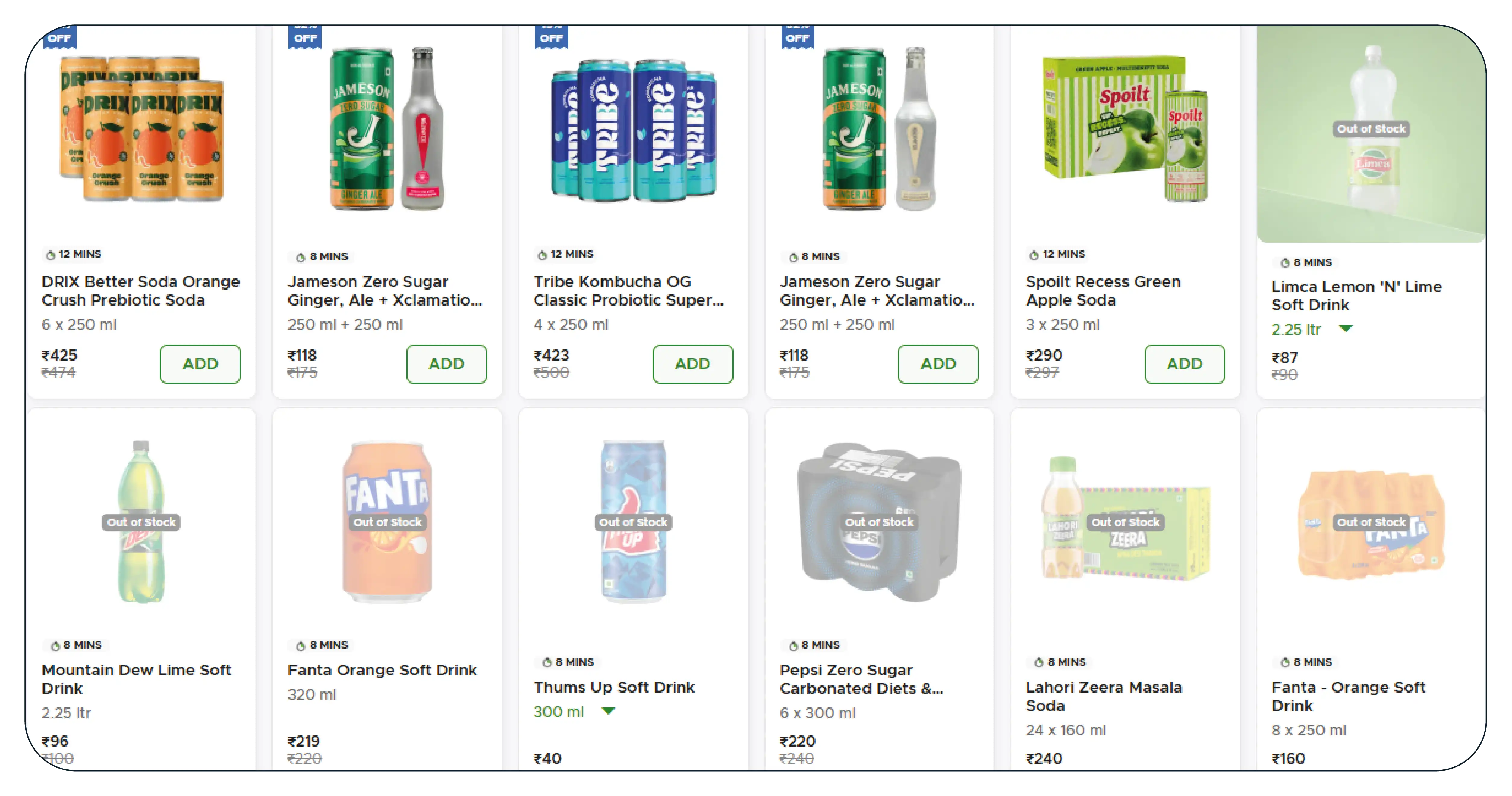
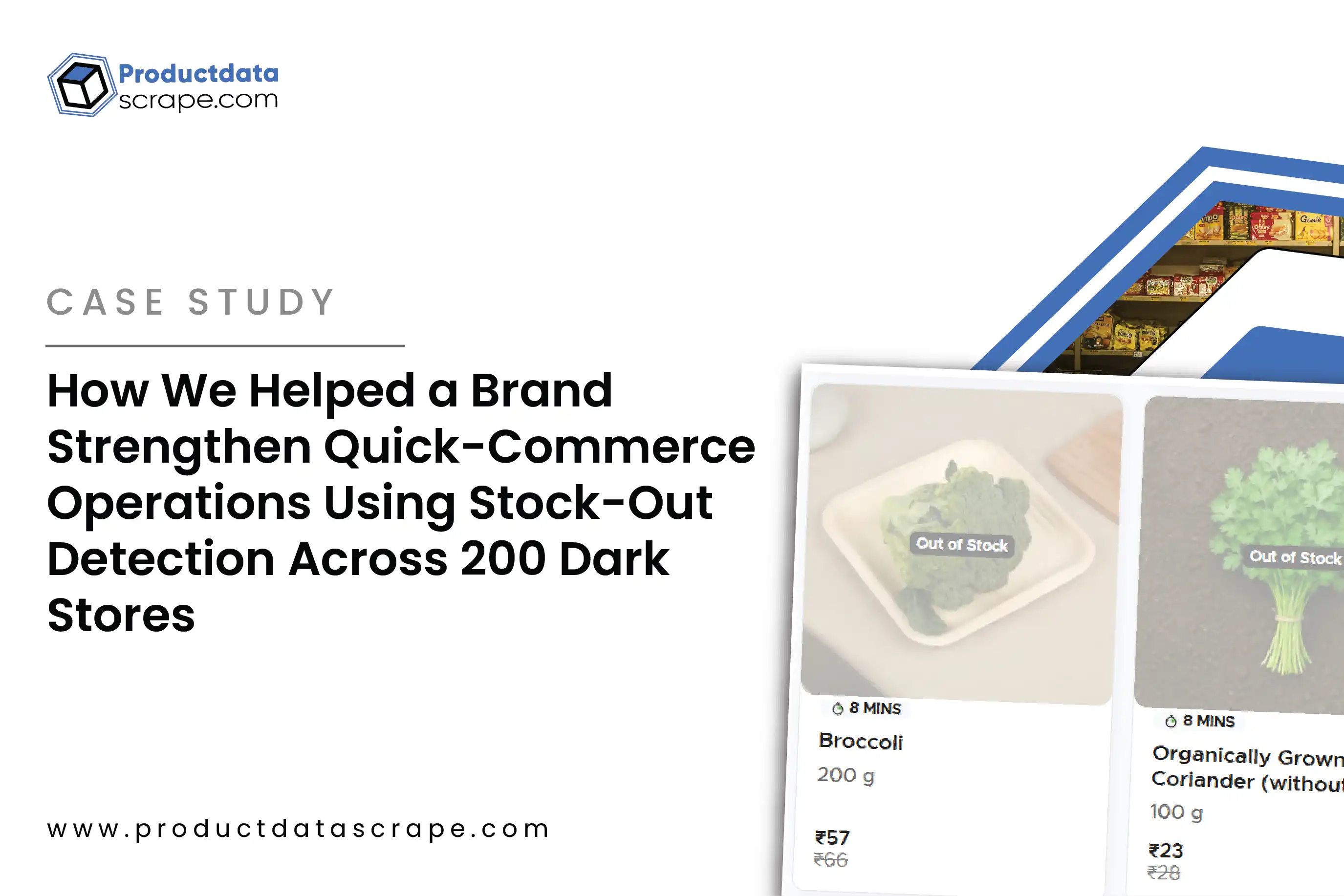
A leading FMCG brand partnered with Product Data Scrape to improve visibility into product availability across a large quick-commerce network. The project focused on Stock-Out Detection Across 200 Dark Stores, helping the brand identify unavailable SKUs, recurring inventory gaps, and location-level availability patterns. The automated framework consolidated marketplace signals into structured datasets that could support faster inventory decisions and operational reporting. By monitoring dark-store availability across major quick-commerce environments, the brand gained a centralized view of stock conditions instead of relying on fragmented manual checks.
Client Name / Industry: Leading FMCG & Consumer Goods Brand
Service / Duration: Quick-Commerce Inventory Data Extraction & Monitoring / 12 Weeks
Key Impact Metrics: 92%+ availability-data consistency, 68% faster stockout reporting, and 200 dark stores monitored through a standardized framework.
The Client
The client was a fast-moving consumer goods brand with products distributed across multiple quick-commerce channels and hyperlocal fulfillment locations. As consumers increasingly expected groceries and everyday products to arrive within minutes, product availability became an important factor in marketplace performance.
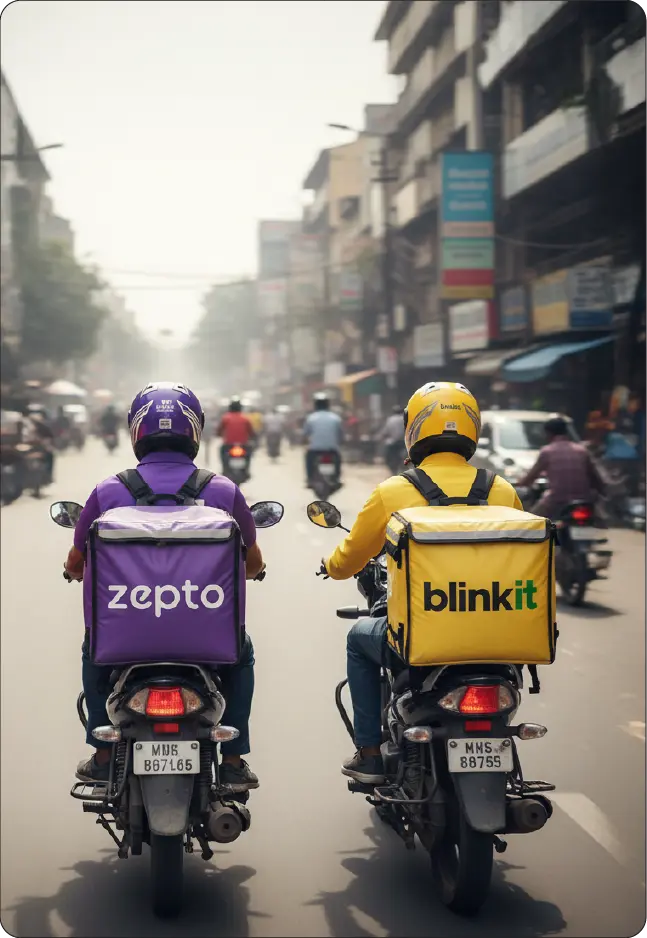
Quick-commerce platforms such as Blinkit, Zepto, and Instamart operate through extensive networks of dark stores. Inventory conditions can vary significantly between locations because of demand, replenishment cycles, local purchasing behavior, and fulfillment capacity. For a brand, a product being available in one location does not necessarily mean it is available across the wider network.
Before partnering with Product Data Scrape, the client depended heavily on periodic manual checks, spreadsheets, and fragmented marketplace observations. Teams could identify some unavailable products, but they lacked a centralized and repeatable mechanism for comparing SKU availability across 200 dark stores.
The existing process also made it difficult to distinguish isolated stockouts from recurring availability problems. Reporting delays meant operations teams sometimes received information after the inventory situation had already changed.
The brand therefore required Stockout Monitoring Across 200 Dark Stores to create a scalable way of observing availability patterns, identifying priority SKUs, and understanding where product availability required attention.
The transformation was essential because manual monitoring could not provide the speed, scale, and consistency required for a rapidly changing quick-commerce environment.
Goals & Objectives
The primary business goal was to establish a scalable inventory intelligence process that could provide better visibility into product availability across 200 dark stores.
Improve SKU availability visibility across monitored locations.
Detect stockout patterns faster.
Increase reporting scalability.
Improve data accuracy and consistency.
Support better replenishment and distribution decisions.
Identify locations with recurring availability issues.
The technical objective was to replace fragmented manual checks with an automated and standardized data workflow.
Automate recurring inventory data collection.
Standardize SKU, location, platform, and availability fields.
Integrate collected data with analytics workflows.
Generate structured datasets for dashboards.
Create automated validation and exception checks.
Support recurring availability analysis.
The project established measurable performance indicators:
92%+ target consistency for availability records.
68% faster stockout reporting.
200 dark stores covered within the monitoring framework.
95%+ validation target for critical SKU fields.
60%+ reduction in repetitive manual monitoring activities.
The combination of Real-Time Dark Store Inventory Monitoring, Competitor Stockout Intelligence enabled the brand to move beyond simple availability checks and develop a broader view of inventory performance and competitive conditions.
The Core Challenge
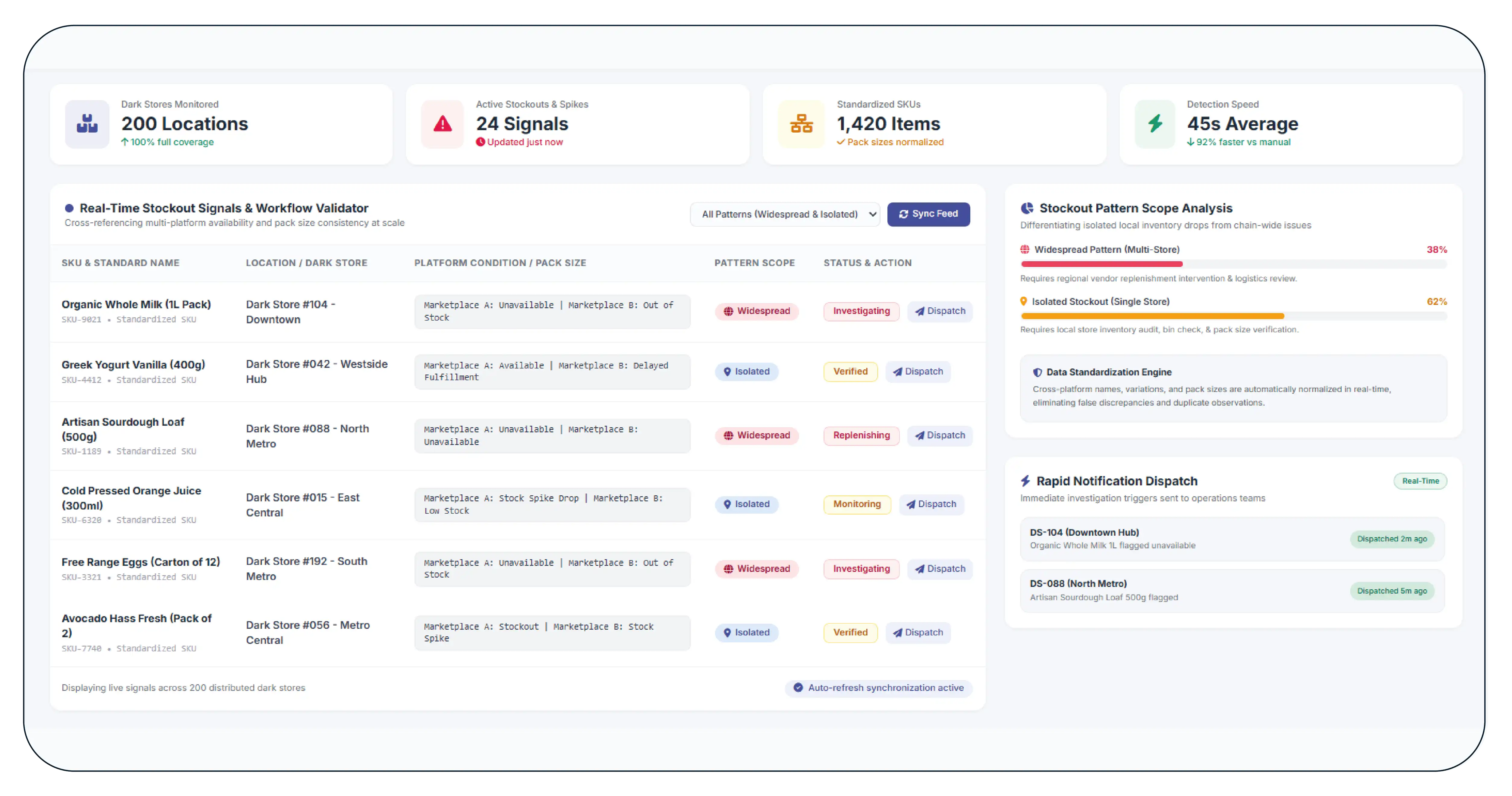
The client faced a fundamental visibility problem: inventory information was changing faster than the existing monitoring process could capture it. Products could move from available to unavailable based on demand spikes, replenishment schedules, local inventory levels, or platform-specific fulfillment conditions.
The operational process required teams to manually inspect multiple locations and marketplace interfaces. At 200 dark stores, this created a significant workload and increased the possibility of inconsistent observations.
Another challenge was data standardization. Different platforms could present availability information differently, while product names, pack sizes, categories, and SKU descriptions were not always uniform. Comparing these records manually could lead to false differences or duplicate observations.
Reporting speed was another concern. When a product became unavailable, the operations team needed timely visibility to investigate the issue. Delayed reporting reduced the usefulness of the information.
The brand also needed to understand whether a stockout was isolated or part of a larger pattern. A single unavailable SKU at one location required a different response from the same SKU being unavailable across dozens of dark stores.
To address this challenge, the project introduced Real-Time Out-of-Stock Alerts for Dark Stores, allowing availability changes to be organized into a structured monitoring workflow.
The objective was to create a system that could detect, validate, organize, and analyze stockout signals at scale.
Our Solution
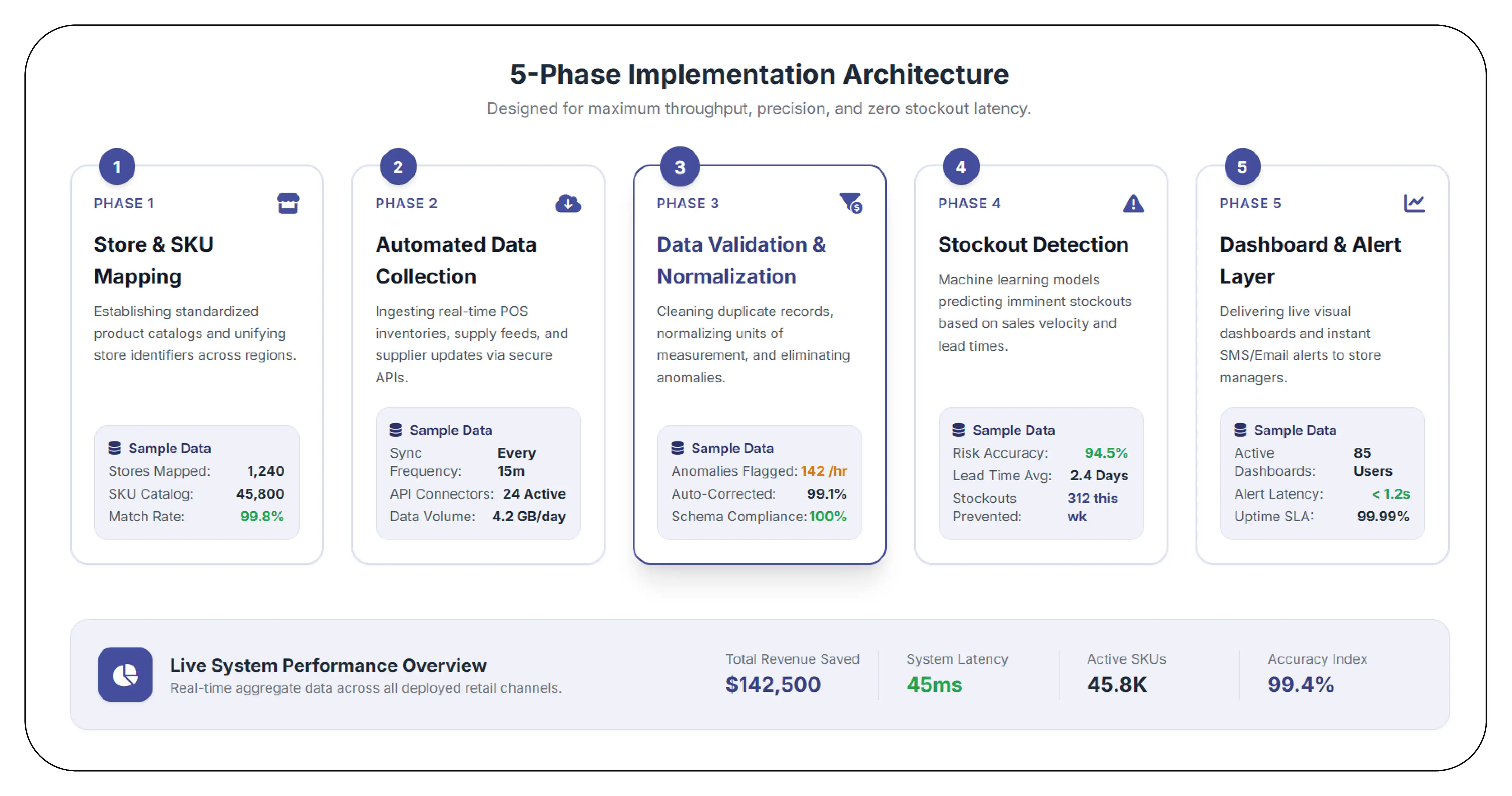
Product Data Scrape designed a phased data-monitoring framework focused on SKU-level availability across the client's 200-dark-store network.
Phase 1: Store & SKU Mapping
The project began by creating a standardized monitoring structure. Dark stores were mapped using location identifiers, while priority products were organized according to brand, category, SKU, pack size, and product name. This created a common structure for comparing availability across locations.
Phase 2: Automated Data Collection
Automated extraction workflows were implemented to capture relevant product availability signals at defined intervals. The framework was designed to reduce repetitive manual checks while creating recurring inventory snapshots. The collected data could include product name, SKU, category, location, platform, price, availability status, timestamp, and other project-specific attributes.
Phase 3: Data Validation & Normalization
Raw records were passed through validation rules to identify missing values, duplicate entries, inconsistent product attributes, and abnormal availability signals. Product and SKU information was normalized to make comparisons across locations more reliable.
Phase 4: Stockout Detection
The next stage focused on identifying changes in availability. The system compared recurring observations to determine whether products had moved from available to unavailable or remained unavailable across multiple monitoring cycles. This supported SKU Stockout Analytics for Quick Commerce, enabling the brand to evaluate stockout frequency, affected locations, and product-level patterns.
Phase 5: Dashboard & Alert Layer
Validated information was organized into analytics-ready datasets and dashboard views. Teams could review availability by SKU, location, platform, and time period. Priority changes could be surfaced through automated exception logic, helping operational teams focus on significant availability issues instead of reviewing every record manually.
The complete framework supported Stock-Out Detection Across 200 Dark Stores by connecting automated collection, validation, comparison, and analytics into a repeatable workflow.
Results & Key Metrics
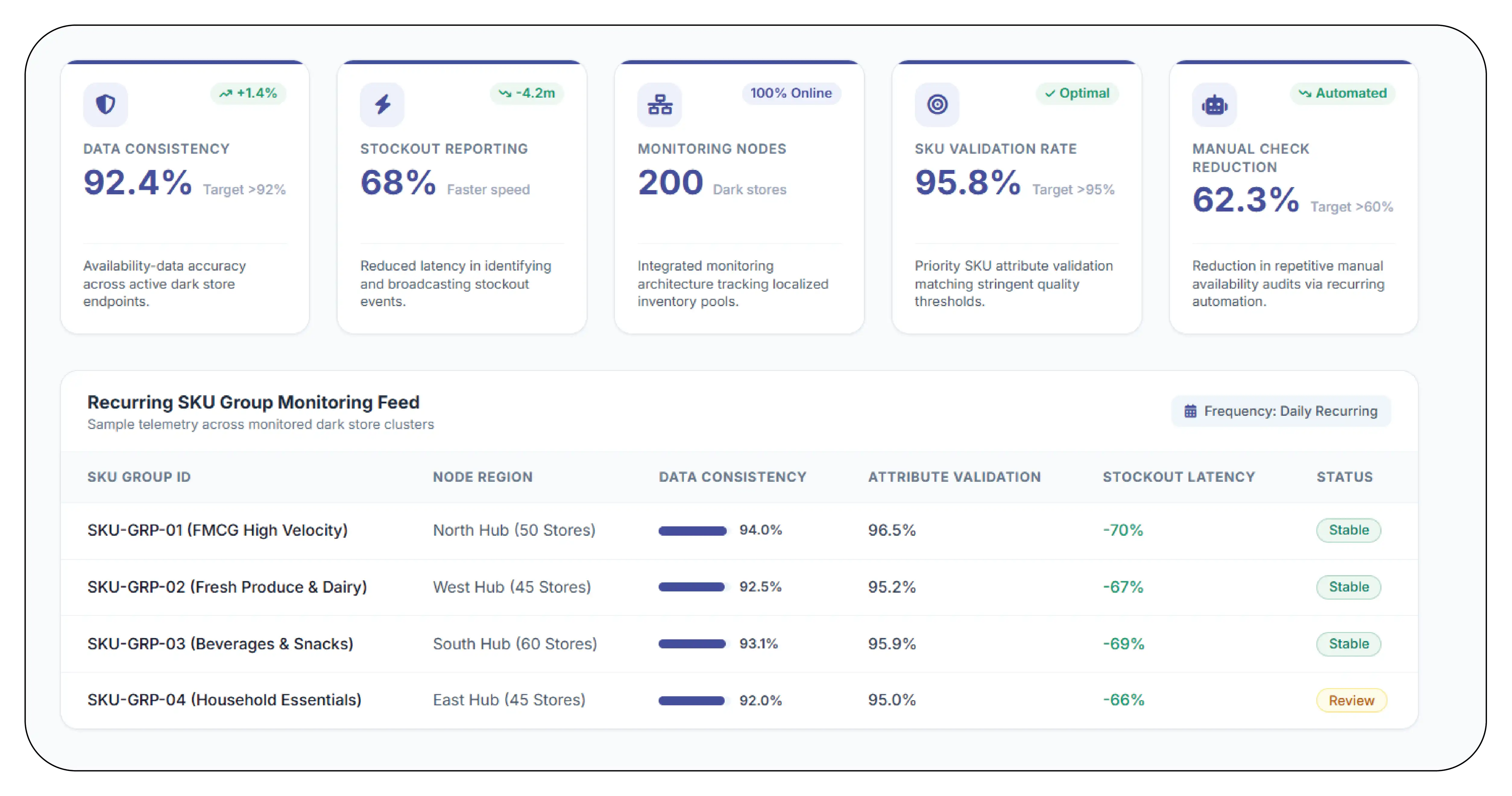
The following are illustrative project performance metrics representing the types of operational improvements delivered through the framework:
92%+ availability-data consistency.
68% faster stockout reporting.
200 dark stores included in the monitoring architecture.
95%+ target validation rate for priority SKU attributes.
60%+ reduction in repetitive manual availability checks.
Daily/recurring monitoring for selected SKU groups.
These indicators demonstrate how structured inventory intelligence can improve operational visibility without relying exclusively on manual marketplace research.
Results Narrative
The Dark Store SKU-Level Stock Monitoring framework gave the brand a more centralized view of product availability across its monitored network.
Teams could identify SKUs experiencing repeated stockouts, compare availability across locations, and distinguish isolated issues from broader patterns. This made inventory-related reporting more actionable and easier to prioritize.
The automated workflow also improved reporting speed by reducing repetitive data collection and spreadsheet consolidation. Instead of manually checking hundreds of locations, teams could work with standardized datasets and dashboard-ready information.
The project created a scalable foundation for future expansion into additional locations, categories, platforms, and inventory intelligence use cases.
What Made Product Data Scrape Different
Product Data Scrape combined automated data extraction, SKU normalization, availability validation, recurring monitoring, and analytics into one operational framework.
Instead of producing a one-time inventory dataset, the solution was designed around recurring observations so the brand could understand changes over time. Automated rules helped identify potential stockout events while normalization made cross-location comparisons more reliable.
The framework could also prioritize specific products, categories, and dark stores, allowing monitoring resources to be focused on commercially important SKUs.
The Out-of-Stock Monitoring layer provided an additional intelligence component by identifying availability changes and recurring gaps rather than simply recording whether an item was available at one point in time.
This approach made the solution more useful for operational teams because it connected raw marketplace observations with structured exception reporting and analytical insights.
Client's Testimonial
"Product Data Scrape gave our team a much clearer view of SKU availability across our quick-commerce network. Previously, monitoring hundreds of locations required significant manual effort and made it difficult to identify recurring stockout patterns. The automated framework helped us consolidate availability information, prioritize problem locations, and respond faster to changes. The ability to analyze SKU-level availability across multiple locations has made our operational reporting more consistent and actionable."
— Senior Manager, E-Commerce & Supply Chain Operations, FMCG Brand
The project also strengthened Dark-store inventory tracking, giving the client a structured foundation for ongoing availability intelligence.
Conclusion
The project demonstrated how automated inventory intelligence can strengthen quick-commerce operations at scale. By monitoring product availability across 200 dark stores, the brand gained faster visibility into stockout events, recurring SKU gaps, and location-level availability patterns.
The solution reduced dependence on manual marketplace checks while creating a structured framework for recurring analysis. Standardized data also made it easier for business and operations teams to interpret availability conditions across their network.
With Q-Commerce data scraping, automated stockout detection, SKU-level monitoring, and analytics workflows, brands can build a stronger foundation for inventory and marketplace decision-making.
Product Data Scrape can help businesses turn complex quick-commerce marketplace signals into scalable, structured, and actionable data intelligence.
FAQs
1. What is stockout detection for dark stores?
Stockout detection identifies products that become unavailable at monitored dark stores. Recurring observations can help determine the frequency, duration, and location patterns associated with unavailable SKUs.
2. What data can be monitored?
Depending on the project requirements, datasets can include product name, SKU, category, brand, pack size, price, availability status, location, platform, timestamp, and other relevant marketplace fields.
3. Can 200 or more dark stores be monitored?
Yes. A scalable architecture can be designed to support hundreds or potentially larger numbers of locations, depending on data requirements, monitoring frequency, and applicable platform access conditions.
4. How does automated monitoring help operations teams?
Automation reduces repetitive manual checks and creates consistent recurring observations. Teams can use structured data to identify priority stockouts, compare locations, and investigate recurring availability issues faster.
5. Can this solution monitor competitors too?
Yes. Where permitted and technically accessible, the same framework can be extended to competitive availability analysis across platforms such as Blinkit, Zepto, and Instamart. This can help brands understand their own availability alongside broader quick-commerce assortment and stockout patterns.


 Singapore
 EMAIL
EMAIL
 PHONE
PHONE











.webp)