


 Singapore
 EMAIL
EMAIL
 PHONE
PHONE


Auto parts data — YMM fitment, OEM vs aftermarket
Auto parts only matter if they fit. Year-make-model fitment is the foundational data structure — not metadata. We capture YMM as first-class fields, classify OEM vs OE-equivalent vs aftermarket vs reman, and deliver ACES/PIES-format compatible feeds.
Brake Pads — Front
Auto parts data structured for fitment.
YMM, OEM cross-reference, brand tier — the fields auto parts e-commerce actually runs on.
Year-make-model fitment
Year, make, model, engine, sub-model, trim as structured fields per part — not buried in description.
OEM part numbers
Original equipment part numbers captured with manufacturer (Toyota, Ford, etc.).
Aftermarket cross-reference
Brand SKU to OEM part-number mapping (Bosch, Akebono, Brembo ↔ OEM equivalent).
Brand tier classification
OEM / OE-equivalent / premium aftermarket / mid / value / reman classification per SKU.
Pricing & warranty
Selling price, list, warranty period, return policy, core charge (for reman parts).
Specs & dimensions
Part-specific specs (rotor diameter, pad thickness, filter dimensions, hose length).
Stock & availability
In stock, store pickup availability, "ships in X days" for slow-moving SKUs.
ACES/PIES output
Industry-standard ACES (fitment) and PIES (product data) format compatibility on request.
Reviews & install difficulty
Star rating, review count, install difficulty rating where retailers expose.
What makes auto parts data different.
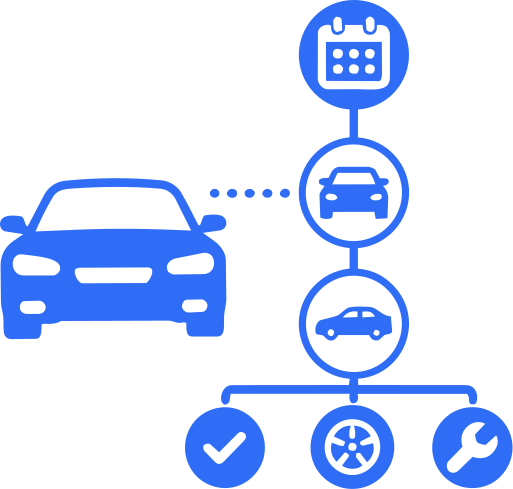
YMM is THE primary key
Brake pad price means nothing without "fits 2019 Camry SE 2.5L." YMM fitment is foundational, not metadata. Captured as structured fields with cross-reference matching.
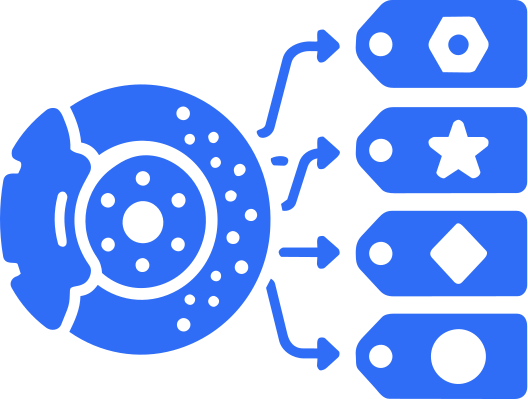
OEM cross-reference
Aftermarket brands (Bosch, Akebono, Brembo) sell parts that fit OEM applications. Cross-reference mapping is the core competitive intelligence asset.

Brand-tier classification
OEM / premium aftermarket / value / reman tiers have very different pricing dynamics. Tier-tagging separates apples from oranges in pricing analysis.
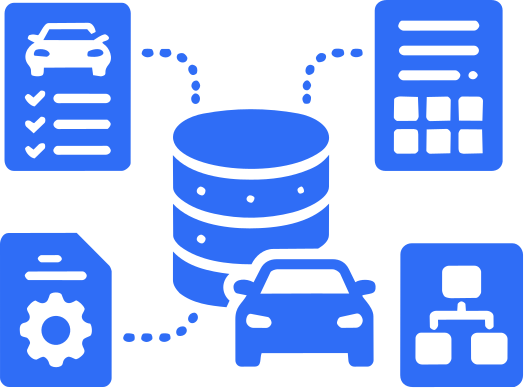
ACES/PIES compatible
Industry-standard format (AAIA ACES for fitment, PIES for product data) delivery available — plugs into existing auto-parts catalogue systems.
What auto parts brands & retailers do with this data.
Competitor brand-tier pricing
Bosch vs Akebono vs Wagner on same fitment — tier-by-tier competitive scan.
OEM vs aftermarket gap
How much premium does OEM command vs aftermarket for the same part? Trend over time.
Catalogue gap detection
Which YMM applications does competitor have that you don't? Gap analysis for product dev.
Cross-reference building
Auto-build OEM ↔ aftermarket cross-reference tables from scraped catalogue data.
New vehicle fitment expansion
New car models launch → competitor part launches for new YMM tracked in week 1.
Marketplace listing audit
3P seller listings on Amazon Auto / eBay Motors — verify YMM accuracy & MAP.
Multi-retailer pricing parity
Same SKU across AutoZone / O'Reilly / RockAuto / NAPA — spot pricing inconsistency.
Reman pricing intel
Reman part pricing + core charge analysis across competitors & brand-tier positioning.
Warranty & return policy audit
Warranty term comparison across brands per category (12mo / lifetime / mileage-based).
From brief to auto parts dataset in 24 hours.
Send scope
Category, retailers, YMM range, OEM cross-reference need, output format.
Free sample
Within 24 hours, sample with fitment + OEM cross-reference + tier-tagged.
Production pipeline
QA'd pipeline, ACES/PIES output configured if needed.
Auto parts scraping FAQs
AutoZone, RockAuto, NAPA, O'Reilly Auto Parts, Advance Auto Parts, Pep Boys (US); Halfords, Euro Car Parts, GSF Car Parts (UK); Repco, Supercheap Auto (AU); plus eBay Motors, Amazon Auto and OEM dealer parts catalogues.
Fitment data (year, make, model, engine, sub-model, trim) captured as structured fields for every part — the foundation of auto parts cataloguing. Cross-reference matching to OEM part numbers.
Yes — OEM (original equipment manufacturer), OE-equivalent, aftermarket, remanufactured, used — each part classified into category with brand tier (premium, mid, value) tagged.
Where retailers expose VIN-driven product filtering, we capture the VIN-to-part mapping. For brand-side cataloguing, ACES/PIES-format fitment data delivery available.
Daily refresh standard for pricing. Fitment data refreshed weekly (changes less frequently). New-model launch periods get higher cadence on relevant categories.