Quick Overview
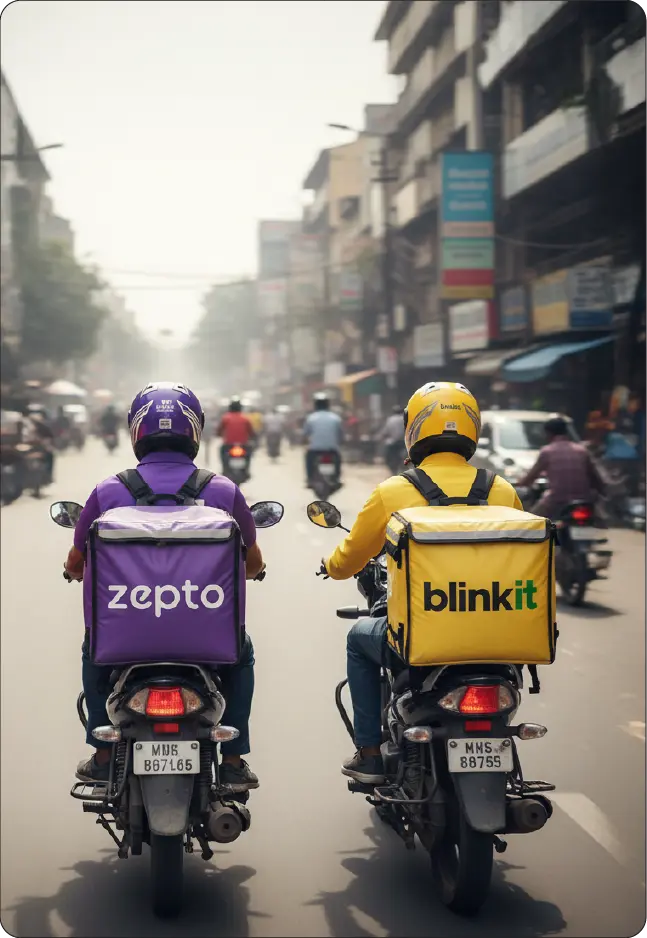
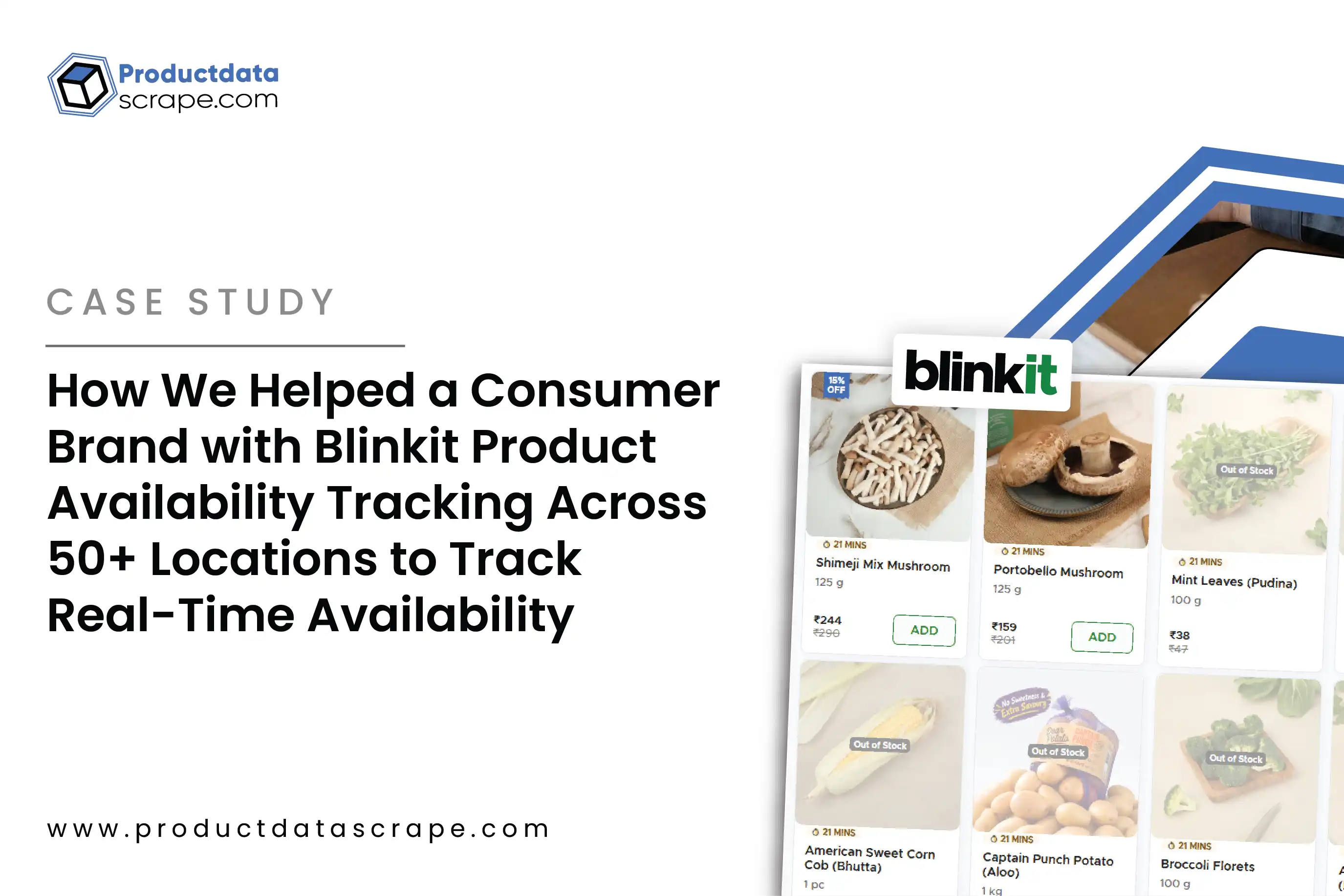
The brand partnered with Product Data Scrape to understand how leading quick-commerce platforms were shaping their 10-minute delivery assortments. The project compared product availability, assortment depth, pricing signals, and category coverage across Blinkit, Zepto, and Instamart. Tracking 10-Minute Delivery Assortments helped convert frequently changing marketplace information into structured competitive intelligence.
Client Name / Industry: Consumer Goods Brand / FMCG & Retail
Service / Duration: Quick-Commerce Data Extraction & Competitive Monitoring / 12 Weeks
Key Impact Metrics: 94%+ data capture consistency, 70% faster competitive reporting, and 3-platform SKU visibility across monitored locations.
The resulting dataset helped the brand identify assortment gaps, monitor competitor movements, and make faster decisions around product distribution and quick-commerce strategy.
The Client
The client was a consumer goods brand operating in a highly competitive FMCG environment where product visibility across quick-commerce platforms had become increasingly important. Platforms such as Blinkit, Zepto, and Instamart were changing how customers discovered and purchased everyday products by emphasizing speed, localized availability, and broad digital assortments.
The market was moving from traditional e-commerce purchasing toward hyperlocal fulfillment, creating additional pressure on brands to understand what customers could actually purchase within a 10-minute delivery promise. The client therefore needed Quick Commerce 10-Minute Delivery Data Scraping to understand assortment differences across platforms and locations.
Before partnering with Product Data Scrape, the brand relied on periodic manual checks and fragmented marketplace observations. This made it difficult to determine whether a missing product represented a genuine assortment gap, temporary stock unavailability, or location-specific inventory variation.
The existing process also lacked a centralized view of competitor SKUs, product prices, categories, availability, and assortment changes. As the number of locations and products increased, manual monitoring became slower and less scalable.
Transformation was essential because quick-commerce assortments can change frequently according to inventory, demand, promotions, dark-store capacity, and local purchasing patterns. The brand needed an automated data pipeline that could create consistent, structured, and analysis-ready information for strategic decision-making.
Goals & Objectives
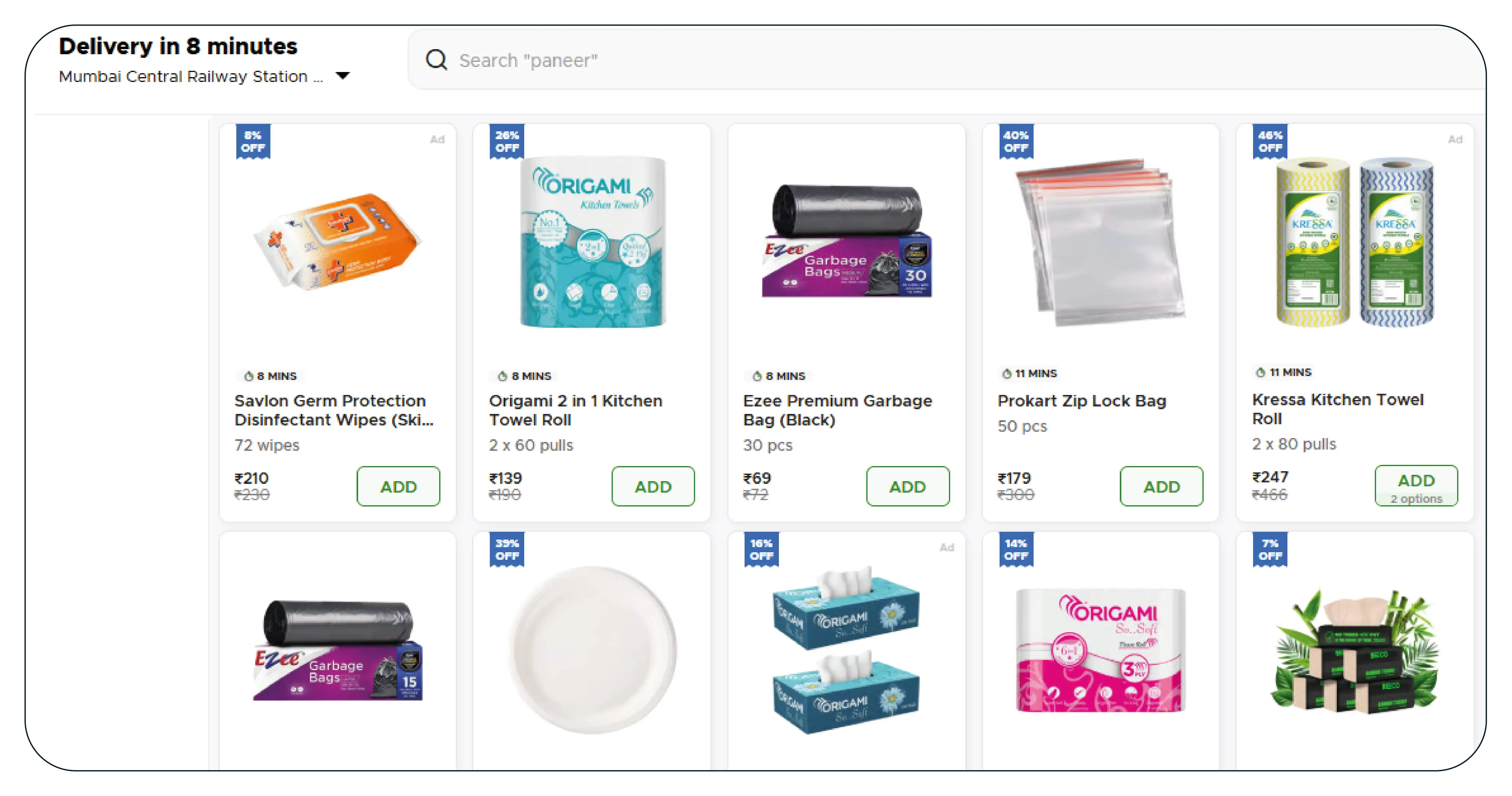
The primary business goal was to create a scalable competitive intelligence process for monitoring Blinkit, Zepto, and Instamart. The brand wanted faster access to assortment information while reducing dependency on manual marketplace checks.
Improve scalability across multiple platforms and locations.
Increase the speed of competitive data collection.
Improve consistency and accuracy of SKU-level information.
Identify assortment gaps and competitor product expansion.
Support faster category and distribution decisions.
The technical implementation focused on automation, structured extraction, validation, and analytics. The system was designed to capture marketplace information at defined intervals and organize it into standardized datasets.
Automate product and assortment monitoring.
Standardize data from Blinkit, Zepto, and Instamart.
Integrate extracted datasets with analytics workflows.
Create structured feeds for dashboards and reporting.
Enable recurring competitive monitoring.
Flag meaningful assortment and availability changes.
The project used measurable operational indicators to evaluate performance:
94%+ target data capture consistency.
70% reduction in competitive reporting turnaround time.
3 platforms monitored through a standardized framework.
95%+ validation target for key product fields.
Daily/recurring monitoring for selected categories and locations.
The resulting Blinkit vs Zepto vs Instamart Product Comparison, Assortment and availability monitoring framework gave the client a repeatable method for understanding competitive assortment movements.
The Core Challenge
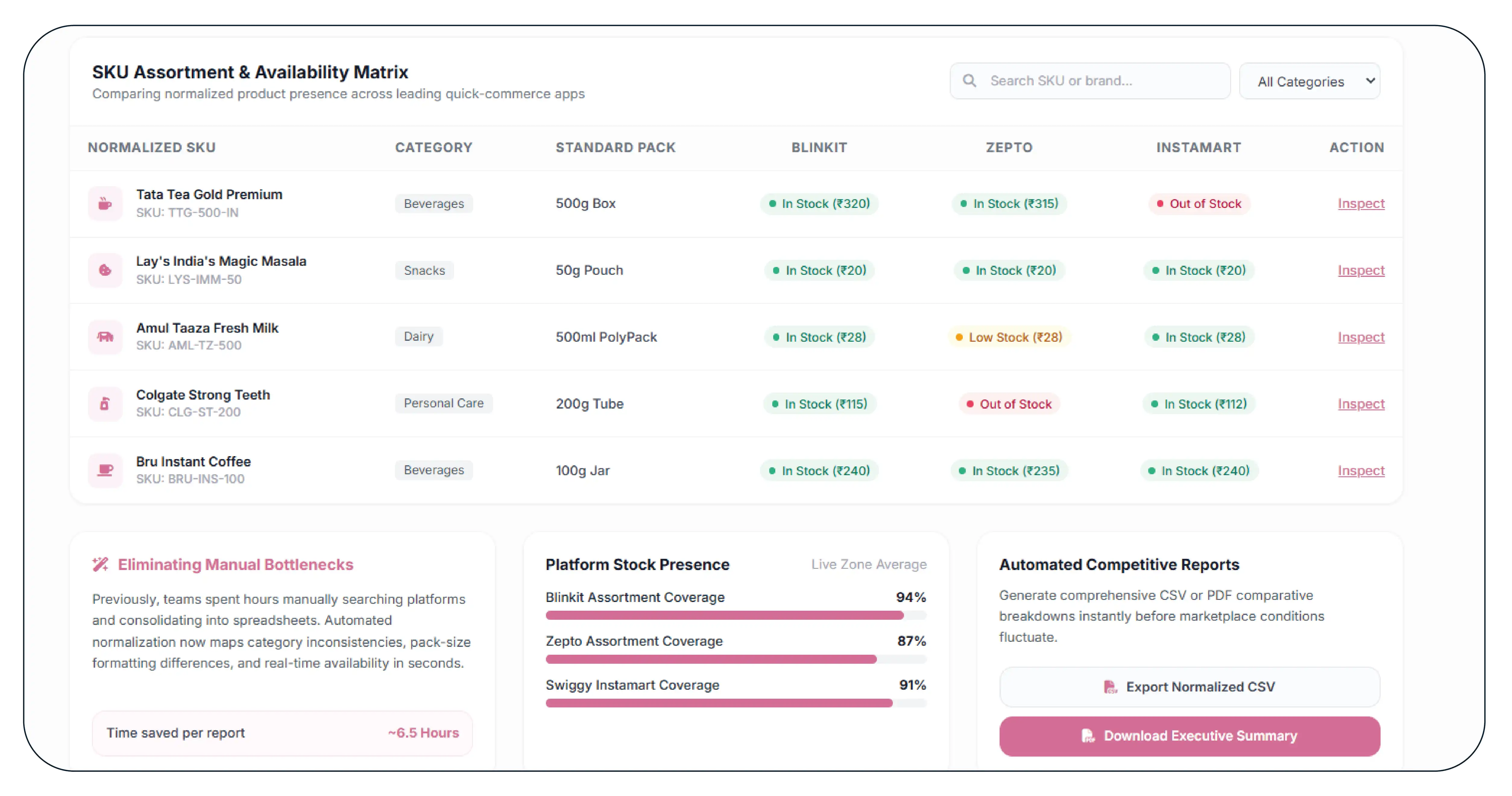
The biggest challenge was the dynamic nature of quick-commerce marketplaces. Product listings, availability, pricing, pack sizes, and category placements could differ by platform and location. A product visible on Blinkit could be unavailable on Zepto, while the same SKU could have different availability conditions on Instamart.
The client's manual monitoring process created several operational bottlenecks. Teams had to repeatedly open individual applications or websites, search for products, record observations, and consolidate the information into spreadsheets. As the number of SKUs and locations increased, this approach became increasingly difficult to maintain.
Another issue was the absence of a standardized structure for comparing product information. Different platforms could use different category names, product descriptions, pack-size formats, and availability indicators. Without normalization, direct comparisons were unreliable.
The brand also struggled with the speed of competitive reporting. By the time a manual report was completed, some marketplace conditions could already have changed.
This created a need for Dark Store Assortment Comparison Across Apps, Quick-commerce cart-comparison capabilities that could systematically evaluate product presence, availability, and assortment differences across leading quick-commerce platforms.
The challenge was therefore not simply collecting data. It was creating a reliable process capable of handling marketplace complexity at scale.
Our Solution
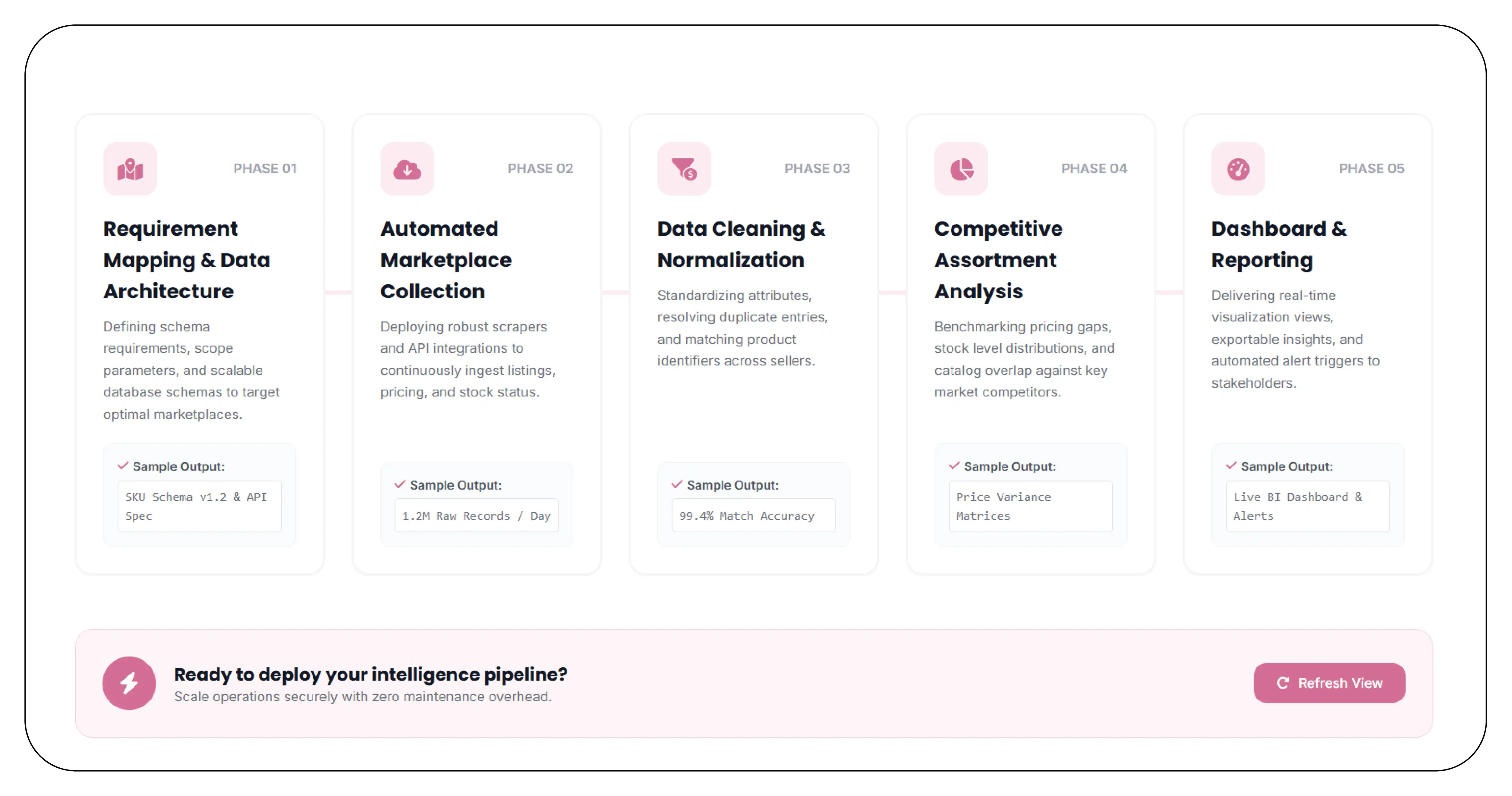
Product Data Scrape implemented a phased data collection and analytics framework designed around the client's quick-commerce intelligence requirements.
Phase 1: Requirement Mapping & Data Architecture
The first phase established the comparison framework. Products were mapped using standardized identifiers such as product name, brand, category, pack size, platform, location, price, and availability status. The team defined the required data fields and created a common schema so information from Blinkit, Zepto, and Instamart could be compared consistently.
Phase 2: Automated Marketplace Collection
Automated extraction workflows were configured to collect relevant product and assortment information at predefined intervals. Instead of relying on manual checks, recurring collection processes helped maintain a structured flow of marketplace observations. The system was designed around category-level and SKU-level monitoring, allowing the client to focus on priority products and competitive categories.
Phase 3: Data Cleaning & Normalization
Raw marketplace data was processed through validation and normalization workflows. Product names, pack sizes, categories, pricing fields, and availability indicators were standardized to improve cross-platform comparison. Duplicate records and inconsistent product attributes were identified before the information entered downstream analytics.
Phase 4: Competitive Assortment Analysis
The next layer compared assortment coverage between Blinkit, Zepto, and Instamart. The Blinkit vs Instamart Assortment Analysis identified products appearing on one platform but not another, category-level differences, and potential assortment expansion opportunities. The analysis also supported Tracking 10-Minute Delivery Assortments through recurring snapshots, enabling the client to observe changes instead of relying only on one-time marketplace observations.
Phase 5: Dashboard & Reporting
The final stage transformed structured data into business-friendly reports and dashboard views. Users could evaluate platform-level assortment coverage, product availability, category presence, and changes over time. The framework allowed business teams to move from raw marketplace data toward actionable competitive insights without repeatedly performing manual checks.
Results & Key Metrics
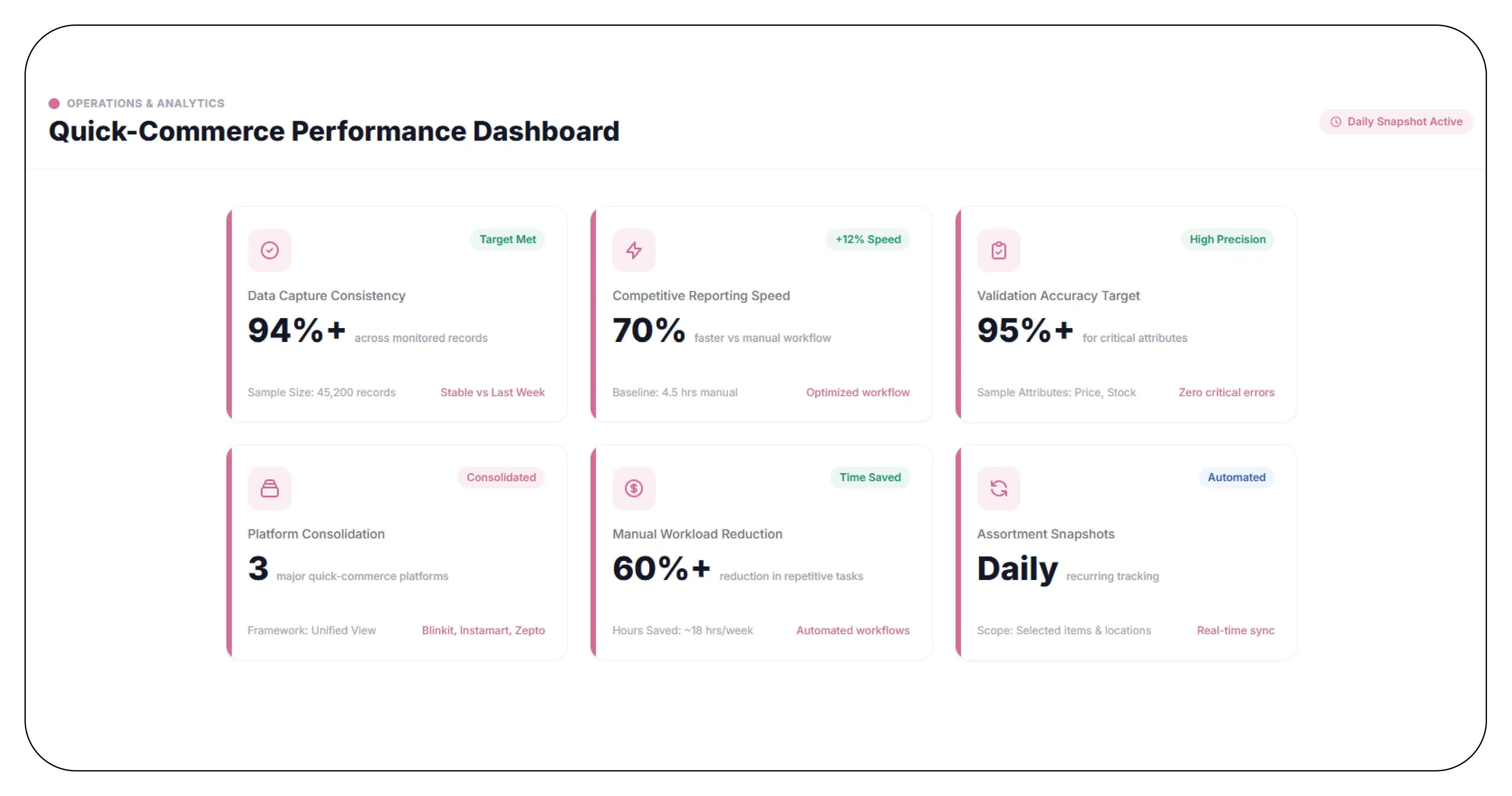
The following are illustrative project performance metrics used to demonstrate the type of outcomes the solution can deliver:
94%+ data capture consistency across monitored records.
70% faster competitive reporting compared with the previous manual workflow.
95%+ validation accuracy target for critical product attributes.
3 major quick-commerce platforms consolidated into one comparison framework.
60%+ reduction in repetitive manual monitoring activities.
Daily/recurring assortment snapshots for selected products and locations.
These improvements gave the brand a more dependable foundation for competitive assortment analysis.
Results Narrative
The Blinkit vs Zepto vs Instamart SKU Availability framework enabled the client to identify where products were consistently available, temporarily unavailable, or absent from specific platform assortments.
The brand could compare assortment breadth, identify competitive gaps, and prioritize categories requiring deeper investigation. Recurring data collection also made it easier to recognize changes in marketplace behavior.
Instead of reviewing three platforms independently, teams could access standardized information through a unified analytical structure. This improved decision speed while creating a scalable foundation for future quick-commerce monitoring.
The project demonstrated how structured marketplace intelligence can support assortment planning, distribution decisions, category management, and competitive benchmarking without depending entirely on manual research.
What Made Product Data Scrape Different
Product Data Scrape differentiated the project by combining automated collection, structured normalization, validation workflows, and competitive analytics into one monitoring framework.
Rather than treating each quick-commerce platform as an isolated source, the solution created a standardized comparison layer for Blinkit, Zepto, and Instamart. Smart automation reduced repetitive manual work while recurring collection enabled the brand to observe marketplace changes over time.
The framework could also be extended to monitor additional categories, locations, and products as the client's requirements expanded.
One important capability was Scrape Fee Delivery Changes, which allowed delivery-related signals to be considered alongside assortment and product-level information when relevant. This created a broader view of the customer-facing quick-commerce experience.
The combination of automation, normalized datasets, recurring monitoring, and analytics helped Product Data Scrape deliver a solution designed for ongoing competitive intelligence rather than a one-time data extraction exercise.
Client's Testimonial
"Product Data Scrape helped us move from fragmented marketplace checks to a structured quick-commerce intelligence workflow. The visibility across Blinkit, Zepto, and Instamart made it much easier for our team to understand assortment differences and identify products requiring attention. The automated approach also reduced the time our analysts spent collecting and organizing marketplace information. Most importantly, we now have a repeatable framework that can be expanded as our categories and locations grow."
— Head of E-Commerce & Marketplace Strategy, Consumer Goods Brand
The solution's Dark-store inventory tracking capabilities also provided a useful foundation for understanding availability fluctuations across hyperlocal fulfillment environments.
Conclusion
The project demonstrated how automated quick-commerce intelligence can help brands respond to a rapidly changing marketplace. By bringing Blinkit, Zepto, and Instamart information into a structured comparison framework, the brand gained better visibility into product presence, assortment differences, and availability patterns.
The solution created a scalable foundation for recurring monitoring while reducing dependence on manual research. It also enabled teams to connect assortment intelligence with broader competitive and operational analysis.
With Delivery fee & time tracking, assortment monitoring, SKU availability analysis, and automated reporting working together, brands can build a more complete picture of the quick-commerce customer experience.
Product Data Scrape can help businesses transform marketplace information into structured, decision-ready intelligence for faster and more informed quick-commerce strategies.
FAQs
1. What information can be collected from Blinkit, Zepto, and Instamart?
Depending on the project scope, structured datasets can include product names, brands, categories, pack sizes, prices, discounts, availability indicators, delivery-related information, location, and assortment presence.
2. How does quick-commerce assortment monitoring benefit brands?
It helps brands understand competitor assortment breadth, identify missing SKUs, monitor product availability, evaluate category coverage, and detect changes across platforms and locations.
3. Can the data be monitored repeatedly?
Yes. Monitoring workflows can be configured around the client's required frequency, such as daily, weekly, or other recurring intervals, subject to the applicable platform access conditions.
4. Can the collected data be integrated with dashboards?
Yes. Structured datasets can be prepared for analytics environments, dashboards, reporting systems, or downstream business intelligence workflows. This allows teams to visualize assortment, availability, and competitive changes more efficiently.
5. Can the framework be expanded beyond Blinkit, Zepto, and Instamart?
Yes. A standardized data architecture can be designed to accommodate additional quick-commerce platforms, product categories, locations, and monitoring requirements. This makes the solution suitable for brands seeking a scalable competitive intelligence program rather than a one-time dataset.


 Singapore
 EMAIL
EMAIL
 PHONE
PHONE


.webp "thumb")








.webp)