


 Singapore
 EMAIL
EMAIL
 PHONE
PHONE


Alcohol data — state-aware, vintage-preserved
US 3-tier distribution. Control-state vs licence-state pricing. Vintages as separate SKUs. Vivino ratings, ABV, tasting notes. Age-gated access at the technical layer. We model alcohol the way an industry analyst would.
Liquor-specific data fields.
Vintage, ABV, varietal, tasting notes, ratings — structured fields not buried in titles.
State-level pricing (US)
50-state pricing where exposed, with control-state vs license-state tagging.
Vintage as discrete SKU
2018 Bordeaux vs 2019 Bordeaux are separate SKUs — vintage preserved in matching.
ABV & size
ABV %, bottle size (750ml, 1.75L, 50ml minis, 6-packs) as structured fields.
Varietal & appellation
Grape varietals, regional appellations (Napa, Bordeaux, Champagne, Rioja).
Tasting notes
Oak, tannin, fruit-forward, smoky, peated — tag-extracted from descriptions.
Vivino ratings
Vivino star ratings, review counts, popular-vintage data where exposed.
Stock & allocation
Stock status, allocation-only flags, "in store only" vs online availability.
Awards & scores
Robert Parker, Wine Spectator, Jeb Dunnuck scores parsed from listings.
Distributor data (where shown)
Some retailers expose distributor (e.g. RNDC, Southern Glazer's). Captured where present.
Why generic scraping fails on alcohol.
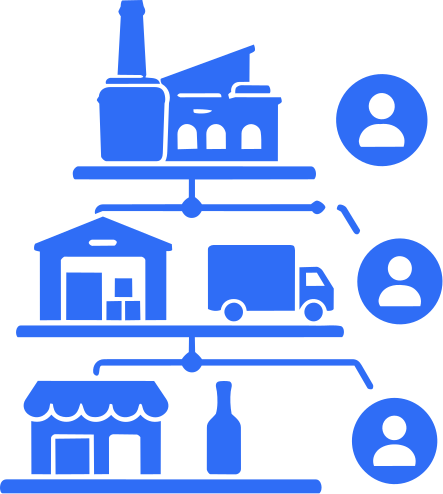
3-tier system aware
Producer → distributor → retailer. Pricing is heavily affected by which distributor operates in which state. Our matching preserves this.
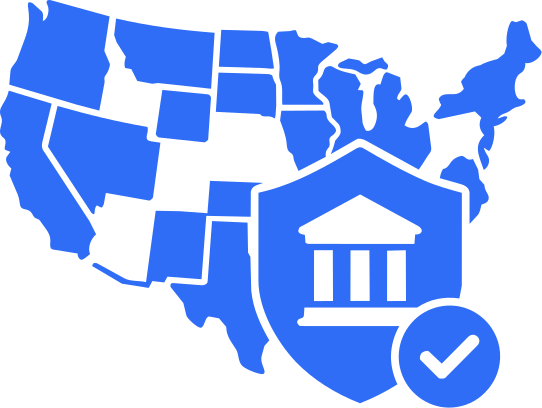
Control vs license states
17 US control states (PA, VA, NH, OH, etc.) have state-monopoly retail. We tag these distinctly — pricing dynamics are entirely different.
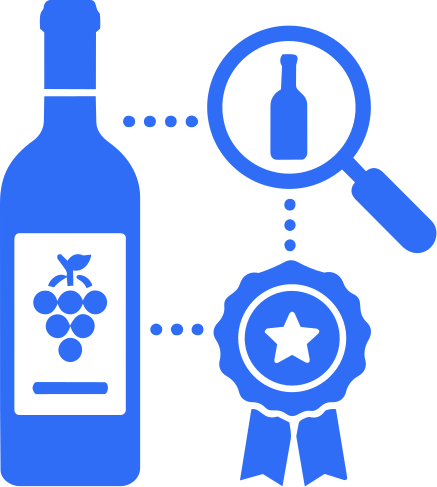
Vintage matching
Different vintages of the same wine are different SKUs with different pricing and demand. Treating them as one wine corrupts data.

Age-gate handled at access layer
Public catalogue accessed the same way any adult visitor would. We don't capture personal data — only public product info.
What alcohol brands & distributors do with this data.
State-by-state pricing audit
How does your SKU price vary across 50 states? Is your pricing strategy actually executing?
Control-state competitive scan
How are competitors priced in PA / VA / NH / OH where state controls everything?
Vintage-level demand modeling
Which vintages move fastest in which markets — allocation planning input.
Vivino reputation tracking
Track your wines' Vivino ratings over time — spot negative momentum.
Drizly / Saucey competitive scan
Real-time on-demand alcohol delivery pricing for hero SKUs.
Allocation status tracking
Track which retailers actually have stock vs allocation-only listings of rare bottles.
Cross-border parity
UK / AU / EU vs US pricing of the same SKUs — spot grey-market arbitrage.
Brand catalogue audit
Your full brand presence across Total Wine vs BevMo vs regional retailers.
Distributor accountability
Where distributors expose data, track whether brand pricing strategy survives the 3-tier journey.
From brief to alcohol dataset in 24 hours.
Send scope
Brand / SKU list, states or markets, vintage depth requirements.
Free sample
Within 24h, sample with state-level pricing + vintage tree.
Production pipeline
QA'd pipeline with control-state coverage & allocation tracking.
Run & iterate
Scheduled refreshes with named delivery lead.
List of Popular Alcohol and Liquor Platforms
Scrape Popular Liquor Data















Scrape Country Wise Alcohol and Liquor Data
india
USA
UK
CANADA
UAE
Australia
Brazil
Japan
Philippines
China
Singapore
Denmark
France
Germany
Hong Kong
Switzerland
Alcohol scraping FAQs
US: Total Wine, BevMo, Wine.com, Drizly, Saucey, Reserve Bar, plus control-state systems (PA, VA, NH, OH liquor authorities). Wine: Vivino, Wine-Searcher. AU: Dan Murphy's, BWS, Liquorland, First Choice. UK: Majestic Wine, Waitrose Cellar, Tesco, Sainsbury's Wine. IN: Living Liquidz, HipBar (where licensed).
Pricing varies dramatically by state due to the producer-distributor-retailer 3-tier system and control-state regulations. We capture state-level pricing where retailers expose it, and tag whether a state is a control state or license state.
Yes — wine vintages preserved as a discrete field. Different vintages of the same wine are separate SKUs with their own pricing and availability.
Yes — Vivino ratings, average prices, tasting note keywords (oak, tannin, fruit-forward, etc.) are captured as structured fields where exposed.
We scrape only publicly visible product, pricing and stock information. Age-gate splash screens are handled at the technical layer to access the public catalogue, the same way any visitor would.