Quick Overview
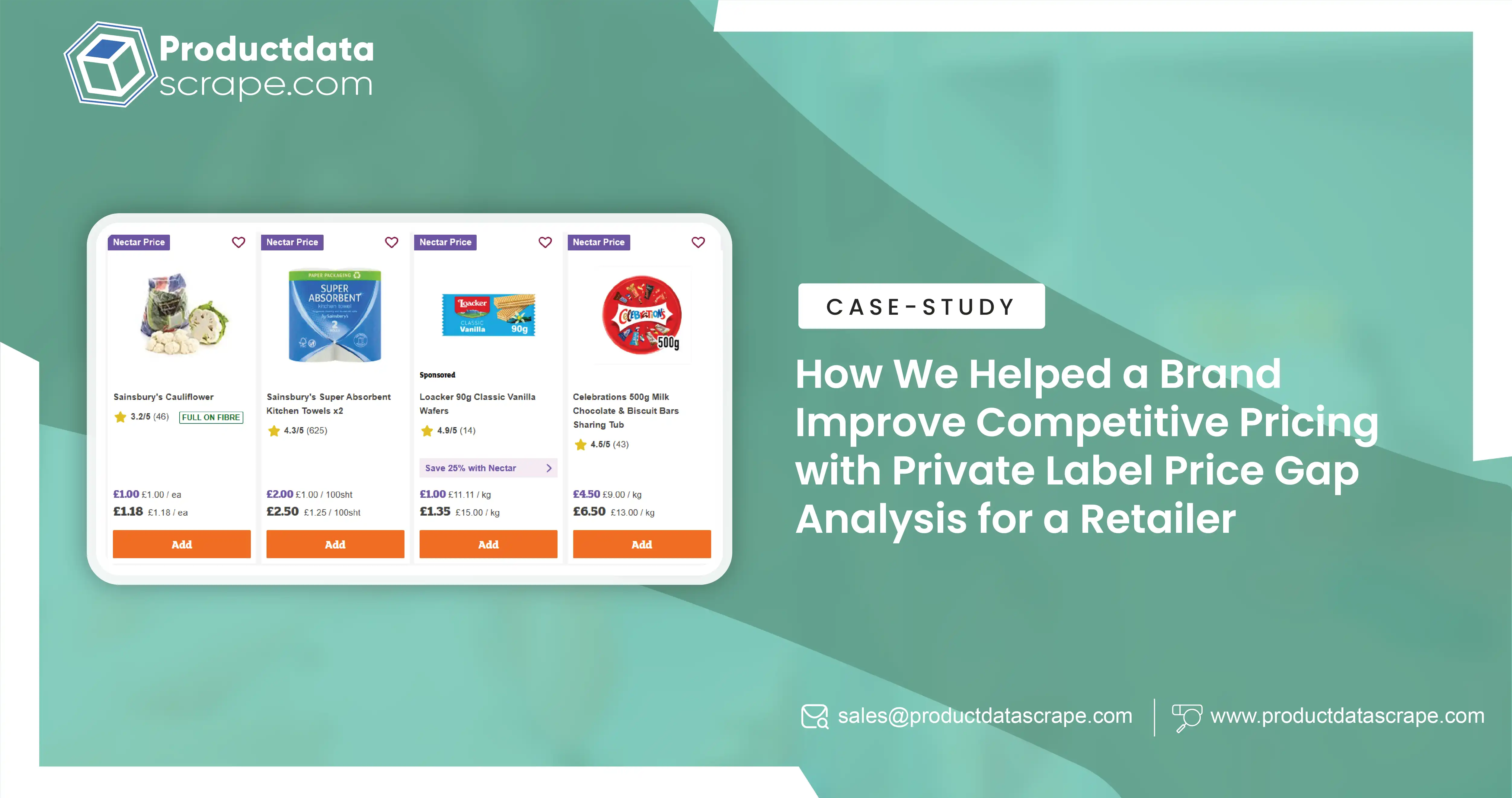
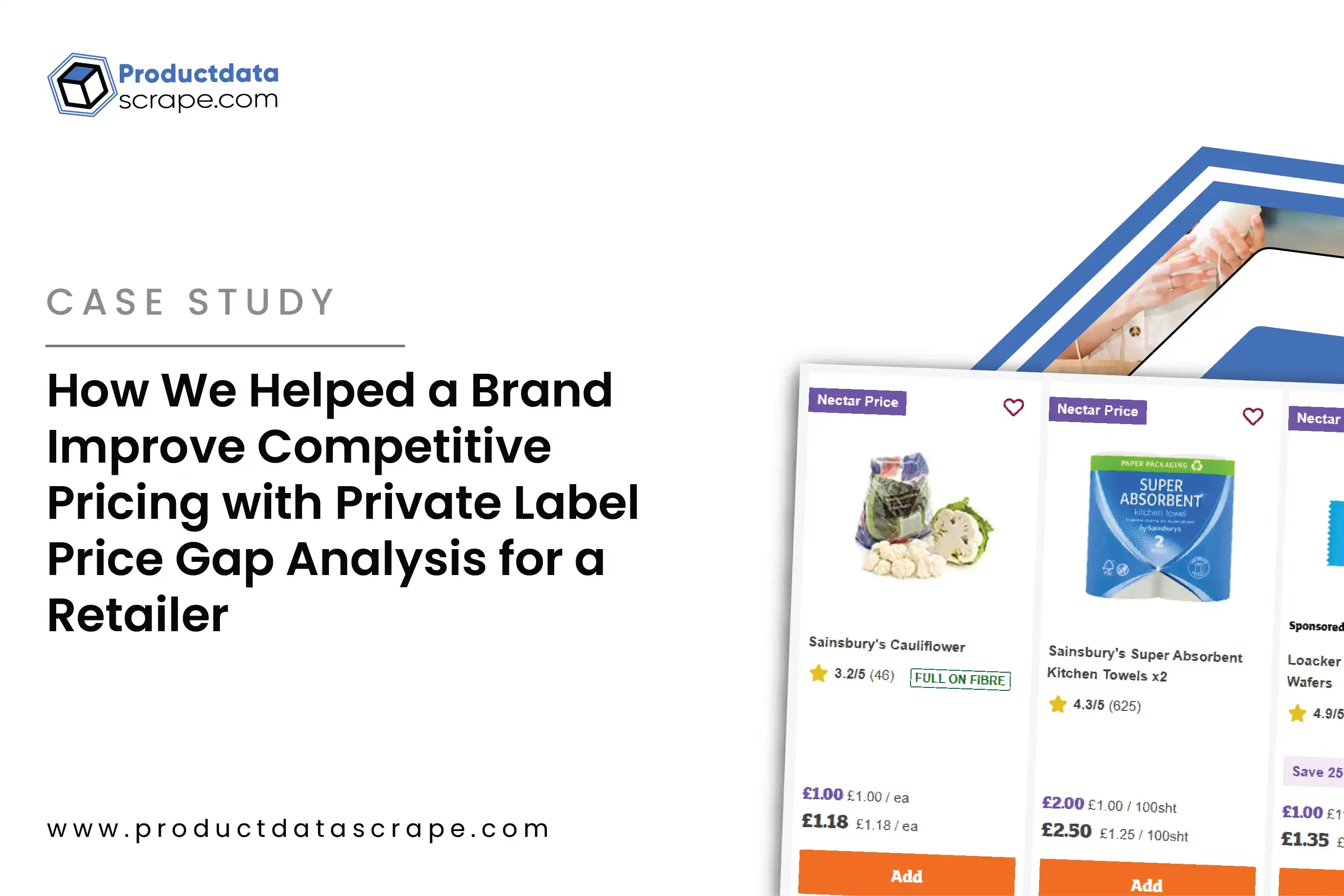
A leading retail-focused consumer goods brand partnered with Product Data Scrape to improve its understanding of private-label pricing across competitive retail channels. The project delivered structured pricing intelligence covering comparable products, pack sizes, categories, promotions, and price differences. Private Label Price Gap Analysis for a Retailer helped the client identify where private-label products were positioned above, below, or close to competing branded products. Automated monitoring reduced manual research and created a repeatable framework for tracking pricing changes. The solution supported faster competitive benchmarking, improved assortment decisions, and more informed pricing reviews across priority categories.
Client Name / Industry: Retail & CPG Brand
Service / Duration: Private-Label Competitive Pricing Data Collection / 12 Weeks
Key Impact Metrics: 91%+ pricing-data consistency, 65% faster competitive reporting, and 3 major retail channels standardized for comparison.
The Client
The client was a retail-focused CPG brand managing a growing portfolio of private-label products across multiple grocery and consumer categories. As retailers increasingly expanded their own brands, competition was no longer limited to national brands. Private-label products were becoming important alternatives across categories such as packaged foods, household essentials, beverages, personal care, and everyday grocery.
Retailers such as Kroger, Walmart, Target, and Amazon can carry overlapping product categories while offering different pack sizes, promotions, and price points. This creates a complex environment for brands trying to understand whether their private-label products are competitively positioned.
Before partnering with Product Data Scrape, the client depended on periodic manual price checks and spreadsheet-based benchmarking. Analysts could capture individual prices, but maintaining consistent comparisons across hundreds of SKUs was difficult.
The absence of centralized Real-Time Private Label Price Tracking, Commerce Intelligence also limited the team's ability to identify rapid price changes and competitive movements.
The transformation was essential because private-label pricing decisions need to consider comparable products, pack sizes, category positioning, promotions, and retailer-specific price differences. Without timely data, teams risked reacting slowly to competitive movements.
Product Data Scrape helped establish a structured data foundation that allowed the client to compare private-label products systematically and make faster, evidence-based pricing decisions.
Goals & Objectives
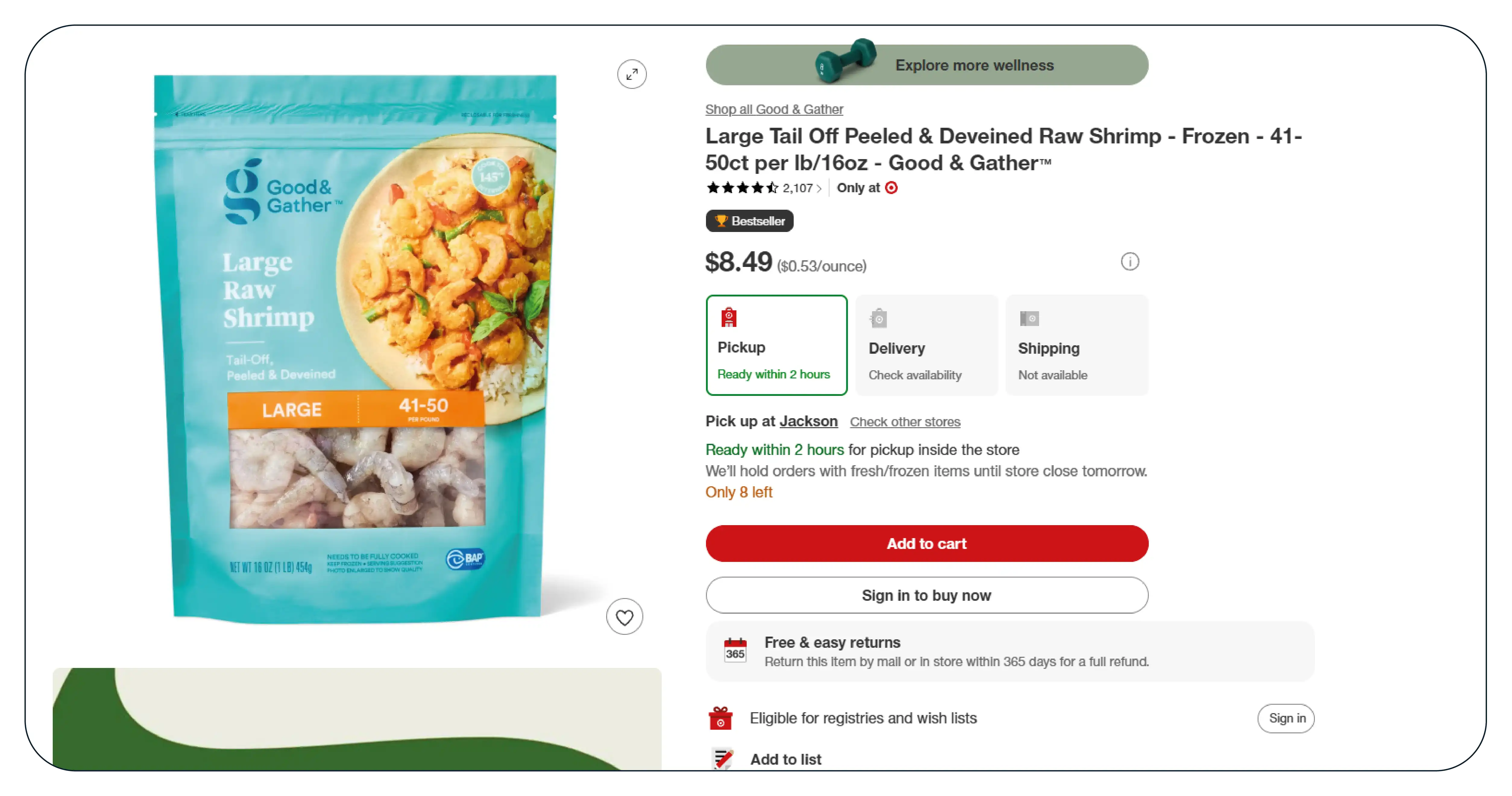
The business goal was to create a scalable pricing intelligence framework capable of comparing private-label products with relevant competitive products across multiple retail environments.
Improve competitive price visibility.
Increase pricing-review speed.
Improve SKU-level pricing accuracy.
Identify products with significant price gaps.
Support category-level pricing decisions.
Monitor competitive movements consistently.
The technical objective was to automate collection and standardize retail pricing information so analysts could work with comparable datasets instead of manually collected records.
Automate recurring price collection.
Normalize product names and pack sizes.
Standardize retailer, category, SKU, and price fields.
Integrate datasets with analytics dashboards.
Enable recurring competitive comparisons.
Support near-real-time analytical workflows where required.
The project used measurable operational indicators to evaluate the effectiveness of the solution:
91%+ target consistency across collected price records.
65% faster competitive reporting.
95%+ validation target for critical product attributes.
3+ retail environments standardized for benchmarking.
60%+ reduction in repetitive manual pricing checks.
The resulting Private Label Pricing Intelligence for Retail, Demand Trend Intelligence framework gave the client a stronger foundation for understanding price positioning and changing customer-market dynamics.
The Core Challenge
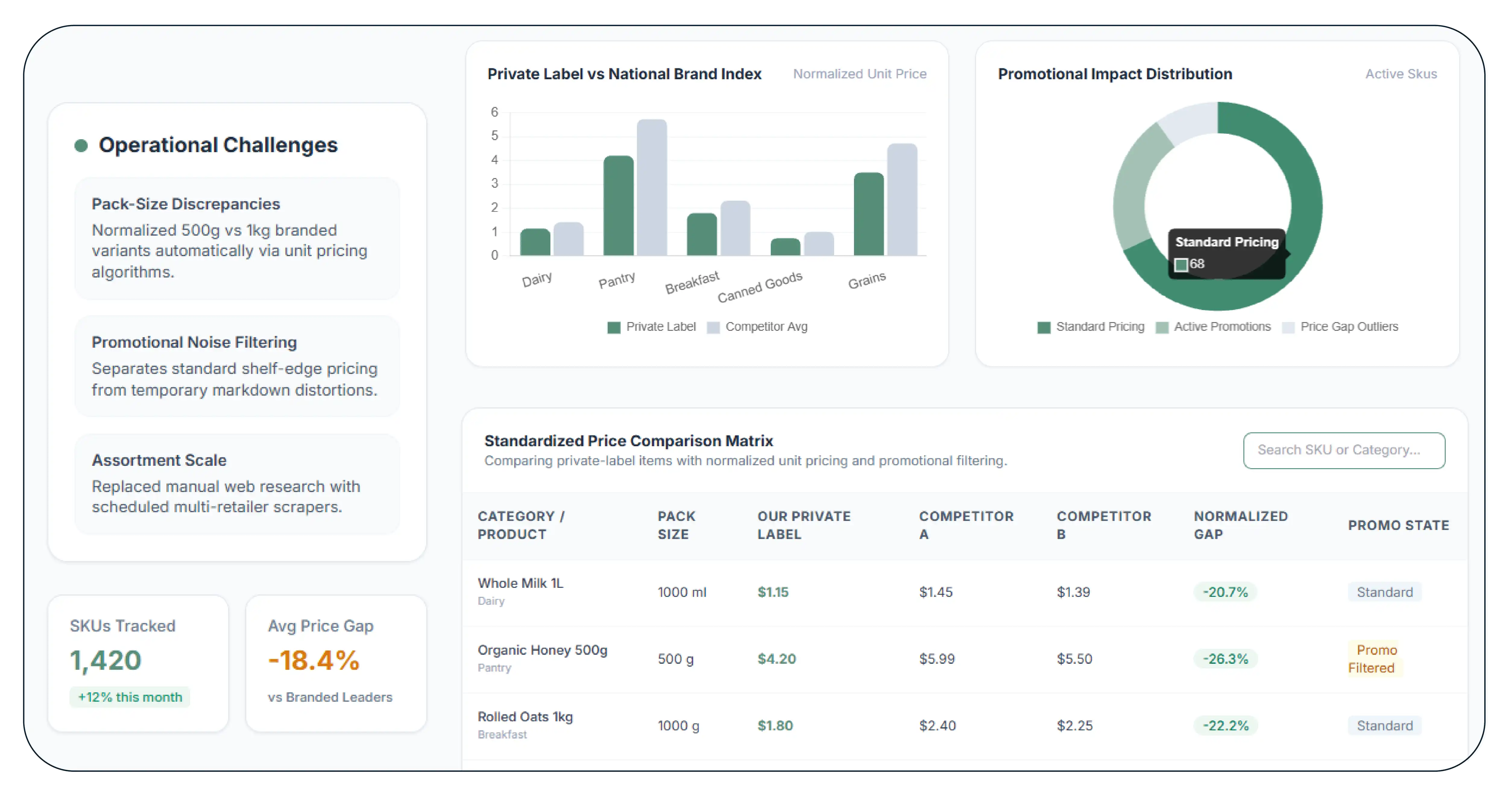
The client's primary challenge was maintaining accurate competitive pricing visibility across a large and changing private-label assortment. Retail prices could vary by retailer, location, product size, promotional period, and category.
Manual research created several operational bottlenecks. Analysts had to search individual retailer websites, locate comparable products, record prices, verify pack sizes, and then calculate price differences manually. As the SKU count increased, this process became increasingly difficult to maintain.
Another challenge was comparability. A private-label 500g product could not always be directly compared with a branded 1kg product without accounting for pack-size differences. Product titles and descriptions also varied across retailers, making automated matching more complicated.
Promotional pricing created an additional layer of complexity. A temporary discount could create an apparent price gap that did not represent the standard market position.
The client needed Grocery Private Label Price Analysis that could account for these variables while producing structured, repeatable comparisons.
Without automated monitoring, pricing teams faced delayed insights, inconsistent datasets, and difficulty distinguishing genuine competitive gaps from temporary promotional movements.
The core requirement was therefore to move from isolated manual price checks to a standardized pricing intelligence process that could scale with the client's assortment.
Our Solution
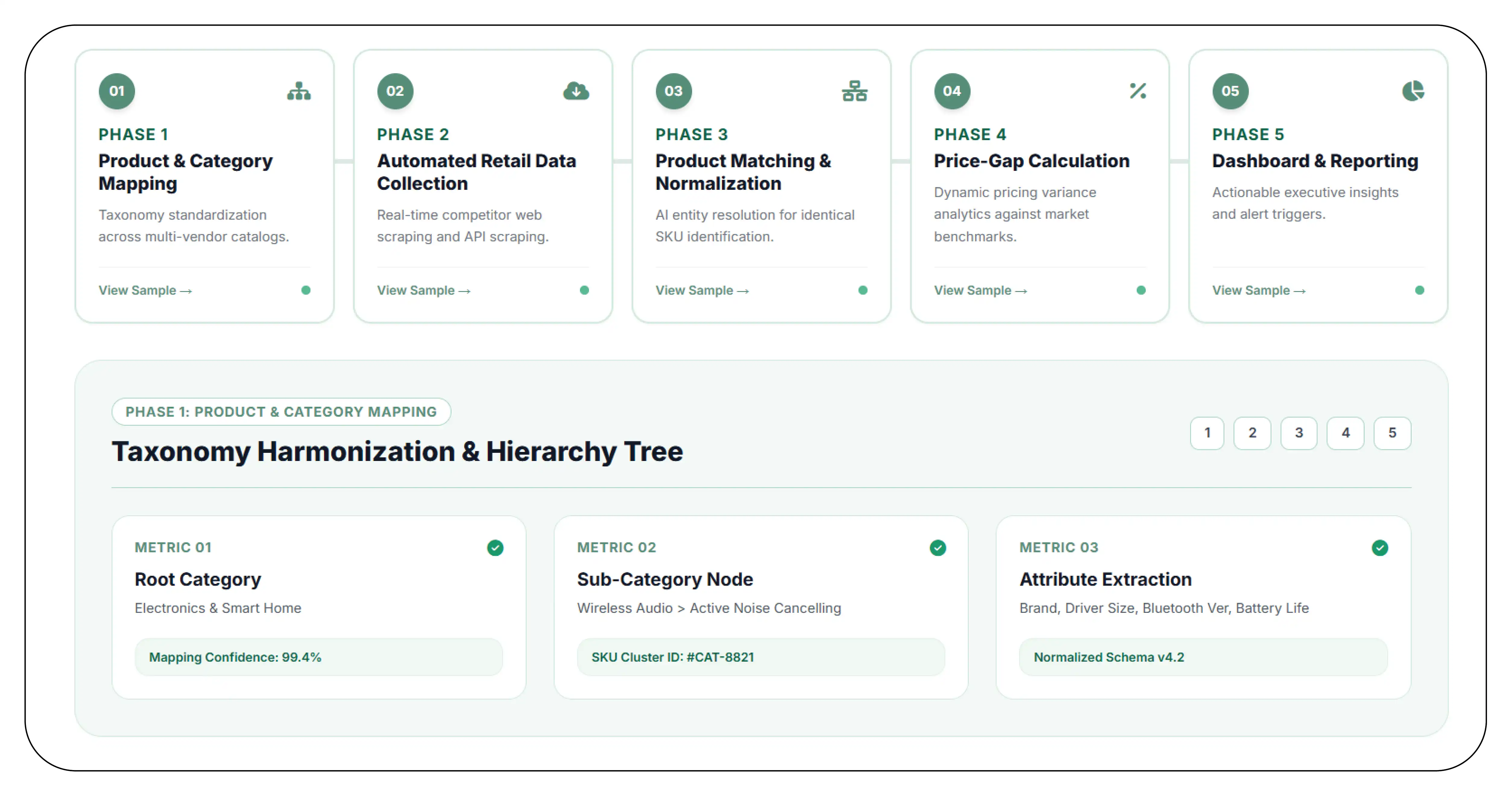
Product Data Scrape implemented a phased competitive pricing data framework designed around private-label products and comparable retail SKUs.
Phase 1: Product & Category Mapping
The first stage established a standardized product hierarchy. Private-label SKUs were mapped by brand, product name, category, pack size, unit size, retailer, and relevant product identifiers. Comparable national-brand and competing private-label products were grouped into logical comparison sets.
Phase 2: Automated Retail Data Collection
Automated workflows were configured to collect pricing and product information from agreed retail sources. Depending on the project scope, monitored environments could include retailer websites and marketplaces such as Kroger, Walmart, Target, and Amazon. The collected fields could include product name, brand, category, pack size, listed price, promotional price, availability, retailer, location, and timestamp.
Phase 3: Product Matching & Normalization
The collected data was processed through normalization workflows. Product titles were standardized, pack sizes were structured, and comparable products were grouped into relevant benchmarking sets. This helped reduce false comparisons caused by different naming conventions or package formats.
Phase 4: Price-Gap Calculation
The next phase calculated price differences between private-label products and their comparable competitors. The framework could evaluate absolute price gaps, percentage differences, unit-level pricing, and promotional variations. The Private Label Margin and Price Gap Analysis, Private Label Price Gap Analysis for a Retailer framework enabled pricing teams to identify products requiring deeper review.
Phase 5: Dashboard & Reporting
The final phase transformed structured records into dashboard-ready datasets. Teams could filter information by retailer, category, SKU, product type, price range, or comparison group. Automated reports highlighted significant price movements and competitive gaps, allowing analysts to focus on commercially relevant exceptions rather than manually reviewing every product.
This created a scalable pricing intelligence workflow that could be expanded to additional categories, retailers, products, and locations.
Results & Key Metrics
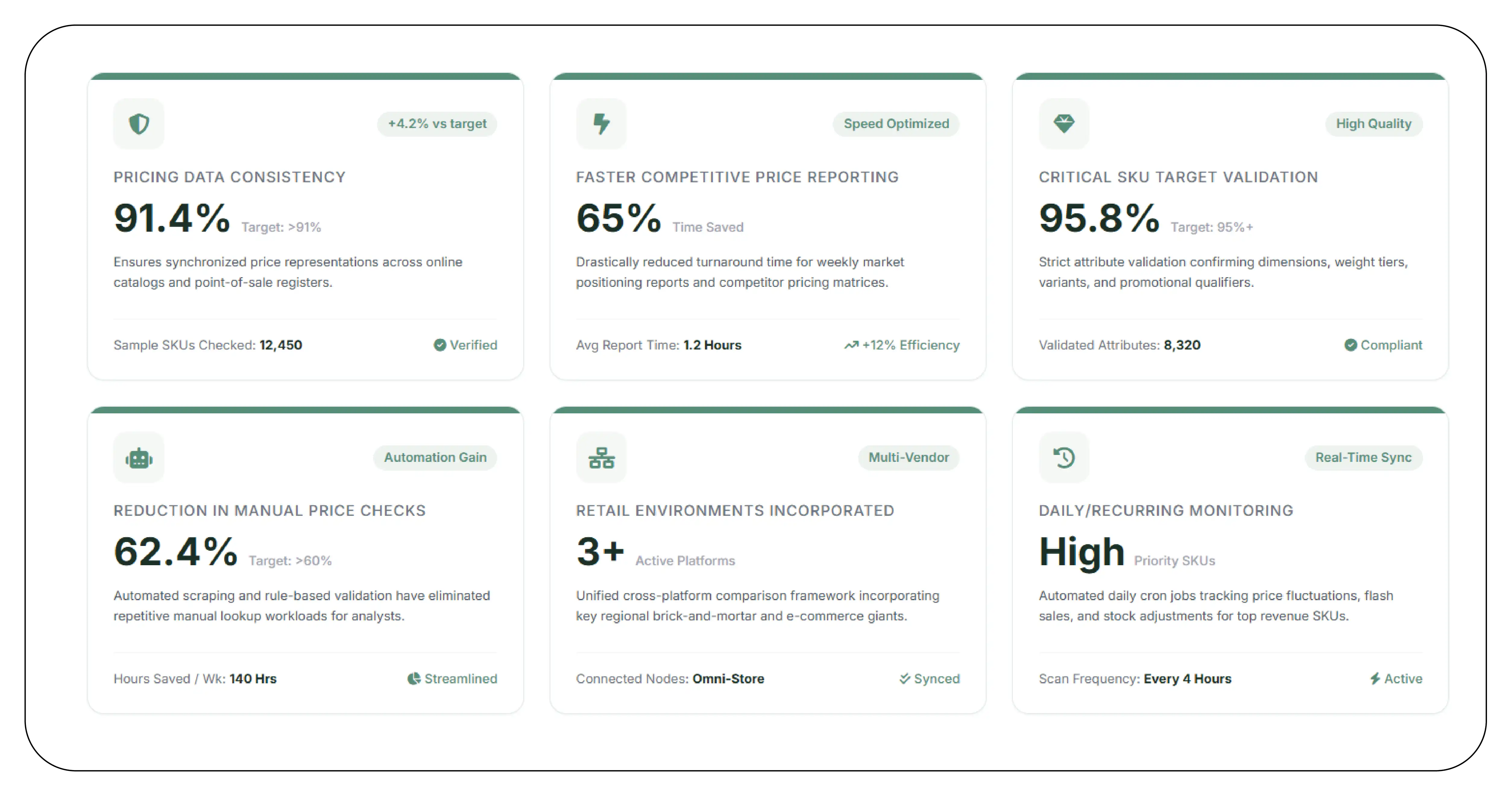
The following are illustrative project performance metrics representing the types of operational improvements delivered through the framework:
91%+ pricing-data consistency.
65% faster competitive price reporting.
95%+ target validation for critical SKU attributes.
60%+ reduction in repetitive manual price checks.
3+ retail environments incorporated into the comparison framework.
Daily/recurring monitoring for selected high-priority SKUs.
These metrics demonstrate how automation can improve the speed and consistency of private-label competitive pricing analysis.
Results Narrative
The Private Label Product Price Comparison Dataset gave the client a standardized view of private-label and competing product prices across monitored retail environments.
Pricing teams could identify products with significant price differences, review pack-size-adjusted comparisons, and distinguish standard pricing from promotional changes.
The centralized dataset also improved collaboration between pricing, merchandising, category management, and e-commerce teams.
Instead of relying on disconnected spreadsheets, teams could work from consistent product-level records and recurring pricing snapshots. This helped improve the speed of competitive reviews and provided a stronger foundation for future pricing optimization.
The project also created a scalable structure that could accommodate new retailers, categories, and SKUs without rebuilding the entire monitoring workflow.
What Made Product Data Scrape Different
Product Data Scrape differentiated the project by combining automated retail data extraction with product matching, pack-size normalization, price-gap calculations, validation, and dashboard-ready reporting.
Rather than simply collecting product prices, the framework focused on making products comparable. This was especially important for private-label analysis, where package sizes, naming conventions, and promotional mechanics can vary significantly between retailers.
Smart automation helped reduce repetitive research while recurring collection enabled pricing teams to observe changes over time.
The framework could also be adapted to different retail environments, making it useful for analyzing retailers such as Kroger, Walmart, Target, and Amazon when relevant to the project scope.
The Kroger Private Label CPG Brand Data Scraping capability further illustrates how retailer-specific datasets can be incorporated into a broader competitive pricing intelligence architecture.
Client's Testimonial
"Product Data Scrape gave our pricing team a much clearer understanding of where our private-label products stood against competing products. Previously, our analysts spent considerable time manually collecting prices and creating comparisons. The structured dataset and automated monitoring process made it easier to identify meaningful price gaps, review category-level positioning, and monitor changes across retailers. The standardized product matching was particularly valuable because it helped us make more consistent comparisons across different pack sizes and product descriptions."
— Director of Pricing & Category Strategy, Retail CPG Brand
The resulting Grocery Datasets also provided a reusable foundation for future assortment, pricing, and competitive intelligence initiatives.
Conclusion
The project demonstrated how structured retail data can help brands make faster and more informed private-label pricing decisions. By automating product collection, normalization, competitive matching, and price-gap analysis, the client gained a more consistent view of market positioning.
The solution reduced manual research while creating a scalable framework for monitoring pricing across retailers and categories. Teams could identify meaningful price gaps, evaluate comparable SKUs, and monitor changes through recurring datasets.
With automated Pricing intelligence, brands and retailers can move beyond occasional price checks and build continuous competitive visibility.
Product Data Scrape can help businesses create customized retail datasets, automate competitive monitoring, and transform complex marketplace information into actionable pricing insights.
FAQs
1. What is private-label price gap analysis?
Private-label price gap analysis compares a retailer's or brand's private-label products against comparable branded or competing products. The analysis can consider listed price, promotional price, pack size, unit price, retailer, and category.
2. Which retailers can be included?
Depending on project requirements and permitted data access, monitoring can include retailer websites and marketplaces such as Kroger, Walmart, Target, and Amazon. The exact retailer list can be customized according to the business requirement.
3. How do you compare products with different pack sizes?
Product matching workflows can normalize pack sizes and calculate unit-level pricing. For example, products can be compared using price per 100g, kilogram, litre, or another relevant unit where appropriate.
4. How frequently can pricing data be collected?
The monitoring frequency can be configured according to the business requirement. Daily, recurring, or higher-frequency collection may be used for priority products, subject to source availability and applicable platform requirements.
5. Can the dataset be connected to a pricing dashboard?
Yes. Structured datasets can be prepared for dashboards, BI systems, internal analytics platforms, or reporting workflows. This allows pricing and category teams to filter products, retailers, categories, and price gaps from a centralized view.


 Singapore
 EMAIL
EMAIL
 PHONE
PHONE










.webp)