Introduction
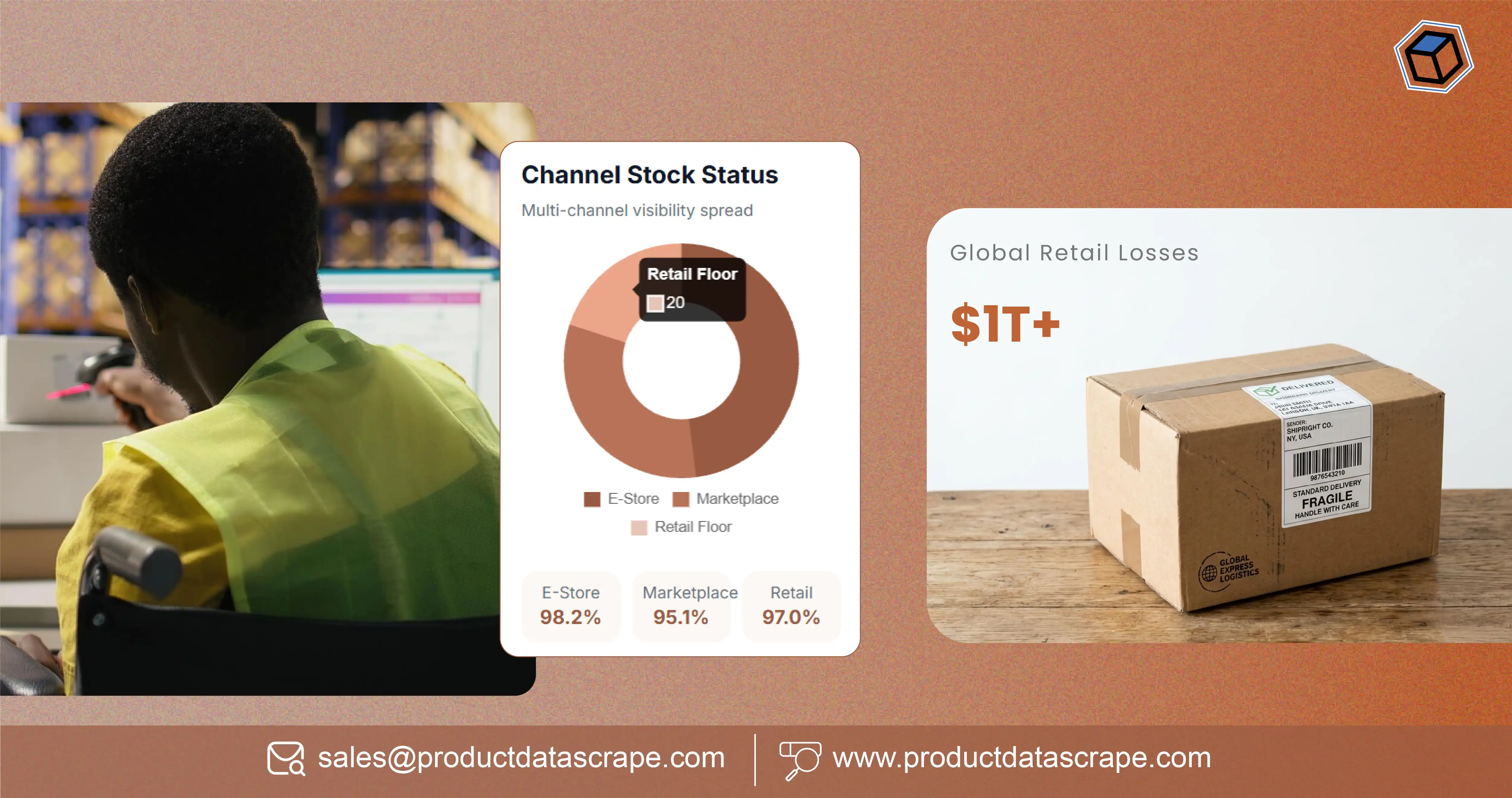
Businesses can prevent stockouts by continuously tracking inventory across retailers, monitoring product availability in real time, and using automated data insights to replenish inventory faster. This approach reduces lost sales, improves customer satisfaction, and strengthens supply chain efficiency.
Industry Insight: According to retail industry studies, nearly 35% of shoppers purchase from a competitor when their preferred product is unavailable. Retailers using automated inventory monitoring have reported stockout reductions of up to 30% and improved product availability between 2020 and 2026.
Inventory availability directly impacts revenue, customer loyalty, and brand reputation. When products are unavailable, customers quickly switch to competitors, resulting in lost sales and reduced long-term retention. Manual inventory tracking is no longer sufficient because online marketplaces and retailer websites update product availability throughout the day.
Implementing Out-of-Stock Monitoring enables businesses to detect unavailable products instantly, identify recurring stock shortages, and improve replenishment planning before inventory problems affect customers. Combined with Assortment and availability monitoring, retailers gain complete visibility into product listings, assortment changes, stock levels, competitor inventory, and regional product availability across multiple eCommerce platforms.
For retail managers, category teams, supply chain professionals, and brand owners seeking to improve inventory performance, automated monitoring provides continuous insights that support smarter replenishment decisions. Instead of reacting after customers encounter unavailable products, organizations can proactively manage inventory and maintain consistent product availability.
This guide explores how automated inventory intelligence, retailer monitoring, and product availability analytics help businesses reduce stockouts, improve operational efficiency, and maximize product availability between 2020 and 2026.
How Can Businesses Gain Complete Visibility into Retail Inventory?
Modern retailers sell products across multiple online marketplaces and retail websites, making inventory visibility increasingly challenging. Product availability changes frequently because of demand spikes, promotional campaigns, logistics delays, and supplier constraints. Businesses need automated monitoring to understand inventory conditions across every sales channel.
Using Stock Availability Monitoring Across Retailers, organizations can monitor inventory levels across multiple retailers simultaneously. Combined with E-commerce data, businesses gain access to continuously updated product listings, stock availability, pricing, seller information, promotions, and assortment changes. This enables inventory teams to identify unavailable products immediately and take corrective action before customer demand is affected.
Automated monitoring also eliminates manual website checks and improves operational efficiency. Instead of reviewing thousands of product pages individually, inventory managers receive centralized reports showing stock availability across brands, retailers, and product categories.
Benefits of inventory visibility
- Detect stockouts immediately.
- Compare retailer inventory levels.
- Improve replenishment planning.
- Reduce lost sales.
- Monitor promotional inventory.
- Track assortment changes.
- Increase customer satisfaction.
- Improve supply chain responsiveness.
Retail Inventory Monitoring Trends (2020–2026)
| Year |
Retailers Using Automated Inventory Monitoring |
Average Stockout Reduction |
| 2020 |
30% |
8% |
| 2021 |
38% |
11% |
| 2022 |
47% |
15% |
| 2023 |
57% |
19% |
| 2024 |
66% |
23% |
| 2025 |
75% |
27% |
| 2026* |
83% |
32% |
*Projected industry estimates.
Businesses investing in automated inventory monitoring improve product availability, strengthen supply chain planning, and create better shopping experiences while reducing revenue losses caused by stock shortages.
How Can Automation Improve Inventory Management Across Multiple Channels?
Managing inventory across numerous retailers requires more than periodic stock checks. Businesses must continuously monitor inventory movements, identify stock shortages, and receive alerts before products become unavailable. Automation simplifies this process while improving data accuracy and operational efficiency.
A Product Inventory Monitoring API enables businesses to collect inventory data automatically from retailer websites, marketplaces, and eCommerce platforms. Instead of manually reviewing inventory reports, teams receive real-time updates whenever stock levels change. This allows supply chain managers to prioritize replenishment, reduce stockout risks, and maintain consistent product availability.
Automated inventory APIs also integrate with business intelligence platforms, ERP systems, and inventory management software. This creates a unified view of inventory performance across multiple sales channels while supporting faster business decisions.
Advantages of automated inventory monitoring
- Continuous inventory updates.
- Faster stockout detection.
- Better replenishment planning.
- Improved inventory forecasting.
- Reduced manual effort.
- Higher inventory accuracy.
- Stronger operational efficiency.
- Improved customer experience.
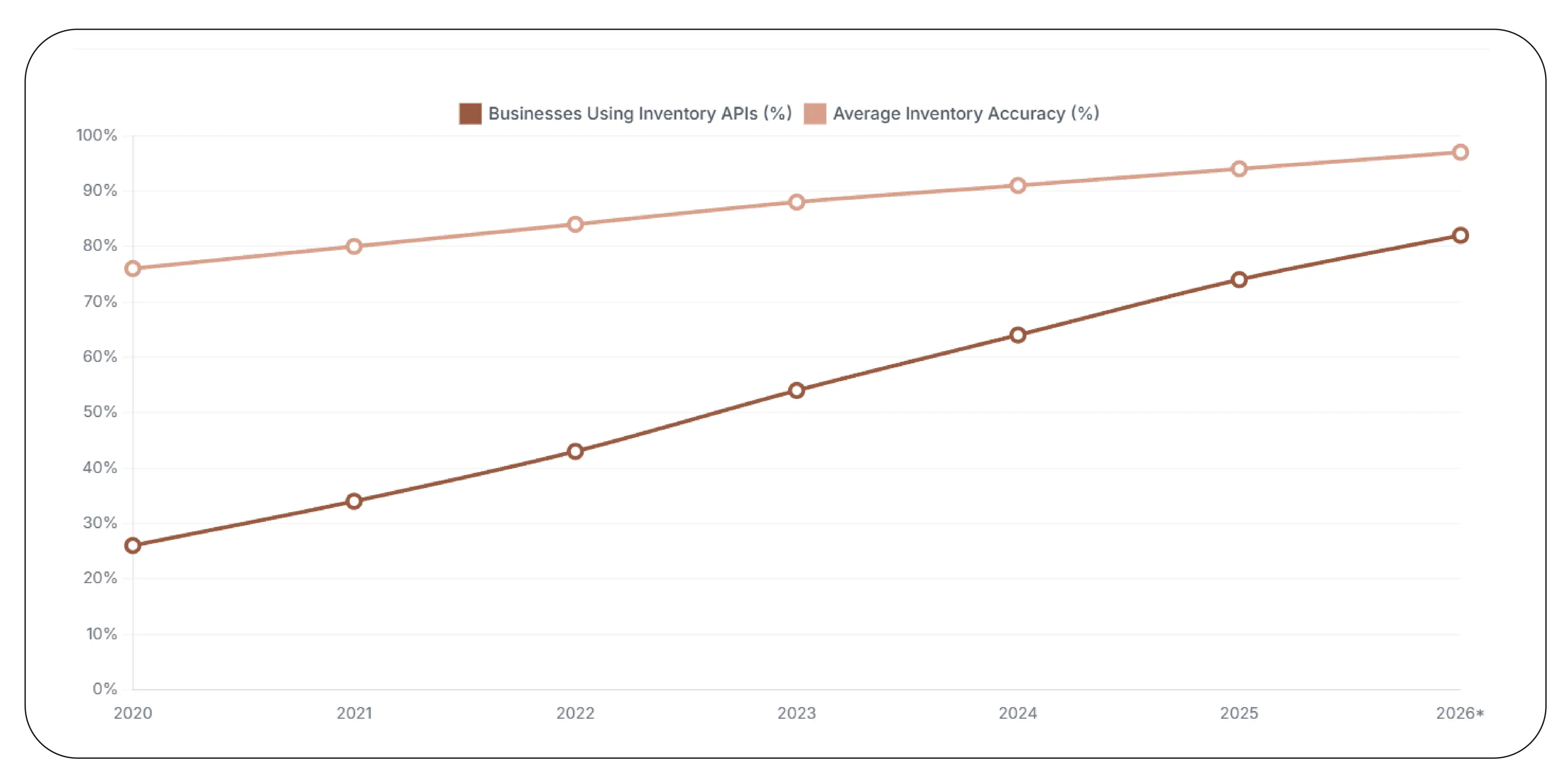
Inventory Automation Adoption (2020–2026)
| Year |
Businesses Using Inventory APIs |
Average Inventory Accuracy |
| 2020 |
26% |
76% |
| 2021 |
34% |
80% |
| 2022 |
43% |
84% |
| 2023 |
54% |
88% |
| 2024 |
64% |
91% |
| 2025 |
74% |
94% |
| 2026* |
82% |
97% |
*Projected industry estimates.
Organizations using automated inventory APIs gain faster visibility into stock movements, improve replenishment accuracy, reduce operational costs, and ensure products remain available for customers across increasingly complex retail ecosystems.
How Can Retailers Transform Inventory Data into Better Business Decisions?
Accurate inventory information is valuable only when it supports better decisions. Retail brands need continuous visibility into product availability, replenishment cycles, regional demand, and competitor inventory levels to prevent stock shortages. Without centralized insights, inventory teams often react too late, resulting in lost revenue and dissatisfied customers.
Implementing Inventory Intelligence for Retail Brands enables organizations to consolidate inventory data from multiple retailers, marketplaces, warehouses, and distribution channels into a single analytical view. These insights reveal recurring stockout patterns, identify slow-moving inventory, forecast replenishment needs, and improve product allocation across regions.
Inventory intelligence also supports cross-functional collaboration. Category managers, supply chain teams, merchandising departments, and procurement specialists can access the same data, reducing decision delays and improving operational efficiency. Businesses become more proactive by identifying inventory risks before they affect customer demand.
Benefits of inventory intelligence
- Improve demand forecasting.
- Optimize stock allocation.
- Reduce inventory shortages.
- Identify replenishment opportunities.
- Improve regional inventory planning.
- Strengthen supply chain collaboration.
- Increase product availability.
- Enhance customer satisfaction.
Inventory Intelligence Adoption (2020–2026)
| Year |
Retailers Using Inventory Intelligence |
Average Inventory Efficiency Improvement |
| 2020 |
29% |
10% |
| 2021 |
37% |
13% |
| 2022 |
46% |
17% |
| 2023 |
56% |
21% |
| 2024 |
66% |
25% |
| 2025 |
75% |
30% |
| 2026* |
84% |
35% |
*Projected industry estimates.
Retailers adopting inventory intelligence gain stronger operational visibility, improve replenishment planning, and reduce revenue loss by making faster, data-driven inventory decisions.
How Can Automated Product Availability Tracking Reduce Stockouts?
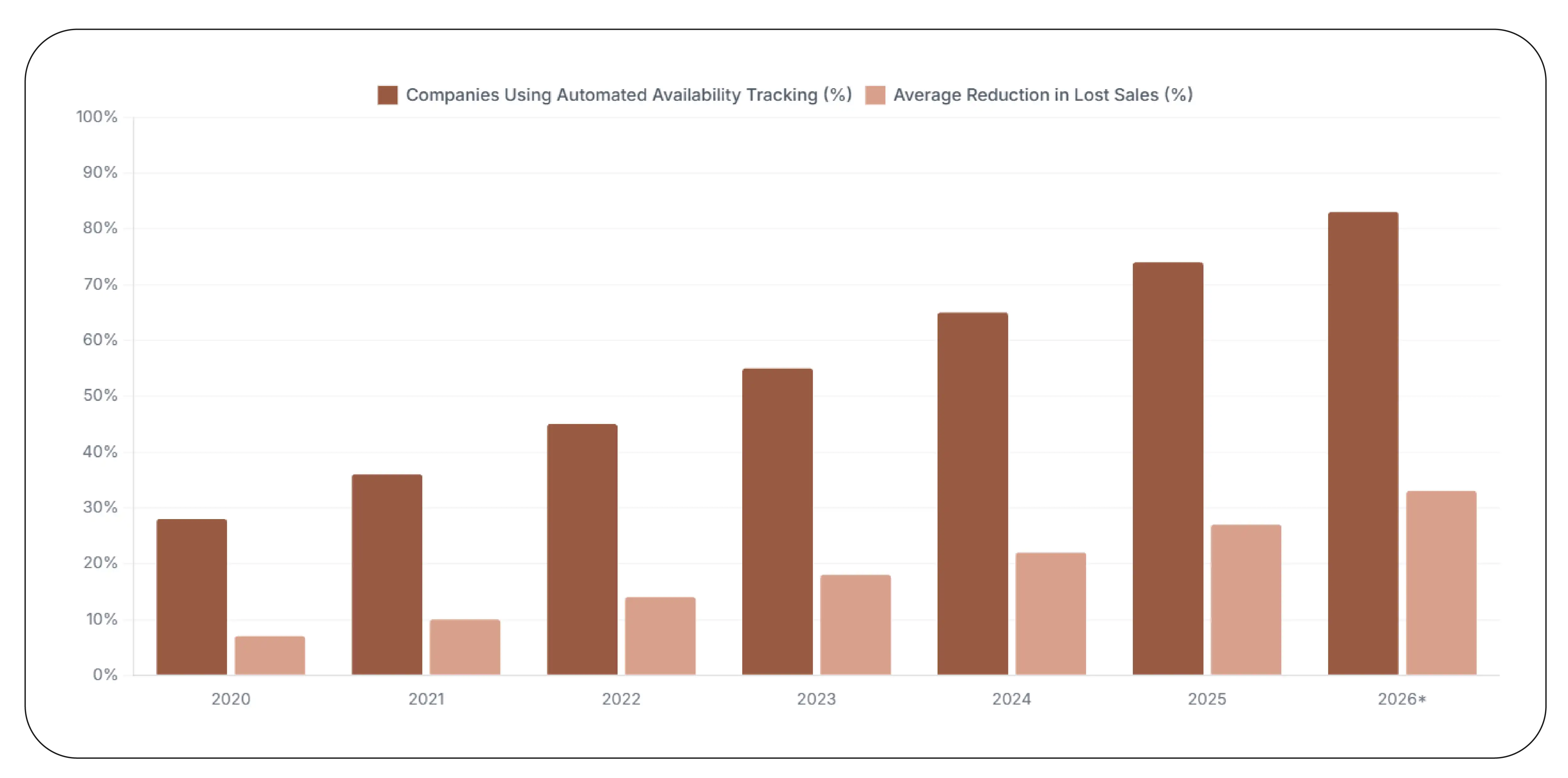
Product availability changes throughout the day due to customer purchases, supplier delays, seasonal demand, and promotional campaigns. Businesses that depend on periodic manual checks often discover stock shortages after customers have already experienced unavailable products. Automated monitoring eliminates this delay.
Using Product Availability Data Extraction, retailers automatically collect availability information from online stores, marketplaces, and retail websites in real time. Businesses can monitor whether products are in stock, temporarily unavailable, discontinued, or available through alternative sellers. These insights support faster replenishment and more accurate inventory planning.
Automated availability tracking also improves assortment management by highlighting missing products, inactive listings, and category gaps. Instead of manually reviewing thousands of product pages, inventory teams receive structured reports with actionable insights that support quicker operational responses.
Advantages of automated availability tracking
- Detect unavailable products immediately.
- Monitor retailer assortment changes.
- Improve replenishment decisions.
- Reduce customer disappointment.
- Identify discontinued products.
- Increase inventory visibility.
- Strengthen operational efficiency.
- Improve product availability.
Product Availability Monitoring Trends (2020–2026)
| Year |
Companies Using Automated Availability Tracking |
Average Reduction in Lost Sales |
| 2020 |
28% |
7% |
| 2021 |
36% |
10% |
| 2022 |
45% |
14% |
| 2023 |
55% |
18% |
| 2024 |
65% |
22% |
| 2025 |
74% |
27% |
| 2026* |
83% |
33% |
*Projected industry estimates.
Organizations implementing automated product availability monitoring improve customer satisfaction, reduce inventory risks, and strengthen retail execution through continuous visibility into changing marketplace conditions.
Why Is Continuous Stockout Analysis Essential for Retail Success?
Stockouts are rarely isolated events. They often result from demand spikes, inaccurate forecasting, supply chain disruptions, delayed replenishment, or regional inventory imbalances. Businesses that analyze stockout patterns continuously can identify root causes and implement preventive strategies before problems grow.
Using Out-of-Stock Data Scraping, retailers collect real-time information about unavailable products, stock status changes, assortment gaps, retailer availability, and marketplace inventory trends. Automated data collection enables businesses to measure stockout frequency, compare retailer performance, and evaluate inventory consistency across multiple sales channels.
Historical stockout analysis also supports demand forecasting and supplier performance evaluation. Businesses can identify high-risk products, seasonal inventory shortages, and recurring supply issues that require operational improvements. These insights help inventory teams prioritize replenishment while reducing future stock shortages.
Best practices for stockout analysis
- Monitor availability continuously.
- Compare retailer stock performance.
- Analyze recurring shortages.
- Improve replenishment planning.
- Measure supplier reliability.
- Evaluate seasonal demand.
- Review inventory trends regularly.
- Optimize inventory allocation.
Stockout Analytics Growth (2020–2026)
| Year |
Businesses Using Stockout Analytics |
Average Reduction in Recurring Stockouts |
| 2020 |
25% |
9% |
| 2021 |
33% |
12% |
| 2022 |
43% |
16% |
| 2023 |
54% |
21% |
| 2024 |
64% |
26% |
| 2025 |
74% |
31% |
| 2026* |
82% |
37% |
*Projected industry estimates.
Continuous stockout analysis enables retailers to strengthen supply chain resilience, improve inventory planning, and maintain consistent product availability despite changing market conditions.
How Can Businesses Build a Proactive Inventory Availability Strategy?
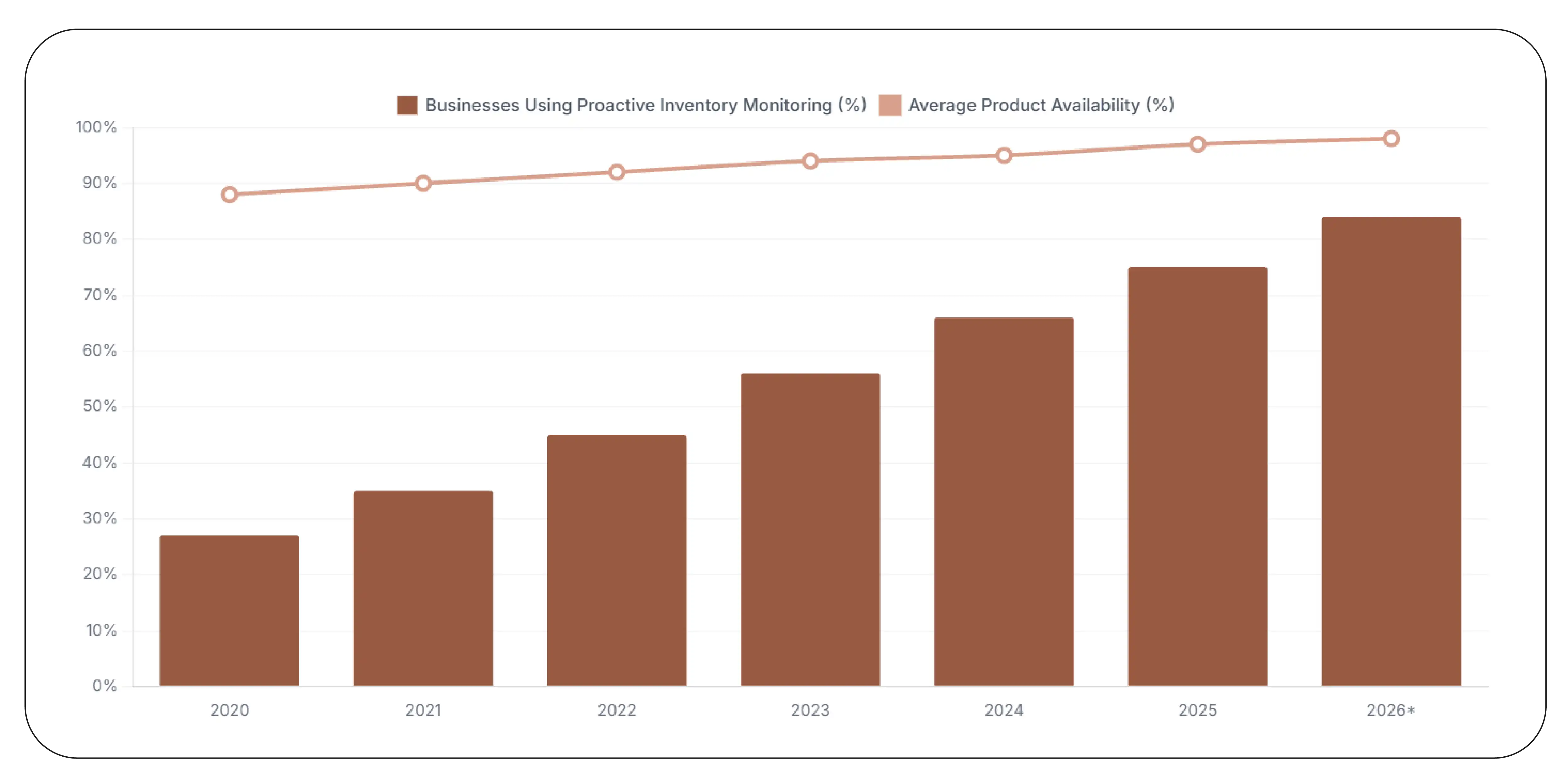
Preventing stockouts requires more than tracking inventory after products disappear. Businesses need continuous monitoring, predictive insights, and automated alerts that identify inventory risks before customers are affected. A proactive inventory strategy helps retailers maintain product availability, improve customer satisfaction, and reduce revenue loss.
Implementing Out-of-stock monitoring enables organizations to track inventory changes across multiple retailers, marketplaces, and regions in real time. Automated monitoring identifies unavailable products, low-stock situations, assortment gaps, and recurring inventory issues before they escalate into larger operational problems.
A proactive strategy also strengthens collaboration between merchandising, procurement, logistics, and supply chain teams. Shared dashboards and automated reporting improve communication while helping decision-makers prioritize replenishment activities based on demand, sales performance, and inventory trends.
Best practices for proactive inventory management
- Monitor inventory continuously.
- Set automated stock alerts.
- Analyze replenishment cycles.
- Forecast seasonal demand.
- Review supplier performance.
- Optimize regional inventory allocation.
- Measure stock availability regularly.
- Improve cross-team collaboration.
Inventory Optimization Trends (2020–2026)
| Year |
Businesses Using Proactive Inventory Monitoring |
Average Product Availability |
| 2020 |
27% |
88% |
| 2021 |
35% |
90% |
| 2022 |
45% |
92% |
| 2023 |
56% |
94% |
| 2024 |
66% |
95% |
| 2025 |
75% |
97% |
| 2026* |
84% |
98% |
*Projected industry estimates.
Organizations that proactively monitor inventory gain stronger supply chain resilience, improve replenishment efficiency, and maintain consistent product availability even during periods of fluctuating demand.
Why Choose Product Data Scrape?
Retail success depends on accurate inventory visibility and timely business decisions. Product Data Scrape provides automated inventory tracking, retailer monitoring, product availability insights, assortment analytics, and advanced Pricing intelligence across multiple online marketplaces. By implementing Out-of-Stock Monitoring, businesses can detect stock shortages in real time, optimize replenishment planning, reduce lost sales, and improve customer satisfaction. Scalable data collection, customized dashboards, and actionable analytics help retailers strengthen inventory management, improve operational efficiency, and maintain consistent product availability across every sales channel.
Conclusion
Maintaining consistent product availability is essential for improving customer satisfaction, protecting revenue, and strengthening retail performance. Automated inventory monitoring enables businesses to detect stock shortages early, improve replenishment planning, and optimize inventory allocation across multiple retail channels. Combining Retail media and ad intelligence with Out-of-Stock Monitoring provides deeper visibility into product performance, promotional effectiveness, and inventory availability, enabling smarter business decisions and long-term operational success.
Ready to eliminate stockouts and maximize inventory visibility? Contact Product Data Scrape today to implement automated inventory monitoring, advanced analytics, and real-time retail intelligence that keeps your products available when customers need them most!
FAQs
1. What is out-of-stock monitoring?
Out-of-stock monitoring continuously tracks product availability across retailers and marketplaces. It helps businesses detect stock shortages quickly, improve replenishment planning, reduce lost sales, and maintain customer satisfaction.
2. Why is inventory availability important for retailers?
High product availability improves customer experience, increases sales opportunities, strengthens brand loyalty, reduces abandoned purchases, and enables retailers to compete effectively in fast-changing online and offline markets.
3. How does automated inventory monitoring improve supply chain performance?
Automated monitoring provides real-time inventory visibility, identifies stock shortages early, improves replenishment accuracy, supports demand forecasting, and helps supply chain teams make faster operational decisions.
4. Can inventory analytics reduce recurring stockouts?
Yes. Inventory analytics identifies recurring shortages, seasonal demand patterns, supplier performance issues, and assortment gaps, enabling businesses to optimize inventory planning and reduce future stockout risks.
5. How can businesses implement an inventory monitoring solution?
Businesses can partner with Product Data Scrape to automate inventory data collection, monitor product availability across retailers, generate actionable insights, and improve inventory planning through real-time analytics.


 Singapore
 EMAIL
EMAIL
 PHONE
PHONE


.webp "thumb")









.webp)