Introduction
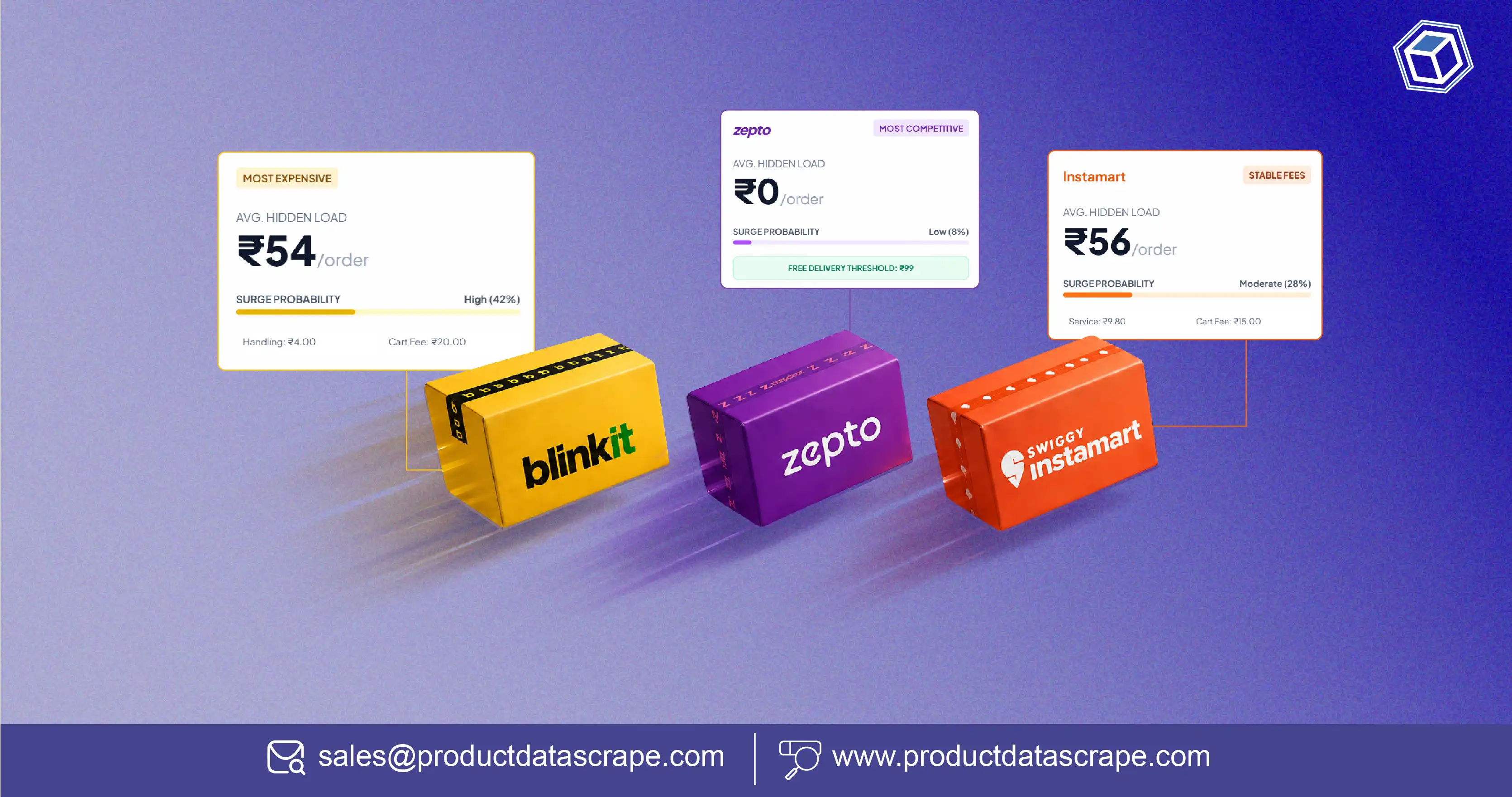
In the fast-evolving quick commerce ecosystem, delivery fees are no longer static—they fluctuate based on demand, location, time, and competition. Businesses that fail to monitor these shifts risk margin erosion and pricing misalignment. Leveraging Scrape Fee Delivery Changes Blinkit, Zepto & Instamart Data enables companies to uncover hidden price hikes, benchmark competitors, and optimize pricing strategies in real time.
With increasing competition across instant delivery platforms, extracting actionable insights through Web Scraping Blinkit Quick Commerce Data has become essential for brands, aggregators, and analytics teams. By systematically collecting delivery fee data, companies can detect patterns in surge pricing, identify cost anomalies, and refine operational decisions. This blog explores how structured data scraping helps track fee changes and protect margins through six detailed analytical approaches supported by industry trends and datasets from 2020 to 2026.
Understanding dynamic fee shifts across platforms
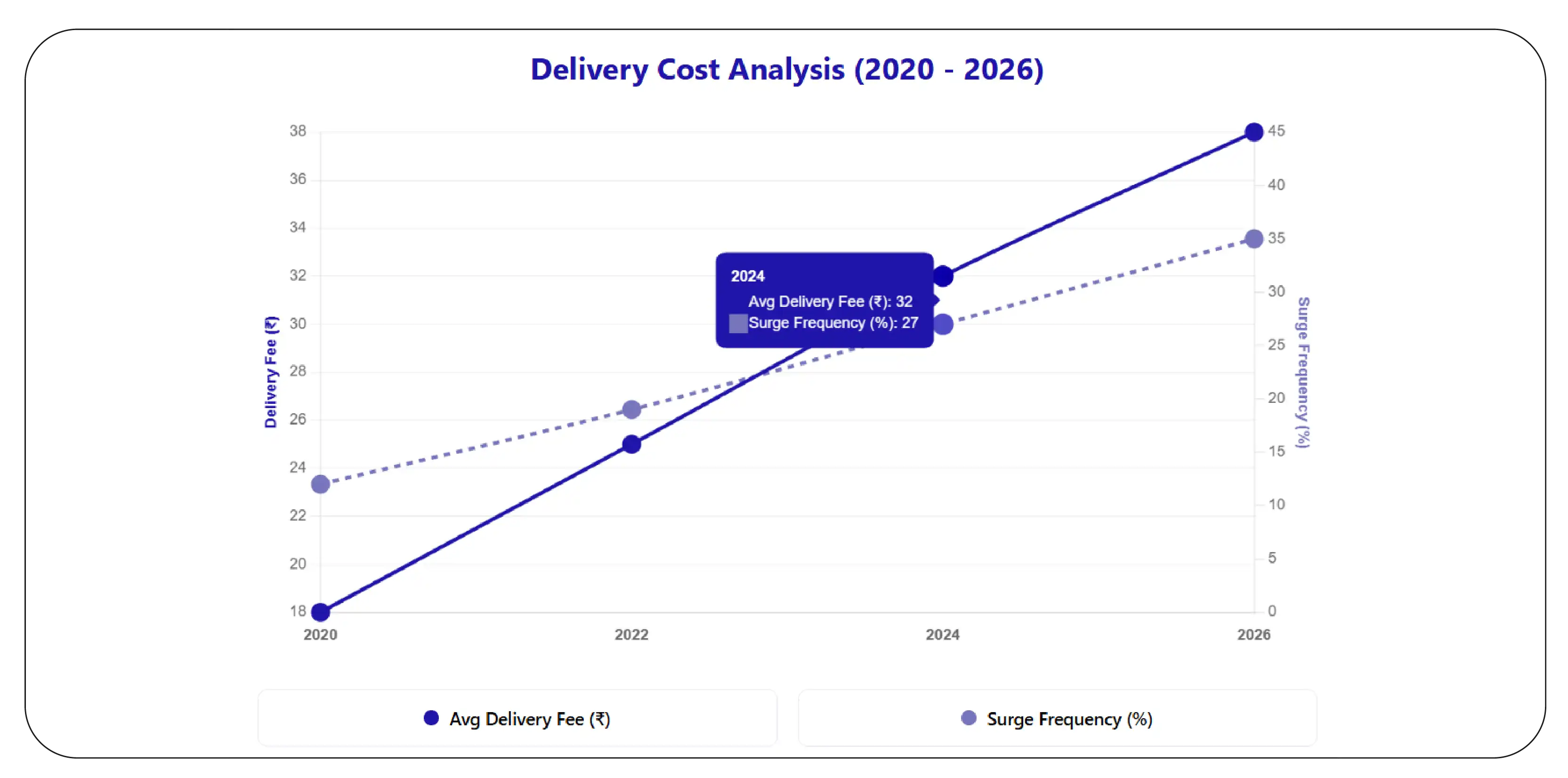
Monitoring quick commerce delivery fees requires precision and speed. With Real-Time Fee Delivery Changes Monitoring, businesses can identify sudden fluctuations in delivery charges and react before competitors. Combining this with Web Scraping Zepto Quick Commerce Data allows continuous tracking of fee variations across multiple pin codes and time slots.
Between 2020 and 2026, delivery fee volatility has increased by over 35%, largely due to demand surges and operational costs. For example:
| Year |
Avg Delivery Fee (₹) |
Surge Frequency (%) |
| 2020 |
18 |
12% |
| 2022 |
25 |
19% |
| 2024 |
32 |
27% |
| 2026 |
38 |
35% |
These trends highlight how real-time monitoring helps identify peak-hour surges and location-specific pricing anomalies. Businesses can use this data to adjust discounts, optimize delivery pricing, and enhance customer retention. Without continuous monitoring, hidden fee increases can silently reduce conversion rates and profitability.
Identifying competitor pricing inconsistencies
Understanding competitor fee structures is crucial for strategic positioning. By using Scrape Blinkit delivery fee changes data, businesses can benchmark pricing models and identify inconsistencies. Integrating insights from Web Scraping Instamart Quick Commerce Data further strengthens competitive intelligence across platforms.
Data from 2020–2026 shows that delivery fee differences between platforms can vary by up to 22% for the same location and time window.
| Platform |
Avg Fee (₹) 2023 |
Avg Fee (₹) 2026 |
Variation |
| Blinkit |
28 |
36 |
+28% |
| Zepto |
26 |
34 |
+30% |
| Instamart |
24 |
33 |
+37% |
These discrepancies create opportunities for businesses to optimize pricing strategies and attract cost-sensitive customers. By analyzing competitor fee changes, companies can align their offerings with market expectations while maintaining profitability.
Such insights also help identify underpriced or overpriced regions, enabling smarter promotional campaigns and targeted pricing adjustments.
Leveraging granular insights for pricing optimization
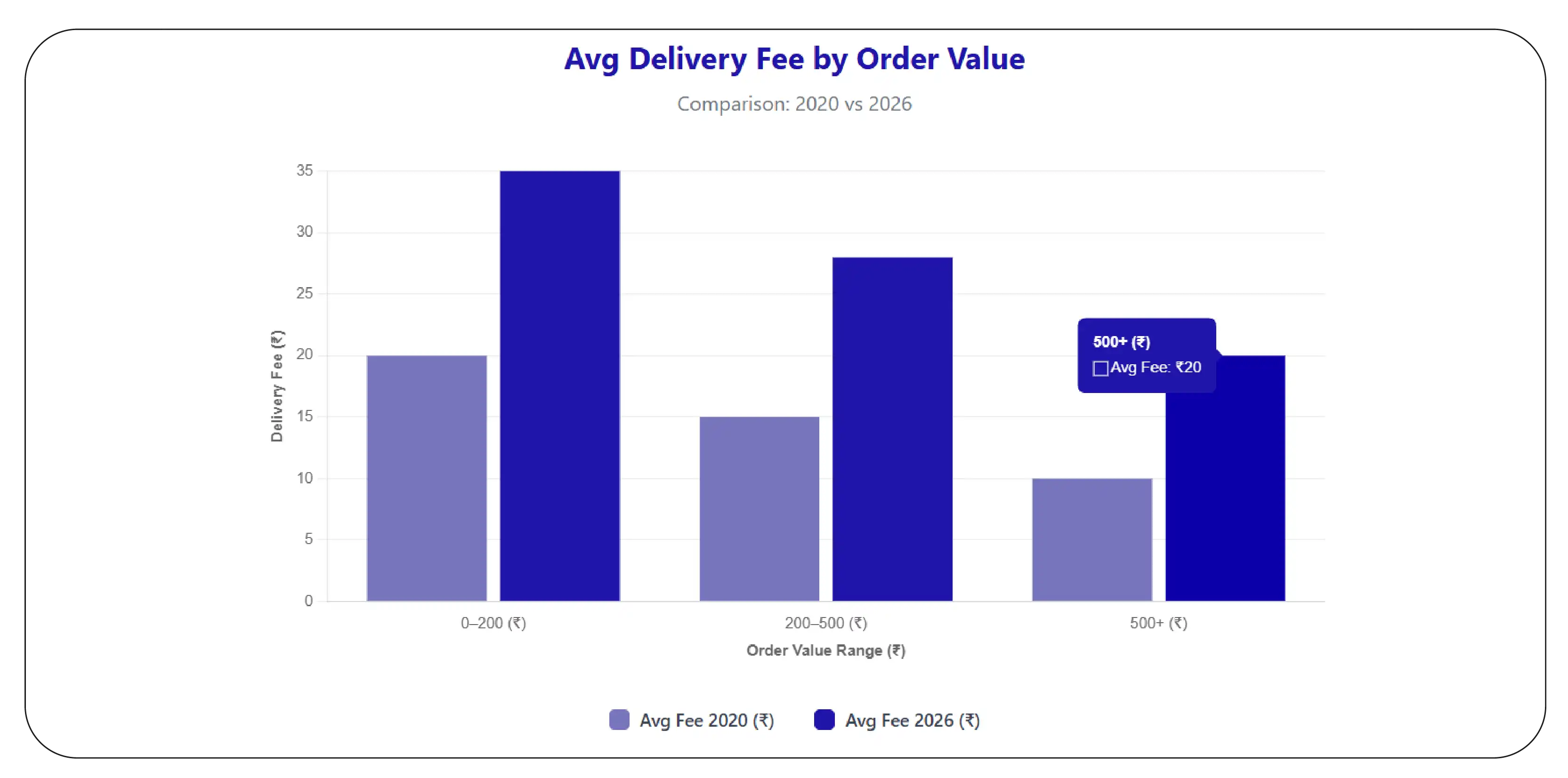
Advanced analytics rely heavily on Real time Zepto delivery charge data Scraping to capture micro-level fee changes. When combined with Quick Commerce Grocery & FMCG Data Scraping, businesses gain a holistic view of pricing trends across product categories and delivery zones.
From 2020 to 2026, FMCG delivery fee correlation with order value has shifted significantly:
| Order Value Range (₹) |
Avg Fee 2020 |
Avg Fee 2026 |
| 0–200 |
20 |
35 |
| 200–500 |
15 |
28 |
| 500+ |
10 |
20 |
This data reveals how platforms increasingly incentivize higher cart values while charging more for smaller orders. Businesses can use such insights to restructure pricing tiers, introduce free delivery thresholds, and improve basket size.
Granular scraping also enables detection of hidden fees such as surge multipliers and service charges, ensuring complete transparency in pricing analysis.
Building structured datasets for decision-making
Creating actionable insights requires structured data pipelines. Through Instamart fee delivery data tracking, companies can build comprehensive datasets for long-term analysis. Integrating this with a Grocery store dataset enhances visibility into pricing patterns across categories and regions.
Historical data (2020–2026) shows that urban delivery fees have grown faster than semi-urban areas:
| Region Type |
Avg Fee 2020 |
Avg Fee 2026 |
Increase (%) |
| Urban |
22 |
40 |
+82% |
| Semi-Urban |
18 |
30 |
+66% |
| Rural |
15 |
24 |
+60% |
These datasets help businesses identify high-cost zones and optimize logistics strategies. They also support predictive modeling, enabling companies to forecast future fee trends and adjust pricing proactively.
Structured datasets ensure that decision-makers rely on accurate, real-time information rather than assumptions, leading to better margin protection.
Transforming raw data into pricing intelligence
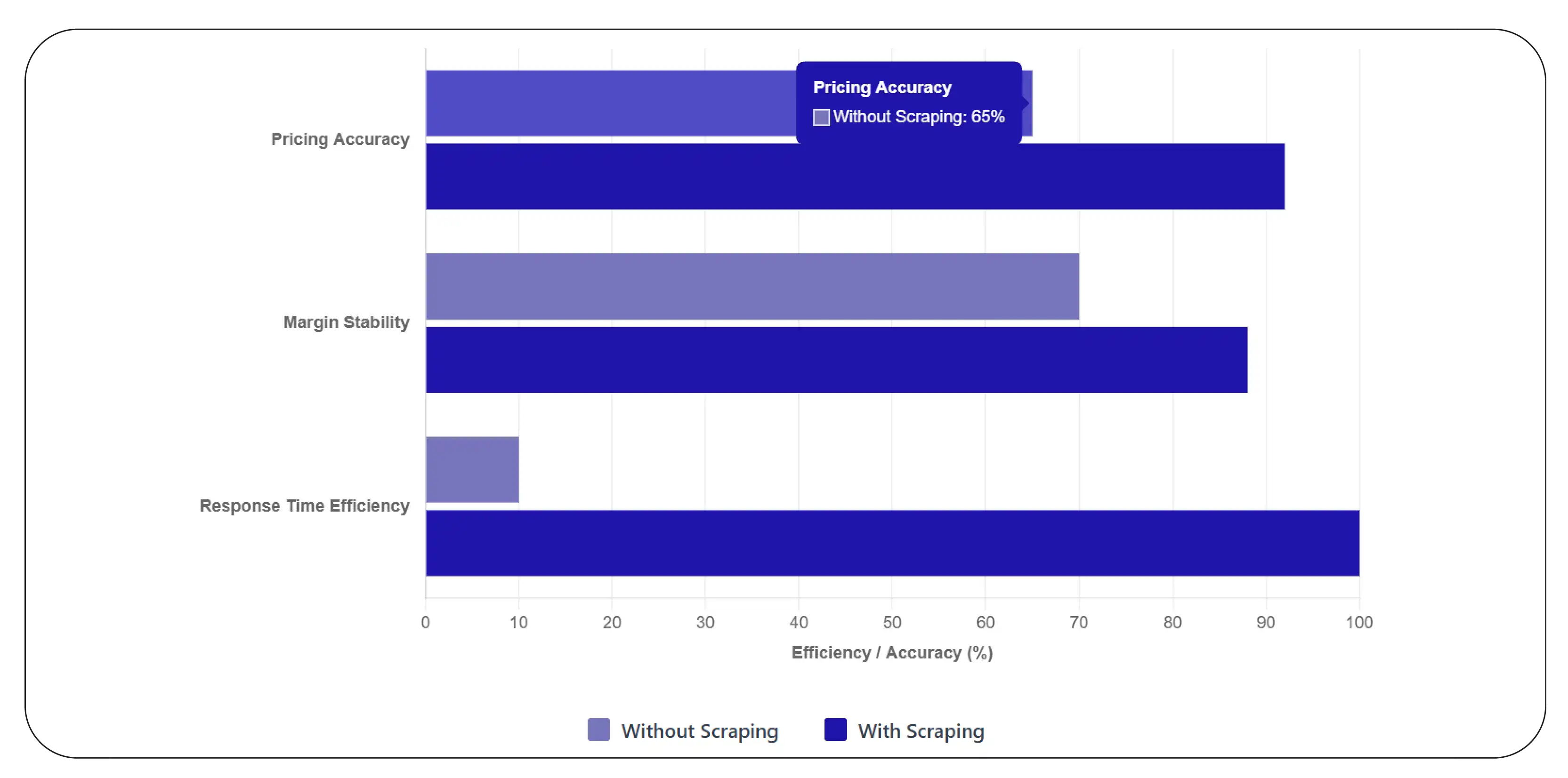
Raw data alone is not enough—it must be converted into actionable insights. With Real-time delivery pricing intelligence quick commerce, businesses can analyze patterns and make data-driven decisions. Leveraging Web Scraping API Services ensures seamless, scalable data collection across platforms.
Between 2020 and 2026, companies using automated scraping solutions reported a 25–40% improvement in pricing efficiency. Key benefits include:
- Faster detection of fee changes
- Improved competitor benchmarking
- Enhanced pricing transparency
- Reduced operational inefficiencies
For example:
| Metric Benefit |
Without Scraping |
With Scraping |
| Pricing Accuracy |
65% |
92% |
| Margin Stability |
70% |
88% |
| Response Time |
24 hrs |
Real-time |
These improvements highlight the importance of automation in modern pricing strategies. Businesses that rely on manual tracking often lag behind competitors, losing both revenue and customer trust.
Capturing regional pricing variations effectively
Delivery fees often vary significantly by location, making location-based delivery fee tracking essential for accurate analysis. Combining this with Price Monitoring Services allows businesses to capture regional differences and optimize pricing strategies accordingly.
From 2020 to 2026, metro cities experienced higher fee volatility compared to tier-2 cities:
| City Tier |
Avg Fee 2020 |
Avg Fee 2026 |
Volatility (%) |
| Metro |
25 |
42 |
38% |
| Tier-2 |
20 |
32 |
28% |
| Tier-3 |
17 |
26 |
22% |
These insights help businesses tailor pricing strategies for different regions, ensuring competitiveness without sacrificing margins. Location-based tracking also enables hyperlocal promotions and targeted discounts, improving customer engagement and retention.
Understanding regional dynamics is critical for scaling operations and maintaining profitability in a highly competitive quick commerce market.
Why Choose Product Data Scrape?
When it comes to reliable data extraction, Product Data Scrape offers advanced solutions tailored for quick commerce analytics. By enabling Blinkit Zepto Instamart delivery fee monitoring, businesses gain accurate, real-time insights into pricing fluctuations. Combined with robust Pricing Intelligence Services, the platform ensures seamless data collection, analysis, and reporting.
With scalable infrastructure, automated scraping capabilities, and high data accuracy, Product Data Scrape empowers businesses to stay ahead of competitors. Whether tracking delivery fees, analyzing market trends, or optimizing pricing strategies, the platform delivers actionable insights that drive growth and profitability in a dynamic ecommerce environment.
Conclusion
In today's competitive landscape, delivery fee transparency is critical for maintaining margins and customer trust. Leveraging Real-time quick commerce delivery fee intelligence allows businesses to detect hidden price hikes, optimize pricing strategies, and stay ahead of competitors. By adopting advanced scraping techniques to Scrape Fee Delivery Changes Blinkit, Zepto & Instamart Data, companies can transform raw data into actionable insights.
The ability to monitor, analyze, and respond to pricing changes in real time is no longer optional—it's essential. Start leveraging data-driven strategies today to protect your margins and outperform competitors in the evolving quick commerce ecosystem. Get started now and turn pricing data into your competitive advantage.
FAQs
1. Why is tracking delivery fee changes important?
Tracking delivery fee changes helps businesses identify hidden costs, optimize pricing strategies, and maintain competitiveness while ensuring profitability in dynamic quick commerce markets.
2. How does data scraping improve pricing decisions?
Data scraping provides real-time insights into competitor pricing, enabling businesses to make informed decisions, adjust strategies quickly, and enhance overall pricing efficiency.
3. What platforms can be monitored using scraping?
Quick commerce platforms like Blinkit, Zepto, and Instamart can be monitored to analyze delivery fees, pricing trends, and regional variations effectively.
4. Is automated scraping better than manual tracking?
Yes, automated scraping ensures faster, more accurate, and scalable data collection compared to manual tracking, reducing errors and improving decision-making efficiency.
5. How can businesses get started with scraping solutions?
Businesses can use Product Data Scrape to implement advanced scraping solutions, enabling real-time monitoring and actionable insights for better pricing and competitive strategies.


 Singapore
 EMAIL
EMAIL
 PHONE
PHONE


.webp "thumb")








.webp)