Quick Overview
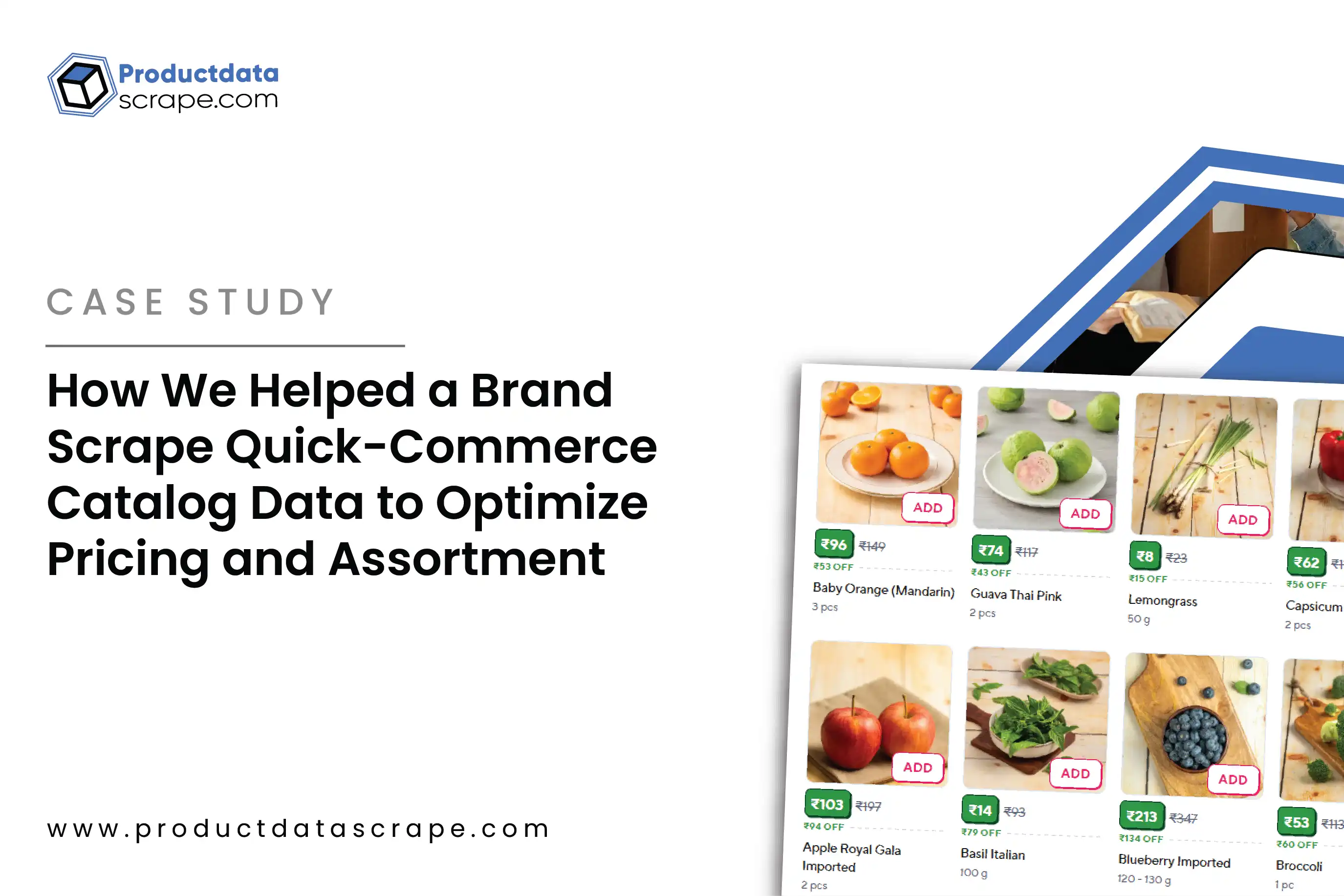
A consumer brand partnered with Product Data Scrape to improve visibility into fast-moving quick-commerce catalogs and strengthen product-level decision-making. Using Scrape Quick-Commerce Catalog Data, the project captured structured product listings, images, identifiers, categories, and assortment attributes across digital commerce platforms. The solution was designed to support the rapidly expanding global quick-commerce market, where product availability and catalog changes can occur frequently. Automated extraction, normalization, and validation helped the brand replace fragmented manual research with a scalable data workflow. The project improved catalog coverage, data consistency, and processing efficiency while creating a stronger foundation for pricing, assortment, and competitive analysis.
Client Name / Industry: Consumer Brand / E-commerce & Retail
Service / Duration: Quick-Commerce Catalog Data Extraction / 6 Months
Key Impact Metrics: 95%+ data accuracy | 80% reduction in manual processing | 3× faster catalog analysis
The Client
The client was a consumer brand operating across a rapidly evolving digital retail environment. As consumers increasingly turned to quick-commerce platforms for groceries, household products, personal care, and everyday essentials, the brand needed greater visibility into how its products and competing products appeared across online catalogs.
The global quick-commerce market has created new requirements for brands that want to monitor product availability, assortment, images, identifiers, pricing, and catalog positioning. Product information can change frequently, making manual monitoring increasingly difficult.
Before partnering with Product Data Scrape, the client relied on fragmented research processes. Analysts manually checked product listings, collected product images, recorded identifiers, and organized information in spreadsheets. As catalog volumes expanded, this approach became time-consuming and difficult to maintain.
Transformation was essential because the client needed a scalable way to understand product representation across quick-commerce channels. It also wanted standardized product records that could support competitive benchmarking and downstream analytics.
The project introduced automated extraction and data processing to organize product information into structured datasets. The approach helped the client improve catalog visibility while reducing repetitive research. It also established a foundation for identifying assortment gaps, comparing product representations, and supporting faster retail decisions.
Goals & Objectives
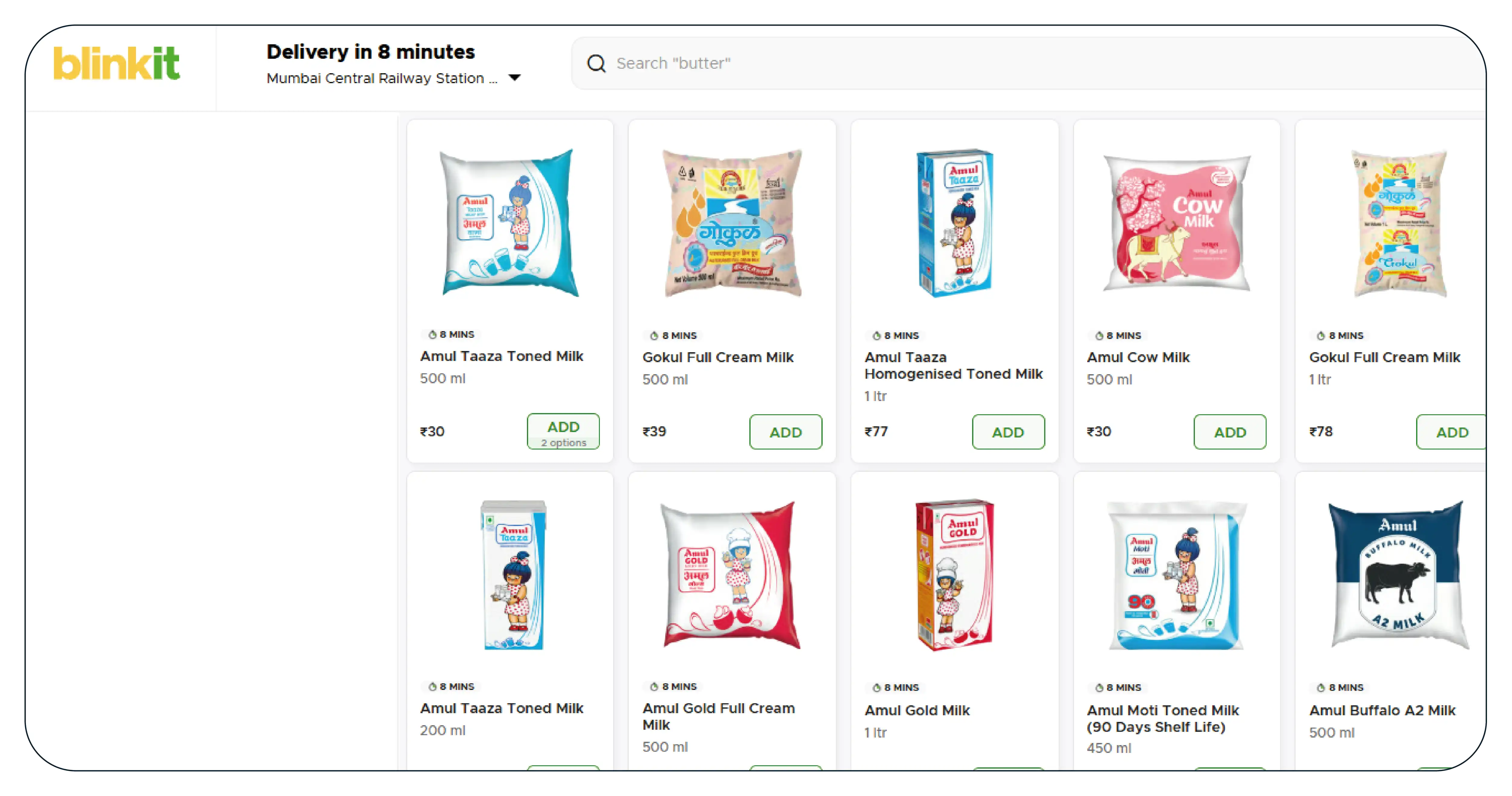
The project focused on creating a scalable catalog intelligence framework capable of handling large volumes of quick-commerce product information. The business wanted to improve speed, accuracy, coverage, and consistency.
Expand product catalog coverage.
Reduce manual catalog research.
Improve product-data accuracy.
Support faster assortment decisions.
Create reusable datasets for competitive analysis.
The technical objectives focused on automation, integration, standardization, and analytics readiness. The workflow needed to capture both textual and visual product information while maintaining consistent product identifiers.
Automate product catalog extraction.
Standardize product attributes and identifiers.
Integrate product images with catalog records.
Support Scrape Product Images and UPC Codes workflows.
Enable recurring data refreshes.
Prepare structured data for analytics and reporting.
Achieve 95%+ catalog-data accuracy.
Reduce manual processing by 80%.
Improve catalog analysis speed by 3×.
Increase product-record completeness.
Improve duplicate-product identification.
The Core Challenge
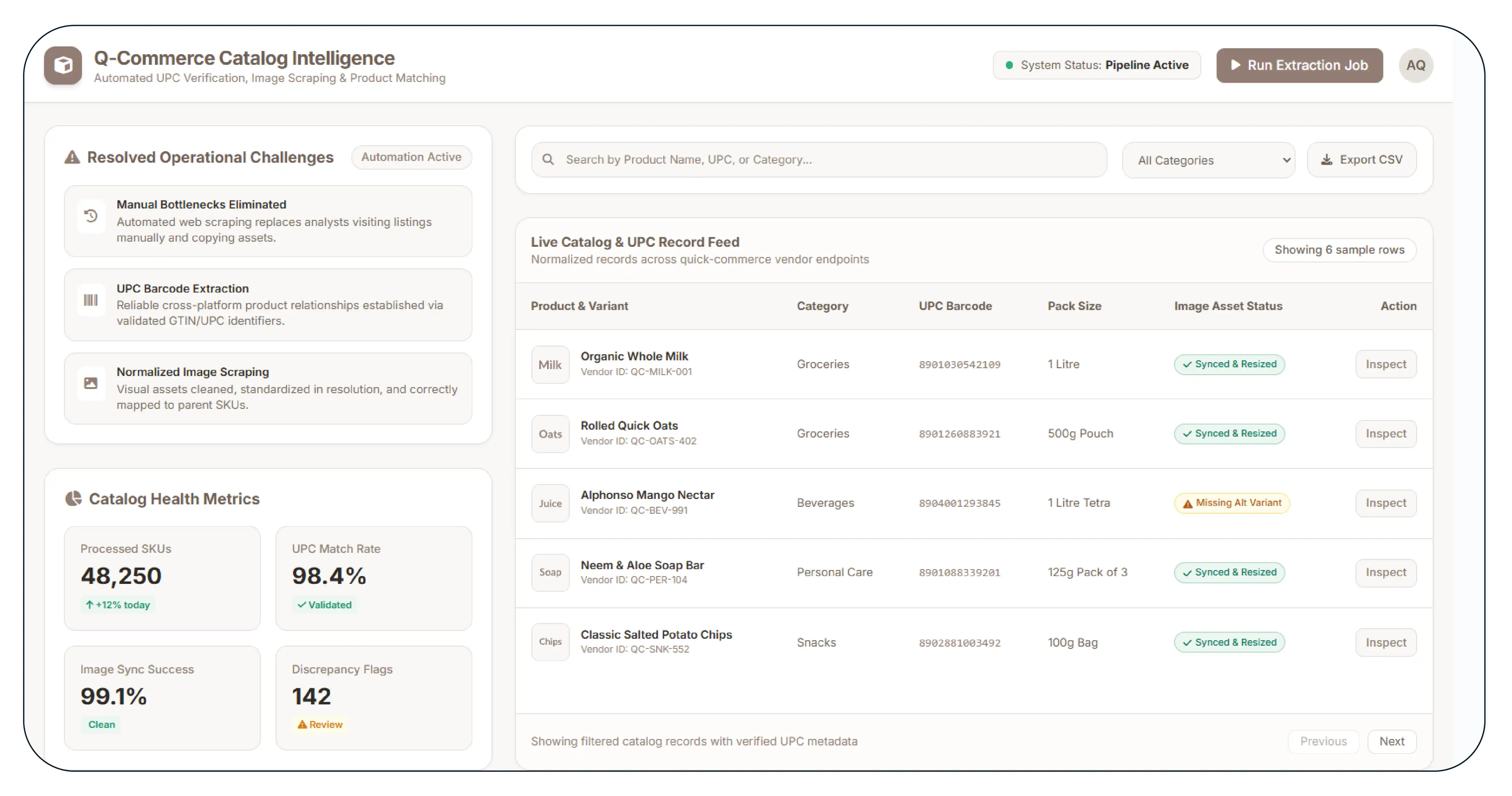
The client's existing catalog-monitoring process faced several operational and data-quality challenges. Quick-commerce catalogs can contain thousands of products across multiple categories, while listings may change frequently due to new products, discontinued SKUs, promotions, availability changes, and catalog updates.
Manual research required analysts to visit individual listings, copy product information, save images, and organize identifiers. This created significant bottlenecks as the volume of products increased.
Product matching was another challenge. Similar products could appear under different names, pack sizes, descriptions, or formats. Without consistent identifiers, comparing products across platforms became difficult.
The client also needed to Extract Q-Commerce Catalog with UPC Barcodes to establish more reliable product relationships. However, collecting and validating UPC information alongside catalog attributes required additional processing.
Image collection introduced another layer of complexity. Product images could differ in size, naming conventions, formats, and source structures. Effective Web Image Scraping therefore required an organized process for collecting and associating visual assets with the correct product records.
These challenges affected data completeness, processing speed, and analytical reliability. The client needed an automated framework capable of collecting catalog information, validating identifiers, organizing images, and creating consistent product records at scale.
Our Solution
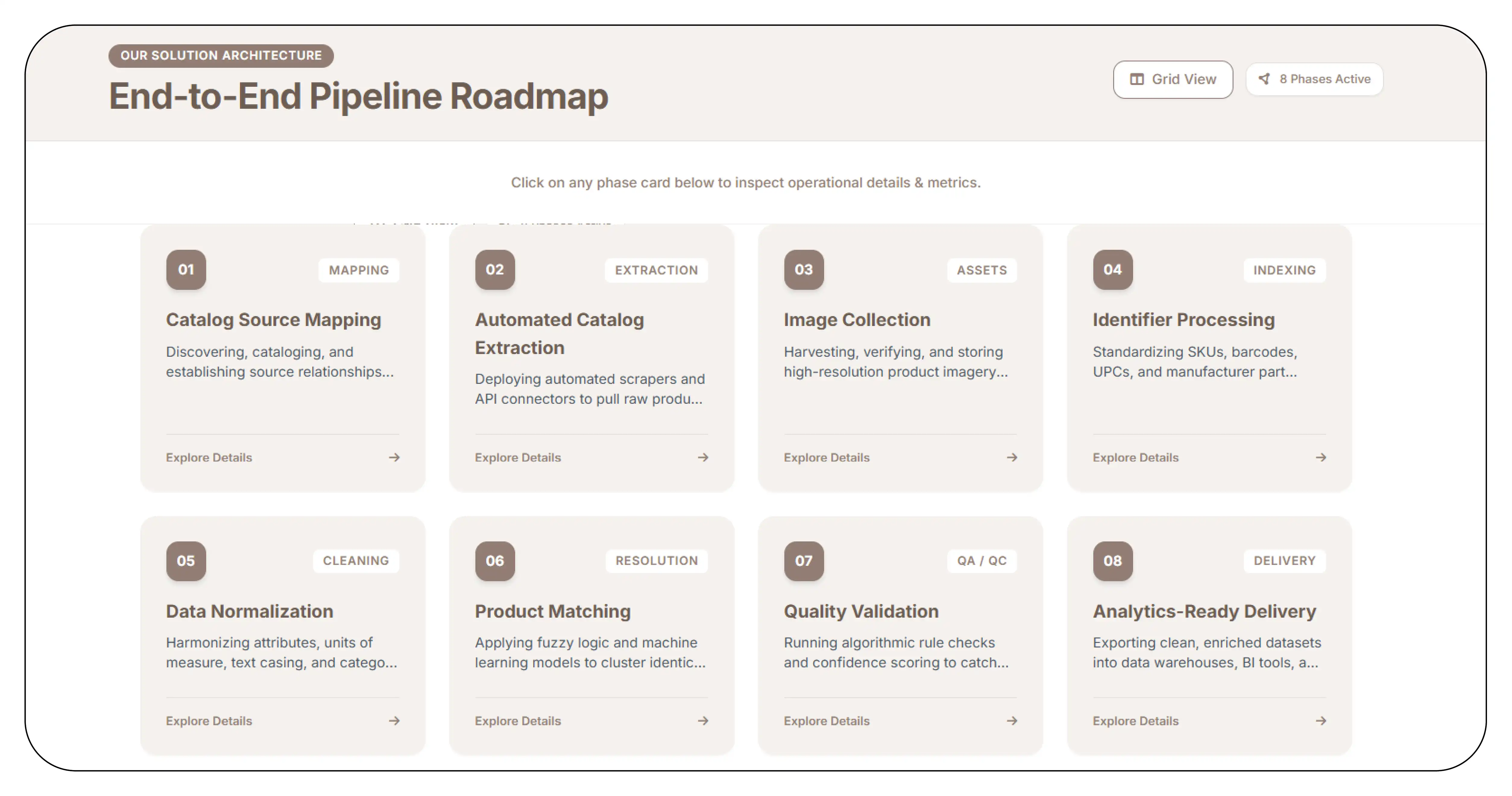
Product Data Scrape implemented a phased catalog-data extraction framework designed to improve coverage, accuracy, and scalability.
Phase 1: Catalog Source Mapping
The first phase mapped relevant quick-commerce sources and identified the required product fields. These included product names, brands, categories, descriptions, images, UPCs, SKUs, pack sizes, availability, and other catalog attributes.
Phase 2: Automated Catalog Extraction
Automated workflows were introduced to collect product information at scale. Instead of manually visiting individual listings, the system gathered structured catalog records through repeatable extraction processes.
Phase 3: Image Collection
Product images were collected and associated with corresponding product records. Image metadata and URLs were organized alongside textual product information, creating a more complete representation of each SKU.
Phase 4: Identifier Processing
UPC and other product identifiers were extracted and standardized wherever available. Validation rules helped identify incomplete, duplicate, or inconsistent identifiers.
Phase 5: Data Normalization
Product names, categories, brands, pack sizes, and other attributes were normalized into standardized formats. This improved consistency and made cross-platform comparisons easier.
Phase 6: Product Matching
The system established relationships between products using identifiers, normalized attributes, brand information, product names, and other available signals. This created a stronger foundation for cross-platform product comparison.
Phase 7: Quality Validation
Automated validation routines checked missing values, duplicate records, invalid identifiers, mismatched images, and inconsistent product attributes. These checks improved the reliability of the final dataset.
Phase 8: Analytics-Ready Delivery
The final Scrape Quick-Commerce Product Listings workflow produced structured outputs suitable for dashboards, competitive analysis, assortment research, and business intelligence applications.
This phased approach transformed fragmented quick-commerce catalog information into a scalable product intelligence workflow. It reduced manual effort while giving the client cleaner, more consistent, and more actionable catalog data.
Results & Key Metrics
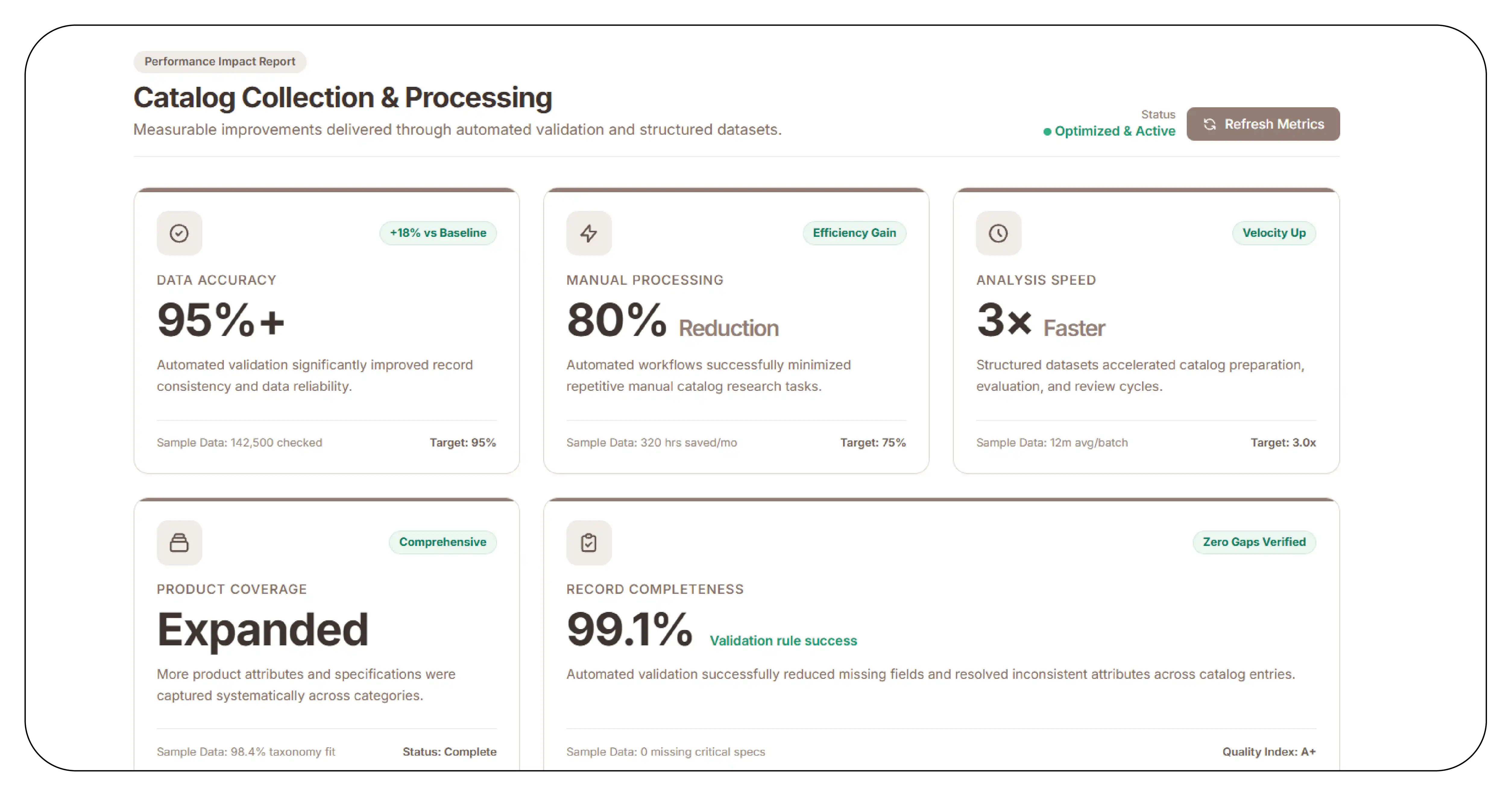
The implementation delivered measurable improvements in catalog collection and processing.
95%+ data accuracy: Automated validation improved record consistency.
80% reduction in manual processing: Automated workflows minimized repetitive catalog research.
3× faster analysis: Structured datasets accelerated catalog preparation and review.
Improved product coverage: More product attributes were captured systematically.
Better record completeness: Validation reduced missing and inconsistent fields.
Results Narrative
The project provided the client with a stronger foundation for catalog intelligence. Product Matching Across Quick-Commerce platforms became more consistent through standardized product attributes and identifier-based relationships. Automated extraction reduced manual catalog research while improving the speed of processing. Product images, UPCs, categories, and listing attributes were organized into structured records that could support broader retail analytics. The client could also identify assortment differences and product representation changes more efficiently. By replacing fragmented workflows with automated collection and validation, the solution created a scalable framework capable of supporting future catalog expansion and more advanced competitive intelligence initiatives.
What Made Product Data Scrape Different
Product Data Scrape differentiated its approach by combining automated catalog extraction, image collection, identifier processing, normalization, and product matching into one integrated workflow. Instead of treating product information as isolated records, the solution connected textual attributes, images, UPCs, and category information.
The resulting Rich Product Catalog provided a more comprehensive view of product-level information. Automated validation helped identify incomplete records, duplicates, and inconsistent attributes before they entered analytical workflows.
The architecture was also designed for scalability, enabling the client to expand monitoring across additional quick-commerce platforms, categories, and product volumes.
By combining automation with structured product intelligence, Product Data Scrape helped transform fragmented catalog information into a reusable data asset. This approach supported more efficient competitive analysis, assortment planning, product discovery, and retail intelligence.
Client's Testimonial
"Product Data Scrape gave us a much more efficient way to manage quick-commerce catalog information. Previously, our team spent significant time manually checking listings, collecting images, and organizing product identifiers. The automated workflow improved both the speed and consistency of our research. Having product images, UPCs, descriptions, and other attributes organized within structured records made product comparison much easier. The solution also reduced repetitive work and gave our analysts more time to focus on strategic insights. The scalable architecture has created a reliable foundation for our catalog intelligence initiatives and strengthened our ability to Scrape Product Images & Barcodes across expanding product categories."
— Head of Digital Commerce, Client Organization
Conclusion
The project demonstrated how structured quick-commerce catalog data can help brands improve pricing, assortment, and competitive decision-making. Product Data Scrape transformed fragmented listings, images, UPCs, and product attributes into a scalable data workflow. Automation reduced manual research while improving catalog accuracy, completeness, and processing speed. The resulting framework supported Automated Product Matching, helping the client establish stronger relationships between comparable products across platforms. With the ability to continuously Scrape Quick-Commerce Catalog Data, the brand gained a foundation for ongoing catalog monitoring, assortment analysis, product intelligence, and competitive benchmarking. As quick-commerce continues to expand, reliable and structured catalog data can help brands respond faster to changing consumer demand and marketplace dynamics.
FAQs
1. What information can be collected from quick-commerce catalogs?
Quick-commerce catalog datasets can include product names, brands, categories, descriptions, prices, availability, images, SKUs, UPCs, pack sizes, ratings, and other publicly available listing attributes.
2. Why are product images important in catalog intelligence?
Product images provide additional information for product identification, comparison, catalog enrichment, and visual matching. They can also help businesses verify whether similar products are represented consistently across platforms.
3. What are UPC codes used for?
UPC codes provide standardized product identifiers that can help businesses connect and compare the same products across different catalogs and retail platforms.
4. Can quick-commerce catalog scraping be automated?
Yes. Automated workflows can collect product records, images, identifiers, and attributes at scale. Validation and normalization processes can then prepare the information for analytics and reporting.
5. How can brands use quick-commerce catalog data?
Brands can use catalog data for assortment analysis, competitive benchmarking, product matching, pricing research, availability monitoring, catalog optimization, and market intelligence. Historical datasets can additionally help identify changes in product representation and assortment over time.


 Singapore
 EMAIL
EMAIL
 PHONE
PHONE











.webp)