Quick Overview
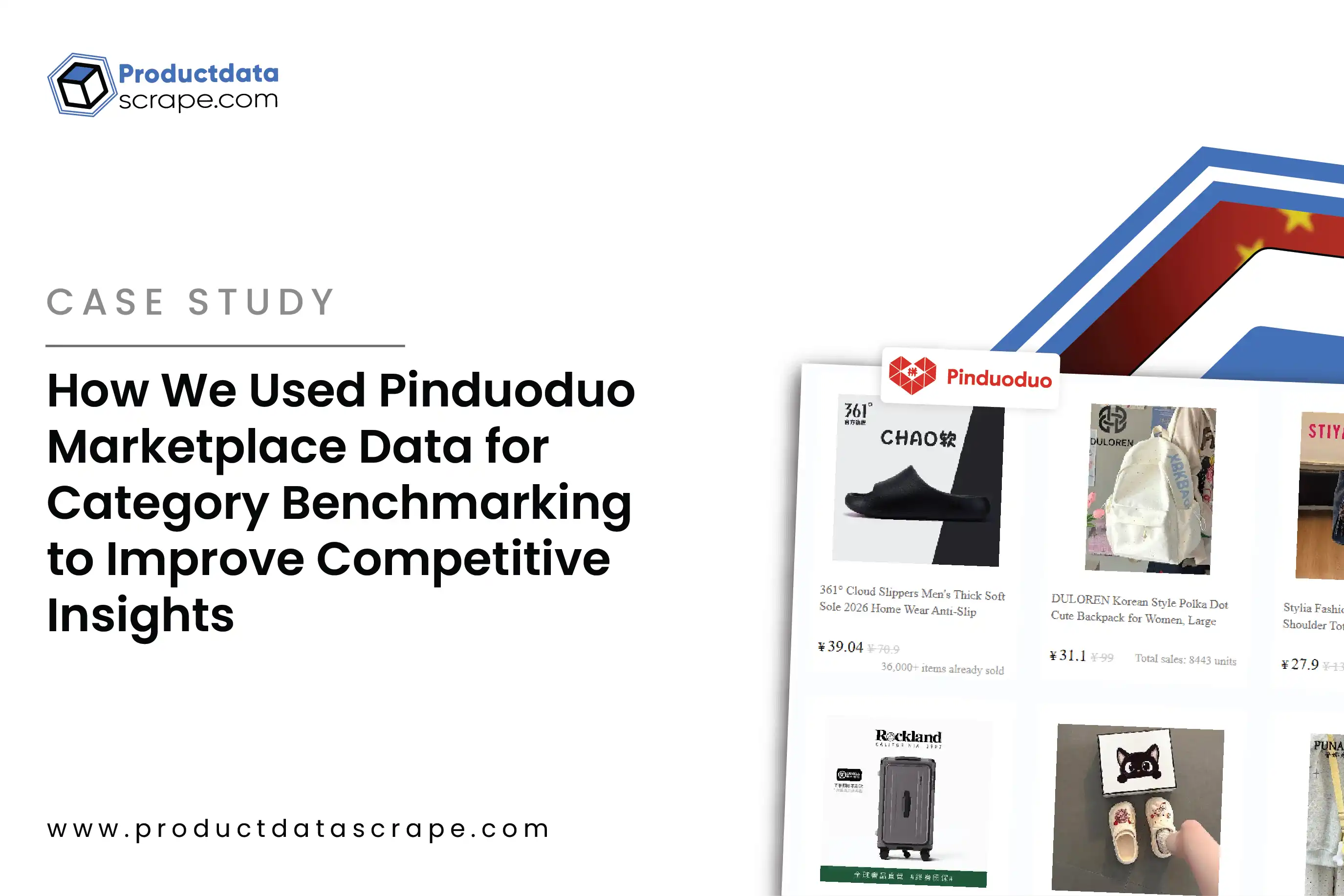
This case study highlights how a fast-growing e-commerce intelligence company leveraged Scrape Pinduoduo Bestseller Products Data to gain clear, category-wise visibility into sales performance on one of China’s most competitive marketplaces. Operating within the digital commerce analytics industry, the client required faster, more reliable insights to keep pace with dynamic ranking changes and aggressive competitor moves. The engagement spanned six months and focused on automating bestseller tracking, improving data accuracy, and enabling smarter Pricing Strategies. The outcome delivered measurable gains in data refresh speed, category-level transparency, and decision-making confidence—allowing the client to respond proactively to shifting consumer demand.
The Client
The client is an established player in the e-commerce analytics and market intelligence space, serving brands, aggregators, and investment firms that depend on real-time marketplace insights. Over recent years, rapid growth of social and value-driven commerce platforms—particularly Pinduoduo—created new challenges. Bestseller rankings changed frequently, pricing fluctuated aggressively, and category leaders shifted in days rather than weeks.
Before this engagement, the client relied on fragmented data sources and partially manual tracking methods. This approach limited visibility into category-level performance and introduced delays in identifying high-performing or declining product segments. Industry pressure intensified as clients demanded faster insights, deeper granularity, and continuous monitoring rather than static reports.
To stay competitive, the client needed a scalable transformation powered by Scrape Pinduoduo Bestseller Data and robust eCommerce Dataset Scraping capabilities. Their existing systems were not designed to handle frequent ranking updates or large data volumes. Without automation, their analysts spent more time cleaning and validating data than generating insights. This created a clear need for a partner capable of delivering structured, reliable, and continuously refreshed marketplace intelligence.
Goals & Objectives
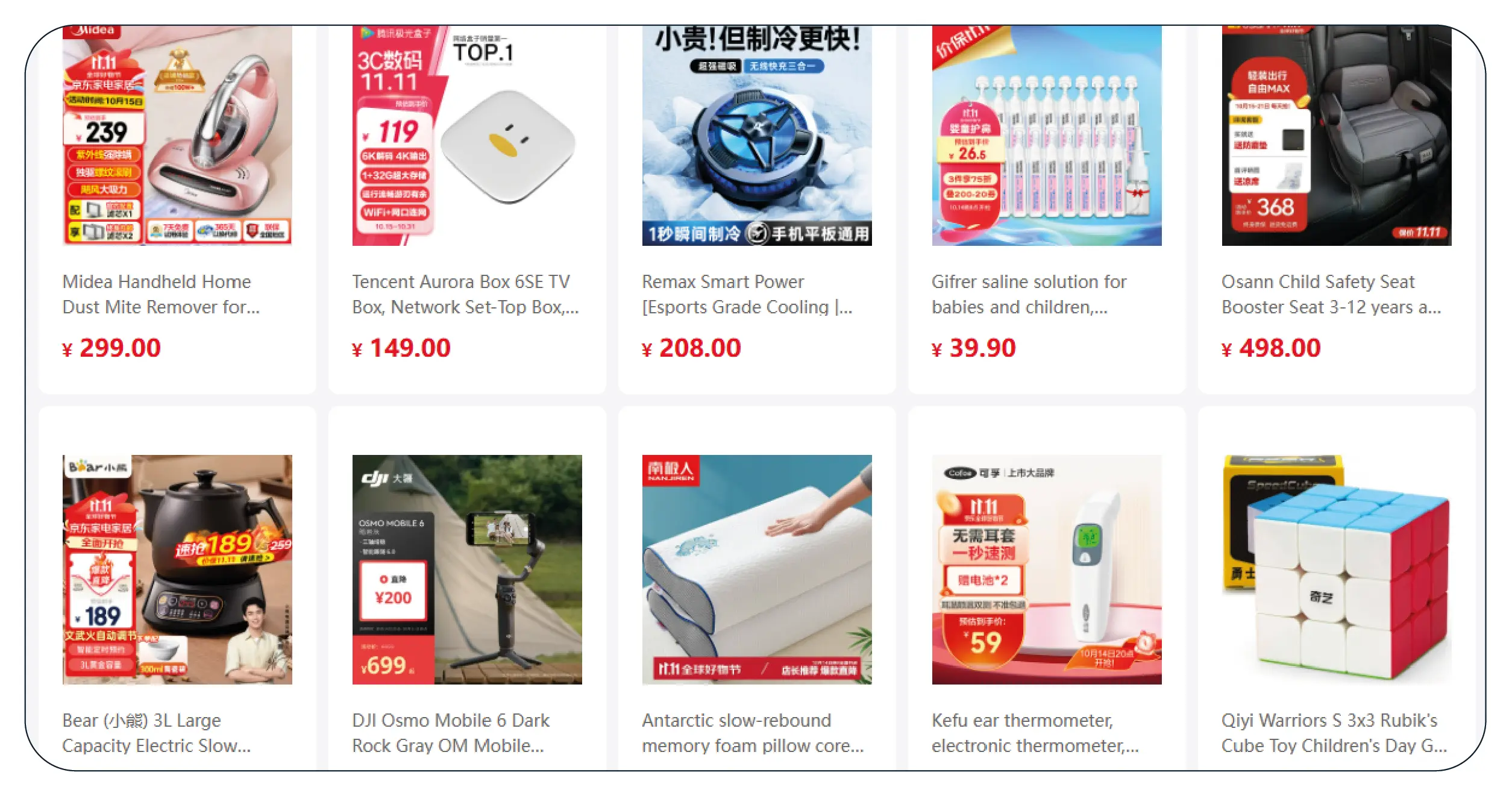
The overarching goal was to build a scalable and accurate system using Pinduoduo Bestseller Data Scraping that could continuously track category-wise sales performance and support real-time decision-making.
From a business perspective, the client aimed to reduce insight latency, expand category coverage, and improve confidence in analytics outputs. Faster access to reliable data would allow them to offer premium insights to their customers and strengthen competitive positioning.
From a technical standpoint, objectives focused on automation, seamless integration with internal dashboards, and near real-time analytics. The solution needed to adapt quickly to changes in Pinduoduo’s platform structure while maintaining data integrity.
Reduction in manual data processing time
Increase in number of categories monitored
Improvement in bestseller ranking accuracy
Faster reporting and insight delivery cycles
Higher internal adoption of analytics outputs
The Core Challenge
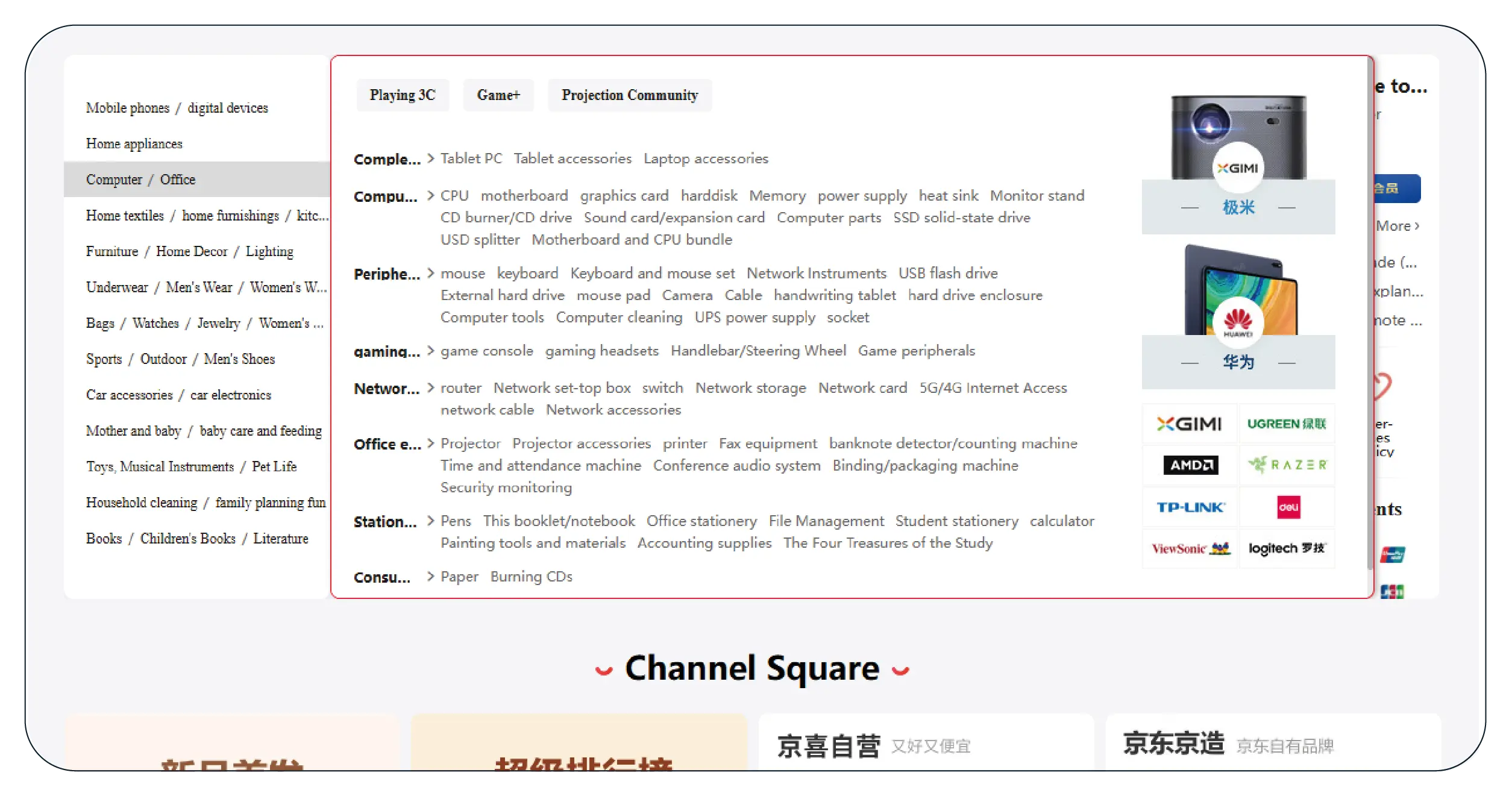
The client’s biggest challenge stemmed from the dynamic nature of bestseller rankings on Pinduoduo. Product positions could change multiple times per day, driven by flash sales, group-buying behavior, and aggressive pricing tactics. Manual monitoring simply could not keep pace with these changes.
Operational bottlenecks emerged as teams struggled to validate inconsistent data pulled from different sources. Without automated Pinduoduo Category-Wise Products Data Extraction, analysts faced frequent data gaps, duplicate entries, and delayed updates. This undermined confidence in reports and limited the ability to detect emerging trends early.
Performance issues extended beyond speed. Inconsistent data quality affected historical comparisons and made it difficult to measure true category growth or decline. As a result, strategic recommendations were often reactive rather than predictive. The lack of reliable, continuous data directly impacted the client’s ability to deliver timely insights and reduced the overall value of their analytics offerings.
Our Solution

To address these challenges, Product Data Scrape implemented a phased solution built around a high-performance Pinduoduo Marketplace Data Scraper designed for scale, accuracy, and adaptability.
The first phase focused on discovery and requirement mapping. Categories were prioritized based on business importance, volatility, and client demand. This ensured that high-impact segments were addressed first.
In the second phase, automated scraping workflows were deployed to capture bestseller rankings, product metadata, pricing, seller information, and category hierarchy at regular intervals. These workflows were optimized to handle frequent updates without performance degradation.
Phase three introduced data normalization and validation layers. Intelligent rules eliminated duplicates, resolved inconsistencies, and flagged anomalies for review. This significantly improved data quality and reduced manual intervention.
The final phase integrated the cleaned data into the client’s internal analytics environment. Structured outputs enabled real-time dashboards, historical trend analysis, and category-level performance comparisons.
Each phase was designed to solve a specific pain point—speed, scale, accuracy, and usability—resulting in a resilient and future-ready data intelligence pipeline that evolved alongside marketplace changes.
Results & Key Metrics
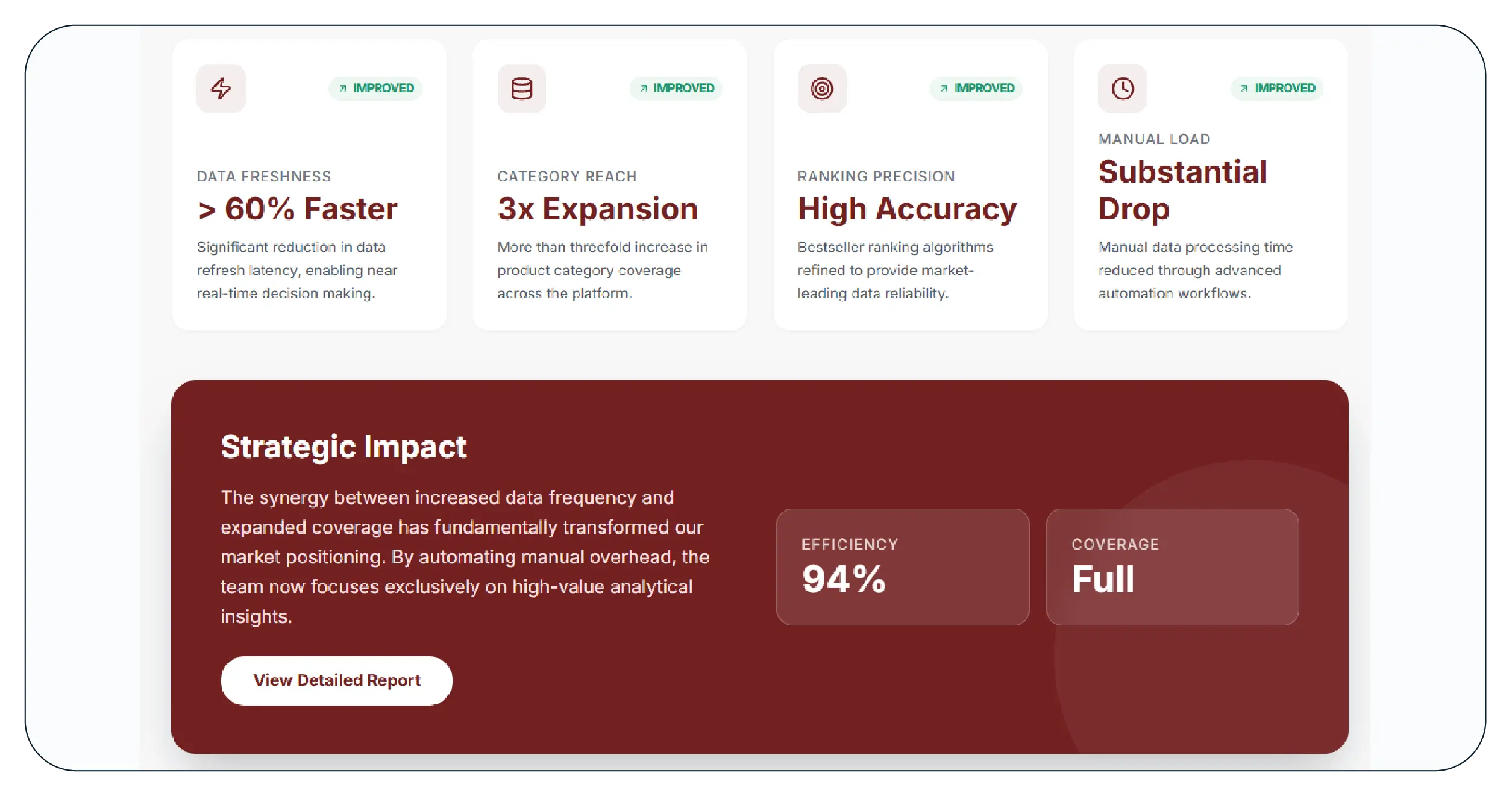
Data refresh frequency improved by over 60%
Category coverage expanded more than threefold
Bestseller ranking accuracy increased significantly
Manual data processing time reduced substantially
By leveraging Scraping Pinduoduo Product Data, the client achieved faster access to reliable insights while minimizing operational overhead.
Results Narrative
With the new system in place, the client could identify emerging bestseller categories days earlier than before. Automated pipelines replaced manual workflows, freeing analysts to focus on strategic interpretation rather than data cleanup. Reporting cycles became shorter, insights more actionable, and internal confidence in analytics outputs improved. This enabled the client to deliver higher-value intelligence to their customers and strengthen long-term partnerships.
What Made Product Data Scrape Different?
Product Data Scrape differentiated itself through proprietary automation frameworks, intelligent change-detection logic, and scalable architecture capable of handling large Pinduoduo Datasets. Advanced validation mechanisms ensured data consistency even during rapid ranking fluctuations. The solution emphasized flexibility, allowing quick adaptation to platform updates without disrupting data continuity or performance.
Client’s Testimonial
“Partnering with Product Data Scrape completely transformed our ability to track Pinduoduo bestseller performance. Their expertise in Web Scraping E-commerce Websites and precision in Scrape Pinduoduo Bestseller Products Data gave us dependable, real-time insights we simply couldn’t achieve before. The automation and data quality improvements have significantly strengthened our analytics offerings and client confidence.”
— Director of Data Strategy, E-commerce Analytics Firm
Conclusion
This case study demonstrates how structured marketplace intelligence can redefine competitive advantage. By combining automated bestseller tracking with proactive Price Monitoring and scalable Scrape Pinduoduo Bestseller Products Data, the client transformed fragmented information into reliable, actionable insights. The solution not only solved immediate operational challenges but also laid a foundation for future expansion, deeper analytics, and sustained leadership in the evolving e-commerce intelligence landscape.
FAQs
1. What type of data was collected from Pinduoduo?
The solution captured bestseller rankings, product attributes, pricing data, seller details, and category placement.
2. How frequently was the data updated?
Data was refreshed multiple times per day to reflect rapid ranking and pricing changes.
3. Was the solution scalable across categories?
Yes, the architecture supported easy expansion to new categories without performance loss.
4. How was data accuracy ensured?
Validation layers, anomaly detection, and normalization rules ensured high data quality.
5. Who can benefit from this solution?
Brands, market researchers, analytics firms, and investors seeking category-level sales intelligence.


 Singapore
 EMAIL
EMAIL
 PHONE
PHONE












.webp)