Introduction
The ecommerce ecosystem is evolving faster than ever, driven by data, automation, and consumer behavior shifts. Businesses that rely on guesswork struggle to keep pace, while data-driven brands gain a competitive edge. Web Scraping Top 15 Ecommerce Trends 2026 enables companies to collect real-time insights from marketplaces, D2C websites, and digital storefronts to identify growth opportunities, forecast demand, and reduce revenue risks.
By analyzing pricing movements, product launches, customer sentiment, and inventory patterns, brands can turn raw online data into actionable intelligence. Product data scraping empowers retailers, manufacturers, and analysts to monitor emerging trends early, adapt faster, and build future-ready ecommerce strategies backed by verified market data.
Top 15 Ecommerce Trends of 2026
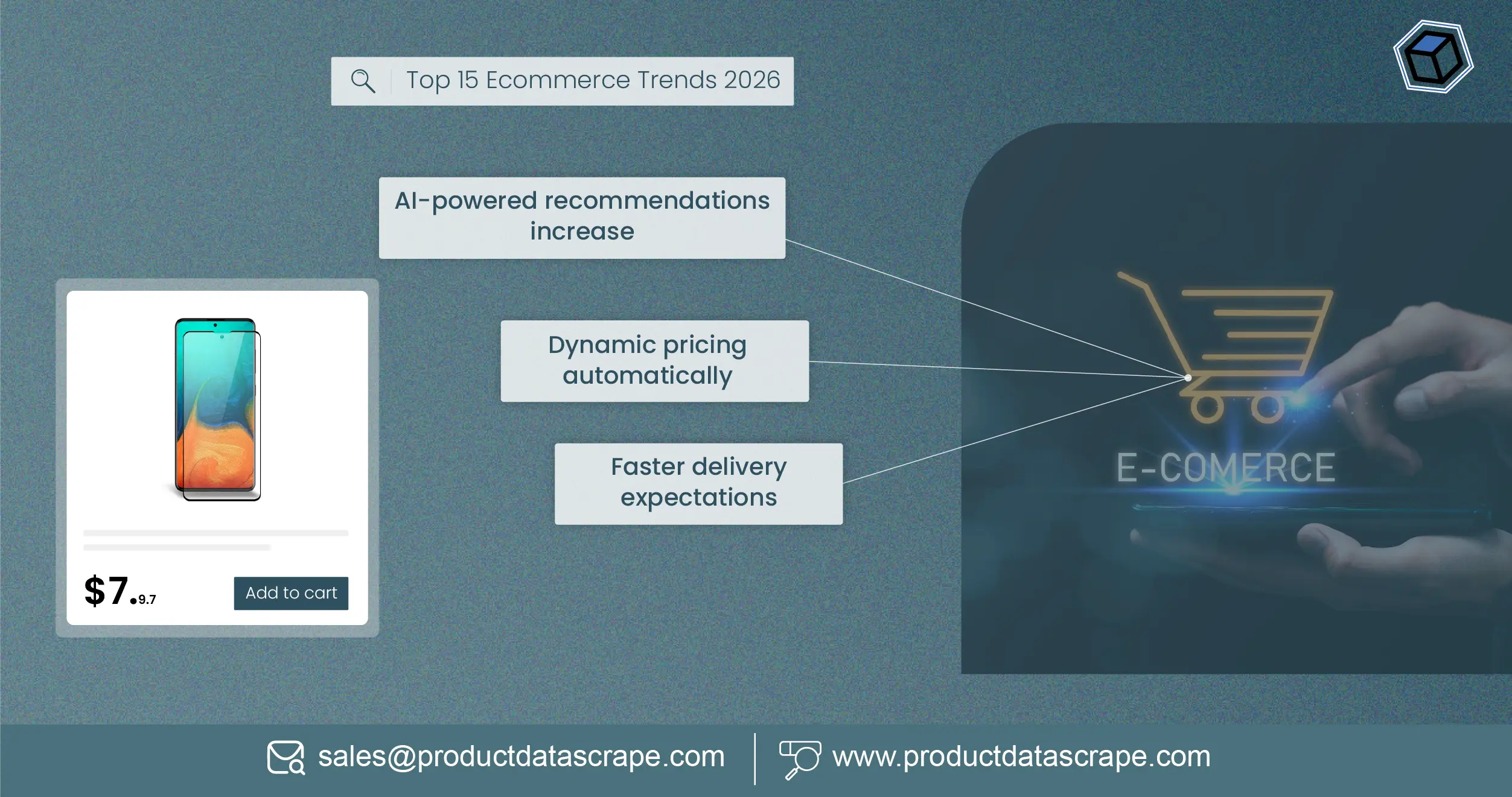
- AI-powered product recommendations improve conversions using real-time browsing and purchase behavior insights.
- Dynamic pricing adjusts product prices automatically based on demand, competition, and inventory levels.
- Voice commerce adoption rises as consumers shop using smart assistants and conversational interfaces.
- Hyper-personalized shopping experiences driven by behavioral and demographic data analytics.
- Subscription-based ecommerce models grow for consumables, fashion, and lifestyle products.
- Social commerce expands through shoppable videos and influencer-driven product discovery.
- Faster delivery expectations increase demand for hyperlocal fulfillment and dark stores.
- Sustainable ecommerce gains traction with eco-friendly packaging and ethical sourcing transparency.
- Cross-border ecommerce growth accelerates with localized pricing and multilingual listings.
- Real-time inventory visibility reduces stockouts and overselling across platforms.
- Buy Now Pay Later (BNPL) becomes a standard checkout option worldwide.
- Augmented reality shopping enhances product visualization for fashion and home décor.
- Data-driven demand forecasting minimizes excess inventory and logistics costs.
- Private label brands grow using competitor price and trend intelligence.
- Marketplace dominance increases, pushing brands to optimize multi-channel strategies.
Turning Trend Signals into Market Intelligence
Using Extract Top 15 Ecommerce Trends 2026, businesses transform scattered online data into structured insights. Ecommerce websites, marketplaces, and review platforms generate massive data volumes that reveal buying patterns, pricing shifts, and category growth trends.
Ecommerce Trend Growth Index (2020–2026)
.webp)
Analysis (Key Points):
- AI-led personalization adoption grows over 2.6× from 2020 to 2026.
- Dynamic pricing becomes mainstream as competition intensifies.
- Social commerce nearly triples due to mobile-first buying behavior.
By scraping ecommerce platforms continuously, brands detect these shifts early and align product strategies accordingly.
Capturing Competitive Movements at Scale
With Scrape Top 15 Ecommerce Trends 2026, organizations monitor competitors’ pricing changes, promotional cycles, and new product introductions in real time. Web scraping ensures no market movement goes unnoticed.
Competitive Activity Metrics (2020–2026)
| Year |
Avg. Monthly Price Changes |
New Product Launches Tracked |
Promotional Frequency (%) |
| 2020 |
3.1 |
120 |
18 |
| 2021 |
3.8 |
145 |
22 |
| 2022 |
4.6 |
190 |
27 |
| 2023 |
5.4 |
230 |
33 |
| 2024 |
6.1 |
280 |
38 |
| 2025 |
6.9 |
340 |
44 |
| 2026 |
7.8 |
410 |
51 |
Analysis (Key Points):
- Price volatility increases steadily due to real-time competition.
- Product launch velocity nearly quadruples from 2020 to 2026.
- Promotions become more aggressive, demanding rapid response strategies.
Scraping enables brands to react instantly instead of relying on outdated reports.
Structuring Data for Predictive Insights
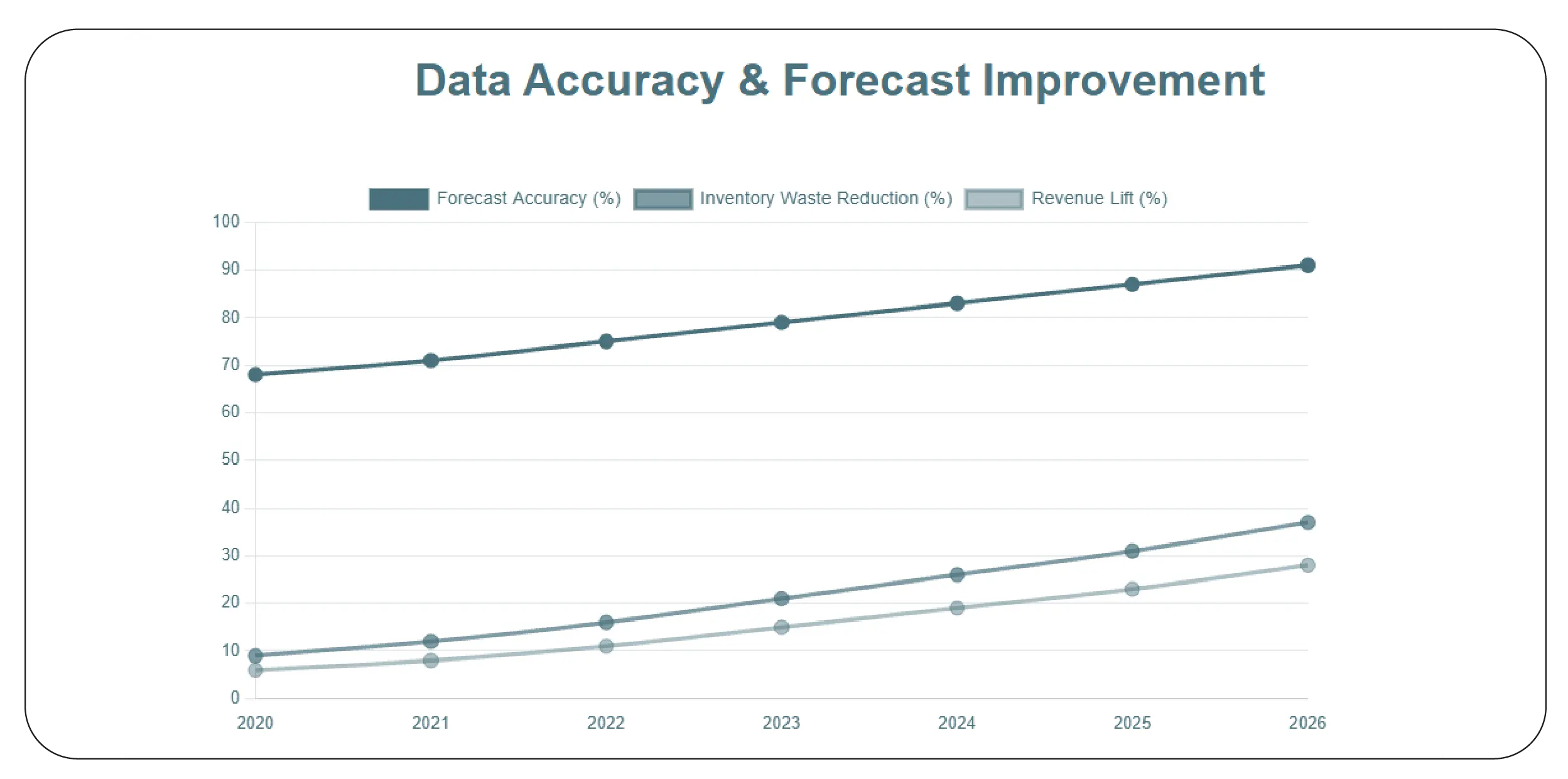
The Top 15 Ecommerce Trends Data Scraper 2026 converts raw product listings, reviews, and pricing feeds into clean datasets for forecasting and analytics.
Data Accuracy & Forecast Improvement
Analysis (Key Points):
- Clean data significantly boosts demand forecasting accuracy.
- Overstock losses drop by over 4× within six years.
- Revenue growth accelerates with smarter product planning.
Structured scraping data fuels predictive ecommerce models.
Monitoring Digital Storefront Ecosystems
Through Web Scraping E-commerce Websites, brands track millions of SKUs across marketplaces, D2C platforms, and comparison sites to identify shifts in consumer demand.
Website Data Coverage Growth
| Year |
Websites Tracked |
SKUs Monitored (Millions) |
Update Frequency |
| 2020 |
120 |
2.4 |
Daily |
| 2021 |
165 |
3.1 |
Daily |
| 2022 |
210 |
4.0 |
Hourly |
| 2023 |
260 |
5.2 |
Hourly |
| 2024 |
310 |
6.5 |
Near Real-Time |
| 2025 |
360 |
7.9 |
Near Real-Time |
| 2026 |
420 |
9.4 |
Real-Time |
Analysis (Key Points):
- Data coverage expands rapidly across global platforms.
- Real-time scraping becomes essential for accurate decision-making.
- Brands gain unified visibility across fragmented ecommerce ecosystems.
Tracking Market Prices Continuously
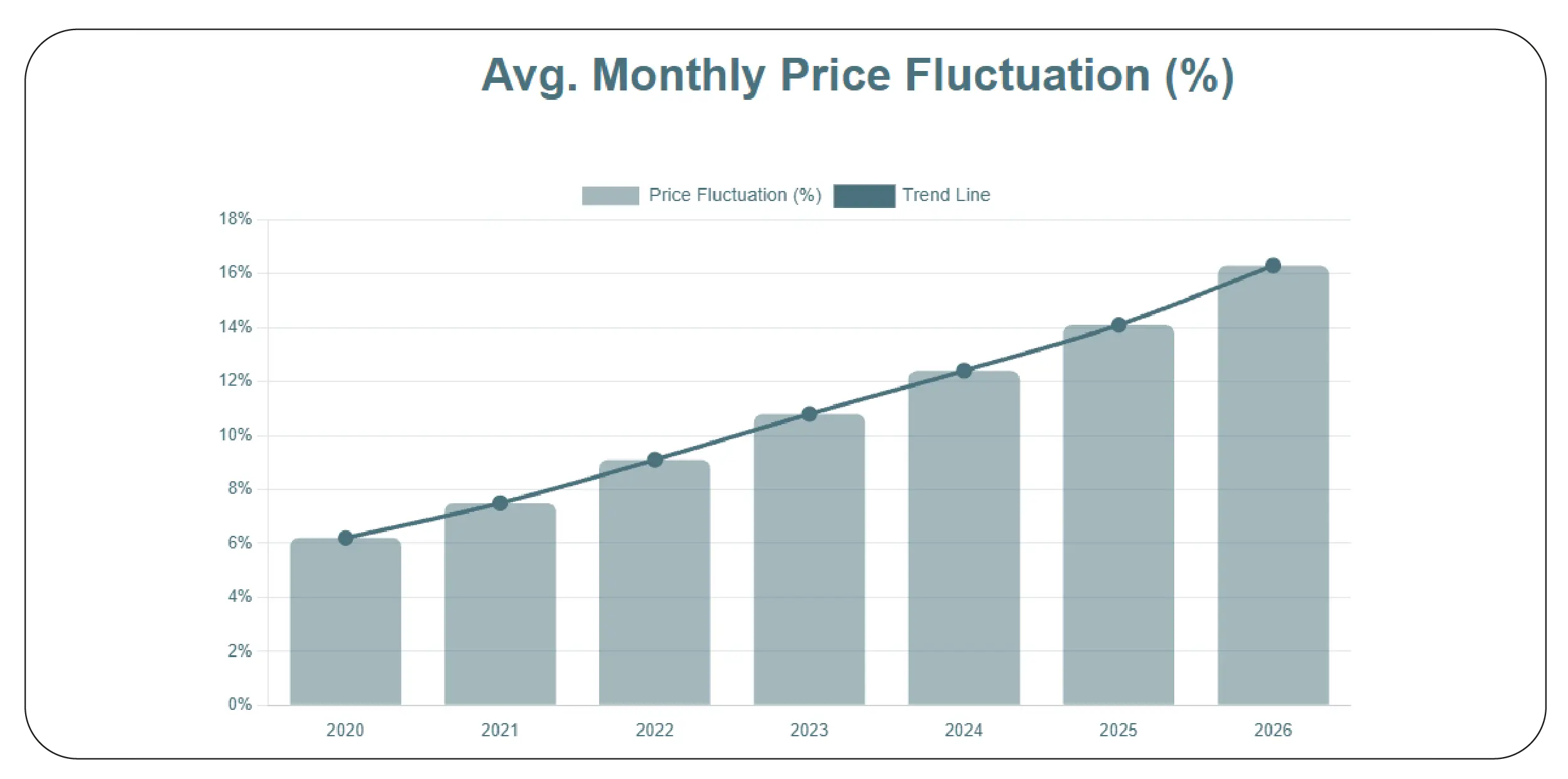
With Price Monitoring, ecommerce businesses track competitor pricing fluctuations, discount strategies, and promotional timing to stay competitive without eroding margins.
Average Price Volatility Index
Analysis (Key Points):
- Price volatility nearly triples from 2020 to 2026.
- Static pricing models become unsustainable.
- Continuous monitoring protects profitability in competitive markets.
Building Adaptive Revenue Models
Advanced Pricing Strategies rely on scraped data to adjust prices dynamically based on demand, competition, seasonality, and inventory health.
Dynamic Pricing Impact
| Year |
Conversion Rate Lift (%) |
Margin Protection (%) |
| 2020 |
4 |
6 |
| 2021 |
6 |
8 |
| 2022 |
9 |
11 |
| 2023 |
12 |
15 |
| 2024 |
15 |
18 |
| 2025 |
18 |
22 |
| 2026 |
22 |
27 |
Analysis (Key Points):
- Conversion rates improve steadily with adaptive pricing.
- Margins are protected despite intense competition.
- Data-backed pricing becomes a core ecommerce capability.
Why Choose Product Data Scrape?
Businesses trust Product Data Scrape for scalable, accurate, and compliant data solutions. With eCommerce Dataset Scraping, brands gain access to structured, real-time market intelligence across categories and geographies. Our expertise in Web Scraping Top 15 Ecommerce Trends 2026 ensures high data accuracy, customizable outputs, and seamless integration into analytics systems. From startups to enterprises, we enable faster decisions, reduced risks, and measurable revenue growth through actionable ecommerce data.
Conclusion
Success in ecommerce 2026 depends on speed, accuracy, and insight. Web Scraping Top 15 Ecommerce Trends 2026 empowers brands to predict demand, optimize pricing, and outperform competitors using real-time data intelligence. Instead of reacting to market changes, businesses can proactively shape strategies using verified trend data.
Turn ecommerce data into growth opportunities today—partner with us to future-proof your digital commerce strategy.
You can also reach us for all your mobile app scraping, data collection, web scraping, and instant data scraper service requirements!
FAQs
1. How does web scraping help ecommerce brands in 2026?
Web scraping collects real-time pricing, product, and trend data. Product Data Scrape helps brands analyze market shifts faster and improve strategic planning accuracy.
2. Is scraping ecommerce trend data scalable?
Yes, automated scraping systems scale easily across platforms, categories, and regions without manual effort or performance loss.
3. Can scraped data improve pricing decisions?
Absolutely. Scraped data supports dynamic pricing, competitor tracking, and margin optimization using real-time insights.
4. How often should ecommerce trend data be updated?
High-competition categories benefit from hourly or real-time updates, while stable segments may require daily monitoring.
5. Is ecommerce web scraping compliant?
When done responsibly and ethically, ecommerce data scraping follows compliance standards and platform policies.


 Singapore
 EMAIL
EMAIL
 PHONE
PHONE


.webp)
.webp "thumb")
.webp "thumb")
.webp "thumb")








.webp)