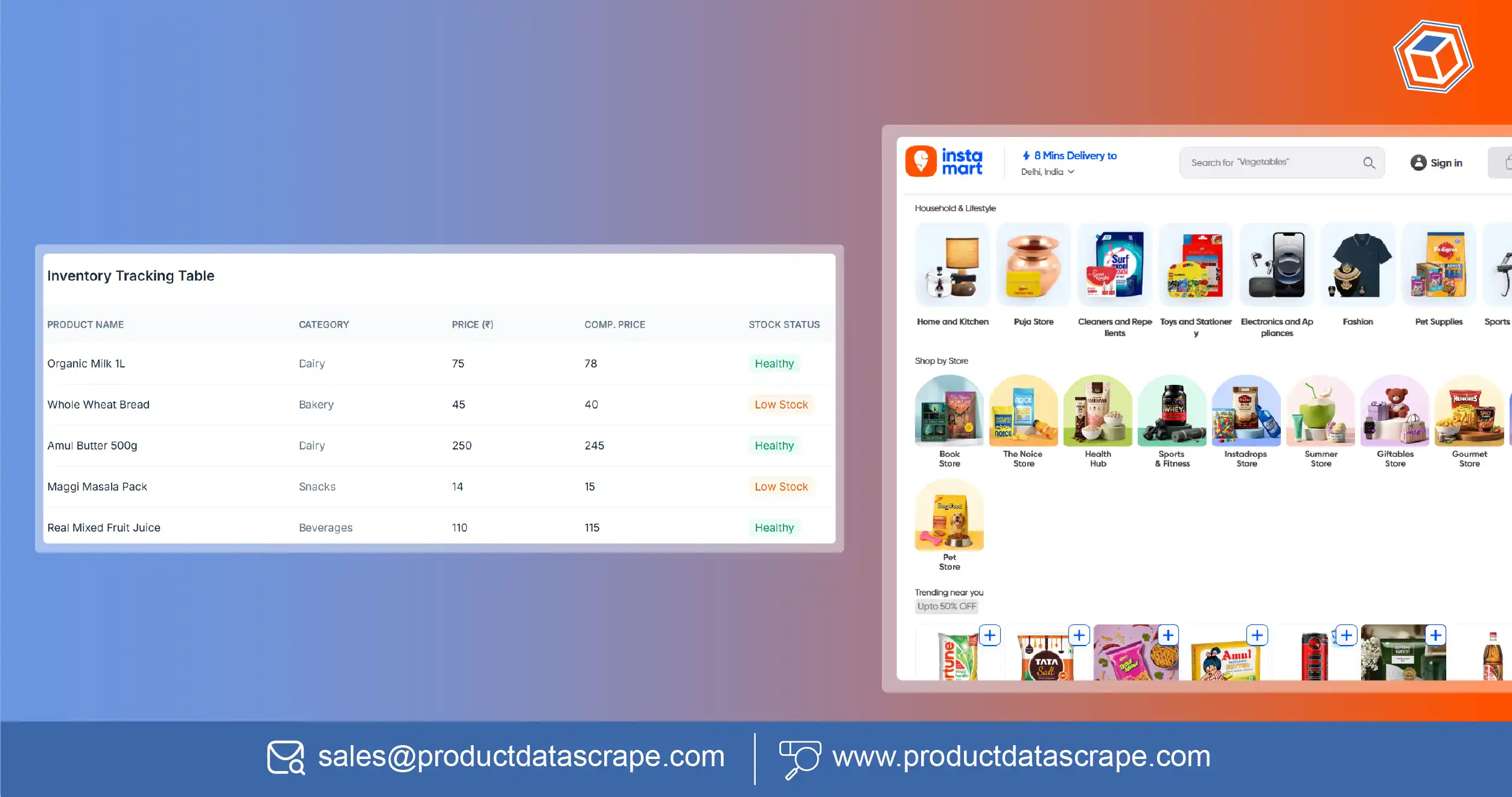
Introduction
The fastest way to understand pricing trends, inventory movement, and customer
demand is through structured quick-commerce datasets. The Swiggy Instamart Product Dataset helps
retailers, FMCG brands, eCommerce sellers, market researchers, and quick-commerce platforms
monitor products, prices, promotions, and stock availability in real time.
Industry Insight: India's quick-commerce sector is expected to
exceed $40 billion by 2026. Industry analysts estimate that over 65% of digital grocery
purchases will be influenced by real-time pricing, delivery speed, and product availability.
Businesses increasingly depend on Swiggy
Instamart analytics to
identify market
opportunities, optimize assortments, track competitors, and improve decision-making. For FMCG
brands, retailers, distributors, and category managers, the biggest challenge is maintaining
visibility across thousands of products that change frequently. Product-level intelligence
solves this challenge by providing continuous market visibility.
Why Is Product Availability Data Critical for Retail Success?
Retail success depends on offering the right products at the right price and at
the right time. Consumers often switch brands when desired products are unavailable.
Businesses use Swiggy Instamart Pricing and Availability Dataset to monitor
stock levels, promotional activity, and price fluctuations across multiple categories. Combined
with a Swiggy Instamart Grocery Store
Dataset, organizations gain deeper visibility into
inventory performance and market competition.
Key Benefits
- Track stock availability
- Monitor product pricing
- Compare competitor assortments
- Identify demand gaps
- Improve replenishment planning
Market Visibility Growth (2020–2026)
| Year |
Retailers Using Availability Monitoring |
Average SKU Tracking Volume |
| 2020 |
24% |
5,000 |
| 2021 |
31% |
8,500 |
| 2022 |
39% |
12,000 |
| 2023 |
48% |
18,000 |
| 2024 |
57% |
25,000 |
| 2025 |
66% |
34,000 |
| 2026 |
75% |
45,000 |
For example, an FMCG company can identify regions where certain products
frequently go out of stock. This insight supports better supply chain decisions and inventory
allocation strategies.
Availability monitoring also helps brands understand competitor performance.
Businesses can evaluate which products consistently remain in stock and which categories
experience frequent shortages.
Real-time visibility reduces lost sales opportunities and strengthens customer
satisfaction.
How Do Businesses Collect Product Data at Scale?
Tracking thousands of products manually is inefficient. Product information
changes rapidly across quick-commerce platforms. Automated collection methods provide a scalable
solution.
Many organizations use Swiggy Instamart Product Data Scraping Services to
gather detailed information on products, pricing, categories, discounts, and availability.
Information Commonly Collected
- Product names
- Brand information
- Product descriptions
- Pricing details
- Stock status
- Promotions and discounts
- Product categories
Data Collection Adoption
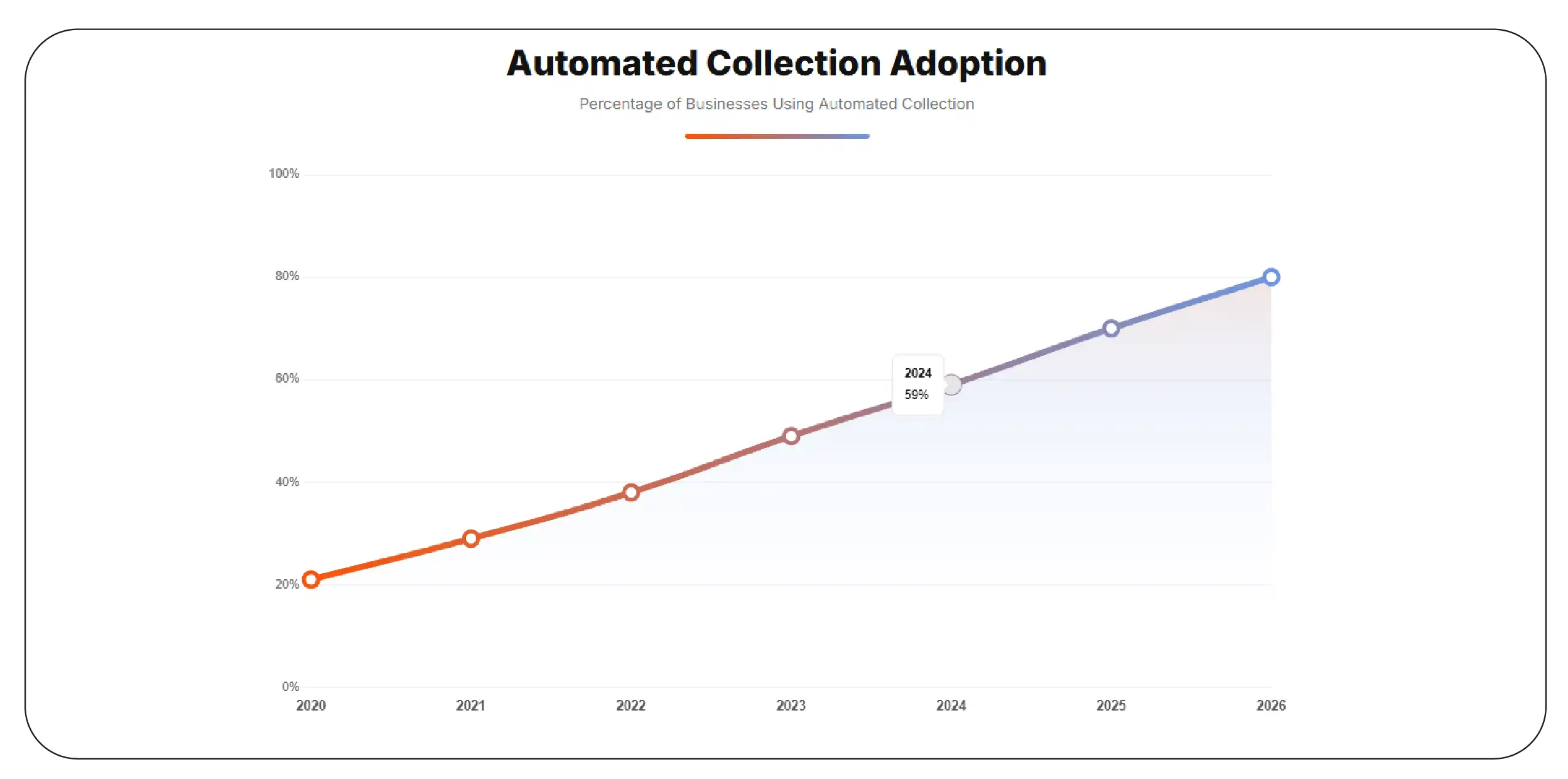
Automated collection enables organizations to gather market intelligence
continuously. This provides a competitive advantage because pricing and inventory conditions can
change multiple times per day.
Retailers use collected data to compare competitor strategies. Manufacturers
use it to monitor product visibility and category performance. Market research firms use it to
evaluate industry trends.
As quick commerce expands, scalable data collection becomes increasingly
important for operational efficiency and strategic planning.
What Data Fields Help Businesses Understand Product Performance?
Product datasets become valuable when they contain structured and detailed
information. Businesses require consistent data formats to support analytics and reporting.
The Swiggy Instamart Product Dataset Fields and Structure typically include
product identifiers, pricing information, category classifications, brand names, ratings,
discounts, and stock indicators. These datasets are widely used for Assortment and availability
monitoring across markets.
Important Dataset Fields
- Product ID
- SKU Number
- Product Name
- Brand Name
- Category
- Subcategory
- Current Price
- Original Price
- Discount Percentage
- Stock Availability
- Delivery Time
Dataset Expansion Trends
| Year |
Average Product Attributes Collected |
| 2020 |
12 |
| 2021 |
15 |
| 2022 |
18 |
| 2023 |
22 |
| 2024 |
27 |
| 2025 |
31 |
| 2026 |
36 |
Structured datasets allow businesses to identify assortment gaps and evaluate
category performance. Retailers can compare product ranges against competitors and determine
whether important products are missing from their inventory.
Assortment monitoring also helps brands understand regional preferences.
Different locations often display unique purchasing behaviors that influence inventory planning
and merchandising strategies.
By organizing product data into standardized formats, businesses gain faster
access to actionable insights and more accurate reporting capabilities.
How Can Market Research Teams Use Product Intelligence for Better Decisions?
Market research depends on accurate and timely information. Quick-commerce
platforms generate valuable consumer and product data that help businesses understand changing
market dynamics.
The Swiggy Instamart Product Dataset for Market Research provides insights into
pricing behavior, category growth, promotional effectiveness, and consumer purchasing trends.
Key Research Applications
- Competitive benchmarking
- Consumer behavior analysis
- Product performance tracking
- Category growth evaluation
- Regional demand assessment
Market Research Adoption Trends (2020–2026)
.webp)
For example, an FMCG manufacturer can analyze pricing differences across
regions to understand how local competition influences consumer choices. A retailer may evaluate
category growth to determine future investment opportunities.
Market researchers can also identify emerging trends before they become
mainstream. Categories such as organic foods, healthy snacks, and premium beverages often show
early growth signals within quick-commerce platforms.
With structured product intelligence, organizations gain a clearer
understanding of consumer preferences and competitive landscapes. This helps decision-makers
reduce uncertainty and improve strategic planning.
How Do SKU-Level Insights Improve Category Management?
Modern retailers manage thousands of products simultaneously. Category managers
require detailed visibility into individual products to improve assortment strategies and
maximize profitability.
Businesses increasingly use Swiggy Instamart SKU-Level Product Data Insights to
analyze performance at the product level rather than relying only on category-wide reports.
Benefits of SKU-Level Analysis
- Product-level pricing intelligence
- Inventory optimization
- Brand performance evaluation
- Promotion effectiveness measurement
- Assortment refinement
SKU Intelligence Growth
| Year |
Businesses Using SKU-Level Analytics |
| 2020 |
22% |
| 2021 |
30% |
| 2022 |
39% |
| 2023 |
50% |
| 2024 |
61% |
| 2025 |
72% |
| 2026 |
83% |
For instance, a beverage company can compare individual product performance
against competing brands. If a competitor consistently offers lower prices or better
availability, adjustments can be made quickly.
SKU-level intelligence also helps retailers identify underperforming products
and improve assortment planning. Businesses gain a more detailed understanding of customer
preferences and purchasing behavior.
The ability to monitor individual products creates a stronger foundation for
category growth and inventory optimization.
What Business Applications Deliver the Highest Return on Investment?
Quick-commerce datasets support multiple operational and strategic use cases.
Organizations across retail, FMCG, analytics, and consulting sectors rely on product
intelligence to improve performance.
Common Swiggy Instamart Dataset Use Cases include competitor monitoring,
assortment planning, promotional tracking, inventory management, and Price scraping initiatives.
High-Value Use Cases
- Dynamic pricing analysis
- Competitor benchmarking
- Product assortment optimization
- Inventory forecasting
- Consumer trend analysis
- Promotion monitoring
Dataset Utilization Growth
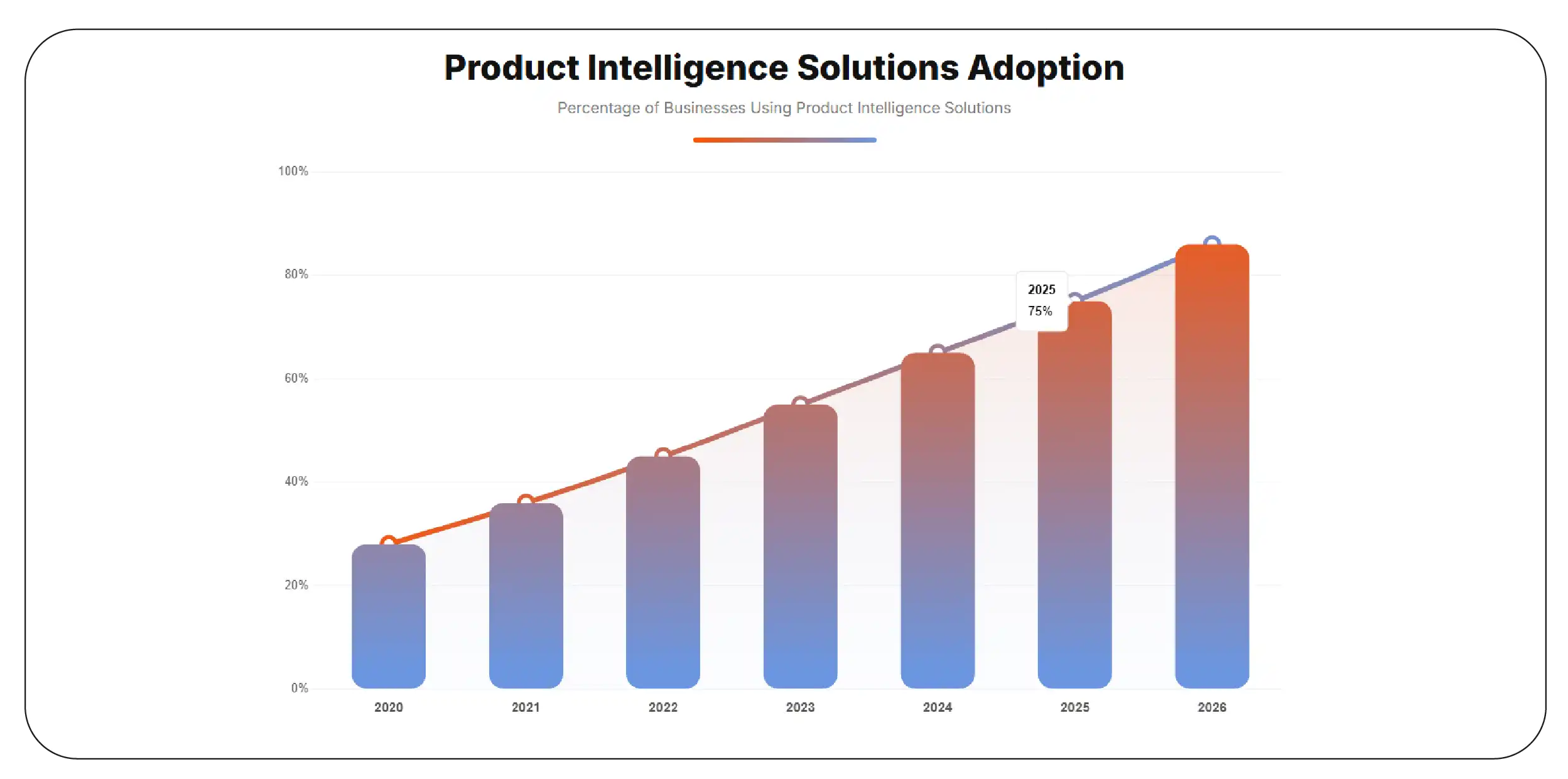
Price monitoring remains one of the most important applications. Retailers can
compare pricing across brands and categories while identifying opportunities to improve
competitiveness.
Manufacturers benefit from improved visibility into product positioning and
promotional effectiveness. Consulting firms use market intelligence to support client
recommendations.
As quick-commerce competition increases, businesses that leverage product
intelligence gain stronger market visibility and faster decision-making capabilities.
Why Choose Product Data Scrape?
Businesses need accurate, scalable, and reliable data solutions to remain
competitive in the rapidly growing quick-commerce ecosystem. Product Data Scrape provides
enterprise-grade data extraction solutions that help organizations collect and analyze market
intelligence efficiently.
With a powerful Swiggy Instamart
scraper, businesses can monitor product
pricing, stock availability, promotions, category performance, and competitor activity in real
time. The Swiggy Instamart Product Dataset delivered by us is structured, accurate, and ready
for analytics, reporting, and business intelligence applications.
Key benefits include:
- Real-time product monitoring
- Large-scale SKU tracking
- Competitive pricing intelligence
- Assortment analysis
- Flexible API integrations
- Enterprise-grade scalability
These capabilities help retailers, brands, and market researchers make informed
decisions based on current market conditions.
Conclusion
The quick-commerce industry is becoming increasingly data-driven. Businesses
that leverage the Swiggy Instamart Product Dataset gain valuable insights into pricing trends,
inventory movements, consumer preferences, and competitor strategies.
From assortment planning and market research to pricing optimization and
inventory forecasting, product intelligence plays a critical role in driving business success.
Organizations can also benefit from a Swiggy Instamart Grocery Delivery
Scraping API to automate
data collection and maintain continuous market visibility.
Ready to unlock actionable quick-commerce intelligence? Contact Product Data
Scrape today and transform your business strategy with real-time product insights powered by the
Swiggy Instamart Product Dataset!
FAQs
1. What information is included in the Swiggy Instamart Product
Dataset?
The dataset typically contains product names, prices, discounts, stock
availability, categories, brands, SKUs, ratings, delivery estimates, and promotional details
useful for competitive analysis and market intelligence.
2. How often should businesses update quick-commerce product
data?
Most organizations update product datasets daily or multiple times per day
because prices, inventory levels, and promotions change frequently across quick-commerce
platforms.
3. Who benefits most from product intelligence
datasets?
Retailers, FMCG brands, distributors, eCommerce sellers, market
researchers, consulting firms, and analytics companies use product intelligence datasets to
improve strategic and operational decisions.
4. How does Product Data Scrape support market research
initiatives?
Product Data Scrape provides structured datasets that help
organizations analyze pricing trends, product availability, consumer preferences, and competitor
activities across multiple categories and markets.
5. Why is automated product monitoring important?
Automated
monitoring provides real-time visibility into pricing changes, stock availability, promotions,
and assortment shifts. This allows businesses to react quickly and maintain competitive
advantages.


 Singapore
 EMAIL
EMAIL
 PHONE
PHONE


.webp "thumb")








.webp)