Introduction
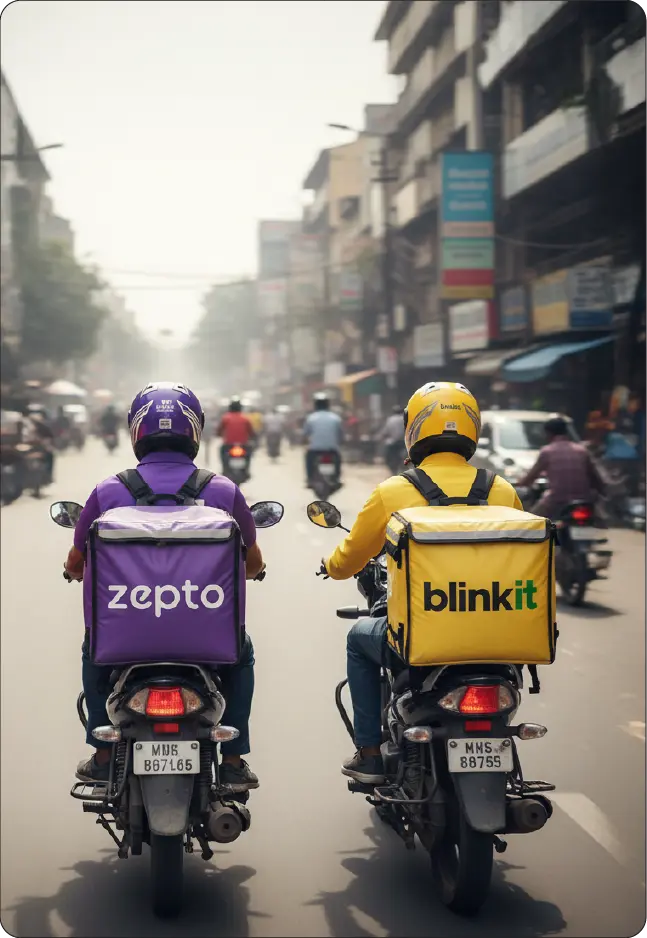
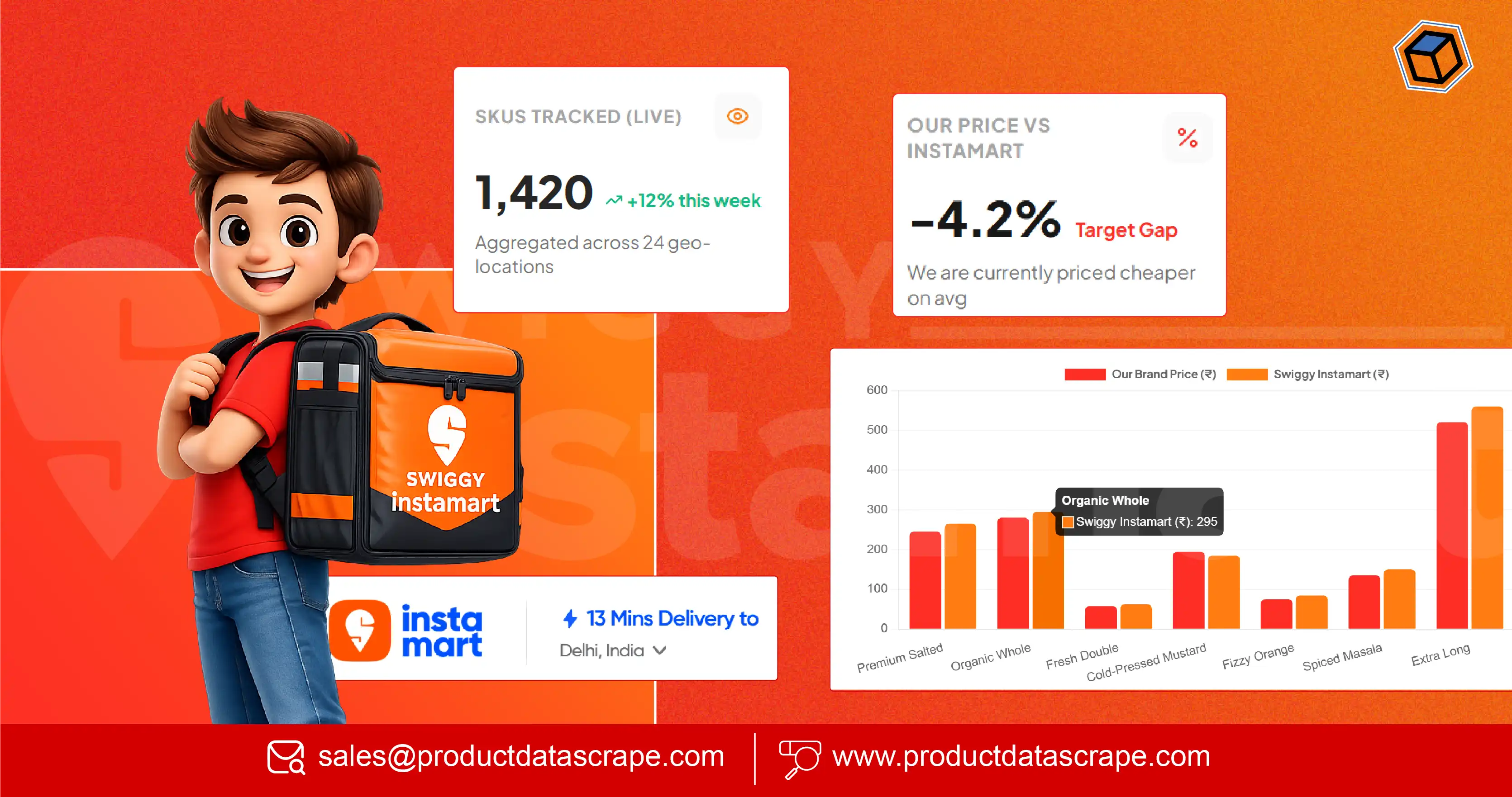
The rapid expansion of quick commerce platforms has transformed the grocery retail ecosystem across India. Consumers now expect instant deliveries, dynamic discounts, and real-time product availability, making pricing intelligence a critical factor for brands and retailers. Businesses operating in FMCG, grocery delivery, retail analytics, and eCommerce increasingly depend on automated data extraction to monitor changing market trends and optimize pricing decisions.
Using Swiggy Instamart Grocery Data Scraping API, companies can capture real-time grocery information including product prices, stock status, discounts, brand rankings, customer preferences, and category-level insights. This helps businesses compare competitors effectively, identify pricing gaps, and improve digital shelf positioning.
Modern analytics platforms also use automated scraping solutions to Extract Swiggy Instamart Grocery & Gourmet Food Data for advanced market intelligence. The extracted datasets support assortment planning, demand forecasting, competitor benchmarking, promotional tracking, and inventory optimization.
As the quick commerce industry continues growing between 2020 and 2026, brands require scalable intelligence solutions to remain competitive. Companies like Product Data Scrape enable businesses to gather structured grocery delivery datasets that drive smarter pricing strategies, operational efficiency, and improved customer targeting in the highly competitive online grocery marketplace.
Understanding the Shift Toward Instant Commerce Intelligence
The quick commerce industry has experienced exceptional growth due to increasing consumer demand for fast grocery deliveries and convenient shopping experiences. Brands are now leveraging Swiggy Instamart delivery intelligence to understand changing customer preferences, optimize pricing strategies, and track product visibility across categories.
Retailers collect structured datasets from platforms like Swiggy Instamart to evaluate product assortment, availability trends, and discount movements. The growing adoption of Swiggy Instamart Grocery Store Dataset solutions enables businesses to compare prices efficiently and identify products sorted from low to high pricing patterns for better market positioning.
Quick Commerce Growth Statistics (2020–2026)
| Year |
India Quick Commerce Market Size (USD Billion) |
Grocery Delivery Users (Million) |
| 2020 | 0.3 | 5 |
| 2021 | 0.8 | 12 |
| 2022 | 1.9 | 25 |
| 2023 | 3.5 | 42 |
| 2024 | 5.8 | 65 |
| 2025 | 8.4 | 88 |
| 2026 | 11.2 | 110 |
Data-Driven Grocery Insights for Smarter Retail Planning
.webp)
Data analytics has become essential for modern grocery retailers aiming to improve operational efficiency and market responsiveness. Businesses now rely heavily on Swiggy Instamart Grocery Delivery analytics to monitor consumer behavior, pricing patterns, and inventory movements in real time.
Using a structured Grocery store dataset, companies can identify which products perform best during promotions, festive sales, and seasonal demand cycles. This data enables brands to optimize their assortments and improve overall revenue generation strategies.
Grocery Delivery Analytics Trends (2020–2026)
| Year |
Avg. Orders Per User Monthly |
Discount Usage Rate (%) |
| 2020 | 3 | 28 |
| 2021 | 5 | 35 |
| 2022 | 7 | 42 |
| 2023 | 9 | 51 |
| 2024 | 11 | 57 |
| 2025 | 13 | 63 |
| 2026 | 15 | 69 |
Real-Time Pricing Visibility Across Digital Grocery Platforms
Pricing transparency has become one of the most important factors influencing consumer purchase decisions in online grocery marketplaces. Businesses increasingly Track Grocery Prices from Swiggy Instamart to analyze discount trends, competitor pricing, and consumer affordability patterns.
Brands rely on automated monitoring systems and Pricing Intelligence Services to gather accurate pricing data across grocery categories.
Grocery Pricing Trend Analysis (2020–2026)
| Year |
Avg. Discount on Grocery Products (%) |
Dynamic Price Changes Per Day |
| 2020 | 8 | 2 |
| 2021 | 10 | 3 |
| 2022 | 14 | 5 |
| 2023 | 17 | 7 |
| 2024 | 20 | 10 |
| 2025 | 24 | 13 |
| 2026 | 28 | 16 |
Competitive Benchmarking Through Digital Shelf Visibility
.webp)
The digital shelf has become the primary battleground for grocery retailers competing for consumer attention. Businesses now use Swiggy Instamart Competitor Pricing Analytics to monitor competitor pricing structures, product rankings, and promotional visibility.
Companies leverage Digital Shelf Analytics to evaluate how products appear across search results, category listings, and featured promotions.
Digital Shelf Performance Metrics (2020–2026)
| Year |
Brands Monitoring Competitor Pricing (%) |
Digital Shelf Optimization Adoption (%) |
| 2020 | 18 | 12 |
| 2021 | 26 | 19 |
| 2022 | 39 | 31 |
| 2023 | 52 | 44 |
| 2024 | 64 | 56 |
| 2025 | 73 | 68 |
| 2026 | 81 | 77 |
Monitoring Inventory Changes and Competitive Stock Availability
Inventory visibility is essential for maintaining consistent customer experiences in grocery delivery platforms. Businesses increasingly adopt Swiggy Instamart real time inventory scraping solutions to monitor stock availability and identify out-of-stock risks before they impact sales performance.
Retailers also use Competitor Price Monitoring tools to compare stock levels alongside pricing trends.
Inventory Monitoring Statistics (2020–2026)
| Year |
Out-of-Stock Reduction (%) |
Real-Time Inventory Tracking Adoption (%) |
| 2020 | 5 | 11 |
| 2021 | 9 | 18 |
| 2022 | 15 | 27 |
| 2023 | 24 | 39 |
| 2024 | 31 | 52 |
| 2025 | 38 | 64 |
| 2026 | 46 | 73 |
Leveraging Market Trends for Long-Term Retail Growth
.webp)
Trend analytics play a vital role in helping brands understand future market opportunities and evolving consumer preferences. Businesses increasingly use Swiggy Instamart grocery Delivery trend analytics to monitor shopping behavior, product demand shifts, and seasonal grocery trends.
Grocery Delivery Trend Forecast (2020–2026)
| Year |
Mobile Grocery Orders (%) |
AI-Based Retail Analytics Adoption (%) |
| 2020 | 44 | 8 |
| 2021 | 52 | 13 |
| 2022 | 61 | 21 |
| 2023 | 69 | 34 |
| 2024 | 76 | 48 |
| 2025 | 83 | 61 |
| 2026 | 89 | 73 |
Why Choose Product Data Scrape?
Businesses require reliable data extraction partners to capture accurate grocery delivery intelligence at scale. Product Data Scrape provides advanced solutions for collecting structured datasets from leading quick commerce platforms with high accuracy and real-time monitoring capabilities.
Using Swiggy Instamart delivery trend monitoring, businesses can identify changing consumer preferences, monitor promotional activities, and optimize retail strategies effectively. Our scalable Swiggy Instamart Grocery Data Scraping API solutions help brands track product prices, inventory availability, competitor discounts, and category performance continuously.
We support FMCG brands, retail analytics companies, market researchers, and eCommerce businesses with customized data extraction services designed for strategic growth and competitive intelligence.
Conclusion
The rapid growth of quick commerce platforms has made grocery pricing intelligence more important than ever for retailers and FMCG brands. Businesses using Swiggy Instamart Grocery Data Scraping API solutions gain real-time visibility into pricing trends, inventory changes, customer demand, and competitor strategies.
With automated grocery analytics, brands can compare prices efficiently, optimize digital shelf visibility, and improve operational planning for long-term success. We empower businesses with scalable data extraction services that support smarter retail decision-making and enhanced competitive positioning.
Connect with Product Data Scrape today to unlock advanced grocery delivery intelligence and transform your pricing strategy with real-time market insights!
FAQs
1. What is a grocery delivery scraping API?
A grocery delivery scraping API extracts product prices, inventory, discounts, and category-level data from online grocery platforms to support pricing intelligence, competitor analysis, and retail market research.
2. How do brands benefit from grocery pricing intelligence?
Brands use pricing intelligence to compare competitor prices, optimize discounts, improve promotional campaigns, and identify low-to-high product pricing trends for stronger retail positioning.
3. Why is real-time inventory tracking important?
Real-time inventory tracking helps businesses identify out-of-stock products, optimize replenishment cycles, and improve customer satisfaction through better product availability management.
4. How does Product Data Scrape support grocery analytics?
Product Data Scrape provides scalable grocery data extraction solutions that help businesses monitor prices, inventory, competitor trends, and customer behavior across quick commerce platforms.
5. What industries use grocery delivery analytics?
FMCG companies, retailers, eCommerce businesses, market researchers, and analytics firms use grocery delivery analytics to improve pricing strategies and monitor digital retail competition.


 Singapore
 EMAIL
EMAIL
 PHONE
PHONE


.webp "thumb")








.webp)