Quick Overview
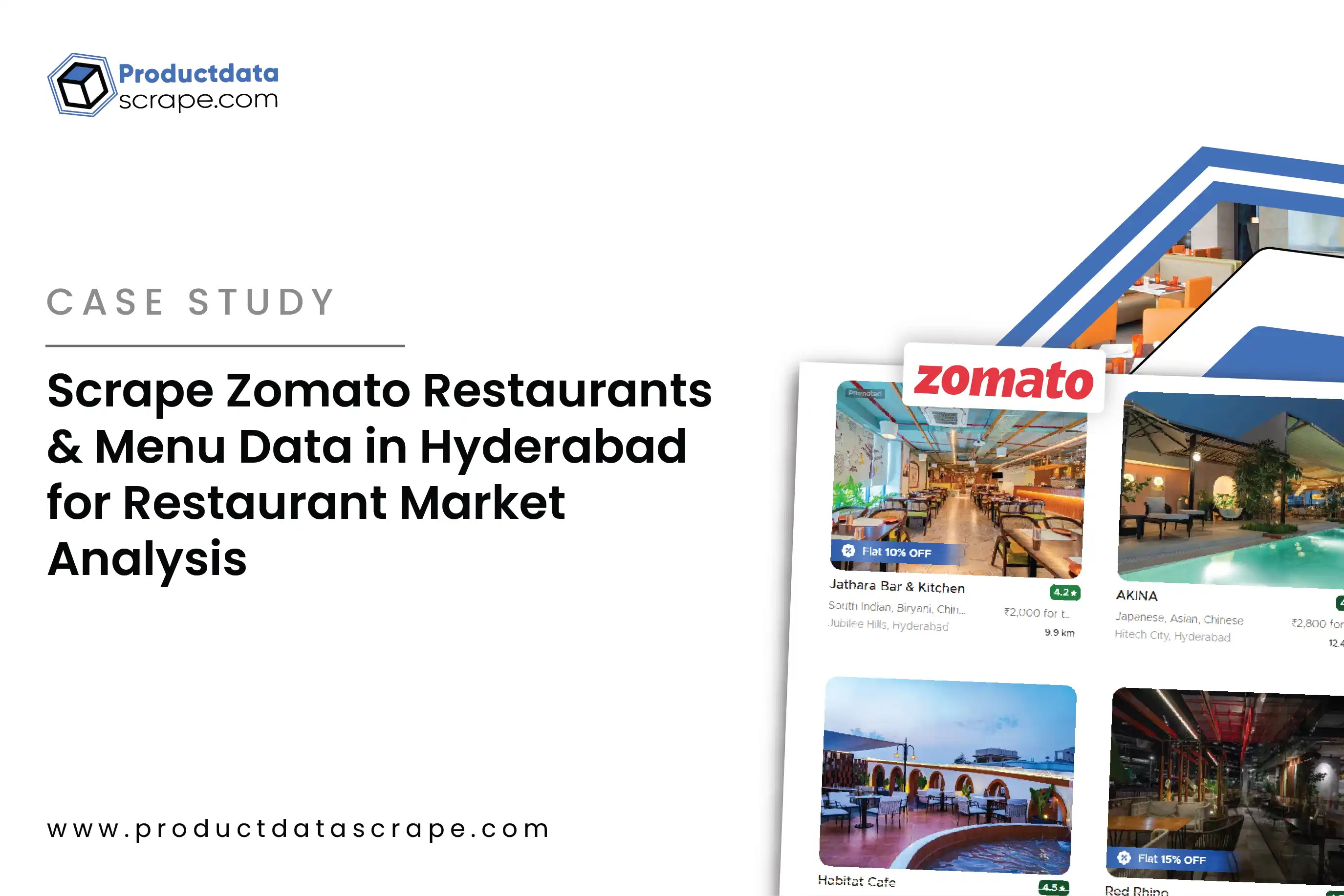
Restaurant businesses operate in a competitive digital marketplace where menu variety, listed prices, cuisines, and customer ratings can inform market research. This case study outlines how Scrape Zomato Restaurants & Menu Data in Hyderabad could support structured restaurant-market analysis for food businesses and analytics teams. The proposed service would organize permitted restaurant and menu information into a consistent dataset for comparison and reporting.
Client / Industry: Restaurant analytics and food-service market research; the specific client remains unconfirmed.
Service / Duration: Restaurant and menu data collection, validation, and reporting; project duration to be agreed.
Key impact metrics: restaurant coverage, required-field completeness, and validation accuracy, measured during an approved pilot.
The Client
The proposed client profile represents a business in the restaurant analytics, food-service consulting, or online food-delivery sector. The exact client name and its pre-project operating conditions have not been supplied, so this section describes the market context rather than attributing unverified problems to a named organization.
Hyderabad's dining market includes a wide range of food options, from biryani and traditional Indian cuisine to cafés, bakeries, quick-service restaurants, and international dining. Restaurant discovery platforms allow consumers to browse restaurant listings and menus, while businesses can use permitted public information to understand the visible competitive landscape. Zomato's official platform provides a reference point for restaurant discovery and menu exploration: Explore Zomato Hyderabad.
When Analyze Zomato Delivery Pricing, businesses can structure available menu prices, delivery-related charges where displayed, and promotional offers to support competitive pricing research and restaurant market analysis.
For a market research team, Zomato Hyderabad restaurant data scraping could provide a consistent way to collect and organize accessible restaurant information instead of relying on repeated manual browsing. A structured dataset can help analysts compare listed menu items, cuisine categories, restaurant locations, and displayed prices where available.
The transformation opportunity is to convert dispersed listing information into a searchable, validated dataset. With Commerce Intelligence, analysts could build repeatable reports, compare restaurant offerings, and identify areas for further research using Competitive pricing data to evaluate menu prices, track market trends, and understand competitor positioning. Any claimed previous manual process, specific operational bottleneck, or confirmed client partnership should be added only after the client verifies those details.
Goals & Objectives
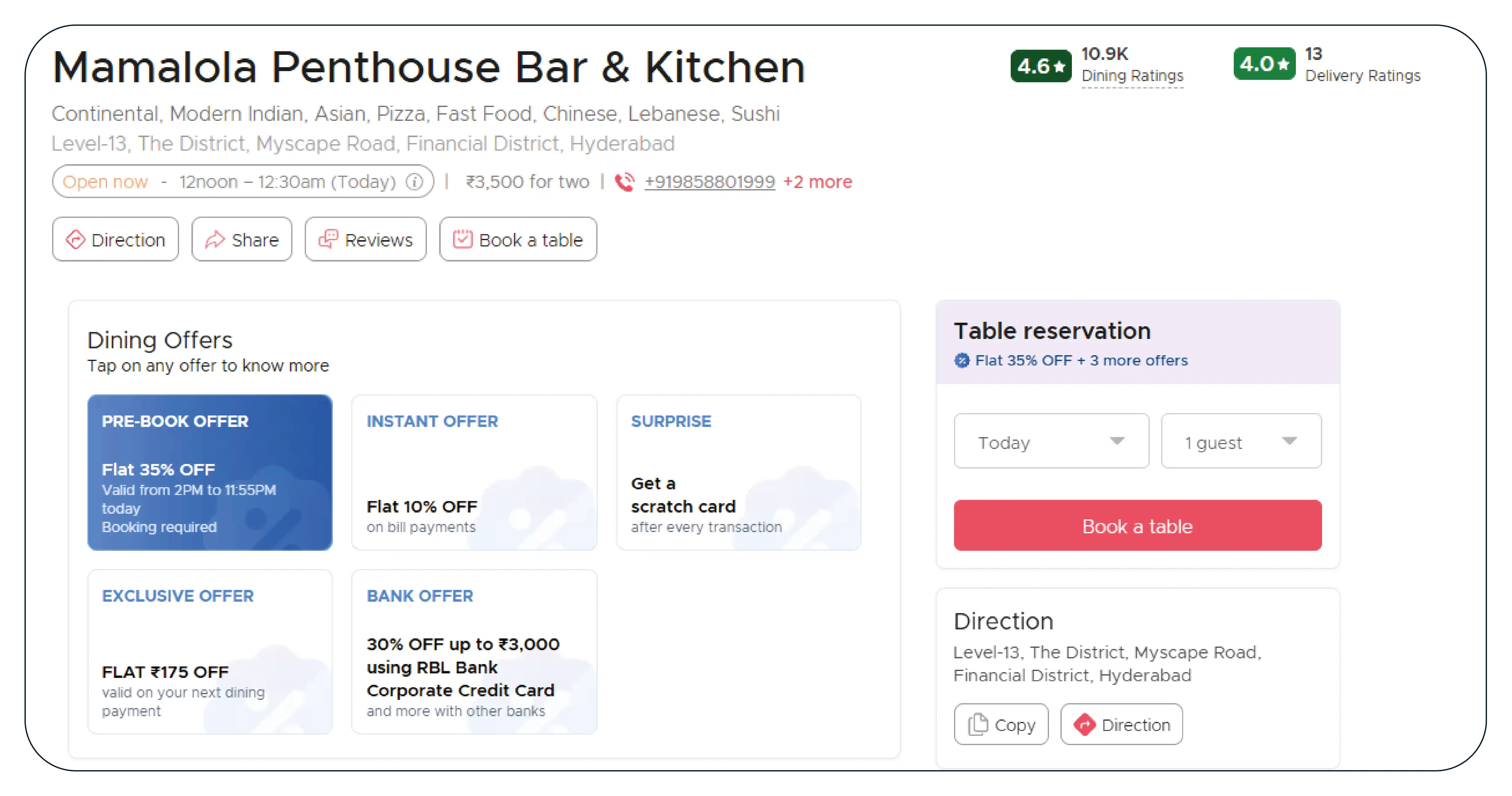
The goal of Scrape Zomato Restaurants & Menu Data in Hyderabad is to establish a reliable data foundation for restaurant-market analysis. The proposed solution would help research teams review restaurant coverage, compare menu offerings, and study displayed pricing using consistent fields.
Business goals include:
Scale collection across an agreed set of restaurants and categories.
Reduce repetitive manual data handling.
Improve consistency across restaurant and menu records.
Support evidence-based market research and competitor comparisons.
The technical objective is to scrape Zomato food item and restaurant information from permitted sources and organize the results into a structured schema. Depending on availability and authorization, fields may include restaurant name, location, cuisine, menu item name, listed price, rating, review count, and source URL.
Automation should include data validation, duplicate detection, timestamps, exception logging, and integration with approved reporting tools. Refresh schedules must respect the platform's applicable terms and access controls.
Restaurant coverage: percentage of agreed target listings processed.
Field completeness: percentage of records containing required attributes.
Validation accuracy: percentage of sampled records matching the source at collection time.
Duplicate rate: percentage of duplicate records after normalization.
Pipeline success: percentage of scheduled runs completed successfully.
Delivery time: elapsed time between an approved collection run and dataset availability.
These are proposed measurement criteria, not verified project outcomes.
The Core Challenge
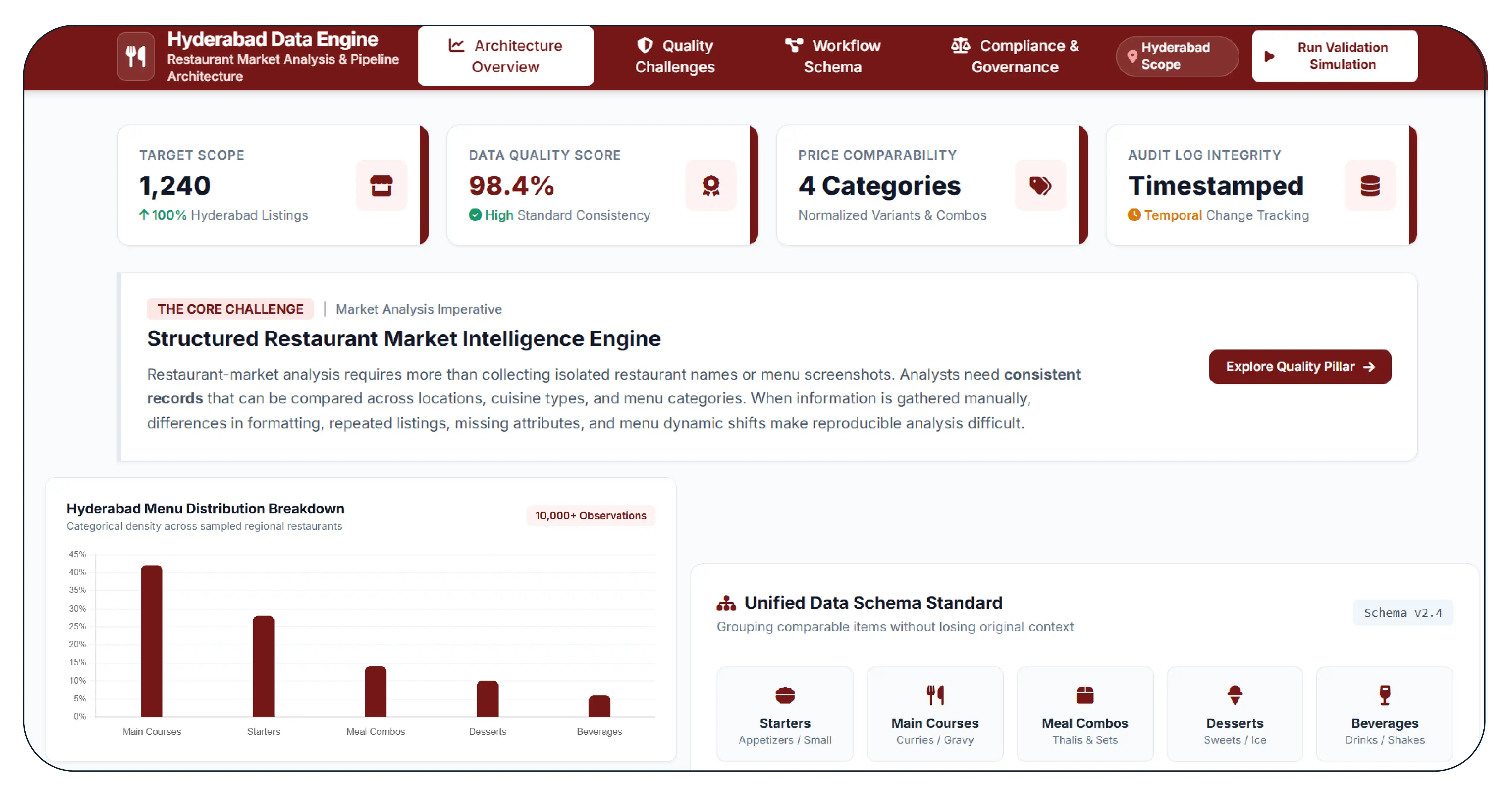
Restaurant-market analysis requires more than collecting isolated restaurant names or menu screenshots. Analysts need consistent records that can be compared across locations, cuisine types, and menu categories. When information is gathered manually, differences in formatting, repeated listings, missing attributes, and changes to menu pages can make analysis harder to reproduce.
A project designed to scrape Hyderabad restaurant menus and pricing would need to address several potential data-quality challenges.
Inconsistent menu structures: Restaurants may organize their menus into categories such as starters, main courses, desserts, beverages, and meal combos. A consistent schema is needed to group comparable items without losing the original context.
Price comparability: Item names and prices alone may not provide a fair comparison. Portion sizes, variants, add-ons, and combo offers may differ. Analysts should preserve these distinctions instead of treating every similarly named item as equivalent.
Changing listings: Menu items, prices, availability, and restaurant details may change. Each observation should include a timestamp, and unavailable values should not be silently treated as confirmed prices.
Data volume and validation: Repeated manual collection across many listings can become difficult to manage. An automated workflow needs duplicate checks, field validation, error logs, and a way to identify incomplete records.
These are common design considerations for restaurant data projects, not confirmed shortcomings in Zomato's systems or a specific client's workflow. A successful implementation would define the scope clearly, measure data quality, and use only data that can be collected in accordance with applicable permissions and platform restrictions.
Our Solution
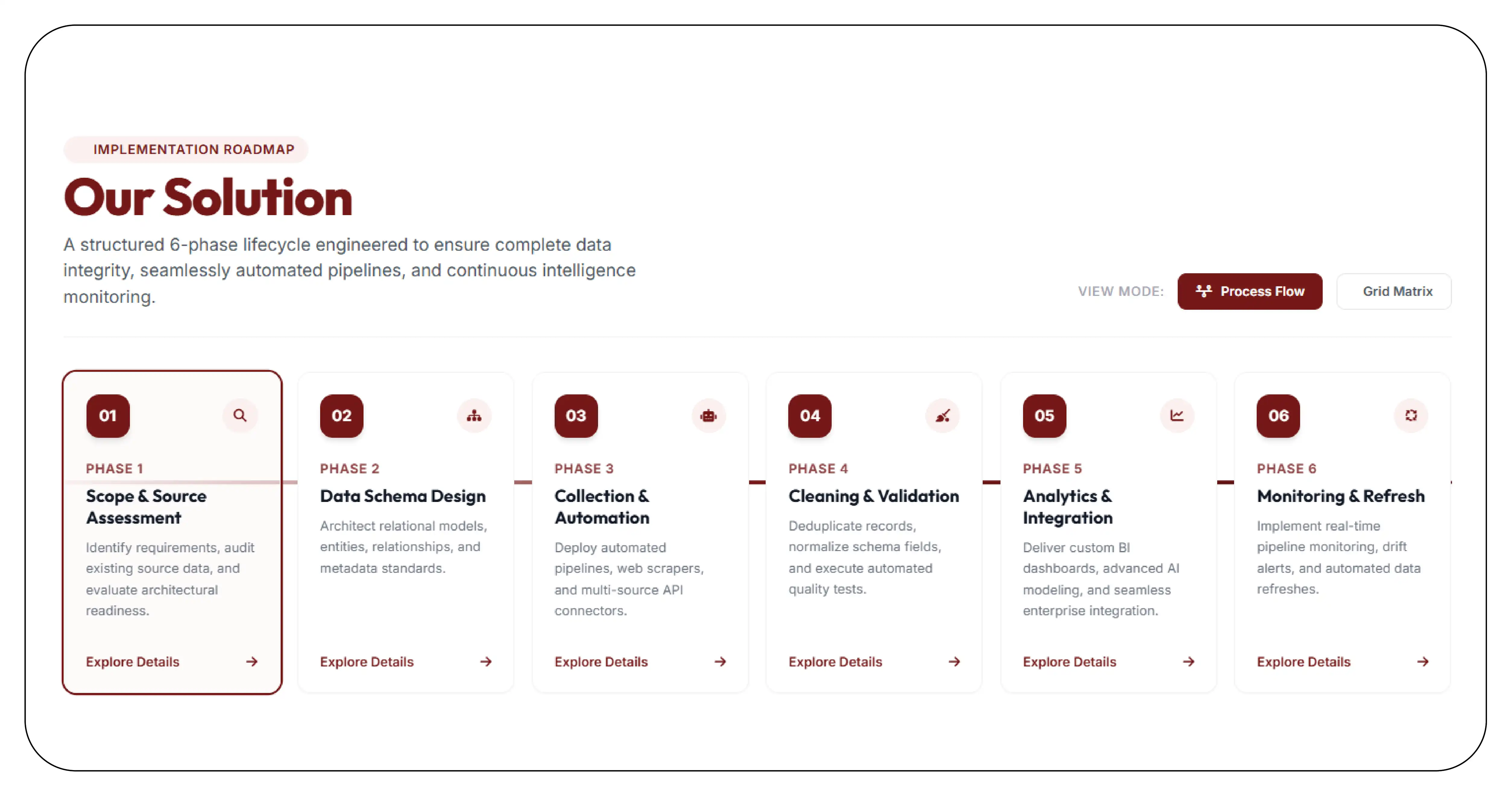
The proposed Scrape Zomato Restaurants & Menu Data in Hyderabad workflow would use phased implementation to create a structured dataset for market research. Each phase would have defined outputs and validation criteria.
Phase 1: Scope and Source Assessment
Identify the permitted sources, target locations, restaurant categories, required fields, and intended use. Confirm access permissions and applicable platform terms before collection begins. The initial scope might include selected Hyderabad localities and cuisine categories rather than the entire city.
Phase 2: Data Schema Design
Define separate records for restaurants and menu items. Restaurant fields could include name, locality, cuisine, rating, and source URL where available. Menu records could include item name, category, displayed price, variant, and collection timestamp. Missing fields should remain identifiable instead of being filled with guesses.
Phase 3: Collection and Automation
Configure an authorized collection process using an appropriate framework or permitted API, where available. Extract Hyderabad restaurant data from Zomato only within the approved scope and access conditions. The pipeline should record collection status, handle temporary errors, and avoid bypassing technical access restrictions.
Phase 4: Cleaning and Validation
Normalize text, standardize supported price formats, identify duplicate records, and retain original source values for traceability. Menu comparisons should distinguish different portions, sizes, and meal combinations. A sample of records should be checked against the source to evaluate accuracy.
Phase 5: Analytics and Integration
Deliver validated data in an agreed format, such as CSV, a database table, or an authorized integration. Dashboards could summarize restaurant coverage, cuisine distribution, menu-item counts, and observed prices. Filters for locality and category would make the data easier to explore.
Phase 6: Monitoring and Refresh
Track successful runs, missing attributes, duplicate rates, and schema changes. Set refresh frequency according to the research requirement and permitted access conditions. Document collection timestamps and known limitations so users understand how current each observation is. The final deliverable would be a maintainable restaurant dataset and measurement report. Specific tools, integrations, timelines, and performance improvements should be confirmed during project discovery rather than represented as already implemented.
Results & Key Metrics
The proposed Zomato restaurant information scraper would be assessed using measurable indicators collected during an approved pilot. No verified results for a completed engagement have been supplied; therefore, the metrics below are evaluation criteria rather than achieved improvements.
Restaurant coverage: share of in-scope restaurant records successfully collected.
Menu completeness: share of records containing all mandatory menu fields.
Validation accuracy: share of sampled records matching source information at collection time.
Duplicate rate: share of records flagged as duplicates.
Collection reliability: percentage of scheduled runs completed successfully.
Data freshness: age of the latest valid observation at reporting time.
Baseline values, measurement periods, sample sizes, and calculation methods should be documented before results are published.
Results Narrative
A completed pilot could help the research team assess whether structured restaurant data improves the consistency and repeatability of market analysis. Using Scrape Zomato Restaurants & Menu Data in Hyderabad as the project scope, the team could compare collected records against a manually validated sample and evaluate coverage across selected localities and cuisines. The resulting dataset could support menu comparisons, category-level reporting, and review of listed prices over time. However, no verified figures for improved speed, accuracy, or coverage are currently available. Any final case study should report only measured results, clearly state the evaluation period, and disclose limitations affecting the dataset.
What Made Product Data Scrape Different
The proposed differentiator is a restaurant-focused data model that connects restaurant records with their individual menu items. Instead of treating each listing as an isolated page, the structure would support analysis by locality, cuisine, menu category, and price. E-commerce data for restaurant menus could be standardized through field validation, duplicate detection, timestamps, and clear handling of missing information. An additional quality layer would distinguish similarly named dishes with different portions or variants, helping analysts avoid misleading comparisons. The workflow could also provide structured exports and reporting-ready tables. These features describe the proposed design; claims of proprietary technology or proven performance require technical documentation and verified project evidence.
Client's Testimonial
"Reliable restaurant and menu information can help businesses understand the competitive landscape, compare listed offerings, and organize market research more efficiently. A structured data workflow makes it easier to review restaurant details and menu items consistently, while validation checks help teams identify missing or outdated information. For our research needs, the key priority would be receiving clear, well-organized data that can be reviewed and used for informed analysis."
— Restaurant Market Research Manager
Conclusion
Structured restaurant information can support market research by making menu offerings, cuisine categories, and listed prices easier to review. A carefully scoped Extract Zomato menu data workflow could help analysts organize accessible information, validate records, and produce repeatable reports for selected Hyderabad restaurants. Combined with clear collection timestamps and consistent product-level fields, the dataset could support category comparisons and ongoing market observation. Scrape Zomato Restaurants & Menu Data in Hyderabad represents a potential use case for Product Data Scrape by Actowiz Metrics. The next step is to define permitted sources, approve the data scope, and establish baseline KPIs before reporting measurable business impact.
Frequently Asked Questions
1. What is Zomato restaurant data scraping?
It is the structured collection of permitted restaurant information, such as restaurant names, cuisines, locations, and menu details, for research and analysis.
2. Which menu details can be included?
Depending on availability and authorization, fields may include item names, menu categories, displayed prices, variants, and restaurant identifiers. Missing information should be clearly marked.
3. Can restaurant prices be compared across Hyderabad?
Yes, collected price observations can be compared when the items, portion sizes, variants, and applicable conditions are sufficiently similar. Differences should be documented to avoid misleading conclusions.
4. How frequently should the data be refreshed?
Refresh frequency depends on research requirements, observed changes, technical feasibility, and permitted access. Collection timestamps help users assess how recent each observation is.
5. How can businesses measure data quality?
Businesses can track restaurant coverage, required-field completeness, duplicate rates, sampled accuracy, and successful collection runs. Results should be calculated from actual pilot data and reported with a defined measurement period.


 Singapore
 EMAIL
 PHONE










.webp)