Introduction
Launching a successful restaurant involves much more than selecting a location and designing a menu. Today's restaurant owners compete in an environment where digital food ordering, dynamic pricing, promotional campaigns, and delivery platforms significantly influence customer purchasing decisions. Consumers compare prices across multiple restaurants within seconds, making competitive pricing one of the most important factors affecting order volume and long-term profitability.
Businesses that leverage Analyze Zomato Delivery Pricing Before Opening a Restaurant gain valuable insights into menu pricing, delivery fees, discount frequency, cuisine trends, and customer preferences before investing significant capital. Combined with Global quick commerce data, restaurant owners can evaluate regional demand, identify underserved cuisines, benchmark competitors, and forecast potential revenue opportunities.
Instead of relying on assumptions, entrepreneurs can use structured restaurant data to understand which menu items perform best, how delivery charges affect customer conversion, and where pricing opportunities exist. Historical data from 2020 through 2026 demonstrates how food delivery platforms have transformed restaurant economics through dynamic pricing, personalized offers, and localized promotions. This guide explains how delivery pricing intelligence helps restaurants improve profitability, reduce launch risks, and make smarter business decisions from day one.
How Can Delivery Pricing Reveal Market Opportunities?
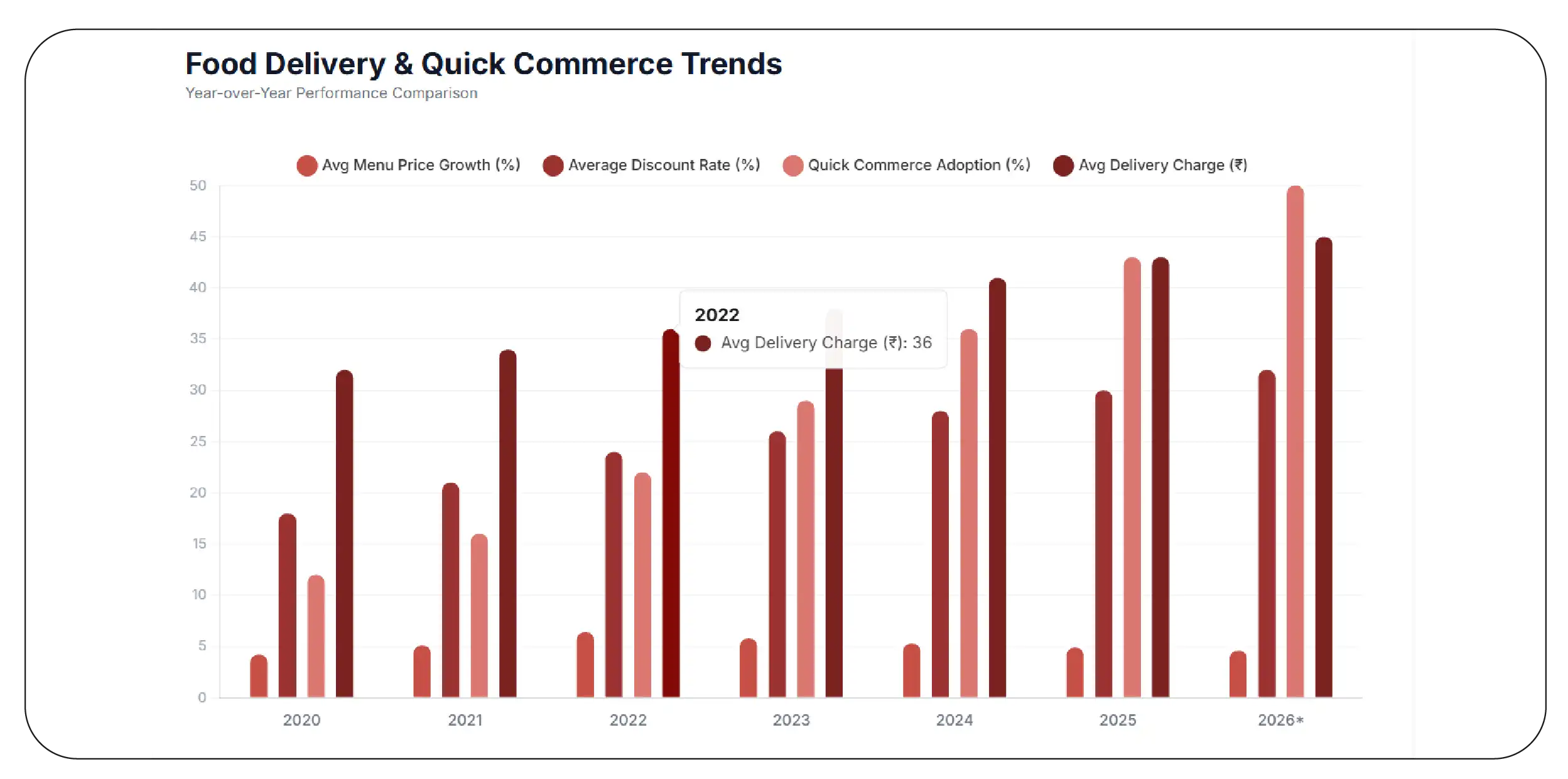
Restaurant pricing has evolved beyond fixed menu rates. Dynamic discounts, surge delivery fees, subscription offers, and seasonal promotions continuously reshape customer purchasing behavior. Understanding these changes before launching a restaurant provides valuable competitive advantages.
Businesses using Monitor Zomato food prices and discounts together with Quick Commerce intelligence can evaluate competitor pricing strategies, identify high-demand cuisine categories, monitor discount frequency, and understand customer expectations across different cities. Historical pricing data also helps entrepreneurs determine optimal launch timing, promotional budgets, and menu positioning while minimizing pricing mistakes.
Restaurant operators who continuously monitor pricing trends are better positioned to maximize profitability without sacrificing customer acquisition.
Food Delivery Pricing Trends (2020–2026)
| Year |
Average Menu Price Growth |
Average Discount Rate |
Avg. Delivery Charge |
Quick Commerce Adoption |
| 2020 |
4.2% |
18% |
₹32 |
12% |
| 2021 |
5.1% |
21% |
₹34 |
16% |
| 2022 |
6.4% |
24% |
₹36 |
22% |
| 2023 |
5.8% |
26% |
₹38 |
29% |
| 2024 |
5.3% |
28% |
₹41 |
36% |
| 2025 |
4.9% |
30% |
₹43 |
43% |
| 2026* |
4.6% |
32% |
₹45 |
50% |
Key Takeaways
- Restaurant pricing has steadily increased since 2020.
- Delivery charges continue rising alongside logistics costs.
- Discount campaigns remain a major customer acquisition strategy.
- Quick commerce influences food ordering frequency.
- Premium cuisines experience lower discount dependency.
- Regional pricing varies significantly across metropolitan cities.
- Data-driven pricing improves restaurant profitability.
- Competitive monitoring reduces pricing uncertainty.
- Historical pricing supports accurate financial forecasting.
- Market intelligence strengthens launch planning.
What Should You Learn from Menu Pricing and Delivery Charges?
Successful restaurants understand both menu pricing and total customer spending. Consumers rarely evaluate food prices alone. They compare delivery charges, taxes, platform fees, and promotional discounts before placing an order. Monitoring these components provides a more accurate picture of customer purchasing behavior.
Organizations that Extract Zomato menu pricing and delivery charges gain valuable insights into competitor pricing structures, average order values, cuisine-specific pricing, delivery fee variations, and promotional effectiveness. Historical analysis between 2020 and 2026 indicates that restaurants balancing competitive menu pricing with optimized delivery costs consistently achieve stronger customer retention and higher order frequency.
These insights enable restaurant owners to build profitable menus while remaining attractive to price-sensitive customers.
Menu & Delivery Economics (2020–2026)
| Year |
Avg. Order Value |
Avg. Delivery Fee |
Avg. Platform Discount |
Repeat Customer Rate |
| 2020 |
₹385 |
₹32 |
15% |
38% |
| 2021 |
₹410 |
₹34 |
17% |
40% |
| 2022 |
₹445 |
₹36 |
19% |
43% |
| 2023 |
₹470 |
₹38 |
21% |
46% |
| 2024 |
₹495 |
₹41 |
22% |
49% |
| 2025 |
₹520 |
₹43 |
24% |
52% |
| 2026* |
₹548 |
₹45 |
25% |
55% |
Key Takeaways
- Average order values continue increasing annually.
- Delivery fees have become a larger share of customer spending.
- Promotional discounts drive repeat purchases.
- Customer loyalty improves with balanced pricing.
- Menu optimization supports higher profitability.
- Delivery fee analysis improves conversion rates.
- Competitor pricing reveals market opportunities.
- Historical trends strengthen pricing decisions.
- Restaurants benefit from continuous pricing intelligence.
- Data-driven planning minimizes launch risk.
Which Competitors Should You Study Before Setting Your Prices?
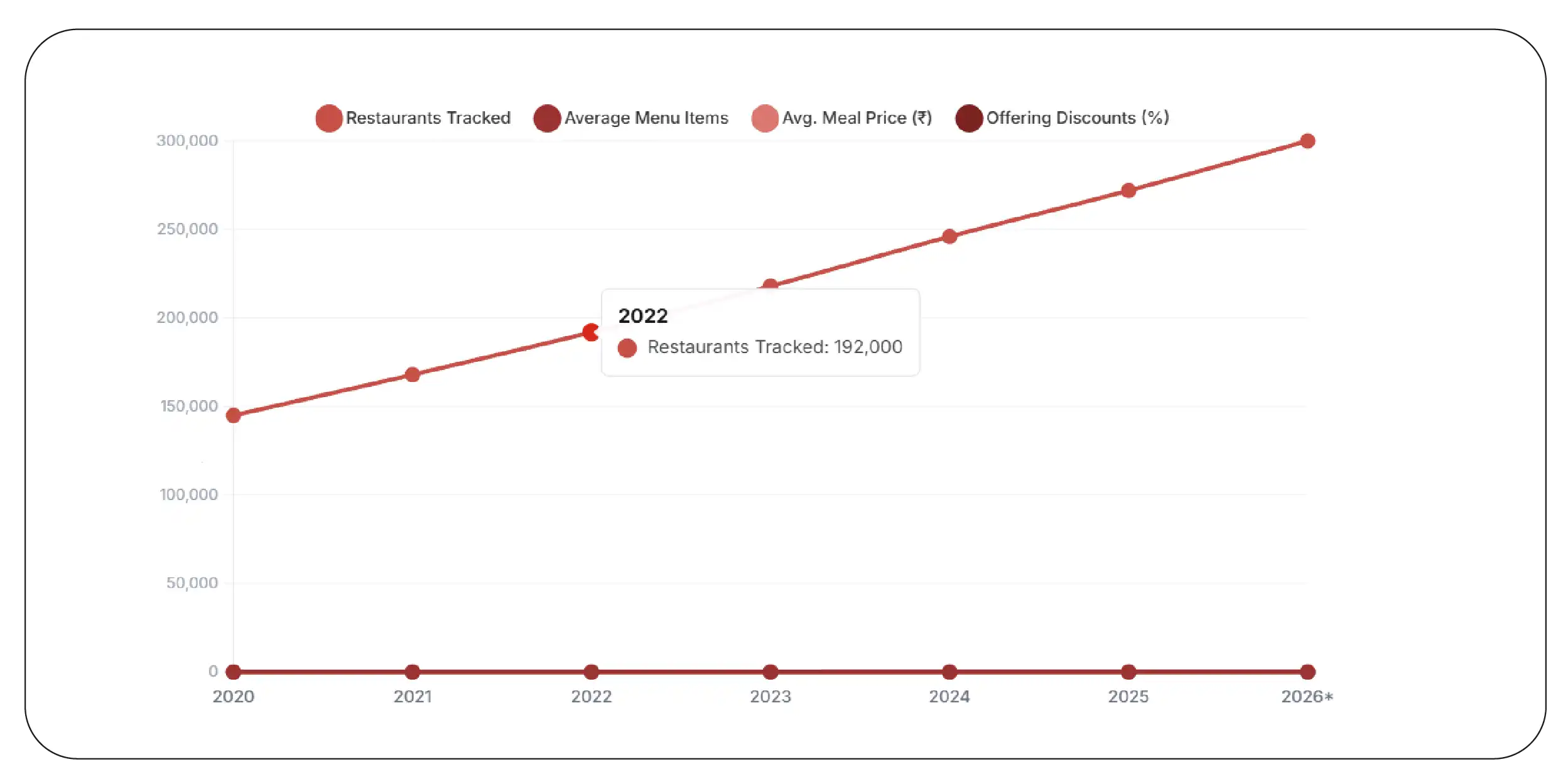
Pricing decisions should never be made in isolation. Restaurant owners need to understand how nearby competitors price similar cuisines, structure meal combos, offer discounts, and position premium items. Studying restaurant listings helps identify pricing gaps, customer preferences, and underserved market segments before investing in a new venture.
Businesses that Scrape Zomato restaurant listings for pricing analysis combined with Pricing intelligence can compare restaurant ratings, menu diversity, cuisine popularity, average order values, promotional campaigns, and pricing consistency across locations. Historical data from 2020–2026 shows that restaurants using competitive benchmarking respond faster to market trends and improve pricing decisions while reducing customer acquisition costs. This approach enables entrepreneurs to launch with confidence, backed by measurable market evidence rather than assumptions.
Competitive Restaurant Pricing Trends (2020–2026)
| Year |
Restaurants Tracked |
Average Menu Items |
Avg. Meal Price (₹) |
Restaurants Offering Discounts |
| 2020 |
145,000 |
82 |
₹265 |
58% |
| 2021 |
168,000 |
85 |
₹278 |
62% |
| 2022 |
192,000 |
88 |
₹295 |
66% |
| 2023 |
218,000 |
91 |
₹312 |
70% |
| 2024 |
246,000 |
95 |
₹328 |
74% |
| 2025 |
272,000 |
99 |
₹343 |
77% |
| 2026* |
300,000 |
104 |
₹358 |
81% |
Key Takeaways
- Restaurant listings continue expanding across major cities.
- Average menu sizes have steadily increased.
- Discount participation has grown significantly.
- Meal prices reflect inflation and premium positioning.
- Competitive benchmarking identifies pricing opportunities.
- Cuisine-specific analysis improves menu planning.
- Market comparison supports smarter launch decisions.
- Restaurant ratings influence pricing flexibility.
- Data-driven insights reduce business uncertainty.
- Continuous monitoring strengthens long-term competitiveness.
How Can Historical Pricing Reduce Launch Risks?
Opening a restaurant without historical pricing insights increases the likelihood of overpricing or underpricing menu items. Customers compare similar restaurants instantly, making competitive pricing one of the strongest drivers of order conversion. Reviewing historical trends helps entrepreneurs estimate realistic pricing ranges and anticipate market changes before launch.
Companies that Monitor Zomato pricing before launching a restaurant gain visibility into seasonal pricing shifts, promotional frequency, cuisine-specific demand, and customer spending patterns. Analysis from 2020–2026 indicates that restaurants entering the market with pricing based on historical trends achieve stronger early customer acquisition and improved revenue stability. Understanding competitor behavior also supports better budgeting for marketing, staffing, procurement, and inventory planning.
Historical Pricing Performance (2020–2026)
| Year |
Avg. Price Increase |
Seasonal Promotions |
Avg. Customer Rating |
Repeat Orders |
| 2020 |
4.0% |
15% |
4.0 |
36% |
| 2021 |
4.8% |
17% |
4.1 |
39% |
| 2022 |
6.1% |
20% |
4.2 |
42% |
| 2023 |
5.6% |
22% |
4.3 |
46% |
| 2024 |
5.2% |
24% |
4.4 |
49% |
| 2025 |
4.8% |
27% |
4.5 |
52% |
| 2026* |
4.5% |
30% |
4.6 |
55% |
Key Takeaways
- Pricing has remained consistently competitive.
- Seasonal promotions continue increasing.
- Customer ratings correlate with pricing consistency.
- Repeat orders improve with optimized pricing.
- Historical analysis strengthens pricing confidence.
- Market intelligence minimizes launch risks.
- Restaurant owners can forecast revenue more accurately.
- Promotional planning becomes more efficient.
- Competitive pricing attracts new customers.
- Data-backed decisions improve profitability.
How Does Market Research Improve Menu Profitability?
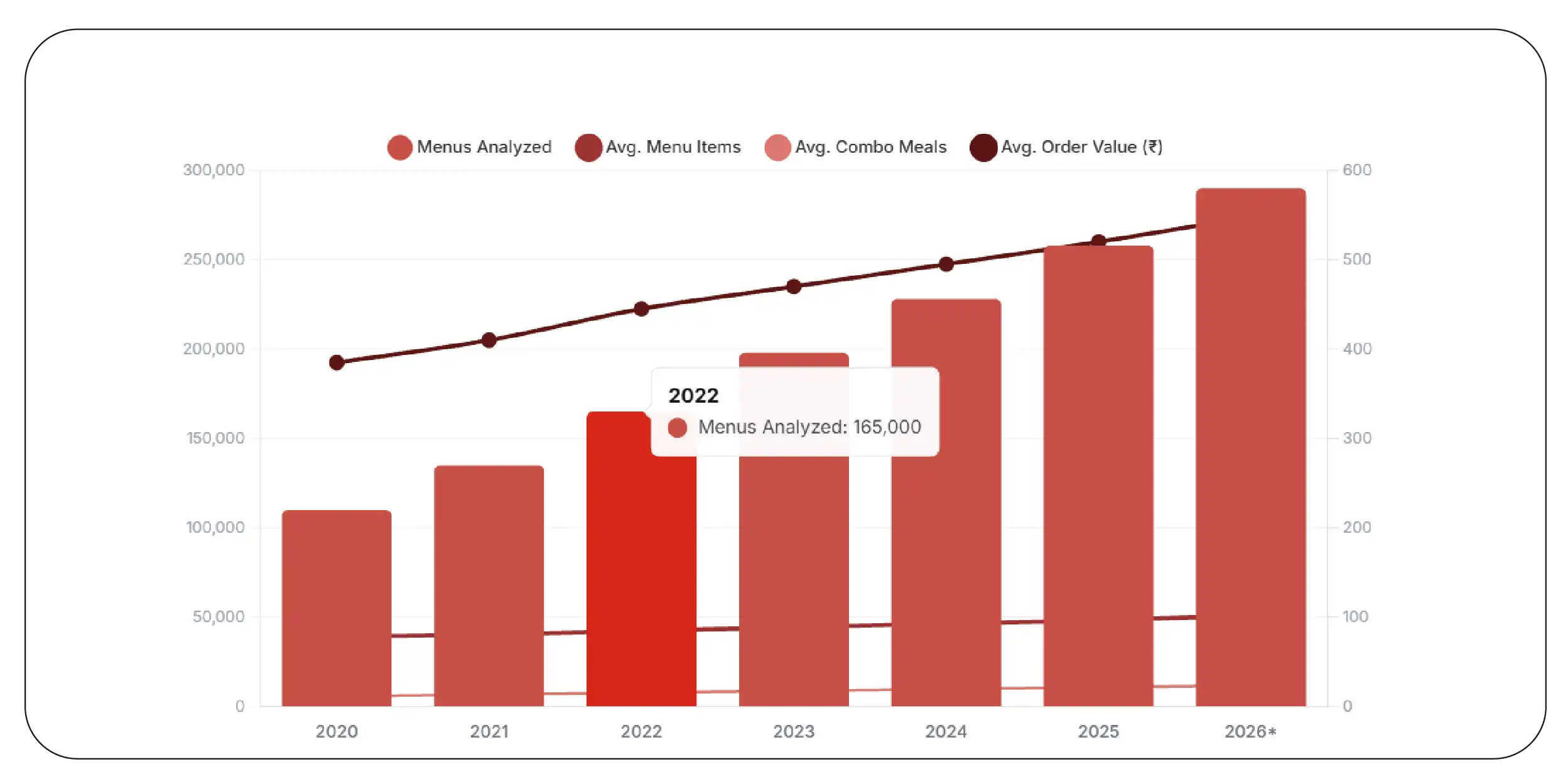
Market research provides restaurant owners with the information needed to develop profitable menus that match customer expectations. Instead of guessing which dishes should be featured or how they should be priced, businesses can evaluate real market demand, competitor offerings, and regional pricing differences. This reduces financial risk while improving customer satisfaction.
Organizations that Scrape Zomato menu prices for restaurant market research gain insights into cuisine popularity, premium pricing opportunities, combo meal performance, seasonal menu trends, and regional preferences. Historical analysis between 2020 and 2026 reveals that restaurants using structured market research consistently refine pricing strategies, improve menu engineering, and increase average order values. These insights also help identify underserved cuisines and emerging food trends before competitors capitalize on them.
Restaurant Market Research Metrics (2020–2026)
| Year |
Menus Analyzed |
Avg. Menu Items |
Avg. Combo Meals |
Avg. Order Value (₹) |
| 2020 |
110,000 |
78 |
12 |
₹385 |
| 2021 |
135,000 |
81 |
14 |
₹410 |
| 2022 |
165,000 |
85 |
16 |
₹445 |
| 2023 |
198,000 |
89 |
18 |
₹470 |
| 2024 |
228,000 |
93 |
20 |
₹495 |
| 2025 |
258,000 |
97 |
22 |
₹520 |
| 2026* |
290,000 |
102 |
24 |
₹548 |
Key Takeaways
- Menu variety has expanded across restaurant categories.
- Combo meals continue driving higher customer spending.
- Average order values have grown consistently.
- Market research identifies pricing opportunities.
- Regional analysis improves menu localization.
- Trending cuisines influence pricing strategies.
- Menu engineering enhances profitability.
- Competitive benchmarking strengthens product positioning.
- Customer preferences evolve with changing lifestyles.
- Continuous market research supports sustainable restaurant growth.
How Can Food Delivery Data Shape Long-Term Restaurant Success?
Restaurant success depends on continuously adapting to changing customer preferences, pricing trends, and delivery expectations. Food delivery platforms generate valuable data that helps businesses optimize menus, forecast demand, improve promotions, and strengthen customer retention. Instead of relying on intuition, restaurant owners can make informed decisions using structured market intelligence collected over time.
Businesses leveraging E-commerce data for restaurant menus & food delivery can monitor menu performance, identify high-demand cuisine categories, compare regional pricing, analyze promotional effectiveness, and forecast customer demand more accurately. Historical insights from 2020–2026 show that restaurants using data-driven decision-making improve operational efficiency, increase average order values, and reduce pricing errors. These insights also help identify new expansion opportunities while supporting inventory planning and supplier negotiations.
Restaurant Delivery Intelligence (2020–2026)
| Year |
Online Orders (Millions) |
Average Delivery Time (mins) |
Digital Menu Updates |
Customer Satisfaction |
| 2020 |
620 |
39 |
14% |
82% |
| 2021 |
710 |
37 |
18% |
84% |
| 2022 |
825 |
35 |
22% |
86% |
| 2023 |
940 |
33 |
26% |
88% |
| 2024 |
1,080 |
31 |
30% |
90% |
| 2025 |
1,240 |
29 |
34% |
92% |
| 2026* |
1,420 |
27 |
38% |
94% |
Key Takeaways
- Online food ordering continues to grow rapidly.
- Faster deliveries improve customer satisfaction.
- Digital menu updates are becoming more frequent.
- Data-driven menus increase operational efficiency.
- Customer preferences evolve with delivery convenience.
- Delivery intelligence supports inventory planning.
- Regional menu optimization improves profitability.
- Historical analytics strengthen forecasting accuracy.
- Restaurants can identify emerging cuisine trends.
- Continuous monitoring supports sustainable business growth.
Why Choose Product Data Scrape?
Restaurant businesses need accurate, timely, and structured market intelligence to make confident pricing and expansion decisions. Product Data Scrape provides comprehensive restaurant data solutions that help businesses monitor menu pricing, delivery charges, competitor promotions, customer trends, and regional demand. With advanced analytics and automated data extraction, restaurant owners can Estimate your sales performance before launch, reduce pricing risks, and improve long-term profitability. Whether planning a cloud kitchen, café, QSR, or full-service restaurant, our data solutions help businesses Analyze Zomato Delivery Pricing Before Opening a Restaurant and transform market insights into profitable growth strategies.
Conclusion
Restaurant success starts with informed pricing decisions. Competitive menu pricing, optimized delivery charges, and continuous market monitoring help businesses attract customers while protecting profit margins. Leveraging Quick commerce & FMCG data enables restaurant owners to understand changing consumer behavior, regional demand, and competitive pricing trends before making major investments. Businesses that Analyze Zomato Delivery Pricing Before Opening a Restaurant gain a measurable competitive advantage through better forecasting, smarter menu engineering, and improved customer acquisition.
Ready to launch your restaurant with confidence? Product Data Scrape delivers powerful restaurant pricing intelligence and market analytics to help you optimize pricing, evaluate competitors, and Analyze Zomato Delivery Pricing Before Opening a Restaurant before your business goes live. Contact us today to make smarter, data-driven restaurant decisions.
FAQs
1. Why should restaurant owners analyze delivery pricing before opening?
Analyzing delivery pricing helps identify competitive menu prices, customer spending patterns, delivery costs, discount trends, and regional demand, enabling restaurants to launch with stronger pricing strategies and better profitability.
2. What restaurant data should entrepreneurs monitor?
Businesses should monitor menu prices, delivery charges, cuisine popularity, promotions, ratings, customer reviews, average order values, competitor pricing, seasonal trends, and regional demand before entering the market.
3. How often should pricing intelligence be updated?
Restaurant pricing data should be monitored regularly because delivery fees, menu prices, promotions, and customer preferences change frequently throughout the year, especially during holidays and promotional campaigns.
4. How does Product Data Scrape help restaurant businesses?
Product Data Scrape provides structured restaurant datasets, competitor pricing intelligence, menu analytics, delivery charge monitoring, and market insights that support smarter pricing, expansion planning, and business growth.
5. Can restaurant pricing analytics improve profitability?
Yes. Continuous pricing analysis helps restaurants optimize menu prices, reduce pricing errors, improve promotional effectiveness, increase customer retention, forecast demand accurately, and maximize long-term revenue growth.


 Singapore
 EMAIL
EMAIL
 PHONE
PHONE












.webp)