Quick Overview
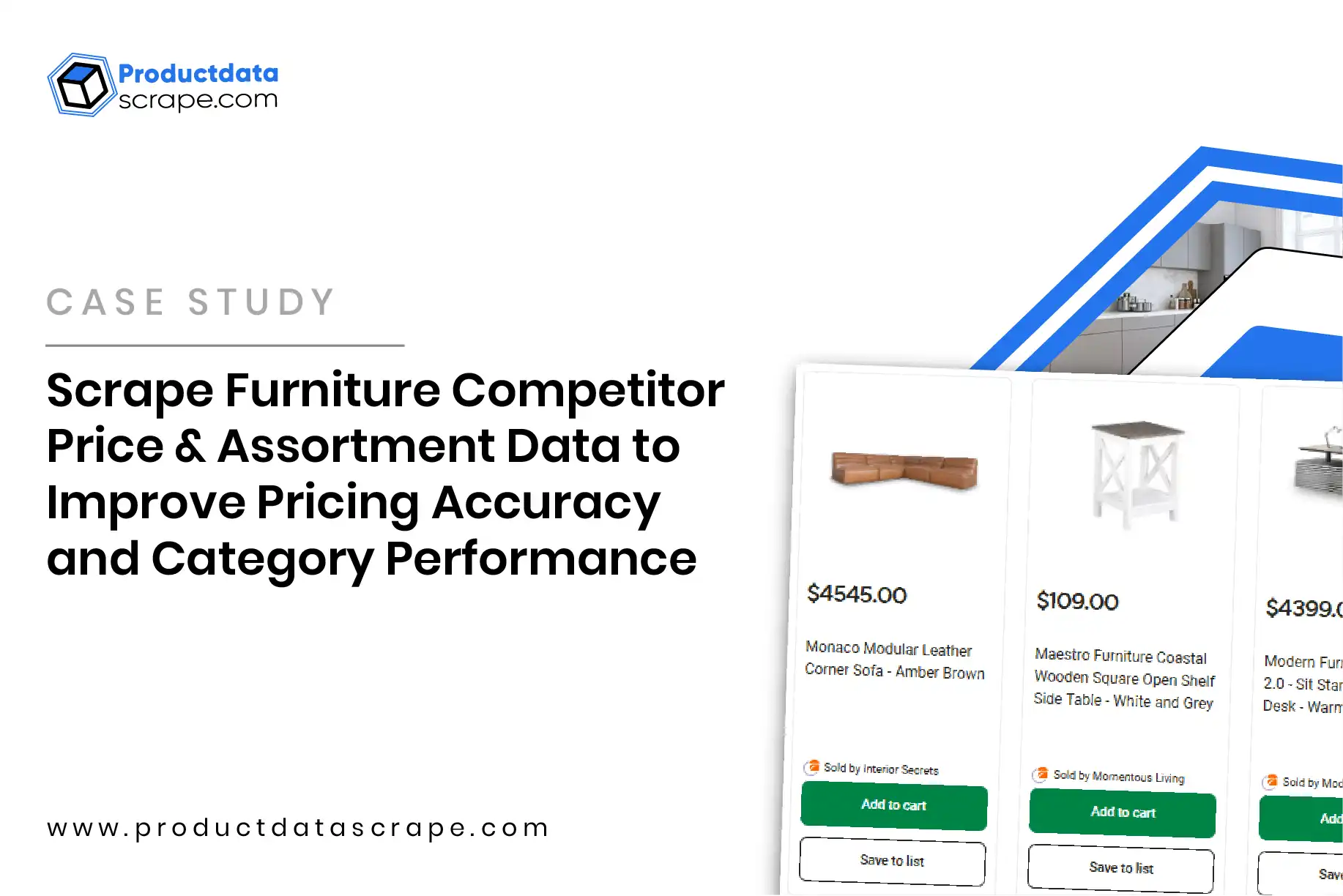
A leading omnichannel furniture retailer partnered with Product Data Scrape to enhance its competitive pricing and assortment intelligence across multiple online furniture stores. The objective was to automate Scrape Furniture Competitor Price & Assortment Data while improving pricing accuracy, assortment visibility, and market responsiveness. Over a five-month implementation, the solution leveraged E-commerce data for furniture to monitor thousands of SKUs, pricing changes, product availability, and category updates in real time. The project achieved a 97% product matching accuracy, reduced manual monitoring efforts by 88%, and increased competitor assortment visibility by 94%, enabling faster pricing decisions and stronger category performance.
The Client
The client is a rapidly growing direct-to-consumer furniture retailer offering living room, bedroom, office, dining, outdoor, and home décor products across multiple online sales channels. As digital furniture shopping accelerated, the company faced increasing pressure to remain competitive against established retailers and emerging marketplace sellers. Consumer expectations for competitive pricing, broader product selection, and faster inventory updates continued to rise, making Furniture D2C Pricing & Assortment Intelligence an essential capability for sustainable growth.
Before partnering with Product Data Scrape, the client relied heavily on manual competitor tracking and fragmented spreadsheets to monitor furniture prices and product assortments. The process was slow, labor-intensive, and unable to keep pace with frequent catalog updates, promotional campaigns, and pricing changes across competing retailers. This limited the company's ability to respond quickly to market shifts and identify assortment gaps.
The organization also struggled to benchmark category performance consistently due to inconsistent product mapping and delayed reporting. Leadership recognized that scalable Assortment analytics would be critical for improving pricing decisions, optimizing merchandising strategies, enhancing inventory planning, and delivering a stronger customer experience. The client therefore sought an automated competitive intelligence solution capable of delivering accurate, real-time insights across thousands of furniture products.
Goals & Objectives
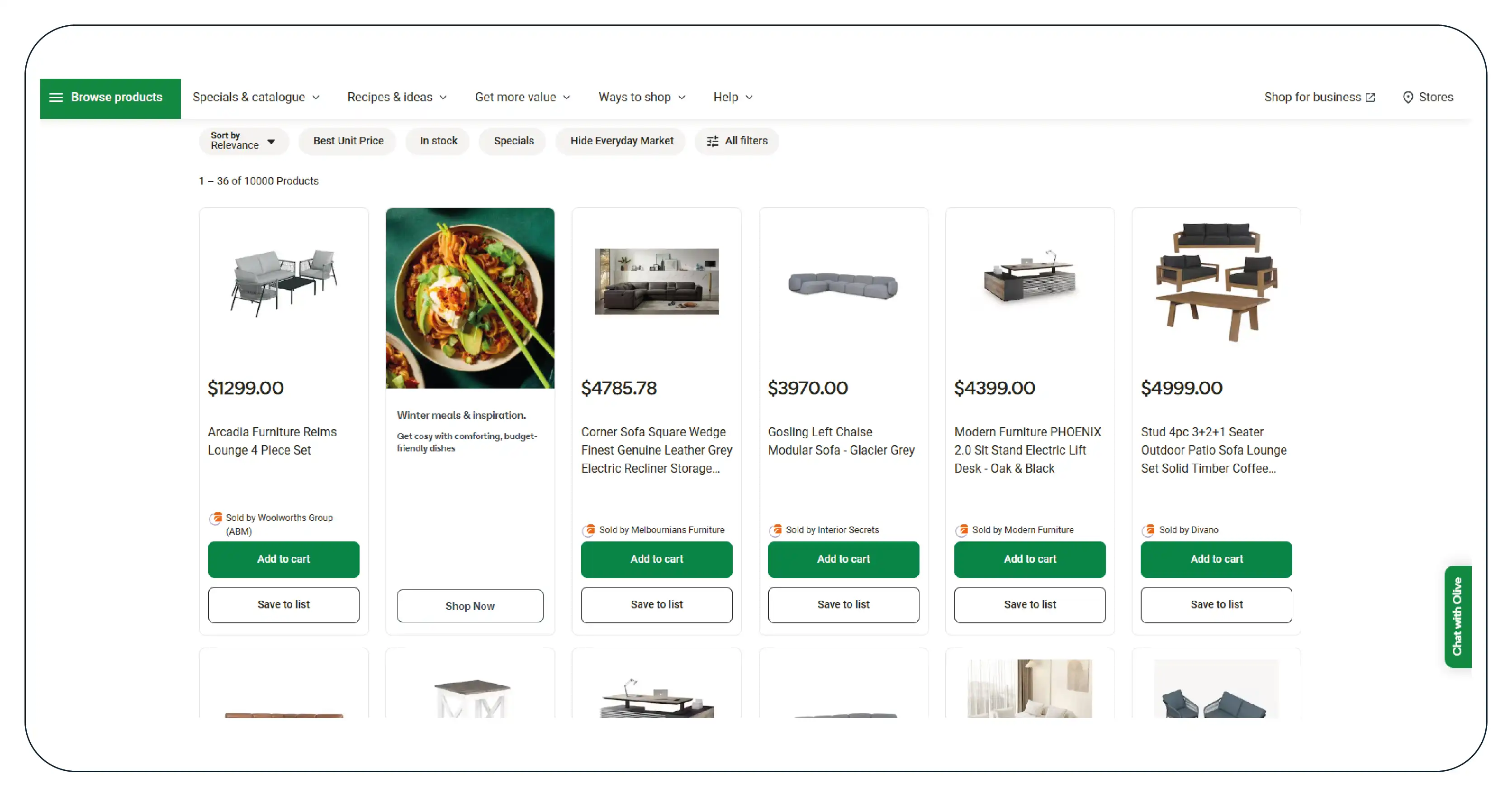
The primary business objective was to build a scalable competitive intelligence platform capable of automating Furniture Catalog Monitoring for Competitor Analysis across leading furniture retailers. The client aimed to improve pricing visibility, strengthen category benchmarking, increase reporting speed, enhance assortment optimization, and support strategic merchandising decisions using reliable competitive data.
From a technical perspective, the project focused on implementing intelligent automation, seamless platform integration, and real-time analytics supported by advanced E-commerce data scraping. The solution was designed to automatically collect competitor pricing, product availability, assortment updates, promotional information, specifications, images, and category changes while integrating structured datasets directly into the client's analytics dashboards. Automated validation ensured consistent product matching and improved data quality across multiple retail websites.
Project success was measured using clearly defined performance indicators:
Increase automated competitor catalog coverage to more than 98%.
Improve product matching accuracy to 97%.
Reduce manual competitor monitoring by 88%.
Improve pricing update frequency throughout the day.
Increase assortment visibility across major competitors.
Reduce reporting turnaround time by over 80%.
Improve category benchmarking accuracy.
Enable scalable expansion across additional furniture retailers and product categories.
The Core Challenge
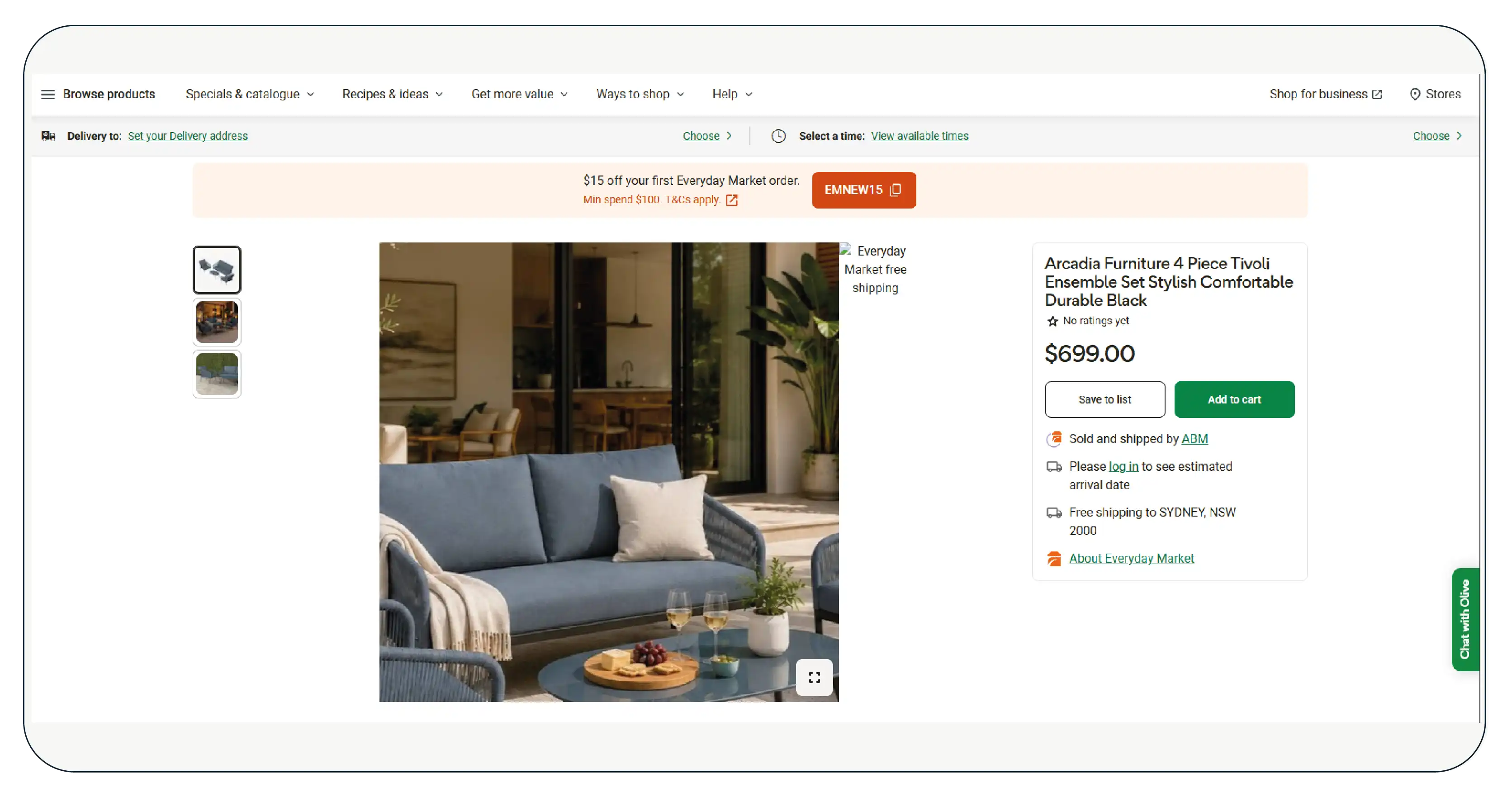
The client faced growing challenges in maintaining accurate competitive intelligence across multiple furniture retailers. Product catalogs changed frequently, promotions were updated throughout the day, and inventory availability varied by region. Manual monitoring could no longer keep pace with these rapid changes, resulting in delayed pricing decisions and incomplete market visibility.
Building an effective Furniture Pricing Benchmark Analysis became increasingly difficult because competitors used different product titles, specifications, dimensions, materials, and category structures. Identifying identical or comparable products required extensive manual effort, often leading to inconsistent product mapping and inaccurate benchmarking. These issues reduced confidence in pricing recommendations and slowed category management decisions.
As the business expanded into additional markets, monitoring global furniture retailers introduced further complexity. Multiple currencies, localized assortments, seasonal collections, and frequent promotional campaigns created fragmented datasets that were difficult to consolidate into meaningful business intelligence.
The client also experienced operational bottlenecks caused by repetitive data collection, inconsistent reporting schedules, duplicate records, and delayed catalog updates. These challenges impacted the speed and quality of competitive insights while limiting the organization's ability to respond quickly to changing market conditions. To remain competitive, the client required an automated solution capable of collecting, standardizing, and analyzing competitor pricing and assortment data continuously across thousands of SKUs while maintaining high accuracy and scalability.
Our Solution
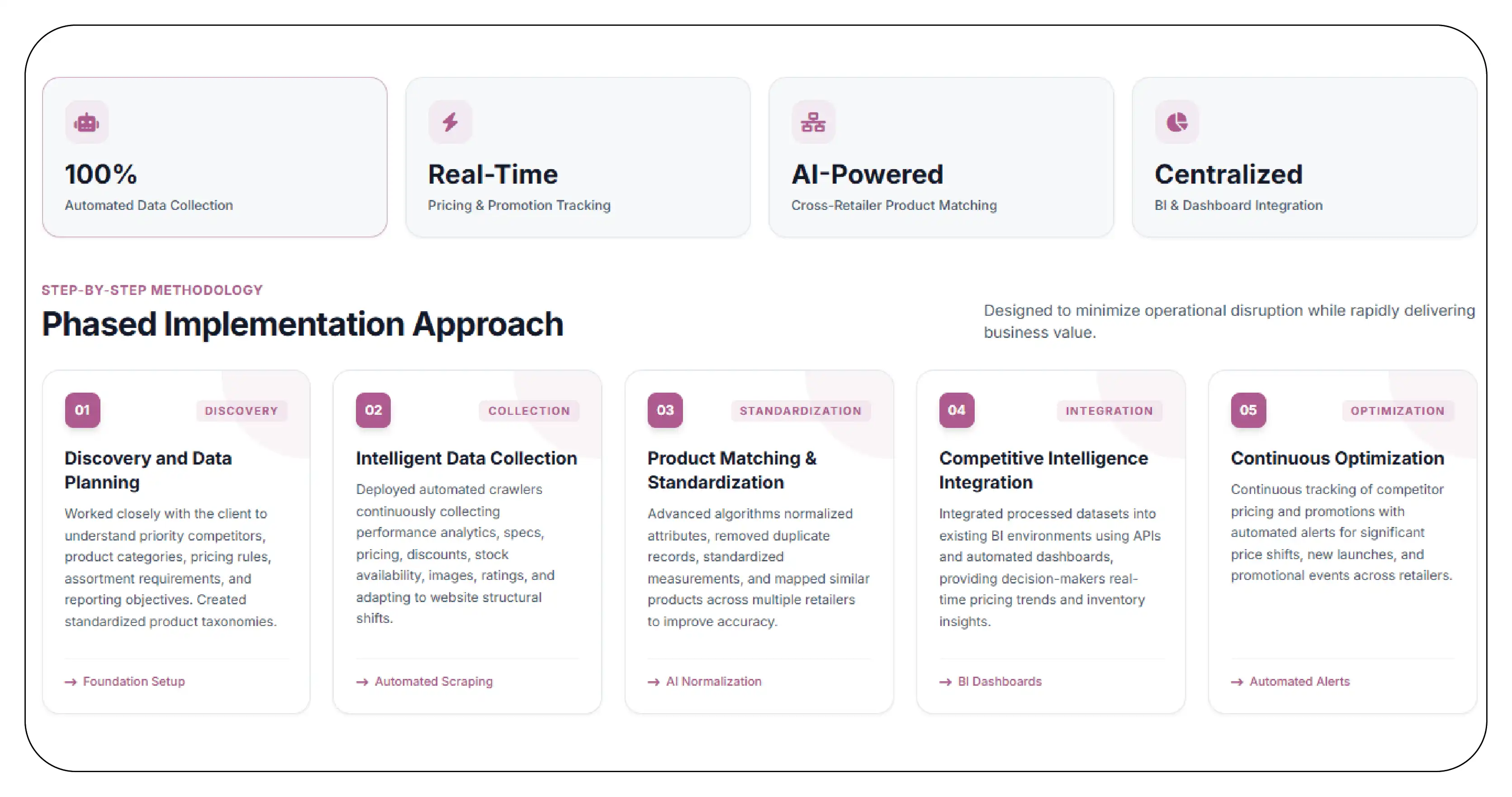
Product Data Scrape designed a scalable competitive intelligence platform that automated data collection, product matching, catalog monitoring, and analytics across leading furniture retailers. The implementation followed a phased approach that minimized operational disruption while delivering immediate business value.
Phase 1: Discovery and Data Planning
Our consultants worked closely with the client to understand priority competitors, product categories, pricing rules, assortment requirements, and reporting objectives. We created standardized product taxonomies and competitive benchmarks that formed the foundation for consistent analytics.
Phase 2: Intelligent Data Collection
We deployed automated crawlers that continuously collected Furniture Product Performance Analytics from competitor websites. The platform captured product names, specifications, dimensions, pricing, discounts, stock availability, images, customer ratings, and category information while adapting automatically to website structure changes.
Phase 3: Product Matching and Data Standardization
Advanced matching algorithms normalized product attributes, removed duplicate records, standardized measurements, and mapped similar products across multiple retailers. This significantly improved benchmarking accuracy and reduced manual validation efforts.
Phase 4: Competitive Intelligence Integration
The processed datasets were integrated into the client's existing BI environment using APIs and automated dashboards. Decision-makers gained access to real-time pricing trends, assortment comparisons, promotion tracking, and inventory insights from a centralized platform.
Phase 5: Continuous Optimization
The solution continuously Track Competitor Product Pricing and Promotions, generating automated alerts whenever significant pricing changes, new product launches, assortment updates, or promotional events occurred. Regular performance optimization ensured reliable data extraction, improved processing efficiency, and scalable expansion across additional furniture retailers and international marketplaces.
By combining automation, intelligent product mapping, and advanced analytics, the solution transformed competitive monitoring into a real-time strategic capability. The client gained faster access to actionable market intelligence, improved pricing accuracy, stronger assortment planning, and enhanced category performance while significantly reducing manual operational effort.
Results & Key Metrics
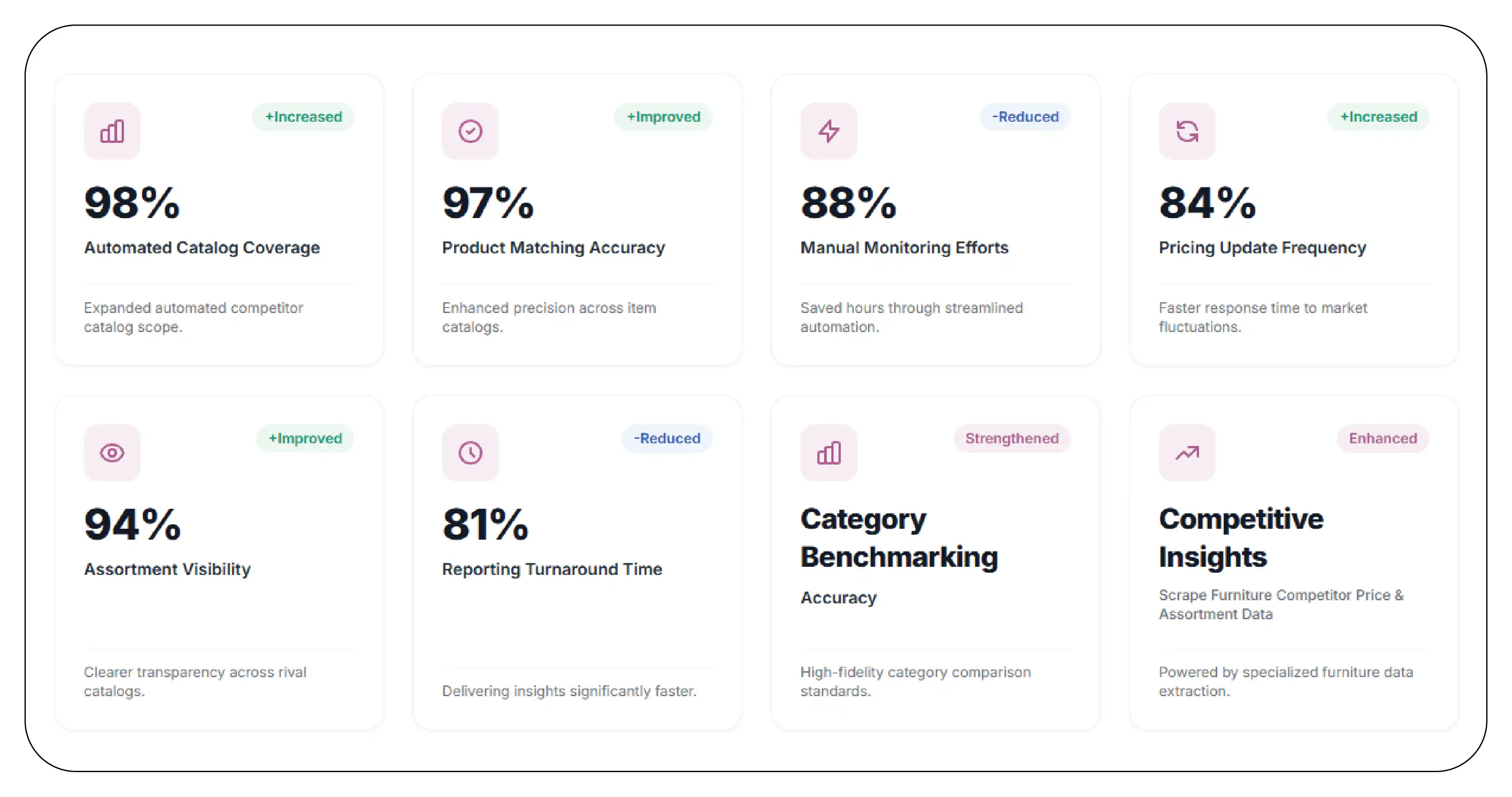
Following implementation, the client experienced substantial improvements in pricing intelligence, assortment visibility, and operational efficiency through Furniture Catalog Monitoring and Price Tracking. Automated data collection enabled the business to respond more quickly to competitor activity while enhancing merchandising decisions across multiple product categories.
Key Performance Metrics
Increased automated competitor catalog coverage to 98%.
Improved product matching accuracy to 97%.
Reduced manual monitoring efforts by 88%.
Increased pricing update frequency by 84%.
Improved assortment visibility across competitor catalogs by 94%.
Reduced reporting turnaround time by 81%.
Strengthened category benchmarking accuracy.
Enhanced competitive insights using Scrape Furniture Competitor Price & Assortment Data.
Results Narrative
The automated competitive intelligence platform transformed how the client evaluated pricing and assortment strategies. Real-time monitoring enabled category managers to identify pricing changes, product launches, discontinued items, and promotional campaigns as they occurred. This faster access to reliable data improved pricing responsiveness and reduced delays in merchandising decisions.
With standardized competitor datasets and centralized reporting, the client strengthened category planning, optimized assortment strategies, and improved inventory alignment with market demand. The scalable solution also positioned the business to expand competitor monitoring across additional retailers while maintaining consistent data quality and operational efficiency.
What Made Product Data Scrape Different
Product Data Scrape delivered more than traditional web scraping by combining intelligent automation, adaptive crawling technology, advanced product matching, and scalable analytics into a unified competitive intelligence platform. Our proprietary framework continuously monitored competitor websites while automatically adapting to catalog updates and structural website changes. Through comprehensive Furniture Assortment Monitoring Across Retailers, the client gained reliable visibility into pricing, inventory, assortment depth, promotions, and category performance from a single centralized dashboard. This innovative approach minimized manual intervention, improved data consistency, accelerated reporting, and empowered decision-makers with accurate market intelligence that supported long-term pricing optimization and merchandising success.
Client's Testimonial
"Working with Product Data Scrape has significantly strengthened our competitive intelligence capabilities. Their solution to Scrape Furniture Competitor Price & Assortment Data gave us real-time visibility into competitor pricing, product assortments, inventory changes, and promotional activities across multiple furniture retailers. We now make faster pricing decisions, improve category planning, and respond more effectively to market trends. The automation reduced manual effort dramatically while delivering highly accurate and actionable insights that continue to support our business growth."
— Director of Pricing & Category Management, Leading Furniture Retail Brand
Conclusion
This case study demonstrates how automated Scrape Furniture Competitor Price & Assortment Data empowers furniture retailers to improve pricing accuracy, optimize category performance, and respond faster to changing market conditions. By combining intelligent automation with Assortment and availability monitoring, businesses gain continuous visibility into competitor pricing, product assortments, inventory levels, and promotional activities. These actionable insights enable data-driven merchandising, stronger competitive positioning, and scalable retail growth. As the furniture industry becomes increasingly competitive, investing in automated competitive intelligence helps organizations make faster, smarter decisions while delivering greater value to customers and sustaining long-term business success.
FAQs
1. Why is competitor furniture pricing data important?
Competitor pricing data helps furniture retailers benchmark prices, monitor market trends, optimize product positioning, improve pricing strategies, and respond quickly to competitor promotions while maintaining profitability and customer satisfaction.
2. What data can be collected from furniture retailers?
Automated data collection can capture product names, SKUs, specifications, dimensions, materials, prices, discounts, stock availability, product images, customer ratings, reviews, and category information across multiple furniture websites.
3. How often should competitor pricing be monitored?
Furniture pricing and assortment data should be monitored several times daily or in near real time to capture price changes, inventory updates, promotional campaigns, and new product launches as they occur.
4. Which businesses benefit from furniture assortment intelligence?
Furniture retailers, manufacturers, wholesalers, marketplace sellers, pricing teams, category managers, merchandising specialists, and market research firms benefit by improving assortment planning, competitive benchmarking, inventory optimization, and pricing decisions.
5. How does automated furniture data scraping improve business performance?
Automated furniture data scraping eliminates manual monitoring, delivers standardized datasets, improves reporting accuracy, enables faster competitive analysis, strengthens merchandising strategies, supports dynamic pricing, and helps businesses make informed decisions based on real-time market intelligence.


 Singapore
 EMAIL
EMAIL
 PHONE
PHONE


.webp "thumb")









.webp)