Introduction
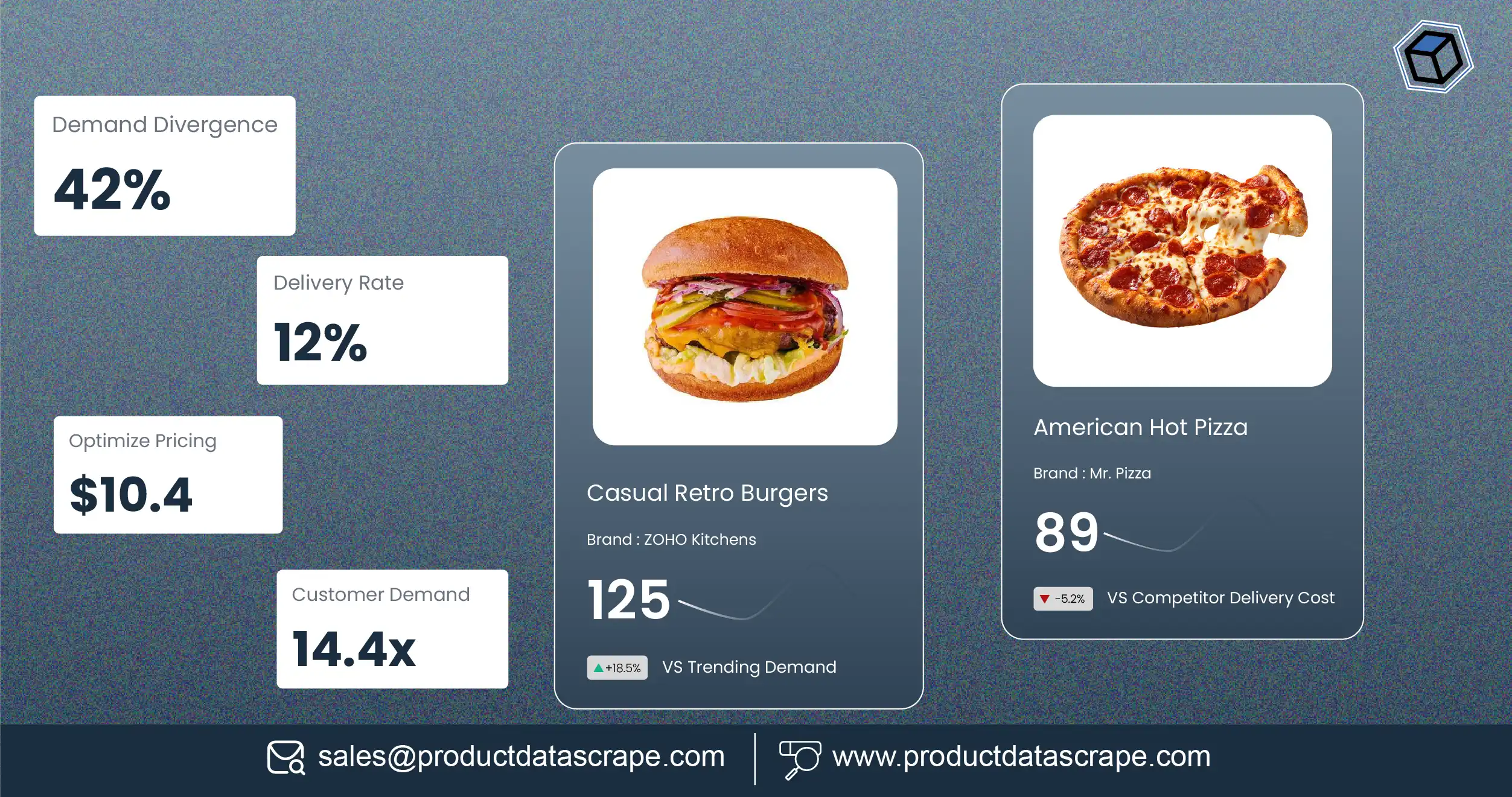
Launching a successful food delivery business starts with accurate market data. Food Delivery Business Data Before Launch helps businesses identify profitable locations, optimize pricing, define delivery zones, and forecast customer demand before investing in operations, reducing risks and improving long-term profitability.
Industry Insight: Industry studies estimate that more than 75% of successful food delivery startups perform extensive market and competitor analysis before launch. Businesses using data-driven planning can improve pricing accuracy by up to 30% and reduce expansion risks between 2020 and 2026.
The food delivery industry continues to expand rapidly as consumers increasingly prefer ordering meals online. However, entering this competitive market without reliable business intelligence can result in poor pricing decisions, inefficient delivery zones, inventory issues, and slow customer acquisition. Startups and restaurant brands must evaluate demand patterns, competitor activity, delivery coverage, menu pricing, and consumer preferences before launching operations.
This is where Food Delivery Business Data Before Launch becomes a strategic advantage. Businesses that analyze restaurant menus & food delivery Data gain valuable insights into pricing trends, customer demand, menu popularity, delivery times, restaurant density, promotional strategies, and market gaps. These insights enable restaurant chains, cloud kitchens, food delivery startups, franchise operators, investors, and market researchers to build data-driven launch strategies instead of relying on assumptions.
This guide is designed for food delivery startups, restaurant owners, cloud kitchen operators, investors, and business strategy teams looking to solve the challenge of entering competitive markets with confidence, optimized pricing, and sustainable growth.
How Can Businesses Build the Right Pricing Strategy Before Launch?
Pricing is one of the most important factors influencing customer acquisition and profitability in food delivery. Setting prices too high discourages new customers, while pricing too low reduces profit margins. Businesses need detailed market intelligence before finalizing menu prices, delivery fees, and promotional offers. By leveraging Extract Food delivery market research data, organizations gain visibility into competitor pricing, customer preferences, discount campaigns, and regional purchasing behavior. Combined with Pricing intelligence, these insights support accurate pricing decisions that align with customer expectations.
Market research datasets typically include menu prices, delivery charges, service fees, promotional offers, average order values, peak ordering hours, and category-wise demand. Businesses analyze this information to identify competitive pricing gaps and evaluate how similar restaurants position their products across different delivery platforms.
Price monitoring also enables startups to compare premium and budget restaurant segments while understanding seasonal pricing changes. Businesses can optimize introductory offers, improve customer acquisition strategies, and maximize revenue from the beginning.
Food Delivery Pricing Trends (2020–2026)
| Year |
Average Online Food Orders Growth |
Businesses Using Pricing Analytics |
Dynamic Pricing Adoption |
| 2020 |
18% |
29% |
20% |
| 2021 |
25% |
38% |
29% |
| 2022 |
31% |
48% |
40% |
| 2023 |
36% |
59% |
51% |
| 2024 |
42% |
68% |
61% |
| 2025* |
47% |
75% |
69% |
| 2026* |
52% |
82% |
77% |
Key Benefits of Pricing Research
- Compare menu prices across competitors.
- Analyze delivery charges by region.
- Monitor promotional campaigns.
- Identify profitable pricing gaps.
- Improve customer acquisition strategies.
- Support long-term revenue optimization.
Businesses that establish pricing strategies using comprehensive market research are better positioned to compete effectively while maintaining healthy profit margins during expansion.
Why Should Startups Analyze Customer Demand Before Entering the Market?
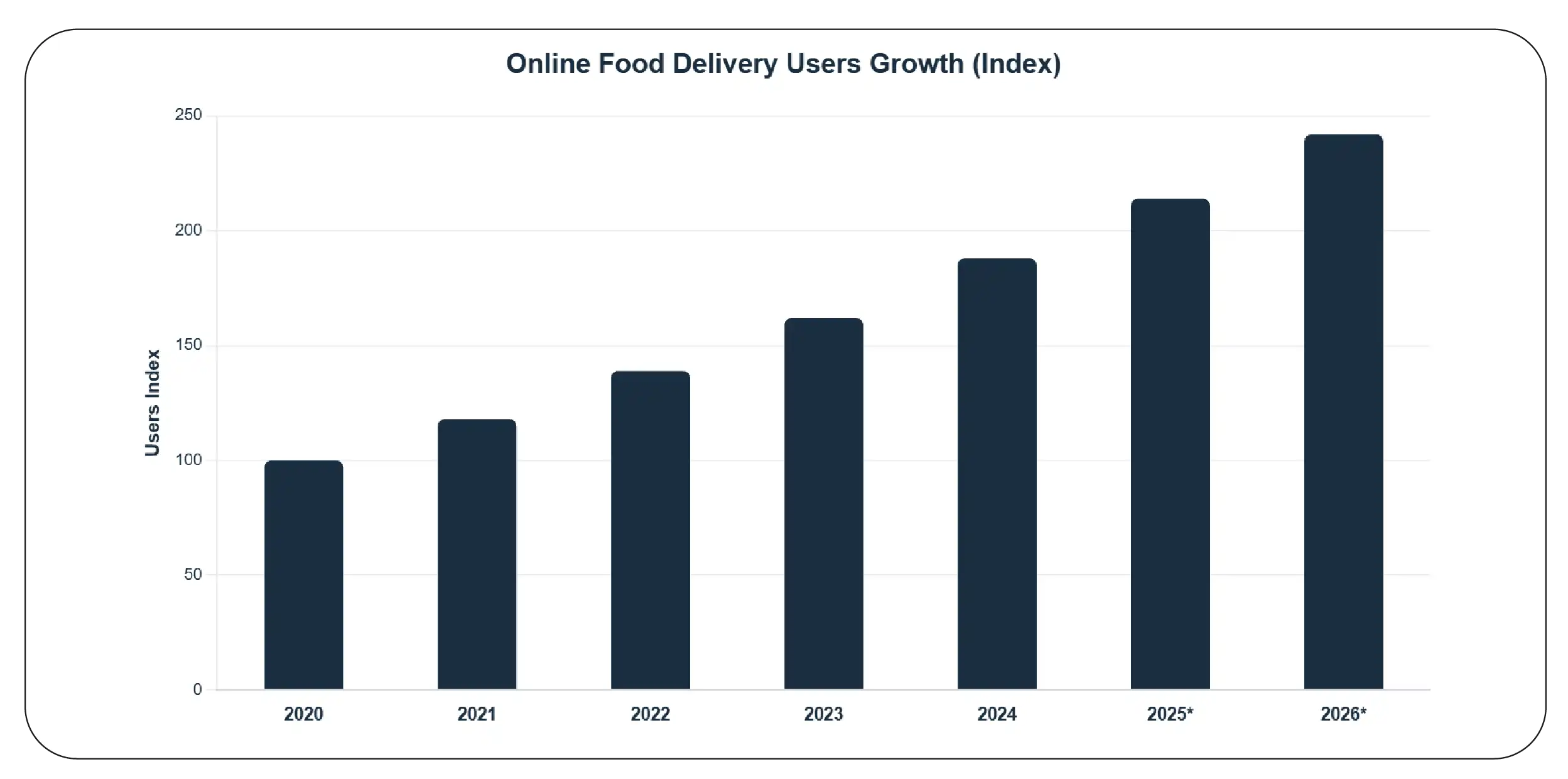
Understanding customer demand is essential before launching any food delivery business. Demand varies by city, neighborhood, cuisine, time of day, weather conditions, local events, and consumer preferences. Without accurate demand insights, businesses risk opening in low-performing locations or investing in menu categories with limited market potential. Performing Food delivery demand analysis allows startups to identify where demand is strongest and how customer behavior changes over time.
Demand analysis combines historical ordering trends, search behavior, cuisine popularity, repeat purchase rates, average order values, and delivery frequency. Businesses use these insights to forecast order volumes, optimize staffing, manage inventory, and improve delivery efficiency before launch.
Demand forecasting also helps determine ideal operating hours and delivery coverage. Cloud kitchens can prioritize high-demand cuisines, while restaurant chains can identify underserved markets with strong growth potential. Investors benefit by evaluating market readiness before allocating capital to expansion projects.
Customer Demand Trends (2020–2026)
| Year |
Online Food Delivery Users (Index) |
Repeat Customer Rate |
Businesses Using Demand Analytics |
| 2020 |
100 |
43% |
27% |
| 2021 |
118 |
48% |
36% |
| 2022 |
139 |
54% |
47% |
| 2023 |
162 |
60% |
58% |
| 2024 |
188 |
66% |
68% |
| 2025* |
214 |
71% |
76% |
| 2026* |
242 |
76% |
83% |
Advantages of Demand Analysis
- Identify high-demand delivery locations.
- Forecast future order volumes.
- Optimize delivery zones before launch.
- Reduce inventory waste.
- Improve workforce planning.
- Enhance customer satisfaction through better service availability.
Businesses that understand customer demand before launch can reduce operational risks, improve resource allocation, and build stronger foundations for long-term growth in the competitive food delivery market.
How Can Startups Benchmark Competitors Before Entering the Market?
Launching a food delivery business without understanding the competitive landscape can lead to poor pricing, weak positioning, and inefficient operations. Every successful startup studies existing market leaders before making investment decisions. Conducting Competitor analysis for food delivery startups enables businesses to compare pricing models, restaurant partnerships, delivery coverage, customer ratings, promotional strategies, and service quality across major delivery platforms.
Competitor intelligence provides a complete picture of market dynamics. Businesses can identify which cuisines dominate specific regions, how competitors structure delivery charges, which promotional campaigns generate higher engagement, and how quickly orders are fulfilled. These insights help startups create unique value propositions instead of duplicating existing business models.
Analyzing competitor performance also reveals market gaps. For example, underserved neighborhoods, niche cuisine categories, or premium delivery services may present opportunities for new entrants. Historical competitor data further helps startups understand seasonal demand fluctuations, customer loyalty patterns, and promotional effectiveness.
Food Delivery Competition Trends (2020–2026)
| Year |
Active Food Delivery Platforms |
Businesses Using Competitor Analytics |
Average Monthly Promotions |
| 2020 |
120 |
31% |
18 |
| 2021 |
142 |
39% |
24 |
| 2022 |
168 |
49% |
31 |
| 2023 |
195 |
60% |
39 |
| 2024 |
224 |
69% |
47 |
| 2025* |
252 |
77% |
55 |
| 2026* |
281 |
84% |
63 |
Benefits of Competitive Benchmarking
- Compare pricing strategies across competitors.
- Monitor promotional campaigns and discounts.
- Evaluate delivery speed and service quality.
- Identify underserved customer segments.
- Benchmark customer ratings and reviews.
- Develop stronger market positioning before launch.
Businesses that invest in competitor intelligence enter the market with clearer strategies, reduced uncertainty, and greater confidence in their pricing and operational decisions.
Why Does Restaurant Intelligence Improve Launch Success?
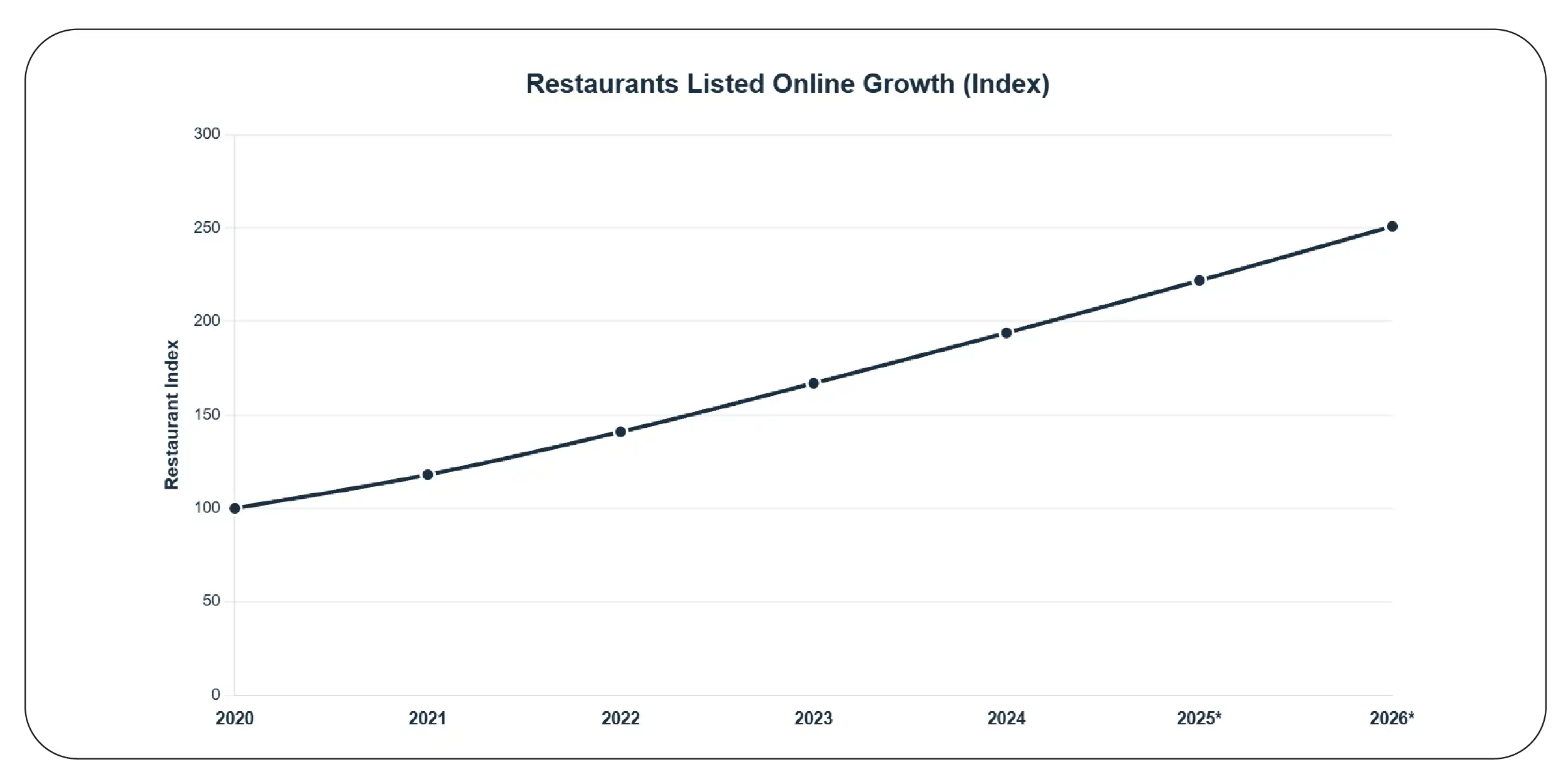
Restaurant data provides far more than menu information. It reveals customer preferences, pricing trends, delivery performance, cuisine popularity, restaurant density, operating hours, and regional demand patterns. Leveraging Restaurant Data Intelligence for Delivery Startups allows businesses to make informed decisions before opening operations in a competitive market.
Restaurant intelligence combines structured datasets such as menu prices, restaurant locations, cuisine categories, customer ratings, order frequency, preparation times, delivery coverage, and promotional offers. By analyzing these variables together, startups can identify profitable business locations, optimize delivery networks, and design menus that match local demand.
Restaurant analytics also support expansion planning. Businesses can compare neighborhoods based on restaurant saturation, average order value, customer satisfaction, and delivery efficiency. Investors and franchise operators use these insights to prioritize markets with stronger growth potential and lower competitive pressure.
Restaurant Intelligence Trends (2020–2026)
| Year |
Restaurants Listed Online (Index) |
Average Digital Orders |
Businesses Using Restaurant Analytics |
| 2020 |
100 |
165 |
29% |
| 2021 |
118 |
198 |
37% |
| 2022 |
141 |
236 |
47% |
| 2023 |
167 |
281 |
58% |
| 2024 |
194 |
325 |
68% |
| 2025* |
222 |
372 |
76% |
| 2026* |
251 |
420 |
84% |
Key Advantages of Restaurant Intelligence
- Identify high-performing restaurant clusters.
- Analyze cuisine popularity by location.
- Compare menu pricing across markets.
- Optimize delivery coverage before launch.
- Improve restaurant partnership decisions.
- Support expansion using data-backed market insights.
Restaurant intelligence helps startups reduce operational risks, improve customer experiences, and build efficient delivery ecosystems from the very beginning. Instead of relying on assumptions, businesses gain measurable insights that strengthen pricing, logistics, menu planning, and long-term growth strategies.
How Can Businesses Identify the Best Markets Before Investing?
Launching in the wrong market can increase customer acquisition costs and reduce profitability. Businesses should evaluate market size, consumer demand, restaurant density, purchasing power, and delivery infrastructure before making expansion decisions. Conducting Food-Delivery Market Opportunity Analysis helps startups identify locations with the highest growth potential while minimizing operational risks.
Market opportunity analysis combines historical ordering trends, demographic data, cuisine preferences, delivery coverage, average order value, customer retention, and promotional activity. These datasets help businesses determine where demand exceeds supply and where new delivery services can gain market share.
The analysis also supports investment planning by identifying cities and neighborhoods with favorable economic conditions, strong digital adoption, and increasing online food ordering behavior. Instead of expanding based on assumptions, businesses can prioritize markets using measurable performance indicators.
Food Delivery Market Opportunity Trends (2020–2026)
| Year |
Online Food Delivery Market Growth |
New Delivery Startups |
Businesses Using Market Opportunity Analytics |
| 2020 |
15% |
850 |
28% |
| 2021 |
22% |
1,080 |
37% |
| 2022 |
29% |
1,360 |
47% |
| 2023 |
34% |
1,690 |
58% |
| 2024 |
39% |
2,040 |
68% |
| 2025* |
44% |
2,410 |
76% |
| 2026* |
49% |
2,820 |
83% |
Benefits of Market Opportunity Analysis
- Identify high-growth launch locations.
- Measure regional customer demand.
- Evaluate market saturation levels.
- Compare purchasing behavior across cities.
- Prioritize expansion using data.
- Reduce investment risks before launch.
Businesses that evaluate market opportunities before entering new regions make better investment decisions and establish stronger foundations for long-term success.
Why Should Food Delivery Businesses Track Quick Commerce Trends?
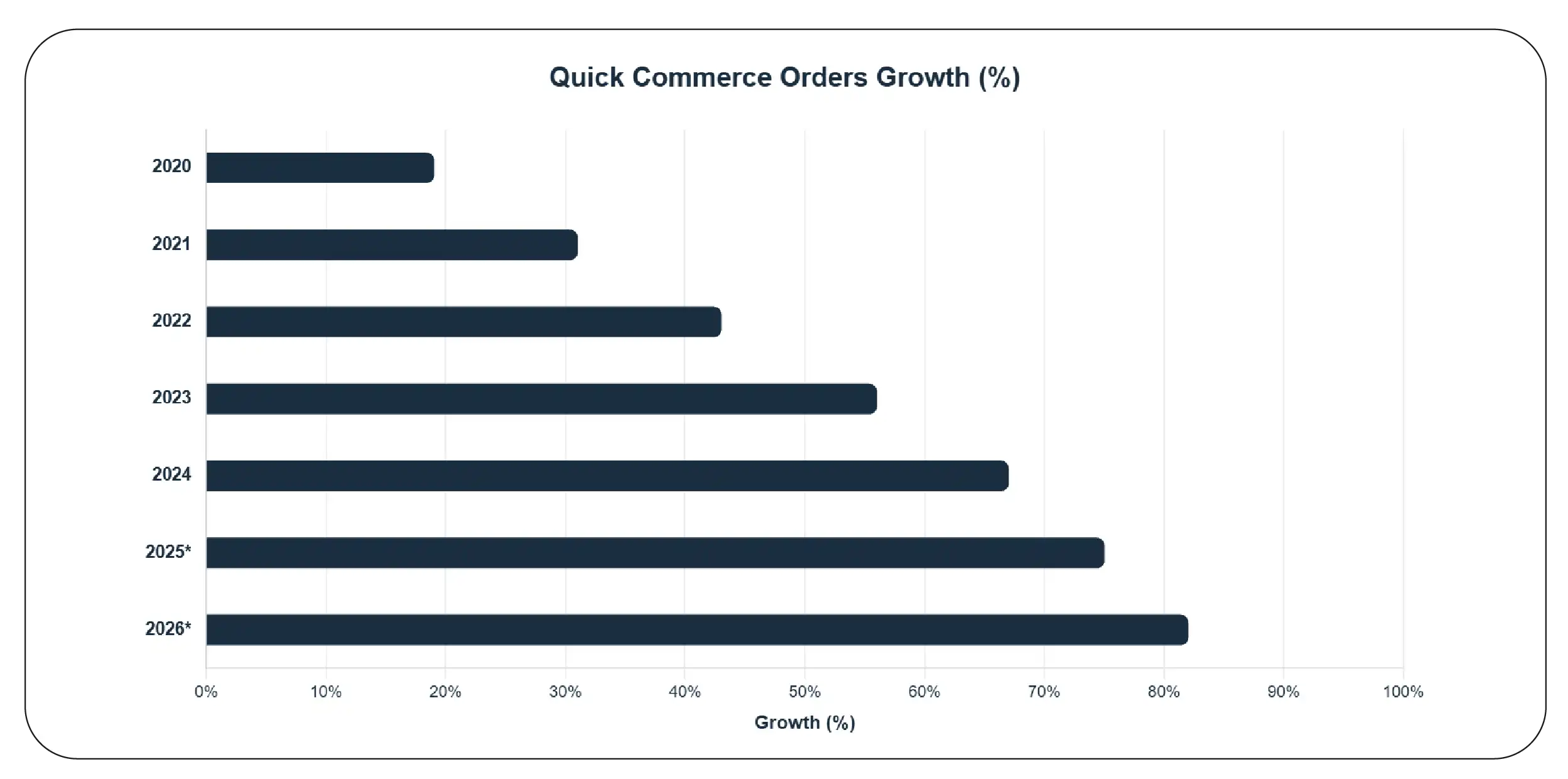
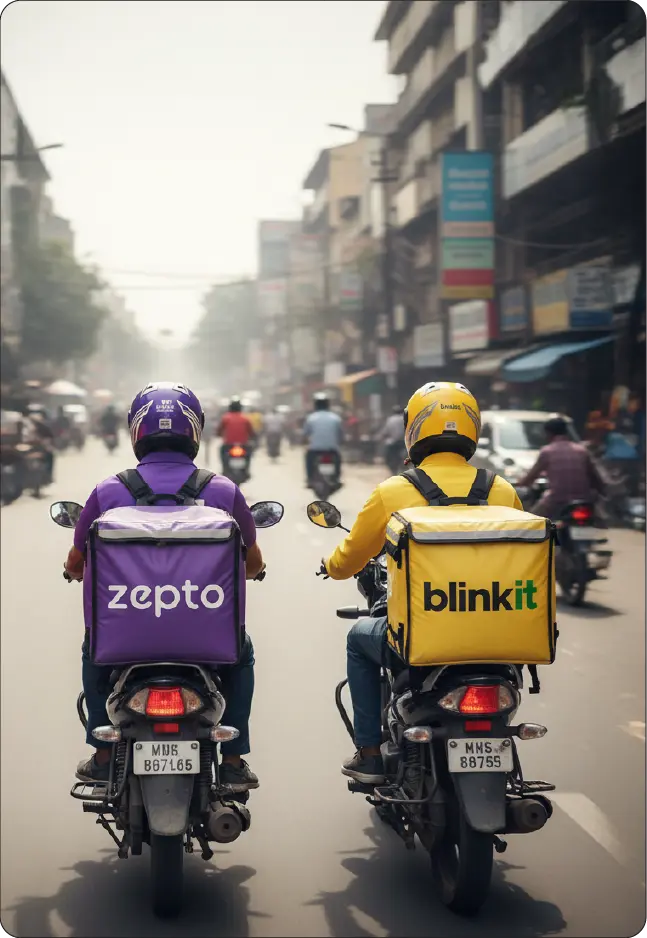
Consumer expectations are evolving rapidly. Customers increasingly expect groceries, ready-to-eat meals, beverages, snacks, and household essentials to be delivered within minutes. Monitoring Quick commerce & FMCG data enables food delivery businesses to understand changing purchasing patterns and identify new revenue opportunities beyond restaurant deliveries.
Quick commerce datasets include grocery pricing, inventory availability, delivery times, product assortment, promotional campaigns, consumer purchasing behavior, and seasonal demand. Analyzing these insights helps businesses diversify offerings, improve delivery efficiency, and expand into adjacent retail categories.
Many food delivery startups now integrate grocery and convenience products alongside restaurant meals. This approach increases order frequency, raises average basket values, and improves customer retention. Businesses that understand FMCG purchasing trends can optimize inventory planning and create bundled offers that encourage repeat purchases.
Quick Commerce Growth Trends (2020–2026)
| Year |
Quick Commerce Orders Growth |
Grocery Delivery Adoption |
Businesses Integrating FMCG |
| 2020 |
19% |
22% |
18% |
| 2021 |
31% |
34% |
27% |
| 2022 |
43% |
46% |
39% |
| 2023 |
56% |
58% |
51% |
| 2024 |
67% |
69% |
63% |
| 2025* |
75% |
77% |
72% |
| 2026* |
82% |
84% |
80% |
Advantages of Quick Commerce Intelligence
- Track grocery purchasing trends.
- Expand beyond restaurant deliveries.
- Improve inventory planning.
- Optimize delivery routes.
- Increase average order values.
- Identify new cross-selling opportunities.
Monitoring quick commerce and FMCG trends enables businesses to adapt quickly to changing consumer expectations while creating additional revenue streams.
Why Choose Product Data Scrape?
Product Data Scrape delivers reliable web scraping and market intelligence solutions for restaurants, cloud kitchens, food delivery startups, investors, and retail businesses. Through Grocery data scraping, organizations gain structured insights into pricing, inventory, product availability, customer demand, and competitor activity across leading delivery platforms. Businesses also leverage Food Delivery Business Data Before Launch to evaluate market readiness, optimize delivery zones, improve pricing strategies, and reduce operational risks before investing. Our scalable data extraction solutions support informed decision-making, faster expansion, and sustainable business growth with accurate, real-time datasets.
Conclusion
Launching a food delivery business requires more than a great menu. It requires accurate market intelligence, demand forecasting, pricing analysis, competitor benchmarking, and location planning. Businesses that leverage Marketplace selling intelligence alongside Food Delivery Business Data Before Launch gain the insights needed to optimize operations before entering the market. With us, organizations can transform raw marketplace data into strategic business intelligence that supports smarter decisions, stronger customer experiences, and long-term profitability.
Ready to launch with confidence? Partner with Product Data Scrape today to access real-time food delivery market intelligence and build a data-driven strategy for sustainable business success!
FAQs
1. Why is food delivery market research important before launching?
Market research identifies customer demand, pricing trends, competitor activity, and delivery opportunities. It helps businesses reduce risks, optimize investments, and improve launch success through informed, data-driven decisions.
2. What data should startups collect before entering the food delivery market?
Businesses should analyze restaurant pricing, customer demand, delivery zones, cuisine popularity, competitor performance, promotions, inventory trends, and operational metrics to develop effective market entry strategies.
3. How does competitor analysis improve launch planning?
Competitor analysis reveals pricing models, promotions, delivery coverage, customer satisfaction, and market gaps. These insights help businesses differentiate services and compete more effectively from day one.
4. Can data improve delivery zone planning?
Yes. Businesses can analyze customer density, ordering frequency, delivery times, and regional demand to define efficient delivery zones, reduce logistics costs, and improve customer satisfaction.
5. Why should businesses choose Product Data Scrape for market intelligence?
Product Data Scrape provides scalable data extraction solutions that deliver accurate food delivery, grocery, restaurant, and marketplace insights, helping businesses make faster, data-driven decisions before and after launch.


 USA
USA
 EMAIL
EMAIL
 PHONE
PHONE











.webp)