Quick Overview
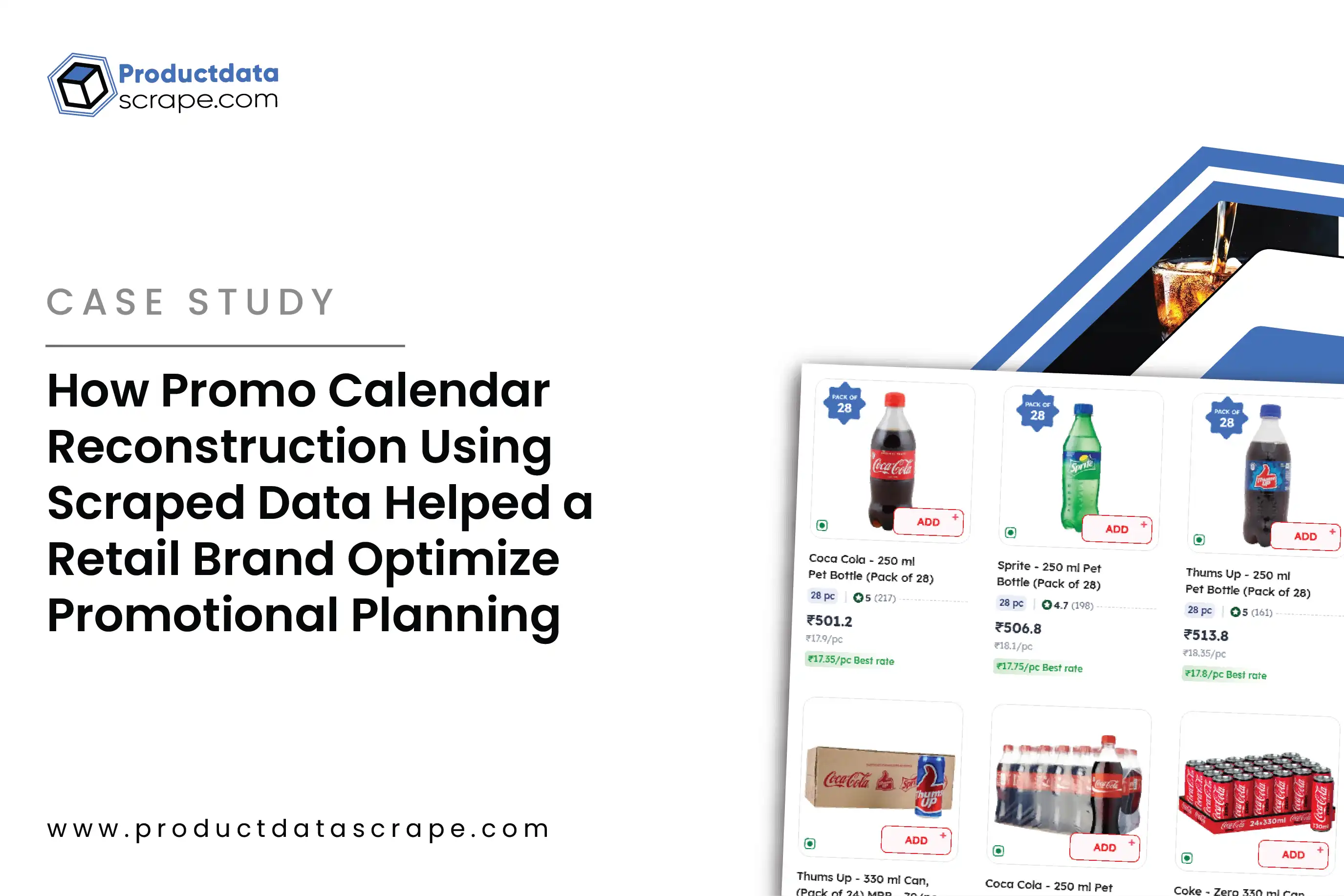
A leading retail brand partnered with Product Data Scrape to improve
promotional planning across grocery, FMCG, and household product categories. The retailer needed
a reliable way to monitor competitor campaigns, discounts, seasonal offers, and promotional
timing across major online retailers. Product Data Scrape implemented automated Scrape Promotional & Leaflet
Data workflows covering sources such as Walmart, Tesco, Carrefour, and Amazon.
Product-level records for brands including Coca-Cola, PepsiCo, Nestlé, and Unilever were
collected, standardized, validated, and organized into a structured promotional intelligence
environment. The solution reduced manual monitoring, accelerated promotional discovery, and gave
analysts a consistent historical view for campaign planning and competitive benchmarking.
Client Name / Industry: Leading Retail & FMCG Brand
Service / Duration: Promotional Data Scraping & Intelligence /
12 Months
Key Impact Metrics: 82% reduction in manual monitoring, 68%
faster promotional data availability, and 93%+ data accuracy.
The Client
The client was a large retail brand operating across grocery, FMCG, beverages,
packaged foods, household products, and personal care categories. Its product portfolio included
high-volume consumer products competing with brands such as Coca-Cola, PepsiCo, Nestlé,
Unilever, and Procter & Gamble.
The retail market was becoming increasingly promotion-driven. Competitors were
frequently changing discounts, bundle offers, seasonal campaigns, and product-level promotions
across digital storefronts. Retailers such as Walmart, Tesco, Carrefour, and Amazon were
publishing new offers throughout the week, creating a constantly changing competitive
environment.
To respond effectively, the client needed Promotion Calendar Data Scraping to
continuously capture promotional information rather than relying on occasional manual research.
Before partnering with Product Data Scrape, analysts monitored competitor promotions through
spreadsheets, retailer websites, digital leaflets, email alerts, and manual searches.
This approach created several limitations. Promotional information was
scattered across different pages and formats, making it difficult to establish a complete
campaign timeline. Analysts also spent significant time comparing product prices and discounts
across retailers.
The lack of centralized Pricing
intelligence made it difficult to determine which competitors were running deeper
discounts, when particular products were repeatedly promoted, and which seasonal periods
generated the highest promotional activity.
Transformation was therefore essential. The client needed an automated and
scalable data infrastructure that could convert fragmented promotional signals into structured
intelligence for faster campaign planning.
Goals & Objectives
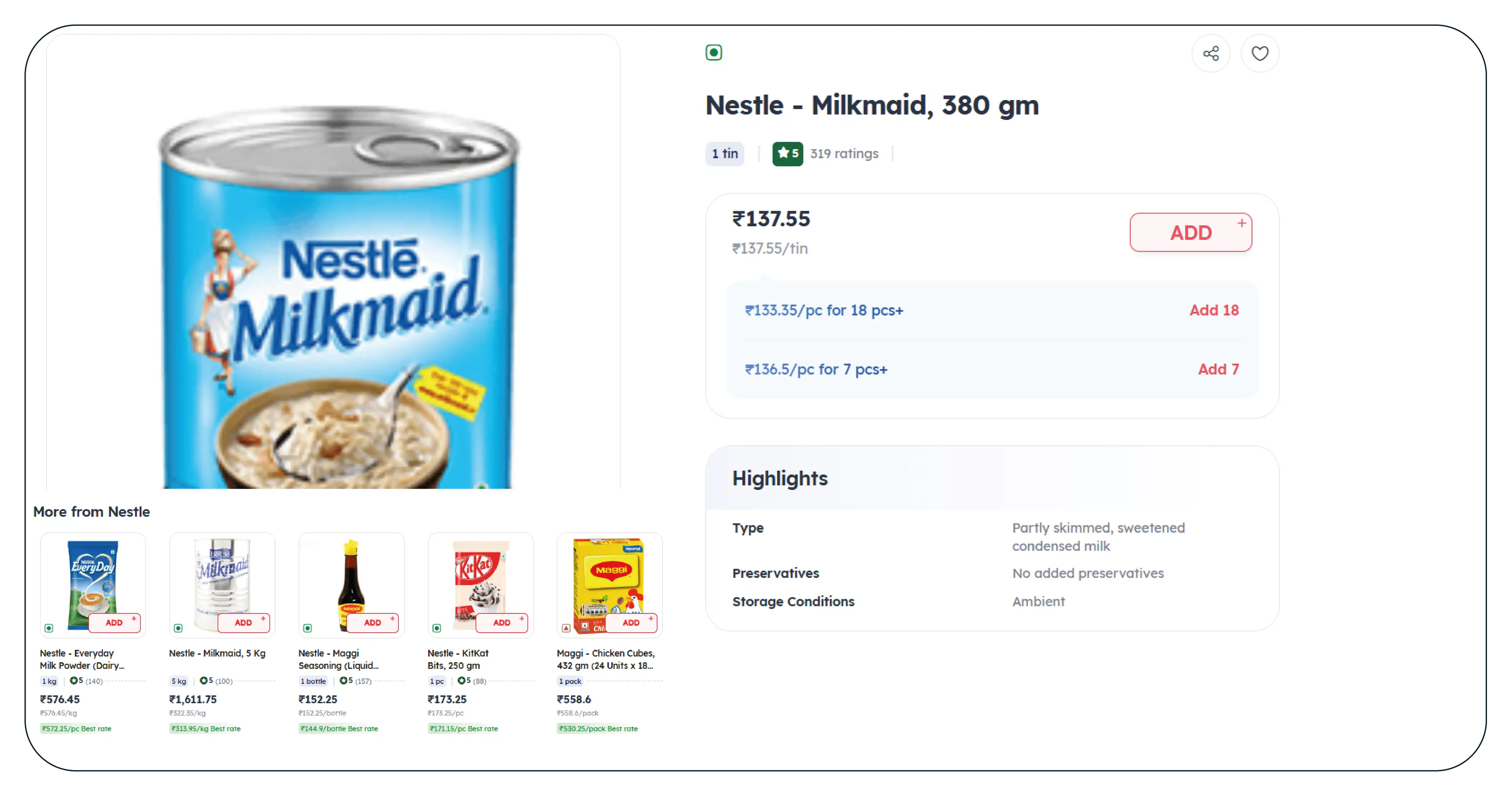
The project combined business priorities with technical requirements to create
a scalable promotional intelligence system. The client wanted faster access to competitor
activity while maintaining high-quality product and pricing records.
Scale promotional monitoring across retailers, brands, categories, and
products.
Reduce the time required to identify new competitor promotions.
Improve promotional data accuracy and consistency.
Support campaign planning using historical promotional patterns.
Build a centralized Retail Promo Intelligence Dataset for analysts and category
managers.
Monitor products from brands such as Coca-Cola, PepsiCo, Nestlé, and Unilever.
Automate promotional page, product page, and leaflet extraction.
Normalize product names, SKUs, pack sizes, prices, discounts, and offer
periods.
Integrate collected data with the client's existing analytics infrastructure.
Establish recurring data refresh schedules.
Enable automated data validation and duplicate detection.
Provide API-ready access through a scalable Web Scraping
API.
Support near-real-time promotional analysis.
Reduce manual promotional monitoring by at least 75%.
Improve promotional data availability speed by 60%+.
Maintain 90%+ accuracy across core promotional fields.
Achieve 95%+ successful scheduled collection cycles.
Reduce duplicate promotional records by 80%.
Improve historical campaign comparison speed by 50%+.
The Core Challenge
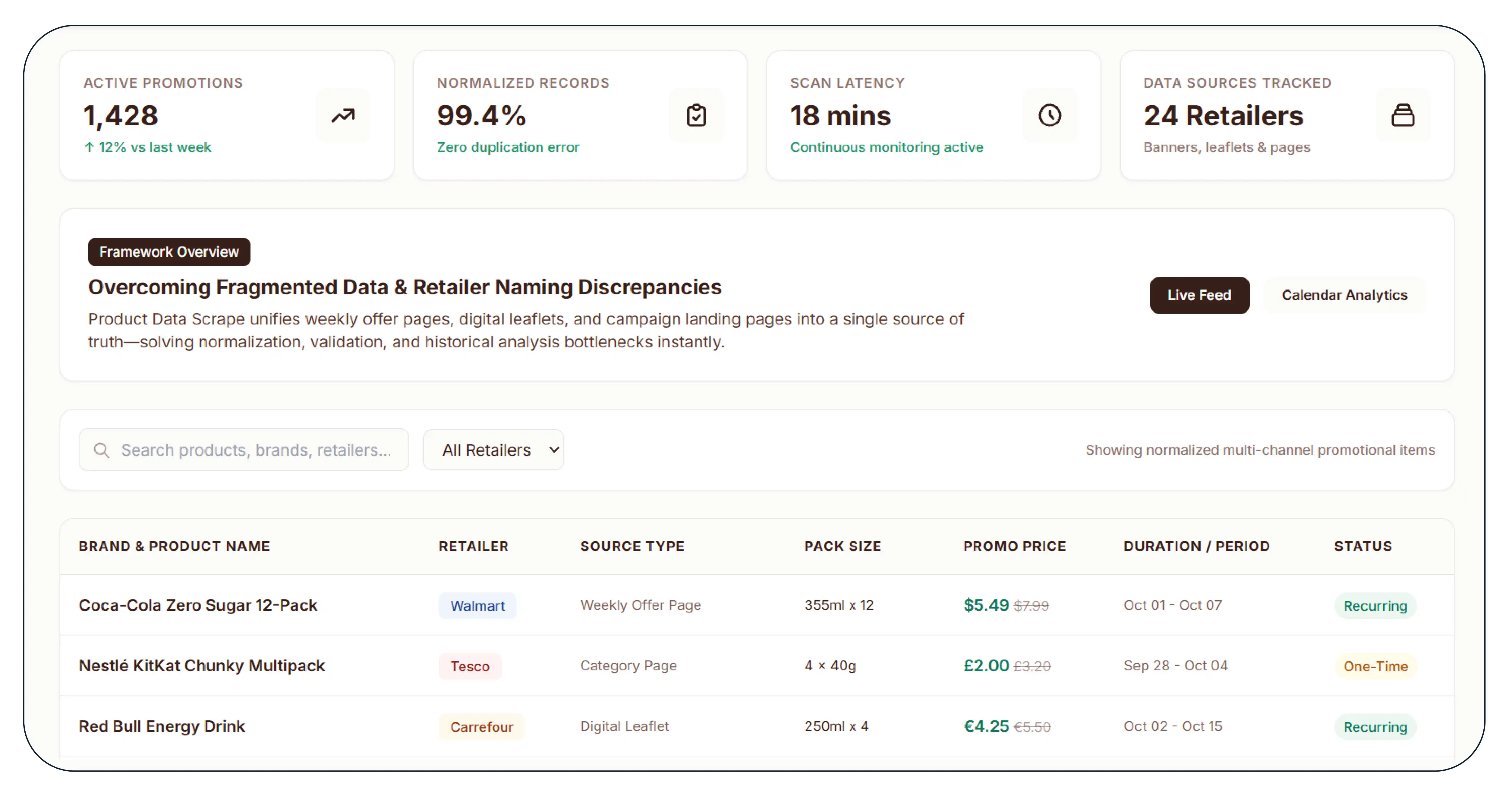
The client's promotional intelligence process was constrained by fragmented
data sources and frequent changes in retailer websites. Promotional information could appear on
weekly offer pages, digital leaflets, category pages, banners, product listings, and dedicated
campaign landing pages.
This created a significant operational bottleneck. Analysts might identify a
Coca-Cola discount on a retailer's weekly promotion page while finding a Nestlé offer on a
separate category page. Similar products could have different promotional prices, pack sizes, or
offer periods across Walmart, Tesco, Carrefour, and Amazon.
The absence of centralized Promotional Calendar Intelligence for Brands made it
difficult to determine when campaigns started, when they ended, and whether a particular
promotion was recurring or one-time.
Data quality presented another challenge. Retailers used different naming
structures for products, brands, pack sizes, and discounts. Manual spreadsheet consolidation
created opportunities for duplicate records, missing information, incorrect price comparisons,
and outdated promotions.
Speed was also critical. A promotion discovered several days after launch had
limited value for a retailer planning its own response. The client needed continuous monitoring
capable of identifying changes quickly.
The existing process also struggled with historical analysis. Because
promotional observations were stored across multiple spreadsheets and reports, analysts could
not easily reconstruct previous campaigns or compare promotional frequency over time.
Product Data Scrape needed to build a scalable framework that could solve
collection, normalization, validation, historical tracking, and delivery challenges within a
single workflow.
Our Solution
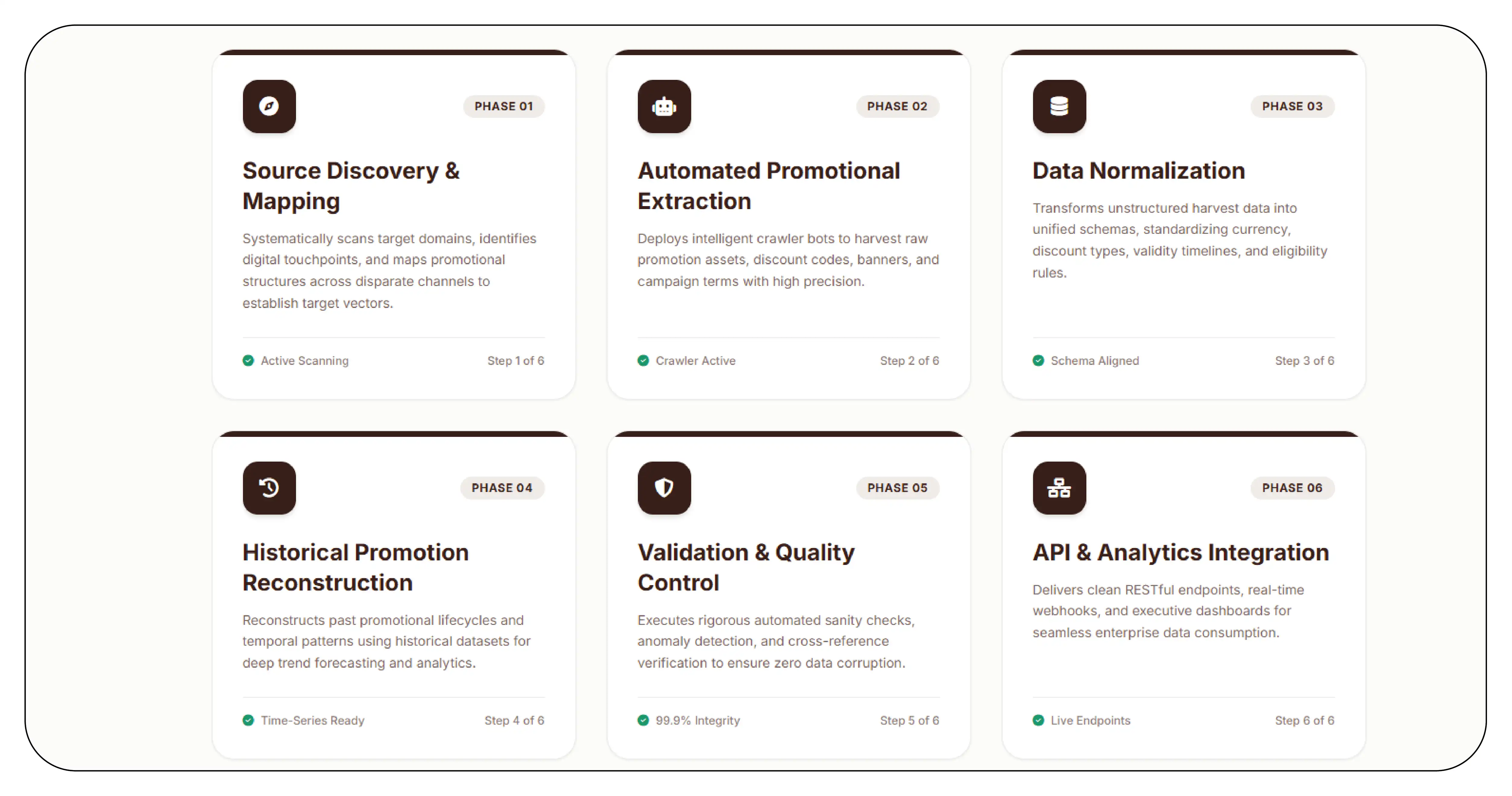
Product Data Scrape implemented a phased promotional intelligence solution
designed to automate data collection and transform raw retailer information into structured,
analysis-ready records.
Phase 1: Source Discovery and Mapping
The first stage identified relevant promotional sources across Walmart, Tesco,
Carrefour, Amazon, and other selected retail platforms. Promotional landing pages, weekly
offers, digital leaflets, product pages, category pages, and campaign sections were mapped. The
team also identified target FMCG brands such as Coca-Cola, PepsiCo, Nestlé, Unilever, and
Procter & Gamble to ensure the system could capture product-level promotional activity.
Phase 2: Automated Promotional Extraction
Automated scraping workflows were configured to collect product and promotion
information at scheduled intervals. Fields included product name, brand, SKU, category, pack
size, regular price, promotional price, discount percentage, offer type, promotion dates,
retailer, product URL, and availability where accessible. This eliminated repetitive manual
checks and provided consistent data collection across monitored sources.
Phase 3: Data Normalization
Raw promotional records were transformed into a standardized schema. Product
names were normalized, brands were mapped consistently, pack sizes were structured, and prices
were converted into comparable formats. For example, Coca-Cola multipack promotions from Walmart
and Tesco could be organized according to standardized product, pack-size, price, discount, and
promotional-period fields.
Phase 4: Historical Promotion Reconstruction
The next stage connected current observations with historical records. New
promotions were compared against existing records to identify recurring campaigns, extended
offers, expired promotions, and changes in promotional pricing. This created a continuous
promotional timeline rather than isolated daily records.
Phase 5: Validation and Quality Control
Automated validation rules checked missing values, duplicate records, abnormal
prices, inconsistent dates, and unexpected changes. Historical comparisons helped identify
potential extraction errors before records entered the analytics layer.
Phase 6: API and Analytics Integration
The final dataset was connected to the client's reporting environment through a
Promotion Monitoring API for Retailers. Analysts could access structured promotional records
based on retailer, brand, category, product, price, discount, and campaign period. The complete
process enabled Promo Calendar Reconstruction Using Scraped Data at scale, helping the retailer
compare competitor campaigns and improve promotional planning.
Results & Key Metrics
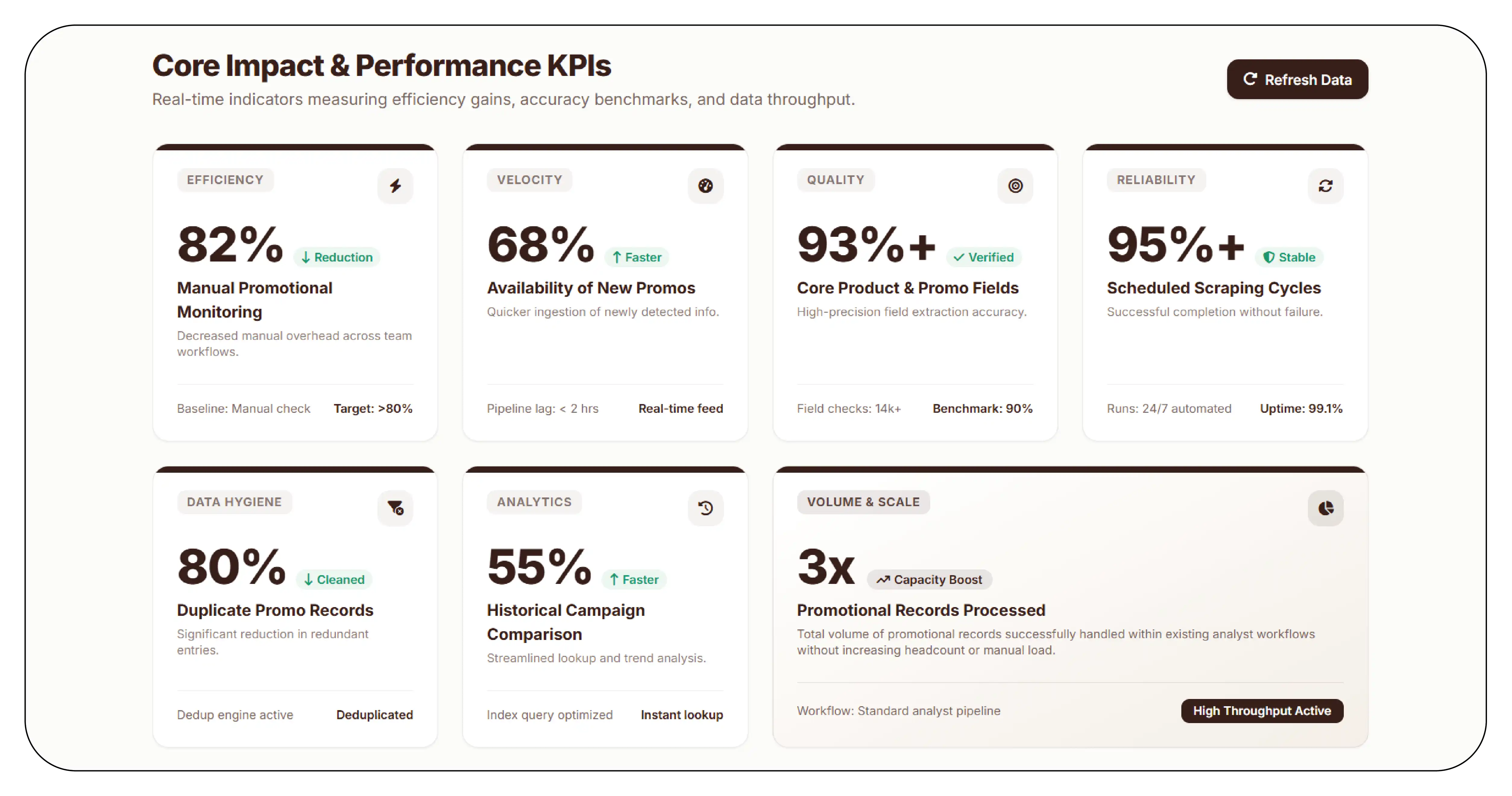
82% reduction in manual promotional monitoring.
68% faster availability of newly detected promotional information.
93%+ accuracy across core product and promotional fields.
95%+ successful completion of scheduled scraping cycles.
80% reduction in duplicate promotional records.
55% faster historical campaign comparison.
3x increase in promotional records processed within existing analyst workflows.
Results Narrative
The new framework significantly improved the client's promotional intelligence
operations. Real-Time Retail Promotion Monitoring enabled analysts to identify new competitor
offers without repeatedly checking individual retailer websites.
The structured dataset made it easier to compare promotional activity across
Walmart, Tesco, Carrefour, and Amazon while tracking brands such as Coca-Cola, PepsiCo, Nestlé,
and Unilever.
The client could identify recurring discount patterns, seasonal campaign
periods, promotional frequency, and product-level changes with greater speed and consistency.
Analysts also gained a stronger historical reference for evaluating previous campaigns.
Ultimately, Promo Calendar Reconstruction Using Scraped Data transformed
fragmented promotional observations into a structured intelligence resource that supported
faster and more informed promotional planning.
What Made Product Data Scrape Different
Product Data Scrape approached the project as a complete intelligence pipeline
rather than a simple data extraction exercise. Source-specific extraction logic was combined
with automated scheduling, normalization, validation, historical comparison, and structured
delivery.
The framework was designed to understand how Retailers price and promote products across different
categories and channels. Automated workflows continuously monitored selected sources, while
validation mechanisms helped maintain data consistency.
The system could also be expanded to additional retailers, product categories,
brands, and geographic markets without requiring the client to redesign its complete
infrastructure.
This scalable architecture made Promo Calendar Reconstruction Using Scraped
Data practical for continuous retail intelligence rather than a one-time research activity.
Client's Testimonial
"Product Data Scrape helped us move from fragmented promotional research to
a much more structured intelligence process. Previously, our teams spent considerable time
reviewing retailer websites and digital leaflets manually. The new system gives us a
consistent view of promotional timing, discounts, products, and competitor activity. We can
now analyze Grocery Price & Promotion Trends across major retailers much faster and use
historical information for campaign planning. The scalability of the solution has also
allowed us to expand monitoring across additional products and brands without significantly
increasing manual workload. The structured promotional data has become an important input
for our retail planning and competitive analysis."
— Head of Retail Strategy, Leading Grocery & FMCG Brand
Conclusion
Promotional activity has become a critical competitive factor for modern
retailers and FMCG brands. Frequent price changes, seasonal campaigns, digital leaflets, and
product-level offers make manual monitoring increasingly difficult.
Product Data Scrape helped the
client create a scalable promotional intelligence framework that collected, standardized,
validated, and organized competitor activity across major retail platforms.
The solution improved data availability, monitoring speed, accuracy, and
historical campaign analysis. It also created a stronger foundation for Brand Protection by giving the retailer greater visibility
into competitor activity and product-level promotional positioning.
With Promo Calendar Reconstruction Using Scraped Data, businesses can transform
scattered promotional information into structured intelligence that supports smarter campaign
planning, competitive benchmarking, pricing decisions, and future retail strategy.
FAQs
1. What is Promo Calendar Reconstruction Using Scraped Data?
It is a data-driven process that collects promotional information from retailer websites,
product pages, digital leaflets, and campaign pages and organizes it chronologically. This
allows brands to understand promotional timing, discount patterns, product activity, and
seasonal campaigns.
2. What promotional information can be collected?
Depending on website accessibility, datasets can include product names, brands, SKUs,
categories, pack sizes, regular prices, promotional prices, discounts, offer types, campaign
dates, retailer names, product URLs, and availability.
3. Which brands and retailers can be monitored?
The framework can monitor publicly accessible promotional information from retailers such as
Walmart, Tesco, Carrefour, and Amazon. FMCG brands including Coca-Cola, PepsiCo, Nestlé,
Unilever, and Procter & Gamble can also be included based on project requirements.
4. How does promotional data improve retail planning?
Historical and current promotional records help retailers identify competitor discount patterns,
seasonal activity, campaign frequency, and product-level promotional strategies. These insights
can support better campaign timing, pricing decisions, and competitive benchmarking.
5. Can promotional monitoring be automated?
Yes. Automated scraping workflows can collect data at scheduled intervals, validate records,
detect changes, and deliver structured datasets through APIs or analytics-ready formats. This
reduces manual research and supports continuous promotional intelligence.


 Singapore
 EMAIL
EMAIL
 PHONE
PHONE










.webp)