Quick Overview
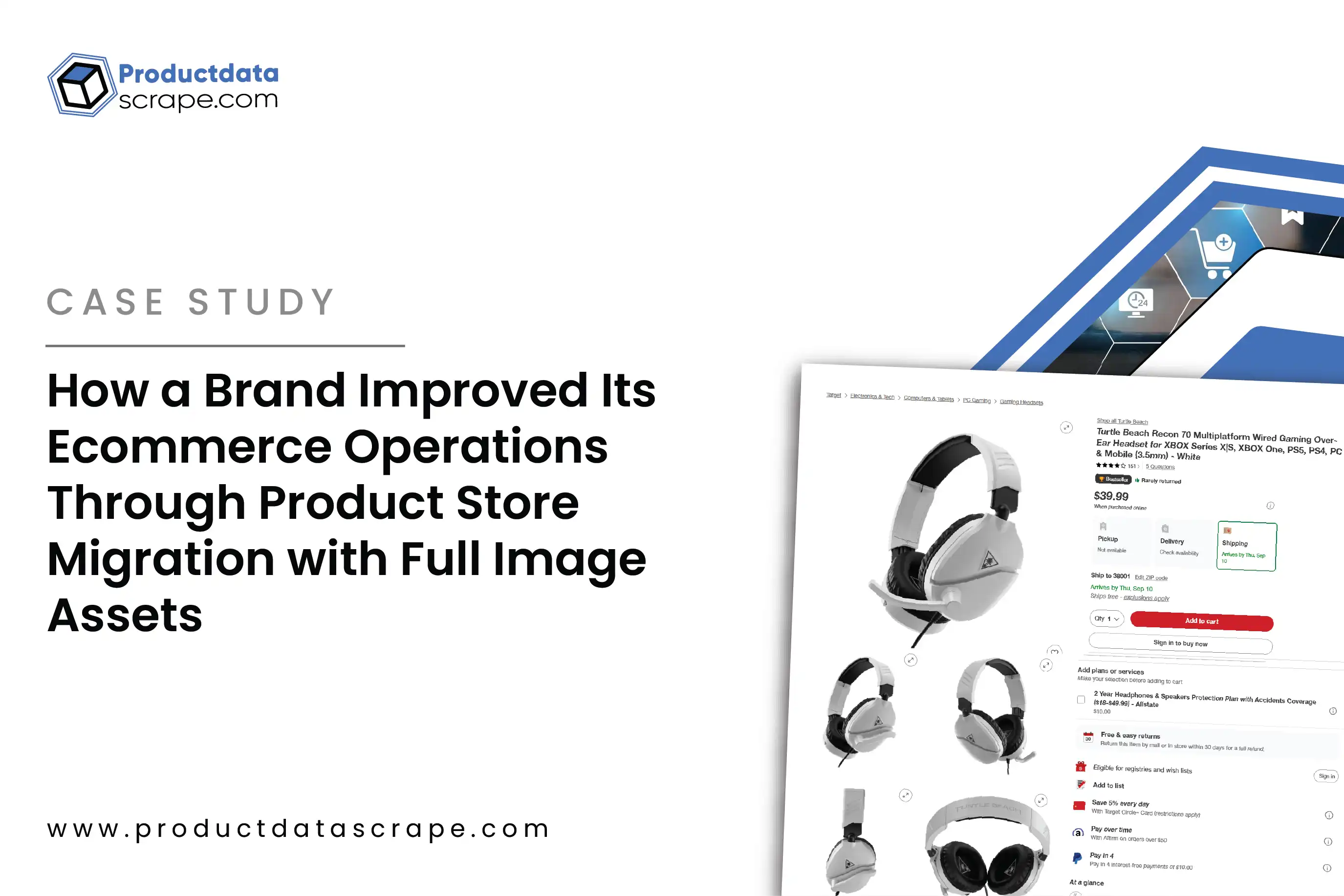
This case study shows how Product Data Scrape helped a growing ecommerce brand modernize its product migration workflow while preserving critical catalog information and visual assets. The project focused on reducing manual catalog work, improving image completeness, and creating a scalable migration process. Through structured Product Store Migration with Full Image Assets, the brand moved product records, variants, descriptions, attributes, and images into its new ecommerce environment with stronger validation. The engagement also used E-commerce data scraping to automate product discovery and extraction. The result was a faster migration workflow, improved catalog accuracy, and a more organized digital storefront ready for future expansion.
Client Name / Industry: Confidential Ecommerce Brand / Retail & Consumer Products
Service / Duration: Product data extraction, catalog migration, and image-asset migration / 8 weeks
Key Impact Metrics: 96% reduction in manual catalog-entry effort; 98% image-asset completeness; 91% faster product migration workflow.
The Client
The client was a growing ecommerce brand operating a broad product catalog across multiple categories and variants. Like many digital retailers, the brand faced increasing pressure to deliver a consistent online shopping experience while expanding its product assortment. Customers expected accurate descriptions, complete product specifications, multiple images, clear variants, and reliable availability information across the digital shelf.
Before partnering with Product Data Scrape, the client was preparing to move from an older ecommerce environment to a more scalable store infrastructure. Its existing catalog contained thousands of product records, multiple variants, category relationships, descriptive fields, and large volumes of product imagery. Much of the information required manual preparation before migration.
The existing process created inconsistencies between product records and their associated images. Some image files required renaming, some products had missing visual assets, and several attributes needed normalization before import.
The transformation therefore became essential. The client needed a repeatable migration process that could handle a growing catalog without creating additional operational workload. Monitor SKU Data for Store Migration, Catalog Enrichment became an important part of the project because product-level consistency was required before the new store could go live.
Rather than treating migration as a simple file-transfer exercise, the client wanted a structured data workflow capable of improving catalog quality while supporting future ecommerce growth.
Goals & Objectives
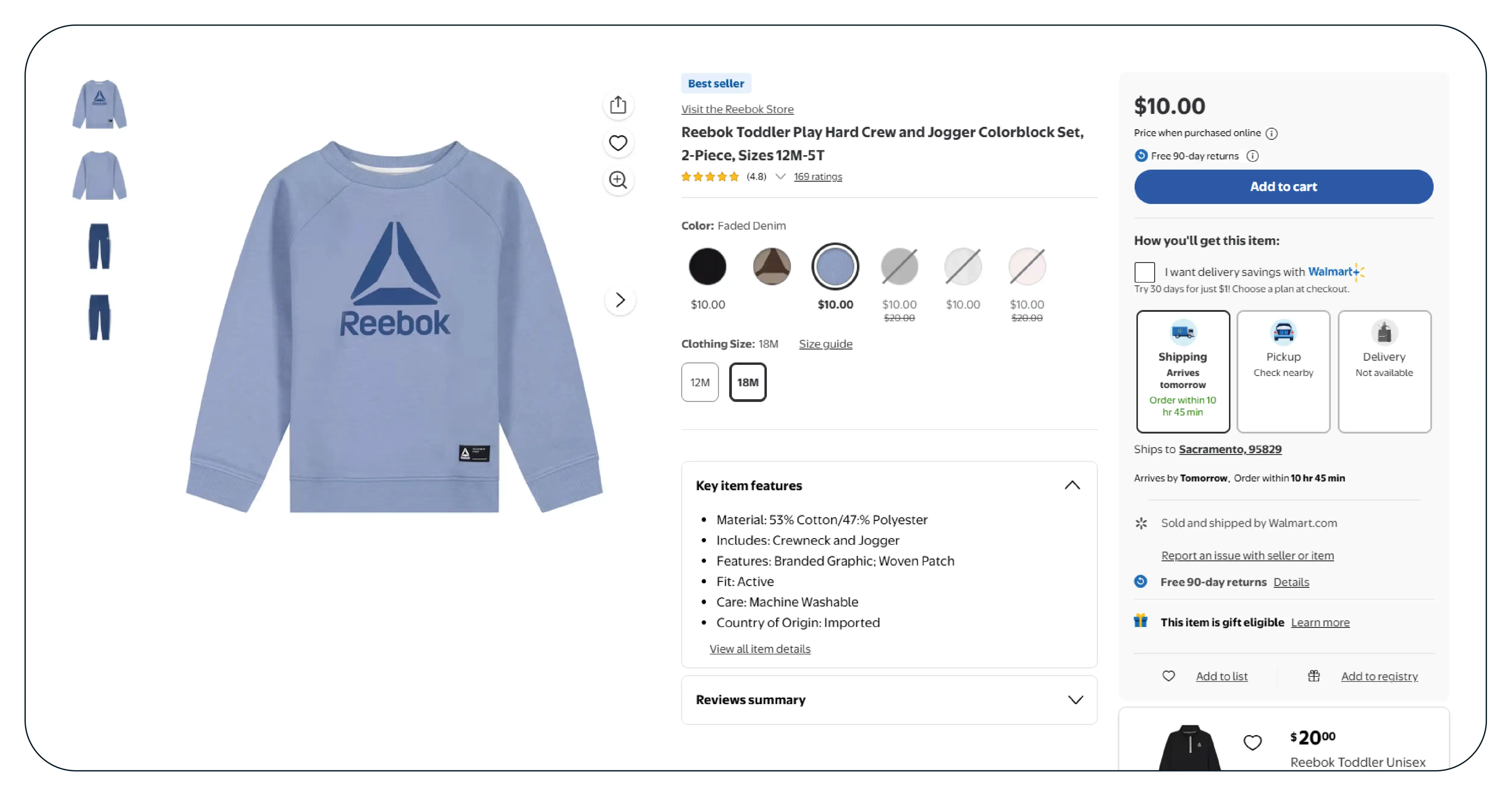
The project was structured around three measurable areas: business goals, technical objectives, and performance KPIs. Scrape Product Image Assets was included as a core requirement because preserving complete visual merchandising information was essential to the new storefront.
Increase catalog migration speed without sacrificing accuracy.
Reduce manual product-data preparation.
Preserve product images and associated asset relationships.
Improve SKU and variant consistency.
Create a scalable workflow for future catalog expansion.
Automate product and image extraction.
Normalize product attributes and variant structures.
Map images to the correct SKUs and product records.
Prepare structured datasets compatible with the target store.
Introduce validation checks before final migration.
Establish a repeatable workflow for future catalog updates.
Reduce manual catalog-entry effort by at least 90%.
Achieve approximately 98% image-asset completeness.
Improve migration processing speed by more than 85%.
Reduce duplicate and incomplete records.
Maintain consistent SKU-to-image mapping.
Establish a migration-ready dataset with validated product fields.
These targets gave the project a clear definition of success. Instead of measuring completion only by the number of migrated products, the team evaluated accuracy, completeness, processing speed, and operational efficiency.
The Core Challenge
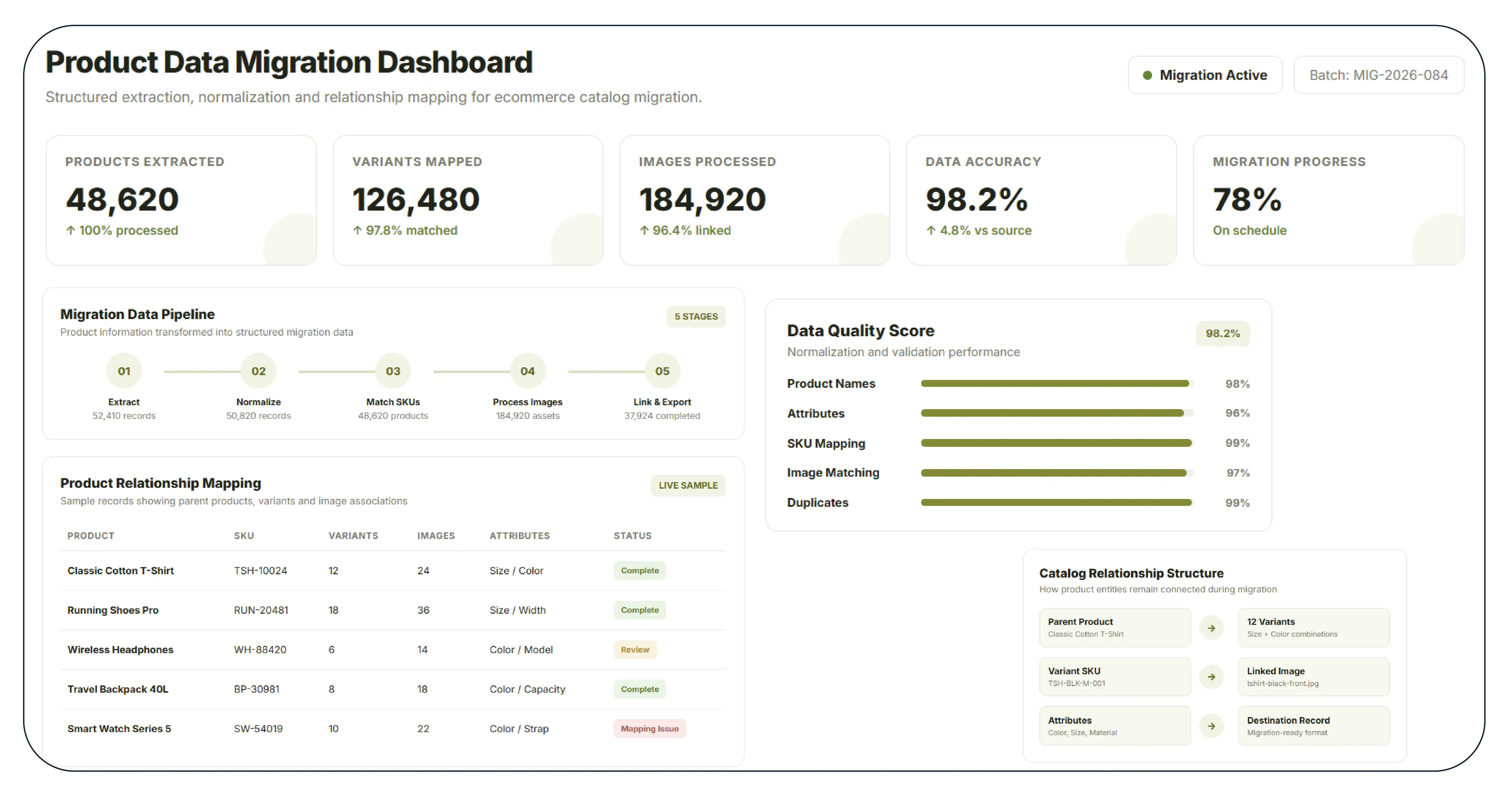
The client's primary challenge was the complexity of moving a large ecommerce catalog while preserving relationships between products, variants, attributes, and images. Manual migration created significant operational bottlenecks because each product needed to be reviewed, formatted, matched with its images, and prepared for the destination platform.
The problem became more difficult when products contained multiple variants. A single parent product could have several colors, sizes, or configurations, each requiring correct associations. Images also needed to remain connected to the appropriate product or variant.
Another issue involved inconsistent source data. Product names followed different formatting conventions, attributes were not always standardized, and image filenames lacked a consistent structure. Without normalization, these inconsistencies could result in duplicate records, incorrect mappings, or incomplete storefront pages.
The client also needed to maintain migration speed. A prolonged migration would delay the new store launch and increase the amount of manual work required from its internal team.
To address these challenges, the project introduced a structured process to Extract Product Data for Migration. Product records were separated into logical fields, SKU relationships were identified, and image assets were processed independently before being linked back to their corresponding products.
This approach transformed the migration from a manual administrative task into a repeatable data-engineering workflow.
Our Solution
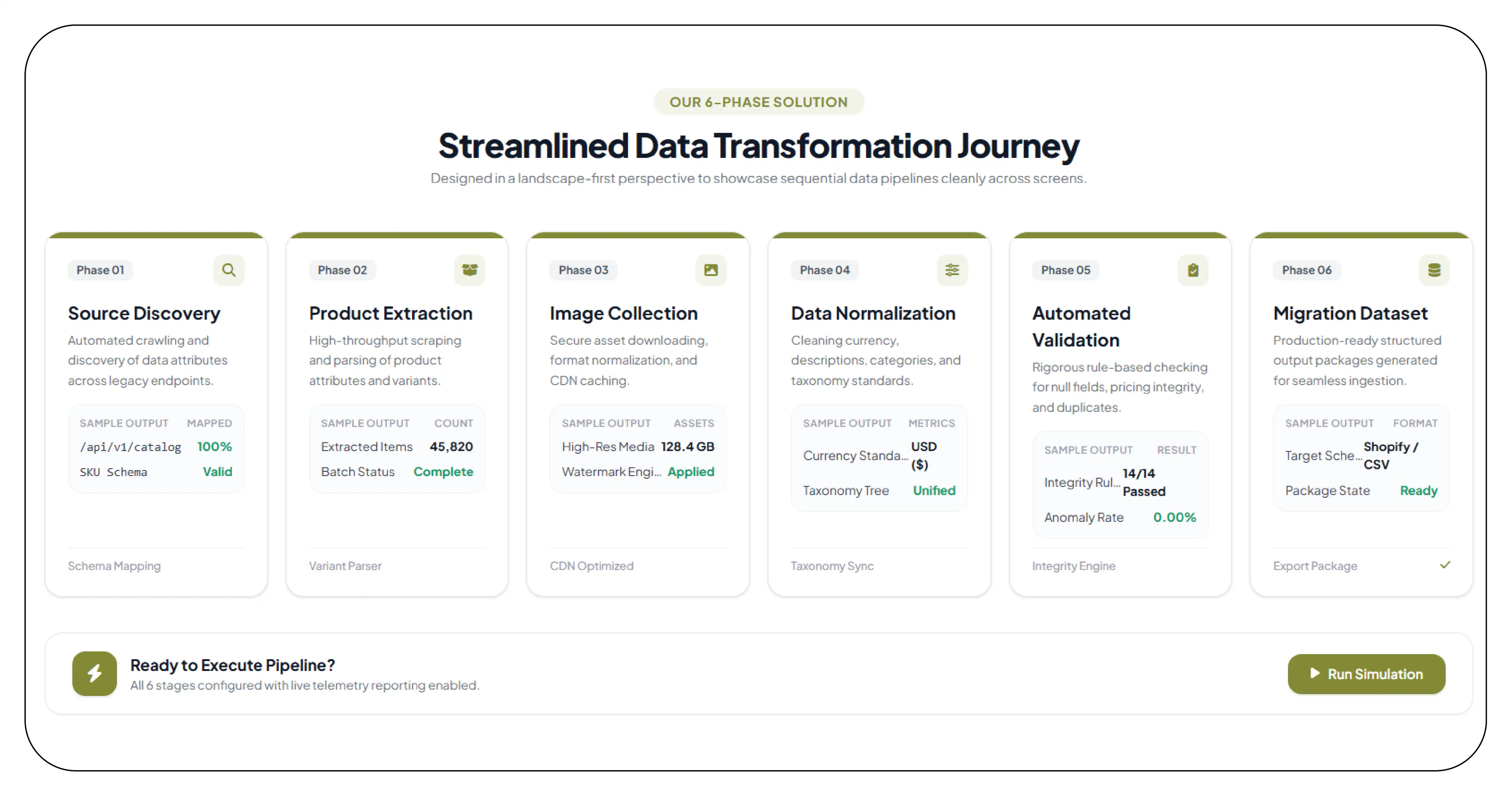
The Product Data Scrape team implemented a phased migration workflow designed to address catalog complexity, image preservation, data quality, and scalability.
Phase 1: Source Discovery and Schema Mapping
The first phase focused on understanding the client's existing product structure. Product fields, SKU identifiers, categories, variants, descriptions, attributes, pricing fields, and image relationships were mapped against the requirements of the destination ecommerce environment. This created a standardized migration schema and reduced the risk of incompatible fields.
Phase 2: Automated Product Extraction
The team then developed an automated extraction workflow to collect product records from the source environment. The workflow captured relevant product attributes, identifiers, descriptions, categories, variants, and available metadata. Scrape Product Data for Store Migration became the central extraction process, allowing the team to process large product volumes consistently instead of relying on manual copying.
Phase 3: Image Asset Collection
Product images were collected and organized separately from textual product information. Each image was associated with the relevant product or SKU using identifiers and mapping logic. The workflow also checked for missing assets, duplicate files, unsupported formats, and inconsistent naming conventions.
Phase 4: Data Normalization
Raw product information was normalized before migration. Product names, categories, variant values, SKU structures, and attribute fields were standardized to improve compatibility with the destination store. This phase was particularly important because inconsistent source formatting can create downstream problems during ecommerce imports.
Phase 5: Automated Validation
Validation rules were introduced to identify incomplete records, missing images, duplicate SKUs, invalid mappings, and inconsistent product relationships. The team used automated checks before final migration so that problems could be corrected in the dataset rather than discovered after storefront publication.
Phase 6: Migration-Ready Dataset
The final dataset was organized into structured files and asset mappings suitable for the target ecommerce platform. Product records and associated images were prepared for controlled import.
The phased approach reduced operational risk because each stage could be tested before the next stage began. It also gave the client a repeatable workflow that could later be adapted for new product launches and catalog updates.
Results & Key Metrics
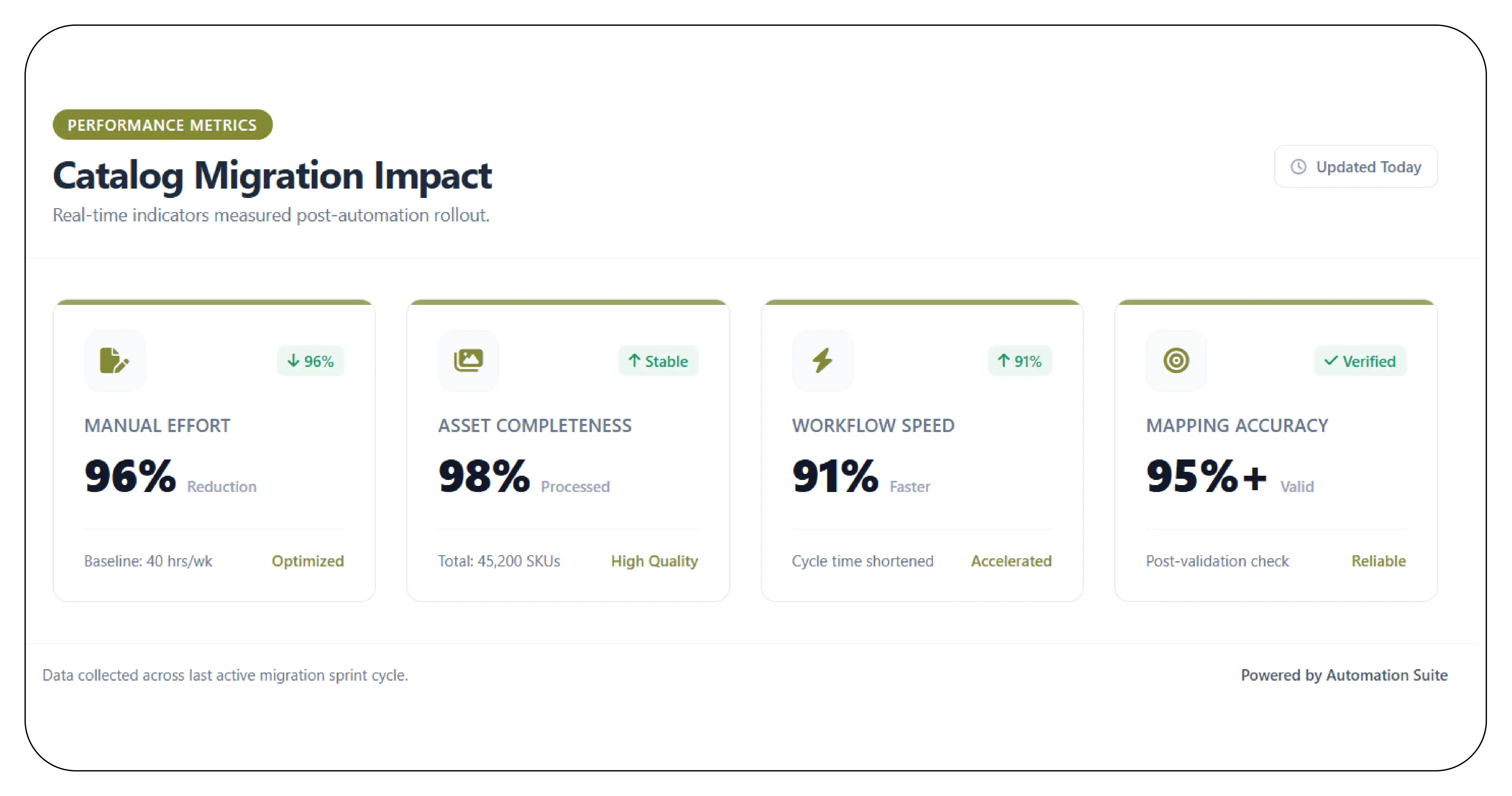
96% reduction in manual catalog-entry effort.
98% image-asset completeness across the processed catalog.
91% faster overall product migration workflow.
95%+ SKU mapping accuracy after validation.
Significant reduction in duplicate and incomplete product records.
Automated validation replaced multiple rounds of manual checking.
Results Narrative
The migration gave the client a cleaner and more scalable foundation for its new ecommerce store. Product records were transferred with stronger consistency, while associated image assets remained organized and connected to the appropriate catalog entries. The automated workflow reduced repetitive work for the internal team and accelerated preparation for launch.
The project also established a reusable process for future catalog updates. Instead of rebuilding migration spreadsheets for every product batch, the client could use structured extraction, normalization, asset mapping, and validation workflows. Scrape Ecommerce Catalog for Migration therefore became more than a one-time service; it created a repeatable operational framework for future ecommerce expansion.
What Made Product Data Scrape Different?
Product Data Scrape approached the project as a data-quality and automation challenge rather than a simple catalog transfer. The workflow combined structured extraction, normalization, asset mapping, validation, and migration preparation into one coordinated process.
The use of automated mapping logic helped maintain relationships between products, SKUs, variants, and images. Validation checks also reduced the possibility of incomplete records reaching the destination store.
The approach was designed around the client's actual catalog structure rather than forcing the source data into a generic template. This made the migration process more adaptable and scalable.
The result was a structured e-commerce product data workflow capable of supporting Product Store Migration with Full Image Assets while reducing repetitive manual operations and improving catalog consistency.
Client's Testimonial
"The migration process was far more organized than our previous manual approach. Product records, variants, and images were handled systematically, and the validation process gave our team much greater confidence before launch. We were able to reduce repetitive catalog work while improving the consistency of our storefront. The biggest advantage was having a workflow that could continue supporting future product additions instead of solving only one migration project."
— Head of Ecommerce, Confidential Retail Brand
The project helped the client Win the digital shelf by creating a more complete, consistent, and visually reliable ecommerce catalog. Product Store Migration with Full Image Assets ensured that the storefront retained important product content while transitioning to a more scalable infrastructure.
Conclusion
The project demonstrates how structured ecommerce data workflows can turn a complex store migration into a controlled, scalable operation. By combining extraction, normalization, image mapping, validation, and migration preparation, Product Data Scrape helped the client reduce manual effort and improve catalog consistency.
The same approach can support future expansion, including new product launches, catalog enrichment, marketplace synchronization, and ongoing data updates. Geo and store-level pricing data can also be incorporated into future ecommerce intelligence workflows where relevant to the client's business model.
For brands planning a replatforming project, maintaining product information and visual assets should be treated as a strategic priority rather than a technical afterthought. Product Store Migration with Full Image Assets provides a foundation for preserving the digital shelf while preparing the business for scalable ecommerce growth.
FAQs
1. What does a complete product store migration include?
A complete migration can include product titles, descriptions, SKUs, categories, variants, attributes, pricing fields, and associated image assets. The exact fields depend on the source and destination platforms.
2. How are product images matched to products?
Images can be mapped using SKU identifiers, product IDs, filenames, URLs, variant information, or other available relationships. Validation checks help identify mismatches or missing assets.
3. Can the migration process handle large catalogs?
Yes. Automated extraction and processing workflows can be designed to handle large product catalogs more efficiently than manual data entry. Processing can be divided into manageable batches when appropriate.
4. Can the same workflow support future catalog updates?
Yes. A reusable extraction and validation pipeline can support recurring product additions, catalog updates, image changes, and other data-refresh requirements after the initial migration.
5. Why is data validation important during ecommerce migration?
Validation helps identify duplicate SKUs, missing fields, broken image mappings, inconsistent variants, and incomplete records before the new store goes live. This reduces the risk of creating poor product pages or customer-facing catalog errors.


 Singapore
 EMAIL
EMAIL
 PHONE
PHONE


.webp)









.webp)