Quick Overview
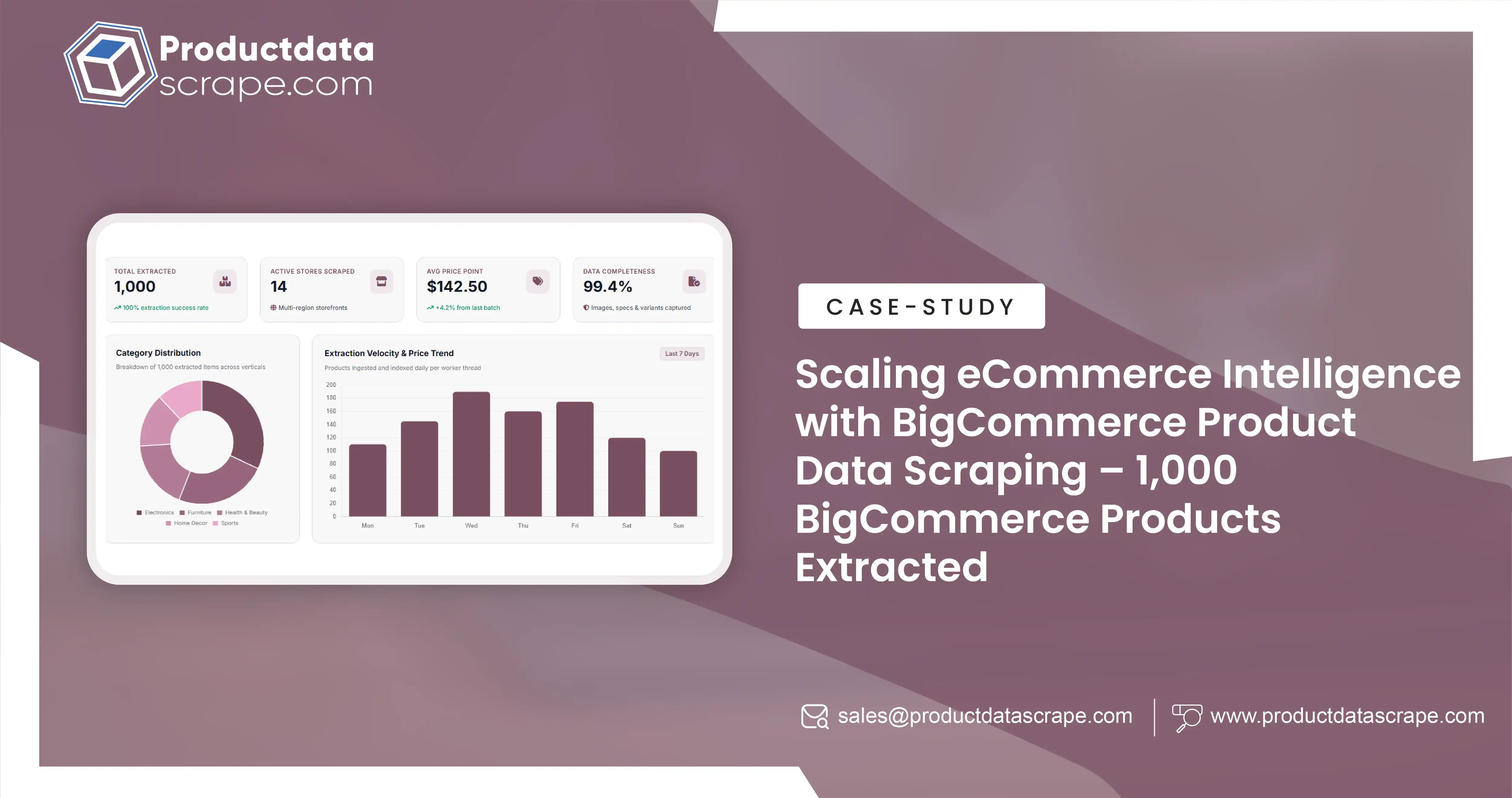
This case study explains how a growing eCommerce intelligence business improved product-data collection, catalog consistency, and competitive analysis by automating the extraction of 1,000 BigCommerce products. The project was designed to replace fragmented manual research with a structured, scalable data workflow. BigCommerce Product Data Scraping enabled the collection of product-level information, including SKUs, variants, pricing, descriptions, categories, and availability. The resulting dataset supported faster catalog analysis and migration planning while strengthening competitive intelligence capabilities. The project also complemented the client's broader requirement for Global quick commerce data, helping its analysts create a more consistent foundation for multi-market research.
Client Name / Industry: A global eCommerce intelligence and retail analytics company operating across online retail and quick-commerce markets.
Service / Duration: Product catalog extraction and structured data processing over a four-week implementation period.
Key Impact Metrics: 1,000 products extracted, 100% of targeted product records structured for downstream analysis, and a significantly faster catalog-processing workflow.
The Client
The client was a global eCommerce intelligence company helping retailers, brands, and market researchers understand digital product assortments, pricing movements, and competitive positioning. As its customer base expanded, the company needed a reliable way to collect product information from stores powered by BigCommerce without increasing manual research workload.
The wider market was becoming increasingly data-driven. Retailers were monitoring competitor catalogs more frequently, product assortments were changing rapidly, and businesses expected faster access to structured information. This created pressure on the client to improve both extraction speed and dataset consistency.
Before the partnership, product information was gathered through a combination of manual research and fragmented extraction processes. Different records could contain inconsistent product names, missing variants, irregular SKU formats, and incomplete pricing information. These issues made downstream analysis more time-consuming.
The transformation became essential because the client wanted to scrape 1000 BigCommerce products in a standardized format while supporting broader requirements for Competitive pricing data. A scalable extraction workflow would allow analysts to spend less time cleaning raw information and more time interpreting market movements.
The project therefore focused on creating a repeatable process capable of handling product attributes, variants, pricing, and availability while producing data suitable for analytics, migration, and competitive research.
Goals & Objectives
The primary business goal was to create a scalable product-data workflow capable of handling larger catalogs without a proportional increase in manual effort. The client wanted faster access to structured product information and greater consistency across extracted records.
The project also needed to support BigCommerce SKU and variant migration, making accurate SKU relationships and product variations important from the beginning. The client wanted a dataset that could be reused for catalog management, research, and future migration initiatives.
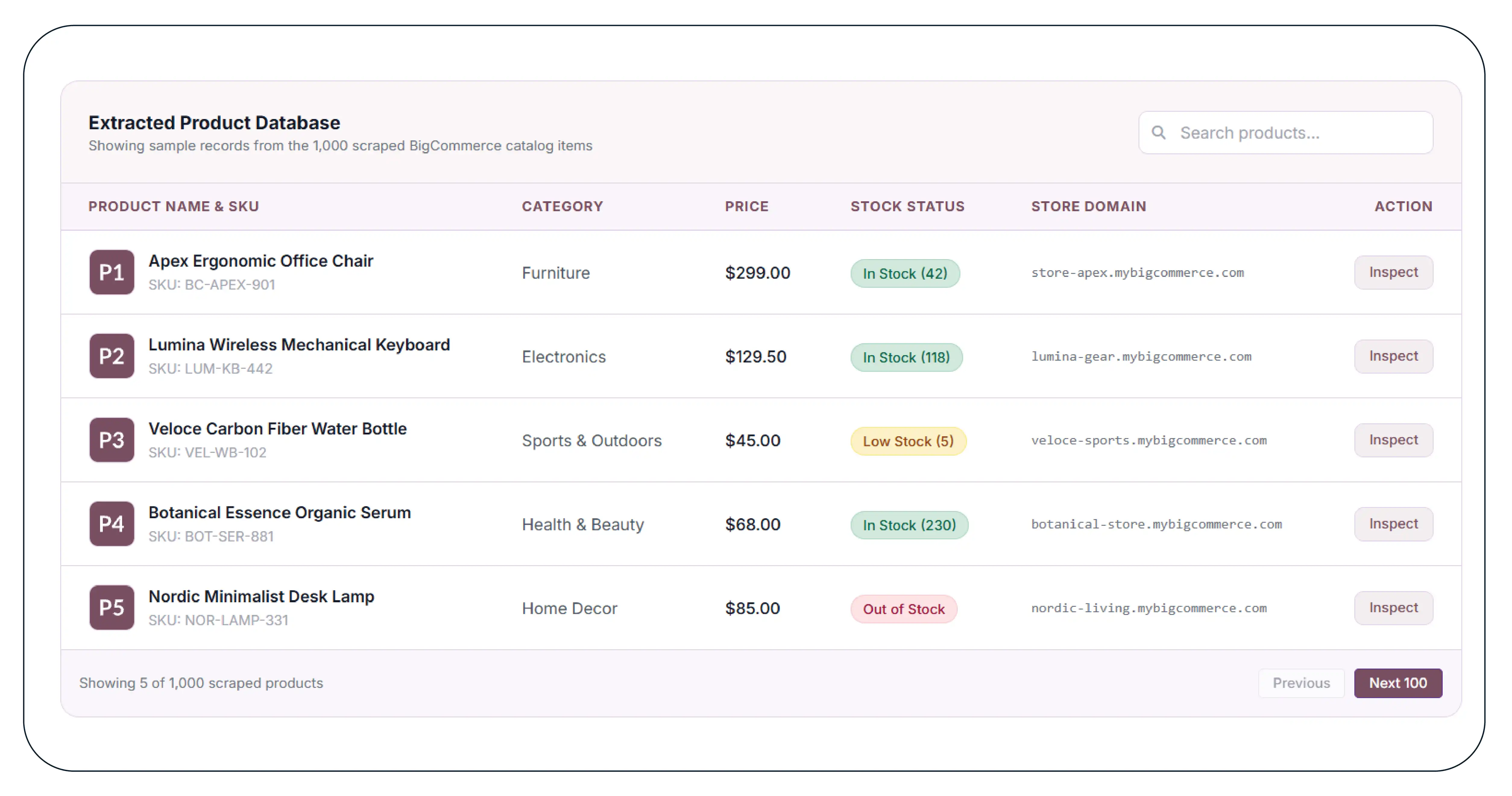
The technical objective was to automate product discovery, extraction, normalization, validation, and structured output. BigCommerce Product Data Scraping needed to capture essential product fields while maintaining relationships between parent products, SKUs, and variants.
The workflow was also designed to support downstream analytics and integration. Data needed to be organized in a consistent schema so it could be transferred into internal databases, dashboards, or analytical environments.
1,000: Target BigCommerce product records extracted and structured.
100%: Target coverage of the agreed product dataset.
Faster processing: Reduce repetitive manual catalog collection and normalization work.
Higher consistency: Standardize product, SKU, variant, pricing, and availability fields.
Reusable dataset: Create structured records suitable for analytics, migration, and competitive research.
The Core Challenge
The central problem was not simply collecting product pages. The client needed reliable information from products containing multiple variants, SKUs, pricing structures, descriptions, and availability conditions. Manual extraction created operational bottlenecks because researchers had to repeatedly locate products, copy attributes, verify fields, and organize records.
A major pain point involved BigCommerce product variant data scraping. A single parent product could contain multiple variants with different SKUs, prices, options, or availability statuses. Treating every product page as a single record risked losing important variant-level information.
Data quality was another challenge. Product attributes could appear in different formats, while missing fields could make records difficult to compare. Without normalization, the same type of information could appear under inconsistent labels or structures.
Speed was equally important. As the client's research requirements increased, manual collection became difficult to scale. Delays in extracting and validating records affected the time available for analysis.
The client therefore required an automated workflow capable of discovering target products, extracting structured fields, preserving parent-child relationships, validating records, and preparing the resulting dataset for analytical use.
The challenge was to improve speed without sacrificing completeness or data quality.
Our Solution
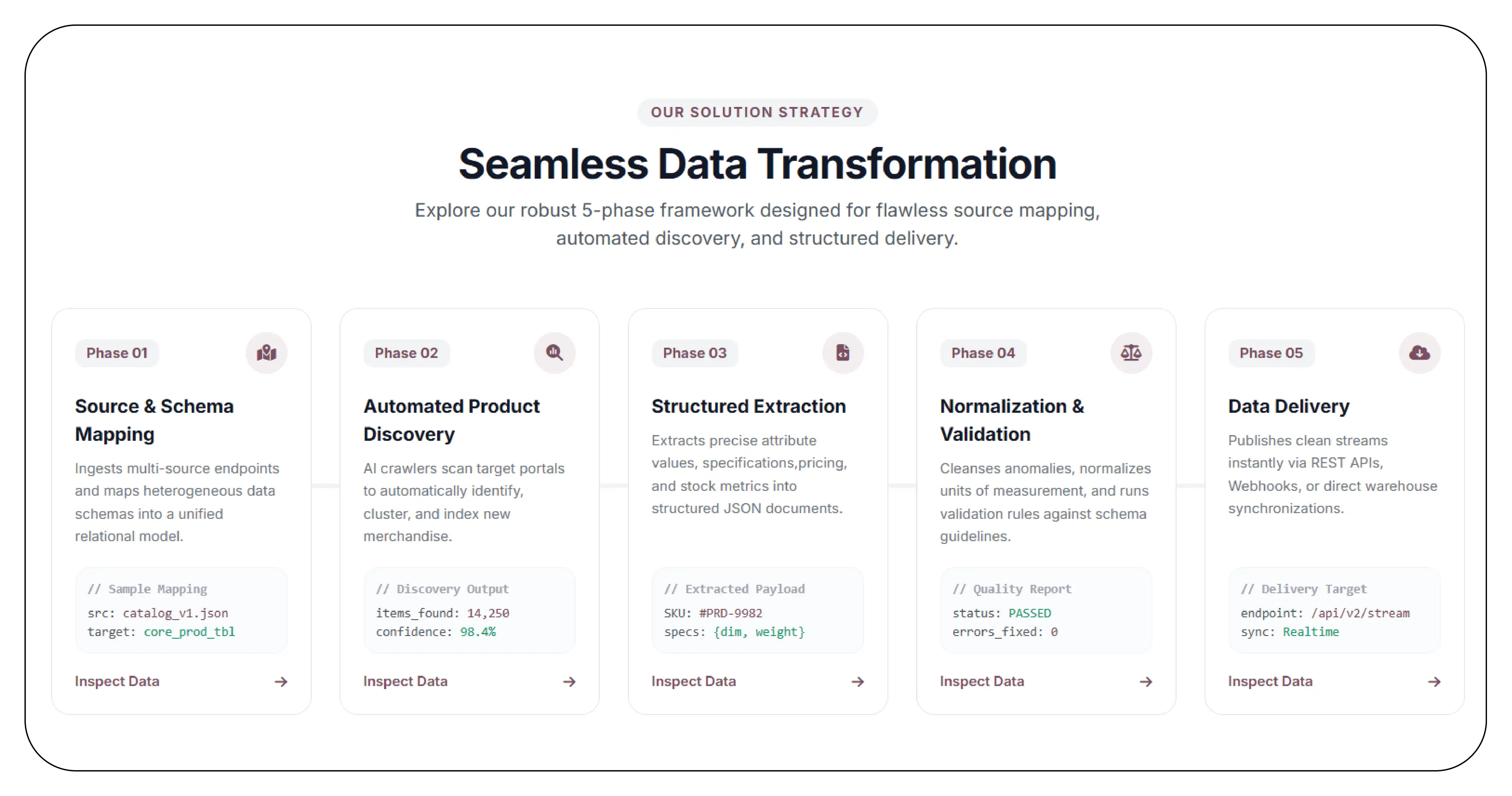
The implementation followed a phased approach designed to solve discovery, extraction, normalization, validation, and delivery challenges systematically.
Phase 1: Source and Schema Mapping
The first phase mapped the target BigCommerce storefront structure and identified the product fields required by the client. The schema covered product names, URLs, SKUs, descriptions, categories, pricing, variants, availability, and other relevant attributes. The team also established relationships between parent products and variant records. This prevented variant information from being flattened into incomplete product-level records.
Phase 2: Automated Product Discovery
The next stage automated product discovery across the agreed catalog. Instead of relying on manual page-by-page research, the workflow identified product URLs and relevant catalog structures systematically. This improved coverage and reduced the possibility of overlooking products within the target dataset.
Phase 3: Structured Extraction
The extraction layer collected product-level and variant-level information into a standardized schema. product catalog scraping for store migration was incorporated into the workflow so that the resulting dataset could support both intelligence analysis and migration-oriented use cases. The process preserved relationships between products, SKUs, options, and variants. Pricing and availability fields were captured alongside core catalog information to provide a more complete view of each product.
Phase 4: Normalization and Validation
Raw records were normalized to create consistent field formats. Product names, SKU values, pricing fields, categories, and variant attributes were checked against the defined schema. Validation rules helped identify incomplete or inconsistent records before final delivery. This stage reduced the likelihood that downstream systems would receive malformed or duplicated information.
Phase 5: Data Delivery
The final dataset was organized into a structured output format suitable for analytical workflows and internal systems. The client could use the data for catalog research, pricing analysis, migration planning, and competitive intelligence.
Through BigCommerce Product Data Scraping, the client moved from fragmented manual collection toward a repeatable product-data pipeline. The phased model also provided a foundation that could be expanded to additional catalogs and markets as requirements evolved.
Results & Key Metrics

The project produced measurable improvements in the client's product-data workflow:
1,000 products extracted: The complete agreed product scope was collected into a structured dataset.
Structured SKU coverage: Product and variant identifiers were organized for easier catalog analysis and migration.
Standardized attributes: Core fields were normalized into a consistent schema.
Automated collection: Repetitive manual extraction activities were substantially reduced.
Migration-ready structure: The resulting records could support downstream catalog and analytical workflows.
Results Narrative
The completed project gave the client a standardized foundation for handling BigCommerce catalog information. BigCommerce product migration data was organized in a format that preserved product and variant relationships, improving its usefulness for migration planning and market intelligence.
The client could analyze product attributes more consistently and reduce the time required to prepare raw catalog information for internal use. BigCommerce Product Data Scraping also created a repeatable workflow that could be adapted to future catalogs.
Rather than treating extraction as a one-time task, the solution established a scalable framework for ongoing product-data collection. This improved operational readiness and allowed the client's analysts to focus more heavily on interpretation, benchmarking, and strategic decision-making.
What Made Product Data Scrape Different
The differentiator was the combination of structured extraction, field normalization, variant handling, validation, and automation in one workflow. Instead of delivering raw page-level information, the process focused on creating usable records for analytical and migration purposes.
The workflow was also designed around the client's broader requirement for Quick commerce & FMCG data, where product attributes, pricing, availability, and assortment can change rapidly. This required an approach that could preserve data relationships while remaining adaptable to changing catalog structures.
Smart automation reduced repetitive research and helped standardize large volumes of product information. Validation rules added another layer of quality control before delivery.
The result was a reusable data pipeline rather than a simple extraction exercise, giving the client a foundation for future catalog expansion and eCommerce intelligence projects.
Client's Testimonial
"The project gave our team a much more structured view of BigCommerce catalogs. The extracted product and variant information was easier to analyze and significantly simplified our internal preparation work. The ability to organize product-level information alongside Geo and store-level pricing data was particularly valuable for our broader retail intelligence initiatives. The structured workflow also gave us confidence that future catalog projects could be handled with greater consistency and scale."
— Head of eCommerce Intelligence, Global Retail Analytics Company
Conclusion
The project demonstrated how structured catalog extraction can solve practical eCommerce intelligence and migration challenges. By collecting 1,000 products and organizing their SKUs, variants, pricing, descriptions, and availability, the client gained a reusable foundation for analysis and catalog management.
The workflow also created opportunities to connect product intelligence with Price scraping, competitive benchmarking, and broader retail datasets. Most importantly, the project replaced fragmented manual research with a scalable and repeatable process.
BigCommerce Product Data Scraping enabled the client to improve catalog visibility while preparing for larger data requirements. As eCommerce markets become more competitive, reliable product data can help businesses make faster and better-informed decisions.
Partner with Product Data Scrape to build scalable BigCommerce product-data pipelines for catalog intelligence, migration, competitive analysis, and market research!
FAQs
1. What information can be collected from BigCommerce stores?
A structured extraction project can collect product names, SKUs, prices, descriptions, categories, URLs, variants, options, availability, images, and other publicly available product attributes required for analysis.
2. Why is variant-level data important?
Variant-level information preserves differences between sizes, colors, configurations, and SKUs. This prevents important product relationships from being lost when catalogs are prepared for migration or competitive analysis.
3. Can BigCommerce data support competitive pricing research?
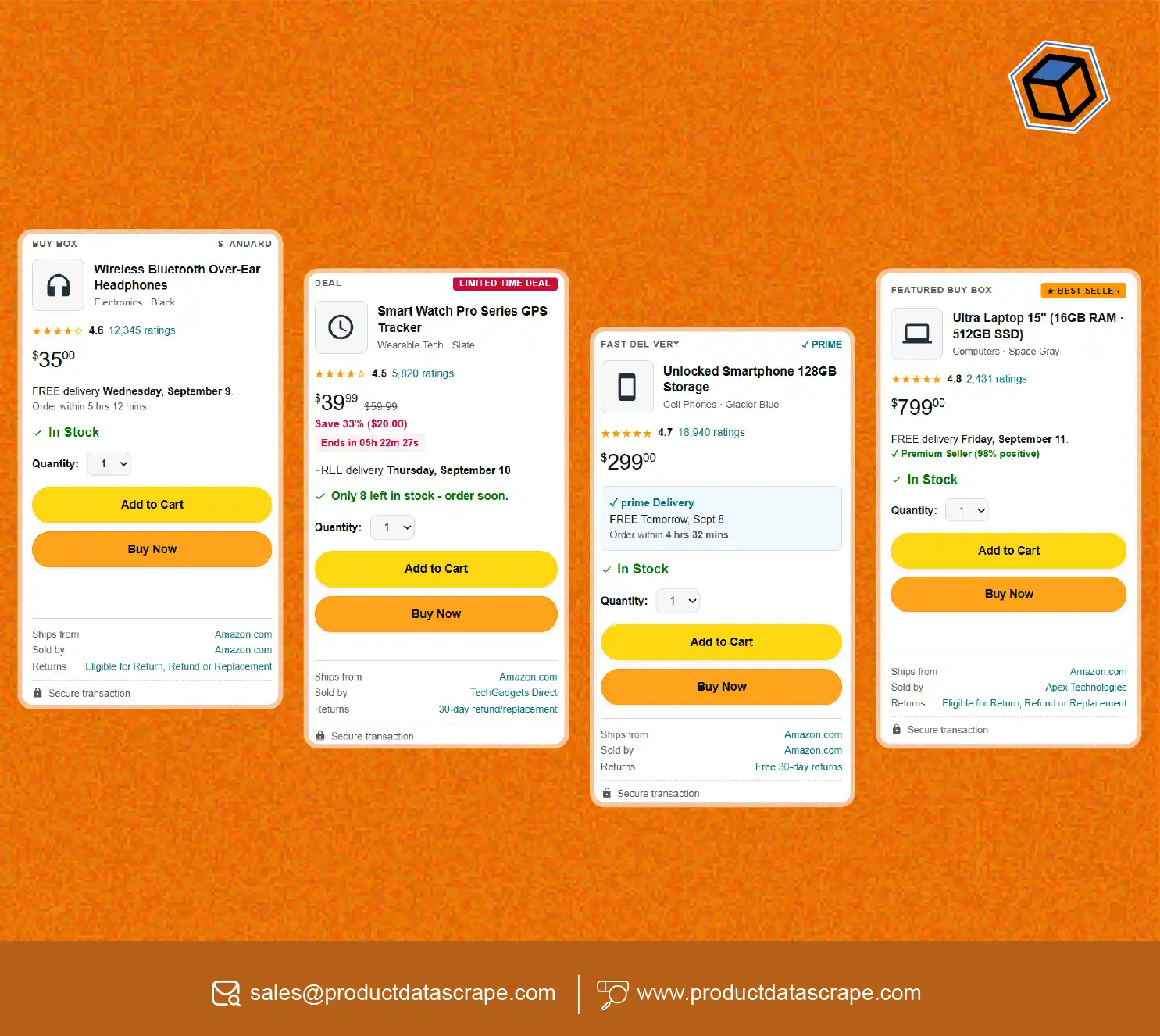
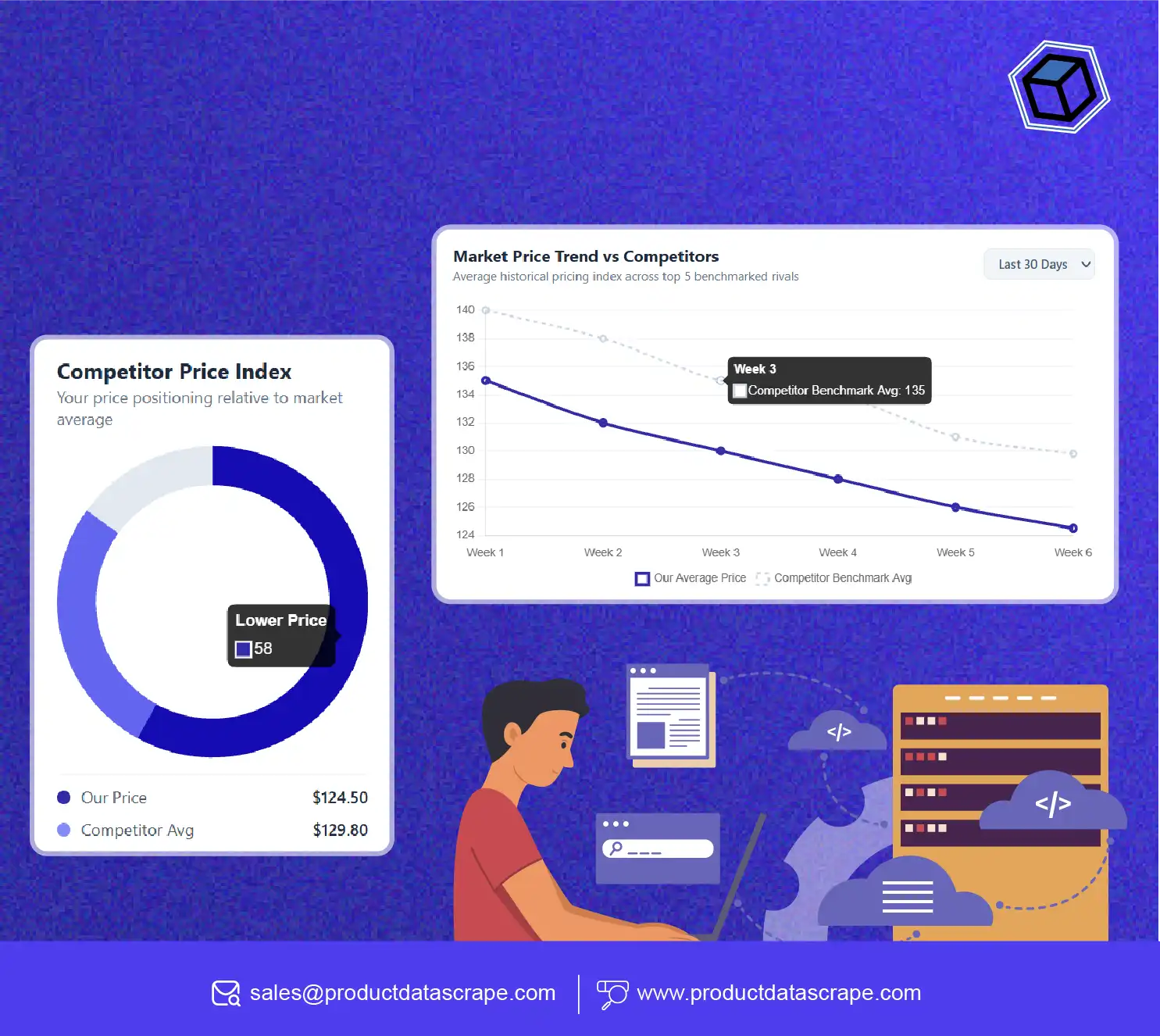
Yes. Structured product and pricing records can help businesses compare assortments, analyze competitor pricing, identify pricing gaps, monitor availability, and create historical datasets for market intelligence.
4. How does automated extraction improve catalog migration?
Automation reduces repetitive manual collection while maintaining consistent fields across large catalogs. Properly structured records can make SKU mapping, variant organization, validation, and downstream migration preparation more efficient.
5. Can the workflow scale beyond 1,000 products?
Yes. A properly designed extraction architecture can be extended to larger catalogs and additional storefronts by expanding discovery, extraction, validation, normalization, and delivery processes according to project requirements.


 Singapore
 EMAIL
EMAIL
 PHONE
PHONE


.webp)









.webp)