Quick Overview
A global ecommerce brand partnered with Product Data Scrape to modernize its pricing-data infrastructure and create a scalable foundation for monitoring competitors across multiple marketplaces and regions. The project focused on tenant isolation, automated collection, data normalization, faster processing, and reliable pricing intelligence. The new Multi-Tenant Price Monitoring SaaS Data Layer provided a centralized foundation for managing customer-specific pricing datasets while supporting scalable monitoring workflows. The engagement also strengthened Price Monitoring capabilities by introducing automated validation, historical storage, and configurable data pipelines. The result was faster data processing, stronger consistency, and improved visibility across the brand's competitive pricing environment.
The infrastructure was designed to support marketplace environments such as Amazon, Walmart, eBay, Target, Best Buy, and Shopify-powered ecommerce stores. Product categories included smartphones, laptops, headphones, fashion, home appliances, beauty products, and lifestyle goods, giving commercial teams a broader view of competitive movements across markets.
For example, a product such as an Apple iPhone, Samsung Galaxy smartphone, Sony headphones, Dyson vacuum cleaner, or Nike footwear could be monitored across several marketplaces. Each marketplace could present different prices, sellers, discounts, stock conditions, shipping offers, and promotional messages, making automated comparison increasingly important.
Client Name / Industry: Confidential Global Ecommerce Brand / Ecommerce & Retail
Service / Duration: SaaS pricing-data architecture and automation / 12 weeks
Key Impact Metrics: 88% faster data processing; 94% reduction in manual data operations; 97% data-validation accuracy.
The Client
The client was a global ecommerce brand operating across multiple markets and marketplace environments. Its commercial teams needed reliable competitor pricing information to evaluate product positioning, promotional activity, and market movements. As the business expanded into additional regions, the amount of pricing data increased rapidly.
The business monitored products across major ecommerce environments such as Amazon, Walmart, eBay, Target, Best Buy, and Shopify-powered stores, as well as regional marketplace platforms. Its assortment included consumer electronics, fashion, beauty, home appliances, sporting goods, and lifestyle products.
A typical monitoring example could involve a consumer electronics product such as the Samsung Galaxy S24. The same or comparable product might appear on Amazon at one price, Walmart at another, and Best Buy with a different promotional offer. Seller identity, stock status, shipping conditions, and discounts could also vary between marketplaces.
The existing infrastructure had evolved incrementally. Different marketplaces were being monitored through separate workflows, and tenant-specific requirements were handled through increasingly complex configurations. This created operational pressure for both engineering and analytics teams.
The client needed to support multiple internal and external users while maintaining clear separation between datasets, monitoring rules, marketplace configurations, and reporting requirements. At the same time, pricing data needed to remain fresh enough to support rapid commercial decisions.
A scalable Multi-tenant price monitoring architecture became essential because simply increasing the number of collection jobs was not enough. The system needed a better way to manage tenants, sources, products, historical observations, and processing workloads.
The transformation was also driven by competitive pressure. Ecommerce pricing changes frequently, promotions can vary by market, and retailers increasingly rely on automated intelligence rather than periodic manual checks. The client therefore needed an infrastructure capable of supporting growth without allowing data complexity to become a bottleneck.
Before the partnership, the client faced fragmented workflows, inconsistent processing, limited scalability, and increasing maintenance requirements. Product Data Scrape was brought in to create a more structured foundation.
Goals & Objectives

The project defined success across business scalability, technical automation, data quality, and measurable operational performance. Multi-marketplace pricing intelligence was established as a core objective because the client needed a unified approach to analyzing pricing signals from multiple ecommerce environments.
Scale pricing monitoring across additional marketplaces and regions.
Reduce manual intervention in data processing.
Improve the consistency and freshness of competitive pricing information.
Support tenant-specific configurations without duplicating the entire infrastructure.
Provide a stronger foundation for pricing analytics and commercial decision-making.
Design a modular multi-tenant data architecture.
Automate source ingestion, transformation, and validation.
Create standardized product and pricing schemas.
Separate tenant data logically and securely.
Support historical price storage and trend analysis.
Enable integration with dashboards, analytics systems, and downstream applications.
Improve processing speed through workload optimization.
Achieve at least 90% reduction in repetitive data operations.
Improve processing speed by more than 80%.
Maintain 97%+ validation accuracy.
Reduce duplicate pricing records.
Improve pipeline reliability and monitoring visibility.
Support additional tenants without proportional infrastructure duplication.
These objectives created a measurable framework for the engagement. The goal was not simply to collect more prices but to build infrastructure that could reliably convert marketplace observations into reusable pricing intelligence.
For example, the client could compare a Sony WH-1000XM5 headphone across Amazon, Walmart, and Best Buy while maintaining separate monitoring rules for another tenant tracking Nike footwear or Dyson appliances.
The Core Challenge
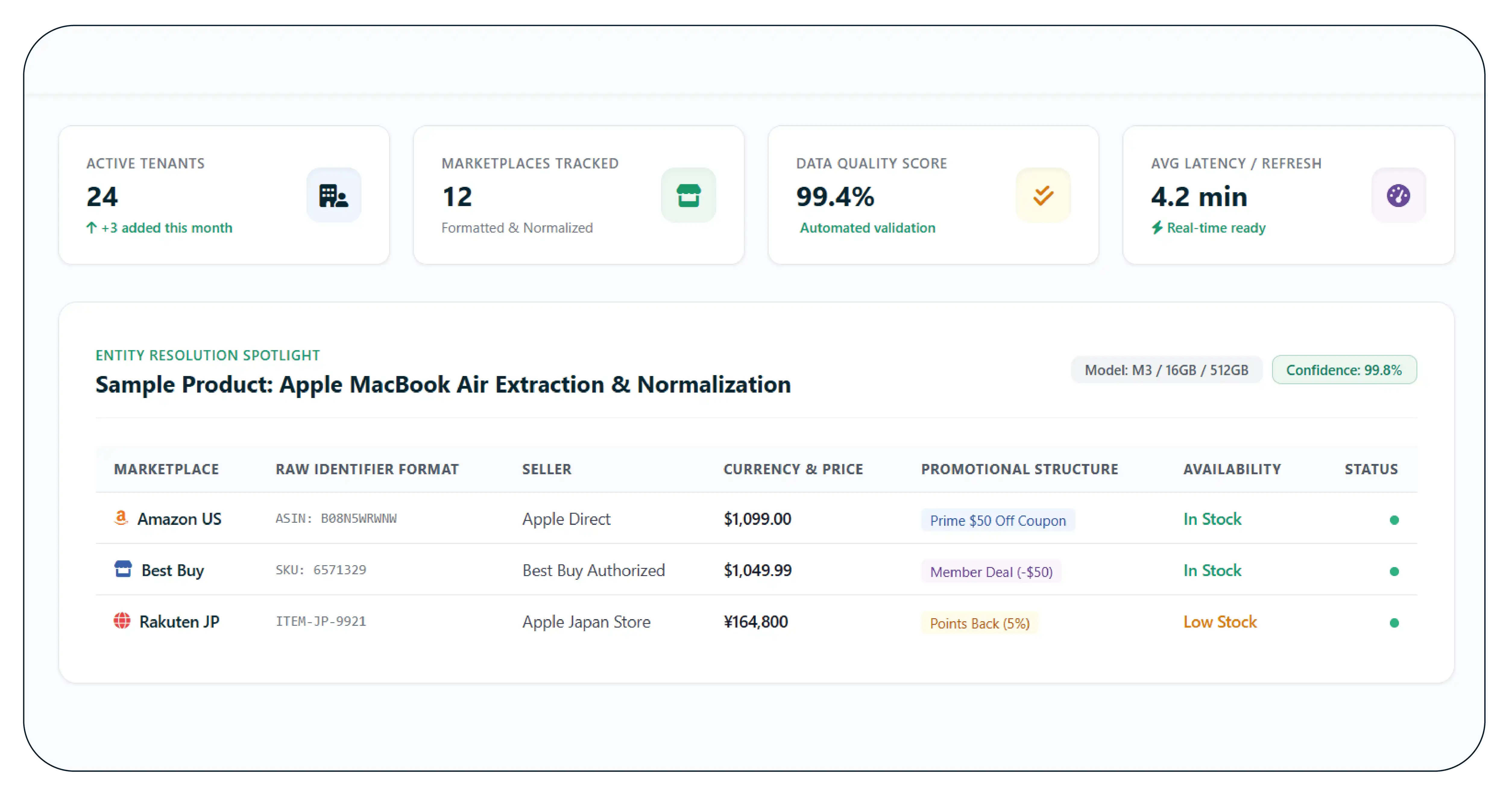
The client's primary challenge was fragmented pricing-data processing. Each marketplace could expose different product identifiers, price formats, currencies, promotional structures, and update patterns. Managing these differences through separate workflows increased operational complexity.
Another challenge was tenant growth. As additional customers, regions, or business units were introduced, the infrastructure needed to support different monitoring frequencies, product lists, source configurations, and reporting requirements. Without a modular architecture, these variations could lead to duplicated logic and higher maintenance overhead.
Data quality was another concern. Price records could contain inconsistent formats, duplicate observations, missing identifiers, or outdated values. Manual validation was time-consuming and made it difficult to maintain consistent quality at scale.
The client also required faster data availability. Delayed price information reduced the usefulness of competitive intelligence because pricing teams might react after competitors had already changed their offers.
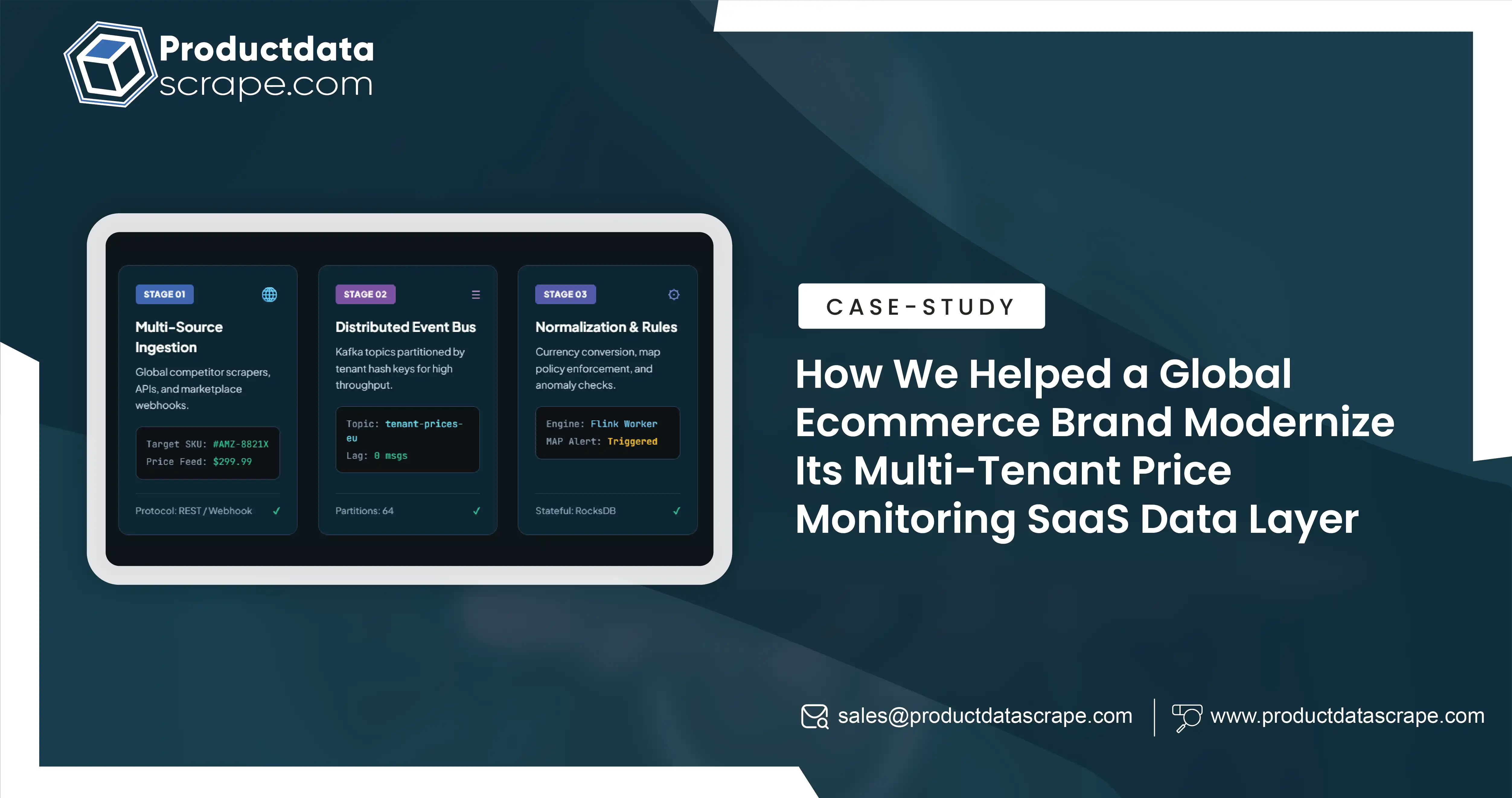
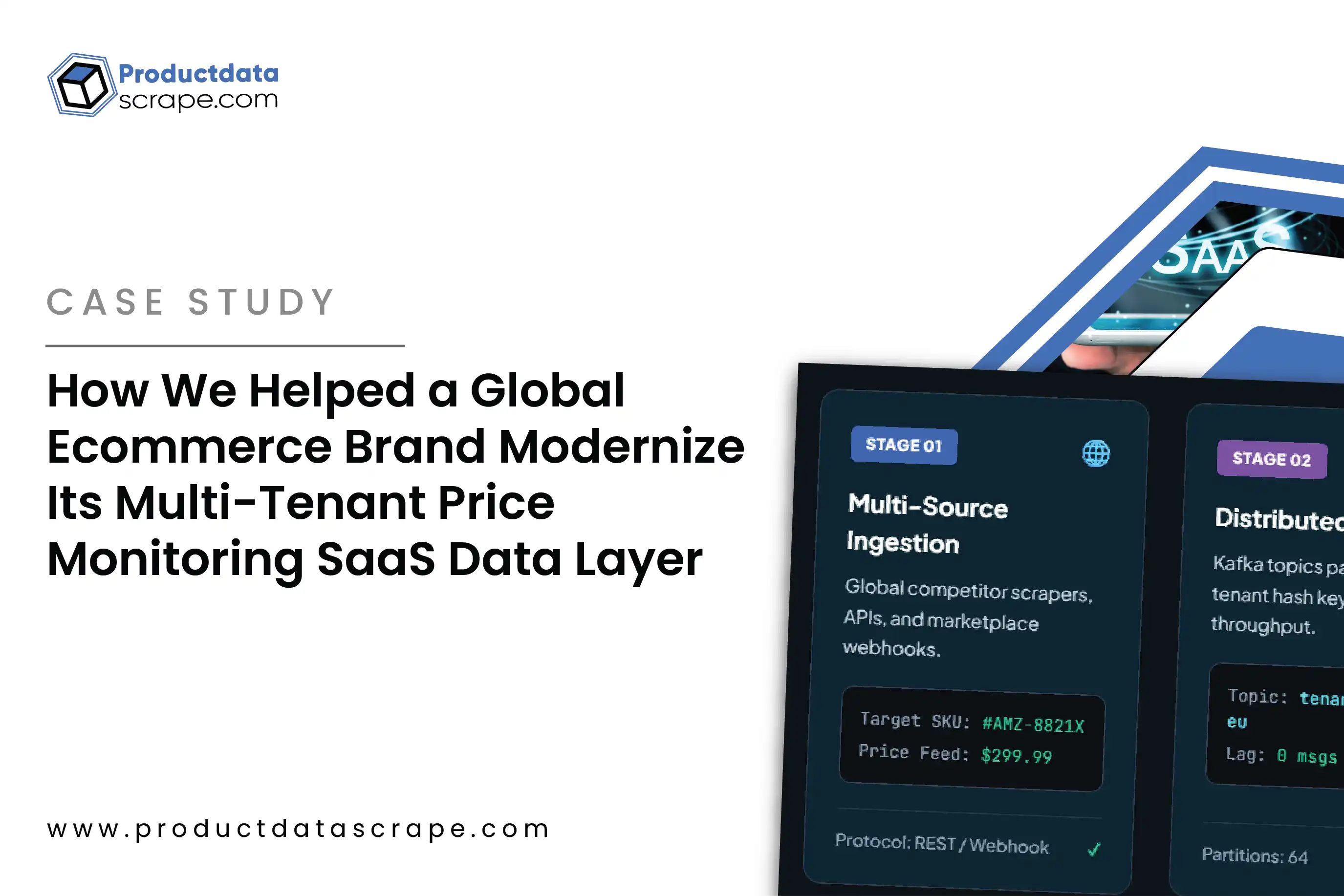
To address these limitations, Product Data Scrape designed an automated price tracking infrastructure that could separate collection, processing, validation, storage, and delivery. This approach allowed individual pipeline components to scale independently while reducing unnecessary duplication.
The challenge therefore extended beyond web data extraction. It required designing an operational data layer capable of supporting multiple tenants, marketplaces, products, currencies, and refresh schedules without compromising reliability.
A practical example was monitoring a product such as an Apple MacBook Air. The system needed to distinguish the correct model, storage configuration, seller, price, promotional discount, currency, and availability before presenting the information to an analytics team.
Our Solution
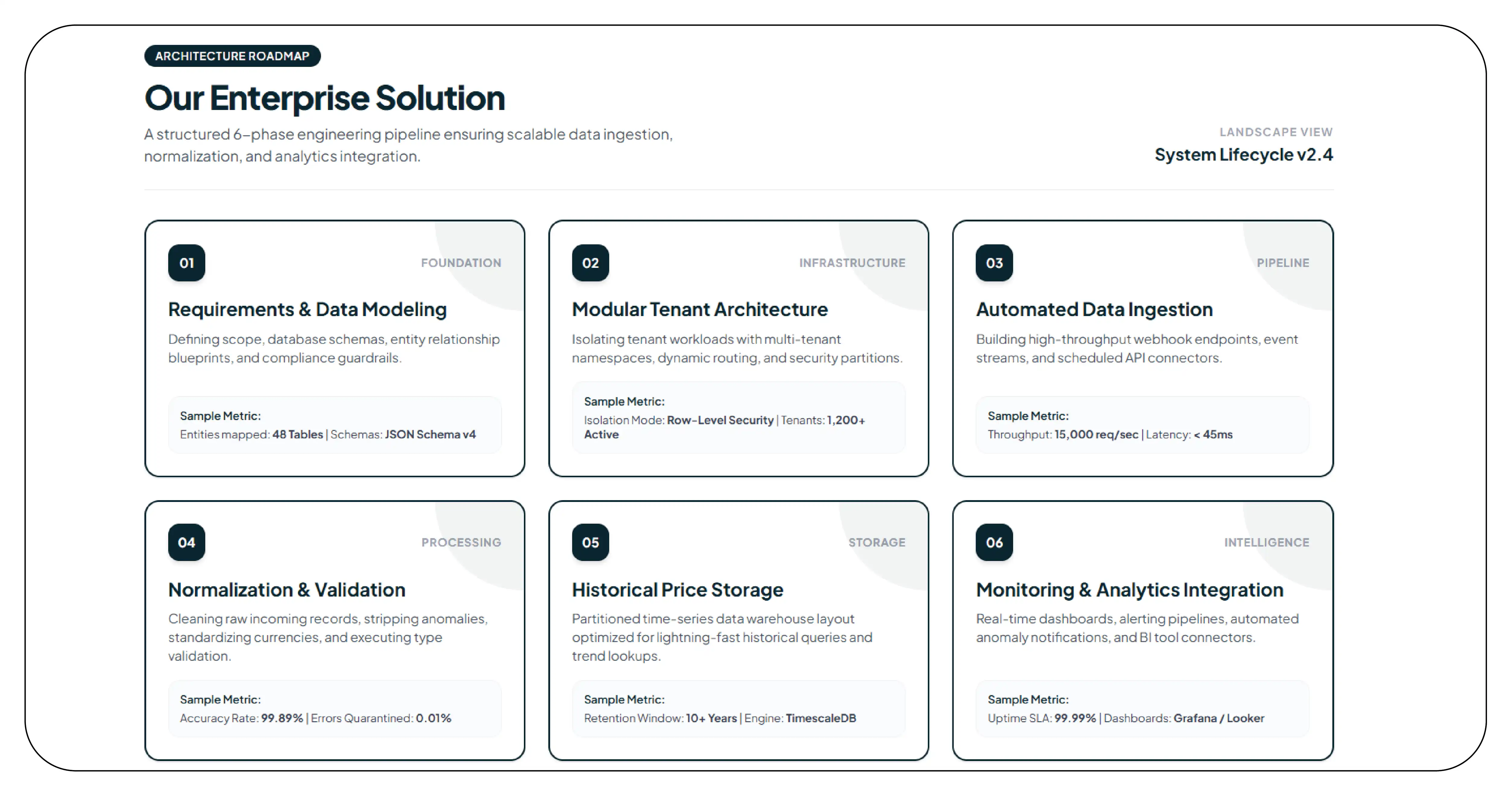
Product Data Scrape implemented the project through a phased architecture and automation strategy designed to improve scalability, data quality, and operational efficiency.
Phase 1: Requirements and Data Modeling
The team first mapped tenant requirements, marketplace sources, product identifiers, pricing fields, currencies, promotional values, timestamps, and update frequencies. A standardized schema was created so that data from different sources could be processed consistently. This reduced downstream complexity because analytics systems no longer needed to interpret every marketplace's unique structure independently.
Phase 2: Modular Tenant Architecture
The next stage introduced tenant-aware configuration. Each tenant could have its own monitored products, marketplace sources, collection schedules, and analytical requirements while using common infrastructure components. Logical separation ensured that tenant-specific information remained associated with the correct customer or business unit.
Phase 3: Automated Data Ingestion
Collection workflows were automated to retrieve pricing observations from configured sources. The ingestion layer was designed to accommodate differences in source structures and update frequencies. The system then passed raw observations into standardized transformation workflows rather than sending unprocessed data directly to analytics.
Phase 4: Normalization and Validation
The team implemented transformation rules for prices, currencies, product identifiers, timestamps, discounts, and other relevant attributes. Validation routines identified missing values, duplicate observations, invalid records, and unexpected changes. This improved the consistency of downstream datasets.
Phase 5: Historical Price Storage
A historical layer was introduced to preserve price observations over time. Instead of retaining only the latest value, the system could maintain historical snapshots for trend analysis and competitive benchmarking.
Phase 6: Monitoring and Analytics Integration
The final stage connected the data layer with downstream analytics and reporting workflows. This allowed pricing teams to access structured data for dashboards, alerts, benchmarking, and other analytical use cases.
The resulting price monitoring data layer architecture separated collection from processing and analytics, making the overall system easier to scale and maintain.
Results & Key Metrics
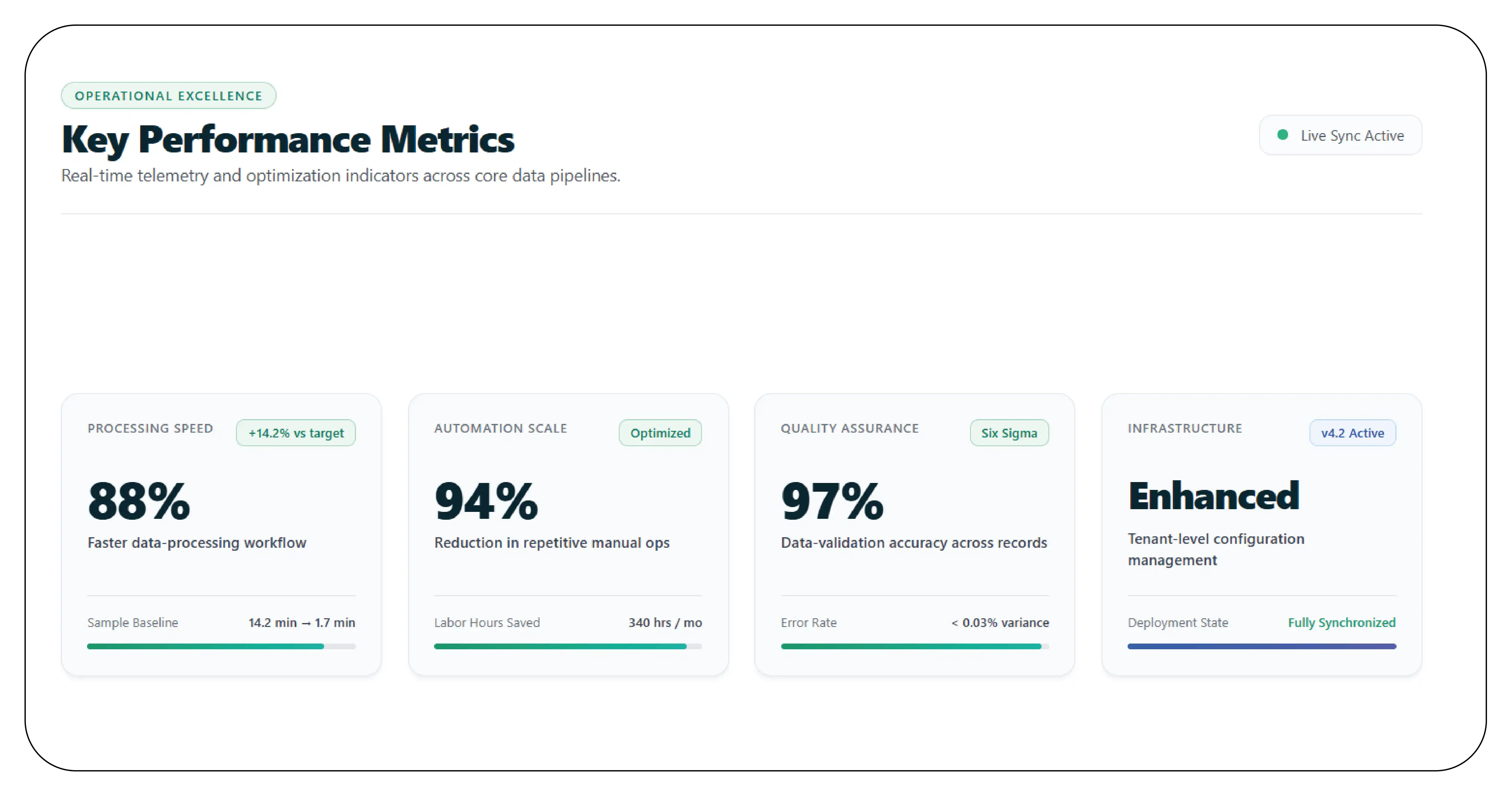
88% faster average data-processing workflow.
94% reduction in repetitive manual data operations.
97% data-validation accuracy across processed records.
Improved tenant-level configuration management.
Reduced duplicate pricing observations.
Faster availability of normalized pricing datasets.
More consistent historical price tracking across marketplaces.
Results Narrative
The redesigned infrastructure gave the client a scalable foundation for expanding its competitive pricing program. Data could be processed through standardized workflows rather than isolated marketplace-specific processes. Tenant-specific configurations could also be managed without rebuilding the entire pipeline.
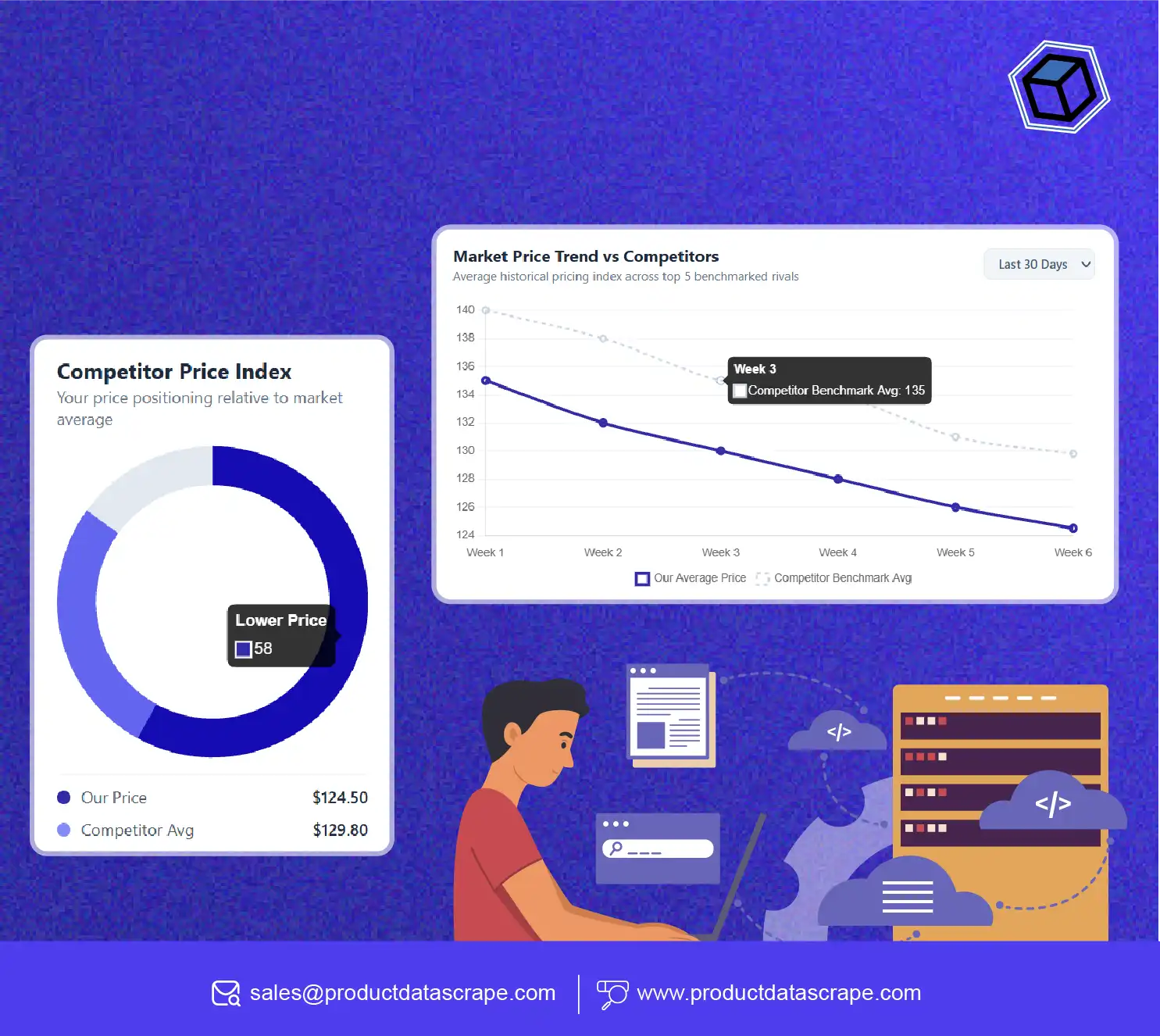
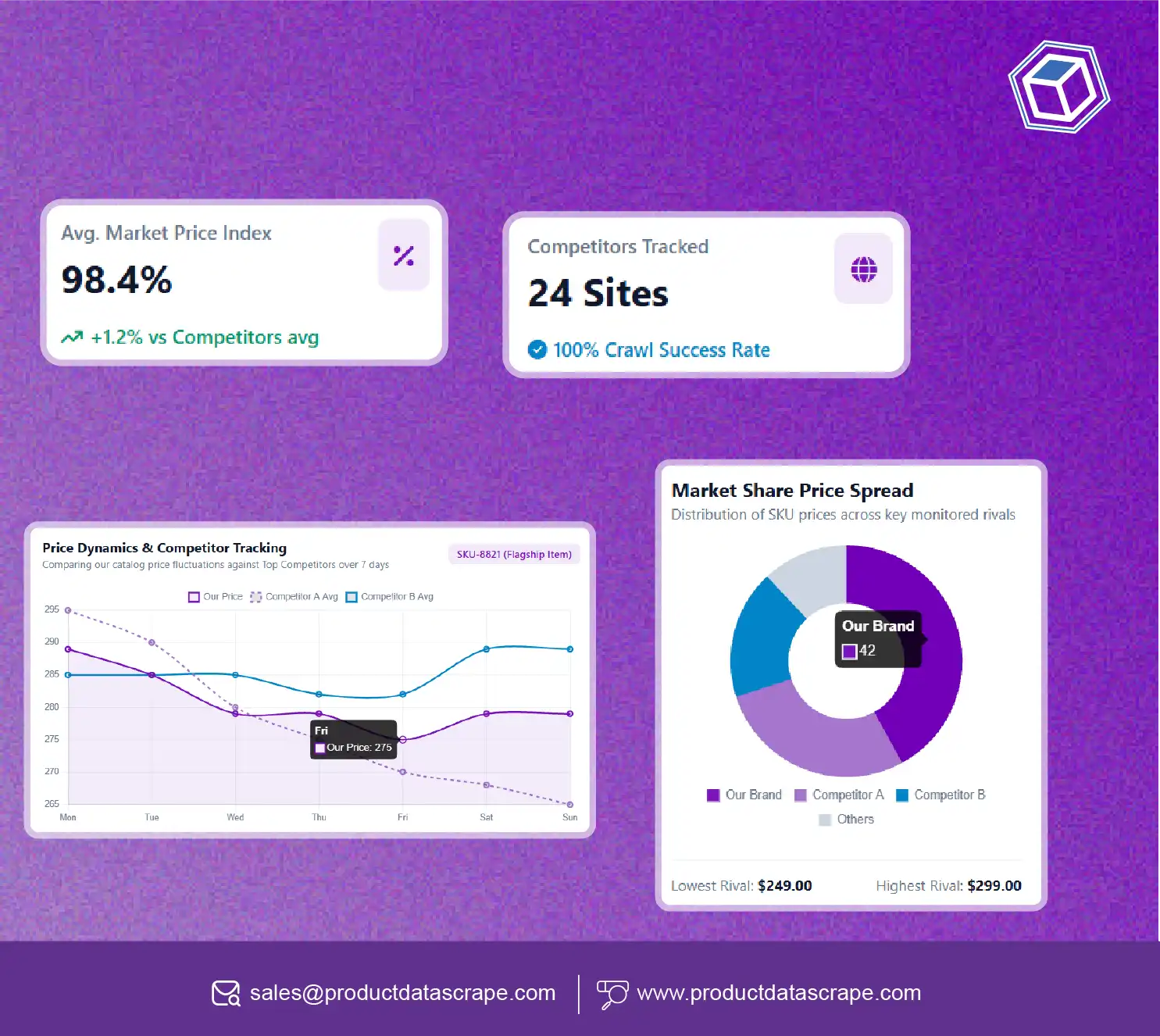
The new SaaS architecture for price monitoring improved operational visibility and allowed pricing teams to work with more consistent datasets. Historical price storage added another layer of value by enabling trend analysis instead of one-time comparisons. The client could therefore move toward more automated, data-driven pricing decisions while reducing the operational workload required to maintain the monitoring program.
For visualization, the results could be represented through a competitive pricing dashboard showing a single product against multiple marketplaces:
| Marketplace |
Example Product |
Current Price |
Discount |
Availability |
| Amazon |
Samsung Galaxy S24 |
$699 |
12% |
In stock |
| Walmart |
Samsung Galaxy S24 |
$679 |
15% |
In stock |
| Best Buy |
Samsung Galaxy S24 |
$699 |
12% |
Limited |
| eBay |
Samsung Galaxy S24 |
$665 |
17% |
Multiple sellers |
Example data for visualization purposes only; not presented as live marketplace pricing.
This type of interface could help pricing teams immediately identify which marketplace had the lowest observed price, where promotions were strongest, and whether a product was consistently available.
What Made Product Data Scrape Different?
Product Data Scrape focused on architecture as much as extraction. Instead of creating a collection system that would require extensive customization for every tenant, the solution used reusable components, standardized schemas, configurable workflows, and automated validation.
The system was designed to separate tenant configuration from shared processing capabilities. This supported scalability while reducing unnecessary duplication. Historical data handling and validation were also integrated into the workflow rather than treated as separate manual processes.
The result was a more flexible foundation for marketplace pricing intelligence, capable of supporting multiple sources, markets, products, and monitoring requirements.
The architecture could support a variety of ecommerce categories. A consumer electronics tenant might monitor Apple, Samsung, Sony, and Bose products, while a fashion tenant could track Nike, Adidas, Levi's, and other brands. Home-appliance monitoring could similarly include Dyson, Philips, KitchenAid, and other manufacturers.
This approach made the Multi-Tenant Price Monitoring SaaS Data Layer suitable for continued expansion rather than only solving the client's immediate infrastructure limitations.
Client's Testimonial
"Product Data Scrape helped us move from fragmented pricing workflows to a much more structured and scalable data foundation. The biggest improvement was the ability to manage different marketplace requirements without constantly rebuilding our processes. Data became faster to access, easier to validate, and more consistent across teams. The architecture also gives us room to add new markets and monitoring requirements without creating the same operational complexity we faced previously. The project has become an important part of how we manage competitive pricing intelligence."
— VP of Ecommerce Technology, Global Ecommerce Brand
The solution also supported the client's broader digital ecosystem, including Single-page applications, dashboards, and analytics interfaces that depended on reliable pricing datasets. The Multi-Tenant Price Monitoring SaaS Data Layer provided the structured backend foundation needed to support these experiences.
Conclusion
The project demonstrates how a well-designed pricing-data infrastructure can help global ecommerce organizations scale competitive intelligence without scaling operational complexity at the same rate. By combining tenant-aware configuration, automated ingestion, normalization, validation, historical storage, and analytics integration, Product Data Scrape created a more reliable foundation for pricing operations.
The client gained faster processing, stronger data quality, and greater flexibility across marketplaces and regions. The architecture also created room for future expansion into additional sources, products, markets, and analytical workflows.
A scalable Pricing strategy increasingly depends on timely and consistent market intelligence. The Multi-Tenant Price Monitoring SaaS Data Layer provided the technical foundation required to turn that intelligence into a repeatable operational capability.
With the infrastructure in place, the business can expand monitoring across marketplaces such as Amazon, Walmart, eBay, Target, Best Buy, and other regional platforms while supporting new product categories and geographic markets.
Want to build a scalable competitive pricing infrastructure for your ecommerce business? Partner with Product Data Scrape to create automated, multi-marketplace pricing intelligence tailored to your products, tenants, and business objectives!
FAQs
1. What is a multi-tenant price monitoring data layer?
It is a shared data infrastructure that allows multiple customers, business units, or tenants to use pricing-monitoring capabilities while keeping their configurations and datasets logically separated.
2. Why is tenant separation important?
Tenant separation helps prevent data from different customers or business units from becoming mixed. It also allows each tenant to maintain individual products, marketplaces, schedules, and monitoring rules.
3. Can the architecture support multiple marketplaces?
Yes. A modular architecture can accommodate different marketplace structures by using source-specific ingestion logic and common normalization and validation layers.
4. How does historical pricing improve intelligence?
Historical pricing allows businesses to identify price movements, promotional patterns, competitor behavior, and longer-term market trends instead of relying only on the current price.
5. Can the system support future SaaS growth?
Yes. Reusable components, configurable tenant settings, automated validation, and scalable processing can allow additional tenants, products, marketplaces, and monitoring schedules to be introduced without duplicating the complete infrastructure.


 Singapore
 EMAIL
EMAIL
 PHONE
PHONE


.webp)









.webp)