Quick Overview
A fictional industrial supplies brand, The client, wanted to improve B2B lead generation, identify potential buyers, and strengthen its competitive research. Its existing prospecting process relied heavily on manual searches across online marketplaces and business listings, limiting outreach efficiency. Product Data Scrape developed an automated data collection workflow to organize seller information, business profiles, and relevant product details into structured datasets. By combining marketplace research with business listing analysis, the project aimed to improve lead discovery, reduce repetitive research, and support more targeted sales campaigns. Illustrative targets included 50% less manual research time, 30% faster prospect identification, and 95% completeness across required data fields.
Client Name / Industry: The client (fictional) / Industrial Equipment and B2B Supplies
Service / Duration: Marketplace and business data collection / 8 weeks (illustrative)
Key Impact Metrics: 50% reduction in manual research time, 30% faster prospect identification, and 95% required-field completeness (illustrative targets).
The Client
The client, a fictional B2B supplier of industrial fasteners, safety equipment, pneumatic tools, and warehouse accessories, wanted to expand its customer base across India. The company served distributors, wholesalers, retailers, and manufacturing businesses, making relevant business contacts essential to its sales strategy.
Competition in industrial B2B markets increasingly requires businesses to identify suitable prospects, understand supplier positioning, and respond quickly to changing product demand. Leveraging E-commerce data for industrial B2B helps sales teams access organized business and product information, prioritize relevant prospects, and streamline outreach instead of spending hours searching multiple websites.
Before partnering with Product Data Scrape, The client depended on manual marketplace searches, business directories, and spreadsheets. Employees copied company names, product details, available contact information, and location data into separate files. This approach made it difficult to maintain consistent records and identify duplicate prospects.
The company also wanted to use Google Shopping Product Data Scraper capabilities to organize relevant product listing information and understand how competing sellers presented similar industrial products. However, fragmented records and inconsistent formats complicated product comparisons and prospect qualification.
The brand recognized that its existing process would become harder to maintain as its target markets expanded. It needed a repeatable data collection workflow that could support lead discovery, structured reporting, and more informed sales planning.
Product Data Scrape proposed a solution combining permitted marketplace data collection, business listing analysis, data cleaning, and organized exports. The objective was to help the company build a more consistent prospecting process while respecting platform access conditions and applicable privacy requirements.
Goals & Objectives
The main business goal was to help The client discover more relevant B2B prospects while reducing repetitive research. The company wanted to identify potential distributors, industrial retailers, wholesalers, and manufacturing businesses across selected regions.
Another priority was to improve the quality and consistency of prospect records so that sales representatives could prioritize outreach more effectively. The workflow also aimed to support product and competitor research without creating disconnected spreadsheets.
The brand wanted to Protect your brand by maintaining responsible data handling practices, using approved collection methods, and avoiding unsupported claims about business contacts or marketplace information.
The technical plan focused on automating structured collection and preparing usable datasets for sales and analytics teams.
Key objectives included:
Scrape Google Maps business data by city and category to identify relevant business listings in selected locations, subject to permitted access methods.
Collect eligible seller and product information from relevant online marketplace pages.
Standardize business names, categories, locations, product attributes, and available business contact fields.
Remove duplicate records and flag incomplete or inconsistent entries.
Export structured datasets to Excel or compatible CRM systems.
Create repeatable collection schedules and monitoring procedures where technically feasible.
Enable timely reporting through regularly refreshed datasets rather than assuming continuous real-time access.
The project used these illustrative evaluation targets:
Manual research time: Reduce repetitive research hours by 50%.
Prospect identification speed: Improve the speed of discovering relevant businesses by 30%.
Data completeness: Achieve 95% completeness across required fields when source information is available.
Duplicate rate: Measure and reduce duplicate prospect records.
Qualification relevance: Track the proportion of collected businesses that match defined target-market criteria.
Workflow reliability: Monitor successful runs, failed requests, and data validation errors.
Actual improvements would need to be measured against documented pre-project and post-project performance.
The Core Challenge
The client faced a fragmented prospecting process that limited the efficiency of its sales operations. Employees searched business directories, online marketplaces, and product listings separately, then manually combined the information into spreadsheets. As the target geography expanded, maintaining consistent records became increasingly time-consuming.
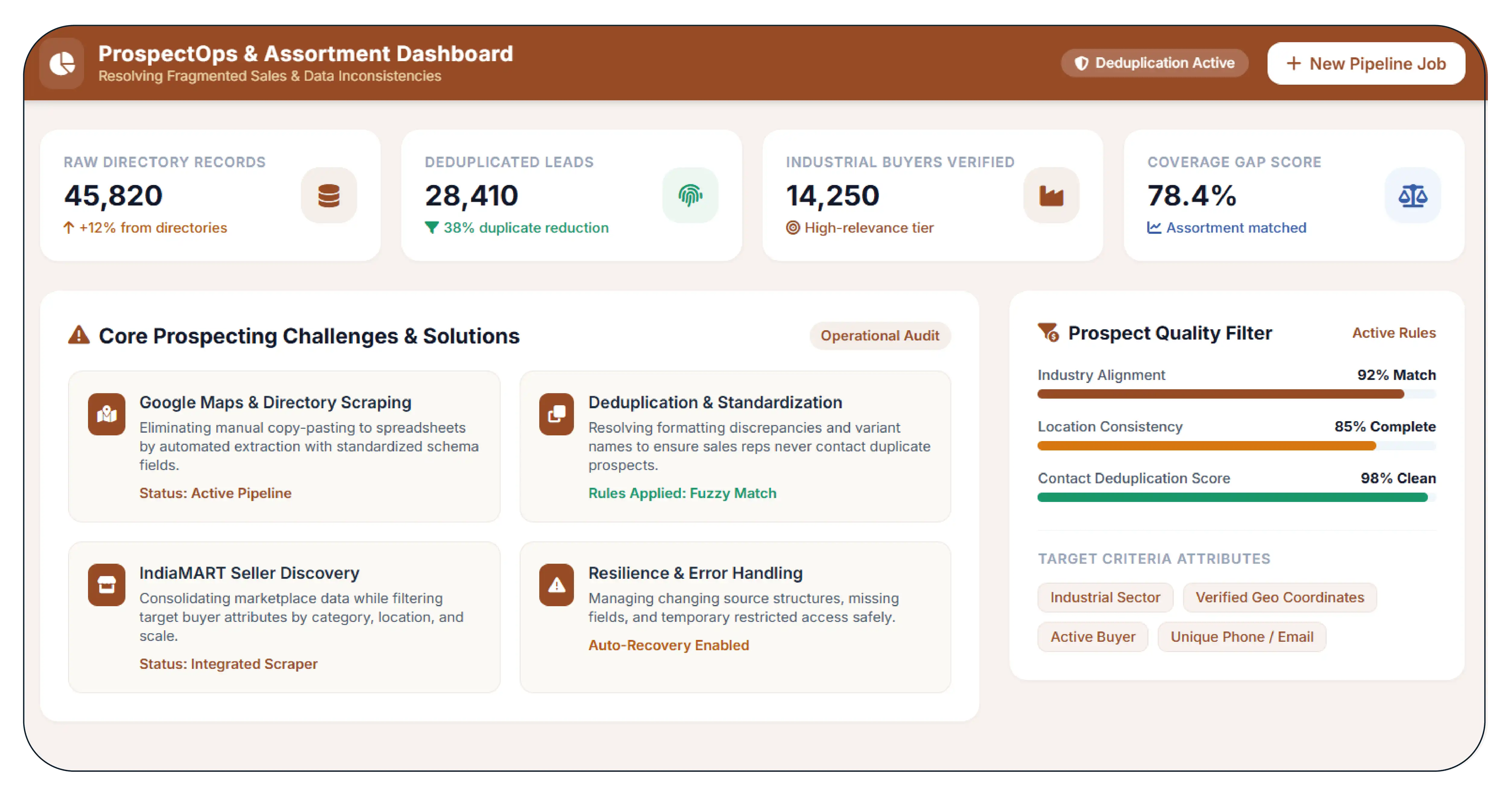
One challenge was inconsistent business information. Company names could appear in different formats, location details could be incomplete, and similar businesses could be listed across multiple sources. Without standardized fields and deduplication rules, sales representatives risked contacting the same prospect more than once. To address this issue, the team needed a structured process to Extract business leads from Google Maps to Excel, organize business details, identify duplicate records, and maintain a more consistent database for targeted sales outreach.
The company also needed to distinguish relevant industrial buyers from businesses that did not match its target market. A large collection of records was not automatically valuable; prospects had to be assessed by industry, location, business category, and other available attributes.
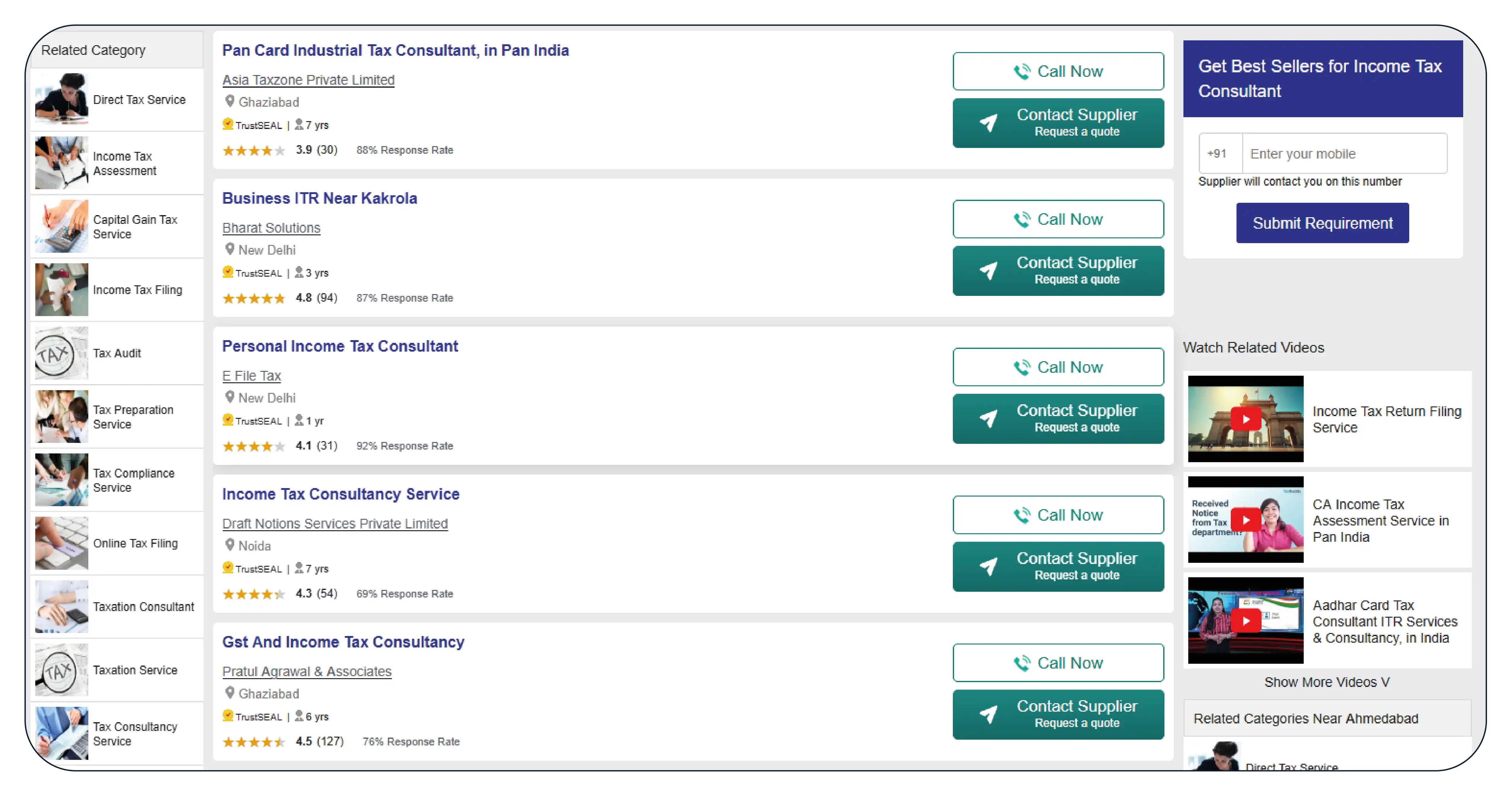
The team explored an IndiaMART lead scraper for small business workflows to simplify seller discovery and consolidate relevant information. However, collecting marketplace information alone would not solve the broader challenge of verifying record quality, organizing product categories, and preparing leads for outreach.
The company additionally lacked consistent Assortment analytics to compare product availability and seller offerings across relevant categories. Manual research made it difficult to recognize coverage gaps or understand which product segments had more competing listings.
Finally, source structures and access conditions could change. Missing fields, temporary errors, duplicate records, and restricted information could affect collection quality.
The project therefore required a controlled, maintainable workflow that combined relevant data sources with validation, categorization, and clear reporting.
Our Solution
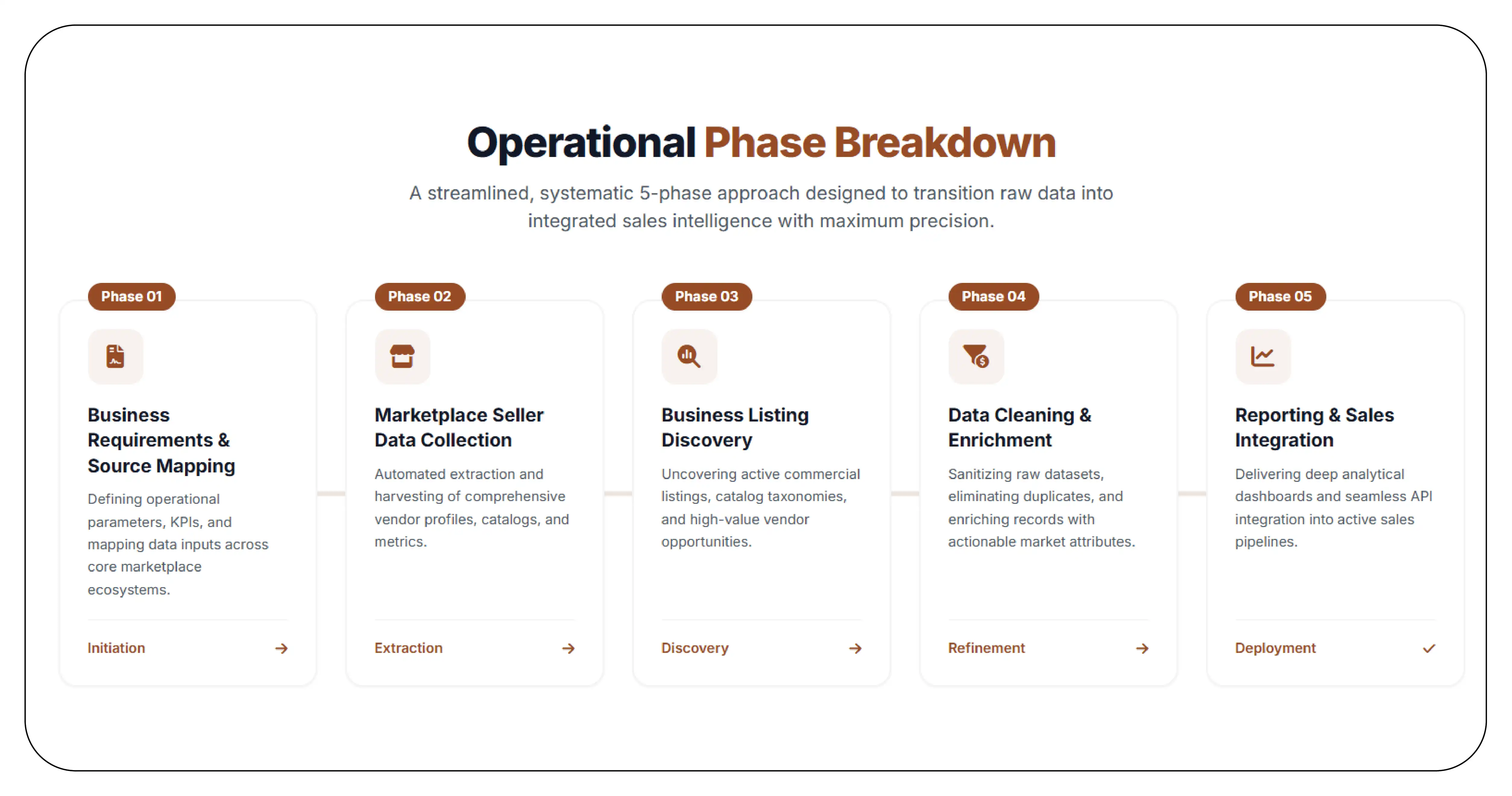
Product Data Scrape implemented a phased workflow to improve prospect discovery, standardize marketplace information, and create analysis-ready datasets.
Phase 1: Business Requirements and Source Mapping
The project began by defining the ideal customer profile for The client. Target prospects included industrial distributors, equipment retailers, manufacturing companies, safety-product suppliers, and regional wholesalers. The team identified the required fields, such as business name, location, category, available public business contact information, seller name, product title, listing URL, and relevant product attributes. A standardized data schema established how records from different sources would be stored and compared. This helped reduce inconsistencies when the same business or product appeared in multiple datasets.
Phase 2: Marketplace Seller Data Collection
The second phase focused on IndiaMART seller information extraction through a configurable workflow for eligible and accessible seller and product information. Collection rules prioritized relevant categories and available product details. The pipeline organized seller names, listing information, product descriptions, and other permitted fields into structured records. Collection frequency and request behavior were configured according to technical constraints and applicable platform terms. The system did not assume that every field would be accessible or that every listing would remain unchanged.
Phase 3: Business Listing Discovery
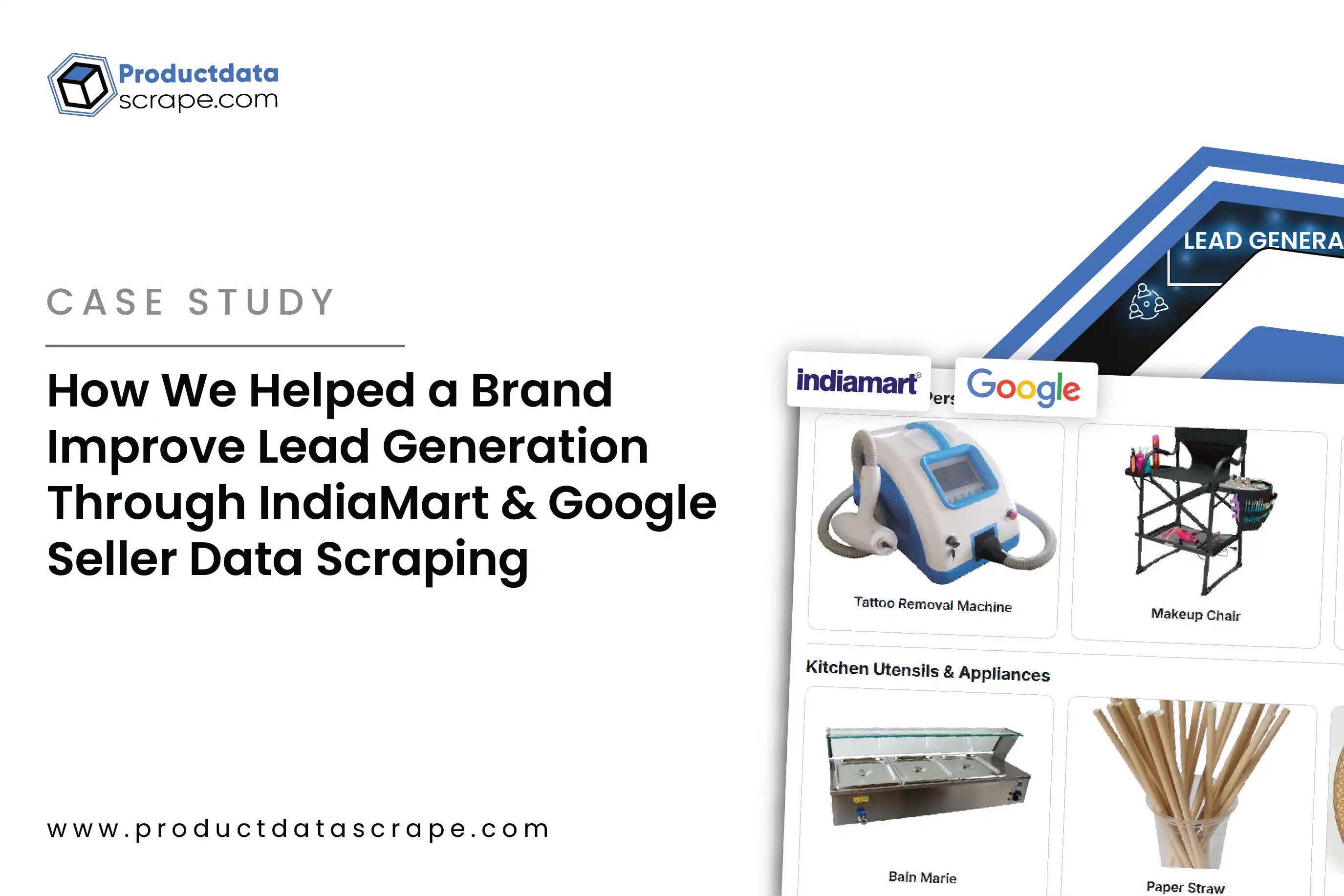
The team added business listing research to identify potential customers and distributors by location and category. Selected business profiles were collected through permitted methods, with available information organized into a consistent structure. For example, a campaign targeting industrial buyers in Pune could focus on manufacturing businesses, equipment distributors, and industrial supply retailers. Similar workflows could be configured for Ahmedabad, Bengaluru, or other relevant markets. The combined IndiaMart & Google Seller Data Scraping workflow was designed to connect relevant seller and business information with the brand's prospecting requirements, rather than treating every collected record as a qualified lead.
Phase 4: Data Cleaning and Enrichment
Raw records passed through validation rules before being added to the final dataset. The workflow standardized text, normalized supported fields, flagged missing values, and identified potential duplicates. Business categories and product descriptions were organized into consistent groupings to make filtering and comparison easier. Through IndiaMART Industry Leader Data Scraping, the team structured relevant industry and seller information for more efficient analysis. Where source information was incomplete, the dataset preserved that limitation rather than inventing missing details, helping maintain data accuracy and supporting informed business decisions. Records could also be prioritized using transparent criteria, such as business category, location, and product relevance.
Phase 5: Reporting and Sales Integration
Validated data was exported into Excel-compatible formats and prepared for potential CRM integration. Sales teams could filter prospects by region, business type, and relevant product categories. Dashboards and reports could summarize the number of collected records, completeness rates, duplicates, and qualified prospects. Monitoring procedures helped identify failed collection runs and changes in data availability. This phased approach established a repeatable prospecting workflow and gave the company a more organized foundation for lead qualification and commercial research.
Results & Key Metrics
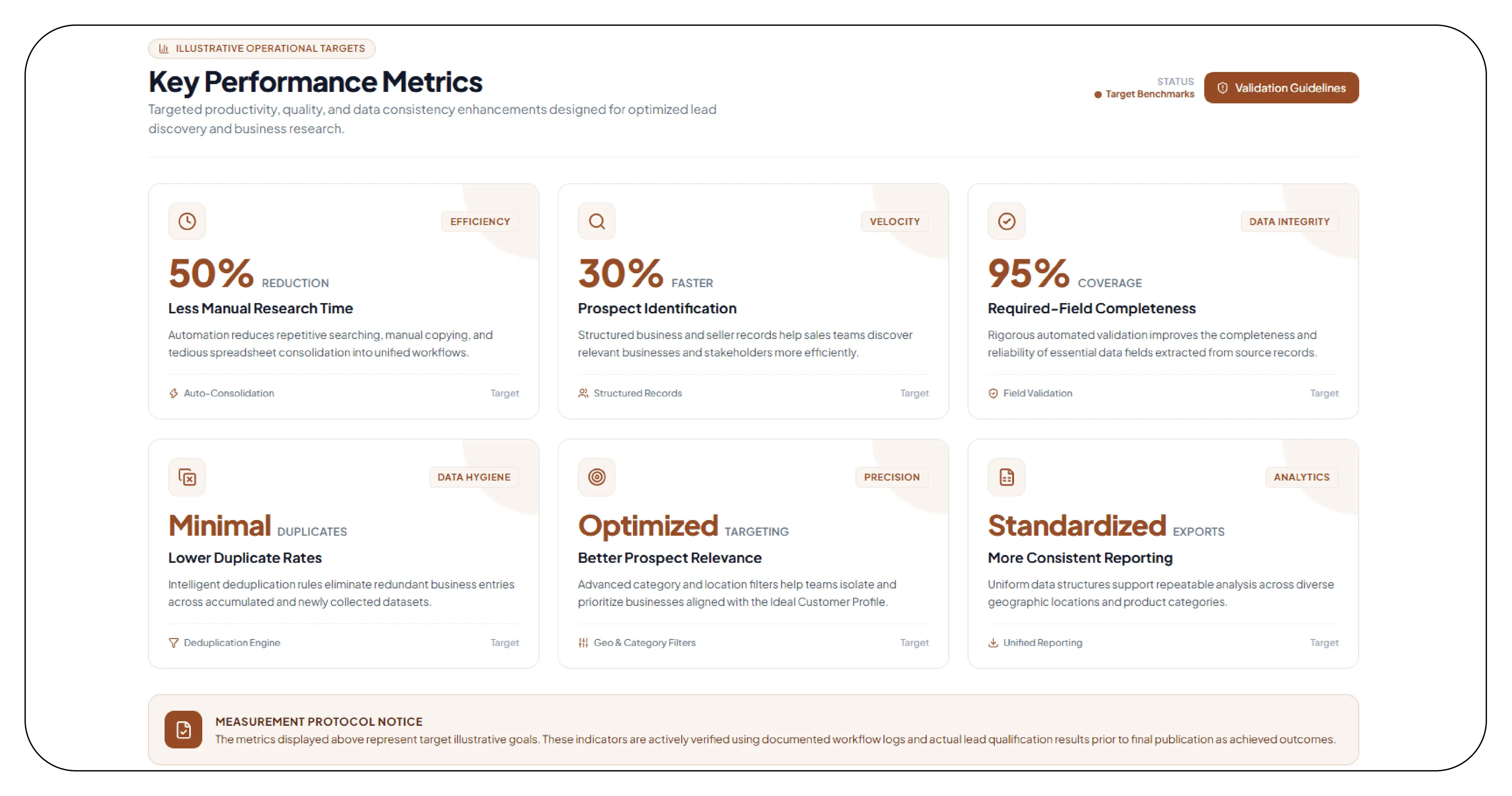
The following metrics are illustrative targets, not verified client outcomes.
50% less manual research time: Automation could reduce repetitive searching, copying, and spreadsheet consolidation.
30% faster prospect identification: Structured business and seller records could help sales teams discover relevant businesses more efficiently.
95% required-field completeness: Validation could improve the consistency of fields available from source records.
Lower duplicate rates: Deduplication rules could reduce repeated business entries across collected datasets.
Better prospect relevance: Category and location filters could help prioritize businesses matching the company's ideal customer profile.
More consistent reporting: Standardized exports could support repeatable analysis across locations and industrial product categories.
These indicators should be measured using documented workflow logs and actual lead qualification results before being published as achieved improvements.
Results Narrative
The proposed workflow gave The client a structured approach to collecting and organizing seller information and relevant business listings. Rather than maintaining separate spreadsheets for each research activity, the team could work from standardized records and filter prospects according to location, business category, and product relevance.
The Google business data scraper component supported the discovery of relevant business listings, while marketplace datasets provided additional context about seller offerings and product categories.
Centralized exports made it easier to review collected records, identify missing fields, and remove potential duplicates before passing prospects to the sales team. Product information could also be organized for competitor comparisons and assortment research.
These improvements could help sales representatives spend less time compiling information and more time evaluating prospect suitability. The actual effect on qualified leads, conversion rates, and revenue would depend on outreach quality, market demand, data freshness, and the accuracy of source information.
What Made Product Data Scrape Different
Product Data Scrape emphasized data usability, validation, and workflow flexibility rather than simply collecting large volumes of records. Its web scraping service for B2B leads approach combined configurable collection rules, structured datasets, duplicate detection, and category-based filtering.
The workflow could be adapted to different industrial product groups, business categories, and target locations without redesigning the entire data structure. Validation checks helped flag incomplete or inconsistent records, while reporting tools made collection quality easier to monitor.
Another differentiator was the focus on practical sales requirements. The output was designed to support prospect prioritization and product research rather than leaving teams with unorganized raw data. Transparent data limitations and responsible collection practices helped the business evaluate its records more carefully and establish a foundation for scalable market research.
Client's Testimonial
"Product Data Scrape helped us organize our prospecting research into a more consistent and manageable workflow. Previously, our team spent considerable time searching different sources and combining business information manually. Having structured seller details, business listings, and product information in one organized dataset made it easier to review potential prospects and prioritize research by location and category. The data validation process was also valuable because it helped us identify incomplete and duplicate records before using them for sales planning. The solution provided a useful foundation for improving our research process as we explore additional industrial markets."
— Business Development Manager
Conclusion
Effective B2B lead generation depends on more than collecting a large list of businesses. Companies need relevant records, consistent data fields, appropriate validation, and a clear process for turning information into sales opportunities.
The The client case study illustrates how Product Data Scrape can combine seller research, business listing analysis, and structured reporting to support a more organized prospecting workflow. When collected through permitted methods, marketplace and business data can help companies identify potential distributors, explore new regions, and evaluate competing product offerings.
Future improvements could include stronger CRM integration, more detailed lead qualification, and scheduled data refreshes. Where supported by source availability and collection constraints, Real-time price tracking could also complement product research by helping teams monitor changes in competing offers.
With validated performance metrics and responsible data practices, businesses can build a stronger foundation for informed B2B growth.
FAQs
1. What information can businesses collect from IndiaMART and Google?
Depending on source accessibility and permitted collection methods, businesses may gather seller names, product listings, business categories, locations, listing URLs, and available public business details. The exact fields vary by source.
2. How does seller data collection help B2B lead generation?
Structured seller information can help businesses identify potential distributors, suppliers, wholesalers, and buyers. Records should be filtered against the company's target market before being used for outreach.
3. Can collected data be exported to Excel?
Yes. Structured records can generally be prepared in Excel-compatible formats, allowing teams to sort, filter, review, and import eligible fields into supported business systems.
4. How can data quality be maintained?
Validation rules, standardized fields, duplicate detection, missing-value checks, and periodic reviews can improve consistency. No workflow can guarantee that all source information is complete or current.
5. How often should seller and business data be updated?
The schedule depends on business requirements, how quickly the source changes, and the technical and permitted access methods available. Periodic refreshes can help identify changes without assuming continuous real-time availability.


 Singapore
 EMAIL
EMAIL
 PHONE
PHONE












.webp)