Introduction
In the fast-paced fashion retail industry, real-time insights into product availability and
pricing are crucial. With How to Use a Zara API, businesses can automate data collection,
monitor pricing trends, and manage inventory efficiently. Leveraging the Zara Product Data
Extraction API, brands can access structured information on SKUs, categories, sizes, and stock
levels. From 2020 to 2025, the fashion industry has seen growing demand for accurate, real-time
product intelligence to remain competitive. This blog explores how Zara APIs can be used to
extract product and pricing data, optimize decision-making, and enable dynamic pricing
strategies across multiple channels.
Product & Pricing Insights
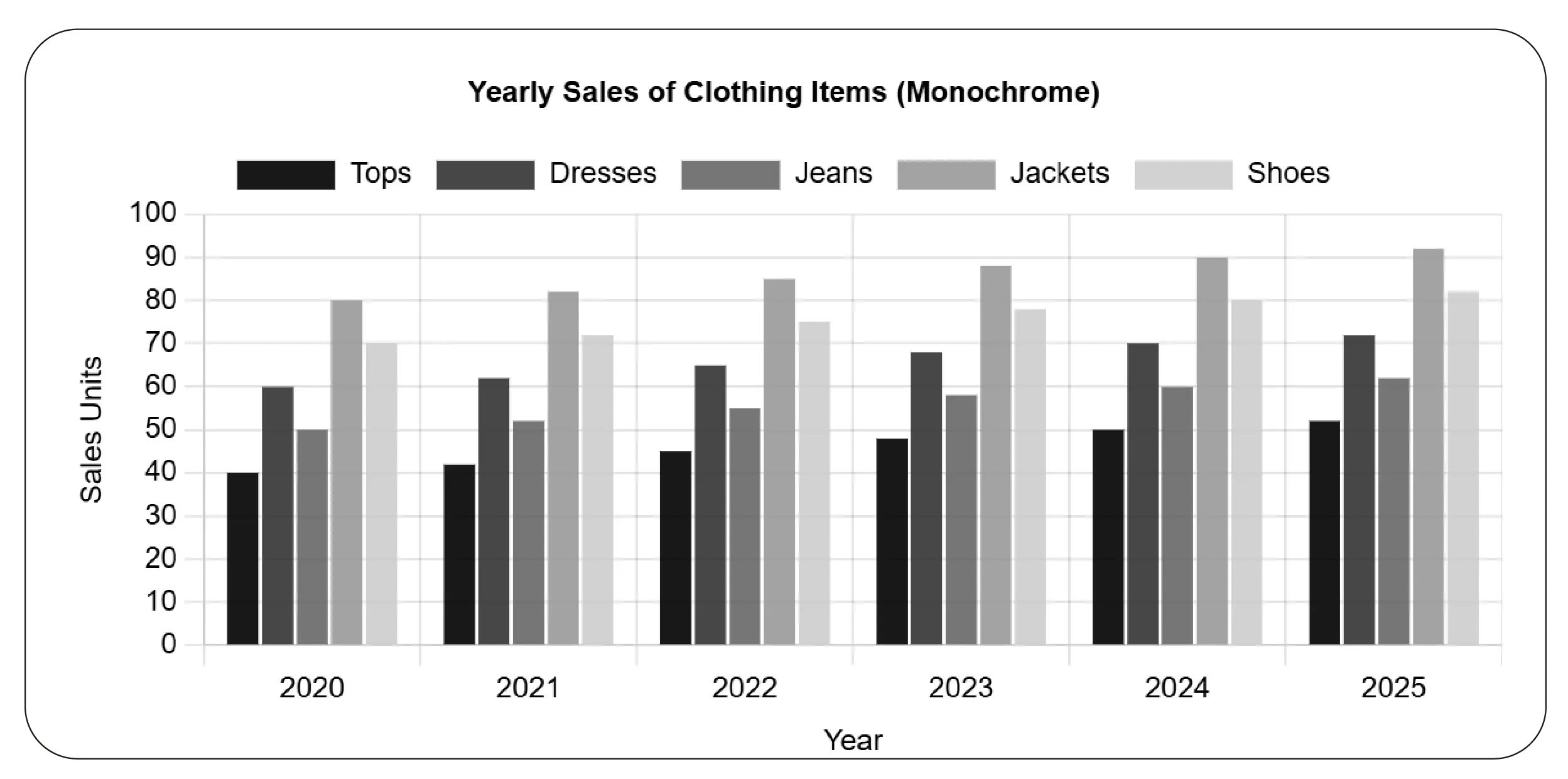
Extracting Real-Time Zara Product & Pricing Data allows brands to track price fluctuations,
monitor competitor listings, and identify trends over time. Daily, weekly, and monthly tracking
reveals how pricing varies by region and SKU, while historical data from 2020 to 2025 provides
long-term insights.
Average Zara Product Prices (USD) – 2020–2025
| Year |
Tops |
Dresses |
Jeans |
Jackets |
Shoes |
| 2020 |
40 |
60 |
50 |
80 |
70 |
| 2021 |
42 |
62 |
52 |
82 |
72 |
| 2022 |
45 |
65 |
55 |
85 |
75 |
| 2023 |
48 |
68 |
58 |
88 |
78 |
| 2024 |
50 |
70 |
60 |
90 |
80 |
| 2025 |
52 |
72 |
62 |
92 |
82 |
Real-time extraction ensures price drops, promotions, and new arrivals are
monitored instantly, enabling faster reactions to market changes.
Pricing Intelligence
The Zara Pricing Intelligence Dataset provides a detailed overview of price
trends across categories, sizes, and regions. By analyzing SKU-level data from 2020–2025,
retailers can forecast demand, optimize promotions, and improve revenue.
Average Discount Trends (%) 2020–2025
| Year |
Tops |
Dresses |
Jeans |
Jackets |
Shoes |
| 2020 |
5% |
6% |
5% |
7% |
6% |
| 2021 |
6% |
7% |
6% |
8% |
7% |
| 2022 |
7% |
8% |
7% |
9% |
8% |
| 2023 |
8% |
9% |
8% |
10% |
9% |
| 2024 |
9% |
10% |
9% |
11% |
10% |
| 2025 |
10% |
11% |
10% |
12% |
11% |
Using this dataset, businesses can identify high-demand SKUs, detect seasonal
trends, and benchmark against competitors.
Automated Monitoring
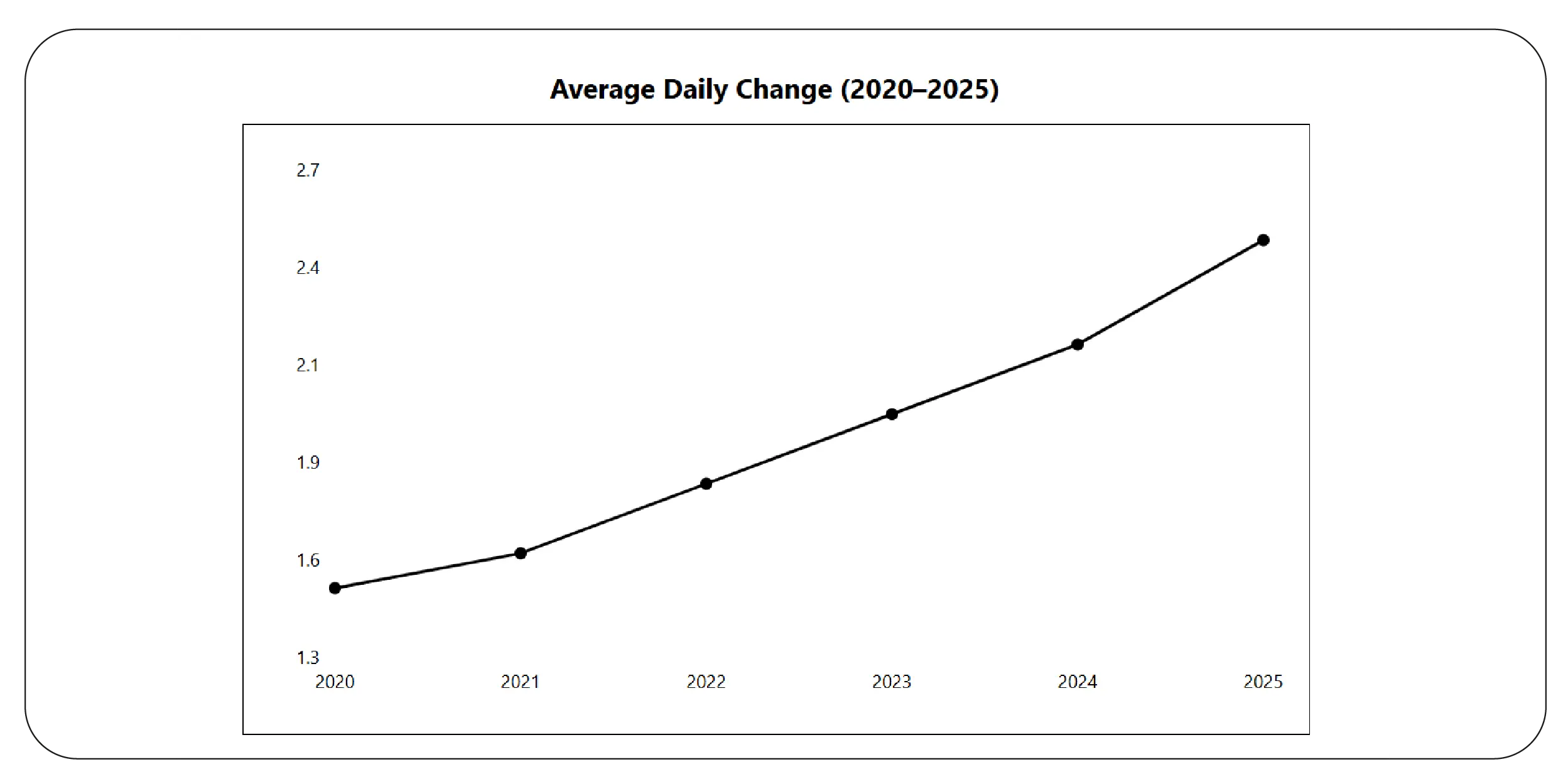
An Automated Zara price monitoring service enables continuous tracking of price
changes, new product launches, and promotional campaigns. Automation reduces manual workload and
improves accuracy across multiple SKUs.
Daily Price Fluctuations (USD) 2020–2025
| Year |
Average Daily Change |
| 2020 |
1.5 |
| 2021 |
1.6 |
| 2022 |
1.8 |
| 2023 |
2.0 |
| 2024 |
2.2 |
| 2025 |
2.5 |
Real-time monitoring allows businesses to respond to price drops, align campaigns,
and maintain competitiveness, ensuring data-driven decisions across all product categories.
Product Data Scraper
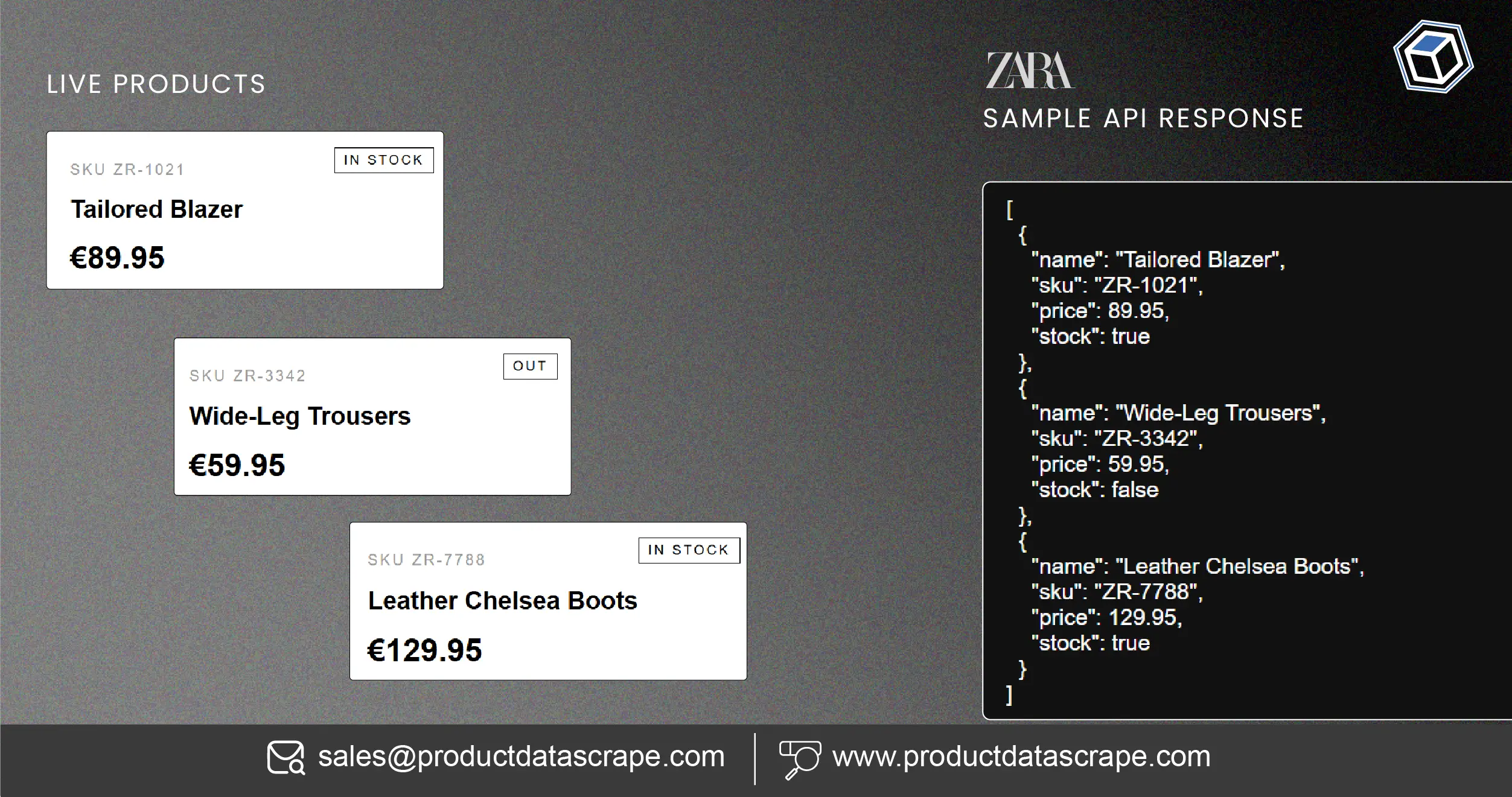
The Zara Product Data Scraper collects structured information including SKU,
category, size, color, stock levels, and pricing. By integrating historical data from 2020–2025,
brands can analyze trends and optimize inventory.
Stock Availability Trends (%) 2020–2025
| Year |
Tops |
Dresses |
Jeans |
Jackets |
Shoes |
| 2020 |
95% |
92% |
94% |
90% |
91% |
| 2021 |
96% |
93% |
95% |
91% |
92% |
| 2022 |
97% |
94% |
96% |
92% |
93% |
| 2023 |
98% |
95% |
97% |
93% |
94% |
| 2024 |
99% |
96% |
98% |
94% |
95% |
| 2025 |
99% |
97% |
99% |
95% |
96% |
This scraper supports SKU-level tracking, ensuring businesses are alerted to
stock changes and promotions in real-time.
Category & Inventory Insights

With Extract Zara categories, sizes, and stock data, brands can analyze
availability across styles and sizes. SKU-level granularity helps identify top-selling
categories, seasonal trends, and regional preferences.
Category Stock Distribution (2020–2025) – %
| Year |
Tops |
Dresses |
Jeans |
Jackets |
Shoes |
| 2020 |
20% |
25% |
20% |
15% |
20% |
| 2021 |
21% |
26% |
20% |
15% |
18% |
| 2022 |
22% |
27% |
21% |
15% |
15% |
| 2023 |
22% |
28% |
21% |
14% |
15% |
| 2024 |
23% |
28% |
22% |
14% |
13% |
| 2025 |
24% |
29% |
22% |
13% |
12% |
By monitoring sizes, stock levels, and categories, retailers can ensure
promotions are aligned with inventory and demand.
Marketplace Integration
The Zara marketplace product API allows integration of real-time product and
pricing data into dashboards for analytics and reporting. Historical insights (2020–2025)
support trend analysis, competitor benchmarking, and pricing optimization.
Average Marketplace Prices (USD) 2020–2025
| Year |
Online |
In-Store |
Mobile App |
| 2020 |
50 |
48 |
49 |
| 2021 |
52 |
50 |
51 |
| 2022 |
55 |
53 |
54 |
| 2023 |
58 |
56 |
57 |
| 2024 |
60 |
58 |
59 |
| 2025 |
62 |
60 |
61 |
Integrating API data enables real-time price monitoring, SKU-level tracking,
and analytics for better strategic decisions.
Why Choose Product Data Scrape?
Product Data Scrape simplifies How to Use a Zara API, providing structured,
real-time datasets for pricing, stock, categories, and promotions. Our Fashion retail web
scraping service ensures data accuracy, speed, and scalability across multiple channels. With
historical insights (2020–2025) and live monitoring, businesses can track SKU-level trends,
price drops, and promotional activities. Automation reduces manual workload, improves
competitive intelligence, and enables faster decision-making. Product Data Scrape empowers
fashion retailers to optimize inventory, align campaigns with demand, and implement dynamic
pricing strategies to maximize revenue and market share.
Conclusion
Using Product Data Scrape, retailers can Extract Zara E-Commerce Product Data
in real-time to monitor SKU-level pricing, stock, sizes, and promotions. Integration of How to
Use a Zara API with structured datasets allows businesses to track daily price drops, analyze
trends from 2020–2025, and make data-driven decisions. This approach optimizes inventory,
enhances competitive pricing, and aligns marketing campaigns with demand. By leveraging
automation and real-time analytics, fashion retailers can respond quickly to market changes,
maximize profitability, and maintain a competitive edge in the fast-paced online fashion
industry.
Start using Product Data
Scrape to integrate real-time Zara API insights today and boost your retail strategy
efficiently.
FAQs
1. Can I track all Zara SKUs in real-time?
Yes, Product
Data Scrape enables real-time monitoring of all Zara SKUs, including pricing, stock, sizes, and
promotions for multiple regions simultaneously.
2. Does the service cover historical data?
Absolutely.
Our datasets include 2020–2025 pricing, stock, and category trends, providing comprehensive
historical insights for strategic decision-making.
3. How does automation improve efficiency?
Automation
reduces manual data collection, ensures real-time updates, monitors price drops, and tracks
promotions, enabling faster, accurate, and actionable insights for retailers.
4. Can the API integrate with dashboards?
Yes, the Zara
marketplace product API can be integrated with analytics dashboards, providing live pricing,
stock, and SKU-level insights for monitoring and reporting.
5. Is the data suitable for competitive analysis?
Product
Data Scrape provides structured, real-time datasets ideal for benchmarking Zara products,
tracking competitors, and analyzing pricing trends efficiently.


 Singapore
 EMAIL
EMAIL
 PHONE
PHONE


.webp)
.webp "thumb")
.webp "thumb")
.webp "thumb")









.webp)