Introduction
As artificial intelligence systems move beyond static training data, real-time information access has become a foundational requirement. Modern AI applications, autonomous agents, and large language models must continuously adapt to new data, changing trends, and evolving user intent. This shift has accelerated the adoption of using web search apis for ai applications as a core capability for intelligent systems in 2026. By combining live web access with structured intelligence layers such as the Web Data Intelligence API, organizations can ensure their AI models deliver accurate, relevant, and context-aware outputs. This evolution marks a turning point where AI systems no longer rely solely on historical datasets but actively interact with the dynamic web to enhance reasoning, decision-making, and user experience.
The Evolution of AI Intelligence in a Live Data World
The rapid growth of AI adoption has redefined expectations around accuracy and freshness, making using web search apis for ai applications in 2026 a strategic necessity rather than an enhancement. Between 2020 and 2026, enterprise AI deployments grew by more than 280%, with real-time data access cited as a top requirement.
AI Adoption and Data Dependency Trends (2020–2026)
| Year |
Enterprise AI Adoption (%) |
Real-Time Data Usage (%) |
| 2020 |
35 |
22 |
| 2022 |
48 |
37 |
| 2024 |
63 |
54 |
| 2026* |
78 |
71 |
AI systems trained on static data struggle with outdated facts, hallucinations, and reduced trust. Web search APIs solve this gap by allowing AI to retrieve current information on demand. This capability supports use cases such as market research automation, live financial analysis, trend monitoring, and regulatory updates. As AI systems increasingly operate autonomously, live data access ensures decisions are based on current realities rather than historical assumptions.
Enhancing Conversational Intelligence at Scale
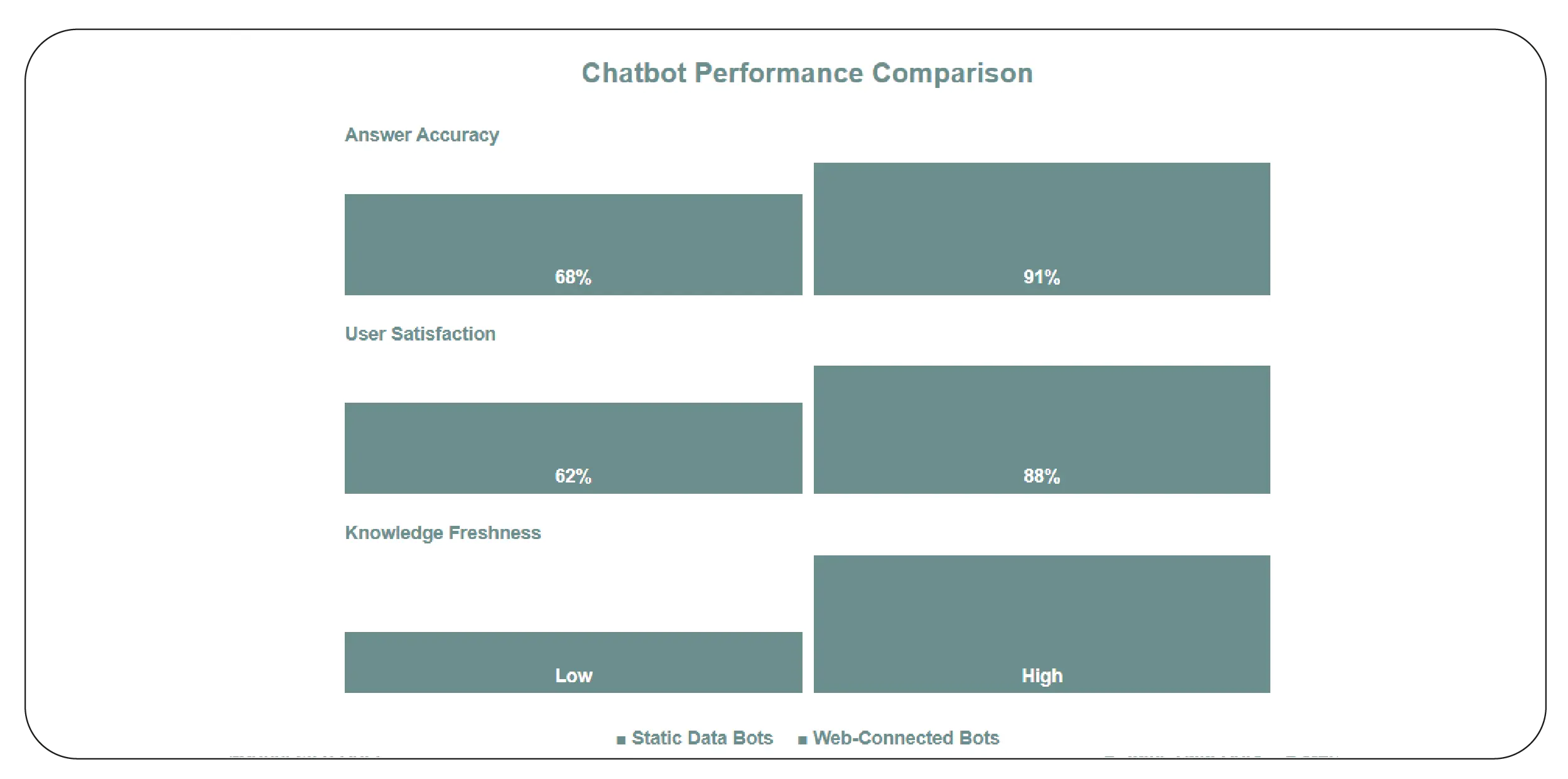
Conversational systems have evolved far beyond scripted responses, with web search api for ai chatbots and copilots playing a critical role in improving response quality. From 2020 to 2026, chatbot accuracy improved significantly when connected to live web sources.
Chatbot Performance Comparison
| Metric |
Static Data Bots |
Web-Connected Bots |
| Answer Accuracy |
68% |
91% |
| User Satisfaction |
62% |
88% |
| Knowledge Freshness |
Low |
High |
By integrating web search APIs, chatbots can answer complex queries, retrieve up-to-date information, and provide contextual recommendations. AI copilots in enterprise environments rely on live data to assist with coding, analytics, legal research, and customer support. This capability transforms conversational AI into a real-time assistant capable of reasoning across fresh information streams, reducing misinformation and increasing user trust.
Bridging AI Models with the Open Web
At their core, web search APIs are essential tools that connect AI systems to the continuously evolving digital ecosystem. From 2020 to 2026, the volume of online content more than doubled, making static datasets increasingly insufficient.
Global Web Content Growth
| Year |
Indexed Pages (Billions) |
Daily Content Growth (%) |
| 2020 |
60 |
4.2 |
| 2023 |
75 |
5.8 |
| 2026* |
95+ |
7.1 |
Web search APIs act as a bridge between AI models and this expanding knowledge base. They enable AI agents to verify facts, cross-reference sources, and synthesize information from multiple domains. This connectivity is especially important for research-driven AI, compliance monitoring, and competitive intelligence systems. By grounding AI outputs in live data, organizations reduce hallucinations and improve explainability, which is critical for enterprise adoption.
Building Scalable and Production-Ready AI Systems
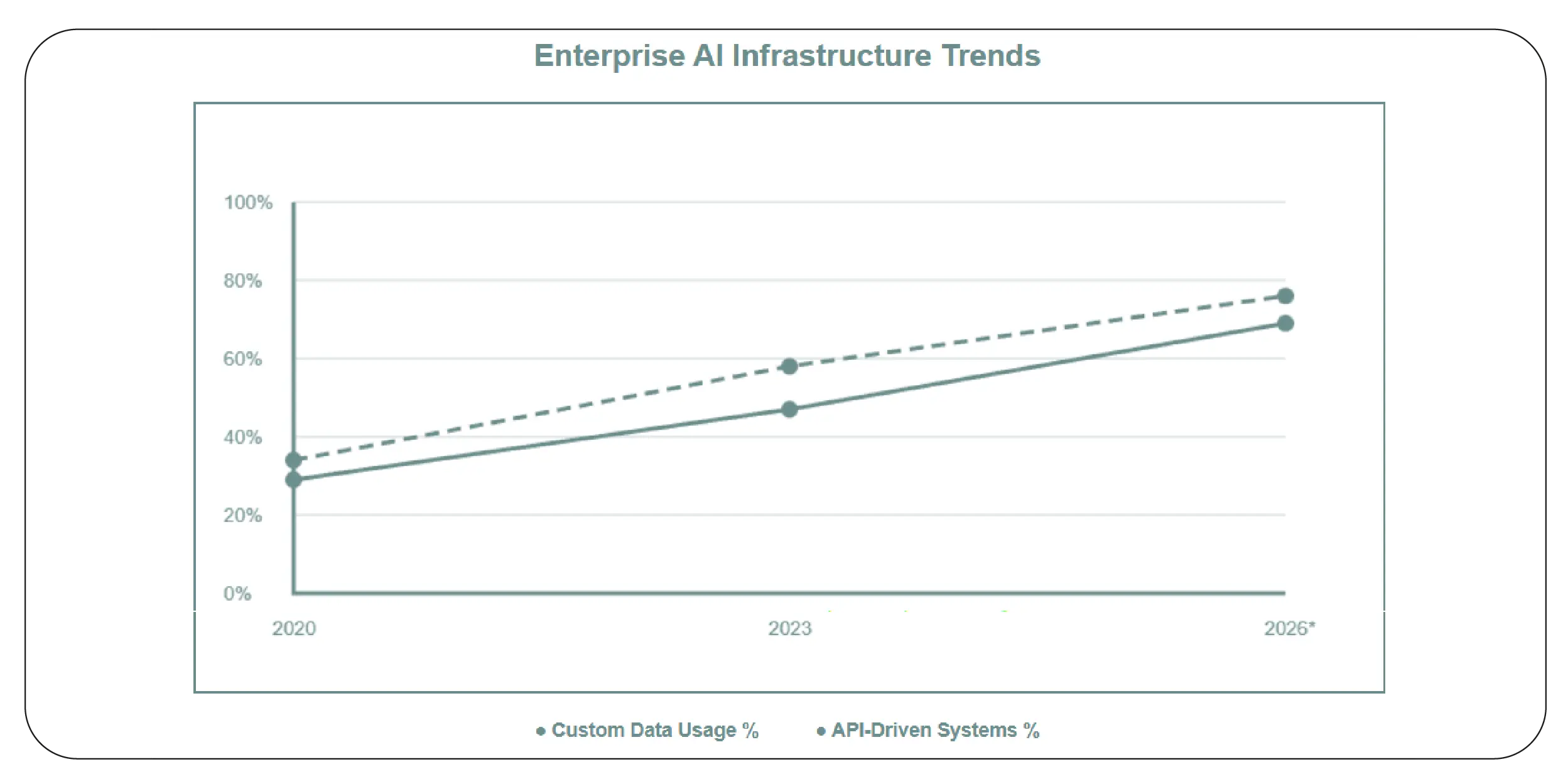
As AI solutions mature, scalability and reliability become paramount. Enterprises increasingly look to Buy Custom Dataset Solution, production ready web search api for ai deployments to support mission-critical applications.
Enterprise AI Infrastructure Trends
| Year |
Custom Data Usage (%) |
API-Driven Systems (%) |
| 2020 |
29% |
34% |
| 2023 |
47% |
58% |
| 2026* |
69% |
76% |
Production-ready web search APIs provide structured responses, rate limits, compliance controls, and high availability. Custom dataset solutions complement live search by enriching AI models with domain-specific knowledge. Together, they enable consistent performance across large-scale deployments, from recommendation engines to autonomous business agents. This combination ensures AI systems remain both adaptable and dependable.
Powering Autonomous Agents and Advanced LLMs
The rise of autonomous systems has amplified the importance of Web Data Intelligence API for ai agents and llms. Between 2020 and 2026, AI agents capable of multi-step reasoning and task execution increased adoption by over 240%.
AI Agent Capability Growth
| Capability |
2020 |
2026* |
| Task Automation |
Basic |
Advanced |
| Web Reasoning |
Limited |
Real-Time |
| Decision Autonomy |
Low |
High |
Web Data Intelligence APIs provide enriched, filtered, and contextualized web data tailored for AI consumption. This enables agents to plan actions, evaluate outcomes, and adjust strategies dynamically. For large language models, this intelligence layer ensures responses are grounded in verified, current information, enhancing reliability across complex use cases such as research synthesis, analytics, and enterprise automation.
Delivering Instant Insights for Modern AI Products
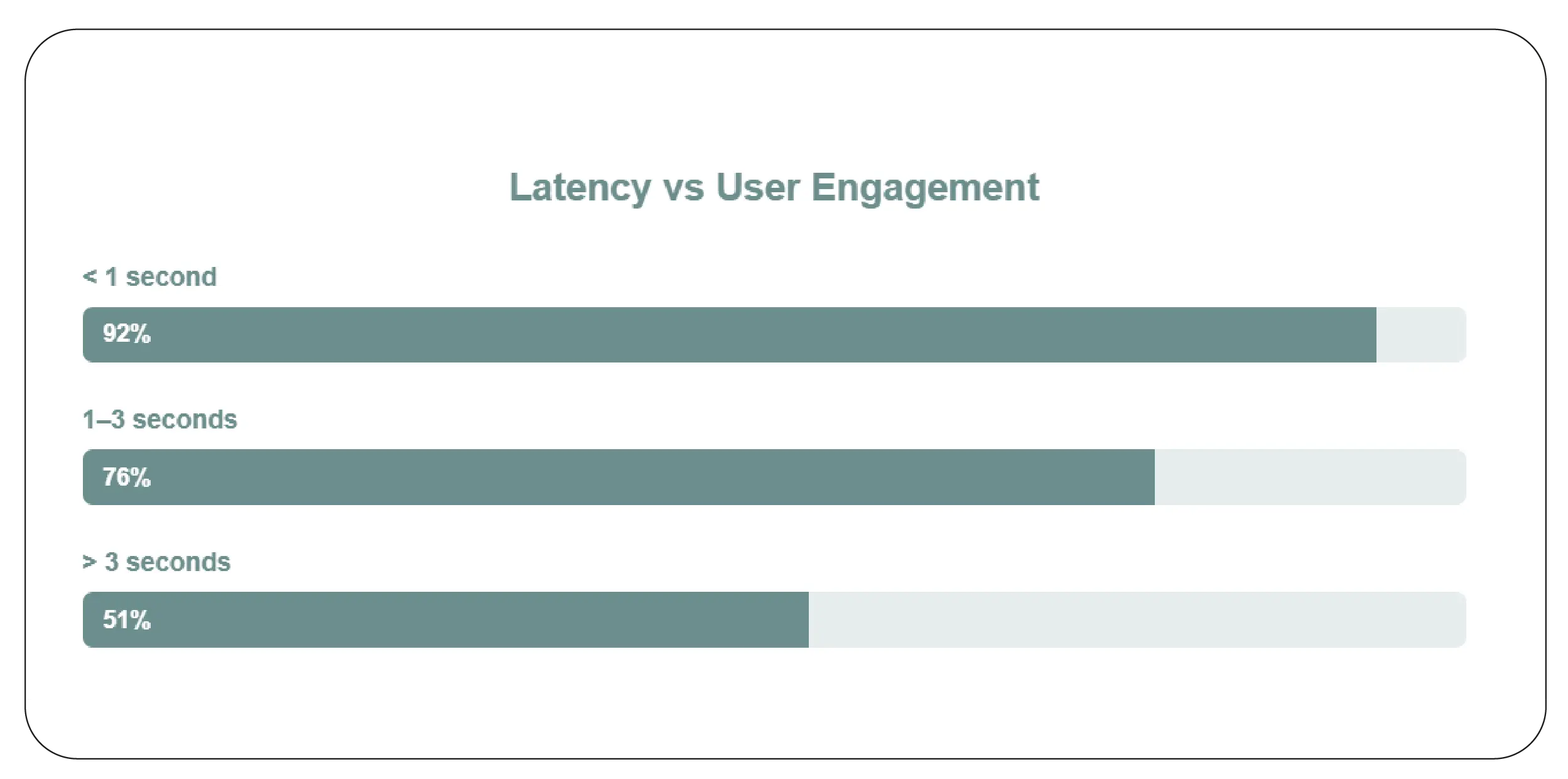
Speed and accuracy define user expectations in 2026, making real time web search api for ai products a competitive differentiator. AI-driven platforms increasingly rely on millisecond-level data access to deliver personalized and relevant experiences.
Latency vs User Engagement
| Response Time |
Engagement Rate (%) |
| < 1 second |
92% |
| 1–3 seconds |
76% |
| > 3 seconds |
51% |
Real-time web search APIs enable AI products to fetch live insights, detect breaking trends, and respond instantly to user queries. This capability supports applications in finance, ecommerce, healthcare intelligence, and travel planning. By embedding real-time intelligence, AI products remain responsive, accurate, and aligned with fast-changing user needs.
Why Choose Product Data Scrape?
Organizations choose Product Data Scrape for its ability to Scrape Data From Any Ecommerce Websites while supporting scalable AI development. By enabling using web search apis for ai applications, the platform delivers reliable, structured, and real-time data streams optimized for modern AI workflows. With flexible integrations, high data accuracy, and enterprise-grade performance, Product Data Scrape helps teams accelerate AI innovation while maintaining consistency and compliance across use cases.
Conclusion
As AI systems evolve toward autonomy and real-time reasoning, live web access is no longer optional. Understanding how ai apps use live web search apis is critical for building intelligent, trustworthy, and future-ready solutions. By embracing using web search apis for ai applications, organizations can enhance accuracy, reduce hallucinations, and unlock new levels of performance for AI agents and large language models.
Partner with Product Data Scrape today to power your AI products with real-time web intelligence and stay ahead in the AI-driven future.
FAQs
1. Why are web search APIs important for AI in 2026?
They allow AI systems to access live information, ensuring accuracy, relevance, and reduced hallucinations in rapidly changing digital environments.
2. Can web search APIs improve large language model responses?
Yes, they ground LLM outputs in real-time data, improving factual correctness and contextual understanding.
3. How do AI agents benefit from live web access?
Agents use live data to plan actions, verify outcomes, and adapt decisions dynamically without relying on outdated information.
4. Are web search APIs suitable for enterprise-scale AI products?
Production-ready APIs offer reliability, scalability, and compliance features required for enterprise deployments.
5. Which platform supports ecommerce-focused AI data needs?
Product Data Scrape provides scalable data extraction solutions tailored for AI systems requiring real-time ecommerce intelligence.


 Singapore
 EMAIL
EMAIL
 PHONE
PHONE


.webp)
.webp "thumb")
.webp "thumb")
.webp "thumb")











.webp)