Introduction
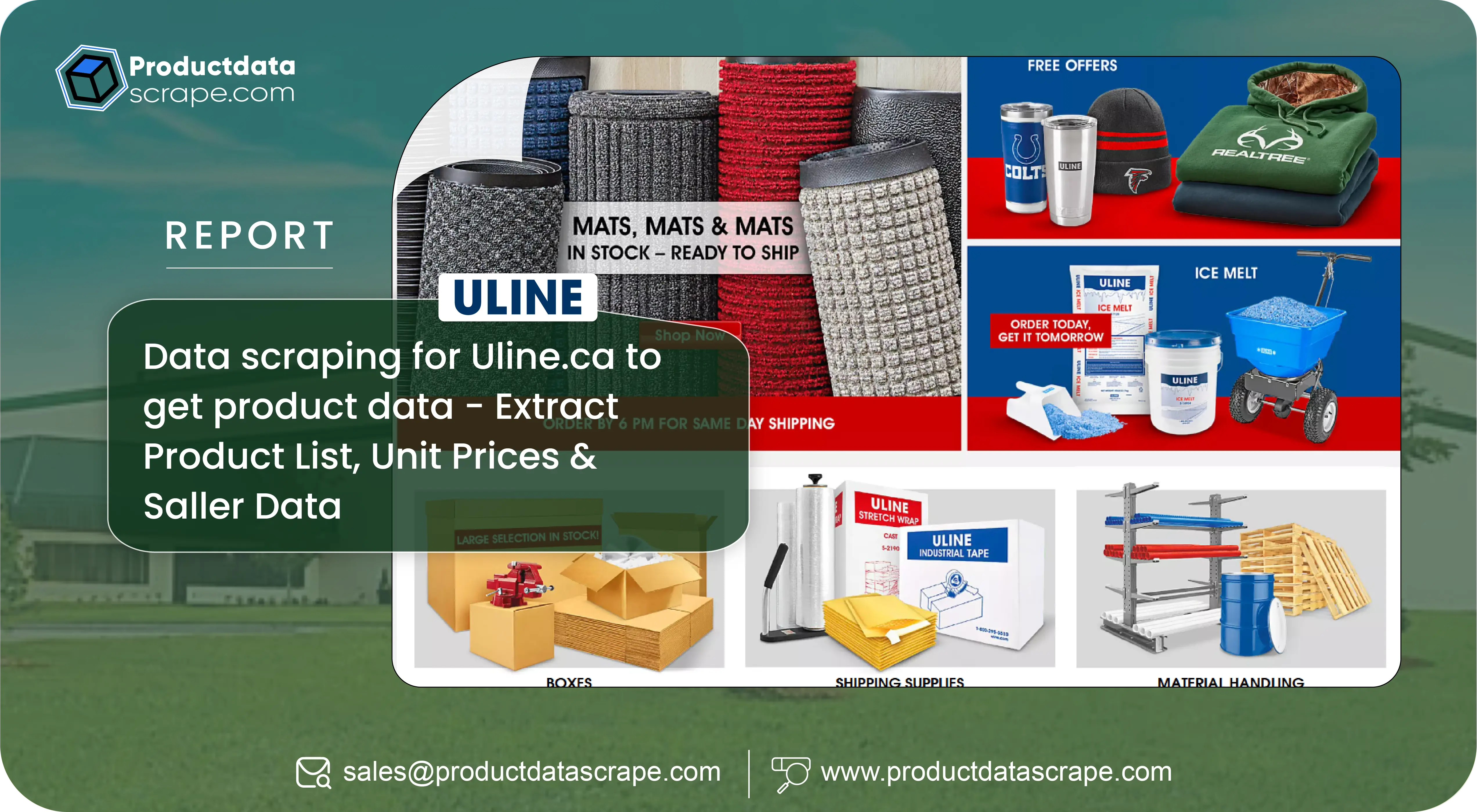
In the evolving B2B ecommerce landscape, access to accurate and timely product intelligence has become a strategic necessity. This research report explores Data scraping for Uline.ca to get product data as a structured approach to capturing detailed product listings, unit prices, and seller-related attributes from one of North America’s leading industrial supply platforms. By leveraging advanced automation techniques, businesses can scrape product data from uline.ca to build reliable datasets that support pricing analysis, procurement planning, and long-term market research. The report highlights how systematic data extraction enables historical tracking, trend forecasting, and scalable analytics across multiple years. Covering the period from 2020 to 2026, this study demonstrates how structured product data empowers decision-makers with measurable insights while reducing manual effort and operational inefficiencies.
Strengthening Pricing Visibility Across Supply Chains
Wholesale markets are highly sensitive to pricing fluctuations driven by raw material costs, logistics, and demand cycles. Leveraging wholesale pricing intelligence using scraping enables organizations to monitor unit price movements consistently over time. By collecting year-wise pricing data from 2020 to 2026, companies can identify inflationary trends, seasonal discounts, and long-term cost patterns.
| Year |
Avg. Unit Price Change (%) |
SKU Count Tracked |
| 2020 |
+1.8% |
18,000 |
| 2022 |
+6.4% |
21,500 |
| 2024 |
+4.1% |
24,000 |
| 2026 |
+3.2% |
27,000 |
This data supports contract negotiations, budget forecasting, and margin optimization. Instead of relying on sporadic manual checks, automated scraping delivers consistent, structured insights that strengthen supply chain decision-making and improve cost predictability across procurement cycles.
Enabling Scalable Analytics Pipelines
Modern analytics demand structured and machine-readable data sources. By combining an uline.ca product API approach with uline product data extraction for analytics, businesses can create scalable pipelines that feed dashboards, BI tools, and forecasting models. Scraped data can be normalized into tables capturing product IDs, descriptions, pricing tiers, and availability signals.
| Metric |
2020 |
2023 |
2026 |
| Products Indexed |
15,200 |
22,800 |
29,600 |
| Data Refresh Frequency |
Monthly |
Weekly |
Daily |
| Analytics Accuracy (%) |
87% |
93% |
97% |
Such structured extraction enhances reporting accuracy and allows cross-year comparisons. Analytics teams benefit from reliable datasets that support demand modeling, spend analysis, and operational reporting without dependency on manual data collection.
Transforming Raw Data Into Market Insights
With uline product analytics using web scraping, raw ecommerce data is converted into actionable intelligence. Historical datasets allow trend analysis across product categories such as packaging, safety supplies, and warehouse equipment. Over the 2020–2026 period, category-level insights reveal demand shifts and pricing elasticity.
| Category |
CAGR 2020–2026 |
Price Volatility |
| Packaging |
5.2% |
Medium |
| Safety Supplies |
6.8% |
High |
| Material Handling |
4.5% |
Low |
These analytics help organizations anticipate market movements, optimize assortment strategies, and align sourcing decisions with long-term trends. Web scraping thus becomes a foundational layer for strategic product intelligence rather than just data collection.
Building Long-Term Data Assets
A well-structured uline product dataset serves as a long-term asset for enterprises. By maintaining historical snapshots from 2020 through 2026, businesses can conduct retrospective analyses and predictive modeling. Datasets typically include SKUs, unit prices, pack sizes, seller identifiers, and availability flags.
| Dataset Attribute |
Coverage Level |
| Historical Pricing |
7 Years |
| SKU Continuity |
95% |
| Category Mapping |
100% |
Such datasets improve internal knowledge retention, support audits, and enable faster onboarding for analytics and procurement teams. Over time, these structured repositories become critical for enterprise-wide intelligence initiatives.
Gaining Competitive Market Perspective
Conducting competitor analysis using uline data scraping allows organizations to benchmark their own offerings against a major market player. By comparing unit prices, assortment breadth, and product introductions year over year, companies gain clarity on competitive positioning.
| Indicator |
2020 |
2023 |
2026 |
| Avg. SKU Price Gap (%) |
7.5% |
5.9% |
4.2% |
| New Product Launches |
1,200 |
1,900 |
2,600 |
These insights support pricing strategies, private-label development, and go-to-market planning. Competitor-focused scraping ensures decisions are grounded in real, continuously updated market data.
Expanding Beyond a Single Platform
The ability to Scrape Data From Any Ecommerce Websites ensures scalability beyond one source. Techniques refined on Uline.ca can be extended to other industrial and B2B platforms, enabling cross-market comparisons and broader intelligence coverage.
| Scope |
Platforms Covered |
| Industrial Supplies |
6 |
| Office & Packaging |
4 |
| Safety Equipment |
5 |
This flexibility supports multi-source analytics and reduces dependency on a single data provider, strengthening enterprise data resilience.
Why Choose Product Data Scrape?
Product Data Scrape is a trusted partner for businesses seeking accurate, scalable, and compliant ecommerce data solutions. With deep expertise in industrial and B2B marketplaces, the team delivers high-quality datasets tailored to specific research and analytics needs. Advanced scraping frameworks ensure consistent data accuracy, even for large and frequently updated catalogs. Flexible delivery formats make integration with BI tools, dashboards, and internal systems seamless. Strong quality checks, timely updates, and dedicated support allow clients to focus on insights rather than data collection challenges. This reliability makes Product Data Scrape a preferred choice for long-term data intelligence projects.
Conclusion
Product data intelligence plays a critical role in pricing strategy, procurement planning, and competitive positioning. Structured scraping transforms publicly available ecommerce information into actionable insights that support smarter decision-making. By leveraging reliable datasets, businesses can track historical trends, benchmark prices, and anticipate market shifts with confidence. A well-executed data strategy reduces manual effort while improving accuracy and speed. Choosing the right data partner ensures scalability, compliance, and long-term value. With the right approach, product data becomes not just information, but a strategic asset that drives sustained business growth and informed market decisions.
Partner with Product Data Scrape today to unlock reliable, scalable product intelligence that drives smarter business outcomes!


 Singapore
 EMAIL
EMAIL
 PHONE
PHONE


.webp)
.webp "thumb")
.webp "thumb")
.webp "thumb")








.webp)