Introduction
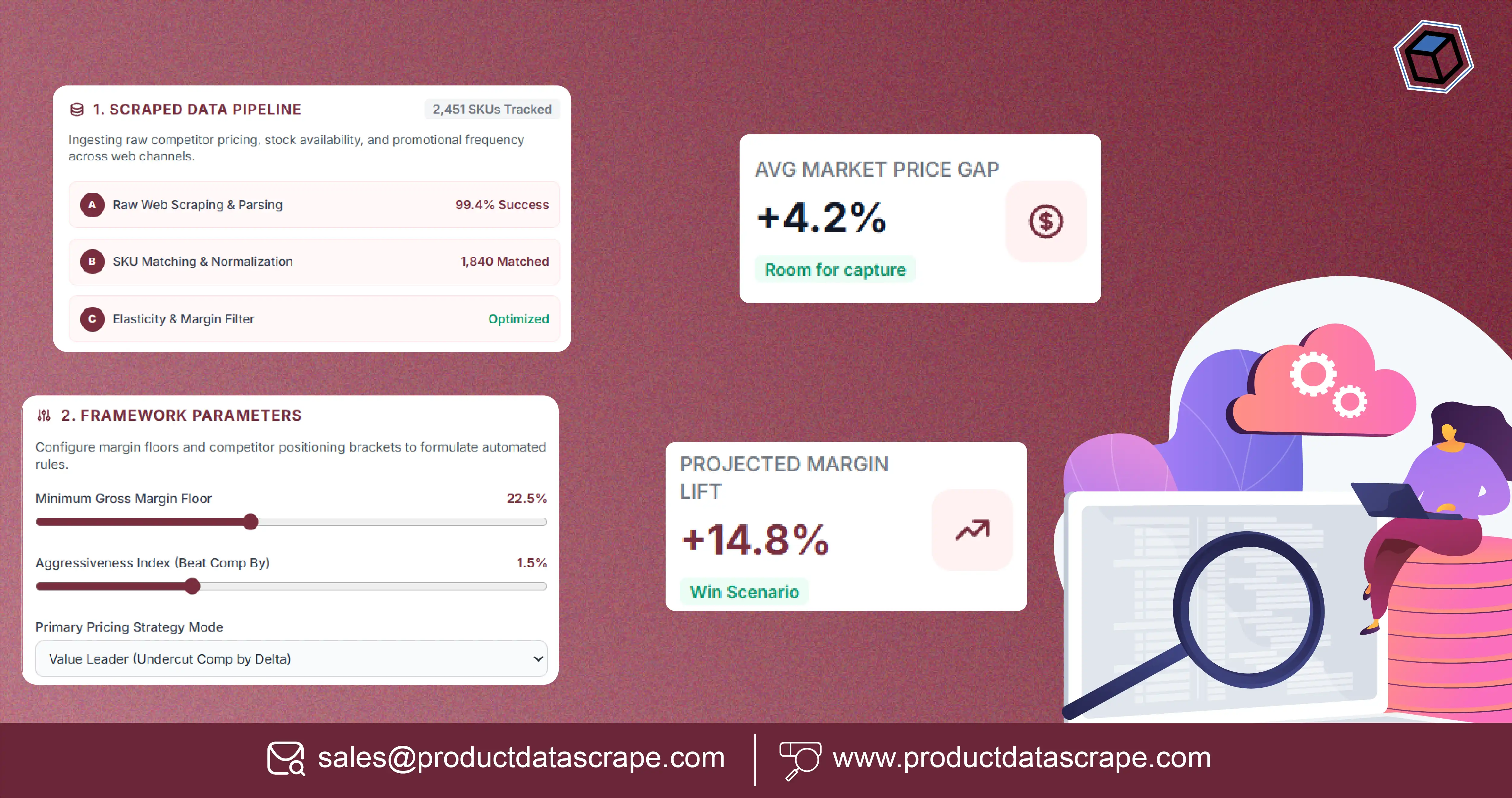
Businesses can turn scraped competitor prices, product availability, discounts, ratings, and inventory signals into structured repricing rules that respond faster to market changes while protecting margins. The key is to connect reliable data collection with clear pricing conditions, validation, and automated decision-making.
Modern e-commerce pricing is dynamic. Competitors can change prices frequently, marketplaces can introduce promotions without warning, and inventory levels can alter the commercial value of a product. Manual price tracking cannot consistently capture these changes at scale.
A stronger approach combines automated collection, data-quality controls, competitive benchmarking, and rule-based price adjustments. Practical Framework Scraped Data to Repricing Rules provides a practical way to connect raw marketplace intelligence with actionable pricing decisions.
The scale of pricing activity is significant. Senkrondata reports that Amazon changes prices across its catalog more than 2.5 million times per day, citing research published in Electronic Commerce Research. The same source reports that a McKinsey retailer pilot using data-driven dynamic pricing achieved a 4.7% EBIT improvement in pilot categories within three months.
For pricing teams, the objective is not simply to collect more data. The objective is to identify which signals should trigger a price change, establish acceptable pricing boundaries, and continuously evaluate whether those rules are improving commercial outcomes.
What Pricing Data Should Be Trusted Before Creating Repricing Rules?
Before automation begins, businesses need to establish whether their pricing dataset is complete, consistent, timely, and comparable. Pricing Intelligence Data Quality determines whether a repricing engine receives reliable inputs or reacts to inaccurate information.
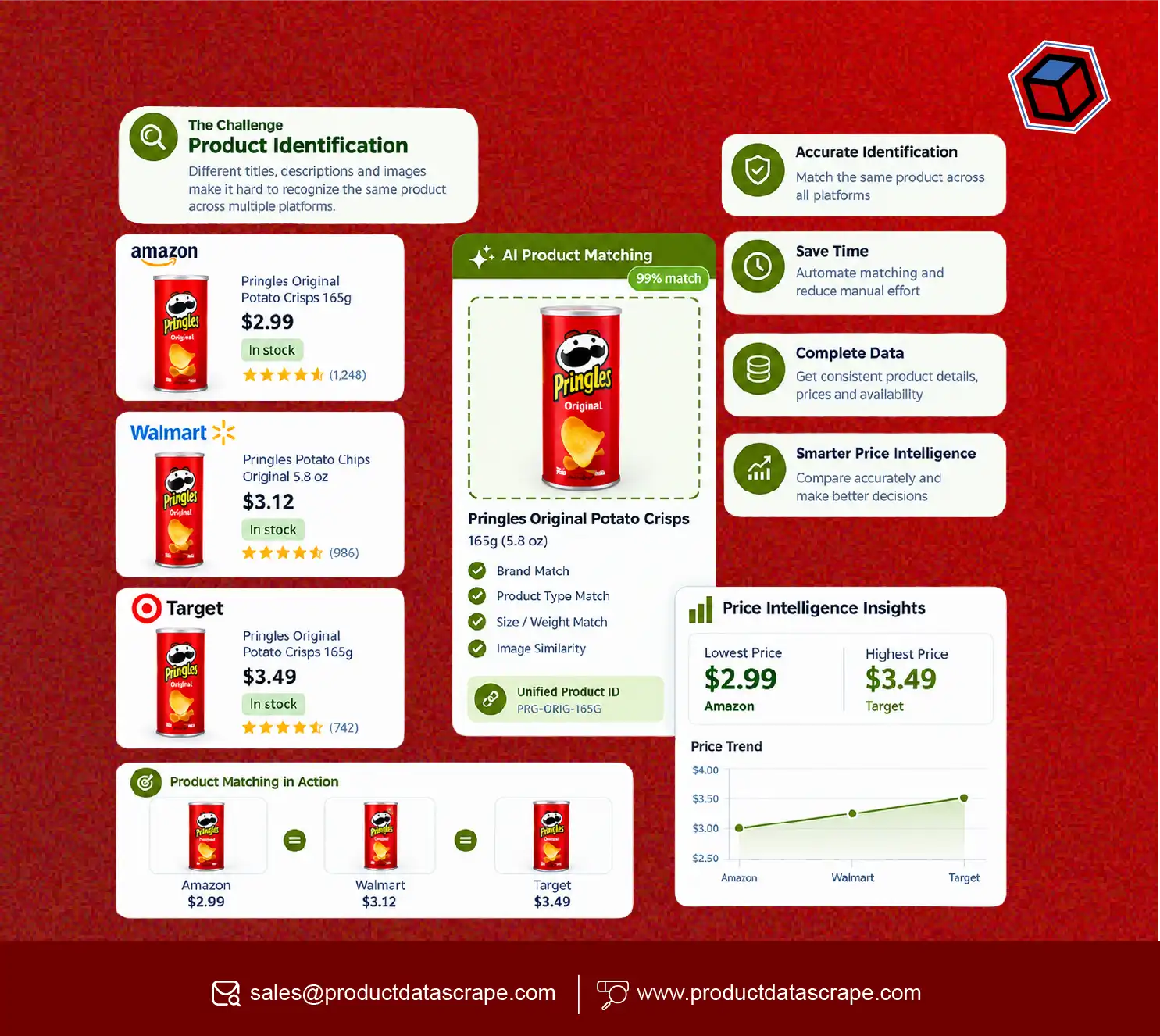
A competitor price is useful only when the product being compared is genuinely equivalent. Differences in pack size, specifications, seller condition, shipping costs, promotions, bundles, and availability can make apparently similar prices commercially different.
A practical validation framework should therefore examine product matching, timestamp accuracy, missing values, duplicate records, currency normalization, seller identification, promotional pricing, and stock status.
Research also demonstrates why price monitoring needs to account for changing pricing behavior. Jungle Scout's 2024 Amazon Product Pricing Report found that the number of Amazon categories whose average product price increased during Q1 2024 was four times higher than in the year-ago quarter. Its analysis of 100 best sellers across five categories also found that about two-thirds experienced year-over-year price fluctuations of less than 10%.
| Period |
Researched Finding |
Respective Research Source |
| 2020–2021 |
21% of surveyed e-commerce businesses were already using dynamic pricing |
SearchNode/Statista |
| 2021 |
17% planned to introduce dynamic pricing |
SearchNode/Statista |
| 2024 |
Q1 categories with average price increases were 4× the year-ago level |
Jungle Scout |
| 2025 |
1.5M+ price data points tracked across 120+ e-commerce platforms |
Decodo |
| 2026 |
54,353 price changes recorded for India in Decodo's 2025 index |
Decodo |
The 2020–2021 adoption figures come from a SearchNode survey of 100 e-commerce decision-makers in North America and Europe, published by Statista. Decodo's Dynamic Pricing Index analyzed more than 1.5 million data points across 40+ countries and 120+ e-commerce platforms during 2025.
The important lesson is that greater data volume should be accompanied by stronger validation. A repricing system built on poor-quality inputs can make incorrect pricing decisions faster, which increases rather than reduces commercial risk.
How Do Pricing Rules Based on Market Signals Improve Repricing?
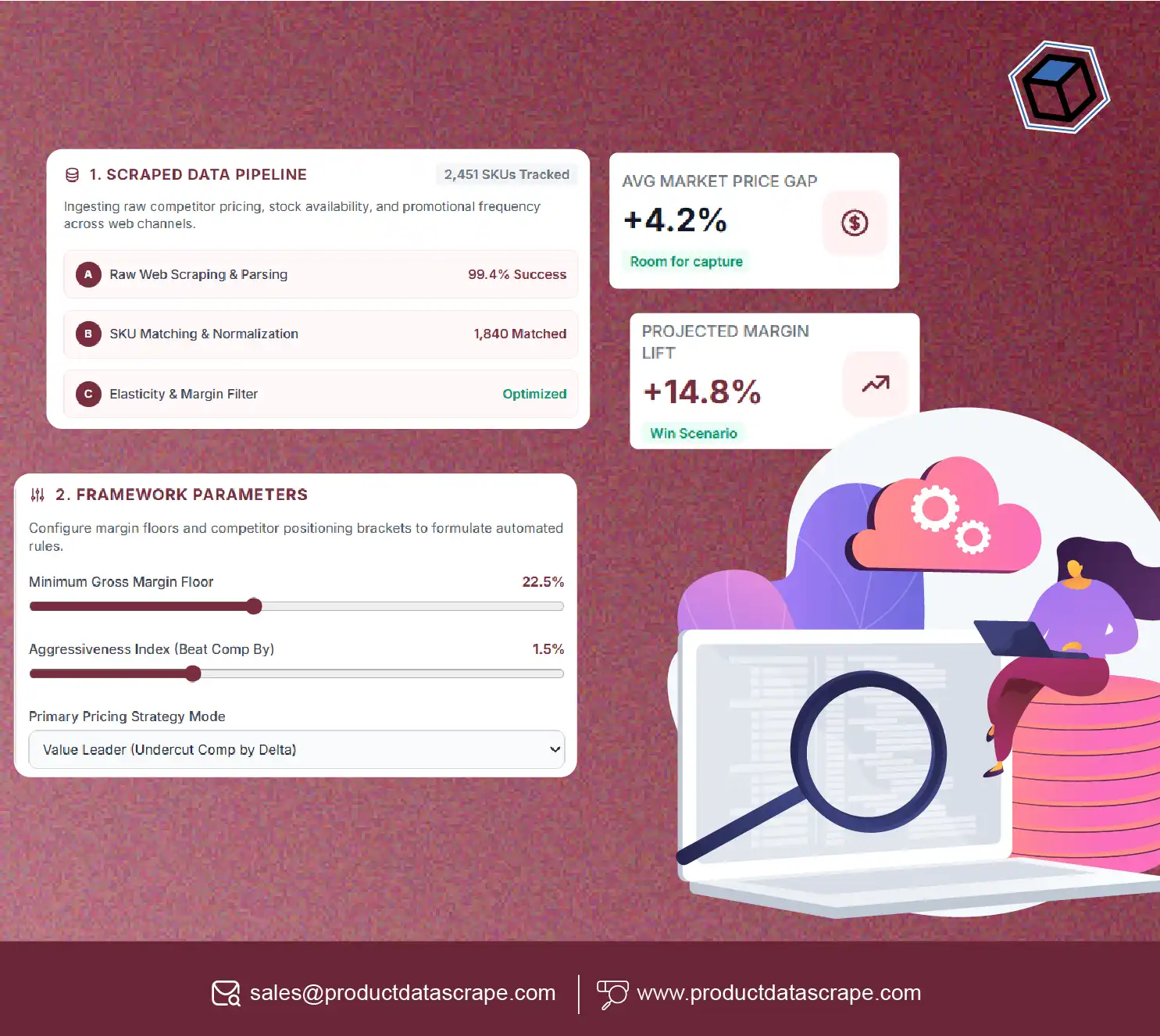
pricing rules based on scraped data allow retailers to translate market observations into predefined commercial actions. Instead of asking employees to monitor hundreds or thousands of competitor listings, businesses can define conditions that determine when a price should change.
For example, a retailer might establish a rule that keeps its product 2% below the lowest verified competitor price when inventory exceeds a specific threshold. Another rule could prevent discounts when stock is limited or when the current margin falls below a predefined floor.
Commerce Intelligence strengthens this approach by combining pricing information with broader signals such as seller activity, product availability, promotions, ratings, reviews, and assortment changes. The result is a more complete view of market positioning.
Research supports the growing importance of dynamic pricing. Statista's published SearchNode research found that, among surveyed e-commerce decision-makers in North America and Europe, 21% were already using dynamic pricing in 2021, while another 15% said they would introduce it and 4% did not know.
| Research Year |
Metric |
Researched Result |
Source |
| 2021 |
Businesses already using dynamic pricing |
21% |
SearchNode/Statista |
| 2021 |
Businesses planning to introduce it |
15% |
SearchNode/Statista |
| 2021 |
Businesses evaluating adoption |
27% |
SearchNode/Statista |
| 2021 |
Businesses not planning adoption |
32% |
SearchNode/Statista |
| 2025 |
Retailers actively deploying AI in production |
58% |
NVIDIA, as reported by Senkrondata |
The 2021 figures were based on a survey conducted in October 2020 involving 100 e-commerce decision-makers and published by Statista in July 2021. The 2025 AI adoption figure is reported by Senkrondata from NVIDIA's State of AI in Retail & CPG survey.
These findings indicate why rule-based pricing is increasingly relevant. However, automation should remain controlled. A rule should contain the triggering condition, data signal, permitted price movement, and exception condition.
How Can Live Market Signals Make Repricing More Responsive?
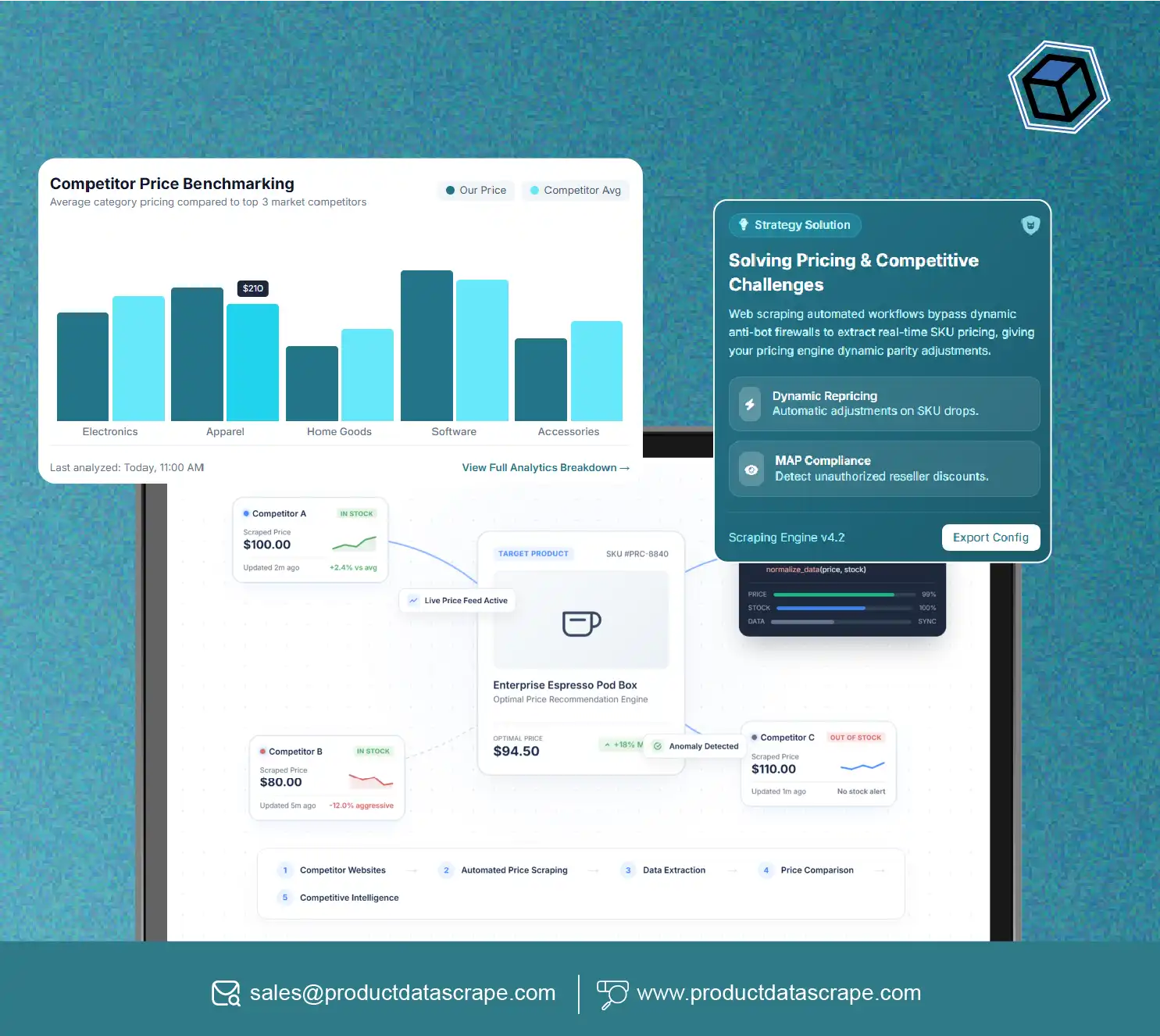
real-time pricing intelligence for repricing Framework connects frequently refreshed market information with rules that can respond to meaningful competitive changes. The concept is particularly useful for categories where prices, promotions, and stock levels change frequently.
Real-time does not necessarily mean that every product must be refreshed every second. A better approach is to determine the appropriate refresh frequency for each category. High-velocity products may require frequent monitoring, while stable products can be checked less often.
Decodo's Dynamic Pricing Index 2025 provides concrete evidence of the scale of modern price monitoring. The research tracked more than 1,440 products across 120+ e-commerce websites in 40 countries, capturing pricing information every four hours throughout 2025. This generated more than 1.5 million data points.
The same research recorded 54,353 price changes for India, including 27,049 increases and 27,303 decreases.
| 2025 Research Metric |
Result |
Source |
| Countries analyzed |
40+ |
Decodo |
| E-commerce platforms |
120+ |
Decodo |
| Products tracked |
1,440+ |
Decodo |
| Data points |
1.5M+ |
Decodo |
| India price changes |
54,353 |
Decodo |
| India price increases |
27,049 |
Decodo |
| India price decreases |
27,303 |
Decodo |
These are researched figures from Decodo's Dynamic Pricing Index 2025, not estimates created for this article.
A strong framework should distinguish between a genuine market movement and a temporary anomaly. If one seller suddenly lists a product at an unusually low price, immediately matching that price could unnecessarily reduce margin. A validation layer can compare multiple sellers, historical prices, product identifiers, and availability before approving a repricing event.
What Should a Scalable Price-Monitoring Pipeline Look Like?
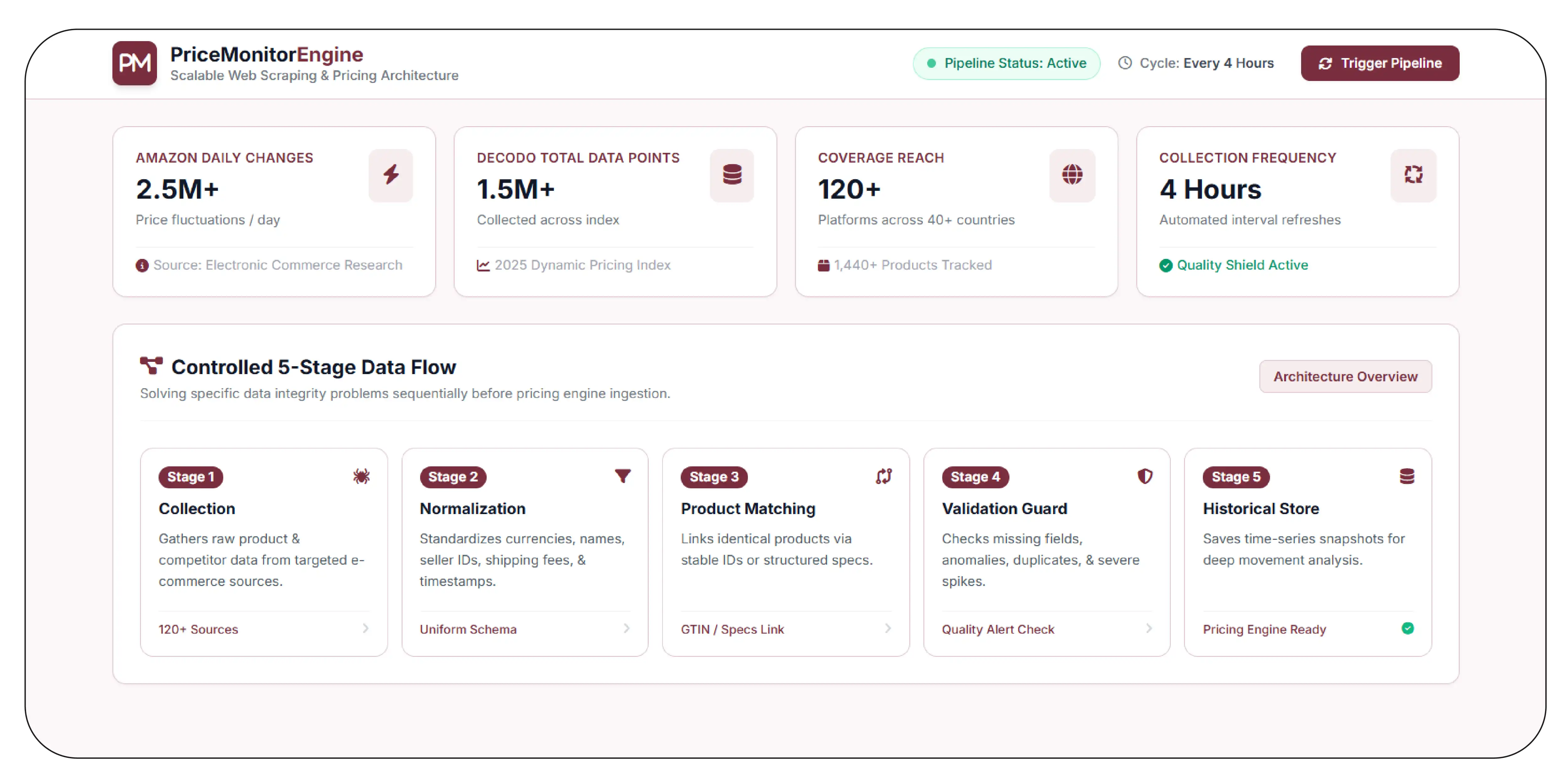
A reliable web scraping pipeline for price monitoring should be designed as a sequence of controlled stages rather than a single scraping task. Each stage should solve a specific data problem before information reaches the pricing engine.
The first stage collects product and competitor information from relevant sources. The second stage normalizes fields such as currency, product names, seller identifiers, price formats, shipping charges, and timestamps. The third stage matches comparable products using stable identifiers or structured attributes.
The fourth stage validates records by checking missing information, abnormal prices, duplicates, and unexpected changes. The fifth stage stores historical snapshots so pricing teams can analyze movement rather than only observe the latest value.
Research by Decodo demonstrates the type of data volume such a pipeline may handle. Its 2025 Dynamic Pricing Index collected more than 1.5 million data points from 120+ e-commerce platforms across 40+ countries, using four-hour collection intervals.
Senkrondata also reports that Amazon's catalog experiences more than 2.5 million price changes per day, citing Electronic Commerce Research as the underlying source.
| Researched Metric |
Finding |
Respective Source |
| Amazon catalog price changes |
2.5M+ per day |
Electronic Commerce Research, cited by Senkrondata |
| Decodo platforms analyzed |
120+ |
Decodo |
| Decodo countries analyzed |
40+ |
Decodo |
| Decodo products tracked |
1,440+ |
Decodo |
| Decodo data points |
1.5M+ |
Decodo |
| Collection frequency |
Every 4 hours |
Decodo |
The figures above come from the respective published research sources and are not illustrative statistics.
A production pipeline should also monitor failures. If a source changes its page structure, a scraper can begin returning incomplete data. Automated quality alerts should detect unusual drops in records, unexpected fields, stale timestamps, or abnormal price distributions before those records influence repricing.
How Can Retailers Convert Product-Level Market Data into Better Prices?
Framework retail price scraping for repricing helps businesses build a product-level view of competitive positioning. Instead of looking only at the lowest competitor price, pricing teams can evaluate the complete competitive context.
For each product, useful fields can include product ID, title, brand, category, seller, current price, original price, discount, shipping charge, stock status, rating, review count, promotion type, and collection timestamp.
These fields enable more sophisticated decisions. A retailer may want to stay below the median competitor price rather than the lowest price. It may also choose to maintain a premium when its product has stronger ratings or faster delivery.
Jungle Scout's 2024 Amazon Product Pricing Report provides researched evidence that product prices can behave differently according to demand and sales events. Its analysis found that best-selling products were less likely to experience price reductions during major shopping events, and approximately two-thirds of the 100 best sellers analyzed across five categories had year-over-year price fluctuations below 10%.
| Researched Finding |
Result |
Source |
| Best-seller sample |
100 products across 5 categories |
Jungle Scout |
| Best sellers with YoY price fluctuation below 10% |
About two-thirds |
Jungle Scout |
| Q1 2024 categories with average price increases |
4× year-ago level |
Jungle Scout |
| Report focus |
Amazon pricing trends |
Jungle Scout |
These figures are researched findings from Jungle Scout's Amazon Product Pricing Report 2024.
Historical information is equally important. A competitor's current price may appear attractive, but if it is part of a short promotional campaign, matching it may create unnecessary margin pressure.
How Can Teams Track Repricing Performance Over Time?
Practical Framework Repricing tracking should go beyond measuring how many price changes were made. Effective tracking evaluates whether repricing decisions improved the intended business outcomes.
Teams can monitor metrics such as price competitiveness, gross margin, conversion rate, revenue per product, stock movement, rule-trigger requency, rejected pricing events, and manual overrides.
Academic research also supports the importance of combining multiple pricing signals. A 2024 quantitative study published in the Review of Applied Science and Technology analyzed 210 respondents from cloud-enabled and enterprise-oriented e-commerce platform cases. Its regression analysis found real-time data integration to be the strongest positive predictor among the examined factors, followed by customer behavior analytics, competitor price monitoring, demand forecasting, and dynamic pricing capability.
| Researched Factor |
Reported Relationship with Platform Performance |
Source |
| Real-time data integration |
β = 0.29, p = 0.002 |
Review of Applied Science and Technology |
| Customer behavior analytics |
β = 0.24, p = 0.006 |
Review of Applied Science and Technology |
| Competitor price monitoring |
β = 0.21, p = 0.011 |
Review of Applied Science and Technology |
| Demand forecasting |
β = 0.18, p = 0.019 |
Review of Applied Science and Technology |
| Dynamic pricing capability |
β = 0.15, p = 0.041 |
Review of Applied Science and Technology |
These are reported results from the study, based on its 210-respondent research design, rather than figures generated for this article.
Tracking rule performance also helps identify poorly designed conditions. If one rule repeatedly generates manual overrides, it may be too aggressive or based on an unreliable signal. If another rule rarely activates, its threshold may need adjustment.
How Should Repricing Teams Build a Sustainable Operating Model?
Strong repricing teams need more than scraping technology. They need a repeatable operating framework that connects data collection, commercial strategy, governance, experimentation, and performance measurement.
The most effective model begins with clear business objectives. A retailer should determine whether its priority is winning marketplace visibility, protecting margin, increasing inventory velocity, maintaining a premium position, or responding to competitor promotions.
The team can then segment products by velocity, margin, competition intensity, and strategic importance. Different segments can receive different repricing frequencies and thresholds.
Practical Framework Scraped Data to Repricing Rules works best when pricing rules remain transparent. Every automated change should be explainable through the underlying market signal and rule that triggered it.
Research published in the Journal of Retailing defines dynamic pricing around changes in four major market-demand drivers: people, product configurations, periods, and places. The research emphasizes that modern dynamic pricing uses algorithms and data analysis to adapt prices to changing conditions.
A 2024 bibliometric analysis of dynamic-pricing research also examined 153 Web of Science papers and found that research interest in e-commerce dynamic pricing had grown, with the publication peak occurring in 2021.
| Researched Indicator |
Finding |
Source |
| Dynamic-pricing research papers analyzed |
153 |
Acta Informatica Pragensia |
| Research database |
Web of Science |
Acta Informatica Pragensia |
| Research interest peak |
2021 |
Acta Informatica Pragensia |
| Key market drivers identified |
4 |
Journal of Retailing |
These figures and findings are taken from the respective academic research publications.
The most important practice is continuous optimization. Repricing should be treated as a controlled feedback loop: observe the market, apply a rule, measure the result, review exceptions, and improve the rule.
Why Choose Product Data Scrape?
A reliable data partner can simplify the technical work required to collect, structure, validate, and deliver marketplace information at scale. The right solution should support multiple sources, structured product attributes, pricing fields, availability signals, historical collection, and flexible delivery formats.
Businesses also need data that can integrate with internal analytics platforms, pricing engines, dashboards, and automated workflows. A scalable approach reduces repetitive manual monitoring while giving commercial teams a consistent source of market intelligence.
The emphasis should remain on usable data rather than raw volume. Clean, timely, well-structured information makes pricing decisions easier to explain, test, and improve.
A capable Web Scraping API can provide the technical foundation required to collect market information efficiently.
How Can Businesses Implement the Framework Successfully?
Implementation should begin with a focused product category rather than attempting to automate every SKU immediately. Select products where competitor pricing changes frequently and where pricing has a measurable commercial impact.
Next, define the data schema. Include product identifiers, competitor information, price, discount, availability, timestamp, and any category-specific attributes required for accurate comparison.
The next step is product matching. A reliable matching system prevents the repricing engine from comparing different pack sizes, variants, or product configurations.
After matching, create pricing rules with explicit boundaries. Every rule should specify its trigger, adjustment, minimum margin, maximum movement, cooldown period, and exception criteria.
The system should then operate in monitoring mode before automatically changing prices. This allows teams to compare recommended prices with actual commercial decisions.
Finally, establish a feedback loop. Monitor outcomes, identify unexpected behavior, review overrides, and refine the rules.
A practical implementation sequence is:
- Define pricing objectives and product segments.
- Identify reliable market-data sources.
- Build product matching and normalization logic.
- Establish validation and anomaly detection.
- Create rule-based pricing conditions.
- Add margin and business constraints.
- Test recommendations before automation.
- Monitor outcomes and continuously improve rules.
Conclusion
In competitive retail markets, pricing advantage comes from converting market signals into timely, controlled decisions. Scraped data can reveal competitor prices, promotions, inventory conditions, seller activity, and assortment changes, but data alone does not create value. The commercial value comes from connecting reliable data with validated product matching, pricing boundaries, automation, and continuous measurement.
Practical Framework Scraped Data to Repricing Rules gives businesses a structured path from raw market observations to actionable pricing logic. The framework helps pricing teams move beyond manual monitoring and build repeatable decision processes.
Product Data Scrape can help businesses build the data foundation required for scalable competitive pricing and repricing workflows. Start by identifying your highest-priority products, define the pricing signals that matter, and turn market intelligence into smarter pricing decisions today.
FAQs
1. What is scraped data repricing?
Scraped data repricing uses collected competitor prices, availability, promotions, and market signals to trigger predefined pricing adjustments while respecting margin and business constraints.
2. How frequently should competitor prices be monitored?
Monitoring frequency depends on category volatility. Fast-moving categories may require frequent updates, while stable products can use scheduled collection intervals to reduce unnecessary processing.
3. Why is product matching important for repricing?
Product matching ensures prices are compared between genuinely equivalent products. It prevents incorrect repricing caused by differences in size, variants, bundles, sellers, or specifications.
4. Can Product Data Scrape support automated pricing workflows?
Product Data Scrape can provide structured market data that businesses can integrate into analytics, monitoring, pricing, and automation workflows according to their specific requirements.
5. What metrics should pricing teams monitor?
Teams should track price competitiveness, margin, conversion, revenue, stock movement, rule activation, rejected recommendations, manual overrides, and the performance of individual pricing rules.


 Singapore
 EMAIL
EMAIL
 PHONE
PHONE












.webp)