Introduction
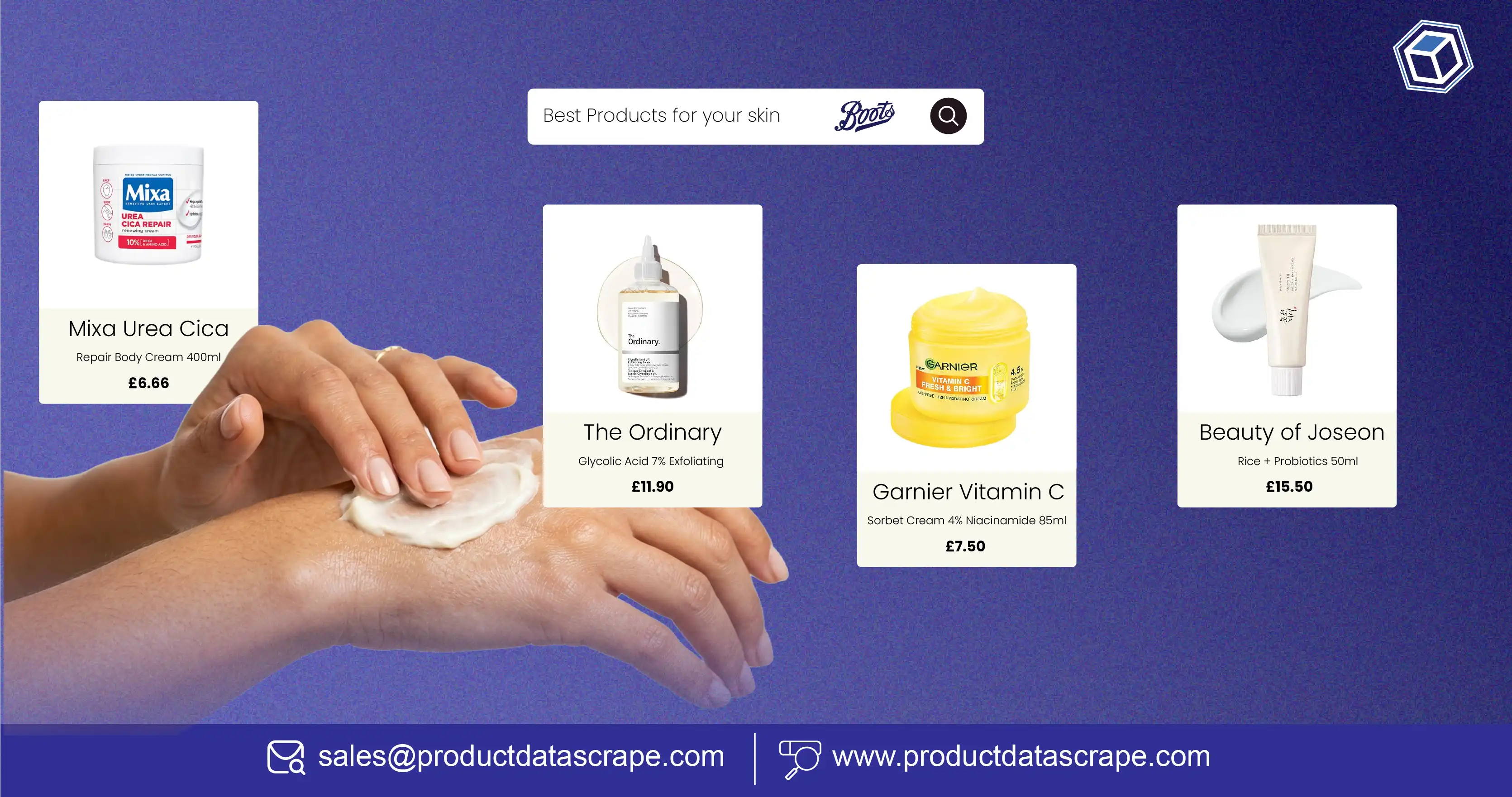
The modern retail and wellness industry depends heavily on accurate product intelligence and real-time consumer insights. Businesses operating in the beauty, skincare, healthcare, and wellness sectors are increasingly relying on data-driven strategies to improve pricing, inventory planning, customer targeting, and product positioning. In this competitive environment, Boots health and beauty Product data analytics plays a critical role in helping brands identify changing customer preferences, optimize digital shelf visibility, and monitor market performance.
Retailers and manufacturers use advanced analytics solutions to evaluate customer purchasing patterns, analyze product demand, and compare pricing strategies across categories. Companies that Extract Boots Health & Beauty Product Data gain access to valuable information related to product listings, reviews, discounts, seasonal trends, and competitor activities. This intelligence enables brands to improve marketing strategies, refine product assortments, and respond quickly to market shifts.
According to industry reports, the global beauty and personal care market is expected to surpass $750 billion by 2026, while online pharmacy and wellness sales continue growing at over 9% CAGR. Businesses leveraging structured retail datasets can better understand consumer behavior, identify emerging trends, and make informed decisions that increase profitability.
This blog explores how product analytics and retail intelligence from Boots help brands strengthen their market presence and stay ahead in the evolving health and beauty landscape.
Understanding Consumer Discovery Through Marketplace Intelligence
Digital retail platforms have transformed how consumers search for and purchase beauty and wellness products. Customers now compare products based on reviews, pricing, ingredients, ratings, and promotional offers before making a purchase decision. Businesses that monitor search visibility and product placement gain a significant advantage in understanding customer intent and market demand.
Companies that Scrape search results from Boots can identify which products appear most frequently in customer searches, which categories are gaining traction, and how sponsored listings influence buying behavior. Access to an eCommerce Dataset helps brands evaluate product rankings, keyword trends, search volume, and customer engagement metrics across skincare, cosmetics, supplements, healthcare essentials, and personal care categories.
Search analytics also help businesses improve digital merchandising strategies. Retailers can track how products perform during seasonal campaigns, promotional periods, and new product launches. This information supports smarter inventory management and targeted marketing initiatives.
Boots Search and Marketplace Data Trends (2020–2026)
.webp)
Brands leveraging marketplace analytics can:
- Identify top-performing search keywords.
- Track category-specific product demand.
- Monitor seasonal consumer buying patterns.
- Improve product discoverability.
- Analyze competitor search visibility.
- Optimize promotional campaigns.
Consumer search behavior directly influences product sales and brand awareness. Businesses using structured retail datasets can refine pricing strategies, improve advertising efficiency, and strengthen digital shelf positioning in highly competitive online marketplaces.
Improving Competitive Pricing Strategies with Retail Insights
Pricing plays a major role in influencing customer purchase decisions in the health and beauty sector. Customers compare prices across retailers before purchasing skincare products, cosmetics, wellness supplements, and healthcare essentials. Companies that monitor retail pricing trends can respond faster to competitor changes and improve profitability.
Using Boots beauty & Health pricing analytics, businesses can analyze price fluctuations, promotional offers, discount patterns, and category-specific pricing behavior. Combined with Pricing Intelligence Services, these insights help brands maintain competitive pricing while protecting profit margins.
Retail pricing analytics support dynamic pricing strategies by helping businesses understand how pricing affects customer demand. Brands can compare premium and budget product categories, monitor price elasticity, and optimize discount campaigns during peak shopping periods.
Pricing Intelligence Trends in Health & Beauty Retail (2020–2026)
| Year |
Average Promotional Discounts (%) |
Beauty Product Price Increase (%) |
Consumer Price Comparison Activity (%) |
| 2020 |
18% |
4% |
41% |
| 2021 |
20% |
5% |
46% |
| 2022 |
22% |
7% |
52% |
| 2023 |
25% |
8% |
58% |
| 2024 |
27% |
9% |
64% |
| 2025 |
29% |
10% |
69% |
| 2026 |
31% |
12% |
74% |
Retailers using pricing intelligence benefit from:
- Monitoring competitor discount campaigns.
- Identifying pricing gaps across categories.
- Adjusting product pricing dynamically.
- Understanding consumer response to discounts.
- Improving revenue optimization strategies.
- Increasing customer retention through competitive pricing.
As online comparison shopping continues to rise, pricing analytics becomes essential for retailers aiming to attract value-conscious customers while maintaining sustainable business growth.
Strengthening Digital Shelf Visibility Through Benchmarking
Digital shelf visibility determines how effectively products are presented across online marketplaces. Brands competing in the beauty and wellness sector must ensure their products maintain competitive positioning through accurate descriptions, reviews, ratings, and pricing consistency.
Businesses that Extract Boots product price benchmarking data can compare product pricing against competing brands and categories. Combined with Digital Shelf Analytics, this information helps organizations monitor product visibility, stock availability, customer reviews, and content quality.
Digital shelf benchmarking enables brands to identify underperforming products and improve online merchandising strategies. Businesses can track whether products maintain optimal ranking positions during campaigns and promotional periods.
Digital Shelf Performance Metrics (2020–2026)
.webp)
Benefits of digital shelf benchmarking include:
- Monitoring product ranking performance.
- Improving product content consistency.
- Tracking out-of-stock occurrences.
- Analyzing review sentiment and ratings.
- Enhancing mobile commerce experiences.
- Increasing online conversion rates.
As consumers increasingly rely on online product research, businesses with strong digital shelf optimization strategies can achieve better customer engagement, higher sales performance, and improved brand loyalty.
Tracking Market Movements and Competitor Activity
Retail competition in the health and beauty industry continues to intensify due to expanding online marketplaces and changing customer expectations. Brands that closely monitor market movements gain valuable insights into evolving consumer trends and competitor strategies.
Using Boots retail trend intelligence, organizations can analyze emerging product categories, seasonal demand fluctuations, and consumer purchasing patterns. Paired with Competitor Price Monitoring, businesses can evaluate competitor pricing changes, promotional campaigns, and assortment strategies.
Trend intelligence supports strategic planning by helping companies understand which categories are experiencing rapid growth. Brands can identify rising demand for vegan skincare, wellness supplements, sustainable packaging, and personalized beauty products.
Retail Trend Intelligence Statistics (2020–2026)
| Year |
Sustainable Beauty Demand (%) |
Personalized Product Growth (%) |
Competitor Price Changes Monitored Daily (%) |
| 2020 |
21% |
14% |
38% |
| 2021 |
27% |
18% |
45% |
| 2022 |
34% |
23% |
52% |
| 2023 |
42% |
29% |
61% |
| 2024 |
49% |
35% |
68% |
| 2025 |
57% |
41% |
74% |
| 2026 |
64% |
48% |
81% |
Key advantages of retail trend intelligence include:
- Identifying fast-growing product categories.
- Monitoring competitor assortment changes.
- Understanding regional purchasing preferences.
- Tracking sustainability-driven consumer behavior.
- Supporting strategic expansion planning.
- Enhancing product innovation strategies.
Businesses using retail trend intelligence can react faster to market changes, improve competitive positioning, and deliver products aligned with consumer expectations.
Leveraging Demand Intelligence for Wellness Growth
The online pharmacy and wellness market has witnessed substantial growth due to increasing health awareness, digital healthcare adoption, and changing consumer lifestyles. Customers now purchase vitamins, supplements, personal care products, and wellness essentials through online retail platforms more frequently than ever before.
Organizations using Boots beauty & Health demand intelligence can analyze customer demand patterns, purchase frequency, and category-specific growth opportunities. Businesses that Extract Boots Online Pharmacy Pharma & Wellness Data gain access to detailed insights related to healthcare products, over-the-counter medicines, vitamins, supplements, and wellness categories.
Demand intelligence helps retailers forecast inventory requirements and improve supply chain efficiency. Businesses can identify which wellness products experience seasonal spikes and which categories maintain stable long-term demand.
Online Wellness and Pharmacy Growth Trends (2020–2026)
.webp)
Benefits of demand intelligence include:
- Forecasting healthcare product demand.
- Optimizing inventory planning.
- Identifying high-growth wellness categories.
- Monitoring seasonal healthcare trends.
- Improving supply chain efficiency.
- Enhancing customer satisfaction through product availability.
Demand analytics enables businesses to deliver better customer experiences while ensuring consistent availability of high-demand products across digital retail channels.
Building Long-Term Retail Success Through Monitoring
Long-term success in health and beauty retail requires continuous monitoring of pricing, promotions, product positioning, and customer engagement. Businesses that regularly track market performance can make proactive decisions that improve profitability and customer loyalty.
Through Boots beauty price monitoring, companies can evaluate how pricing changes influence sales performance, customer retention, and category growth. Continuous price monitoring allows brands to respond quickly to market shifts and competitor actions.
Retail monitoring also helps businesses understand customer preferences across premium, mid-range, and budget product categories. Companies can identify the impact of discounts, loyalty programs, and bundled offers on overall sales performance.
Beauty Retail Monitoring Statistics (2020–2026)
| Year |
Dynamic Pricing Adoption (%) |
Loyalty Program Participation (%) |
Real-Time Retail Monitoring Usage (%) |
| 2020 |
19% |
33% |
26% |
| 2021 |
25% |
39% |
32% |
| 2022 |
31% |
45% |
39% |
| 2023 |
38% |
51% |
47% |
| 2024 |
45% |
58% |
55% |
| 2025 |
53% |
64% |
63% |
| 2026 |
61% |
71% |
70% |
Advantages of continuous retail monitoring include:
- Tracking pricing performance in real time.
- Measuring promotion effectiveness.
- Improving customer retention strategies.
- Supporting personalized marketing campaigns.
- Enhancing operational efficiency.
- Strengthening long-term profitability.
Retail monitoring empowers businesses to make informed decisions based on live market conditions and evolving customer behavior, enabling stronger competitive performance in the health and beauty industry.
Why Choose Product Data Scrape?
Modern businesses require reliable data extraction and analytics solutions to stay competitive in rapidly changing retail markets. Product Data Scrape delivers scalable data intelligence services that help brands monitor pricing, track product performance, analyze customer trends, and improve strategic decision-making.
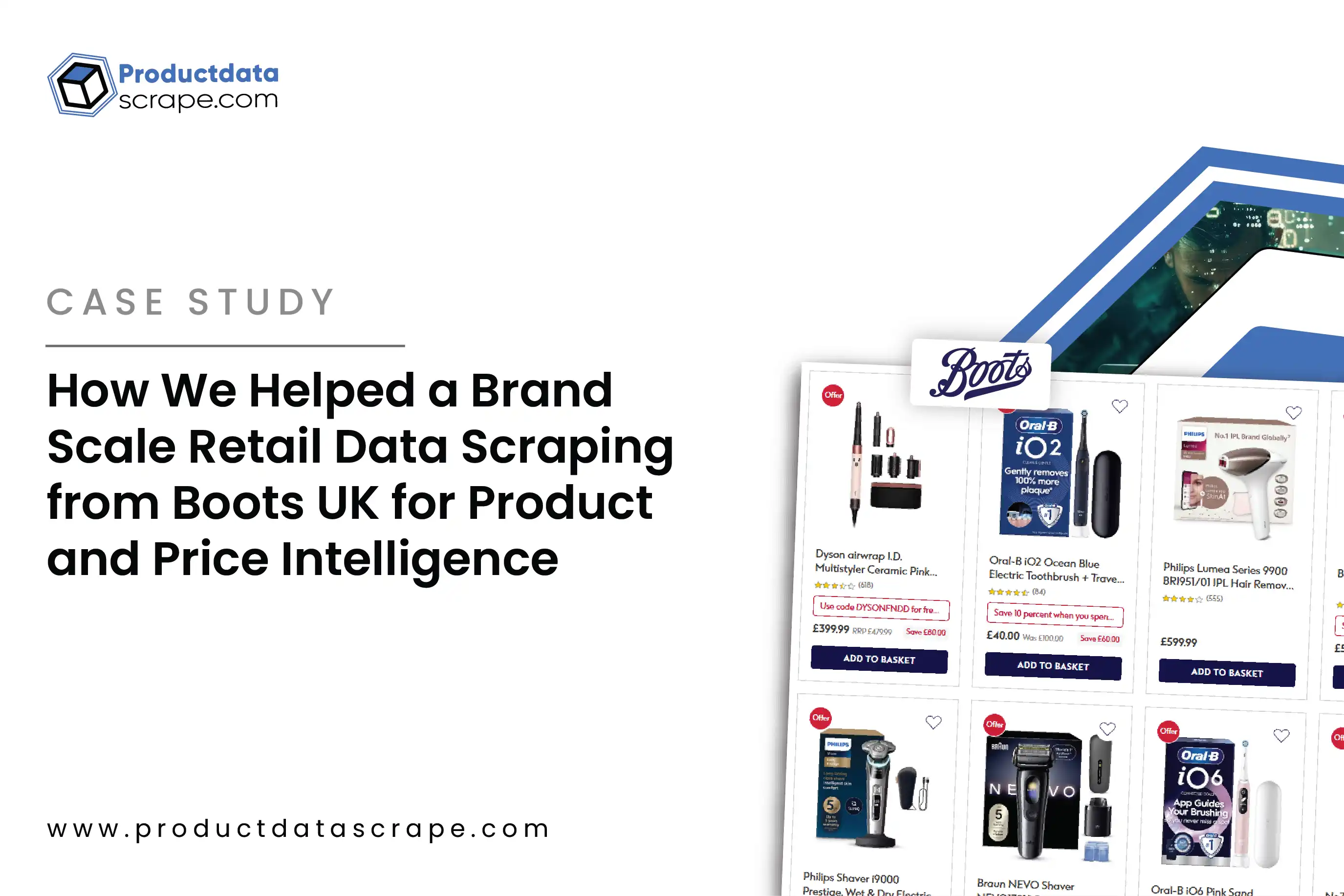
With expertise in Boots pharmacy catalog scraping, businesses can access structured datasets related to pharmacy products, wellness categories, beauty essentials, customer reviews, and promotional activities. Advanced analytics capabilities combined with Boots health and beauty Product data analytics help organizations identify market opportunities, improve inventory planning, and strengthen digital shelf visibility.
We provide accurate, customizable, and real-time retail intelligence solutions that support eCommerce growth, competitor tracking, demand forecasting, and pricing optimization for businesses operating in the health and beauty sector.
Conclusion
The growing influence of online retail and digital healthcare platforms has increased the importance of accurate product intelligence and consumer analytics. Businesses leveraging Boots Product API Product Data Scraping solutions can gain valuable insights into pricing trends, customer preferences, product demand, and competitor strategies.
By utilizing Boots health and beauty Product data analytics, brands can improve digital shelf visibility, optimize pricing decisions, forecast demand, and enhance customer engagement across beauty, wellness, and healthcare categories. Data-driven strategies enable organizations to respond faster to evolving consumer behavior and strengthen long-term market performance.
We help businesses transform raw retail information into actionable intelligence that supports sustainable growth and competitive advantage. Contact Product Data Scrape today to unlock advanced retail analytics solutions tailored to your health and beauty business needs.
FAQs
1. Why is product analytics important for health and beauty brands?
Product analytics helps brands understand customer preferences, pricing trends, and buying behavior. These insights support better inventory planning, marketing optimization, and improved customer experiences across online retail platforms.
2. How does pricing intelligence improve retail performance?
Pricing intelligence helps businesses monitor competitor prices, analyze discount strategies, and optimize product pricing. This enables companies to remain competitive while maintaining profitability and improving customer retention.
3. What benefits does digital shelf analytics provide?
Digital shelf analytics helps businesses monitor product visibility, ratings, reviews, and stock availability. These insights improve online merchandising strategies and increase customer engagement and conversion performance.
4. How does demand intelligence support wellness retailers?
Demand intelligence helps wellness retailers forecast product demand, monitor seasonal trends, and optimize supply chain operations. This improves inventory management and ensures better product availability for customers.
5. How can Product Data Scrape help businesses in retail analytics?
Product Data Scrape provides scalable retail intelligence solutions that help businesses monitor pricing, track consumer trends, extract marketplace data, and improve decision-making across health, beauty, and wellness categories.


 Singapore
 EMAIL
EMAIL
 PHONE
PHONE











.webp)