Introduction
The best choice depends on your scale, budget, technical resources, and pricing goals. Amazon Price Monitoring Build vs Buy vs Managed Service helps businesses compare three paths: building an internal system, purchasing ready-made software, or outsourcing the work. For most teams that need fast deployment and reliable data without adding engineering overhead, a managed approach offers the strongest balance.
Amazon pricing changes frequently. Sellers can adjust prices based on demand, inventory, promotions, competition, and marketplace conditions. This makes manual tracking difficult.
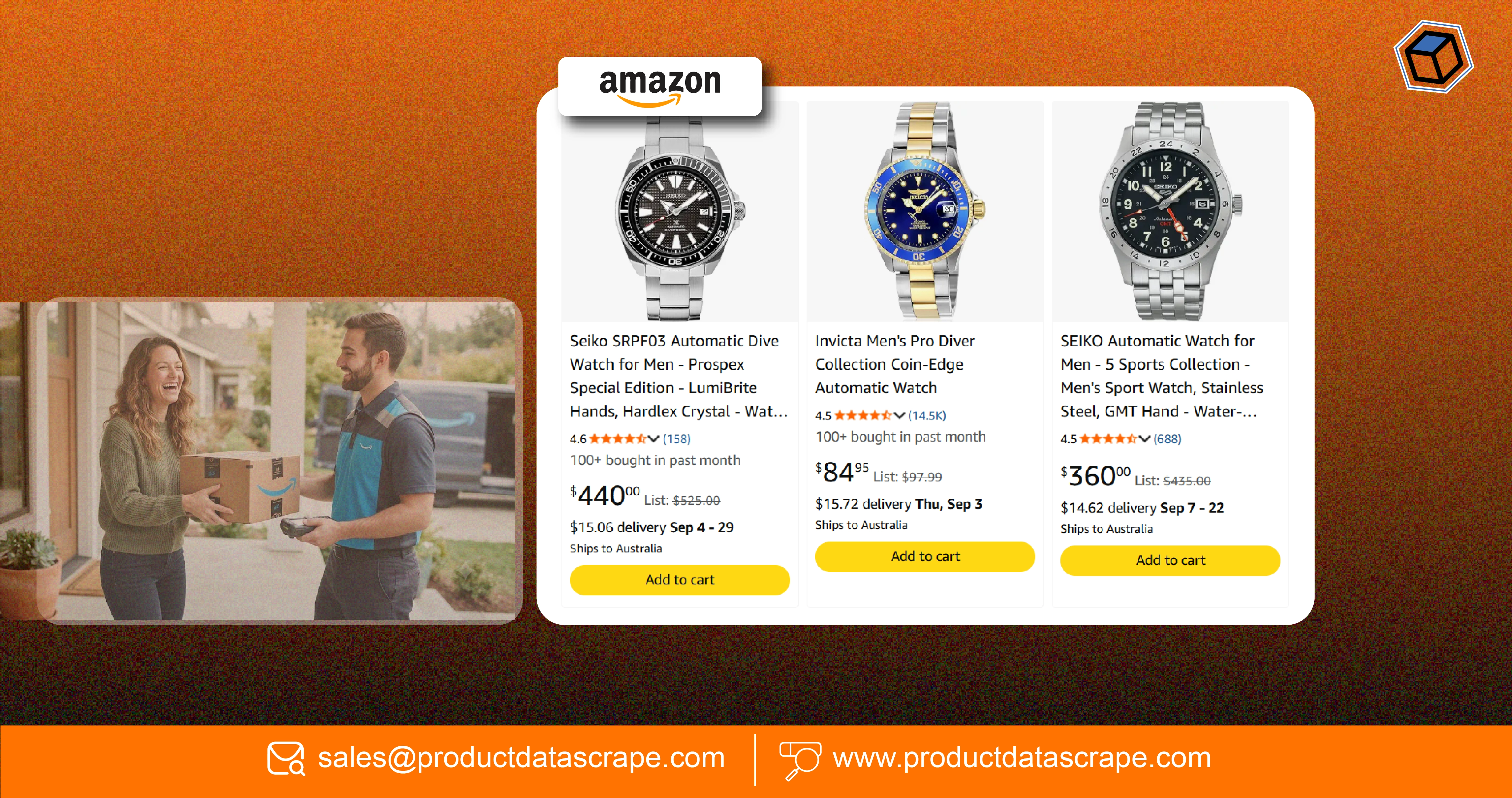
Amazon product data scraping can automate the collection of product names, prices, discounts, ratings, availability, seller details, and other marketplace attributes.
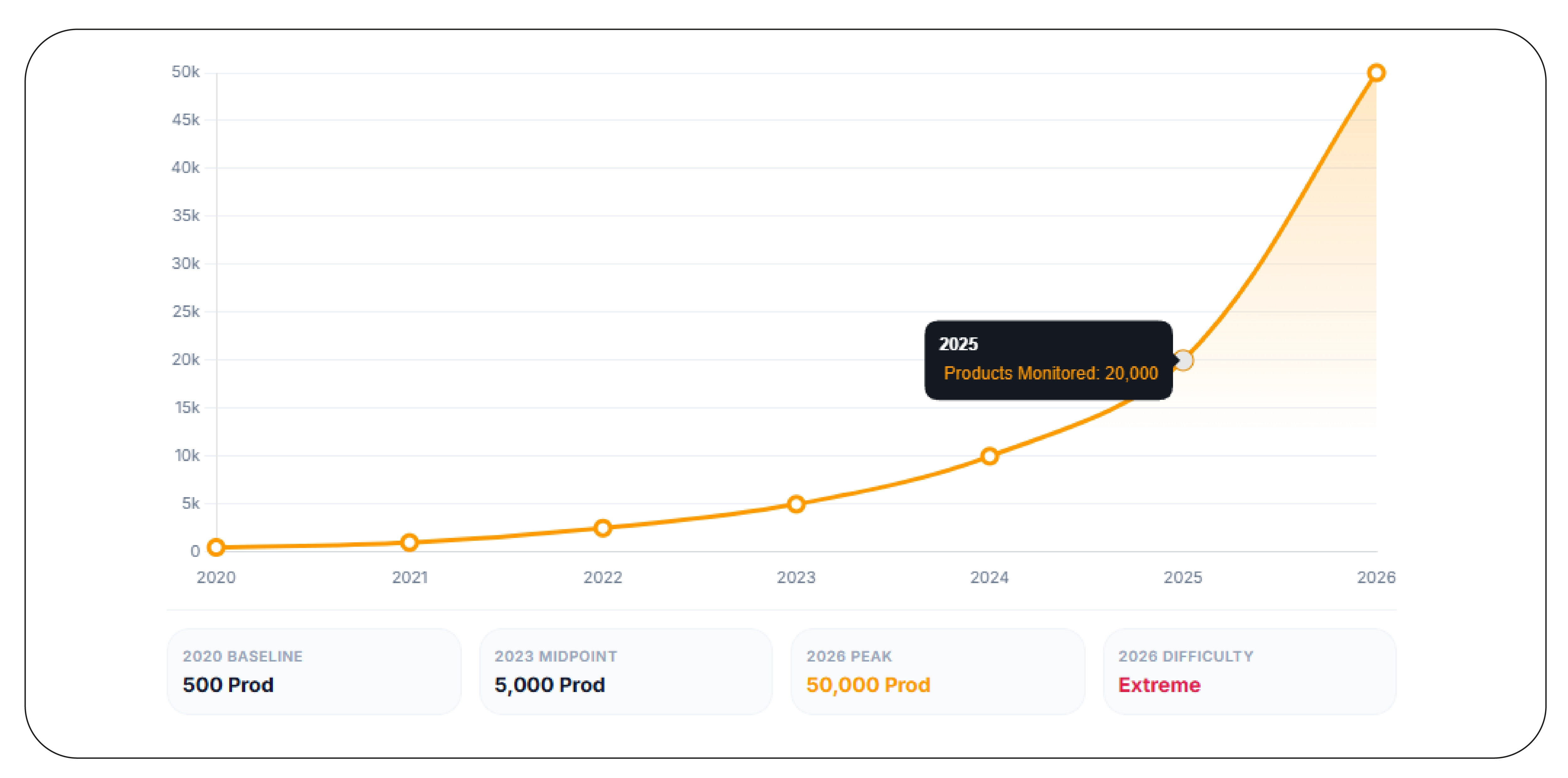
For planning purposes, the following illustrative benchmark shows how the workload can increase as monitoring requirements expand:
Illustrative Monitoring Workload (2020–2026)
| Year |
Illustrative Products Monitored |
Price Checks per Month |
Manual Tracking Difficulty |
| 2020 |
500 |
5,000 |
Medium |
| 2021 |
1,000 |
12,000 |
Medium |
| 2022 |
2,500 |
30,000 |
High |
| 2023 |
5,000 |
60,000 |
High |
| 2024 |
10,000 |
150,000 |
Very High |
| 2025 |
20,000 |
300,000 |
Very High |
| 2026 |
50,000 |
750,000 |
Extreme |
These figures are illustrative planning benchmarks rather than reported market statistics. They show one important point: monitoring complexity grows quickly when businesses expand their product coverage and checking frequency.
What Makes Outsourced Monitoring Useful for Growing Businesses?
Managed Amazon price monitoring services can remove much of the technical burden associated with collecting and maintaining marketplace pricing data.
An internal team must manage infrastructure, extraction logic, scheduling, data storage, error handling, monitoring, and updates. Marketplace pages can also change. A scraper that works today may require adjustments later.
A managed model shifts these operational responsibilities to a specialist provider. The business receives structured data without building every component internally.
This approach can be useful for retailers, brands, distributors, pricing teams, marketplaces, and competitive intelligence departments.
The key benefits include:
- Faster implementation.
- Lower internal engineering requirements.
- Automated data collection.
- Flexible monitoring frequency.
- Structured product information.
- Scalable product coverage.
- Reduced maintenance workload.
- Easier integration with analytics systems.
Illustrative Operational Requirements (2020–2026)
| Year |
Data Volume |
Suggested Monitoring Frequency |
Operational Pressure |
| 2020 |
Low |
Daily |
Low |
| 2021 |
Low-Medium |
Daily |
Low |
| 2022 |
Medium |
Daily/Several times weekly |
Medium |
| 2023 |
Medium-High |
Several times daily |
High |
| 2024 |
High |
Multiple daily checks |
High |
| 2025 |
Very High |
Hourly for priority SKUs |
Very High |
| 2026 |
Very High |
Near-real-time for priority SKUs |
Very High |
A managed model becomes more attractive when the business wants continuous monitoring but does not want to build a dedicated data engineering function.
It also helps when the pricing team needs data quickly. Instead of spending months designing a system, teams can focus on using the resulting information.
The important question is not simply whether outsourcing costs more than development. The better question is whether the total business value exceeds the combined cost of technology, labor, maintenance, downtime, and delayed insights.
How Do Scrapers and Monitoring Systems Work Together?
Amazon Price Monitoring, Amazon Product Data Scraper solutions typically combine automated collection with scheduled monitoring workflows.
The scraper collects marketplace information. The monitoring layer compares current information against previous observations. An analytics layer can then identify changes.
For example, a retailer could monitor:
- Product price.
- List price.
- Discount percentage.
- Seller name.
- Availability.
- Rating.
- Review count.
- Product category.
- Product URL.
- Promotional offers.
- Delivery information.
The system can store each observation with a timestamp. This creates a historical pricing dataset.
That history is valuable because a single price snapshot tells only part of the story. A six-month or multi-year dataset can reveal recurring discounts, seasonal changes, competitor movements, and pricing patterns.
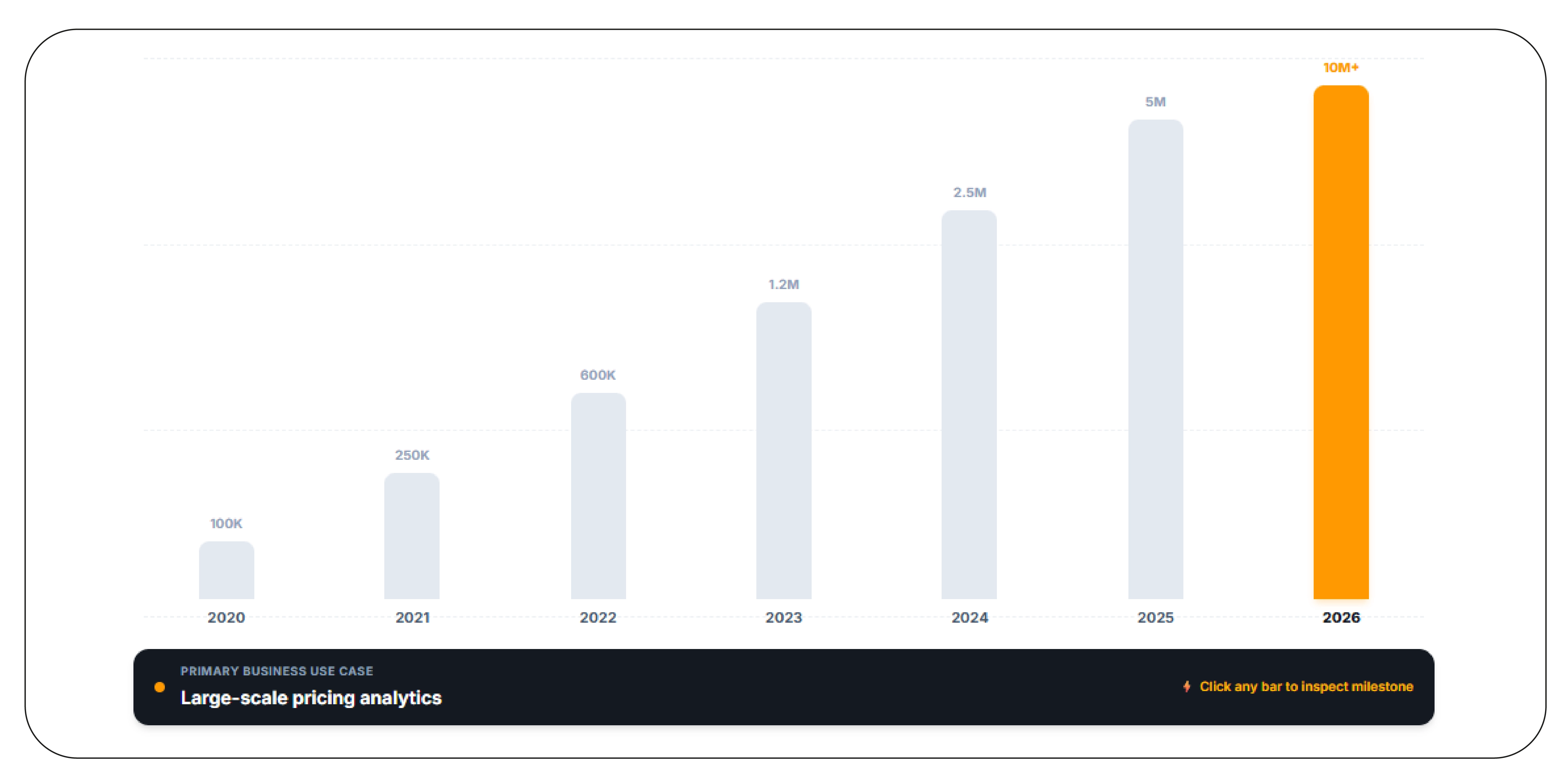
Illustrative Historical Dataset Growth (2020–2026)
| Year |
Illustrative Historical Records |
Primary Business Use |
| 2020 |
100K |
Basic price tracking |
| 2021 |
250K |
Competitor comparison |
| 2022 |
600K |
Promotion analysis |
| 2023 |
1.2M |
Price trend analysis |
| 2024 |
2.5M |
Automated alerts |
| 2025 |
5M |
Dynamic competitive intelligence |
| 2026 |
10M+ |
Large-scale pricing analytics |
These are illustrative dataset volumes. Actual requirements depend on SKU count, monitoring frequency, geographic coverage, and attributes collected.
A reliable workflow generally follows five steps:
- Identify target products.
- Collect current product information.
- Validate and normalize the data.
- Compare new observations with historical records.
- Deliver alerts, reports, dashboards, or API-ready data.
This workflow turns raw marketplace information into usable business intelligence.
It also makes pricing decisions more systematic. Teams can identify when competitors change prices instead of relying on occasional manual checks.
For large catalogs, automation becomes especially important. Manual processes often create inconsistent records. Automated pipelines can apply the same collection and validation rules across thousands of products.
Which Data Collection Method Gives You Better Control and Speed?
Amazon price scraping vs API is not always a simple either-or decision. The right option depends on what data the business needs and how that data will be consumed.
Scraping can provide flexibility when businesses need specific marketplace fields or customized collection workflows. An API can simplify integration and make structured data easier for applications to consume.
The choice becomes more important when companies compare Amazon Price Monitoring Build vs Buy vs Managed Service because each model provides a different balance of control, cost, and operational responsibility.
A build strategy can provide maximum customization. A purchased solution can provide faster deployment. A managed service can reduce infrastructure and maintenance responsibilities.
Illustrative Approach Comparison (2020–2026)
| Year |
Build Focus |
Buy Focus |
Managed Focus |
| 2020 |
Custom development |
Ready-made tools |
Outsourced collection |
| 2021 |
Internal automation |
Faster deployment |
Reduced maintenance |
| 2022 |
API integration |
Dashboard adoption |
Larger data coverage |
| 2023 |
Scalable infrastructure |
Advanced alerts |
Automated operations |
| 2024 |
Data engineering |
Workflow integration |
Enterprise monitoring |
| 2025 |
High-volume pipelines |
AI-assisted analytics |
Continuous optimization |
| 2026 |
Full customization |
Platform ecosystems |
Scalable managed intelligence |
The build option works well when the company has strong engineering resources and unusual requirements.
The buy option works well when standard features meet the business need.
The managed option works well when the organization wants reliable data without owning the entire technical operation.
Cost should also be evaluated beyond the initial price.
A build project may require developers, cloud infrastructure, monitoring tools, data storage, maintenance, and troubleshooting.
A purchased platform may reduce technical work but can introduce subscription costs or feature limitations.
A managed model usually packages data operations into an ongoing service.
The best decision should therefore consider total cost of ownership rather than the initial implementation cost alone.
When Should a Business Build Its Own Monitoring System?
Amazon price monitoring build vs buy decisions become easier when companies evaluate their internal capabilities first.
Building can make sense when pricing data is a core part of the company's technology strategy. It may also be appropriate when the business requires highly customized workflows that commercial platforms cannot support.
For example, an enterprise may want pricing data connected directly to internal recommendation engines, inventory systems, promotional engines, or proprietary analytics.
A build strategy provides control over architecture. It also allows teams to define their own collection rules and data models.
However, ownership comes with responsibility.
The company must manage:
- Infrastructure.
- Data pipelines.
- Monitoring.
- Error recovery.
- Schema changes.
- Scaling.
- Storage.
- Security.
- Quality checks.
- Engineering resources.
Illustrative Decision Scoring Model
| Factor |
Build |
Buy |
Managed |
| Initial control |
5/5 |
3/5 |
4/5 |
| Deployment speed |
2/5 |
5/5 |
5/5 |
| Customization |
5/5 |
3/5 |
4/5 |
| Internal workload |
1/5 |
4/5 |
5/5 |
| Scalability effort |
2/5 |
4/5 |
5/5 |
| Maintenance burden |
1/5 |
4/5 |
5/5 |
These scores are illustrative decision-making criteria, not measured market ratings.
A build model can be powerful, but it is rarely maintenance-free.
Teams should also consider opportunity cost. Engineers working on scraping infrastructure are not working on customer-facing products, analytics, automation, or other strategic projects.
For organizations without dedicated data engineering capacity, outsourcing can provide a faster route to usable data.
A hybrid model can also work. A business can use an external data service while maintaining its own analytics and pricing decision layer.
What Features Should You Expect From a Modern Pricing Platform?
Choosing the best Amazon price monitoring software requires more than comparing dashboards or subscription prices.
The software should match the company's data requirements.
Important capabilities include product discovery, scheduled monitoring, historical storage, change detection, data validation, structured output, alerts, and integration options.
Businesses should also evaluate how easily the platform handles catalog growth.
A system designed for 500 products may not perform the same way when monitoring 50,000 products.
Illustrative Capability Priorities (2020–2026)
| Year |
Illustrative Monitoring Need |
Priority Capability |
| 2020 |
Basic SKU tracking |
Price collection |
| 2021 |
Competitor comparison |
Historical storage |
| 2022 |
Promotion monitoring |
Change detection |
| 2023 |
Larger catalogs |
Automation |
| 2024 |
Frequent updates |
Alerts and APIs |
| 2025 |
Enterprise datasets |
Scalability |
| 2026 |
Advanced intelligence |
Flexible integrations |
When evaluating a platform, buyers should ask:
- How often can prices be monitored?
- Which product fields are available?
- Can historical records be retained?
- How are failed requests handled?
- Can the system scale with catalog growth?
- Can data be delivered through APIs or structured files?
- Can alerts be customized?
- How quickly can new products be added?
- What maintenance does the buyer need to manage?
- How is data quality validated?
Price should not be the only deciding factor.
A low-cost solution that misses products or produces inconsistent data can create hidden costs. Analysts may spend additional time cleaning records. Pricing teams may lose confidence in reports.
A reliable platform should make the data easy to consume.
It should also support the business workflow rather than forcing teams to redesign their processes around the tool.
For growing businesses, flexibility is often more valuable than a long list of unused features.
What Alternatives Can Businesses Use for Large-Scale Data Collection?
Web Scraping Service Alternatives include internal development, commercial software, APIs, data providers, and fully managed extraction services.
Each alternative solves a different problem.
An internal development team provides maximum control. A software platform provides a packaged workflow. An API can simplify application integration. A managed service can handle collection and operational complexity.
The right alternative depends on business priorities.
Illustrative Directional Guidance (2020–2026)
| Year |
Common Business Priority |
Suitable Direction |
| 2020 |
Basic data access |
Manual or simple tools |
| 2021 |
Competitive tracking |
Software platforms |
| 2022 |
Automation |
APIs and scheduled systems |
| 2023 |
Scale |
Managed collection |
| 2024 |
Faster intelligence |
Automated pipelines |
| 2025 |
Large product catalogs |
Enterprise services |
| 2026 |
Continuous intelligence |
Managed and integrated systems |
Businesses should assess five areas before selecting an alternative:
Data scope: Define the products, sellers, categories, and attributes that must be monitored.
Frequency: Determine whether daily, hourly, or event-based monitoring is necessary.
Integration: Decide whether the data must feed dashboards, databases, applications, or pricing engines.
Maintenance: Estimate how much internal technical effort the company can support.
Economics: Calculate the total cost over one to three years rather than comparing only monthly fees.
The decision can also change over time.
A startup may begin with a simple software solution. A growing retailer may later move to an API or managed service. A large enterprise may eventually combine external collection with an internal analytics platform.
There is no universal winner.
The best model is the one that provides the required data quality and frequency without creating unnecessary technical or financial pressure.
Why Choose Product Data Scrape?
Choosing the right data partner can simplify the transition from marketplace data collection to usable pricing intelligence. Price scraping becomes more valuable when businesses can receive structured, consistent, and scalable information instead of raw pages.
For organizations comparing Amazon Price Monitoring Build vs Buy vs Managed Service, the key advantage is operational simplicity. A managed data workflow can reduce the need to maintain extraction infrastructure internally.
Product Data Scrape can support businesses that need scalable product information for competitive research, pricing analysis, assortment monitoring, and marketplace intelligence.
A strong solution should emphasize:
- Structured data.
- Scalable collection.
- Consistent delivery.
- Historical monitoring.
- Flexible output.
- Reduced engineering overhead.
- Business-ready datasets.
The goal is simple: give pricing teams dependable data so they can spend more time making decisions and less time maintaining collection systems.
Conclusion
The right choice depends on your business priorities. Build when customization and internal control are the highest priorities. Buy when you need standard capabilities and fast implementation. Choose a managed approach when you want scalable data without taking on the full operational burden.
A Scraper as a Service model can help businesses access automated data collection while keeping internal teams focused on analytics and pricing decisions. Amazon Price Monitoring Build vs Buy vs Managed Service should ultimately be evaluated through total cost, data quality, scalability, maintenance, and speed.
For businesses expanding their marketplace intelligence programs, the decision should also consider future product volume. A solution that works for 1,000 products may not work efficiently for 50,000.
Contact Product Data Scrape today to discuss your Amazon pricing data requirements and build a scalable monitoring strategy for your business!
FAQs
What is the biggest advantage of managed price monitoring?
Managed monitoring reduces technical workload. Businesses can receive structured pricing data without building, maintaining, scaling, and troubleshooting the complete collection infrastructure internally.
Is building an internal monitoring system cheaper?
Not always. Development, infrastructure, maintenance, engineering salaries, monitoring, storage, and troubleshooting can increase total ownership costs as product coverage expands.
When should businesses buy monitoring software?
Buying makes sense when standard features meet business requirements and the company wants faster deployment without investing heavily in custom infrastructure or ongoing engineering.
Can Product Data Scrape support large product datasets?
Yes. Product Data Scrape can support businesses seeking structured marketplace data for product research, competitive analysis, pricing intelligence, and large-scale monitoring workflows.
What should companies compare before choosing a solution?
Compare total cost, data quality, monitoring frequency, scalability, customization, integration options, historical coverage, maintenance requirements, and the technical resources needed to operate the solution.


 Singapore
 EMAIL
EMAIL
 PHONE
PHONE










.webp)