Quick Overview
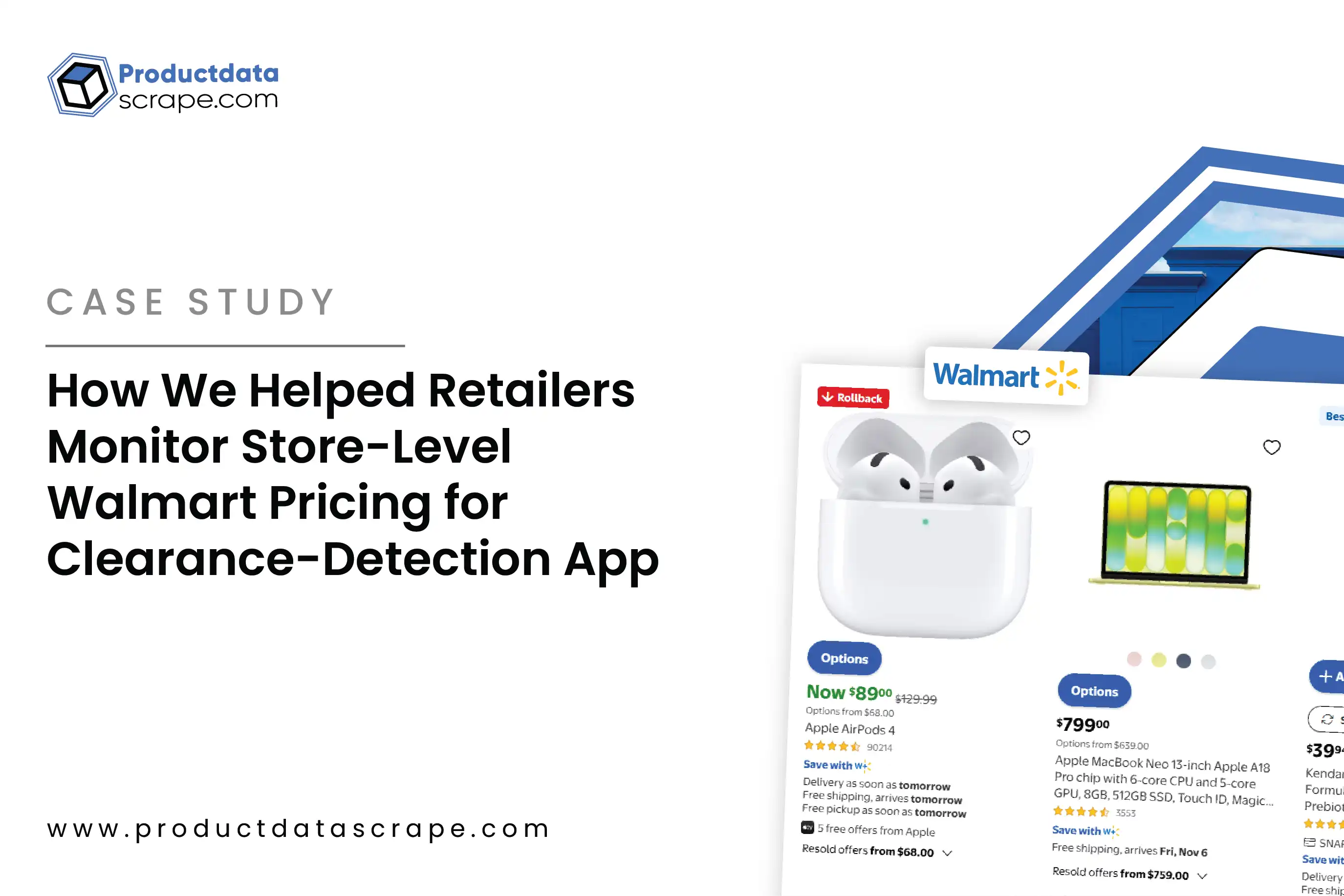
Product Data Scrape developed an automated retail intelligence solution to help retailers identify Walmart clearance opportunities through localized pricing data. The project focused on Monitor Store-Level Walmart Pricing for Clearance-Detection App, enabling the client to track product prices, discounts, and availability across selected Walmart locations. Using a structured Walmart Grocery Scraping API workflow, the system organized store-specific information for faster analysis and clearance detection. The solution helped improve pricing visibility, reduce manual monitoring, and support location-based retail decisions through automated collection and data validation.
Client Name / Industry: Confidential Retail Technology Company | Retail Analytics and Clearance Detection
Service / Duration: Walmart Product Data Scraping, Store-Level Price Monitoring, Inventory Intelligence | Illustrative 12-week implementation
Key Impact Metrics (Illustrative Targets): 95%+ data accuracy, 60% reduction in manual monitoring, and 3x faster pricing analysis.
The Client
The US retail market is highly competitive, with frequent price adjustments, promotional campaigns, seasonal discounts, and store-specific clearance activities. Walmart operates across a large retail network, making localized pricing information valuable for retailers, deal-tracking platforms, and retail intelligence providers.
Our client was a retail technology company developing a clearance-detection application. Its objective was to help users discover potential clearance opportunities by monitoring Walmart product prices across different store locations.
Before partnering with Product Data Scrape, the client relied on fragmented product research and manual price checks. Its existing workflow struggled to identify regional price differences, detect newly discounted products, and maintain consistent information across multiple store locations.
The business needed a scalable solution to Extract Walmart Clearance Pricing for Detection Apps and transform scattered product information into structured, location-specific datasets.
Another concern was maintaining competitive pricing intelligence without creating conflicts with retailer pricing policies. The client also wanted to strengthen its MAP monitoring capabilities by identifying relevant advertised-price changes and differentiating them from store-specific clearance prices.
The transformation was essential because outdated or incomplete pricing records could lead to missed opportunities, inaccurate deal alerts, and poor user experiences. The client needed automated collection, product matching, and reliable store-level data validation to support its growing application.
Goals & Objectives
The primary business goal was to develop a scalable clearance-monitoring solution covering Walmart products and individual store locations.
The client wanted to identify localized discounts, monitor changing product prices, and improve the speed of clearance opportunity discovery. It also aimed to expand product coverage without increasing manual research requirements.
The technical implementation focused on building an automated data collection and processing pipeline.
Collect Walmart product information across selected locations.
Standardize product names, brands, SKUs, and identifiers.
Track regular prices, displayed discounts, and clearance indicators.
Associate product records with relevant store locations.
Develop workflows to Monitor Walmart Clearance Deals by Location.
Support automated detection of new or changed product listings through Catching New Listings on Walmart.
Integrate structured datasets with the client's application and analytics environment.
Maintain historical pricing records for trend analysis.
The following illustrative performance targets were established:
Product data accuracy: 95% or higher.
Manual monitoring reduction: 60%.
Faster pricing analysis: 3x improvement.
Store coverage: Configurable Walmart locations.
Required-field completeness: 98% target.
Price-change detection: Consistent scheduled monitoring.
Duplicate records: Reduced through automated validation.
These indicators provided measurable criteria for evaluating the solution's reliability, scalability, and business value.
The Core Challenge
Monitoring Walmart prices across individual stores presented several operational and technical challenges. Product prices, promotional offers, and clearance availability could vary by location, making nationwide price monitoring insufficient for accurate deal identification.
The client struggled with fragmented product information and inconsistent store-level records. A product available at one Walmart location might have a different price or availability status at another location. Without accurate location mapping, the application could generate misleading clearance alerts.
The main challenges included:
Location-based price differences: Identifying variations in product prices across Walmart stores was difficult with fragmented records.
Inventory inconsistencies: Product availability and stock information changed frequently.
Manual monitoring: Analysts spent considerable time checking individual listings and store information.
Product identification: Different product descriptions and identifiers complicated matching.
Delayed updates: Infrequent collection cycles increased the risk of missing new clearance opportunities.
The client also needed reliable Walmart Store Specific Inventory Tracking to connect product availability with the correct retail location.
Another challenge was maintaining accurate historical pricing records. Without historical comparisons, the application could struggle to distinguish genuine clearance reductions from ordinary promotional changes.
These limitations made it difficult to consistently Monitor Store-Level Walmart Pricing for Clearance-Detection App requirements and deliver timely, location-relevant deal information.
Our Solution
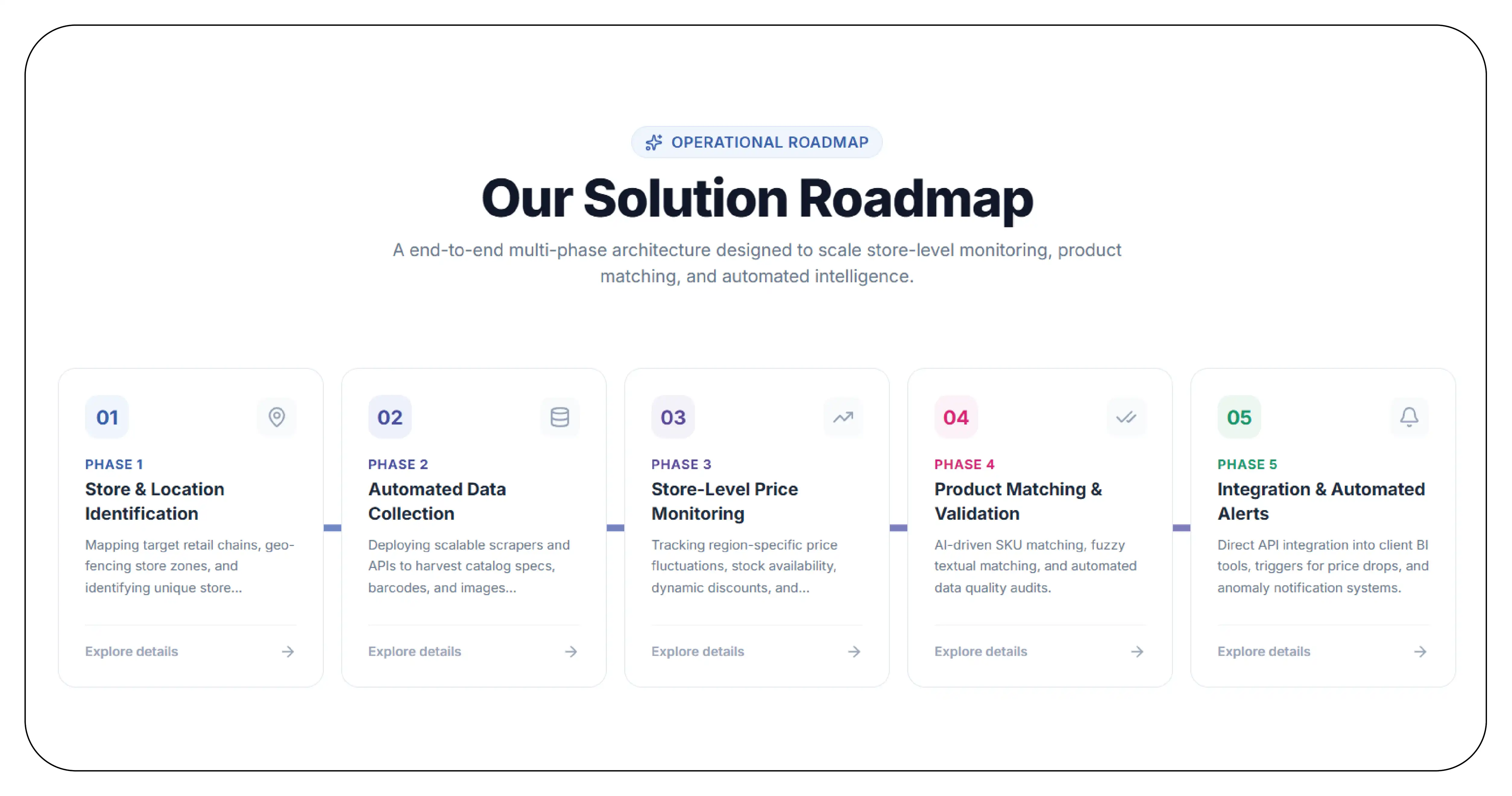
Product Data Scrape implemented a phased data extraction and processing solution to help the client monitor Walmart pricing and identify potential clearance opportunities across selected locations.
Phase 1: Store and Location Identification
We began by identifying the required Walmart store locations and determining how location-specific product information would be organized.
The collection workflow incorporated relevant store identifiers, location references, and ZIP code information wherever available. This established a structured foundation for connecting product records with the appropriate stores.
Phase 2: Automated Product Data Collection
Our team developed retailer-specific collection workflows to Extract Walmart Product Availability by Store.
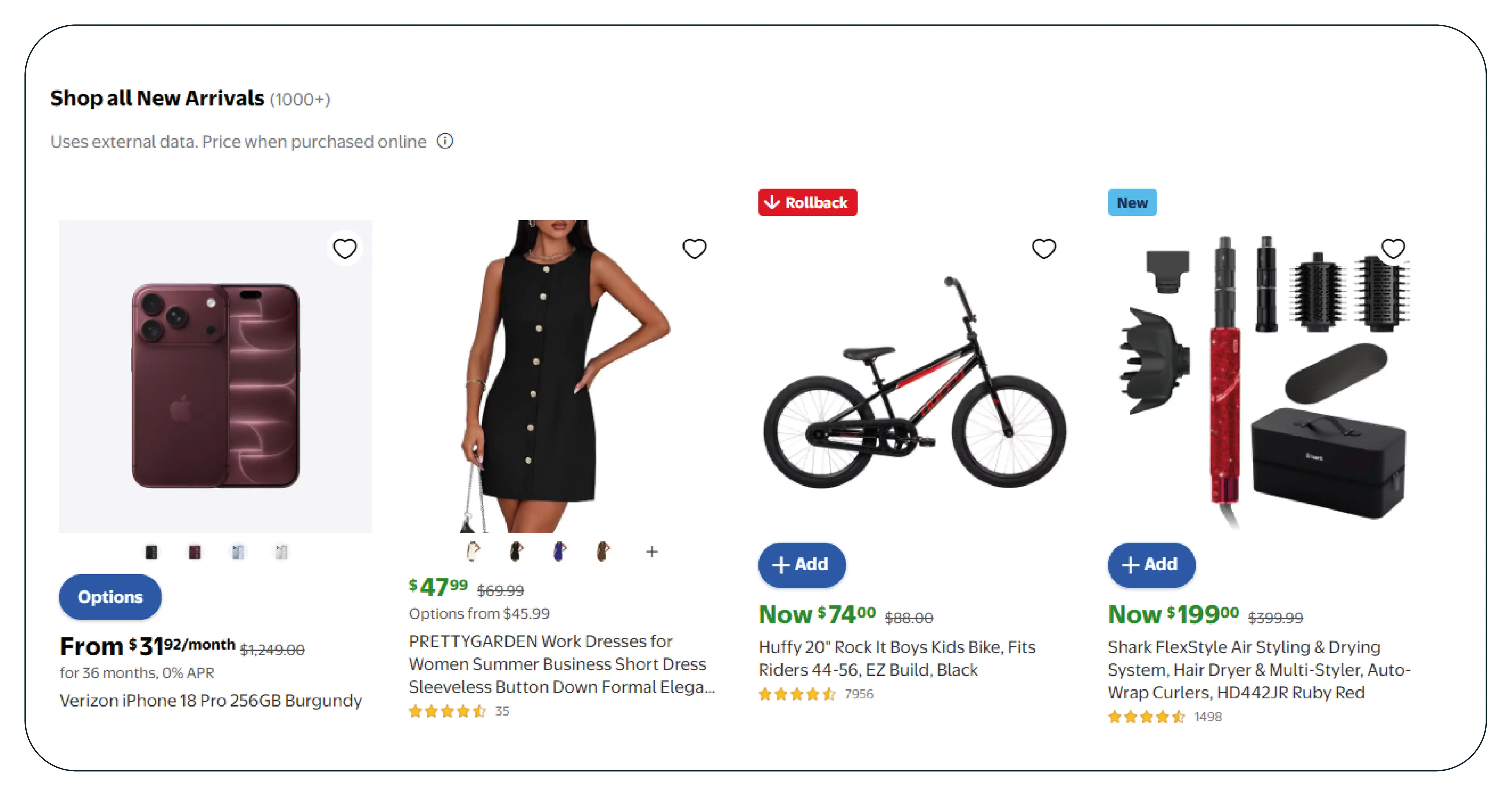
The extraction process focused on relevant product attributes, including:
- Product name and description
- Brand and product category
- Walmart product ID and SKU, where available
- Displayed selling price
- Original or reference price, where displayed
- Discount and promotional information
- Product URL
- Store identification and location
- Product availability status
Product examples included Great Value groceries, Mainstays home products, Equate essentials, and electronics from brands such as Samsung and Apple.
Phase 3: Store-Level Price Monitoring
The collected information was organized around individual store locations. This helped distinguish national pricing information from locally displayed prices.
Automated comparison rules identified changes between collection cycles. Price reductions, promotional updates, and potential clearance indicators were flagged for further analysis.
Phase 4: Product Matching and Data Validation
Product records were standardized using product identifiers, descriptions, brands, and other available attributes.
Validation checks helped identify missing prices, duplicate products, inconsistent store references, and unusual price movements.
The system also maintained historical records to support comparisons between previous and current product prices. This helped the client distinguish temporary discounts from more substantial price reductions.
Phase 5: Application Integration and Automated Alerts
The processed information was delivered in structured formats suitable for databases, dashboards, and application integration.
Configurable automation supported scheduled updates and price-change notifications. The client could use these records to generate potential clearance alerts based on defined price thresholds, store coverage, and product availability conditions.
The resulting Monitor Store-Level Walmart Pricing for Clearance-Detection App workflow provided a scalable foundation for localized retail intelligence, automated price comparisons, and clearance opportunity discovery.
Results & Key Metrics
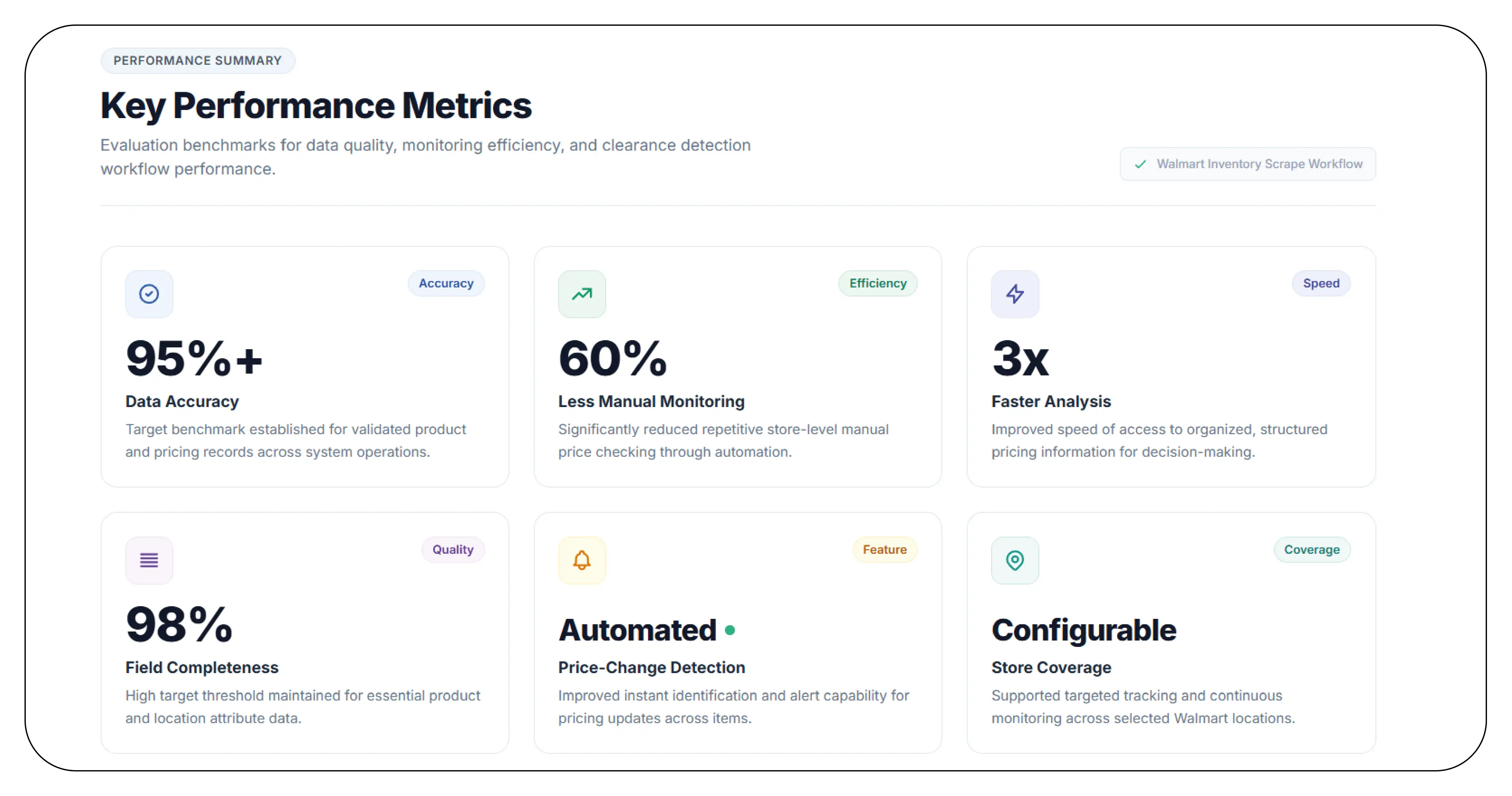
The implementation established a structured approach to monitoring Walmart product pricing across individual store locations. The following metrics are illustrative project targets rather than independently verified client results.
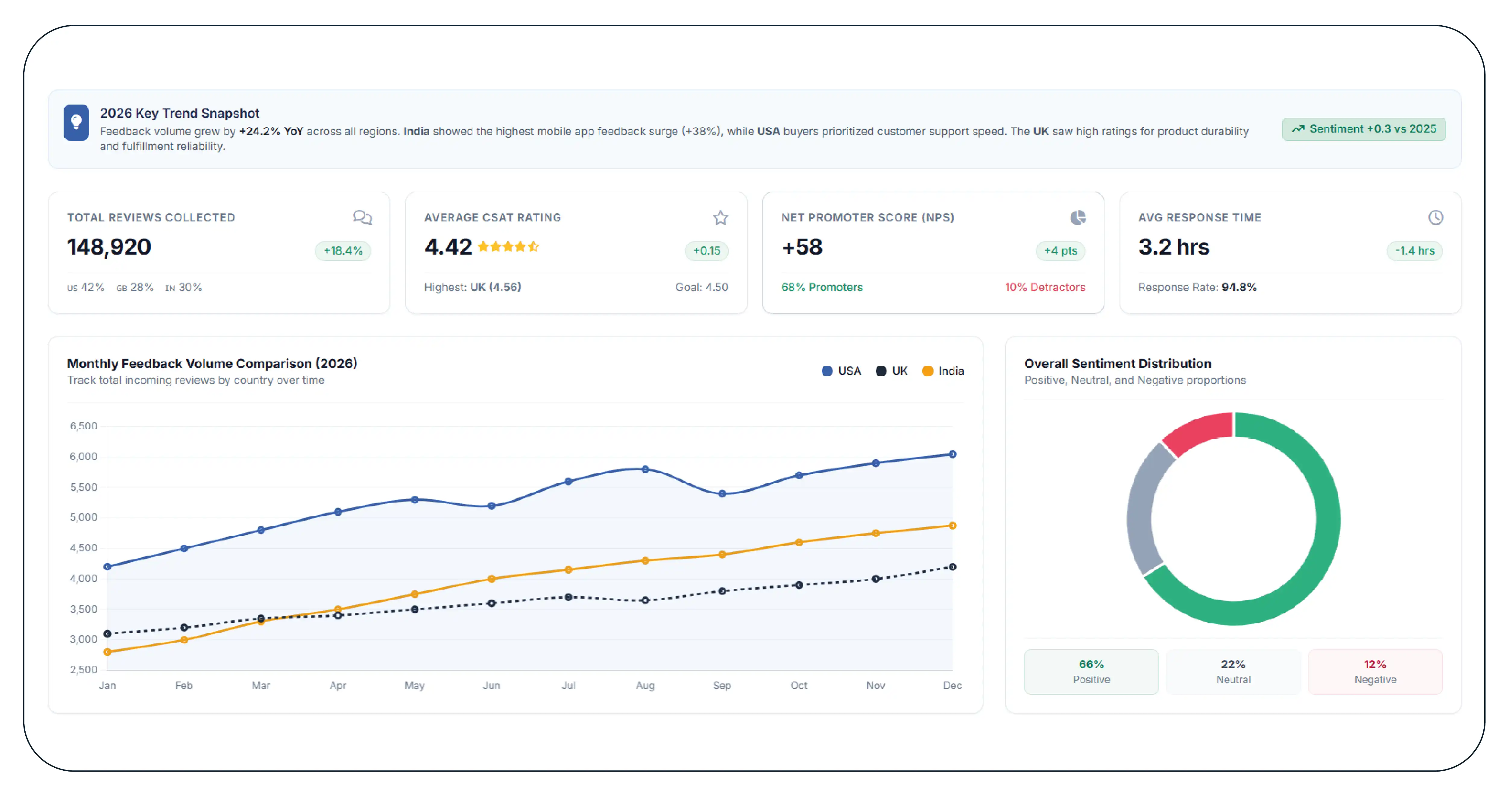
The solution was evaluated using the following performance indicators:
95%+ data accuracy: Target for validated product and pricing records.
60% less manual monitoring: Reduced repetitive store-level price checking.
3x faster analysis: Improved access to organized pricing information.
98% field completeness: Target for essential product and location attributes.
Automated price-change detection: Improved identification of pricing updates.
Configurable store coverage: Supported monitoring across selected Walmart locations.
The structured Scrape Walmart Inventory for Clearance Detection workflow helped establish measurable benchmarks for data quality, monitoring efficiency, and application performance.
The automated solution improved the client's ability to organize Walmart product information by individual store locations. Instead of relying entirely on manual research, the application could use structured records to identify price changes and potential clearance opportunities.
Historical price comparisons improved visibility into product-level pricing movements. Store mapping also helped distinguish location-specific changes from broader retail promotions.
With Monitor Store-Level Walmart Pricing for Clearance-Detection App, the client gained a scalable foundation for improving clearance alerts, expanding store coverage, and supporting data-driven retail decisions.
What Made Product Data Scrape Different?
Product Data Scrape focused on the relationship between product pricing, inventory information, and individual retail locations. Our approach combined automated collection, location mapping, product matching, and historical price validation into a unified workflow, delivering reliable Geo and store-level pricing data for accurate retail intelligence and localized clearance monitoring.
A key differentiator was the ability to scrape Walmart prices by store ID and zip code, helping organize pricing records around specific retail locations rather than relying exclusively on general product listings.
Configurable monitoring rules also helped identify meaningful price movements and potential clearance opportunities. Automated validation reduced duplicate records and improved the consistency of product information.
The solution was designed to accommodate additional stores, product categories, and application integrations as the client's monitoring requirements evolved.
Client's Testimonial
"Product Data Scrape helped us improve how we collect and organize Walmart pricing information across individual store locations. Previously, tracking local price changes and identifying potential clearance opportunities required significant manual effort. The structured data collection process improved our visibility into product-level pricing and location-specific availability. We particularly valued the focus on automated monitoring, historical comparisons, and data validation. The solution provided a strong foundation for developing our clearance-detection application and expanding our retail intelligence capabilities."
Product Manager, Retail Technology
Conclusion
Store-level pricing intelligence helps retailers and technology companies identify localized discounts, monitor product availability, and understand changing retail conditions.
Through Clearance Price Data Scraping, Product Data Scrape helps businesses transform fragmented Walmart product information into structured pricing datasets that support automated monitoring and clearance analysis.
Our approach to Monitor Store-Level Walmart Pricing for Clearance-Detection App demonstrates how location mapping, historical price comparisons, and automated data validation can improve retail intelligence workflows.
Businesses can extend these capabilities across additional stores, product categories, and retail platforms.
Want to build a smarter clearance-detection application? Contact Product Data Scrape to discuss your Walmart pricing and inventory data requirements!
FAQs
1. What is Walmart store-level price monitoring?
Walmart store-level price monitoring involves collecting and comparing product pricing information across individual Walmart locations to identify local price differences, discounts, and potential clearance opportunities.
2. Can Walmart prices vary by store location?
Yes. Displayed prices, promotions, and product availability may vary by location. Comparisons should use the relevant store and ZIP code context.
3. What data is required for clearance detection?
Useful fields include product names, brands, product IDs, current prices, reference prices, discount information, store identifiers, ZIP codes, availability, and historical pricing records.
4. How does automated clearance detection work?
An automated system compares current product prices with previous records and configured thresholds. It flags significant price reductions and potential clearance opportunities for further validation.
5. Can Walmart pricing data be integrated into a clearance-detection app?
Yes. Structured datasets can be integrated into applications through suitable database connections, APIs, or scheduled file delivery. Integration depends on the client's technical requirements and authorized data access.


 Singapore
 EMAIL
 PHONE











.webp)