Introduction
Brands can protect pricing, reputation, and marketplace integrity by continuously monitoring online marketplaces, identifying unauthorized sellers in real time, enforcing channel policies, and taking rapid corrective action. Automated monitoring helps reduce counterfeit risks, maintain pricing consistency, and strengthen customer trust across eCommerce platforms.
Industry Insight: According to marketplace and eCommerce industry reports, third-party sellers now account for more than 60% of online marketplace sales worldwide. Between 2020 and 2026, brands have significantly increased investments in automated marketplace monitoring to combat unauthorized sellers, pricing violations, and counterfeit listings.
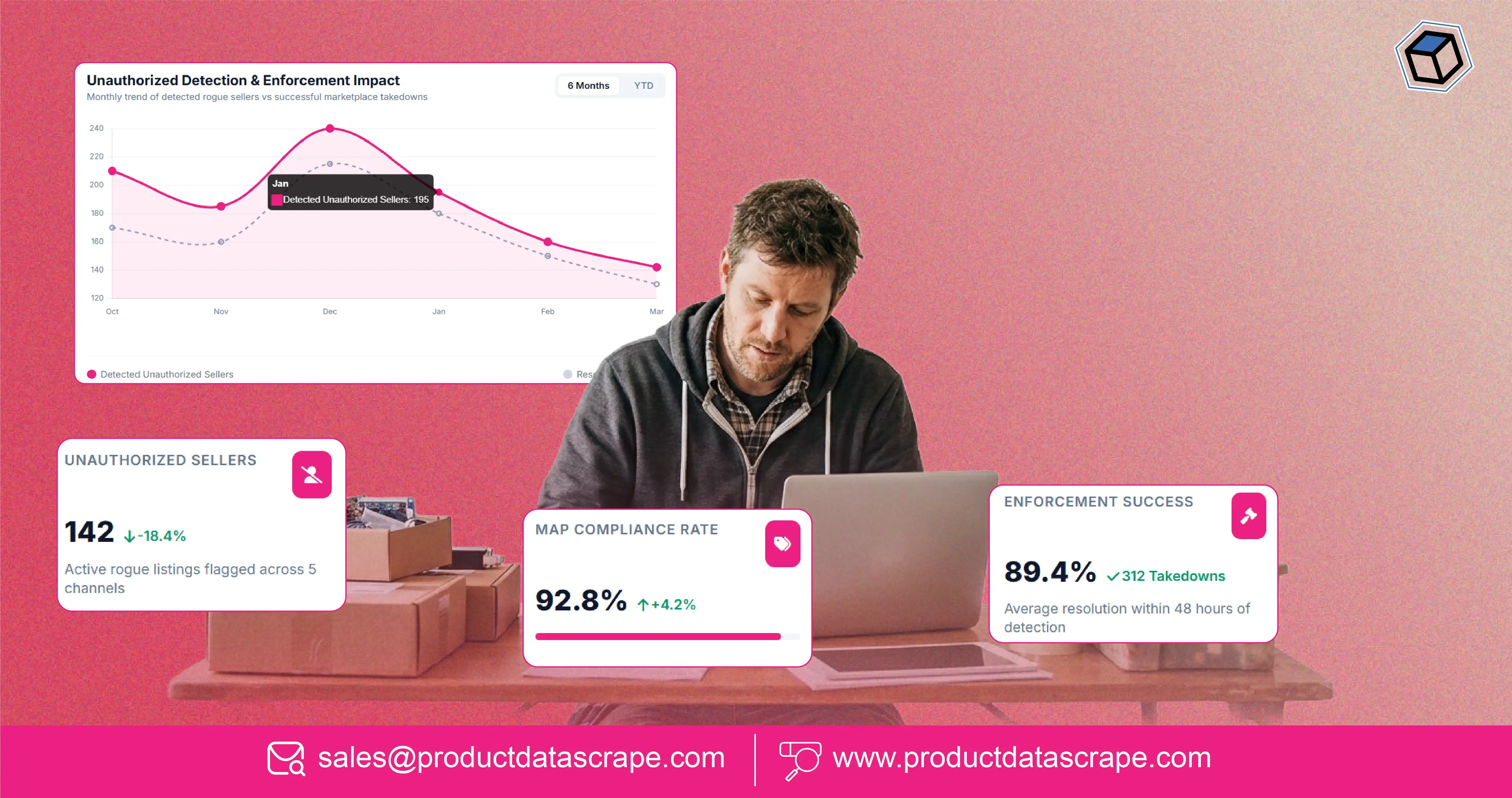
Brand protection has become one of the biggest priorities for manufacturers, distributors, and retailers selling through online marketplaces. As marketplaces continue expanding, unauthorized sellers can quickly list products without approval, creating pricing inconsistencies, damaging customer trust, and increasing counterfeit risks. Businesses need continuous marketplace visibility to identify these sellers before they negatively impact revenue and brand reputation.
Implementing Unauthorized Seller Detection enables companies to monitor product listings, compare seller activities, identify pricing violations, and detect unauthorized distribution channels in real time. Combined with Marketplace selling intelligence, businesses gain actionable insights into seller behavior, inventory movements, competitive pricing, and marketplace compliance. These insights allow brands to take proactive enforcement actions while improving pricing consistency and customer satisfaction.
This guide explains how automated marketplace monitoring supports brand protection, reduces operational risks, and helps organizations maintain control over their products across major eCommerce platforms. It also explores practical strategies, industry data, and emerging trends shaping marketplace intelligence between 2020 and 2026.
How Can Brands Gain Complete Visibility Across Online Marketplaces?
One of the biggest challenges brands face is identifying who is actually selling their products. Thousands of new marketplace listings appear every day across Amazon, Flipkart, Walmart Marketplace, and other online channels. Without continuous monitoring, unauthorized sellers can remain undetected for months.
Using Amazon & Flipkart Unauthorized Seller Monitoring, businesses receive continuous updates whenever new sellers appear, pricing changes occur, or unauthorized listings become active. Combined with Flipkart product data scraping, organizations can collect accurate product information, seller details, ratings, inventory availability, pricing history, promotional offers, and fulfillment information from marketplace listings.
Instead of manually reviewing thousands of listings, automated monitoring delivers actionable intelligence within minutes. This enables compliance teams to prioritize enforcement and reduce manual effort.
Benefits include:
- Faster seller identification
- Improved pricing consistency
- Better MAP policy enforcement
- Counterfeit detection
- Marketplace transparency
- Reduced revenue leakage
- Improved customer confidence
Marketplace Monitoring Trends (2020–2026)
| Year |
Brands Using Automated Monitoring |
Average Unauthorized Listings Detected Monthly |
| 2020 |
34% |
380 |
| 2021 |
41% |
470 |
| 2022 |
50% |
590 |
| 2023 |
59% |
710 |
| 2024 |
66% |
860 |
| 2025 |
72% |
980 |
| 2026* |
78% |
1,120 |
*Projected industry estimates.
Organizations adopting automated monitoring consistently reduce investigation time while improving marketplace compliance. Instead of reacting to violations after customer complaints, businesses can identify suspicious sellers early and initiate corrective actions before pricing and brand perception are affected.
Why Is Continuous Marketplace Visibility Essential for Long-Term Brand Success?
Unauthorized marketplace activity rarely occurs in isolation. Pricing violations, counterfeit products, duplicate listings, unauthorized distributors, and inconsistent product information often appear together. Without continuous visibility, these issues grow rapidly and become increasingly difficult to manage.
Implementing Marketplace Seller Monitoring for Brand Protection allows businesses to build a centralized view of marketplace activity. Every seller, listing update, inventory change, and pricing adjustment becomes measurable. This helps compliance teams distinguish authorized partners from suspicious sellers while improving enforcement decisions.
Continuous monitoring also strengthens collaboration between sales, legal, compliance, and marketplace management teams. Instead of relying on periodic audits, organizations receive near real-time intelligence that supports faster decision-making and reduces operational risks.
Key advantages include:
- Early detection of policy violations.
- Improved distributor accountability.
- Better inventory transparency.
- Faster counterfeit identification.
- Stronger pricing governance.
- Higher marketplace compliance.
- Better customer experience.
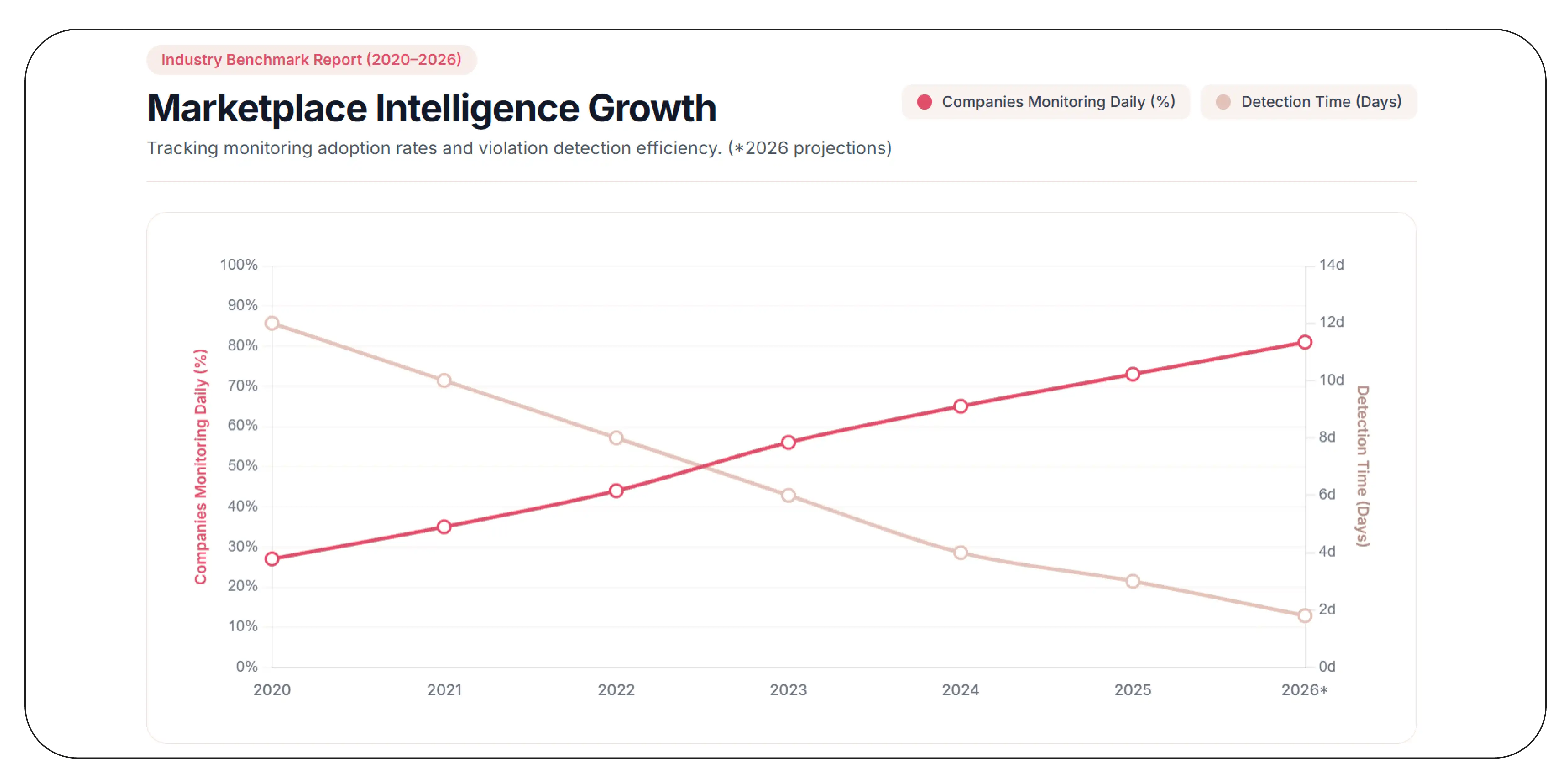
Marketplace Intelligence Growth (2020–2026)
| Year |
Companies Monitoring Sellers Daily |
Average Time to Detect Violations |
| 2020 |
27% |
12 days |
| 2021 |
35% |
10 days |
| 2022 |
44% |
8 days |
| 2023 |
56% |
6 days |
| 2024 |
65% |
4 days |
| 2025 |
73% |
3 days |
| 2026* |
81% |
Less than 2 days |
*Projected industry estimates.
As marketplace ecosystems become increasingly competitive, brands that invest in intelligent seller monitoring gain stronger control over pricing, distribution, customer experience, and long-term marketplace integrity. Automated insights also support faster enforcement while minimizing revenue loss from unauthorized marketplace activities.
How Can Brands Respond Faster to Unauthorized Marketplace Activity?
Unauthorized sellers can damage a brand long before customers notice a problem. They often undercut pricing, sell products through unofficial channels, or distribute counterfeit goods that reduce customer confidence. Manual reviews are too slow to keep pace with thousands of daily listing updates. Automated monitoring gives brands the speed needed to identify violations and respond immediately.
With Amazon Unauthorized Seller Monitoring, businesses receive alerts when new sellers appear, existing sellers violate pricing policies, or suspicious listings gain traction. This continuous visibility enables legal, compliance, and marketplace teams to investigate issues before they spread across multiple regions. When organizations move quickly, they reduce customer complaints, protect authorized partners, and preserve marketplace credibility.
Effective monitoring also supports the broader goal to Protect your brand by identifying recurring seller behavior, analyzing historical pricing patterns, and documenting evidence for enforcement actions. Instead of reacting after revenue declines, companies can proactively remove unauthorized listings and maintain channel discipline.
Best practices for faster enforcement include:
- Monitor marketplace listings continuously.
- Track seller pricing history.
- Verify seller authorization status.
- Identify duplicate or suspicious listings.
- Document violations with supporting data.
- Escalate repeated offenders promptly.
- Review compliance reports regularly.
Response Efficiency Trends (2020–2026)
| Year |
Average Response Time |
Brands Using Automated Alerts |
| 2020 |
9 Days |
32% |
| 2021 |
8 Days |
40% |
| 2022 |
7 Days |
49% |
| 2023 |
5 Days |
58% |
| 2024 |
4 Days |
67% |
| 2025 |
3 Days |
75% |
| 2026* |
Less than 2 Days |
83% |
*Projected industry estimates.
Organizations that automate seller monitoring consistently resolve marketplace violations faster, improve compliance, and reduce long-term reputational risks.
What Data Helps Businesses Strengthen Marketplace Governance?
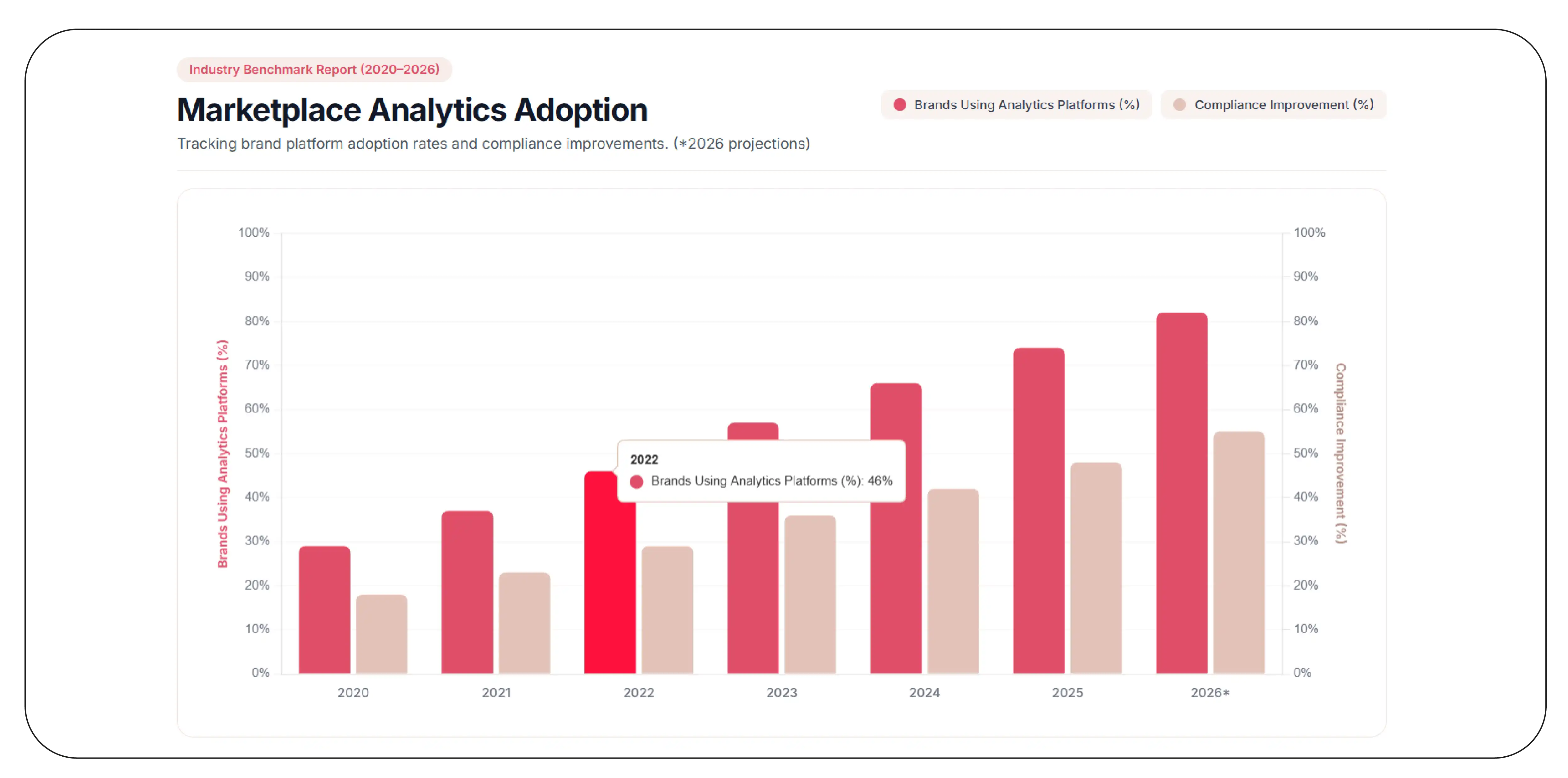
Successful marketplace governance depends on reliable data rather than assumptions. Brands need detailed visibility into seller behavior, pricing trends, inventory movements, customer ratings, promotional activity, and distribution channels. Consolidating these insights into a single analytics framework enables better decision-making and more effective enforcement.
Modern Marketplace Brand Protection Analytics combines seller intelligence, pricing data, product availability, customer feedback, and listing history to create a complete marketplace overview. These insights help identify recurring policy violations, emerging counterfeit risks, and unusual selling behavior before they impact revenue.
Integrating Unauthorized Seller Detection within an analytics platform further strengthens governance by automatically identifying unauthorized sellers, highlighting pricing inconsistencies, and prioritizing high-risk violations. This allows compliance teams to focus resources where they generate the greatest business value.
Valuable marketplace metrics include:
- Seller growth trends
- Price consistency scores
- Listing duplication rates
- Inventory fluctuations
- Product review sentiment
- Regional seller distribution
- Compliance performance indicators
Marketplace Analytics Adoption (2020–2026)
| Year |
Brands Using Analytics Platforms |
Average Compliance Improvement |
| 2020 |
29% |
18% |
| 2021 |
37% |
23% |
| 2022 |
46% |
29% |
| 2023 |
57% |
36% |
| 2024 |
66% |
42% |
| 2025 |
74% |
48% |
| 2026* |
82% |
55% |
*Projected industry estimates.
Organizations adopting comprehensive marketplace analytics gain greater transparency, improve operational efficiency, and strengthen long-term brand governance across multiple online sales channels.
How Does Seller Intelligence Improve Competitive Decision-Making?
Marketplace competition changes every day. New sellers enter the market, pricing strategies evolve, inventory levels fluctuate, and promotional campaigns influence customer purchasing decisions. Brands that lack timely intelligence often struggle to respond before competitors gain an advantage.
Using Amazon Seller Intelligence, businesses can monitor seller performance, compare pricing strategies, evaluate fulfillment methods, analyze inventory trends, and identify emerging competitors. These insights support smarter pricing decisions, stronger distributor management, and more effective marketplace planning.
Seller intelligence also reveals long-term patterns that may not be obvious through manual observation. Brands can identify seasonal pricing behavior, recurring unauthorized sellers, high-performing regions, and product categories with the greatest compliance risks. These insights support better forecasting while helping teams optimize marketplace strategies.
Key insights generated through seller intelligence include:
- Seller performance rankings.
- Competitive pricing benchmarks.
- Inventory availability trends.
- Buy Box participation analysis.
- Promotional activity tracking.
- Regional marketplace performance.
- Historical seller behavior.
Seller Intelligence Adoption (2020–2026)
| Year |
Companies Using Seller Intelligence |
Average Pricing Accuracy |
| 2020 |
31% |
74% |
| 2021 |
39% |
78% |
| 2022 |
48% |
82% |
| 2023 |
58% |
86% |
| 2024 |
67% |
90% |
| 2025 |
75% |
93% |
| 2026* |
83% |
96% |
*Projected industry estimates.
As online marketplaces continue expanding, organizations that leverage seller intelligence are better equipped to anticipate market changes, maintain pricing discipline, improve channel performance, and make faster, data-driven business decisions.
How Can Businesses Build a Future-Ready Marketplace Compliance Strategy?
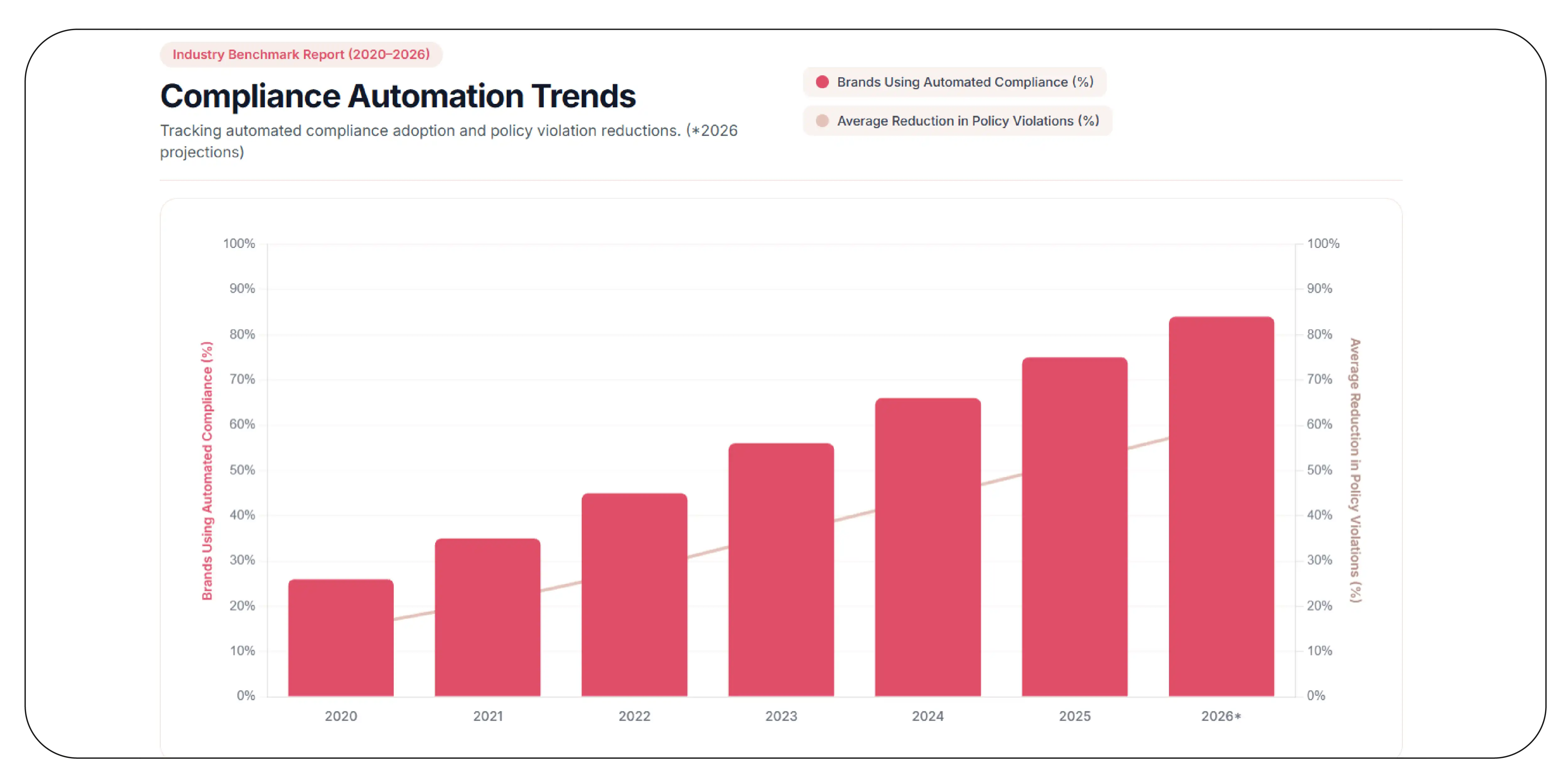
Long-term marketplace success requires more than occasional audits. Brands need continuous monitoring, accurate seller intelligence, and scalable compliance workflows that adapt to changing marketplace conditions. Automated data collection provides the visibility required to identify policy violations before they affect pricing, customer trust, or authorized distribution networks.
Using Flipkart Seller Data Scraping, organizations can capture seller profiles, product listings, pricing updates, stock availability, ratings, reviews, and promotional activity from marketplace pages. When combined with Unauthorized Seller Detection, compliance teams can rapidly identify unauthorized listings, monitor recurring offenders, and maintain a consistent enforcement process across multiple product categories.
An integrated compliance strategy also improves collaboration between marketplace managers, legal teams, sales departments, and channel partners. Instead of reacting to customer complaints, organizations gain proactive insights that support faster investigations and more informed business decisions.
Steps to strengthen marketplace compliance:
- Automate seller monitoring.
- Track pricing changes daily.
- Verify authorized distributors.
- Monitor listing modifications.
- Analyze seller performance trends.
- Generate compliance reports.
- Review enforcement outcomes regularly.
Compliance Automation Trends (2020–2026)
| Year |
Brands Using Automated Compliance |
Average Reduction in Policy Violations |
| 2020 |
26% |
15% |
| 2021 |
35% |
21% |
| 2022 |
45% |
28% |
| 2023 |
56% |
36% |
| 2024 |
66% |
44% |
| 2025 |
75% |
52% |
| 2026* |
84% |
60% |
*Projected industry estimates.
A proactive compliance strategy enables businesses to improve operational efficiency, strengthen marketplace governance, and maintain consistent brand standards as online commerce continues to expand.
Why Choose Product Data Scrape?
Modern brands require accurate marketplace intelligence to stay ahead of unauthorized sellers and pricing violations. Product Data Scrape delivers automated data extraction, real-time seller monitoring, marketplace analytics, pricing intelligence, inventory tracking, and compliance insights across major eCommerce platforms. With advanced Unauthorized seller detection, businesses can identify suspicious sellers quickly, reduce counterfeit risks, monitor pricing consistency, and improve channel compliance. Scalable data collection and customized reporting empower organizations to make informed decisions, protect brand reputation, and optimize marketplace performance through reliable, actionable intelligence tailored to evolving business needs.
Conclusion
Online marketplaces continue to grow rapidly, making proactive monitoring essential for every brand. Automated intelligence enables businesses to identify unauthorized sellers, maintain pricing consistency, improve compliance, and protect customer trust before violations escalate. Combining Amazon product data scraping with Unauthorized Seller Detection creates a powerful foundation for long-term marketplace governance and competitive advantage.
Product Data Scrape helps organizations transform marketplace data into actionable insights that strengthen brand protection strategies and improve operational efficiency.
Ready to safeguard your brand across online marketplaces? Contact Product Data Scrape today to implement advanced seller monitoring, automated compliance, and real-time marketplace intelligence for sustainable business growth.
FAQs
1. What is unauthorized seller monitoring?
Unauthorized seller monitoring continuously tracks online marketplaces to identify sellers offering products without authorization. It helps brands maintain pricing consistency, reduce counterfeit risks, improve compliance, and protect long-term marketplace reputation.
2. Why is marketplace seller monitoring important?
Marketplace seller monitoring enables businesses to detect pricing violations, unauthorized distributors, duplicate listings, and suspicious seller activity early. Faster detection minimizes revenue loss while strengthening customer trust and brand integrity.
3. How does seller intelligence improve marketplace decisions?
Seller intelligence provides insights into pricing trends, inventory availability, seller performance, fulfillment methods, and promotional activity. These insights help businesses optimize pricing strategies and improve marketplace competitiveness through informed decisions.
4. Can automated marketplace monitoring reduce compliance risks?
Yes. Automated monitoring identifies policy violations in near real time, allowing compliance teams to investigate quickly, document evidence, enforce marketplace policies, and reduce recurring unauthorized seller activity across multiple platforms.
5. How can businesses implement an effective seller monitoring solution?
Businesses can implement automated monitoring by partnering with Product Data Scrape, integrating marketplace data collection, analyzing seller behavior, tracking pricing changes, and generating actionable compliance reports for continuous brand protection.


 Singapore
 EMAIL
EMAIL
 PHONE
PHONE












.webp)