Quick Overview
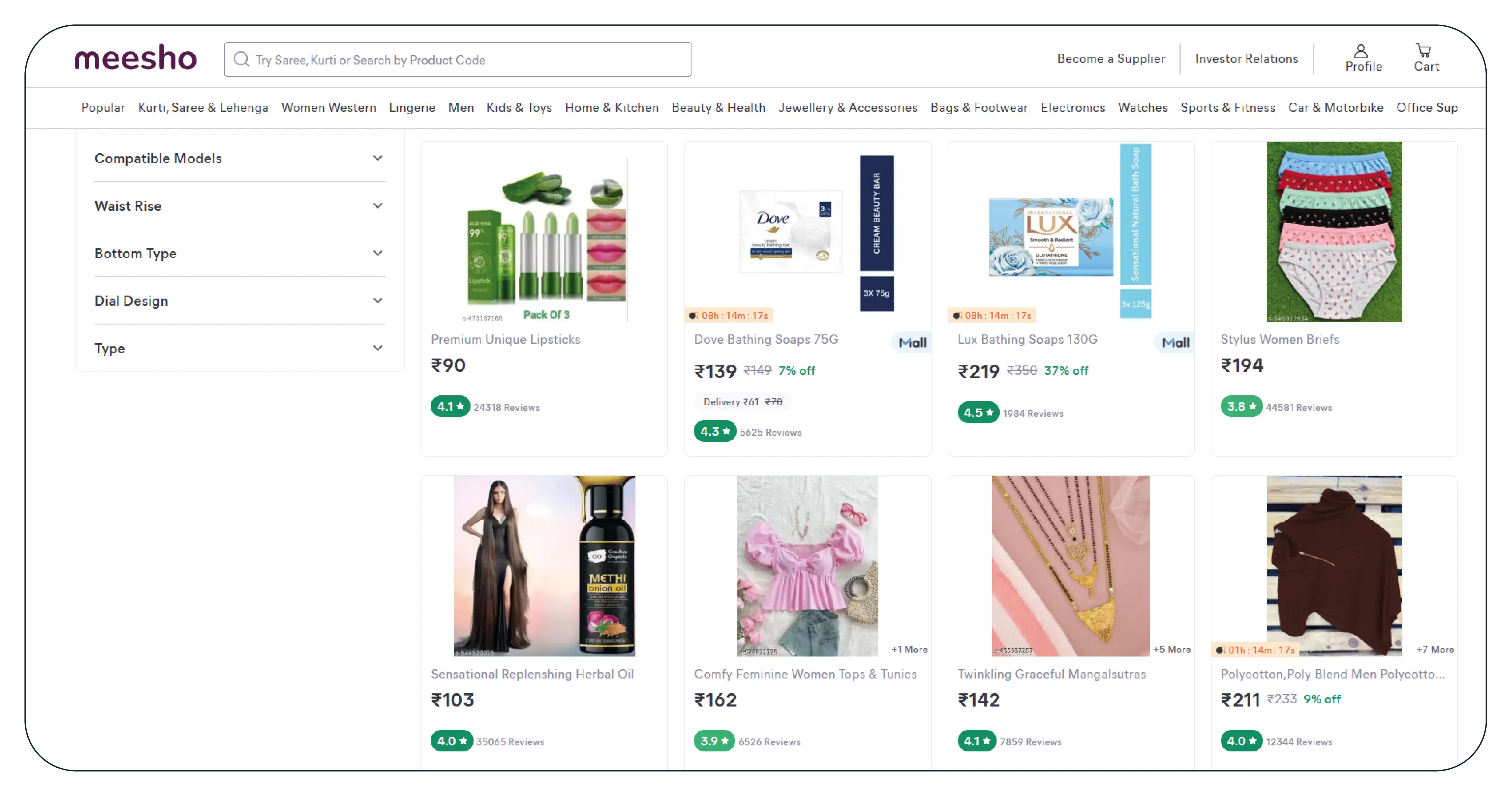
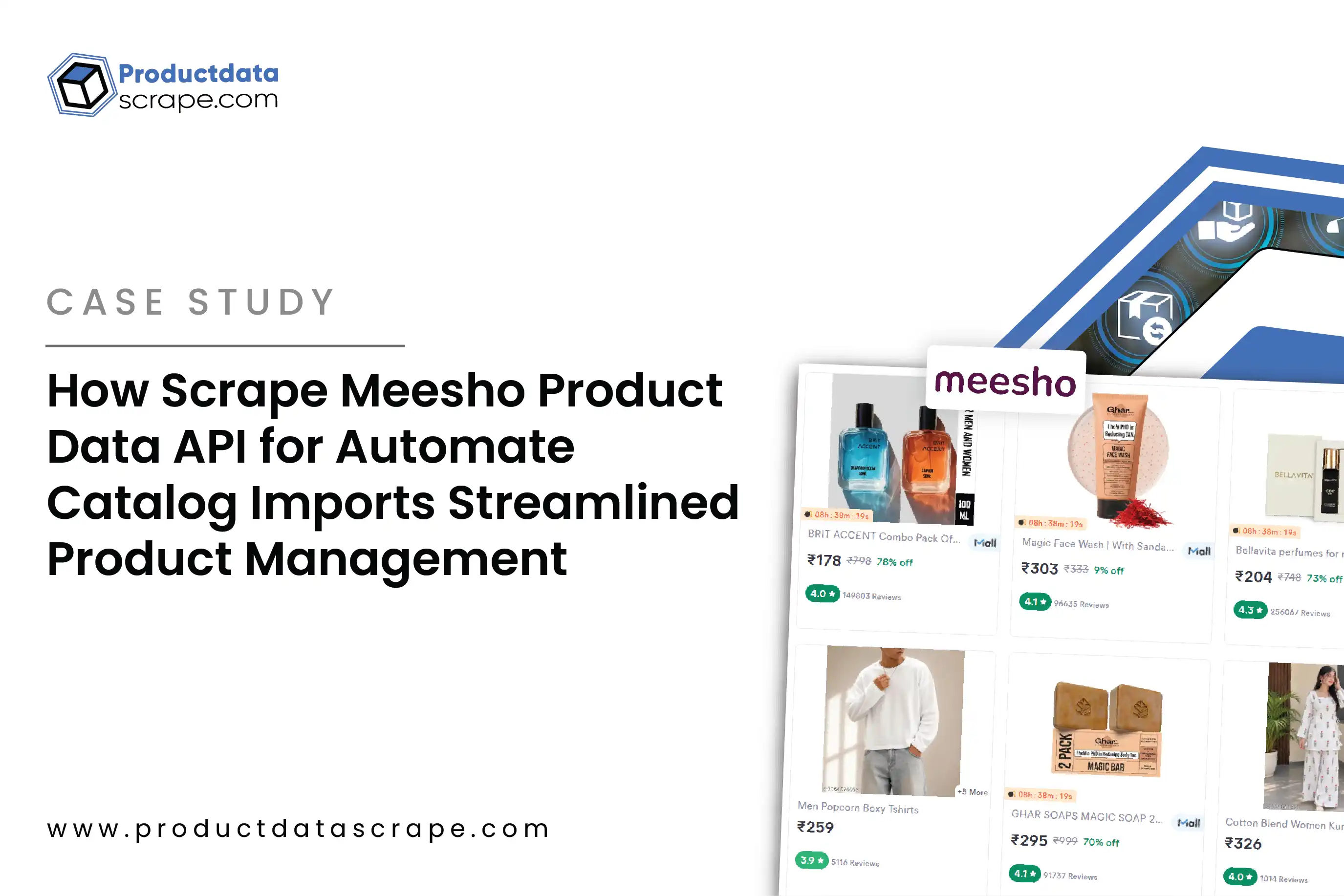
A growing e-commerce business partnered with Product Data Scrape to simplify catalog imports and maintain structured product information from Meesho. The project used Scrape Meesho Product Data API for Automate Catalog Imports to collect product names, categories, prices, brands, images, ratings, availability, and seller information in a consistent format. The workflow was supported by Meesho Scraping API for India, enabling scalable product data collection and automated processing. The project focused on reducing manual catalog work, improving data consistency, and creating an efficient pipeline for recurring product updates across categories such as fashion, electronics, beauty, home, and kitchen.
Client Name / Industry: E-commerce Retailer / Online Retail
Service / Duration: Meesho Product Data Collection & Catalog Automation / [Project Duration]
Key Impact Metrics: [X%] reduction in manual catalog effort | [X%] faster catalog processing | [X%] improvement in product-field completeness
The Client
The client was an e-commerce retailer managing a growing catalog sourced from multiple online marketplaces and suppliers. Meesho represented an important source for discovering products across fashion, beauty, home essentials, electronics accessories, kitchenware, and lifestyle categories.
Its product research covered items such as women's kurtis, sarees, handbags, jewellery, phone accessories, kitchen organizers, storage products, beauty items, and household essentials. Brands and product references could include boAt, Noise, Mamaearth, Prestige, Milton, and other marketplace-listed or seller-specific brands.
As the catalog expanded, manually collecting product information became increasingly difficult. Product names, prices, images, discounts, ratings, seller information, and availability could change frequently. Teams had to repeatedly review listings and transfer information into internal catalog systems.
The client therefore needed a scalable Meesho Product Data Extraction API workflow that could support recurring catalog collection without creating additional manual workload. The project also required reliable Price scraping so product prices and promotional information could be incorporated into catalog and competitive analysis workflows.
Before the partnership, catalog teams faced fragmented data, inconsistent product descriptions, duplicate listings, and delays in updating product information. A structured automation framework was required to make catalog imports faster, more consistent, and easier to scale.
Goals & Objectives
The project combined business priorities with technical requirements to create a scalable catalog automation workflow. The client wanted to move beyond manual product collection and establish a repeatable process for importing structured marketplace information.
Scale product catalog collection as the number of SKUs increased.
Reduce the time required to collect and prepare marketplace product information.
Improve accuracy across product names, categories, prices, brands, images, and availability.
Support faster catalog refreshes.
Reduce repetitive manual data-entry tasks.
Create a consistent structure for products across multiple categories.
Automate product discovery and extraction.
Standardize product attributes before catalog import.
Integrate collected data into the client's internal catalog workflow.
Support recurring data refreshes.
Capture seller and marketplace attributes for competitive analysis.
Enable Meesho Seller Product Scraper workflows for seller-level product intelligence.
Build a scalable Meesho eCommerce Website Data Extraction API pipeline that could accommodate increasing product volumes.
Product-field completeness rate.
Number of products processed per collection cycle.
Catalog processing turnaround time.
Duplicate-record reduction percentage.
Successful data-validation rate.
Product update frequency.
Manual catalog-processing hours reduced.
Percentage of records successfully integrated into downstream systems.
The Core Challenge
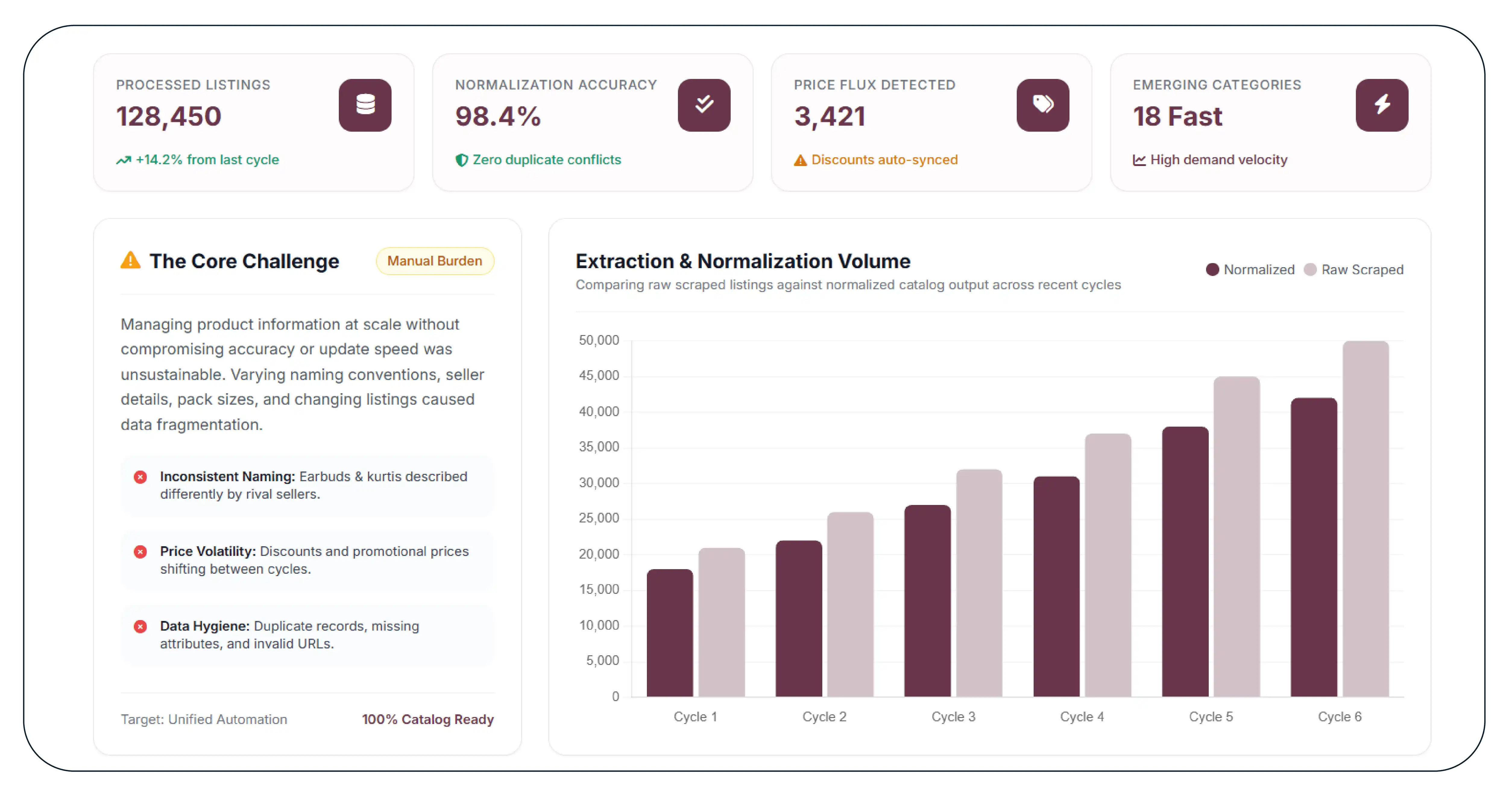
The client's biggest challenge was managing product information at scale without compromising accuracy or update speed. As Meesho listings changed, manually checking every product created a significant operational burden.
The business needed a dependable Meesho Marketplace Scraping API workflow that could collect product information from targeted categories while maintaining a consistent data structure. Listings could contain different naming conventions, seller details, product descriptions, pack sizes, discounts, ratings, and image formats.
For example, two sellers could offer similar products such as wireless earbuds, women's kurtis, storage boxes, or kitchen organizers but describe them differently. Without normalization, these listings could appear as unrelated products even when their attributes were comparable.
Price changes created another challenge. Product discounts and promotional prices could change between collection cycles, making outdated catalog records less useful for pricing and assortment decisions.
The client also had to deal with duplicate records, incomplete attributes, inconsistent brand names, invalid URLs, and changing listing structures. Manual validation increased processing time and made it difficult to maintain a consistent catalog.
The absence of an automated workflow also limited the ability to identify emerging categories and fast-moving product opportunities. The client therefore required a solution capable of combining automated extraction, data cleaning, validation, categorization, and catalog-ready formatting into one repeatable process.
Our Solution
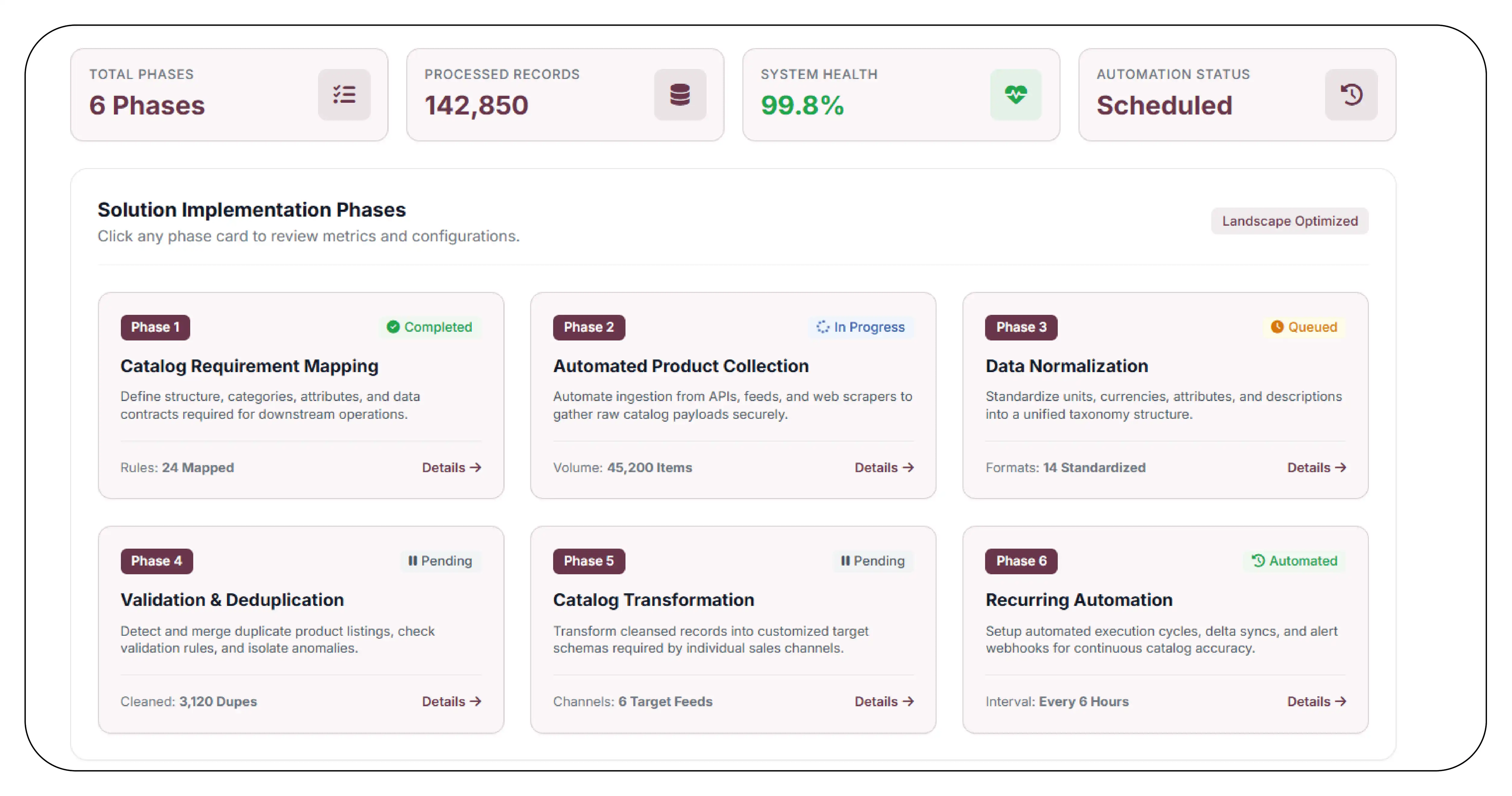
Product Data Scrape implemented a phased product-data automation framework designed to simplify Meesho catalog imports and create a scalable data pipeline.
Phase 1 – Catalog Requirement Mapping
The first phase established the client's required fields and product taxonomy. Attributes included product name, category, subcategory, brand, SKU or product ID, seller name, price, discount, rating, review count, availability, product description, image URLs, product URL, and other accessible attributes. Product categories were mapped across areas such as women's fashion, men's clothing, footwear, beauty, electronics, home essentials, kitchen products, toys, and accessories. Examples used for category mapping included wireless earphones from boAt and Noise, beauty products from Mamaearth, kitchen products from Prestige and Milton, and fashion products from brands such as Allen Solly where available.
Phase 2 – Automated Product Collection
Automated extraction workflows were configured to collect product information from targeted Meesho listings. The workflow captured structured product-level information while minimizing repetitive manual browsing and copying. This created a repeatable mechanism for collecting large volumes of catalog information according to the client's defined requirements.
Phase 3 – Data Normalization
Collected records were standardized to create a consistent catalog structure. Product names, categories, brands, prices, pack sizes, ratings, and seller information were normalized where possible. For example, variations of wireless earphones could be categorized consistently based on product type, while fashion products could be organized according to category, material, style, size, and other available attributes.
Phase 4 – Validation & Deduplication
Automated quality checks were applied to identify duplicate products, incomplete records, missing values, invalid URLs, and inconsistent fields. Records were then validated against predefined rules before being prepared for catalog import.
Phase 5 – Catalog Transformation
The structured data was converted into an import-ready format compatible with the client's catalog requirements. Product attributes were organized into standardized columns and formats to simplify downstream integration.
Phase 6 – Recurring Automation
The final workflow supported recurring collection cycles so that catalog information could be refreshed at defined intervals. This allowed the client to maintain more current product information while reducing dependency on manual catalog maintenance. The complete framework enabled Meesho Automated Catalog Scraping API workflows to support scalable collection, processing, validation, and delivery.
Results & Key Metrics
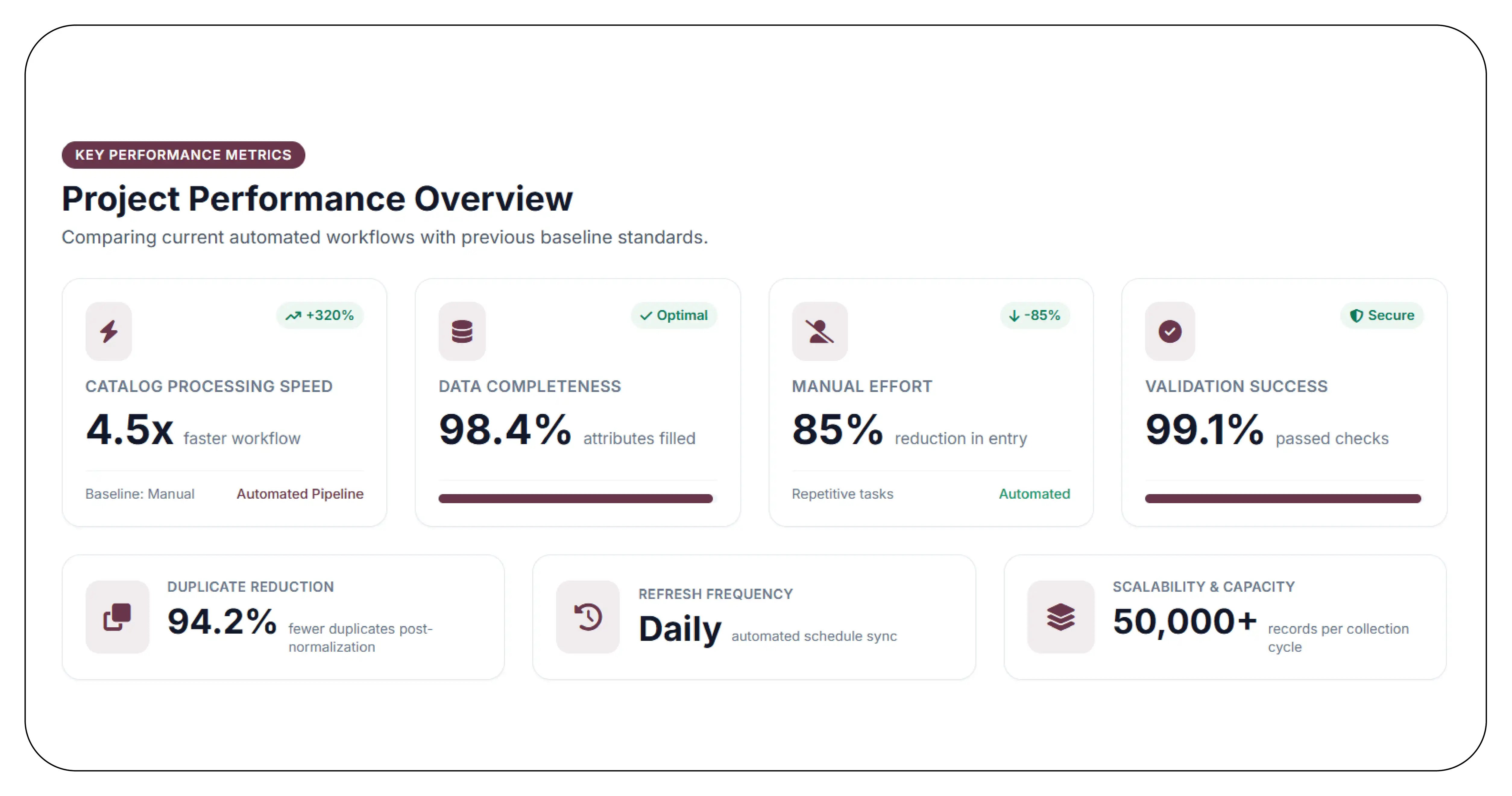
The project established measurable improvements across catalog processing, data quality, and operational efficiency.
Catalog Processing Speed: [X%] faster processing compared with the previous manual workflow.
Data Completeness: [X%] of required product attributes populated.
Manual Effort: [X%] reduction in repetitive catalog-entry activities.
Validation Success: [X%] of collected records passed predefined quality checks.
Duplicate Reduction: [X%] fewer duplicate records after normalization.
Refresh Frequency: Catalog updates moved to a [daily/weekly/custom] automated schedule.
Scalability: [X]+ product records processed per defined collection cycle.
Results Narrative
The automated workflow gave the client a more structured way to manage marketplace product information. Instead of manually opening listings and copying details into spreadsheets, the team received standardized records prepared for catalog processing.
The implementation of Meesho Seller Data Scraping API workflows also created additional visibility into seller-level information, including seller names, product listings, ratings, availability, and other accessible attributes.
The project supported faster catalog updates and improved consistency across categories. Product teams could work with standardized information for items such as fashion products, kitchen organizers, beauty products, phone accessories, and electronics.
The workflow also reduced repetitive operational tasks and created a foundation for future expansion into additional categories and marketplaces.
What Made Product Data Scrape Different
Product Data Scrape focused on creating an end-to-end catalog workflow rather than simply delivering raw marketplace information. The solution combined automated extraction, normalization, validation, deduplication, categorization, and structured delivery.
The framework supported Meesho Product Data Scraper workflows designed around the client's catalog fields and business requirements. Automated processing helped reduce repetitive operations, while validation rules improved consistency before data reached downstream systems.
The solution could also be adapted to different product categories, collection frequencies, and output formats. This flexibility enabled the client to scale from selected product groups toward broader catalog coverage without redesigning the entire workflow.
The resulting system made Scrape Meesho Product Data API for Automate Catalog Imports a repeatable operational process rather than a one-time data collection exercise.
Client's Testimonial
"The structured marketplace data significantly simplified our catalog workflow. Instead of spending extensive time manually collecting product information, our team could work with organized product records and focus on catalog decisions, validation, and merchandising activities. The recurring workflow also gave us a practical way to keep product information refreshed."
— E-commerce Catalog & Merchandising Manager, Online Retail Company
The project also supported Scraping Fast-Selling Categories From Meesho, giving the client a framework that could be extended to identify product categories requiring closer monitoring based on defined business signals.
Conclusion
The project demonstrated how automated marketplace data collection can simplify catalog operations for growing e-commerce businesses. By combining extraction, normalization, validation, deduplication, and structured delivery, Product Data Scrape helped create a scalable workflow for managing Meesho product information.
The approach can also support broader Catalog Enrichment Services, enabling businesses to supplement existing product records with attributes such as descriptions, images, brands, prices, ratings, sellers, availability, and product URLs.
With recurring collection and automated processing, the client can expand its catalog coverage while reducing repetitive manual work. Scrape Meesho Product Data API for Automate Catalog Imports provides a structured foundation for future marketplace monitoring, product intelligence, pricing analysis, and catalog expansion.
FAQs
1. What product information can be collected from Meesho?
Depending on source availability, businesses can collect product names, categories, brands, prices, discounts, ratings, reviews, seller information, images, availability, product URLs, SKUs, and other accessible attributes.
2. Can Meesho product data support automated catalog imports?
Yes. Structured product records can be transformed into predefined formats and integrated into internal catalog systems, reducing repetitive manual entry and helping teams maintain consistent product information.
3. Which categories can businesses monitor?
Common categories include fashion, beauty, electronics, home essentials, kitchenware, footwear, accessories, toys, personal care, and other product segments available through targeted marketplace listings.
4. How frequently can product data be updated?
Collection frequency depends on business requirements. Workflows can be configured for scheduled refreshes, such as daily, weekly, or other defined intervals, subject to source availability and technical requirements.
5. Can the workflow capture seller information?
Yes. Where seller information is publicly accessible, structured workflows can capture relevant seller attributes alongside product information, supporting seller comparison, marketplace intelligence, and product-level analysis.


 Singapore
 EMAIL
EMAIL
 PHONE
PHONE











.webp)