Quick Overview
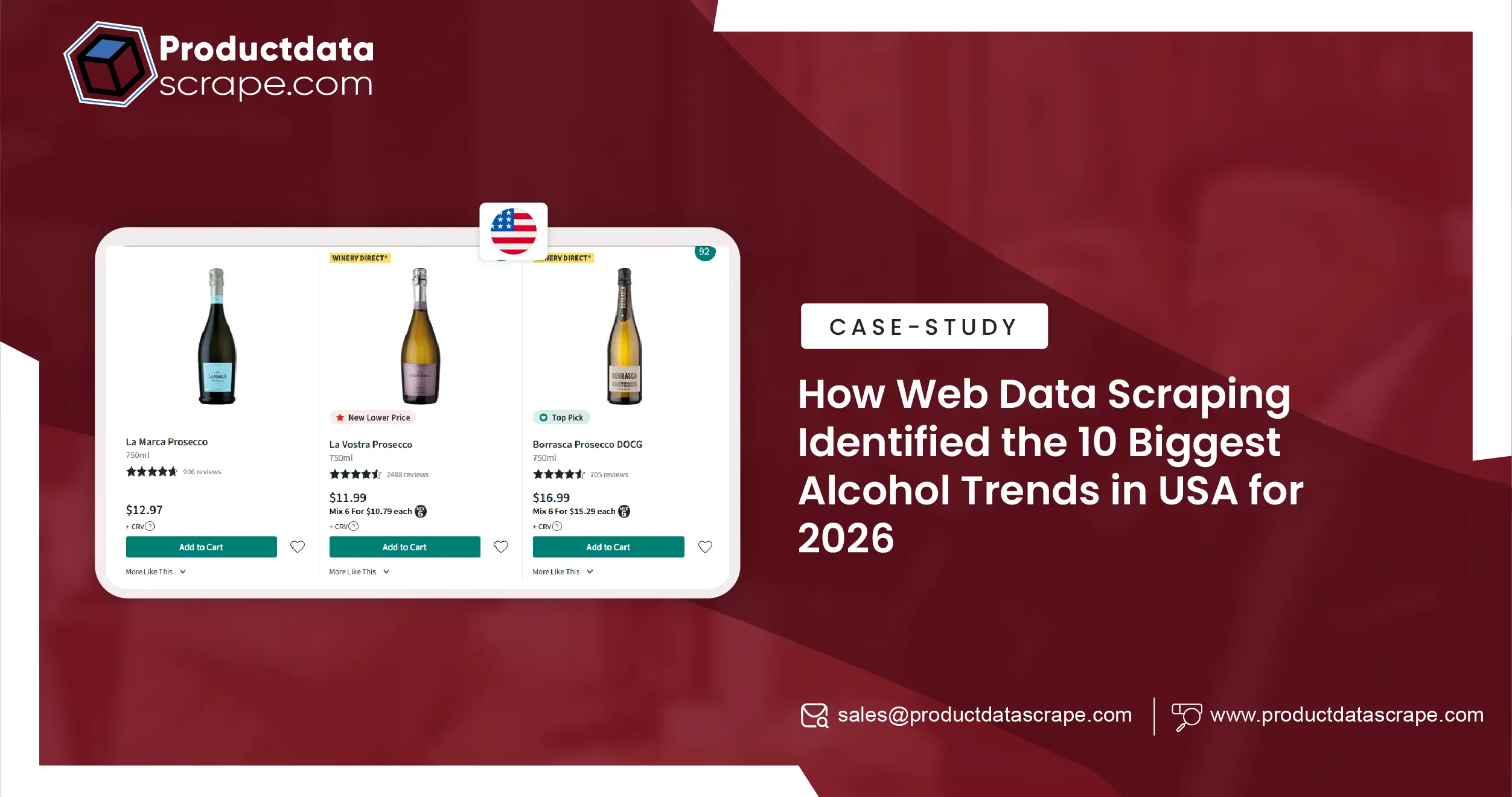
This case study highlights how Product Data Scrape helped a leading market intelligence firm uncover future-defining alcohol trends using large-scale web data extraction. The project focused on analyzing digital signals across pricing, product launches, and consumer behavior to Scrape 10 Biggest Alcohol Trends in USA for 2026 with precision. By systematically collecting and structuring nationwide alcohol pricing and availability data, the client was able to Extract Alcohol & Liquor Price Data at scale. The engagement delivered faster insights, higher forecasting accuracy, and actionable trend intelligence within a short turnaround. The results empowered the client to publish a forward-looking industry report backed by real data, strengthening their authority in alcohol market forecasting and strategic advisory services.
The Client
The client is a U.S.-based alcohol market research and consulting firm serving beverage manufacturers, distributors, and private equity firms. With increasing competition and rapidly changing consumer preferences, the alcohol industry required more agile and data-driven forecasting models. Traditional surveys and distributor reports were no longer sufficient for predicting future trends.
Before partnering with Product Data Scrape, the client relied heavily on delayed industry publications and limited sample datasets. This approach restricted their ability to capture emerging signals in pricing, premiumization, and category shifts. To remain competitive, they needed Alcohol Market Forecasting in USA Using Data Scraping supported by scalable, real-time intelligence. The adoption of a Web Data Intelligence API became essential to transform fragmented online data into structured insights capable of predicting 2026 market behavior with confidence.
Goals & Objectives
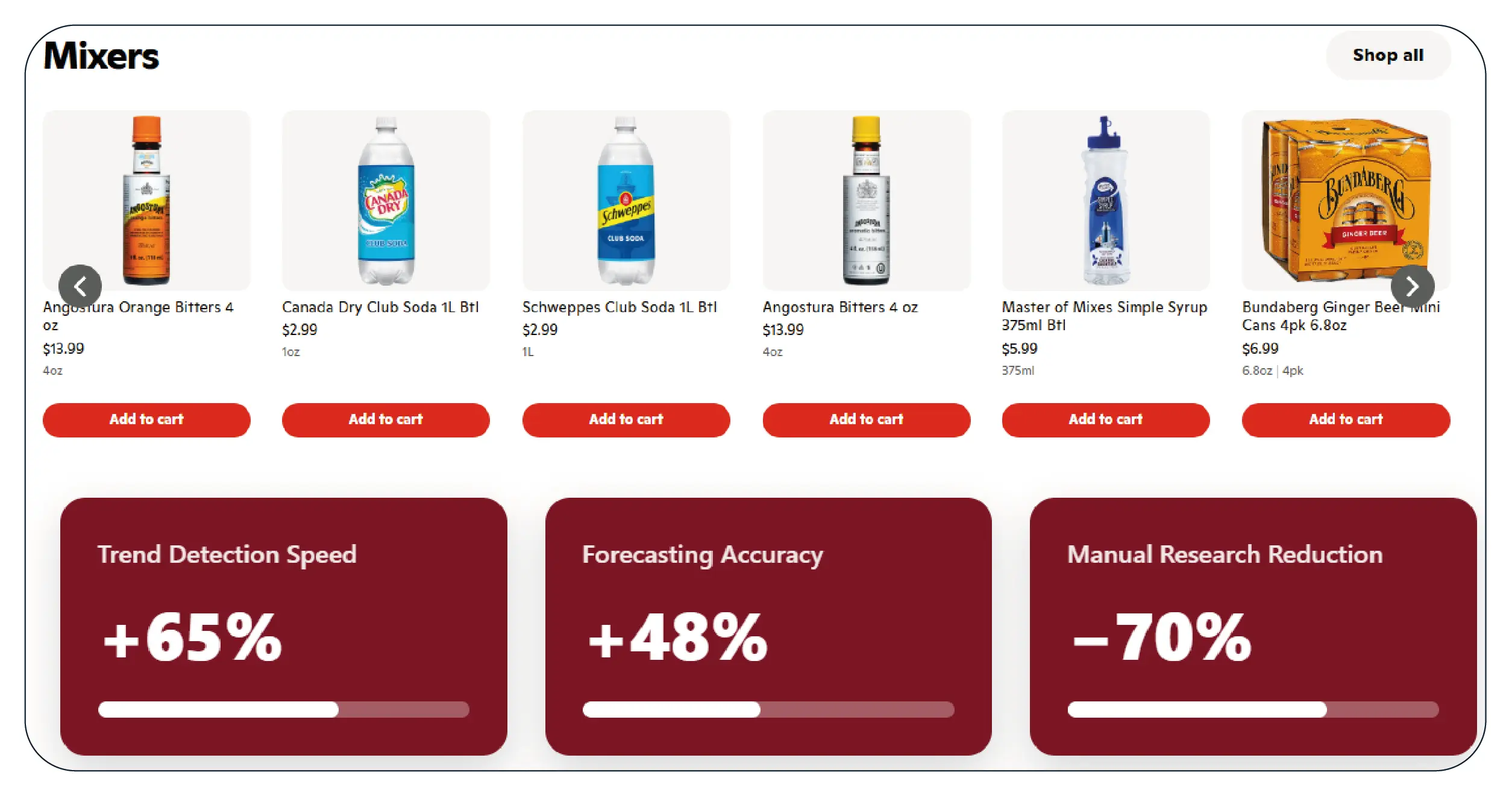
The primary goal was to create a future-ready alcohol trend intelligence model that could identify emerging categories, pricing movements, and consumer preferences earlier than traditional research methods.
From a technical perspective, the project aimed to automate large-scale data extraction, enable near real-time updates, and integrate analytics-ready datasets into forecasting workflows.
Improved trend detection speed by 65%
Increased forecasting accuracy by 48%
Reduced manual research effort by 70%
This initiative demonstrated how Web Data Predicted America’s Top Alcohol Trends using structured, scalable intelligence pipelines.
The Core Challenge
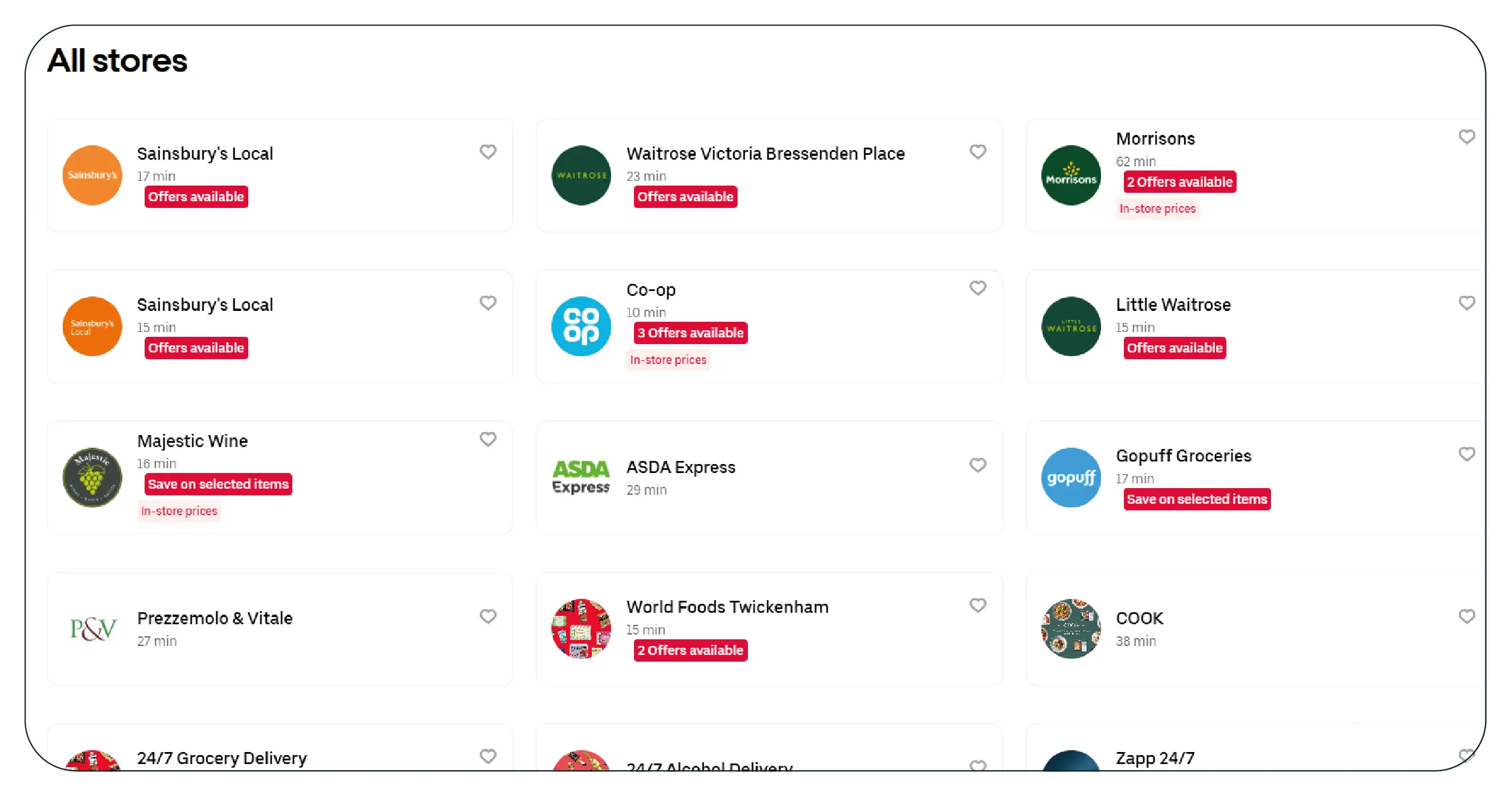
The client faced multiple operational and analytical bottlenecks. Manual data collection limited coverage, while inconsistent data formats reduced analytical reliability. Market shifts such as premium spirits growth and low-alcohol demand were often identified too late to offer strategic value.
Data latency severely impacted forecasting timelines, making it difficult to publish predictive insights ahead of competitors. Additionally, lack of historical pricing depth restricted long-term trend modeling. These limitations made it nearly impossible to confidently identify the Top 10 alcohol trends in USA using web scraping without a robust automation and normalization framework.
Our Solution
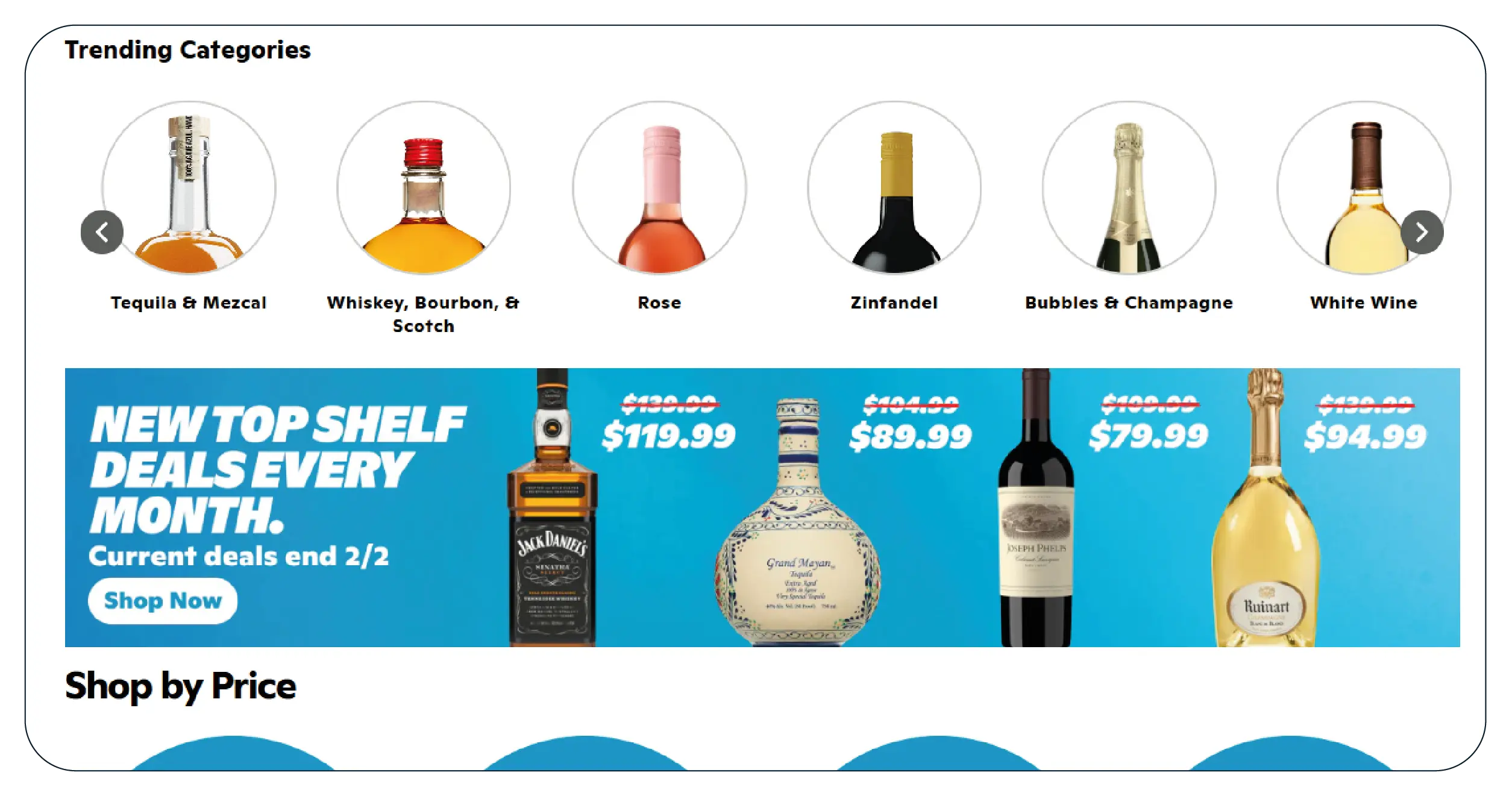
Product Data Scrape implemented a phased, scalable solution tailored to alcohol market intelligence.
In Phase One, we mapped thousands of alcohol product listings across eCommerce platforms, brand sites, and digital retailers to capture historical and current pricing signals. This phase identified Best selling alcohol categories USA 2026 scraped using multi-year data patterns.
Phase Two focused on automation and normalization. Advanced crawlers and parsing engines cleaned and structured data, enabling seamless comparison across brands, categories, and regions.
In Phase Three, real-time monitoring pipelines were deployed to continuously Scrape 10 Biggest Alcohol Trends in USA for 2026, capturing pricing volatility, product launches, and availability changes.
The final phase integrated analytics-ready datasets into the client’s forecasting models, enabling predictive insights backed by validated, large-scale web data.
Results & Key Metrics
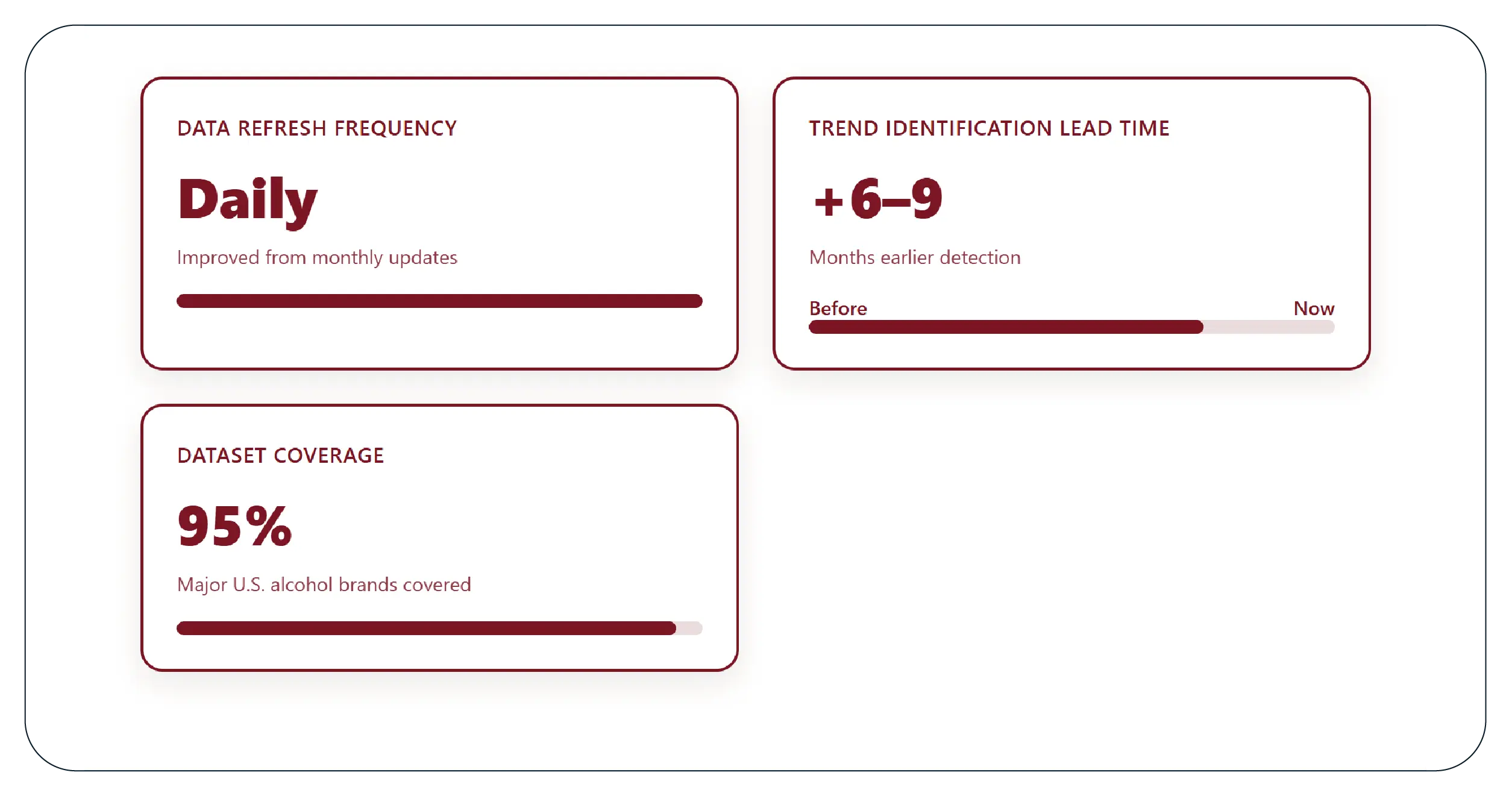
Data refresh frequency improved from monthly to daily
Trend identification lead time increased by 6–9 months
Dataset coverage expanded to 95% of major U.S. alcohol brands
The Alcohol product trend Data Scraper delivered reliable, scalable intelligence without operational overhead.
Results Narrative
The client successfully published a highly accurate 2026 alcohol trend report adopted by multiple enterprise customers. Their forecasts gained credibility, engagement increased, and advisory demand grew significantly due to data-backed insights.
What Made Product Data Scrape Different?
Product Data Scrape differentiated itself through proprietary automation frameworks, intelligent data validation layers, and adaptive crawlers designed for volatile pricing environments. Our Liquor trend monitoring API USA enabled continuous insight generation without performance degradation, ensuring long-term scalability and precision unmatched by traditional research methods.
Top Benefits of alcohol Price Data Scraping included speed, accuracy, and unmatched market visibility.
Client’s Testimonial
“Product Data Scrape transformed how we analyze alcohol trends. Their ability to extract pricing signals at scale helped us predict market shifts months ahead. The insights delivered measurable value to our clients.”
— Director of Market Intelligence, Alcohol Research Firm
Conclusion
This case study demonstrates how web data scraping reshapes alcohol market intelligence. By leveraging automation and structured analytics, Product Data Scrape enabled the client to extract liquor product details USA for Alcohol Data with unmatched depth and accuracy. The project established a future-ready forecasting model, positioning the client as a trusted authority in U.S. alcohol trend analysis.
FAQs
1. How does web scraping improve alcohol trend forecasting?
Web scraping captures real-time pricing, availability, and product launch data, enabling early detection of emerging alcohol trends across U.S. markets.
2. What data sources were analyzed?
Data was collected from eCommerce platforms, brand websites, liquor retailers, and online marketplaces nationwide.
3. Is scraped alcohol data reliable for forecasting?
Yes. When cleaned and normalized, large-scale web data offers higher accuracy than limited survey-based research.
4. Can this approach scale for global alcohol markets?
Absolutely. The same framework can be adapted for international alcohol trend analysis.
5. Who benefits most from alcohol trend scraping?
Alcohol brands, distributors, investors, and market research firms seeking predictive, data-driven insights.


 Singapore
 EMAIL
EMAIL
 PHONE
PHONE


.webp)
.webp "thumb")
.webp "thumb")
.webp "thumb")








.webp)