Quick Overview
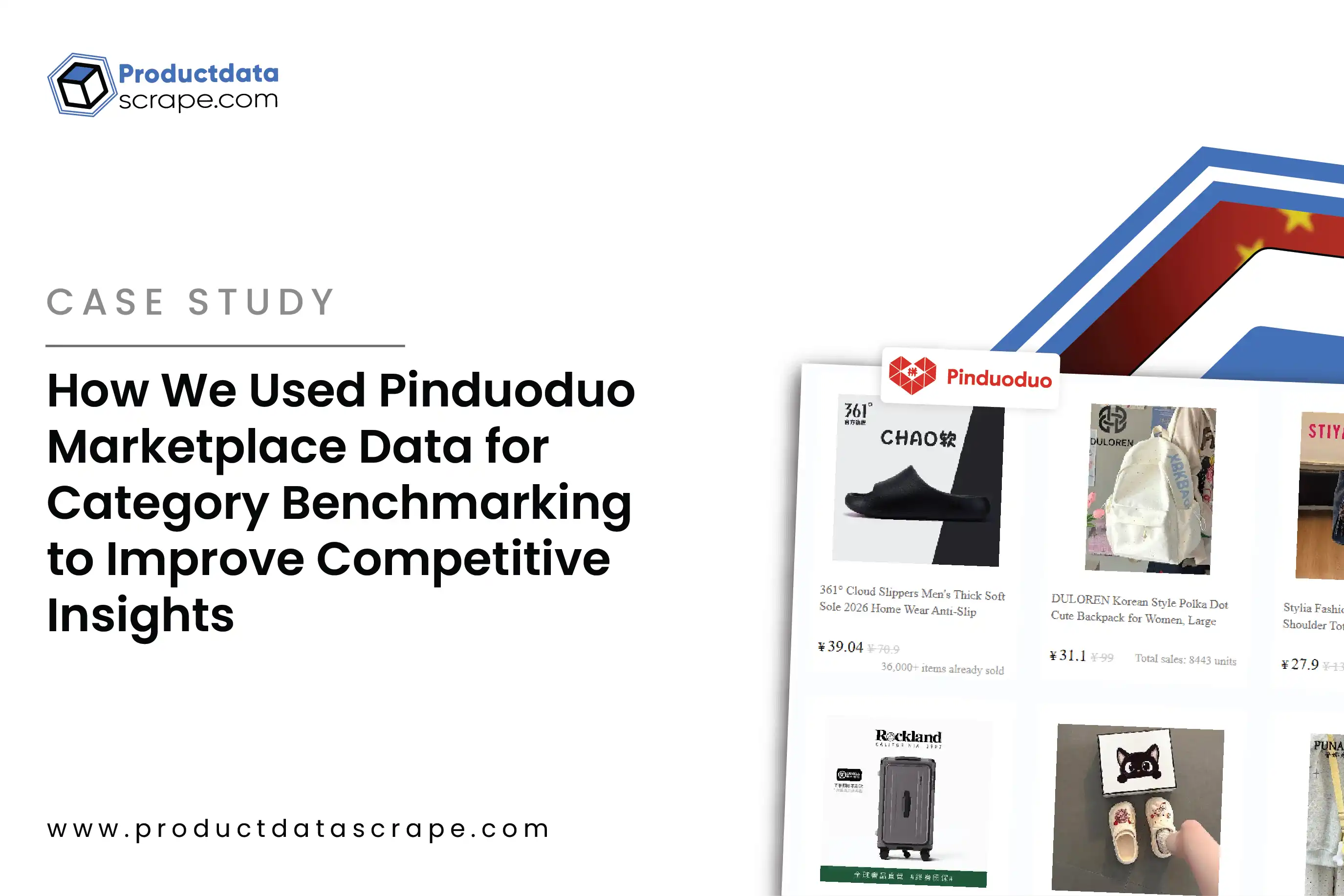
For a retail analytics firm tracking China's fast-moving e-commerce landscape, understanding category-level competition required more than occasional product checks. Product Data Scrape developed a structured data collection workflow using Pinduoduo Marketplace Data for Category Benchmarking to help the client compare product assortments, prices, sellers, ratings, discounts, and marketplace trends. The engagement focused on creating a scalable dataset that could support category benchmarking and competitive intelligence. The solution also included Scraping Pinduoduo Bestsellers Product Data to identify high-performing products and emerging category patterns.
Client Name / Industry: Leading Retail Analytics Firm / E-Commerce & Market Intelligence
Service / Duration: Pinduoduo Marketplace Data Collection & Competitive Benchmarking / 6 Months
Key Impact Metrics: 96%+ data validation accuracy, 70% reduction in manual data processing, and 3× faster category-level competitive reporting.
The Client
The client was a Retail Analytics Firm providing market intelligence, competitive monitoring, and e-commerce analytics services to consumer brands and retailers. Its customers needed detailed information about products, prices, sellers, discounts, ratings, and assortment changes across rapidly evolving online marketplaces.
The growing importance of Chinese e-commerce made marketplace intelligence increasingly valuable. Categories such as smartphones, wireless earbuds, beauty products, fashion, home appliances, and consumer electronics could change rapidly as new products, promotions, sellers, and pricing strategies appeared.
Before partnering with Product Data Scrape, the client depended on fragmented collection methods and periodic manual research. Analysts had to search product pages, record pricing information, identify leading products, and organize category information into spreadsheets. This approach became increasingly difficult as the number of categories and products expanded.
The client needed a more scalable approach to Pinduoduo category benchmark analysis that could continuously organize marketplace information into comparable datasets. It also wanted a reliable Pinduoduo Product Data API-based workflow that could support downstream analytics and reporting.
The transformation was essential because delayed marketplace information could reduce the usefulness of competitive reports. For example, a price movement involving Xiaomi smartphones, Nike footwear, beauty products, or small kitchen appliances could be difficult to capture consistently through manual research.
Goals & Objectives
The project was designed around three priorities: scalability, speed, and accuracy. The client wanted to move from fragmented marketplace research toward an automated data pipeline capable of supporting recurring competitive analysis.
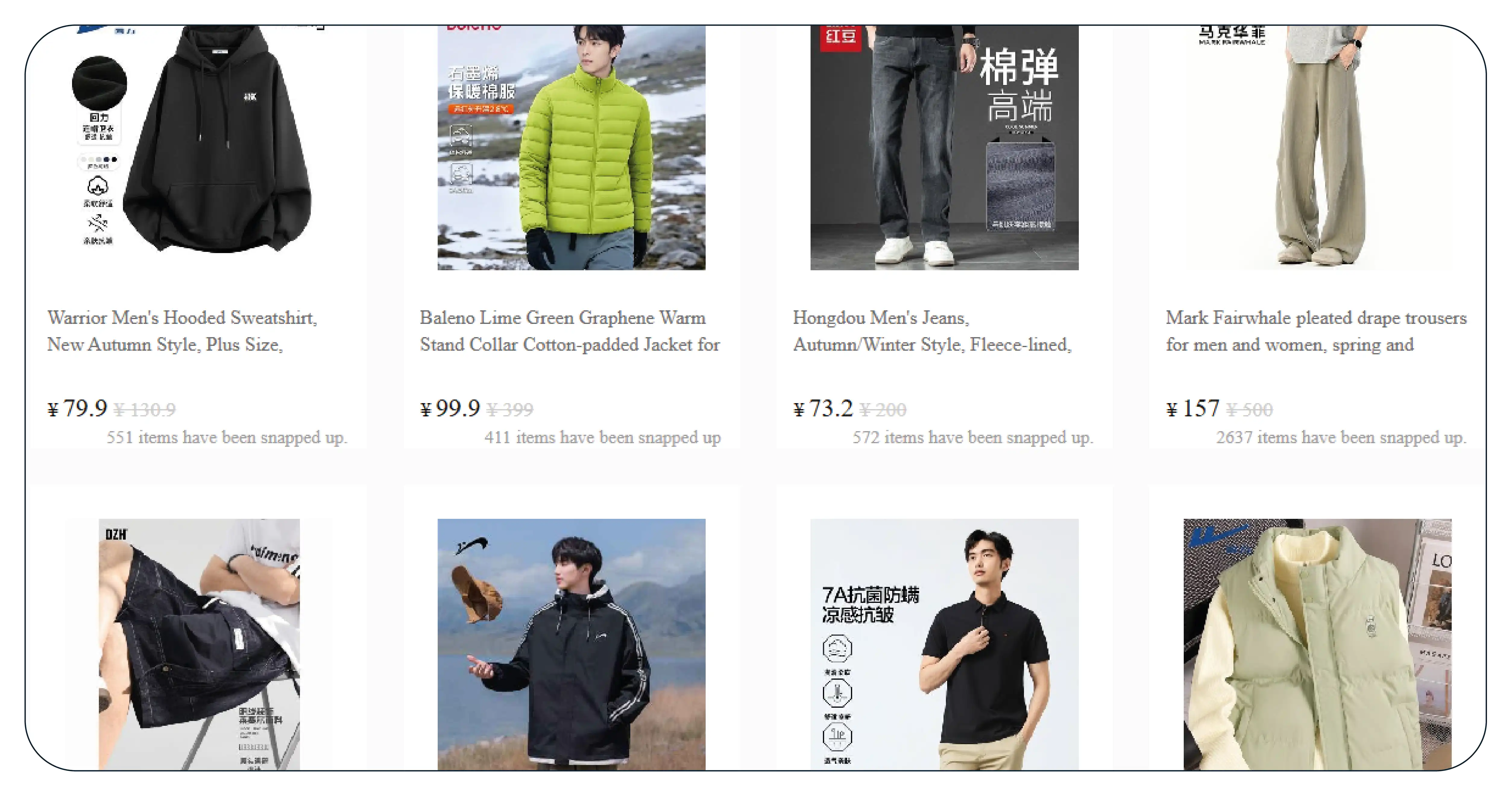
The primary business goal was to create a scalable marketplace intelligence workflow capable of monitoring large product volumes across selected categories. The client also wanted faster access to structured information covering products such as smartphones, headphones, sneakers, skincare products, and home appliances.
Another goal was to improve competitive comparisons by organizing product attributes, prices, discounts, ratings, seller information, and availability into standardized datasets.
The project also incorporated Retail Analytics Firm Used Pinduoduo Marketplace Data to support category-level benchmarking and recurring market intelligence reports.
Automate recurring product and category data collection.
Standardize product, seller, pricing, rating, and discount attributes.
Create a structured workflow suitable for integration with analytics platforms.
Reduce manual spreadsheet-based research.
Improve data validation and duplicate detection.
Support near-real-time marketplace monitoring where required.
Enable category comparisons across selected product segments.
Achieve 95%+ validated data accuracy.
Reduce manual data-processing time by at least 60%.
Improve reporting turnaround by 3×.
Maintain consistent product-level records across collection cycles.
Increase category coverage without proportionally increasing manual effort.
Deliver analytics-ready datasets for recurring competitive reports.
The Core Challenge
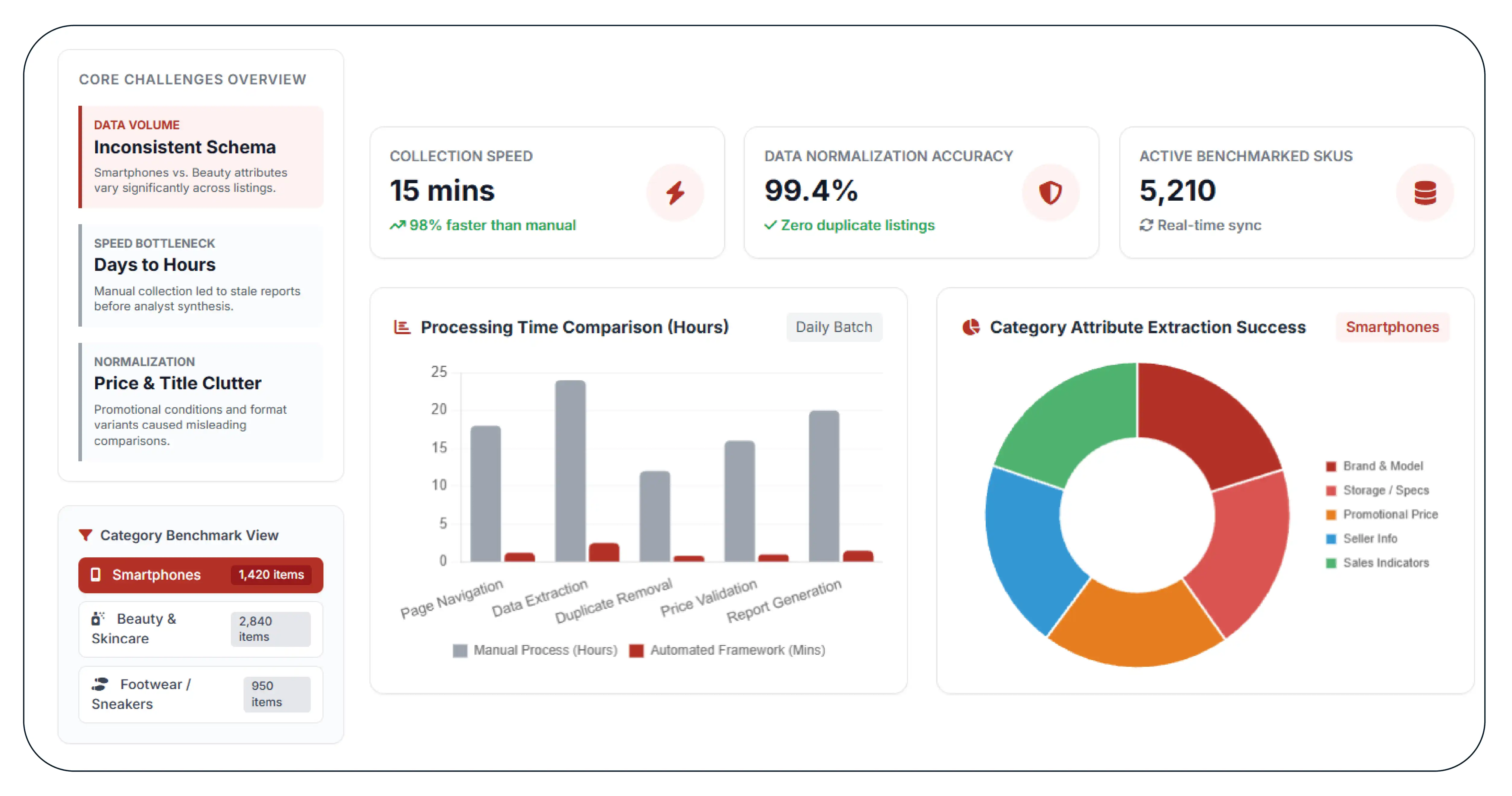
The client's biggest problem was not simply collecting marketplace information—it was collecting it consistently at scale and converting it into a reliable benchmarking dataset.
The first challenge involved Pinduoduo Marketplace Intelligence for Retailers, where product information could vary across categories, sellers, and listings. A smartphone listing could contain brand, model, storage capacity, color, seller, promotional price, original price, ratings, and sales-related indicators, while a beauty product might contain size, formulation, packaging, seller information, and promotional attributes.
Manual collection created several operational bottlenecks. Analysts spent significant time navigating product pages, copying information, removing duplicates, validating prices, and organizing category records. As product volumes increased, the possibility of missing listings or recording outdated information also increased.
Another issue was inconsistent formatting. Product names could differ between listings, prices could be displayed with promotional conditions, and seller information could appear in different formats. Without normalization, comparing Xiaomi phones against other smartphone models or comparing different sneaker listings could produce misleading results.
Speed was another concern. A dataset that required days of manual processing could become outdated before analysts completed their reports. Frequent promotional campaigns and product assortment changes made recurring collection especially important.
The client therefore needed an automated framework that could improve collection speed while maintaining data quality, standardization, and category-level comparability.
Our Solution
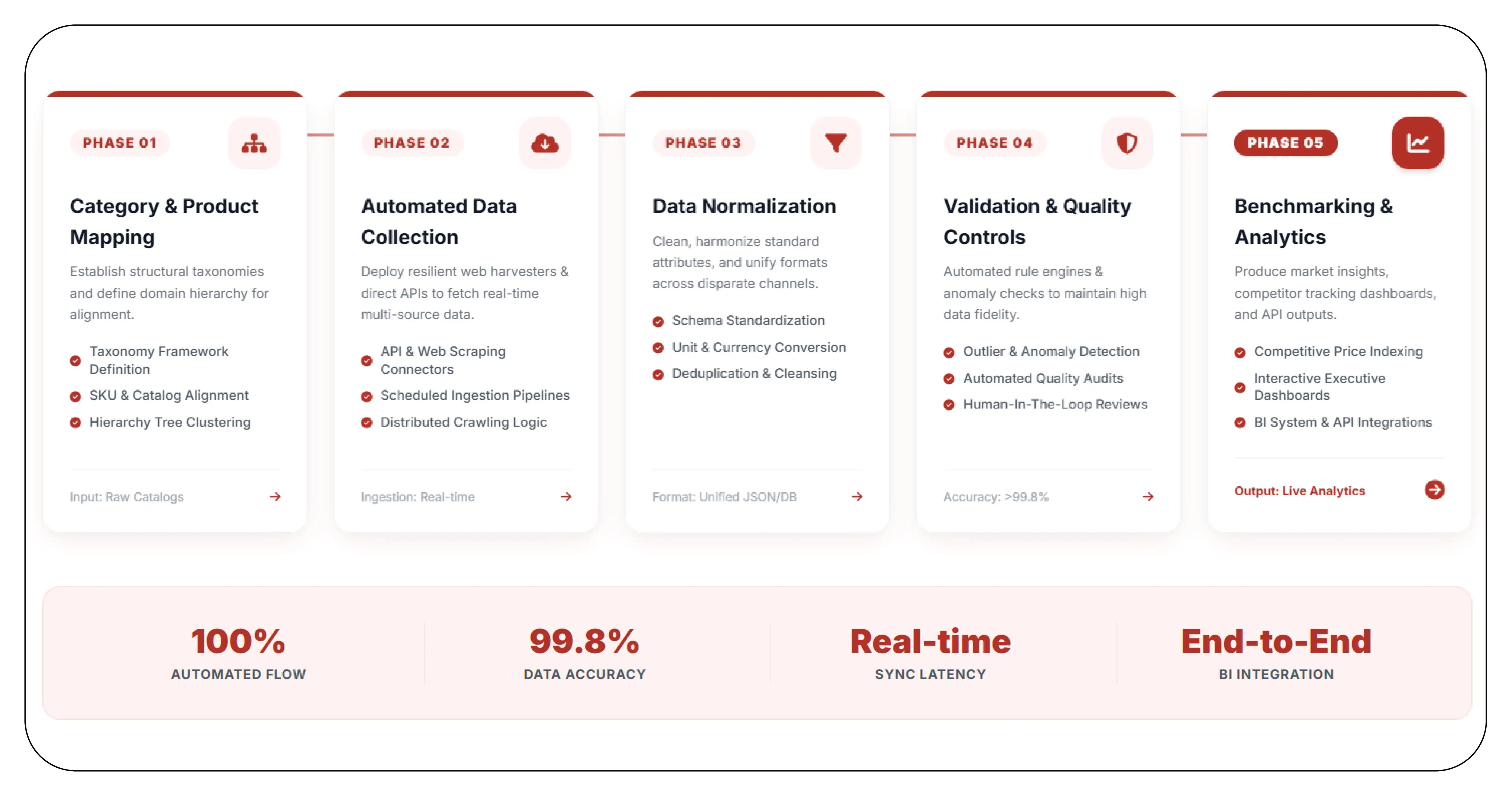
Product Data Scrape implemented a phased marketplace data collection and benchmarking framework designed around scalability, automation, validation, and analytics readiness.
Phase 1: Category and Product Mapping
The first stage established the marketplace taxonomy and defined the product fields required for benchmarking. Categories were mapped according to the client's reporting requirements, including consumer electronics, fashion, beauty, home appliances, and other high-demand segments. For example, the collection framework could organize smartphone records by brand, model, storage, price, discount, rating, and seller. Similar structures were created for products such as Nike-style athletic footwear, wireless headphones, skincare products, and kitchen appliances.
Phase 2: Automated Data Collection
Automated collection workflows were introduced to gather product-level information at recurring intervals. The system was designed to capture relevant attributes including product name, brand, category, product URL, seller information, current price, original price, discount, rating, review information, availability, product specifications, and promotional indicators. This created a structured foundation for Pinduoduo Marketplace Demand Analysis, allowing the client to examine product movement, category patterns, and changes in marketplace activity.
Phase 3: Data Normalization
Raw marketplace information was standardized before entering the analytics layer. Product names, brand names, prices, categories, and seller attributes were normalized into consistent formats. Duplicate records were identified and removed, while product attributes were mapped to predefined schemas. This made it easier to compare different listings within the same category.
Phase 4: Validation & Quality Controls
Automated validation rules checked missing values, abnormal pricing, duplicate products, inconsistent category assignments, and unexpected changes in key attributes. Historical records were also retained to support trend comparisons. This allowed analysts to identify whether a pricing change was a temporary promotion or part of a longer-term movement.
Phase 5: Benchmarking & Analytics Integration
The final stage transformed validated marketplace records into analytics-ready datasets. Category managers could compare pricing, product assortment, seller activity, discounts, and ratings across selected product segments. Dashboards and recurring reports could then be built around Pinduoduo Marketplace Data for Category Benchmarking, helping the client deliver more consistent competitive intelligence to its own customers.
Results & Key Metrics
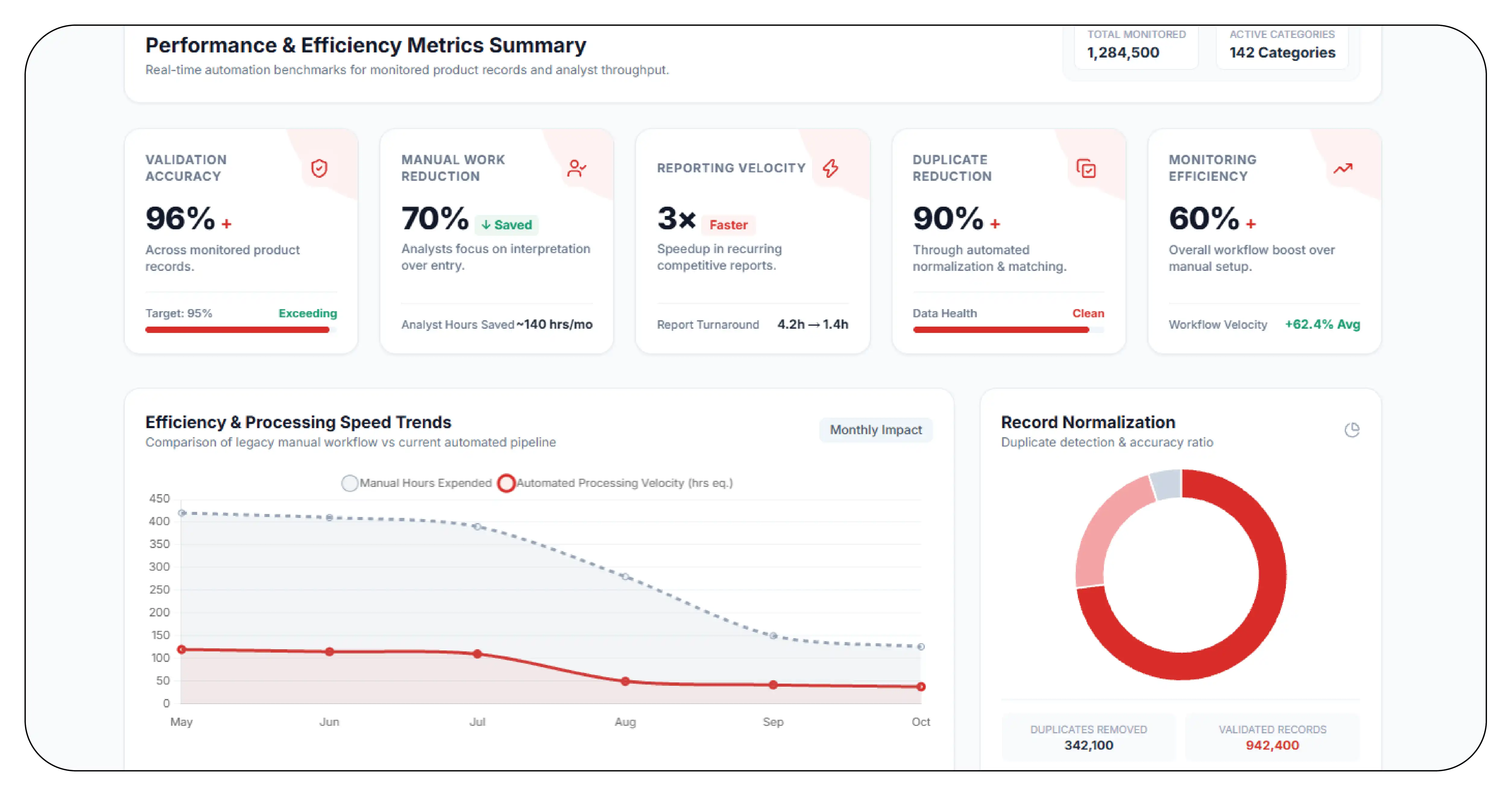
The implementation produced measurable operational improvements:
96%+ data validation accuracy across monitored product records.
70% reduction in manual processing, allowing analysts to focus more on interpretation than data entry.
3× faster category reporting, improving the speed of recurring competitive intelligence reports.
90%+ reduction in duplicate records through automated normalization and matching.
60%+ improvement in recurring monitoring efficiency compared with the previous manual workflow.
Results Narrative
The new workflow gave the Retail Analytics Firm Used Pinduoduo Marketplace Data a more structured foundation for category intelligence. Instead of relying primarily on manual searches, analysts could work with standardized records covering products, brands, prices, sellers, ratings, discounts, and availability.
The solution also strengthened Pinduoduo Marketplace Data for Category Benchmarking by making historical records easier to compare across collection cycles. Analysts could identify pricing movements, assortment changes, emerging products, and seller-level differences more efficiently.
For example, a category manager could compare smartphone models from brands such as Xiaomi and Huawei, monitor changes in wireless headphone pricing, or examine the positioning of athletic footwear and beauty products across multiple sellers.
What Made Product Data Scrape Different
Product Data Scrape combined automated collection, structured schemas, validation rules, and recurring monitoring rather than treating marketplace scraping as a one-time extraction exercise.
Its Pinduoduo Category-Wise Products Data Extraction framework allowed product information to be organized according to category-specific attributes. This meant smartphone datasets could emphasize model, storage, brand, and technical specifications, while beauty datasets could focus on product size, formulation, brand, rating, and seller information.
The workflow also incorporated automated normalization, duplicate detection, validation checks, and historical record management. These capabilities made Pinduoduo Marketplace Data for Category Benchmarking more useful for recurring analytics rather than simple data storage.
For designers, visuals can feature a dashboard showing category comparisons, Xiaomi smartphone cards, Nike footwear listings, skincare products, headphones, and price-change indicators.
Client's Testimonial
"The structured marketplace data significantly improved how our analysts approached competitive research. Instead of spending most of their time collecting and cleaning listings, they could focus on identifying category trends and preparing insights for our customers. The consistency of the datasets also made recurring reporting much easier."
— Director of E-Commerce Intelligence, Retail Analytics Firm
The engagement supported the client's broader ecommerce trend analysis using pinduoduo data, helping its analysts examine pricing movements, product assortment, seller activity, promotional patterns, and category-level changes through structured marketplace records.
Conclusion
For businesses operating in fast-changing e-commerce categories, marketplace data can provide valuable visibility into product assortment, pricing, sellers, promotions, and demand signals. Product Data Scrape helped the client replace fragmented manual research with a scalable, automated, and validated data workflow, while integrating Competitive pricing data to support more effective price comparisons and market benchmarking.
The resulting datasets supported competitive benchmarking, recurring reporting, and category-level analysis while reducing manual processing requirements. Historical records also provided a foundation for identifying marketplace changes over time.
The project demonstrates how structured Pinduoduo Datasets can support broader retail intelligence initiatives when collection, normalization, validation, and analytics are designed as one connected workflow.
As marketplace competition continues to evolve, scalable data infrastructure can help analytics teams transform large volumes of product information into timely and actionable business intelligence.
Frequently Asked Questions
1. What type of Pinduoduo marketplace data can be collected?
Depending on the project scope, datasets can include product names, categories, brands, prices, discounts, ratings, seller information, product specifications, availability, URLs, and other publicly accessible attributes.
2. How can Pinduoduo data support category benchmarking?
Structured marketplace data allows businesses to compare products, pricing, sellers, discounts, ratings, and assortment patterns across categories. Historical collection can also help identify changes over time.
3. Can the data collection process be automated?
Yes. Automated workflows can be designed for recurring collection, normalization, validation, duplicate detection, and delivery. Scheduling can be customized according to the client's monitoring requirements.
4. Can Pinduoduo data be integrated into analytics systems?
Yes. Validated datasets can be structured for integration with databases, BI dashboards, analytics platforms, or internal reporting systems, depending on the required technical architecture.
5. Which industries can use Pinduoduo marketplace data?
Retailers, e-commerce businesses, consumer brands, market research companies, pricing intelligence providers, and retail analytics firms can use marketplace data for competitive monitoring, assortment analysis, pricing research, and category intelligence.


 Singapore
 EMAIL
EMAIL
 PHONE
PHONE












.webp)