Manual Scraping vs Using Grocery Data APIs - Accuracy, Scale & Cost Analysis (2026)

Introduction

In today’s data-driven grocery ecosystem, retailers and analytics teams face a crucial decision: whether to rely on traditional scraping methods or shift to API-based data collection. This research explores Manual Scraping vs Using Grocery Data APIs, focusing on accuracy, scalability, operational effort, and long-term cost efficiency.

With growing SKU counts, dynamic pricing models, and omnichannel competition, modern businesses increasingly depend on real-time, reliable data streams. Solutions powered by a Web Data Intelligence API now offer structured access to pricing, inventory, and promotion insights—dramatically improving speed and reliability compared to legacy scraping techniques.

From 2020 to 2026, grocery data usage has expanded by more than 240%, driven by demand forecasting, price intelligence, and automated merchandising. This report provides a comprehensive comparison to help organizations choose the most sustainable and scalable data extraction approach for 2026 and beyond.

Evolving Data Collection Approaches in Grocery Retail
Evolving Data Collection Approaches in Grocery Retail

Comparing Manual Scraping vs Grocery APIs for Price Intelligence highlights how grocery analytics has transformed over the past six years. Early-stage businesses often relied on scripts to capture pricing data from competitor websites, but as SKU counts grew, maintaining accuracy became increasingly difficult. Today, structured access to a Grocery store dataset via APIs enables faster and more reliable decision-making.

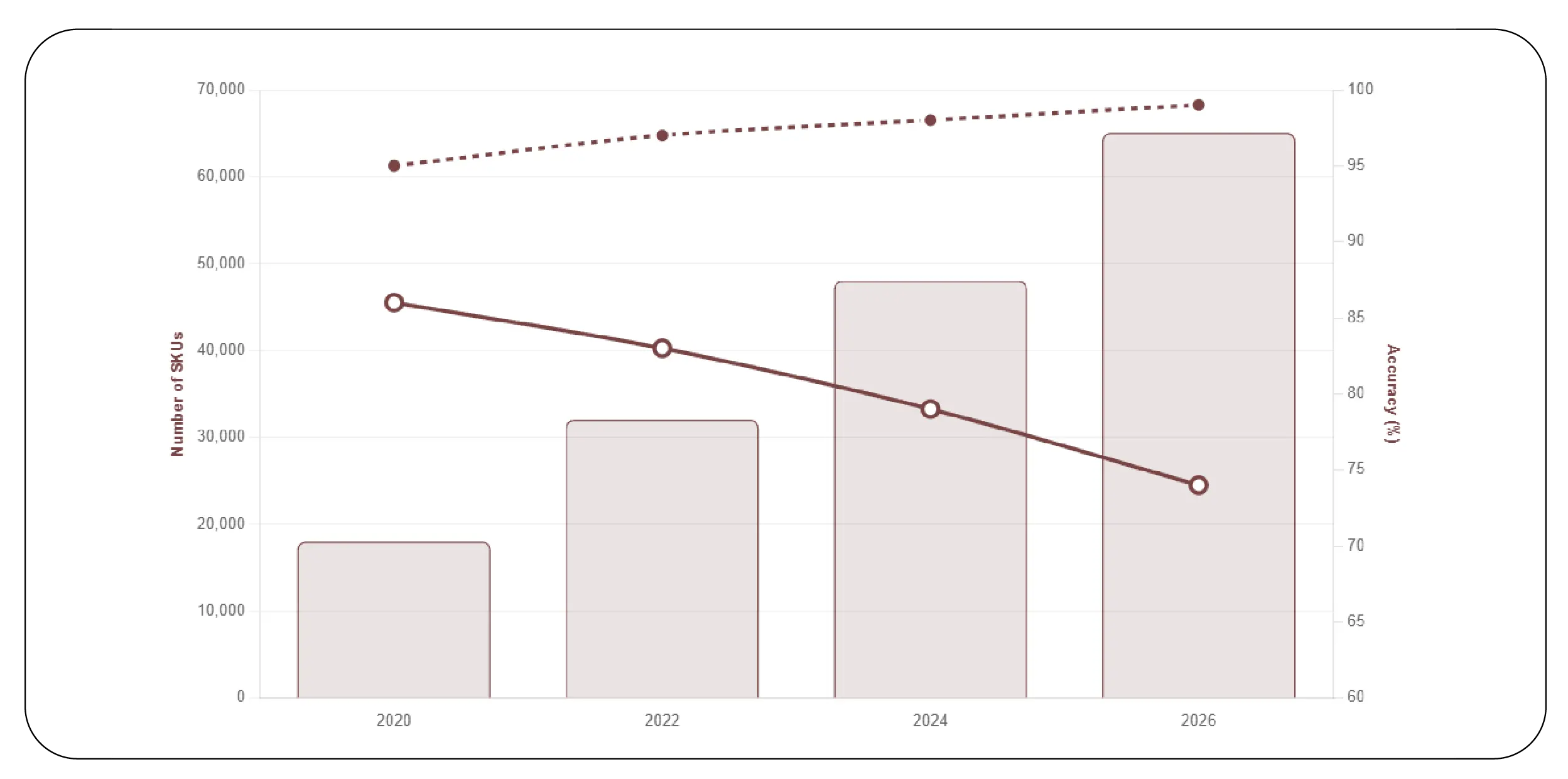
Between 2020 and 2026, grocery retailers expanded digital catalogs from an average of 18,000 SKUs to over 65,000 SKUs. This shift made manual scraping resource-intensive and error-prone.

Year Avg. SKUs Monitored Manual Scraping Accuracy API Accuracy
2020 18,000 86% 95%
2022 32,000 83% 97%
2024 48,000 79% 98%
2026 65,000 74% 99%

Retailers using APIs report faster data refresh cycles, averaging updates every 15 minutes, compared to 6–12 hour refresh cycles in manual systems. This performance gap directly impacts pricing accuracy, promotional effectiveness, and inventory forecasting across omnichannel operations.

Understanding the True Cost of Data Collection

A detailed cost analysis of grocery data APIs vs manual scraping reveals that initial setup costs can be misleading. While manual scraping appears cheaper in year one, maintenance, infrastructure, and staffing costs grow rapidly as data volume increases.

From 2020 to 2026, average monthly costs for manual scraping rose by 210%, driven by anti-bot defenses, site changes, and higher compute usage. In contrast, API costs increased by only 48% due to scalable pricing models.

Cost Category (Monthly Avg.) Manual Scraping 2020 Manual Scraping 2026 API 2020 API 2026
Infrastructure $1,200 $3,800 $800 $1,200
Engineering Time $2,000 $5,500 $600 $900
Data Validation $900 $2,300 $300 $500
Total $4,100 $11,600 $1,700 $2,600

Organizations migrating to API-based extraction report average annual savings of 38% by year three, primarily due to reduced downtime and automation of validation processes.

Real-World Data Collection at Scale
Real-World Data Collection at Scale

Enterprises extracting supermarket data often evaluate methods using high-volume platforms such as Scraping ASDA Supermarket Product Data to compare outcomes. Large retailers require near-perfect accuracy across pricing, promotions, and stock levels—making manual approaches increasingly unsustainable.

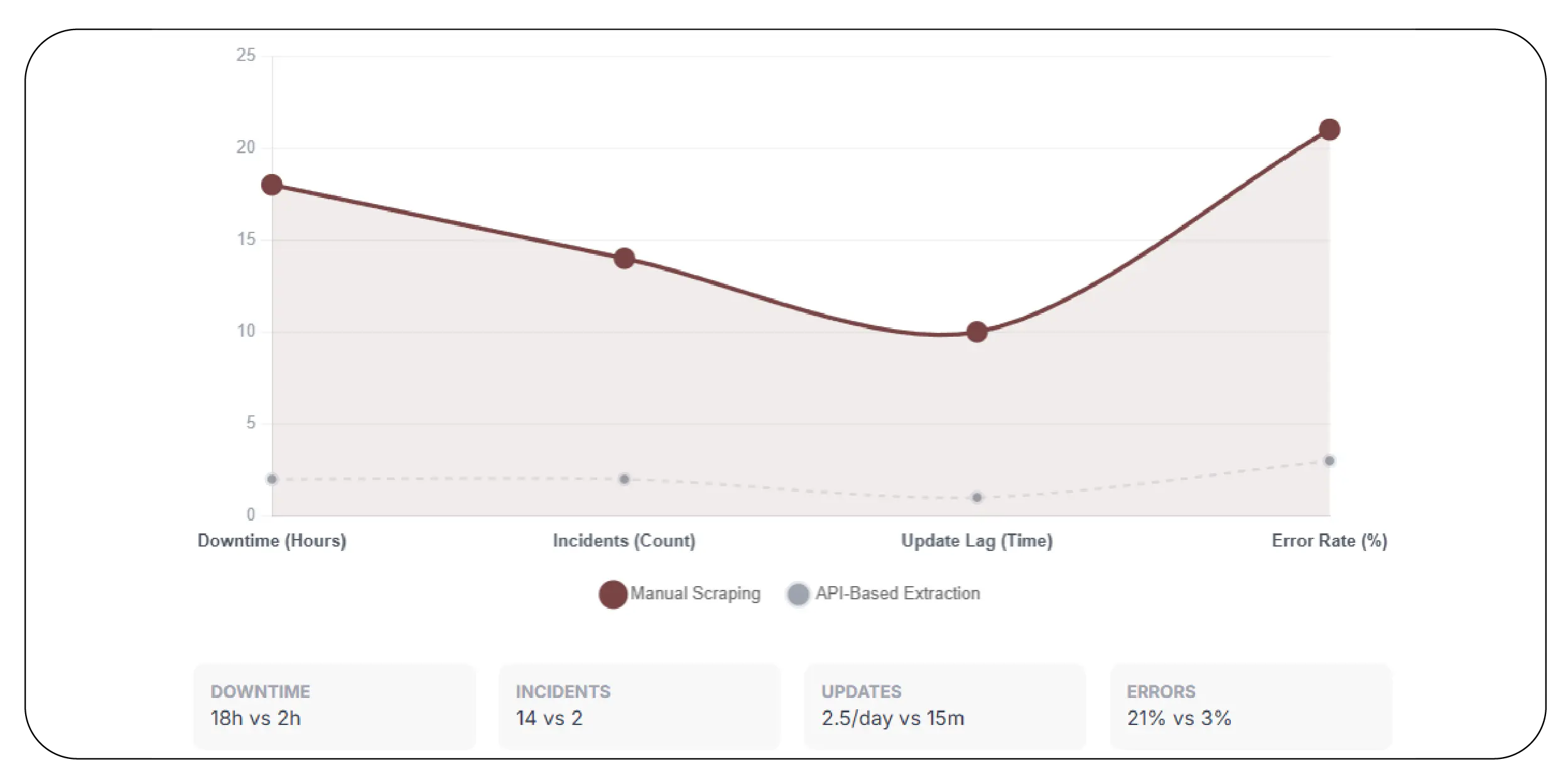
Between 2020 and 2026, ASDA product listings expanded from 22,000 to over 58,000 SKUs. Manual scraping teams required an average of 6 engineers to maintain pipelines, while API-driven workflows required only 1–2 specialists.

Metric Manual Scraping API-Based Extraction
Avg. Downtime per Month 18 hours 2 hours
Data Loss Incidents/Year 14 2
Update Frequency 2–3/day Every 15 minutes
Error Rate 21% 3%

Retailers using APIs improved promotion tracking accuracy by 42%, directly improving campaign ROI and shelf competitiveness across digital channels.

Risk Exposure and Operational Stability

The comparison of Operational costs & risks of manual scraping vs APIs shows that beyond expenses, risk management is a major factor. Manual scraping faces constant threats from IP blocking, CAPTCHA enforcement, and frequent site redesigns. These disruptions translate into lost data coverage and delayed business decisions.

From 2020 to 2026, compliance-related risks also increased as organizations faced tighter data governance standards. API-based solutions significantly reduce exposure by offering compliant, structured access models.

Risk Factor Manual Scraping API-Based
Legal & Compliance Risk High Low
System Downtime Frequent Rare
Maintenance Dependency High Minimal
Scalability Limit Medium Unlimited

Enterprises adopting APIs reported 63% fewer operational incidents and 51% faster deployment of new data pipelines compared to traditional scraping environments.

What 2026 Reveals About Grocery Data Strategies
What 2026 Reveals About Grocery Data Strategies

A forward-looking 2026 analysis of grocery data extraction indicates that automation and AI-readiness now define competitive advantage. Retailers no longer seek raw data—they require structured feeds that integrate directly into pricing engines, forecasting tools, and BI platforms.

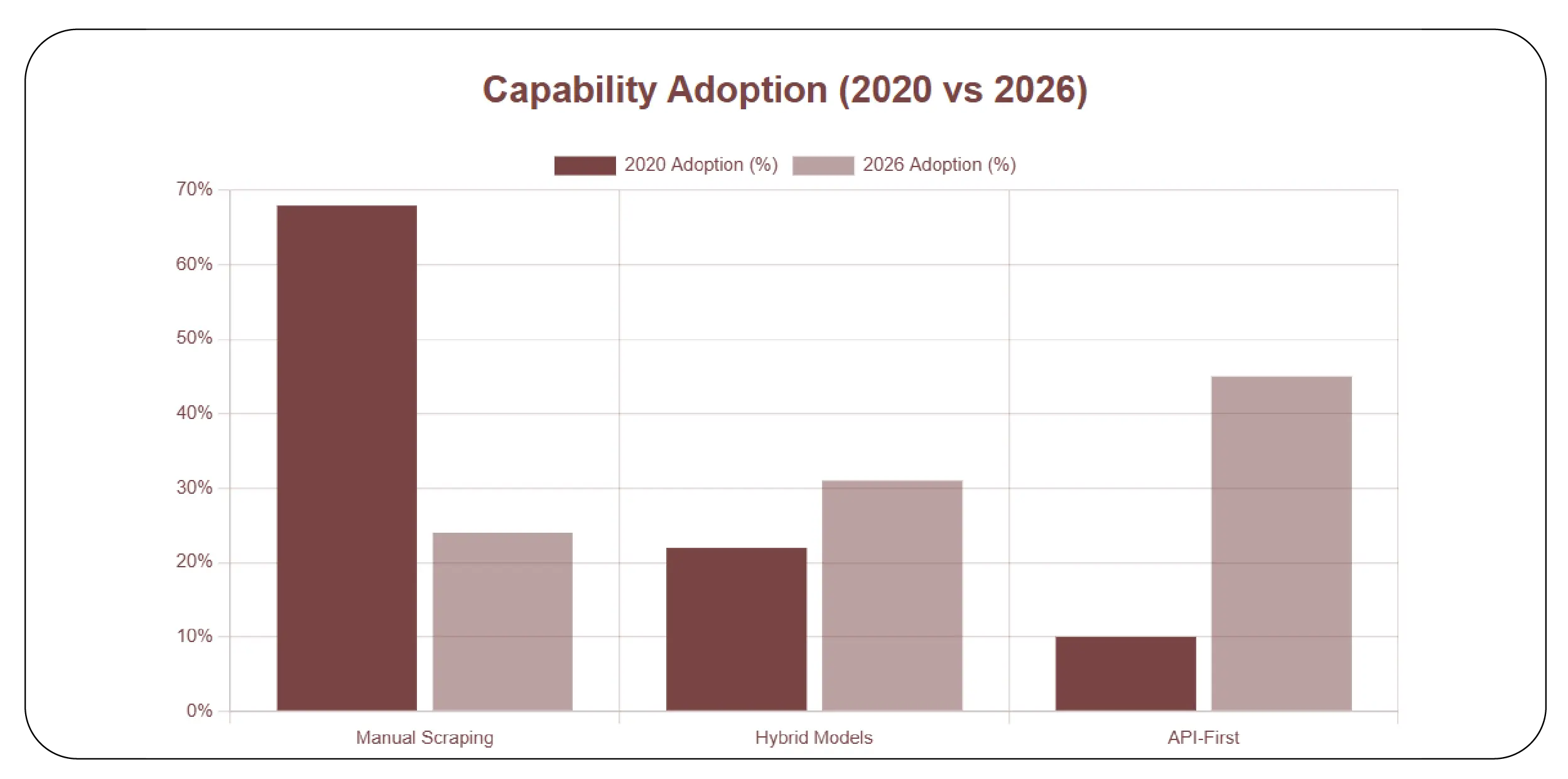
Between 2020 and 2026, grocery analytics maturity evolved rapidly:

Capability Level 2020 Adoption 2026 Adoption
Manual Scraping 68% 24%
Hybrid Models 22% 31%
API-First 10% 45%

API-first organizations reported:

• 34% faster price change execution

• 29% improvement in stock forecasting accuracy

• 41% reduction in data reconciliation time

This shift reflects how grocery retailers increasingly prioritize reliability, compliance, and integration speed over legacy extraction methods.

Scaling Grocery Intelligence Across Millions of SKUs

Modern retailers rely on Large-scale grocery SKU monitoring methods to manage vast assortments across physical and digital shelves. Monitoring thousands of SKUs manually introduces blind spots that impact pricing integrity and promotional timing.

From 2020 to 2026, average enterprise grocery catalogs grew from 40,000 to 120,000 SKUs. API-based systems now support real-time synchronization across channels, ensuring price consistency and stock visibility.

Metric Manual Systems API-Driven Systems
Max SKUs Tracked 50,000 500,000+
Refresh Speed 6–12 hours 5–15 minutes
Automation Coverage 35% 92%
Analytics Readiness Low High

This capability enables grocery brands to shift from reactive monitoring to predictive intelligence—transforming data into a strategic growth asset.

At Product Data Scrape, we help enterprises move beyond traditional collection models by delivering advanced Commerce Intelligence solutions. Our platform simplifies the transition from legacy systems to API-driven workflows, empowering organizations evaluating Manual Scraping vs Using Grocery Data APIs to make smarter, future-ready decisions. We provide structured grocery datasets, real-time monitoring, and seamless integration with analytics platforms—helping retailers reduce operational costs, improve accuracy, and scale effortlessly in fast-moving grocery markets.

Conclusion

As grocery ecosystems grow more complex, the debate around Manual Scraping vs Using Grocery Data APIs is no longer theoretical—it directly impacts profitability, speed, and resilience. Organizations that rely on outdated methods face rising costs, operational risks, and missed opportunities.

By adopting modern platforms that Extract Grocery & Gourmet Food Data, businesses unlock reliable, scalable intelligence that fuels smarter pricing, optimized inventory, and data-driven promotions.

Ready to future-proof your grocery analytics? Partner with Product Data Scrape today and transform how you collect, analyze, and act on market data!

LATEST BLOG

Scrape Amazon vs Best Buy Laptop Prices - A Data-Driven Web Scraping Comparison

Scrape Amazon vs Best Buy laptop prices to compare deals, track price changes, and gain real-time insights for smarter purchasing and pricing strategies.

Using Web Search APIs For AI Applications, Agents, and Large Language Models in 2026

Learn how using web search APIs for AI applications enables real-time data access, better context retrieval, improved accuracy, and scalable intelligence for modern AI systems.

How Apparel & Accessories Data Collection from Indian E-Commerce Drives Smarter Fashion Decisions?

Apparel & Accessories Data Collection from Indian E-Commerce enables real-time tracking of prices, availability, and trends across online retail platforms in India.

Case Studies

Discover our scraping success through detailed case studies across various industries and applications.

WHY CHOOSE US?

Product Data Scrape for Retail Web Scraping

Choose Product Data Scrape to access accurate data, enhance decision-making, and boost your online sales strategy effectively.

Reliable Insights

Reliable Insights

With our Retail Data scraping services, you gain reliable insights that empower you to make informed decisions based on accurate product data and market trends.

Data Efficiency

Data Efficiency

We help you extract Retail Data product data efficiently, streamlining your processes to ensure timely access to crucial market information and operational speed.

Market Adaptation

Market Adaptation

By leveraging our Retail Data scraping, you can quickly adapt to market changes, giving you a competitive edge with real-time analysis and responsive strategies.

Price Optimization

Price Optimization

Our Retail Data price monitoring tools enable you to stay competitive by adjusting prices dynamically, attracting customers while maximizing your profits effectively.

Competitive Edge

Competitive Edge

THIS IS YOUR KEY BENEFIT.
With our competitive price tracking, you can analyze market positioning and adjust your strategies, responding effectively to competitor actions and pricing in real-time.

Feedback Analysis

Feedback Analysis

Utilizing our Retail Data review scraping, you gain valuable customer insights that help you improve product offerings and enhance overall customer satisfaction.

5-Step Proven Methodology

How We Scrape E-Commerce Data?

01
Identify Target Websites

Identify Target Websites

Begin by selecting the e-commerce websites you want to scrape, focusing on those that provide the most valuable data for your needs.

02
Select Data Points

Select Data Points

Determine the specific data points to extract, such as product names, prices, descriptions, and reviews, to ensure comprehensive insights.

03
Use Scraping Tools

Use Scraping Tools

Utilize web scraping tools or libraries to automate the data extraction process, ensuring efficiency and accuracy in gathering the desired information.

04
Data Cleaning

Data Cleaning

After extraction, clean the data to remove duplicates and irrelevant information, ensuring that the dataset is organized and useful for analysis.

05
Analyze Extracted Data

Analyze Extracted Data

Once cleaned, analyze the extracted e-commerce data to gain insights, identify trends, and make informed decisions that enhance your strategy.

Start Your Data Journey
99.9% Uptime
GDPR Compliant
Real-time API

See the results that matter

Read inspiring client journeys

Discover how our clients achieved success with us.

6X

Conversion Rate Growth

“I used Product Data Scrape to extract Walmart fashion product data, and the results were outstanding. Real-time insights into pricing, trends, and inventory helped me refine my strategy and achieve a 6X increase in conversions. It gave me the competitive edge I needed in the fashion category.”

7X

Sales Velocity Boost

“Through Kroger sales data extraction with Product Data Scrape, we unlocked actionable pricing and promotion insights, achieving a 7X Sales Velocity Boost while maximizing conversions and driving sustainable growth.”

"By using Product Data Scrape to scrape GoPuff prices data, we accelerated our pricing decisions by 4X, improving margins and customer satisfaction."

"Implementing liquor data scraping allowed us to track competitor offerings and optimize assortments. Within three quarters, we achieved a 3X improvement in sales!"

Resource Hub: Explore the Latest Insights and Trends

The Resource Center offers up-to-date case studies, insightful blogs, detailed research reports, and engaging infographics to help you explore valuable insights and data-driven trends effectively.

Get In Touch

Scrape Amazon vs Best Buy Laptop Prices - A Data-Driven Web Scraping Comparison

Scrape Amazon vs Best Buy laptop prices to compare deals, track price changes, and gain real-time insights for smarter purchasing and pricing strategies.

Using Web Search APIs For AI Applications, Agents, and Large Language Models in 2026

Learn how using web search APIs for AI applications enables real-time data access, better context retrieval, improved accuracy, and scalable intelligence for modern AI systems.

How Apparel & Accessories Data Collection from Indian E-Commerce Drives Smarter Fashion Decisions?

Apparel & Accessories Data Collection from Indian E-Commerce enables real-time tracking of prices, availability, and trends across online retail platforms in India.

How Dior Paris Product Data Scraping Unlocks Luxury Market Intelligence

Dior Paris product data scraping delivers real-time insights on pricing, collections, availability, and trends to support luxury retail intelligence.

D2C Founders Used E-Commerce Data APIs to Validate New Product Categories

E-Commerce Data APIs to Validate New Product Categories help brands analyze pricing, demand, competition, and trends faster, reducing risk and enabling confident product launch decisions.

Scaling Global Product Data Collection from AliExpress for Trend Analysis

Gain actionable ecommerce insights through product data collection from AliExpress to track pricing, SKUs, seller performance, demand trends, and sourcing opportunities.

Shelf Life Intelligence - Sephora vs Ulta Beauty product Shelf-life analysis

Analyze Sephora vs Ulta Beauty product Shelf-life analysis to track availability duration, product rotation, and optimize inventory and assortment strategies.

Data scraping for Uline.ca to get product data - Extract Product List, Unit Prices & Saller Data

Get structured pricing, SKUs, specs, and availability using data scraping for Uline.ca to get product data, enabling smarter procurement, catalog analysis, and B2B decisions.

Using Amazon and Namshi Product APIs for Advertising to Overcome Inventory and Targeting Challenges in Digital Marketing

Use Amazon and Namshi product APIs for advertising to optimise bids, track price changes, align ads with availability, and improve ROAS using real-time product intelligence.

Reducing Returns with Myntra AND AJIO Customer Review Datasets

Analyzed Myntra and AJIO customer review datasets to identify sizing issues, helping brands reduce garment return rates by 8% through data-driven insights.

Before vs After Web Scraping - How E-Commerce Brands Unlock Real Growth

Before vs After Web Scraping: See how e-commerce brands boost growth with real-time data, pricing insights, product tracking, and smarter digital decisions.

Scrape Data From Any Ecommerce Websites

Easily scrape data from any eCommerce website to track prices, monitor competitors, and analyze product trends in real time with Real Data API.

5 Industries Growing Fast Because of Web Scraping Technology

Discover how web scraping fuels growth in quick commerce, e-commerce, grocery, liquor, and fashion industries with real-time data insights and smarter decisions.

Why Meesho Sellers Are Growing Faster Than Amazon Sellers (Data Deep Dive)

This SMP explores why Meesho sellers are growing faster than Amazon sellers, using data-driven insights on pricing, reach, logistics, and seller economics.

How Real-Time Grocery Price APIs Power India & UAE Retail Intelligence (2025)

Real-time grocery price APIs help India and UAE retailers track prices, stock, and trends in 2025 to drive smarter pricing and retail intelligence decisions.

FAQs

E-Commerce Data Scraping FAQs

Our E-commerce data scraping FAQs provide clear answers to common questions, helping you understand the process and its benefits effectively.

E-commerce scraping services are automated solutions that gather product data from online retailers, providing businesses with valuable insights for decision-making and competitive analysis.

We use advanced web scraping tools to extract e-commerce product data, capturing essential information like prices, descriptions, and availability from multiple sources.

E-commerce data scraping involves collecting data from online platforms to analyze trends and gain insights, helping businesses improve strategies and optimize operations effectively.

E-commerce price monitoring tracks product prices across various platforms in real time, enabling businesses to adjust pricing strategies based on market conditions and competitor actions.

Let’s talk about your requirements

Let’s discuss your requirements in detail to ensure we meet your needs effectively and efficiently.

bg

Trusted by 1500+ Companies Across the Globe

decathlon
Mask-group
myntra
subway
Unilever
zomato

Send us a message