Quick Overview
A global retail brand operating across multiple Amazon marketplaces partnered with Product Data Scrape to modernize its marketplace intelligence framework. Using our Amazon Seller Central Data Scraping API, we automated reporting, improved pricing visibility, and streamlined inventory tracking across thousands of SKUs. By leveraging advanced capabilities to Extract amazon API Product Data, the brand gained structured, real-time access to seller metrics, pricing fluctuations, Buy Box insights, and stock levels.
Client Industry: Global Retail & Consumer Goods
Service Duration: 6 Months Implementation + Ongoing Monitoring
Key Impact Metrics: 32% faster reporting, 24% improved pricing accuracy, 18% increase in inventory efficiency
The Client
The client is a multinational retail brand selling across North America, Europe, and Asia through Amazon marketplaces. Between 2020 and 2024, the e-commerce sector saw over 28% annual growth, intensifying competition and compressing seller margins. Rising ad costs, dynamic repricing, and Buy Box volatility made manual monitoring inefficient and risky.
Before partnering with Product Data Scrape, the brand relied heavily on spreadsheets and delayed reports. Their internal teams struggled with fragmented dashboards and inconsistent data exports from Seller Central. This created delays in implementing agile Pricing Strategies, impacting conversion rates and inventory turnover.
Through structured Amazon Seller Central Product Data Extraction, the brand aimed to centralize product, pricing, and inventory insights into a single intelligence system. Transformation was essential to prevent margin leakage, enhance operational efficiency, and strengthen marketplace dominance in a highly competitive digital shelf environment.
Goals & Objectives
The primary goal was to create a scalable infrastructure powered by an Amazon Seller Central Price Scraper capable of processing large SKU volumes without latency. The business required faster decision-making, improved accuracy in pricing intelligence, and better visibility across regional marketplaces. Additionally, they aimed to eliminate dependency on manual Seller Central downloads and reduce reporting turnaround time.
From a technical standpoint, the objective was to implement a real-time automation system aligned with advanced Web Scraping E-commerce Website frameworks. This included API integration with BI dashboards, structured SKU-level monitoring, and seamless compatibility with ERP systems. The client required daily updates on pricing, Buy Box ownership, stock levels, and performance metrics across multiple regions.
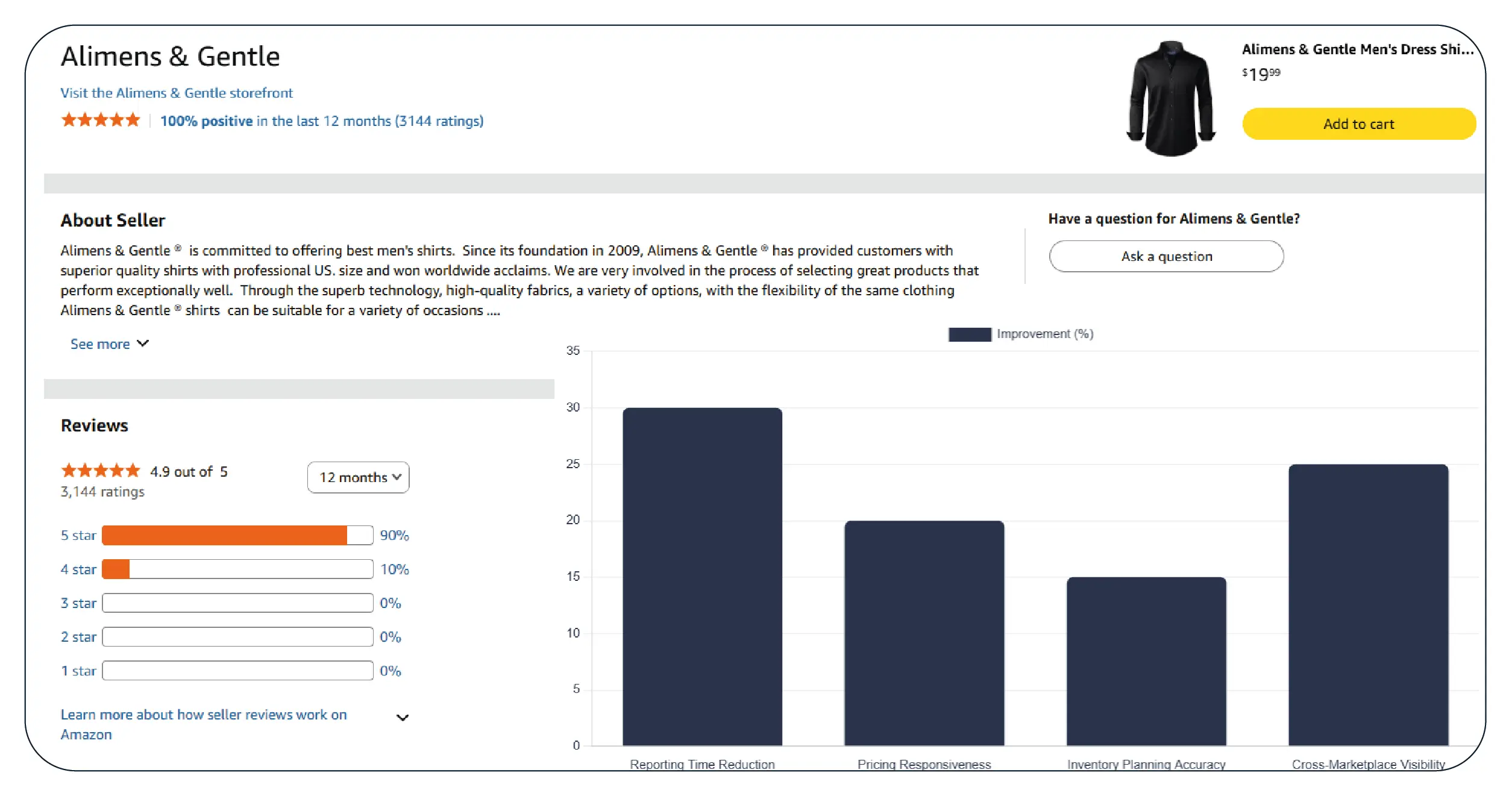
30% reduction in reporting time
20% improvement in pricing responsiveness
15% boost in inventory planning accuracy
25% better cross-marketplace visibility
The Core Challenge
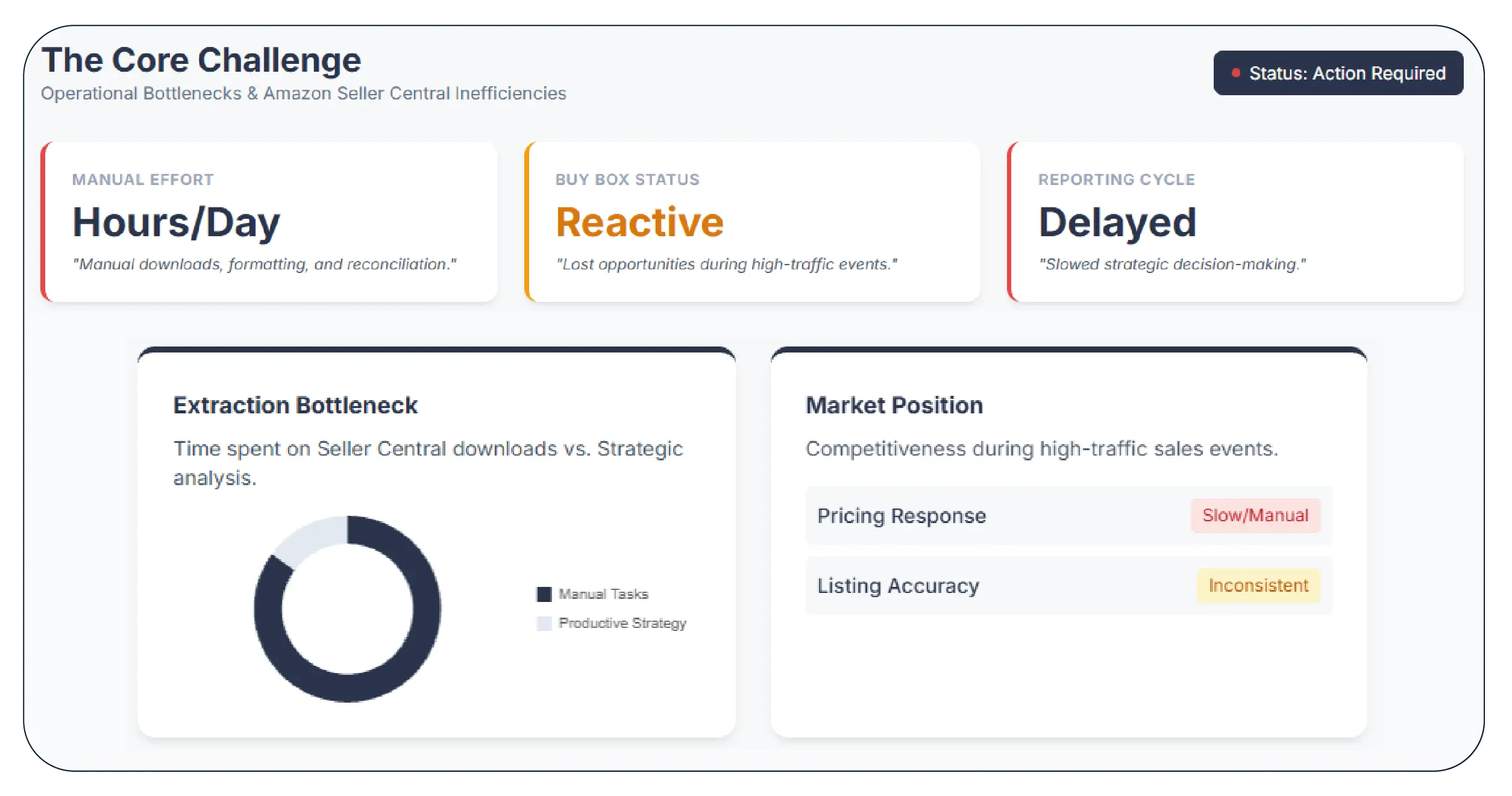
The brand faced operational bottlenecks caused by manual data extraction and delayed reporting cycles. Extracting performance insights from Seller Central required hours of manual downloads, formatting, and reconciliation. This slowed strategic decision-making.
The absence of automation to Extract Amazon Seller Central Product and Price Data created inconsistencies across internal dashboards. Pricing updates were reactive rather than predictive, causing lost Buy Box opportunities and reduced competitiveness during high-traffic sale events.
Inventory mismatches further complicated operations. Stockouts were identified too late, while overstocked SKUs tied up capital unnecessarily. The lack of unified, real-time intelligence across product listings created friction between marketing, operations, and pricing teams.
Without centralized automation, the brand risked revenue erosion, inefficient advertising spend, and declining seller performance metrics in key Amazon regions.
Our Solution
Product Data Scrape deployed a phased implementation strategy designed to deliver measurable improvements.
In Phase 1, we built a structured pipeline to collect data into an Amazon Seller Product E-commerce Product Dataset. This included SKU-level pricing, Buy Box status, seller competition metrics, advertising indicators, and inventory movement insights. Automated validation ensured clean, standardized outputs compatible with analytics tools.
In Phase 2, we implemented advanced scheduling mechanisms to build a comprehensive eCommerce Product Dataset updated multiple times daily. This resolved latency issues and allowed the brand to track dynamic repricing trends in near real time.
Phase 3 focused on dashboard integration. APIs were connected directly to the client’s BI system, enabling automated visualizations of revenue trends, stock performance, and price gaps. Real-time alerts flagged Buy Box losses and sudden competitor undercutting.
Each phase addressed a key operational gap—eliminating manual effort, enhancing speed, and improving pricing responsiveness. The final solution provided a scalable intelligence ecosystem capable of monitoring thousands of SKUs simultaneously across global marketplaces.
Results & Key Metrics
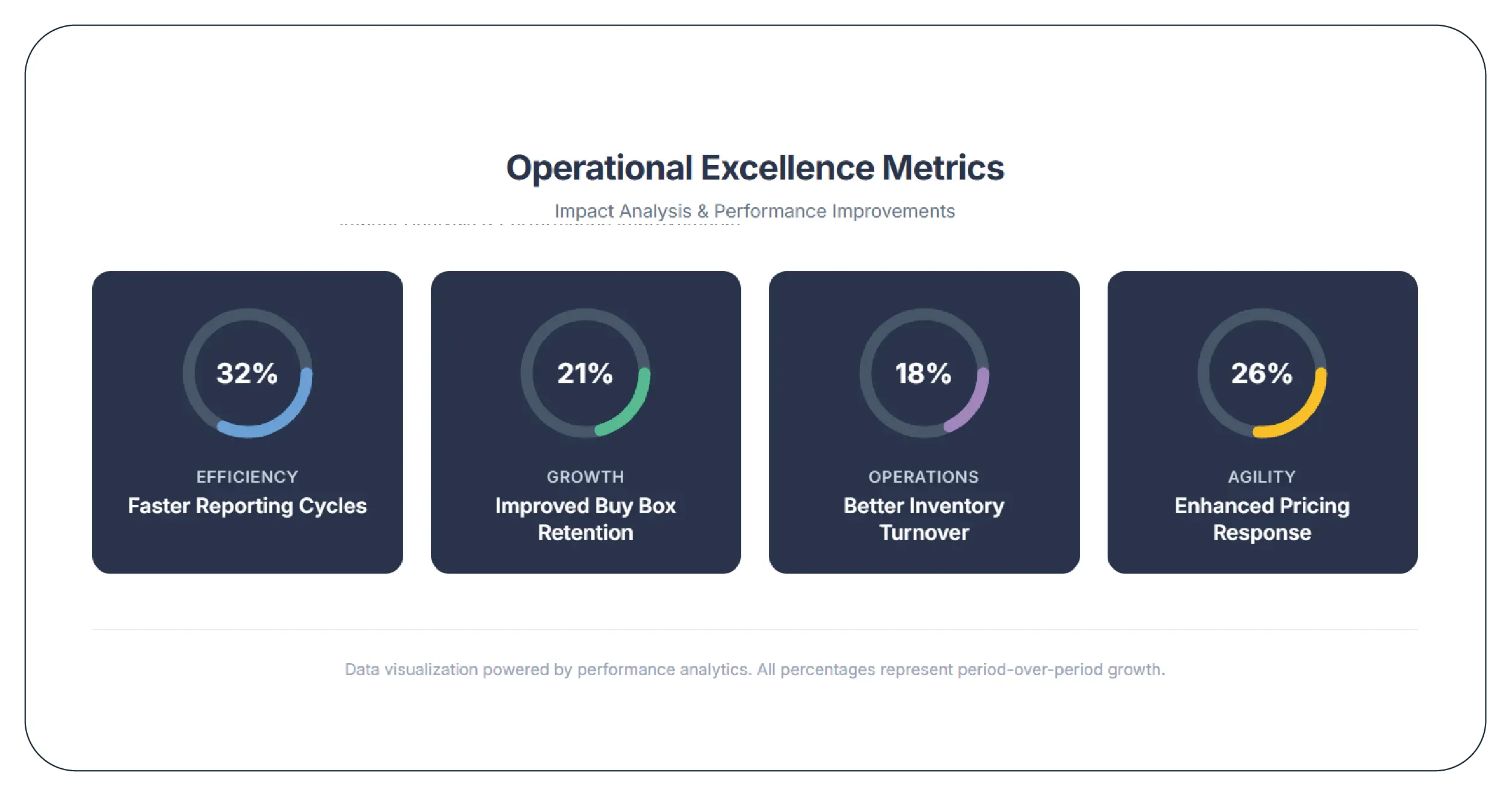
Through Inventory Amazon Data Extraction, the brand achieved measurable improvements across reporting and performance management systems.
32% faster reporting cycles
21% improved Buy Box retention
18% better inventory turnover
26% enhanced pricing response time
The integration of an eCommerce data scraping API significantly reduced manual dependency and improved cross-team collaboration.
Results Narrative
Within six months, the client transitioned from reactive reporting to predictive marketplace intelligence. Automated alerts minimized pricing conflicts and improved margin consistency. Inventory forecasting accuracy improved, reducing stockouts during peak demand periods.
The centralized dataset enabled marketing teams to align campaigns with real-time pricing insights. Overall, operational efficiency improved while competitive positioning strengthened across Amazon marketplaces.
What Made Product Data Scrape Different?
Product Data Scrape differentiated itself through proprietary automation frameworks and adaptive scraping architecture. Our Ecommerce Website Data Scraping engine ensured structured, compliant, and scalable extraction across high-volume SKUs.
Unlike conventional solutions, we delivered real-time API connectivity, automated quality validation, and seamless BI integration. Our modular infrastructure allowed rapid expansion into additional marketplaces without disrupting core operations.
This combination of innovation and scalability enabled the client to future-proof their Amazon strategy.
Client’s Testimonial
“Product Data Scrape transformed the way we approach Amazon analytics. Their expertise in Amazon Product and Inventory Data Scraping provided us with real-time visibility we never had before. Reporting that once took days now updates automatically. Pricing decisions are faster, smarter, and more strategic. Their team delivered measurable improvements in efficiency and performance across all major marketplaces.”
— Director of E-commerce Operations, Global Retail Brand
Conclusion
This case study highlights how structured automation can revolutionize marketplace performance. By implementing advanced Amazon Stock Quantity Data Extraction capabilities alongside a powerful Amazon Product Data Scraper, the client achieved greater visibility, operational speed, and pricing precision.
With scalable infrastructure and real-time intelligence, the brand is now positioned to expand globally without sacrificing control or accuracy. Product Data Scrape continues to support their growth journey with advanced marketplace analytics and automated performance monitoring.
FAQs
1. What data can be extracted using Amazon Seller Central scraping?
Product listings, pricing changes, Buy Box ownership, stock quantities, advertising metrics, and performance indicators can all be extracted and structured for analysis.
2. Is automated Seller Central data extraction scalable?
Yes, enterprise-grade scraping APIs are designed to handle thousands of SKUs across multiple marketplaces with minimal latency.
3. How does real-time data improve pricing strategies?
It allows brands to respond instantly to competitor price changes, preventing margin erosion and Buy Box losses.
4. Can extracted data integrate with BI tools?
Yes, APIs enable seamless integration with dashboards, ERP systems, and forecasting platforms.
5. How quickly can implementation begin?
Deployment timelines depend on SKU volume and integration complexity, but scalable solutions can begin delivering structured insights within weeks.


 Singapore
 EMAIL
EMAIL
 PHONE
PHONE


.webp)
.webp "thumb")
.webp "thumb")
.webp "thumb")









.webp)