Quick Overview
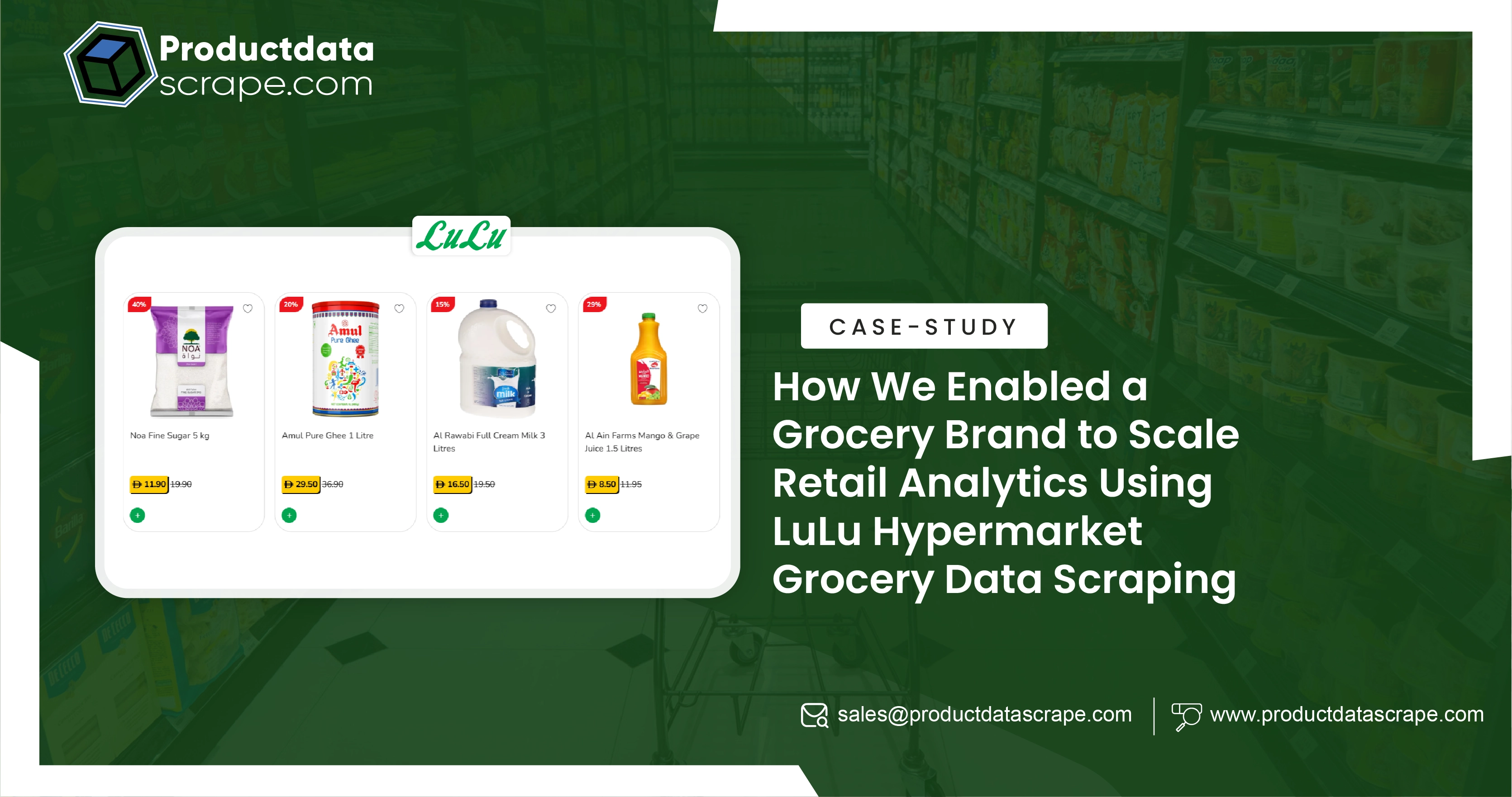
A leading grocery retail brand partnered with Product Data Scrape to modernize its retail analytics ecosystem and improve visibility into pricing, promotions, and inventory performance. The client needed a scalable solution for LuLu Hypermarket Grocery data Scraping to monitor thousands of SKUs across multiple grocery categories and regional markets. By leveraging automated extraction systems to Extract LuLu Hypermarket Grocery & Gourmet Food Data, the brand gained access to real-time insights for pricing intelligence and demand forecasting. Within six months, the company improved data processing speed by 72%, enhanced pricing accuracy by 64%, and reduced manual reporting workloads by 70%. The project successfully transformed fragmented grocery intelligence workflows into a centralized analytics framework powered by automation and visualization technologies.
The Client
The client was a fast-growing grocery and FMCG brand operating across multiple regional retail markets. Increasing competition in online grocery retail and quick-commerce platforms forced the company to improve pricing intelligence and customer demand forecasting. Rising consumer expectations around dynamic pricing, product availability, and promotional visibility created significant pressure on the organization to modernize its retail analytics operations.
Before partnering with Product Data Scrape, the company relied heavily on manual data collection processes and delayed reporting systems. Teams struggled to LuLu Hypermarket grocery Track pricing Data consistently due to rapidly changing product prices and promotions across digital grocery platforms. Their internal analytics infrastructure lacked automation, which caused reporting delays, inconsistent pricing insights, and operational inefficiencies.
The company also faced challenges integrating competitive intelligence into existing dashboards. Without a scalable LuluHypermarket Grocery Data Scraping API, the business could not efficiently monitor inventory trends, category performance, or regional pricing fluctuations in real time. These limitations reduced forecasting accuracy and made it difficult for leadership teams to respond quickly to market changes.
As grocery eCommerce competition intensified in 2026, the client recognized the need for an automated, real-time retail intelligence solution capable of supporting long-term growth and operational scalability.
Goals & Objectives
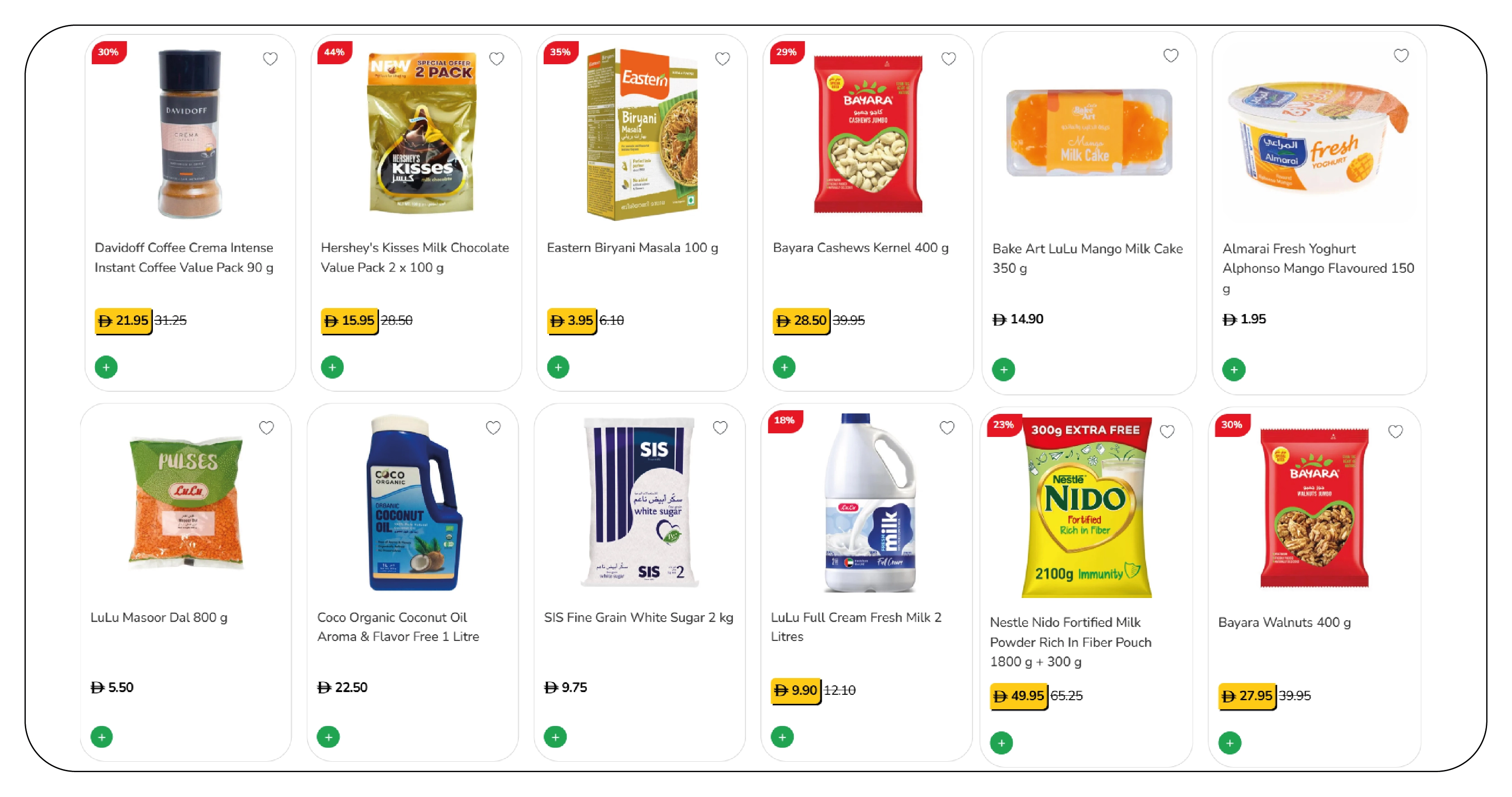
The primary goal of the project was to build a scalable grocery analytics ecosystem capable of processing large volumes of grocery pricing, inventory, and promotional data in real time. The client wanted to improve operational visibility, competitor intelligence, and forecasting accuracy using automation technologies.
Another key business goal was to Extract inventory data from LuLu Hypermarket more efficiently to support category management and supply chain planning. The company also aimed to improve pricing competitiveness across high-demand grocery categories.
From a technical perspective, the project focused on automating retail data extraction workflows and integrating structured datasets into centralized dashboards. Product Data Scrape implemented scalable systems to Extract Grocery & Gourmet Food Data continuously while reducing dependency on manual processes.
The project objectives included:
- Real-time pricing and inventory monitoring
- Automated competitor analytics integration
- Improved dashboard visualization capabilities
- Faster reporting and decision-making workflows
- Scalable cloud-based analytics architecture
The success metrics for the project included measurable operational improvements such as:
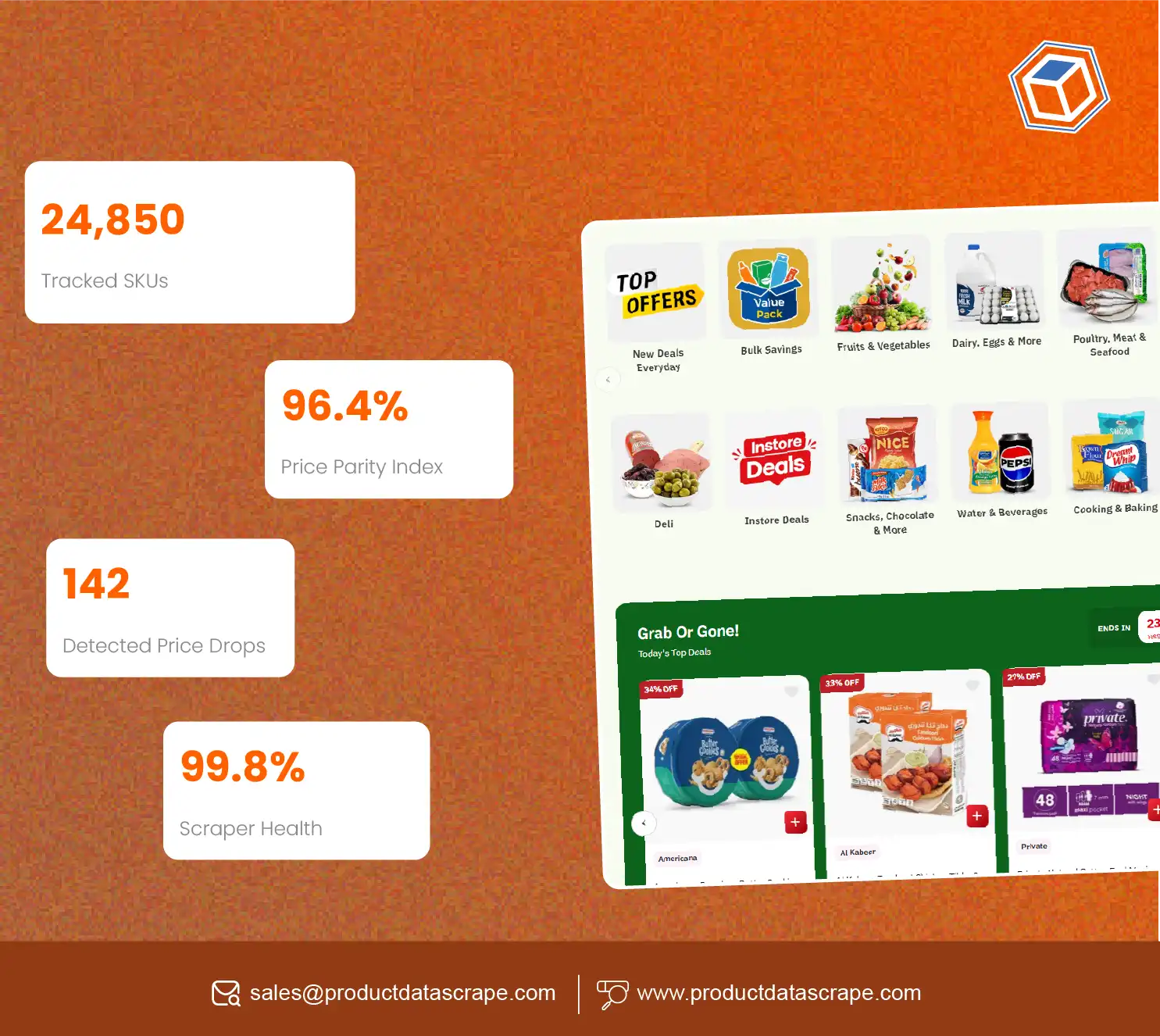
72% faster data processing speed
64% increase in pricing accuracy
70% reduction in manual reporting tasks
58% improvement in demand forecasting
61% increase in competitor monitoring efficiency
The Core Challenge
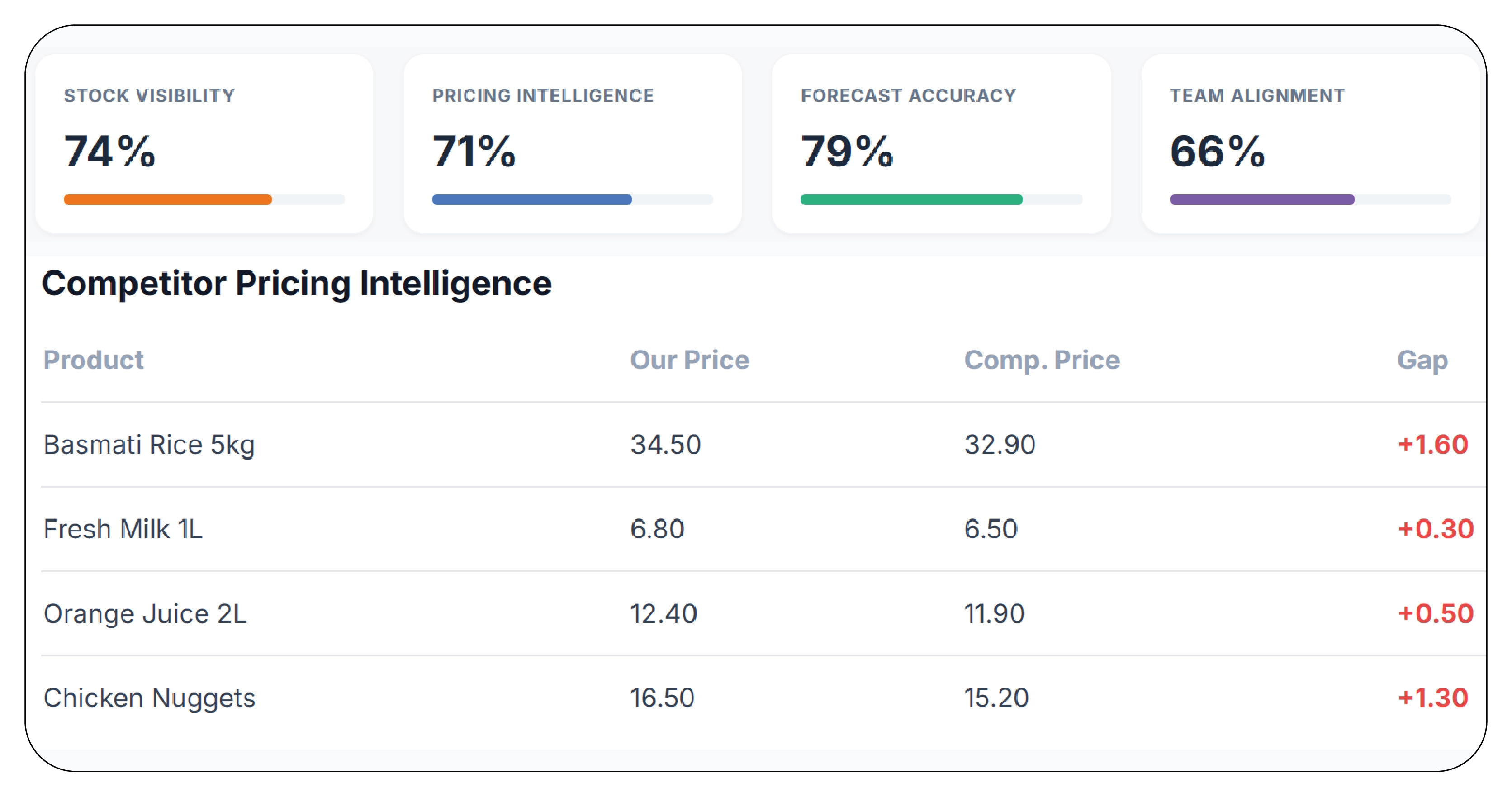
The client faced several operational and technical challenges before implementing the new analytics framework. One of the biggest issues was inefficient LuLu Hypermarket Stock Availability Scraping, which limited the company’s ability to monitor product availability and category performance accurately.
The organization relied on fragmented spreadsheets and inconsistent data collection methods that created delays in reporting and reduced confidence in analytics accuracy. Teams often worked with outdated pricing information, which impacted promotional planning and competitor benchmarking.
Another major challenge involved using a reliable Scraper to Track Competitor Product Pricing and Promotions across thousands of grocery SKUs. The company lacked automated systems capable of monitoring rapid pricing fluctuations and promotional campaigns in real time. This prevented the business from responding quickly to competitor activities and changing market conditions.
Operational bottlenecks also affected cross-department collaboration. Procurement, marketing, and analytics teams used separate datasets, leading to inconsistencies in reporting and forecasting. The absence of centralized dashboards further complicated strategic planning and inventory optimization efforts.
These limitations reduced operational agility and slowed the company’s ability to scale retail analytics efficiently in an increasingly competitive grocery environment.
Our Solution
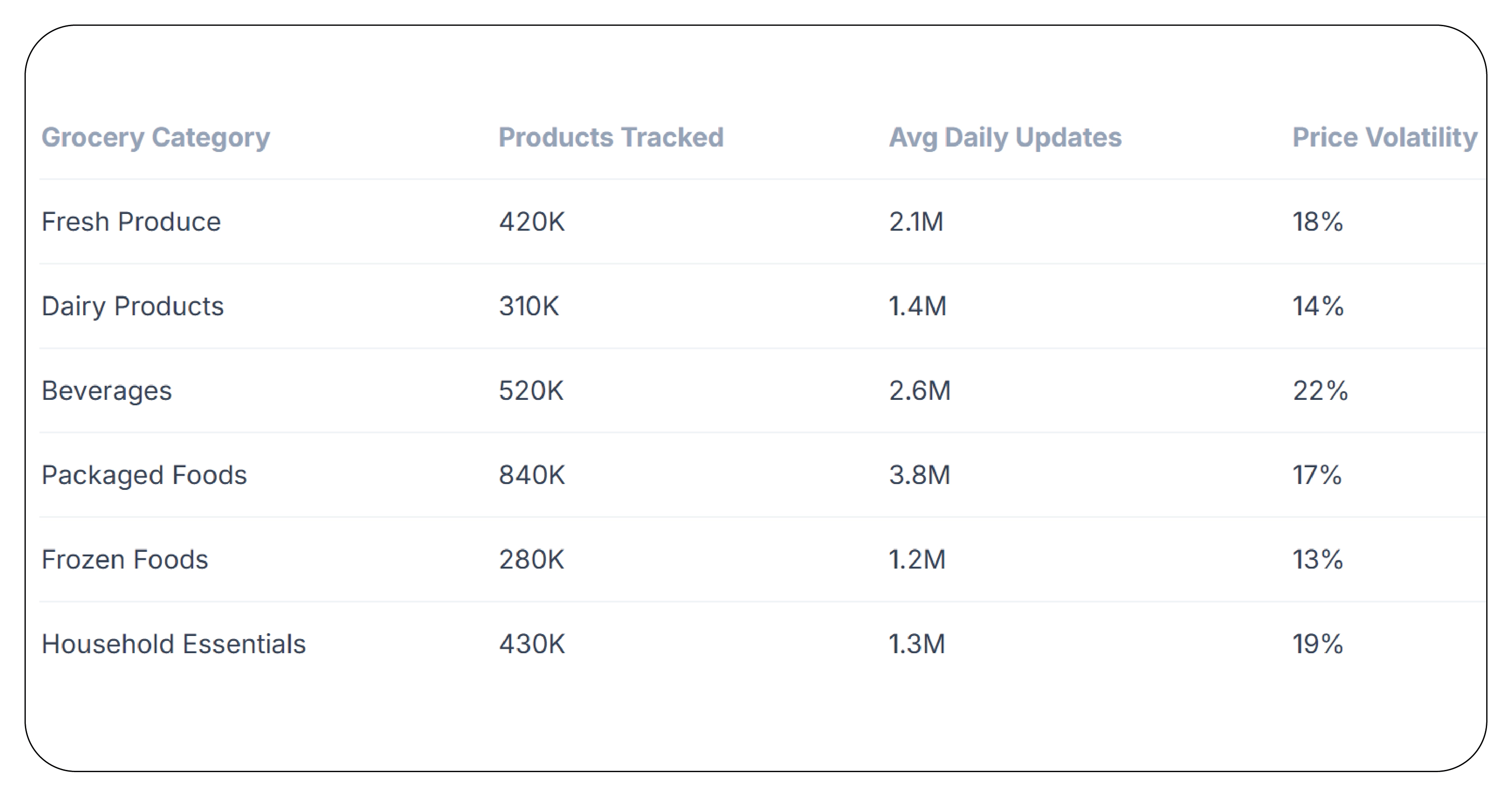
Product Data Scrape implemented a multi-phase automation strategy designed to improve grocery analytics scalability, pricing intelligence, and operational efficiency. The project combined real-time scraping infrastructure, AI-powered dashboards, and cloud-based analytics integration to create a centralized retail intelligence ecosystem.
Phase 1: Automated Data Collection Infrastructure
The first phase focused on developing scalable scraping systems to Monitor LuLu Hypermarket grocery pricing trends across multiple grocery categories and regional markets. Automated crawlers collected pricing, inventory, and promotional data continuously from LuLu Hypermarket’s digital platforms.
The infrastructure was designed to support high-frequency data extraction while maintaining data consistency and scalability. Real-time pipelines eliminated manual data collection bottlenecks and significantly improved reporting speed.
Phase 2: Data Transformation and Integration
The second phase involved cleaning, structuring, and integrating grocery datasets into centralized analytics dashboards. Product Data Scrape implemented advanced processing pipelines capable of handling millions of grocery records efficiently.
Visualization tools and Digital Shelf Analytics frameworks transformed raw data into actionable insights through charts, category analysis, pricing trend visualizations, and inventory monitoring dashboards.
This integration enabled teams across procurement, sales, and marketing departments to access unified business intelligence from a single platform.
Phase 3: Advanced Retail Intelligence and Automation
The final phase focused on predictive analytics and competitor intelligence automation. AI-powered forecasting models analyzed pricing fluctuations, promotional effectiveness, and customer demand trends in real time.
Automated alert systems notified teams about competitor pricing changes and inventory shortages, enabling faster operational decisions. Cloud-based architecture ensured scalability while improving analytics accessibility across departments.
The phased implementation approach allowed the client to modernize retail analytics workflows without disrupting ongoing business operations.
Results & Key Metrics
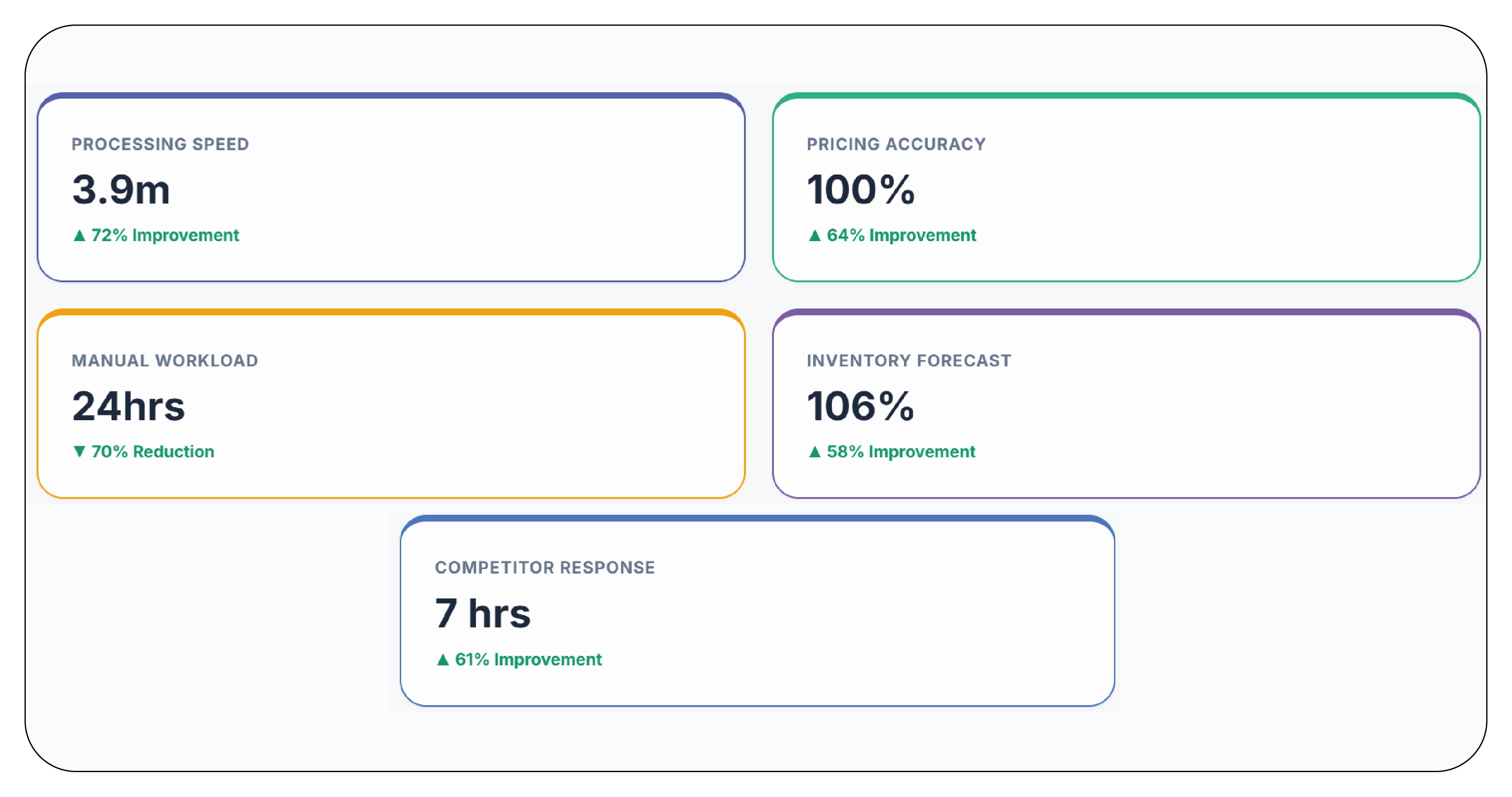
The implementation delivered measurable performance improvements across pricing intelligence, operational speed, and forecasting capabilities. By leveraging LuLu Hypermarket retail trend analytics, the client gained stronger visibility into grocery pricing trends and competitor activities.
Key Metrics Achieved
72% faster real-time data processing
64% improvement in pricing accuracy
70% reduction in manual reporting workloads
58% increase in inventory forecasting efficiency
61% faster competitor analysis response times
The automation framework also improved Product Pricing Strategies by enabling dynamic pricing analysis and real-time promotional tracking across grocery categories.
Results Narrative
The project transformed the client’s retail analytics operations from fragmented manual processes into a centralized real-time intelligence ecosystem. Teams gained immediate access to updated grocery pricing, inventory availability, and promotional insights through interactive dashboards.
The company improved competitor benchmarking capabilities, optimized category management strategies, and enhanced forecasting accuracy using AI-powered analytics. Cross-functional collaboration also improved significantly due to centralized reporting systems and standardized datasets.
As a result, the client achieved faster decision-making, stronger operational agility, and improved market responsiveness in the highly competitive grocery retail industry.
What Made Product Data Scrape Different
Product Data Scrape differentiated itself through scalable automation architecture, advanced scraping technologies, and AI-powered retail analytics frameworks. The company developed customized systems capable of processing large-scale grocery datasets while maintaining speed, accuracy, and reliability.
Advanced Lulu Grocery Buying behavior analytics enabled the client to monitor customer demand patterns, pricing sensitivity, and category performance more effectively. Product Data Scrape also implemented cloud-based dashboards and predictive analytics tools tailored specifically for grocery retail intelligence.
The company’s expertise in LuLu Hypermarket Grocery data Scraping helped the client automate complex workflows while improving scalability, forecasting accuracy, and operational visibility across multiple retail functions.
Client’s Testimonial
“Partnering with Product Data Scrape completely transformed our grocery analytics operations. Their expertise in LuLu Hypermarket Grocery data Scraping helped us automate pricing intelligence, inventory monitoring, and competitor analysis at scale. The dashboards provided our teams with real-time visibility into grocery trends and customer demand, significantly improving forecasting and decision-making speed. We also reduced manual reporting workloads while increasing pricing accuracy across multiple product categories. The implementation process was smooth, scalable, and highly effective for our retail growth strategy.”
— Head of Retail Analytics, Grocery & FMCG Brand
Conclusion
The grocery retail industry continues evolving rapidly as digital commerce and real-time pricing intelligence become essential for competitive success. By implementing scalable analytics infrastructure powered by Lulu Hypermarket Grocery Product Dataset, the client transformed operational efficiency, forecasting accuracy, and competitor intelligence capabilities.
Through automated LuLu Hypermarket Grocery data Scraping, the business gained centralized visibility into pricing trends, inventory performance, and customer demand patterns. Real-time dashboards and AI-powered forecasting models enabled faster decision-making and stronger market responsiveness.
This case study demonstrates how modern grocery brands can leverage automation and retail intelligence technologies to scale analytics operations, improve pricing strategies, and achieve sustainable growth in increasingly competitive grocery markets.
FAQs
1. What is LuLu Hypermarket grocery data scraping?
LuLu Hypermarket grocery data scraping is the automated extraction of grocery pricing, inventory, promotional offers, and product-related information from LuLu Hypermarket digital platforms for retail analytics and intelligence.
2. Why do grocery brands use retail analytics dashboards?
Retail analytics dashboards help brands monitor pricing trends, inventory availability, customer demand, and competitor activities in real time, improving forecasting accuracy and operational decision-making efficiency.
3. How does grocery pricing intelligence improve business performance?
Pricing intelligence enables businesses to optimize promotional strategies, compare competitor pricing, improve profitability, and respond faster to changing market trends and customer purchasing behaviors.
4. What challenges do retailers face without automation?
Without automation, retailers often struggle with delayed reporting, inaccurate pricing data, fragmented datasets, inefficient inventory monitoring, and slower competitor analysis processes across grocery categories.
5. How can automated grocery scraping improve forecasting?
Automated grocery scraping provides continuous access to real-time pricing, inventory, and demand data, allowing businesses to improve forecasting models, optimize stock planning, and enhance supply chain efficiency.


 Singapore
 EMAIL
EMAIL
 PHONE
PHONE










.webp)