Introduction
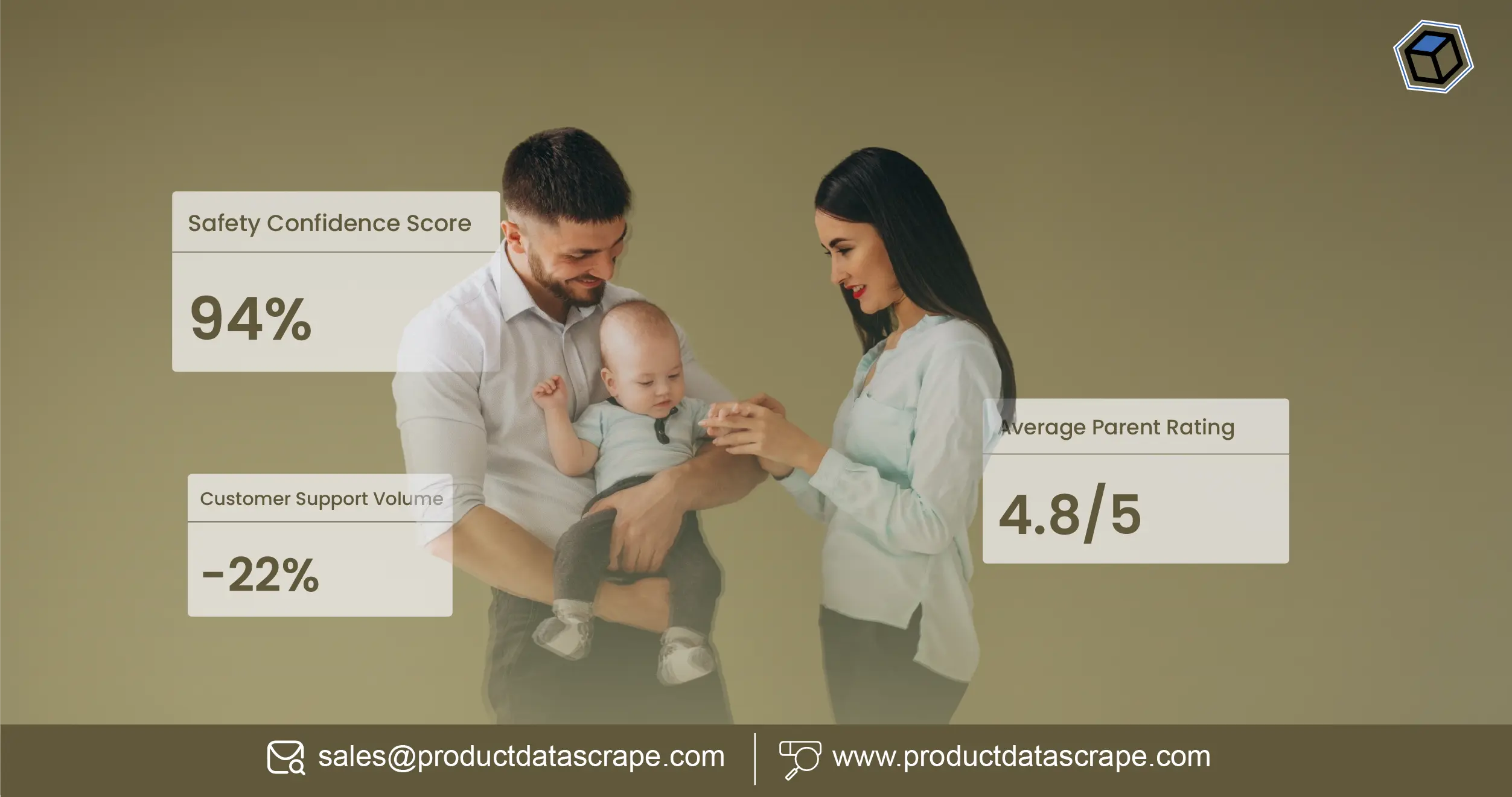
In today’s competitive baby care market, parents rely heavily on online reviews before choosing products for their children. From baby food and diapers to skincare and toys, feedback has become one of the most powerful decision drivers. This is why How Weekly Review Tracking Helps Baby Brands is no longer just a marketing idea—it’s a business necessity. By analyzing parent feedback every week, brands gain early visibility into product issues, emerging preferences, and shifting expectations.
At the same time, advanced data collection methods now allow companies to Extract Baby Products Data from multiple platforms and convert it into structured insights. Instead of reacting months later to negative trends, baby brands in 2026 can respond within days—updating formulations, packaging, or communication strategies to better meet parent needs.
This blog explores six practical ways weekly review tracking helps baby brands improve products and build stronger relationships with parents, supported by data trends from 2020 to 2026.
Building a Feedback-Driven Brand Culture
Modern baby brands are moving away from annual surveys toward continuous listening. Weekly review tracking for baby product brands allows teams to capture real-time feedback across e-commerce platforms, parenting forums, and social channels. This approach ensures that even small complaints—such as packaging issues or fragrance sensitivity—are identified before they become large-scale reputation risks.
From 2020 to 2026, the brands that adopted weekly review monitoring reported higher customer trust and faster product iteration cycles. Instead of waiting for quarterly reports, product teams now review sentiment trends every week and prioritize changes that matter most to parents.
Adoption of Weekly Review Tracking (2020–2026)
| Year |
Brands Using Weekly Tracking (%) |
Avg. Issue Resolution Time (Days) |
| 2020 |
22% |
30 |
| 2021 |
30% |
24 |
| 2022 |
42% |
18 |
| 2023 |
55% |
14 |
| 2024 |
65% |
10 |
| 2025 |
73% |
7 |
| 2026 |
81% |
5 |
By shortening feedback loops, baby brands improve product quality faster and demonstrate that parent voices truly matter. This culture of responsiveness strengthens loyalty in a category where trust is everything.
Turning Parent Voices into Actionable Insights
Parents often share highly detailed experiences in reviews—about allergies, texture preferences, packaging convenience, and even delivery reliability. With Customer review monitoring for baby care brands, companies can transform these unstructured opinions into structured intelligence that guides decisions across departments.
Between 2020 and 2026, brands using automated review monitoring tools saw a steady rise in positive sentiment scores. Why? Because they were able to detect patterns early—such as recurring complaints about pump bottle leaks or diaper fit issues—and fix them before dissatisfaction spread.
Impact of Review Monitoring on Brand Sentiment (2020–2026)
.webp)
| Year |
Avg. Positive Review Rate |
Brands Using Monitoring Tools (%) |
| 2020 |
68% |
26% |
| 2021 |
70% |
34% |
| 2022 |
73% |
45% |
| 2023 |
76% |
57% |
| 2024 |
79% |
66% |
| 2025 |
82% |
74% |
| 2026 |
85% |
82% |
Consistent monitoring also improves crisis management. When safety concerns arise, brands can respond publicly, reassure parents, and implement fixes within days—protecting both reputation and long-term trust.
Using Feedback to Shape Better Products
Every review is a mini product test report written by real parents. Using scraped reviews to optimize baby products allows brands to aggregate thousands of such experiences and uncover what truly matters—whether it’s fragrance-free formulations, eco-friendly packaging, or easier-to-open lids.
From 2020 to 2026, brands that actively analyzed review data introduced more customer-aligned innovations. Instead of relying solely on internal R&D assumptions, they validated ideas with real-world feedback before rolling out major changes.
Product Improvement Cycles Influenced by Reviews (2020–2026)
| Year |
Avg. Improvements / Year |
Brands Using Review Data (%) |
| 2020 |
2 |
28% |
| 2021 |
3 |
36% |
| 2022 |
4 |
47% |
| 2023 |
5 |
58% |
| 2024 |
6 |
67% |
| 2025 |
7 |
75% |
| 2026 |
8 |
83% |
Optimizing products through review insights reduces trial-and-error costs and increases first-time success rates. For baby brands, this means safer products, happier parents, and stronger word-of-mouth advocacy.
Scaling Intelligence Across Teams
As baby brands expand across regions and platforms, managing reviews manually becomes impossible. A Review intelligence API for baby brands centralizes data collection and analysis, enabling marketing, product, and customer support teams to access the same insights in real time.
From 2020 to 2026, API-driven review intelligence transformed how quickly organizations could act on feedback. Instead of siloed information, brands now share dashboards that highlight trending issues, sentiment changes, and top feature requests across all markets.
Enterprise Adoption of Review Intelligence APIs (2020–2026)
.webp)
| Year |
Brands Using APIs (%) |
Avg. Cross-Team Response Time (Days) |
| 2020 |
18% |
20 |
| 2021 |
25% |
16 |
| 2022 |
37% |
12 |
| 2023 |
49% |
9 |
| 2024 |
60% |
7 |
| 2025 |
69% |
5 |
| 2026 |
78% |
3 |
This level of integration ensures that insights don’t stay stuck in reports—they drive real change across the organization, from packaging redesigns to customer education campaigns.
Automating Weekly Feedback Collection
To maintain consistency in feedback analysis, many brands now rely on automation. A Baby Weekly product review data Scraper ensures that reviews are collected systematically from multiple sources—e-commerce platforms, parenting apps, and forums—without manual effort.
Between 2020 and 2026, automation reduced data gaps and improved reporting accuracy. Brands that previously sampled reviews occasionally now analyze 100% of available feedback every week, leading to more reliable insights.
Shift from Manual to Automated Review Collection (2020–2026)
| Year |
Brands Using Scrapers (%) |
Data Coverage (%) |
| 2020 |
20% |
45% |
| 2021 |
28% |
55% |
| 2022 |
40% |
65% |
| 2023 |
52% |
75% |
| 2024 |
63% |
85% |
| 2025 |
72% |
92% |
| 2026 |
80% |
97% |
Automated scraping doesn’t just save time—it creates a foundation for advanced analytics, sentiment scoring, and predictive modeling that guide smarter business decisions.
Staying Ahead of Care and Skincare Trends
Baby skincare is one of the fastest-evolving segments in the industry. Parents increasingly look for clean labels, dermatologist-tested products, and eco-friendly packaging. By analyzing weekly feedback to Track Baby Skincare Trends, brands can anticipate shifts instead of reacting late.
From 2020 to 2026, review data revealed major trend movements—such as rising demand for fragrance-free lotions and plant-based wipes. Brands that acted early gained first-mover advantages in crowded categories.
Emerging Skincare Preferences from Reviews (2020–2026)
.webp)
| Year |
Demand for Clean Labels (%) |
Brands Acting on Trend (%) |
| 2020 |
38% |
25% |
| 2021 |
42% |
32% |
| 2022 |
48% |
44% |
| 2023 |
55% |
56% |
| 2024 |
62% |
64% |
| 2025 |
70% |
72% |
| 2026 |
78% |
81% |
Tracking these trends through reviews ensures that baby brands stay aligned with evolving parent expectations—strengthening both innovation pipelines and brand credibility.
Why Choose Product Data Scrape?
Baby brands need more than raw feedback—they need insights that drive action. Product Data Scrape helps brands transform review data into structured intelligence that supports faster decisions and better outcomes. With advanced tools to Extract Customer Ratings and Reviews to Increase Sales, companies can improve product performance while strengthening trust with parents. By aligning strategy with real-time insights into How Weekly Review Tracking Helps Baby Brands, businesses gain a competitive edge in a market where credibility and care define success.
Conclusion
In a category built on trust, listening to parents is not optional—it’s essential. Weekly review tracking enables baby brands to move from reactive problem-solving to proactive innovation. By understanding what parents love, what concerns them, and what they expect next, brands can continuously refine their offerings and experiences. This is the true power of How Weekly Review Tracking Helps Baby Brands—it transforms feedback into growth.
Ready to turn parent feedback into your strongest competitive advantage? Start building a smarter review intelligence strategy today and let your products evolve with every parent voice.
FAQs
1. Why is weekly review tracking important for baby brands?
It helps brands identify issues early, understand parent expectations, and improve products continuously—ensuring higher satisfaction and stronger trust in sensitive baby care categories.
2. How does review tracking improve product development?
By analyzing recurring feedback, brands can prioritize real customer needs, reduce guesswork, and introduce improvements that resonate with parents more effectively.
3. What platforms should baby brands track reviews from?
E-commerce sites, parenting apps, social media, and forums are key sources where parents actively share experiences and product opinions.
4. Can small baby brands benefit from review tracking?
Yes, even smaller brands can use weekly insights to compete with larger players by responding faster to feedback and building closer relationships with parents.
5. Does Product Data Scrape support review intelligence solutions?
Yes, Product Data Scrape offers scalable data solutions that help baby brands collect, analyze, and act on customer reviews to improve products and drive satisfaction.


 Singapore
 EMAIL
EMAIL
 PHONE
PHONE












.webp)