Introduction
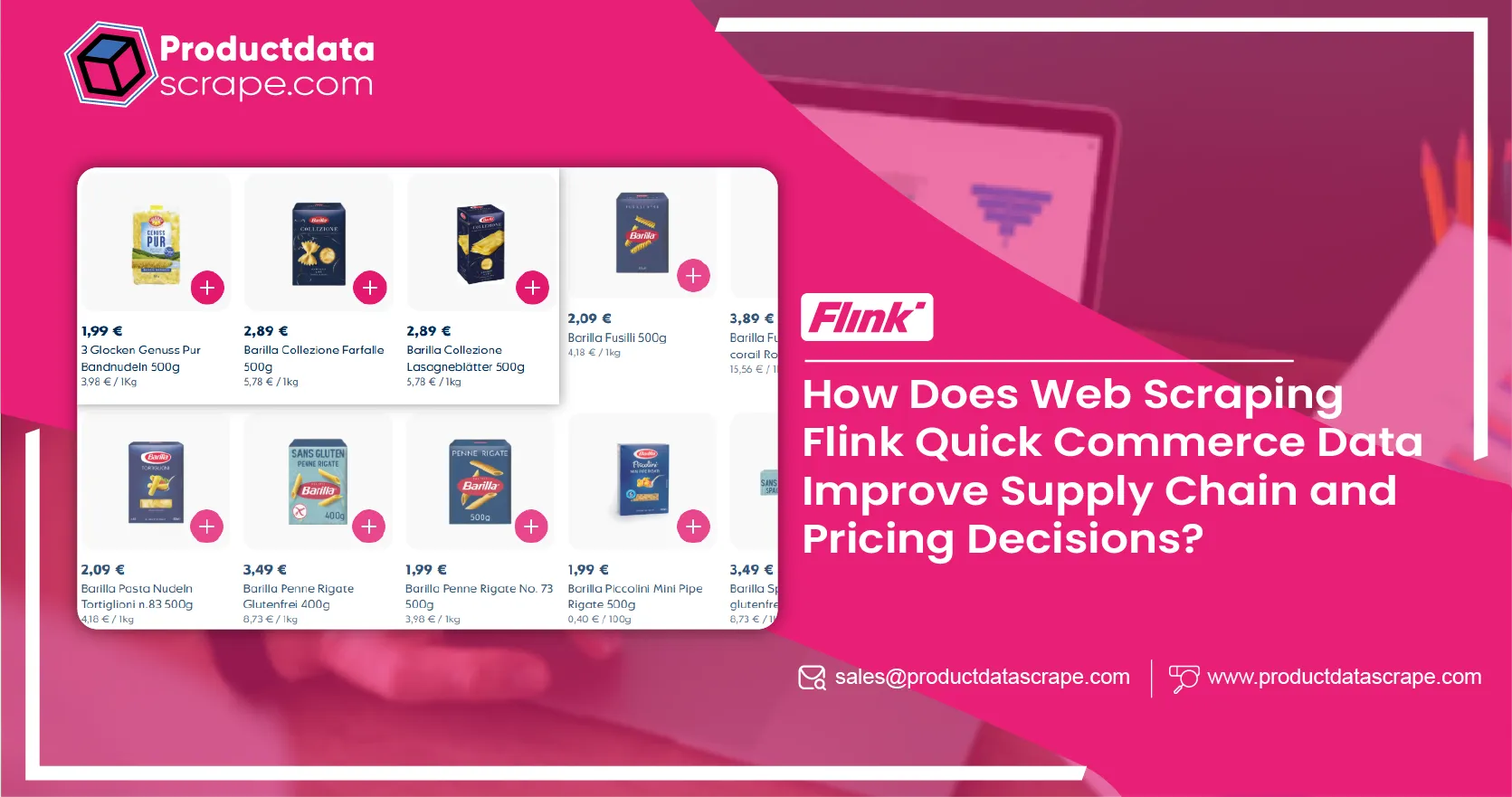
Quick commerce (q-commerce) has redefined consumer convenience by merging technology, real-time logistics, and ultra-fast delivery in today's rapidly evolving grocery retail landscape. A standout in this space is Flink, a German startup that has quickly expanded across Germany and the Netherlands, offering grocery delivery in under 10 minutes. With growing demand and hyperlocal inventory strategies, Web Scraping Flink Quick Commerce Data is becoming increasingly valuable for businesses and analysts seeking a competitive edge.
Instead of exploring technical steps or legal aspects, this article focuses on the strategic importance of scraping Flink's data. By choosing to Scrape Q-Commerce Product Data from Flink Germany, stakeholders can analyze price trends, product availability, and regional preferences. Similarly, those aiming to Extract Quick Commerce Data from Flink Netherlands can gain insights into consumer behavior, promotions, and fast-moving goods. When structured effectively, this data supports smarter decisions in pricing, inventory planning, and market entry strategies.
From pricing trends to inventory updates, understanding Costco wholesale product offerings at scale gives you a critical edge. In this blog, we’ll explore how to extract Costco wholesale supermarket data, the significance of web scraping Costco wholesale grocery item listings, and why these methods are transforming grocery retail analytics.
Understanding Flink's Market Influence
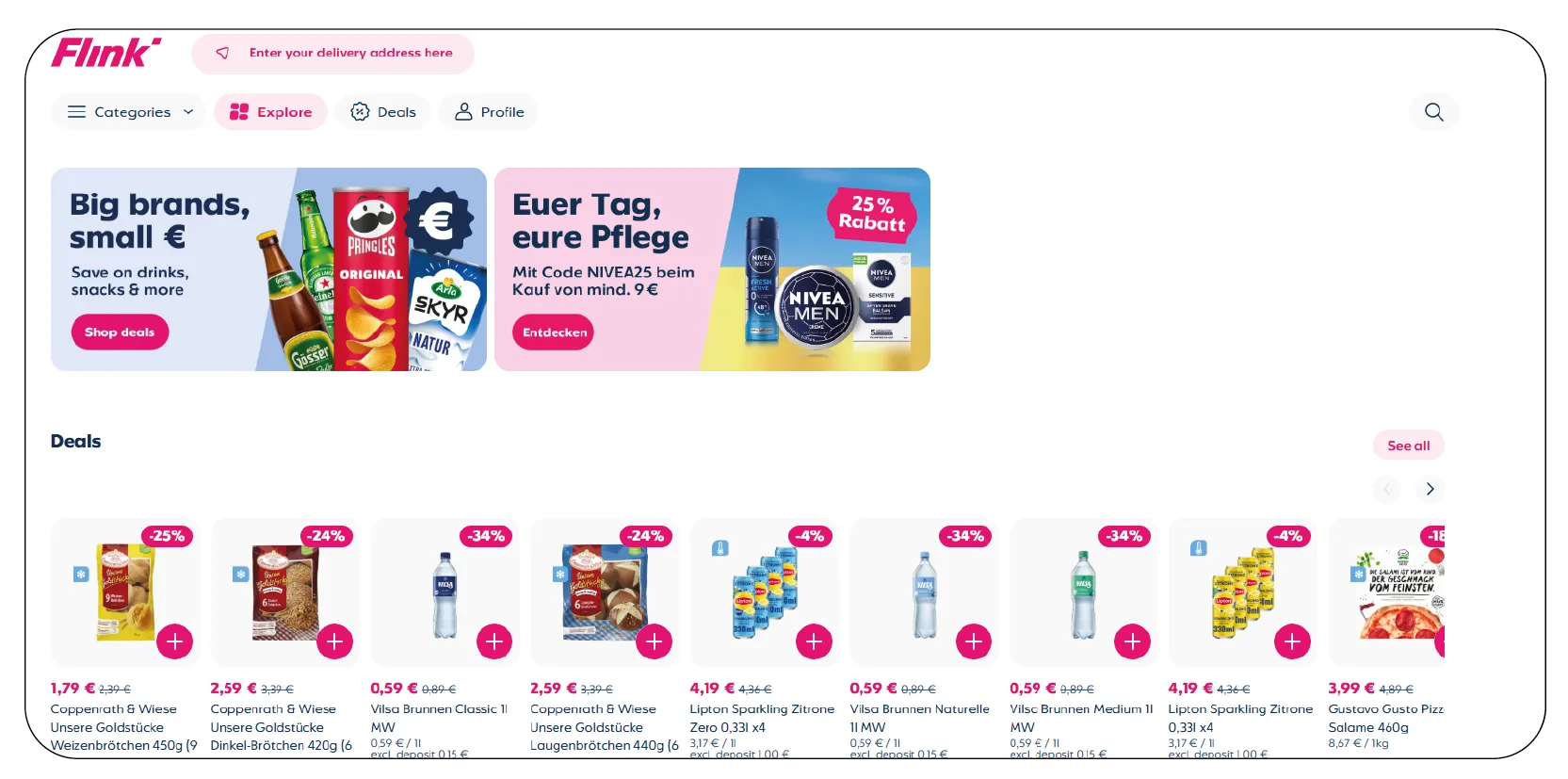
Flink, launched in 2020, quickly gained momentum by offering grocery delivery in under 10 minutes. Backed by major investors and partnerships with established retailers like REWE in Germany, Flink has become a central player in the European q-commerce ecosystem. It operates a decentralized warehouse model (micro-fulfillment centers) with a smart supply chain, often tailoring inventory by region or city.
In Germany, Flink is available in over 40 cities, including Berlin, Munich, and Hamburg. In the Netherlands, it operates in key urban hubs like Amsterdam, Rotterdam, and Utrecht. The data derived from these localized operations represents a real-time pulse of consumer demand, pricing volatility, and product trends, making it immensely valuable for those looking to Extract Flink Q-Commerce Listings Germany and analyze regional SKU availability. Likewise, businesses and analysts can benefit from Web Scraping Flink Q-Commerce Prices Netherlands to study pricing strategies, discounts, and local market variations.
- Retail intelligence platforms
- CPG (Consumer Packaged Goods) brands
- Logistics and supply chain companies
- Grocery price comparison tools
- AI recommendation systems
Unlock powerful insights from Flink—start your custom quick commerce data scraping solution with us today!
Contact Us Today!
What Can Be Extracted from Flink Germany and the Netherlands?
In Germany, Flink is available in over 40 cities, including Berlin, Munich, and Hamburg. In the Netherlands, it operates in key urban hubs like Amsterdam, Rotterdam, and Utrecht. The data derived from these localized operations represents a real-time pulse of consumer demand, pricing volatility, and product trends, making it immensely valuable for those looking to Extract Flink Q-Commerce Listings Germany and analyze regional SKU availability. Likewise, businesses and analysts can benefit from Web Scraping Flink Q-Commerce Prices Netherlands to study pricing strategies, discounts, and local market variations.
When structured and organized properly, scraped grocery data from Flink can yield the following categories of information:
1. Product Listings and Availability
Every regional Flink app or site has distinct product line-ups based on local preferences and supply chain logistics. Tracking this reveals trends in regional SKU preferences, availability shifts, and new product entries, providing valuable intelligence to manufacturers and brand managers.
2. Real-Time Pricing Trends
Flink adjusts prices dynamically based on stock, location, and promotions. Scraping this data helps monitor competitive pricing strategies, regional pricing variation, and promotion cycles—all of which feed into pricing optimization models for rival platforms or FMCG brands.
3. Product Categories and Tags
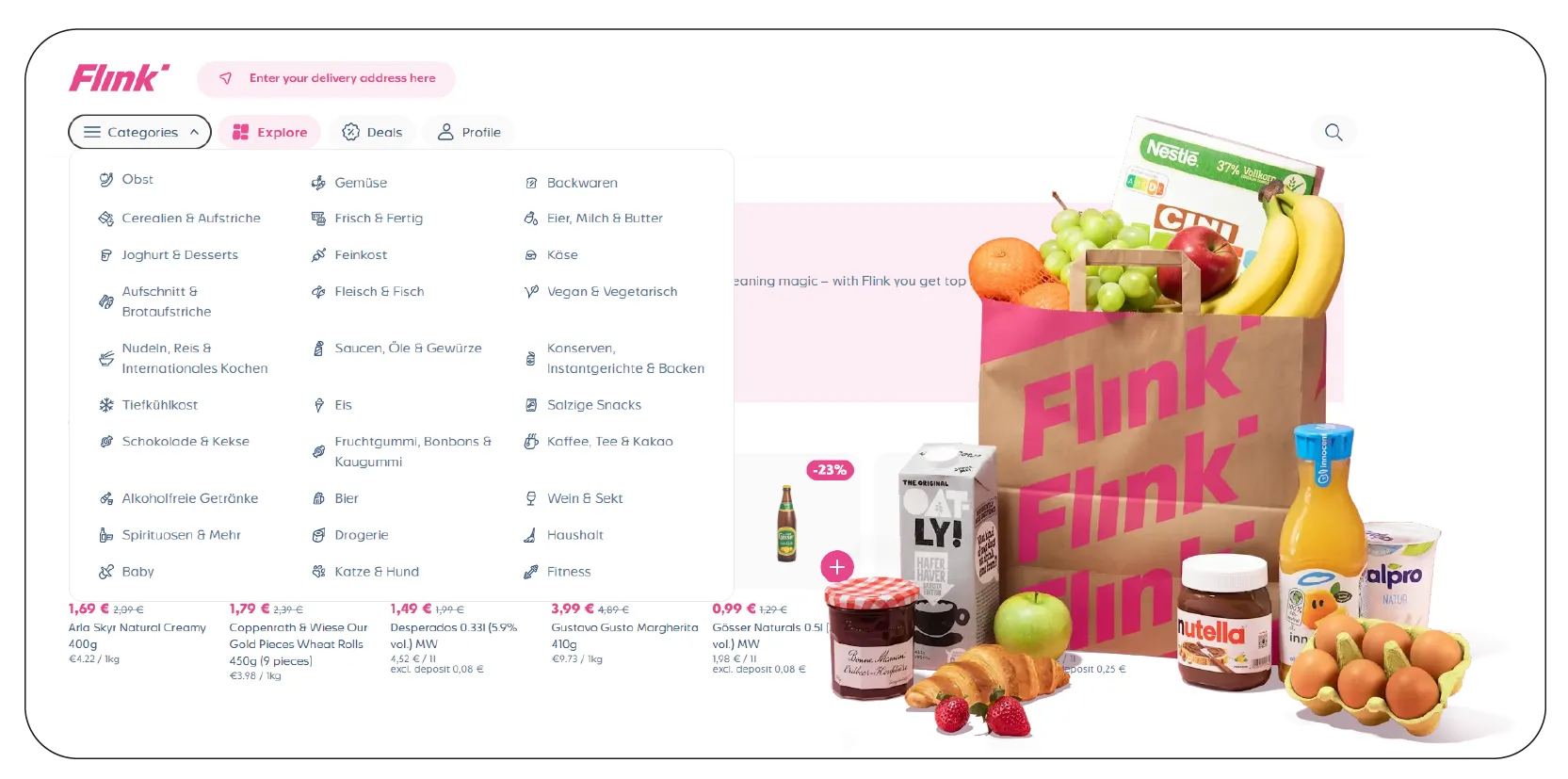
Flink's taxonomy includes categories like "Fresh Produce," "Ready-to-Eat," "Vegan," "Organic," "Snacks," "Household Items," and "Baby Products." Analyzing category frequency and growth across cities can help brands gauge category-level consumer interest and spot gaps for innovation or inventory adjustment.
4. Popularity Indicators
Some product listings feature tags like "Most Popular," "Bestseller," or customer review counts. This data can help companies identify fast-moving products, emerging food trends, or brand performance, particularly when tracking over time.
5. Language and Localized Descriptions
Differences in product naming conventions, languages (German vs. Dutch), and even regional labeling (e.g., eco-labels or nutritional info styles) provide insights into how localization influences consumer behavior in e-commerce grocery.
6. Special Discounts and Bundles
Promotions, multi-buy deals, and coupon applications on Flink provide a rich source for understanding promotional effectiveness and consumer price sensitivity in different urban zones.
Why Businesses Want Flink Grocery Data from Germany and the Netherlands?
Flink operates in two of Europe's most advanced e-commerce environments. Scraping grocery data from these territories is not merely an exercise in market monitoring—it's a strategic move for multiple verticals. Here's how:
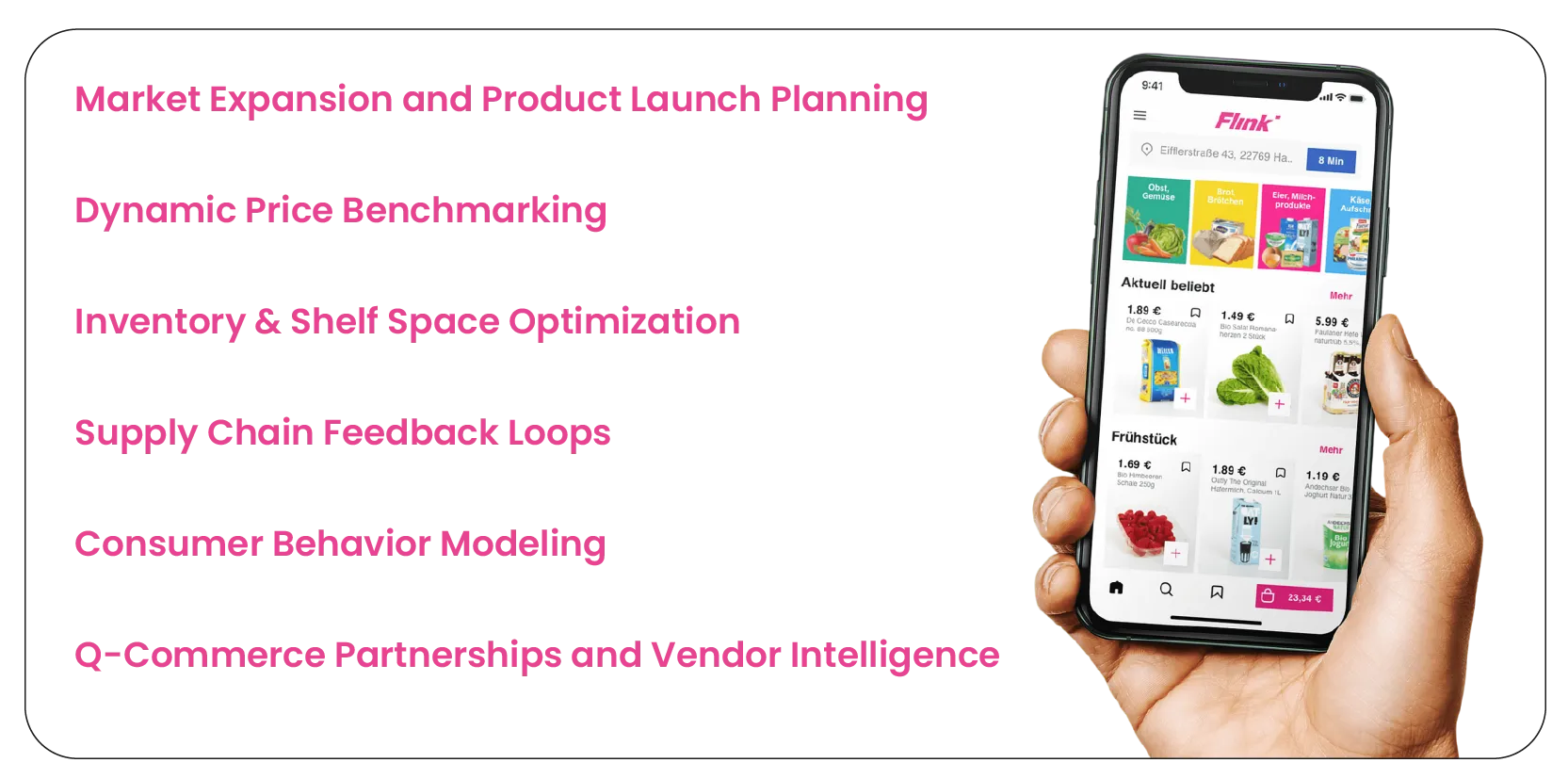
Market Expansion and Product Launch Planning: For any grocery retailer or D2C brand aiming to enter the German or Dutch market, analyzing Flink's assortment by geography allows for pre-launch intelligence. You can identify:
- Which product formats are accepted (e.g., 500ml juice packs vs. 1-liter family packs).
- Whether local or international brands dominate.
- Gaps in SKU offerings that your product could fill.
This level of insight is made possible through Web Scraping Flink Quick Commerce Data, enabling granular comparisons at the city or regional level.
Dynamic Price Benchmarking: In q-commerce, pricing agility is vital. Competitor price monitoring through Flink data can fuel AI-powered pricing engines that dynamically adjust prices to stay competitive without eroding margins. This is crucial, especially in markets like the Netherlands, where online grocery competition includes Picnic and Getir. Businesses increasingly Scrape Flink Prices Data to keep up with volatile real-time pricing trends.
Inventory & Shelf Space Optimization: Flink's digital shelves are closely correlated with physical shelf dynamics. Product visibility patterns—like which items are consistently shown in top results or receive "highlight" tags—are invaluable for:
- SKU performance forecasting
- Retail shelf placement negotiations
- Market-share estimation models
Leveraging a reliable Flink Quick Commerce Scraper allows teams to track these product placements at scale, revealing which brands and formats dominate the q-commerce spotlight.
Supply Chain Feedback Loops: Real-time fluctuations in product availability may indicate supply chain bottlenecks, regional demand spikes, or supplier shortages. This data is vital for logistics companies or brands using demand prediction to optimize their distribution network in Germany or the Netherlands. Companies focused on Quick Commerce Grocery & FMCG Data Scraping can gain a significant distribution efficiency and responsiveness edge.
Consumer Behavior Modeling: Cross-referencing what products are trending on Flink with socio-economic or seasonal variables (e.g., back-to-school, winter, Easter promotions) helps train consumer demand models. These can be applied to other markets or guide ad targeting and promotions. Such modeling becomes far more effective when supported by continuous Web Scraping Grocery & Gourmet Food Data , particularly when tailored to specific promotions or product life cycles.
Q-Commerce Partnerships and Vendor Intelligence: Understanding which third-party brands (e.g., Pepsi, Nestlé, Oatly) are active on Flink in which regions allows for benchmarking partner penetration and opens doors for distribution partnerships, especially for startups or challenger brands wanting to ride the q-commerce wave. Grocery & Supermarket Data Scraping Services make it possible to maintain ongoing visibility into competitive vendor landscapes, helping businesses position themselves smartly within the ecosystem.
Regional Insights: Flink Germany vs. Flink Netherlands
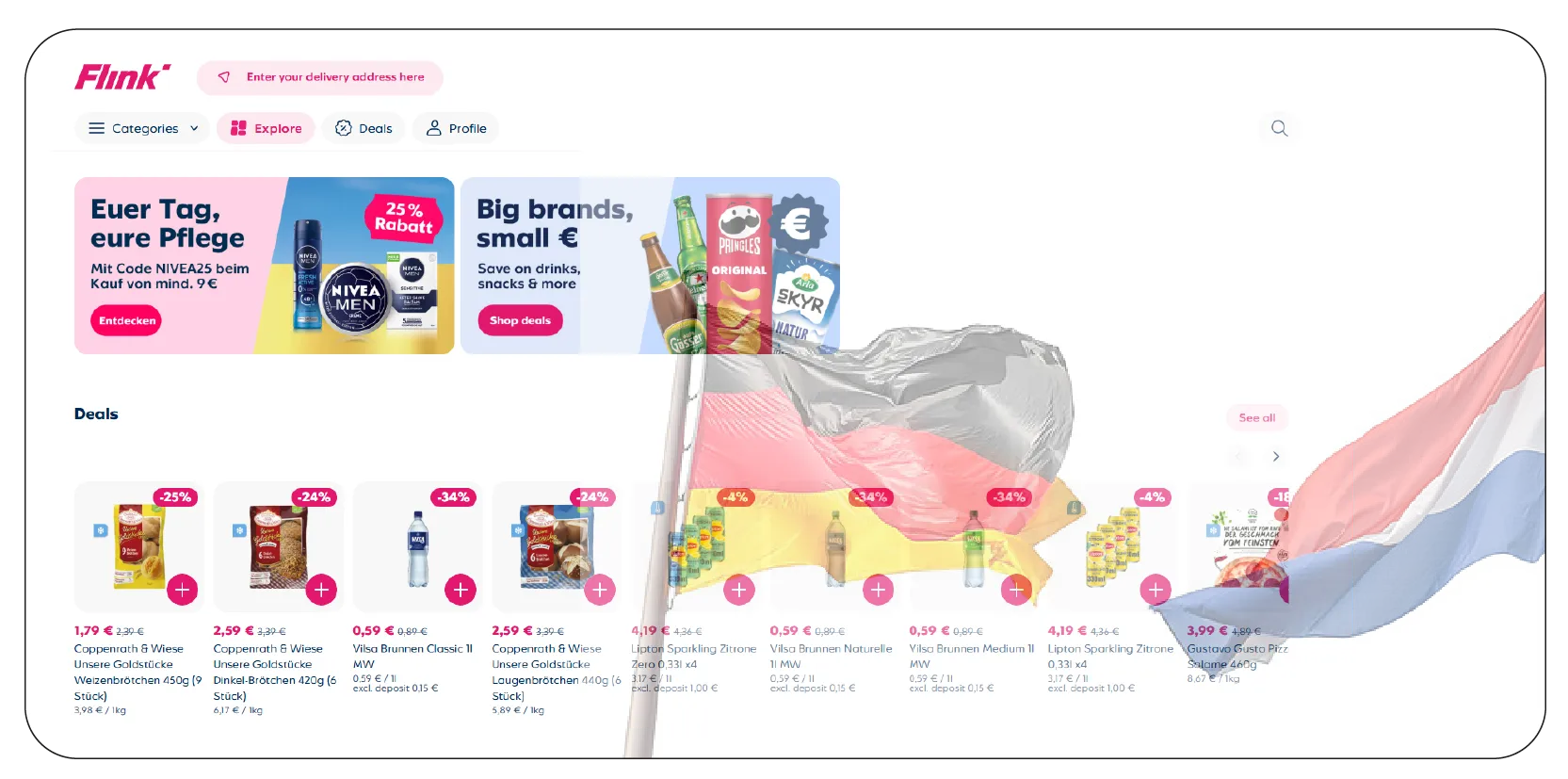
Germany
- German Flink operations lean towards organic, bio-certified, and local farm produce.
- There's heavy inclusion of REWE private-label products due to their partnership.
- Pricing sensitivity is higher in Tier 2 cities like Dresden and Hanover, creating variable discounting patterns.
- German language packaging and a strong emphasis on carbon-neutral labeling dominate.
Netherlands
Dutch Flink stores show a marked preference for ready-to-eat meals, bakery items, and international snacks.
There's a stronger emphasis on compact packaging and multi-lingual labeling (Dutch-English).
Compared to Germany, combo deals and student-centric marketing (e.g., beer + snack bundles) are more frequent.
Scraping this data highlights consumer preferences and helps brands tailor their positioning and product messaging in each country.
The Growing Role of Grocery Analytics in Europe
The wave of quick commerce is not slowing down—if anything, it's moving from urban density to suburban efficiency. Companies that integrate q-commerce grocery data from platforms like Flink into their analytics engines are better positioned to respond with agility. Whether adjusting regional ad campaigns, launching geo-targeted promotions, or creating predictive demand models, data is the new shelf space.
And with platforms like Flink releasing daily-changing product assortments, flash discounts, and inventory rotations, relying on static data reports or market studies is no longer enough. Real-time scraping feeds are the foundation for keeping up with the velocity of change in q-commerce.
How Product Data Scrape Can Help You?
- Real-Time Market Intelligence: Gain up-to-date insights from platforms like Flink, enabling rapid response to pricing, product, and consumer trends.
- Customized Data Extraction: We tailor scraping solutions to your exact needs, using city-specific, category-wise, or brand-level data from German and Dutch q-commerce markets.
- High Accuracy & Scalability: Our robust infrastructure ensures clean, structured, scalable datasets, even from dynamic websites with frequent updates.
- Integration-Ready Datasets: Receive data in formats compatible with your analytics tools, CRMs, or AI models for seamless integration and action.
- Competitive Edge in Q-Commerce: Stay ahead with detailed insights into competitor assortments, pricing patterns, and inventory shifts, fueling smarter decisions across departments.
Final Thoughts
In a world where consumers expect groceries to be delivered in 10 minutes, businesses must act even faster with their insights. Flink Germany and Flink Netherlands are more than delivery apps—they are real-time reflections of how Europe shops today. Scraping grocery data from these platforms gives stakeholders access to a Grocery Store Dataset and a map of shifting consumer priorities, spending behaviors, and brand competition across two of Europe's most sophisticated markets.
By investing in innovative scraping systems and data pipelines, companies unlock a strategic asset that enhances pricing, supply chain, marketing, and product development decisions. Web Scraping Quick Commerce Data from platforms like Flink isn't just about tracking competitors and capturing real-time intelligence. Flink isn't just about speed in delivery—it's about speed in insights. Those who grasp this and use the data accordingly will likely dominate the next decade of grocery commerce.
At Product Data Scrape, we strongly emphasize ethical practices across all our services,
including Competitor Price Monitoring and Mobile App Data Scraping. Our commitment to
transparency and integrity is at the heart of everything we do. With a global presence and a
focus on personalized solutions, we aim to exceed client expectations and drive success in data
analytics. Our dedication to ethical principles ensures that our operations are both responsible
and effective.


 Singapore
 EMAIL
EMAIL
 PHONE
PHONE


.webp)
.webp "thumb")
.webp "thumb")
.webp "thumb")








.webp)