How U.S. Grocery Chains Use Data Scraping APIs to Predict Shopping Trends for 2025

Introduction

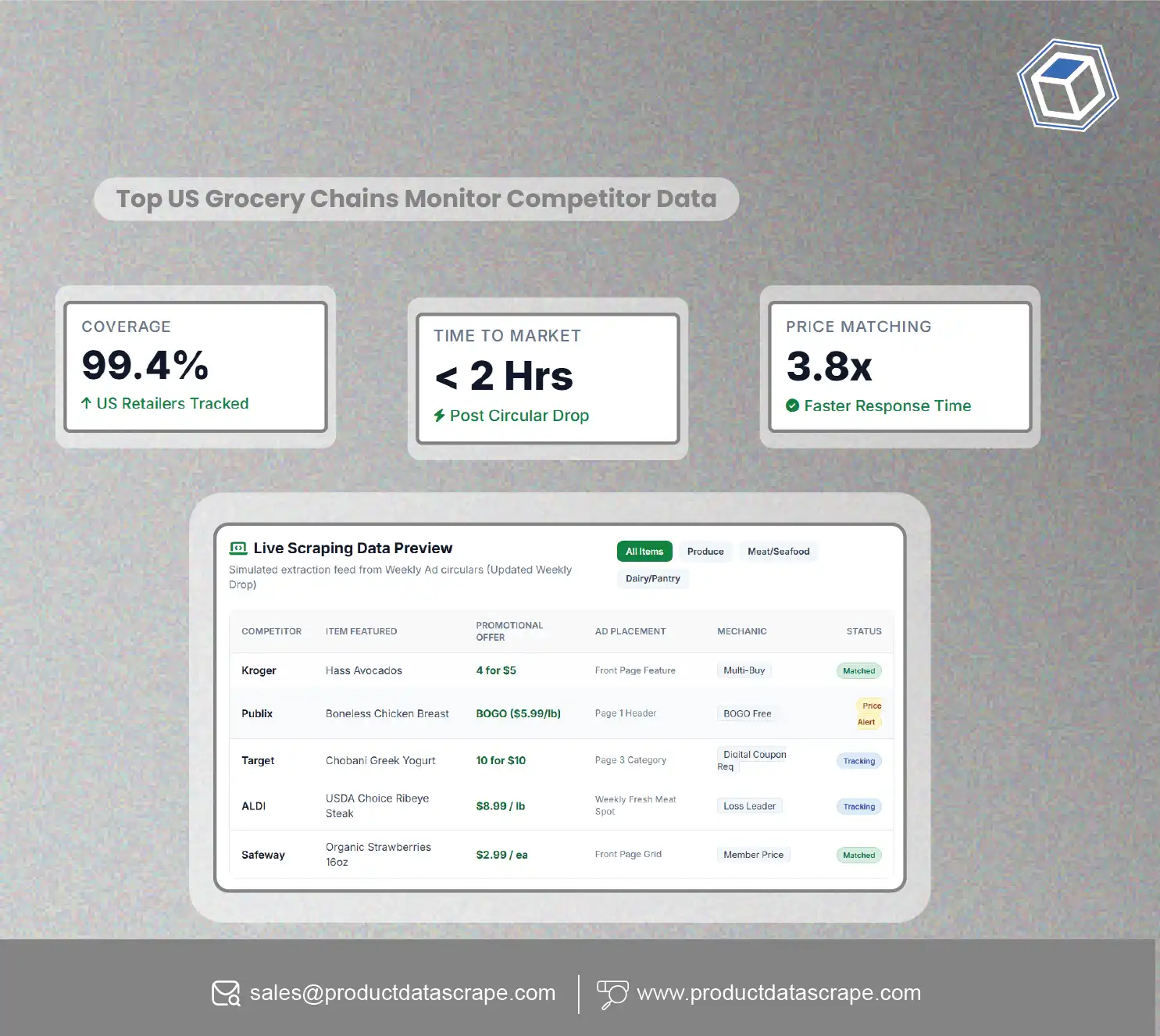
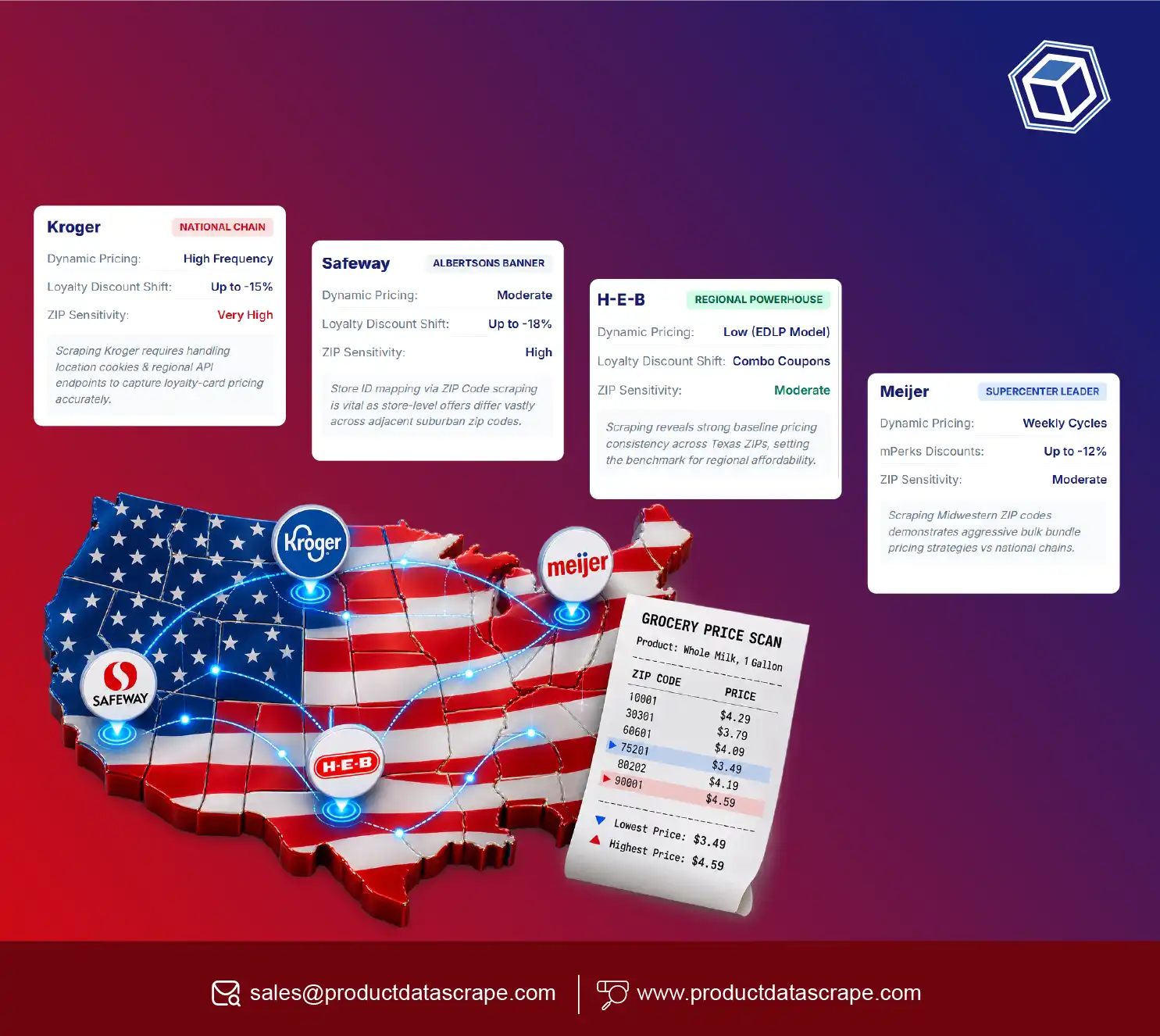
The U.S. grocery sector is undergoing a rapid transformation driven by data, automation, and changing consumer expectations. Inflationary pressures, evolving dietary preferences, and the rise of omnichannel shopping have made demand prediction more complex than ever. To stay competitive, U.S. grocery chains use data scraping APIs to capture real-time insights from digital shelves, competitor pricing, promotions, and assortment changes. These data-driven approaches help retailers move from reactive decision-making to predictive strategy. By leveraging a scalable Web Data Intelligence API, grocery chains can continuously monitor online signals and convert raw data into actionable intelligence. This blog explores how data scraping APIs are reshaping grocery analytics, enabling retailers to forecast shopping trends for 2026 with greater accuracy. Through structured datasets, historical comparisons from 2020 to 2026, and predictive modeling, grocery leaders are aligning pricing, inventory, and promotions with consumer demand before trends fully emerge.

Transforming Retail Visibility Through Advanced Analytics

Modern grocery forecasting relies on consolidated insights derived from Retail Data Analytics for Market Insights that integrate scraped pricing, promotions, and availability data across competitors. Between 2020 and 2026, grocery chains that adopted advanced analytics saw measurable improvements in forecast accuracy and category performance.

Year Forecast Accuracy (%) Avg. Price Change YoY Promo Intensity Index
2020 68% 4.2% 1.1
2021 71% 5.1% 1.2
2022 74% 6.8% 1.4
2023 77% 5.9% 1.3
2024 80% 4.6% 1.2
2025 83% 4.1% 1.2
2026 85% 3.8% 1.1

These improvements highlight how analytics-driven retailers use historical scraped data to identify pricing elasticity, optimize promotions, and anticipate category-level demand shifts ahead of competitors.

Building Comprehensive Product-Level Intelligence
Building Comprehensive Product-Level Intelligence

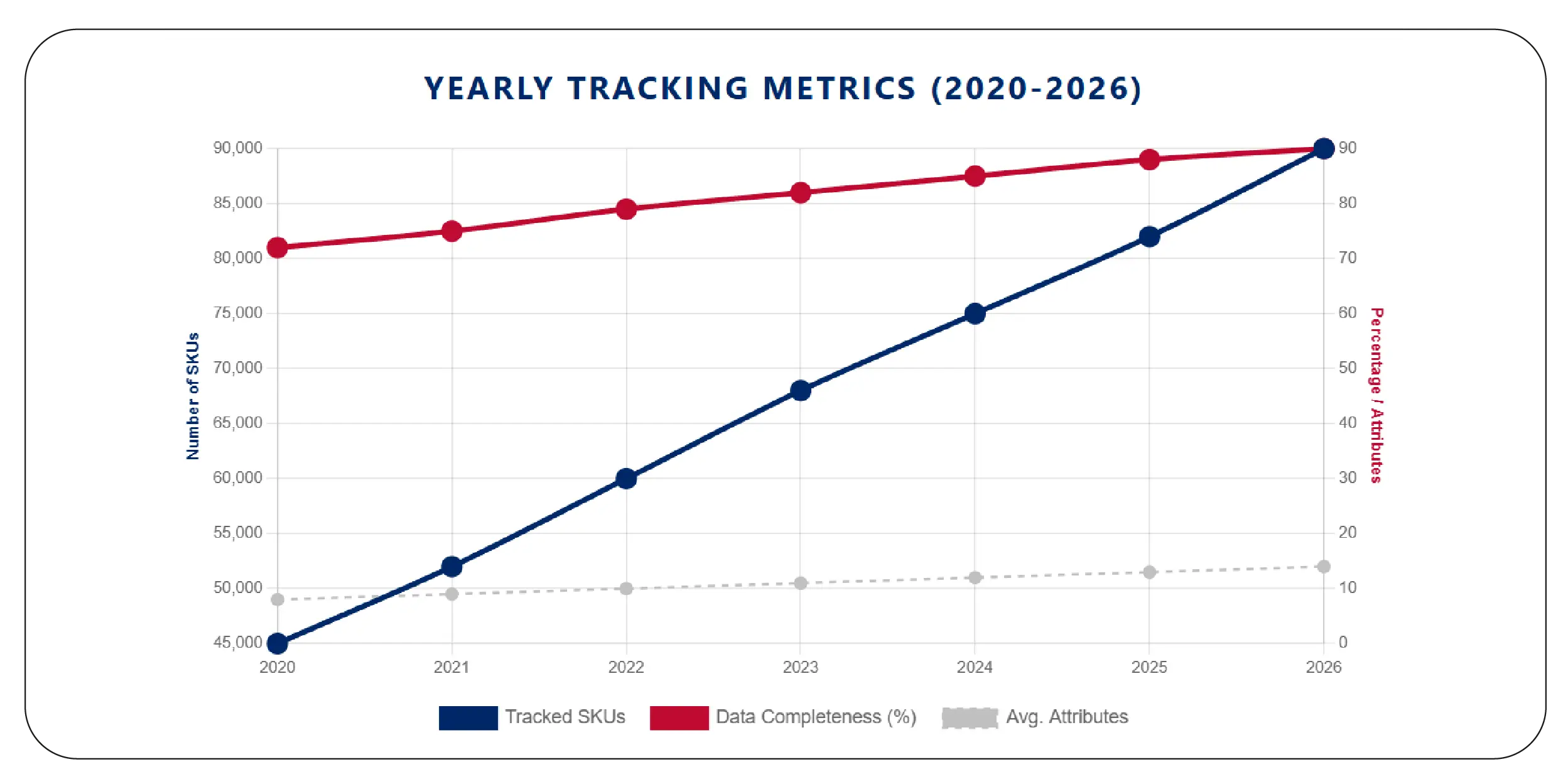
Accurate forecasting starts with access to complete and structured product information. Grocery chains increasingly rely on a unified Grocery store dataset combined with the ability to Extract Grocery & Gourmet Food Data across categories such as packaged foods, fresh produce, dairy, and private labels. Scraped datasets between 2020 and 2026 show consistent expansion in tracked SKUs and product attributes.

Year Tracked SKUs Avg. Attributes per SKU Data Completeness
2020 45,000 8 72%
2021 52,000 9 75%
2022 60,000 10 79%
2023 68,000 11 82%
2024 75,000 12 85%
2025 82,000 13 88%
2026 90,000 14 90%

Richer datasets allow retailers to analyze price-per-unit, brand mix, and private-label expansion, forming the foundation for reliable demand prediction models.

Turning Historical Signals into Predictive Demand Models

One of the most powerful applications of scraping APIs is grocery demand forecasting using scraped data. By analyzing multi-year price movements, availability patterns, and promotion frequency, grocery chains can forecast demand spikes for key categories. From 2020 to 2026, scraped data has significantly improved category-level forecasting precision.

Year Demand Forecast Accuracy Stockout Reduction Excess Inventory Reduction
2020 65%
2021 69% 6% 4%
2022 73% 10% 7%
2023 77% 14% 10%
2024 81% 18% 13%
2025 84% 21% 16%
2026 87% 25% 18%

These insights enable grocery chains to proactively adjust procurement and pricing strategies before consumer behavior shifts.

Regionalizing Strategy with Location-Level Intelligence
Regionalizing Strategy with Location-Level Intelligence

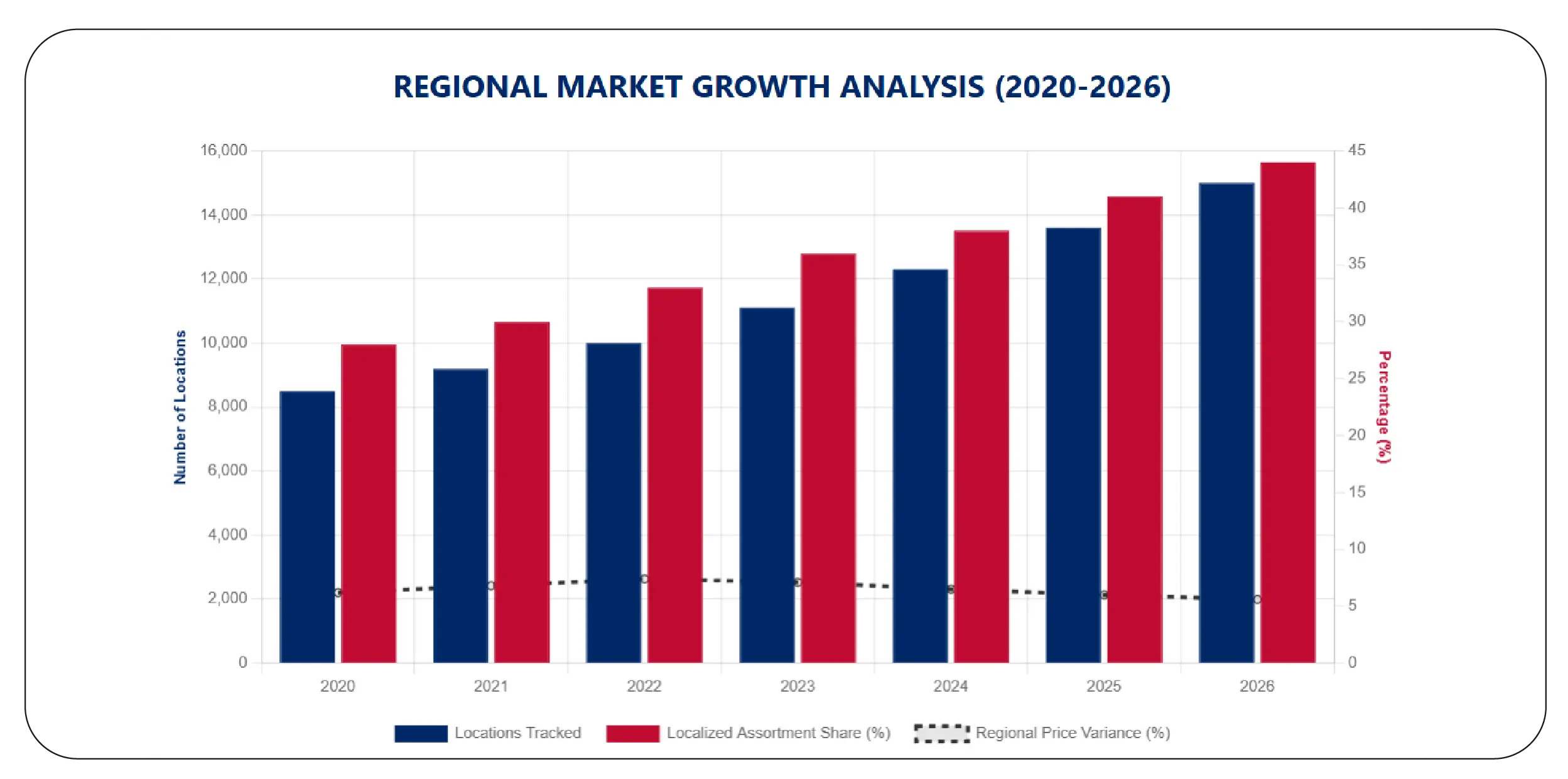
Shopping trends vary significantly by geography, income levels, and urban density. Through Grocery Store Location Data Scraping in USA, retailers capture store-level availability, local pricing differences, and regional assortment strategies. Location-based datasets from 2020 to 2026 show growing reliance on hyperlocal intelligence.

Year Locations Tracked Regional Price Variance Localized Assortment Share
2020 8,500 6.2% 28%
2021 9,200 6.8% 30%
2022 10,000 7.4% 33%
2023 11,100 7.1% 36%
2024 12,300 6.5% 38%
2025 13,600 6.0% 41%
2026 15,000 5.6% 44%

This data helps retailers tailor pricing and promotions to local demand patterns, improving store-level performance.

Competitive Benchmarking Through Discounters

Hard discounters play a critical role in shaping grocery price perception. Monitoring competitors like Aldi provides early signals of category-level pricing shifts. Using Aldi USA Retail Data Collection Service, grocery chains benchmark pricing strategies and private-label growth.

Year Avg. Aldi Price Index Private Label Share Competitive Price Gap
2020 92 38% 8%
2021 91 40% 9%
2022 89 43% 11%
2023 90 45% 10%
2024 91 47% 9%
2025 92 49% 8%
2026 93 52% 7%

These benchmarks inform promotional timing and private-label investment strategies across traditional grocery chains.

Creating a Unified Intelligence Layer for Strategy
Creating a Unified Intelligence Layer for Strategy

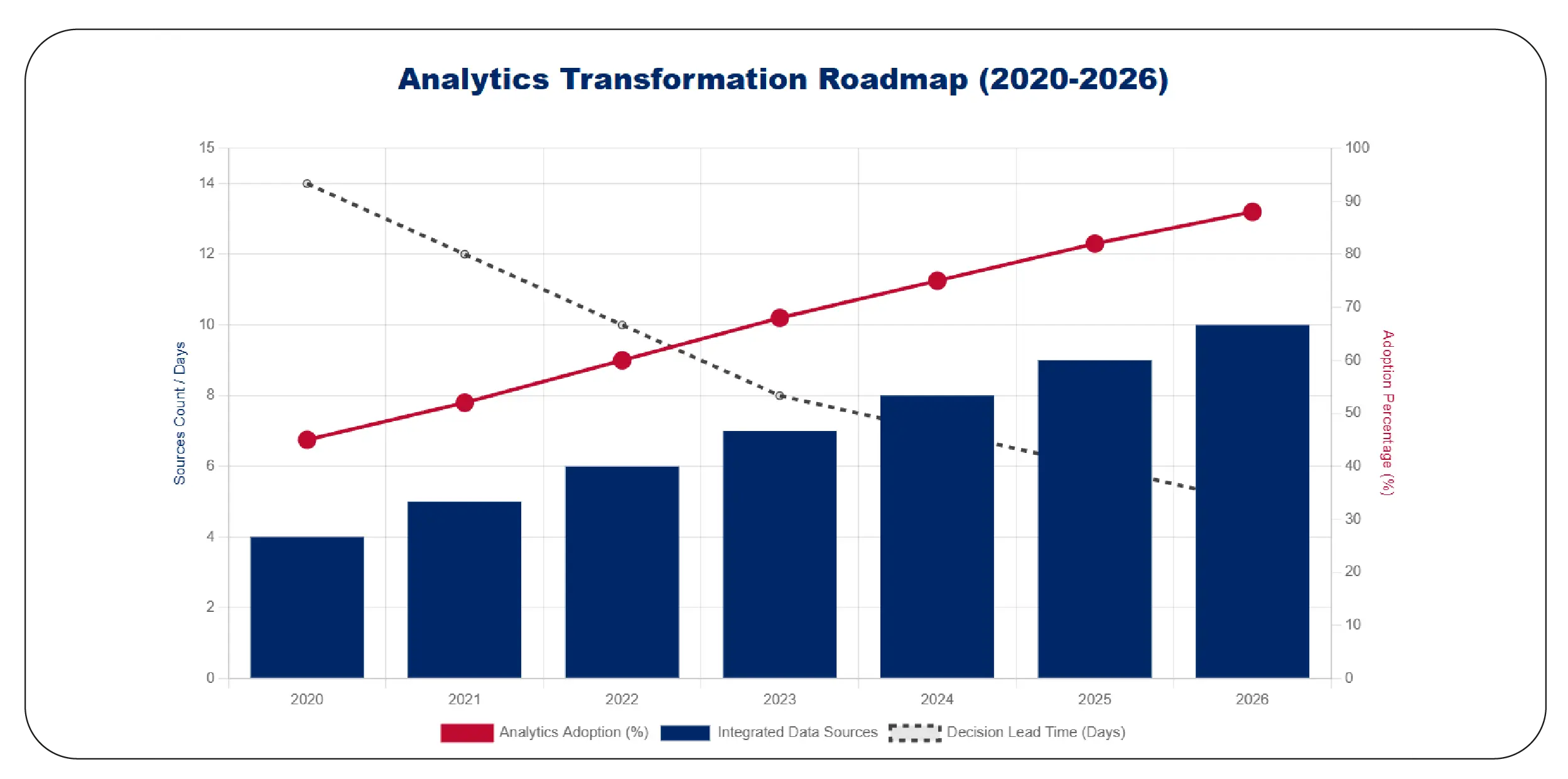
To scale analytics across functions, retailers consolidate scraped insights into a centralized us grocery market intelligence dataset. This unified layer integrates pricing, inventory, location, and promotional data to support forecasting for 2026 and beyond.

Year Integrated Data Sources Analytics Adoption Decision Lead Time
2020 4 45% 14 days
2021 5 52% 12 days
2022 6 60% 10 days
2023 7 68% 8 days
2024 8 75% 7 days
2025 9 82% 6 days
2026 10 88% 5 days

This consolidation enables faster, more confident decisions across pricing, inventory, and promotions.

Why Choose Product Data Scrape?

Retailers preparing for 2026 need partners that deliver accuracy, scale, and speed. Product Data Scrape supports advanced forecasting and planning by helping retailers Predict Holiday Demand Across U.S. Retail Chains using reliable, real-time scraped data. The platform enables automated collection, structured delivery, and seamless integration with analytics systems, reducing manual effort while improving forecast precision. With historical depth and real-time monitoring, grocery chains can anticipate demand surges, optimize promotions, and align inventory well ahead of peak seasons.

Conclusion

As grocery competition intensifies, predictive intelligence is becoming a strategic necessity rather than an advantage. Data scraping APIs allow retailers to move beyond historical reporting toward forward-looking insights. By leveraging structured datasets and advanced analytics, grocery chains can predict grocery shopping trends using data with higher confidence and agility.

Partner with Product Data Scrape to turn real-time grocery data into accurate demand forecasts and smarter retail strategies for 2026 and beyond.

FAQs

1. How does web scraping help grocery chains predict trends?
Web scraping captures real-time pricing, promotions, and availability data, enabling retailers to analyze patterns and forecast demand changes before they appear in sales reports.

2. What type of data is most valuable for grocery forecasting?
Product-level pricing, inventory status, promotions, and location-based data provide the strongest signals for predicting future grocery demand.

3. Can scraped data support regional grocery strategies?
Yes, location-level data enables retailers to customize pricing, assortments, and promotions based on local consumer behavior.

4. How far back should historical data be analyzed?
Most retailers benefit from at least three to five years of historical data to identify seasonal patterns and long-term trends.

5. Why use Product Data Scrape for grocery intelligence?
Product Data Scrape delivers scalable, compliant, and analytics-ready grocery datasets that support accurate forecasting and faster decision-making.

LATEST BLOG

Solve Pricing and Market Analysis Challenges with the Scotch Rarity Index - Scraping Rare Islay Malts Auction vs Retail Spreads

Analyze whisky market trends and optimize pricing strategies with the Scotch Rarity Index - Scraping Rare Islay Malts Auction vs Retail Spreads efficiently.

Tracking Resale Brand Item Pricing on Amazon Using Automated Data Scraping

racking Resale Brand Item Pricing on Amazon effortlessly using automated data scraping for real-time insights, pricing trends, and competitive analysis.

How to Solve Inventory and Pricing Challenges with Coupang Best Seller Product Data Scraping

Discover how Coupang Best Seller Product Data Scraping helps solve inventory and pricing challenges, track trends, and optimize e-commerce strategies efficiently.

Case Studies

Discover our scraping success through detailed case studies across various industries and applications.

WHY CHOOSE US?

Product Data Scrape for Retail Web Scraping

Choose Product Data Scrape to access accurate data, enhance decision-making, and boost your online sales strategy effectively.

Reliable Insights

Reliable Insights

With our Retail Data scraping services, you gain reliable insights that empower you to make informed decisions based on accurate product data and market trends.

Data Efficiency

Data Efficiency

We help you extract Retail Data product data efficiently, streamlining your processes to ensure timely access to crucial market information and operational speed.

Market Adaptation

Market Adaptation

By leveraging our Retail Data scraping, you can quickly adapt to market changes, giving you a competitive edge with real-time analysis and responsive strategies.

Price Optimization

Price Optimization

Our Retail Data price monitoring tools enable you to stay competitive by adjusting prices dynamically, attracting customers while maximizing your profits effectively.

Competitive Edge

Competitive Edge

THIS IS YOUR KEY BENEFIT.
With our competitive price tracking, you can analyze market positioning and adjust your strategies, responding effectively to competitor actions and pricing in real-time.

Feedback Analysis

Feedback Analysis

Utilizing our Retail Data review scraping, you gain valuable customer insights that help you improve product offerings and enhance overall customer satisfaction.

5-Step Proven Methodology

How We Scrape E-Commerce Data?

01
Identify Target Websites

Identify Target Websites

Begin by selecting the e-commerce websites you want to scrape, focusing on those that provide the most valuable data for your needs.

02
Select Data Points

Select Data Points

Determine the specific data points to extract, such as product names, prices, descriptions, and reviews, to ensure comprehensive insights.

03
Use Scraping Tools

Use Scraping Tools

Utilize web scraping tools or libraries to automate the data extraction process, ensuring efficiency and accuracy in gathering the desired information.

04
Data Cleaning

Data Cleaning

After extraction, clean the data to remove duplicates and irrelevant information, ensuring that the dataset is organized and useful for analysis.

05
Analyze Extracted Data

Analyze Extracted Data

Once cleaned, analyze the extracted e-commerce data to gain insights, identify trends, and make informed decisions that enhance your strategy.

Start Your Data Journey
99.9% Uptime
GDPR Compliant
Real-time API

See the results that matter

Read inspiring client journeys

Discover how our clients achieved success with us.

6X

Conversion Rate Growth

“I used Product Data Scrape to extract Walmart fashion product data, and the results were outstanding. Real-time insights into pricing, trends, and inventory helped me refine my strategy and achieve a 6X increase in conversions. It gave me the competitive edge I needed in the fashion category.”

7X

Sales Velocity Boost

“Through Kroger sales data extraction with Product Data Scrape, we unlocked actionable pricing and promotion insights, achieving a 7X Sales Velocity Boost while maximizing conversions and driving sustainable growth.”

"By using Product Data Scrape to scrape GoPuff prices data, we accelerated our pricing decisions by 4X, improving margins and customer satisfaction."

"Implementing liquor data scraping allowed us to track competitor offerings and optimize assortments. Within three quarters, we achieved a 3X improvement in sales!"

Resource Hub: Explore the Latest Insights and Trends

The Resource Center offers up-to-date case studies, insightful blogs, detailed research reports, and engaging infographics to help you explore valuable insights and data-driven trends effectively.

Get In Touch

Solve Pricing and Market Analysis Challenges with the Scotch Rarity Index - Scraping Rare Islay Malts Auction vs Retail Spreads

Analyze whisky market trends and optimize pricing strategies with the Scotch Rarity Index - Scraping Rare Islay Malts Auction vs Retail Spreads efficiently.

Tracking Resale Brand Item Pricing on Amazon Using Automated Data Scraping

racking Resale Brand Item Pricing on Amazon effortlessly using automated data scraping for real-time insights, pricing trends, and competitive analysis.

How to Solve Inventory and Pricing Challenges with Coupang Best Seller Product Data Scraping

Discover how Coupang Best Seller Product Data Scraping helps solve inventory and pricing challenges, track trends, and optimize e-commerce strategies efficiently.

How We Assisted a Premium Whisky Brand to Scrape Scotch to Bourbon Global Whisky Pricing Data and Improve Sales Forecasting

Leverage our solution to Scrape Scotch to Bourbon Global Whisky Pricing Data, enabling brands to track prices, monitor trends, and optimize sales strategy.

How We Enabled a Beverage Analytics Brand to Track Product Availability and Market Trends via Wine and Beer Product Data API for Wine.com & TotalWine

Leverage Wine and Beer Product Data API for Wine.com & TotalWine to optimize inventory, track trends, and make data-driven beverage business decisions.

How We Assisted a Brand in Tracking Market Trends Using Used vs New Fashion SKU Data Scraping on Amazon

Discover how Used vs New Fashion SKU Data Scraping on Amazon helps brands track pricing, optimize inventory, and stay ahead in fashion retail.

Inflation on Baby Products - API-Driven Price Intelligence - Trends, Price Volatility, and Consumer Impact

Inflation on Baby Products - API-Driven Price Intelligence analyzes rising prices, market trends, and cost fluctuations using real-time, data-driven insights.

Long-Term E-Commerce Trend Analysis Using Continuously Scrape Pinduoduo Bestseller Data 2026

Research report analyzing long-term e-commerce trends using Scrape Pinduoduo Bestseller Data to track demand shifts, pricing patterns, and category growth.

Scrape Coupang Pricing & Availability Trends - A Data-Driven Market Report

Scrape Coupang Pricing & Availability Trends to track real-time price changes, stock status, and regional availability, enabling smarter pricing strategies.

Reducing Returns with Myntra AND AJIO Customer Review Datasets

Analyzed Myntra and AJIO customer review datasets to identify sizing issues, helping brands reduce garment return rates by 8% through data-driven insights.

Before vs After Web Scraping - How E-Commerce Brands Unlock Real Growth

Before vs After Web Scraping: See how e-commerce brands boost growth with real-time data, pricing insights, product tracking, and smarter digital decisions.

Scrape Data From Any Ecommerce Websites

Easily scrape data from any eCommerce website to track prices, monitor competitors, and analyze product trends in real time with Real Data API.

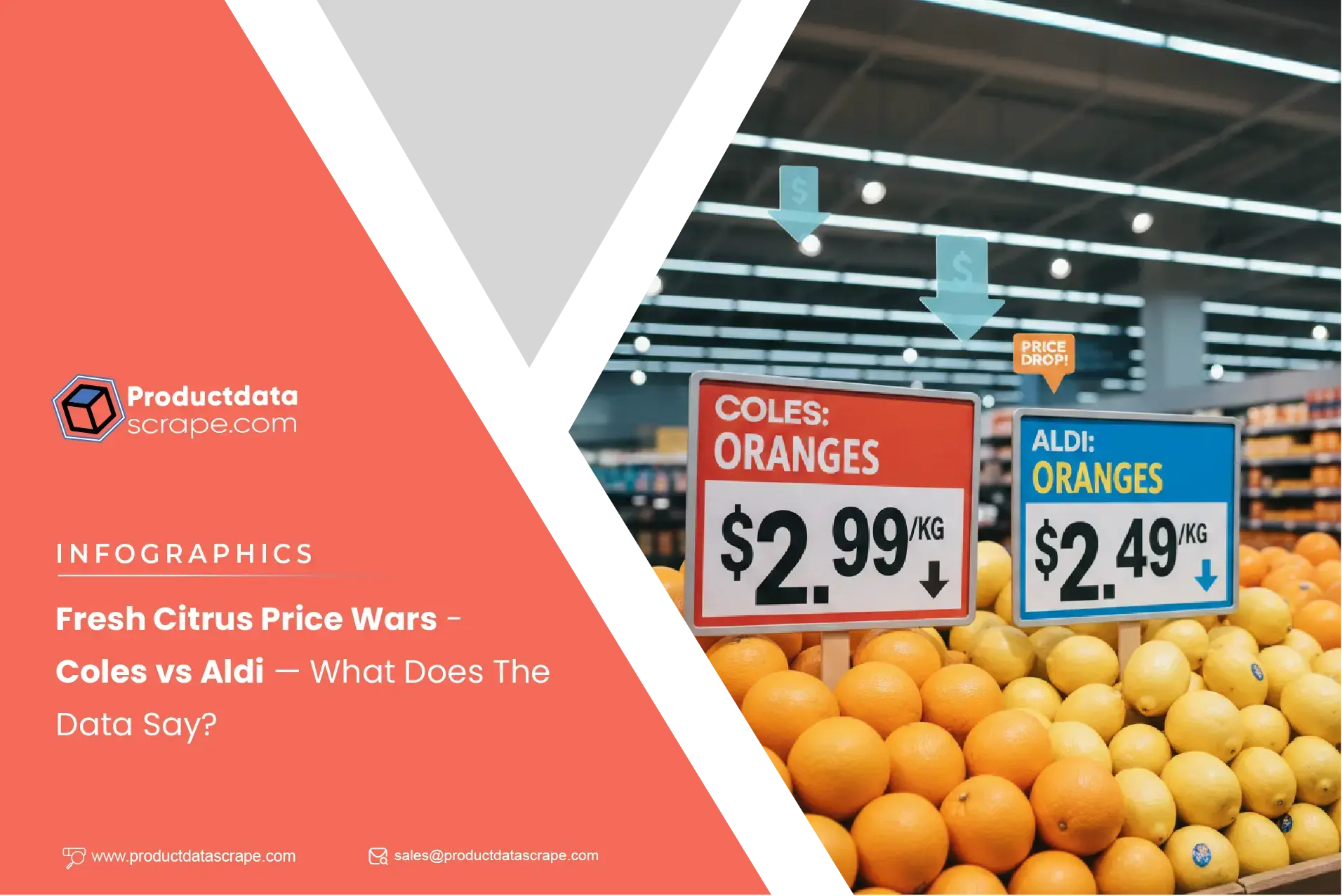
Fresh Citrus Price Wars - Coles vs Aldi — What Does the Data Say?

Fresh Citrus Price Wars — Coles vs Aldi: data-driven comparison of prices, trends, and savings to see which retailer wins on value for shoppers.

Retail Inflation 2025 – Comparing Grocery Baskets in Dubai vs. Abu Dhabi (Noon)

Retail Inflation 2025 – Comparing Grocery Baskets in Dubai vs. Abu Dhabi (Noon) highlights price differences and real-world grocery costs across UAE cities.

Unlock Winning Products on Pinduoduo - How Scraping Bestseller Data Reveals Top Titles, Prices & Sales Trends

Scrape Pinduoduo bestseller data to analyze top-selling products, pricing trends, sales performance, for smarter eCommerce and intelligence decisions.

FAQs

E-Commerce Data Scraping FAQs

Our E-commerce data scraping FAQs provide clear answers to common questions, helping you understand the process and its benefits effectively.

E-commerce scraping services are automated solutions that gather product data from online retailers, providing businesses with valuable insights for decision-making and competitive analysis.

We use advanced web scraping tools to extract e-commerce product data, capturing essential information like prices, descriptions, and availability from multiple sources.

E-commerce data scraping involves collecting data from online platforms to analyze trends and gain insights, helping businesses improve strategies and optimize operations effectively.

E-commerce price monitoring tracks product prices across various platforms in real time, enabling businesses to adjust pricing strategies based on market conditions and competitor actions.

Let’s talk about your requirements

Let’s discuss your requirements in detail to ensure we meet your needs effectively and efficiently.

bg

Trusted by 1500+ Companies Across the Globe

decathlon
Mask-group
myntra
subway
Unilever
zomato

Send us a message