Quick Overview
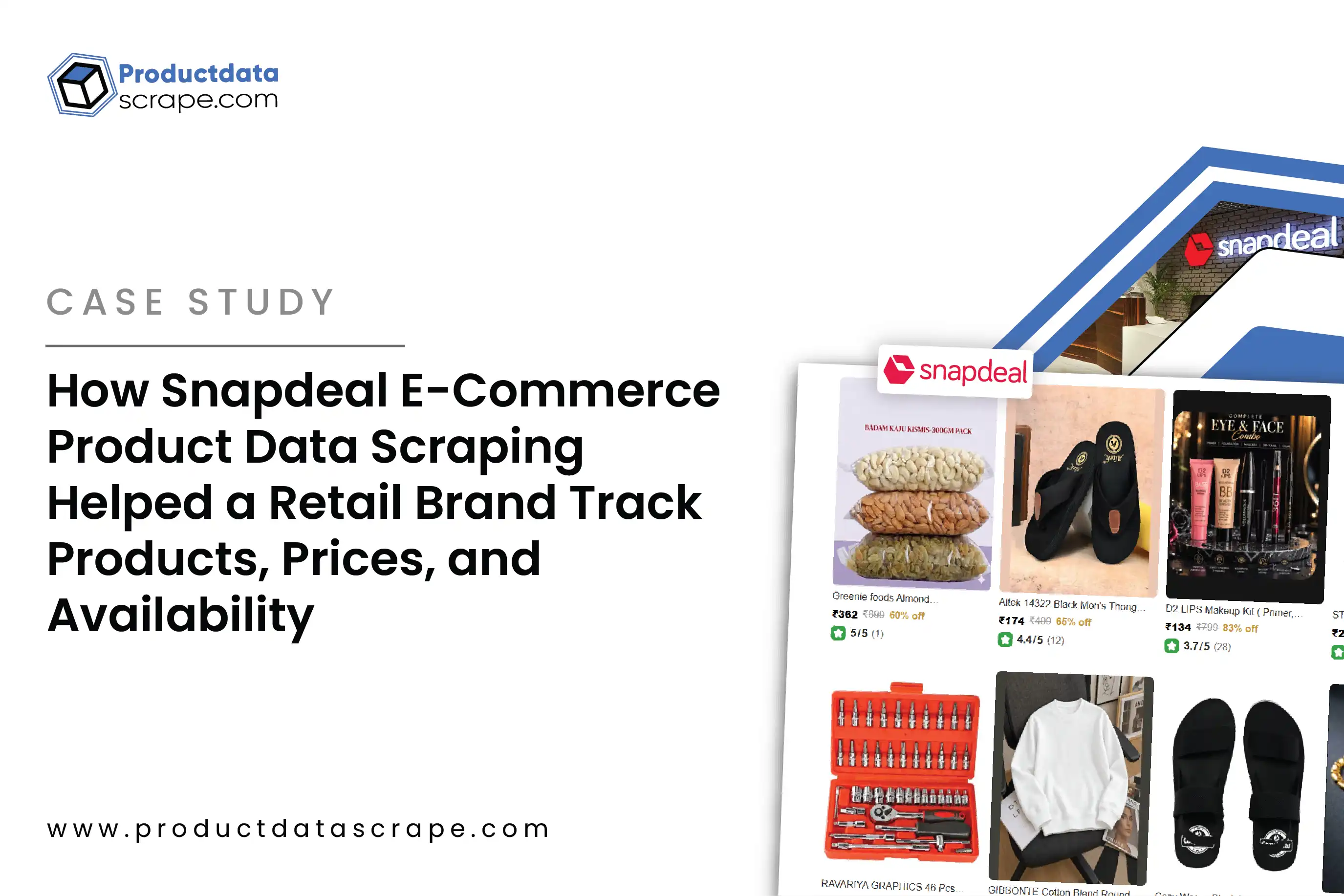
A consumer electronics retailer partnered with Product Data Scrape to build a scalable marketplace intelligence system for Snapdeal. The project focused on tracking electronics and accessories from brands such as Samsung, Apple, OnePlus, HP, Lenovo, ASUS, Logitech, and boAt. Using Snapdeal E-Commerce Product Data Scraping, the retailer created a structured dataset covering product titles, categories, prices, discounts, sellers, ratings, availability, and product URLs. The solution was implemented over 12 weeks and supported automated monitoring across thousands of listings. The retailer achieved faster product discovery, improved pricing visibility, and more consistent availability tracking, creating a stronger foundation for competitive analysis and marketplace decision-making.
Client Name / Industry: Leading Indian Consumer Electronics Retailer
Service / Duration: Snapdeal Product Data Collection & Intelligence / 12 Weeks
Key Impact Metrics: 90% faster product monitoring, 95%+ data validation accuracy, 80% reduction in manual marketplace research
The Client
The client was an India-based consumer electronics retailer selling products across smartphones, laptops, gaming accessories, headphones, smartwatches, televisions, computer peripherals, and other technology categories. Its assortment included products from brands such as Samsung, Apple, OnePlus, Xiaomi, HP, Lenovo, ASUS, Logitech, boAt, and JBL.
The Indian online marketplace environment was becoming increasingly dynamic. Product prices, discounts, seller participation, stock status, ratings, and assortment could change frequently. For a retailer competing across multiple categories, relying on manual research made it difficult to maintain a current view of the marketplace.
Before partnering with Product Data Scrape, the client depended on spreadsheets, manual product checks, and disconnected sources to understand Snapdeal listings. Analysts had to repeatedly search for products such as Samsung Galaxy smartphones, HP laptops, Lenovo notebooks, Logitech keyboards, and boAt headphones. This consumed valuable time and introduced inconsistencies into the data.
The company therefore explored Snapdeal Marketplace Data Scraping to create a more systematic approach to collecting marketplace information. Its broader requirement for E-commerce data scraping was driven by the need for scalable, structured, and repeatable product intelligence.
The transformation was important because the retailer wanted to move from periodic manual observations toward an automated data pipeline that could support pricing analysis, assortment monitoring, availability tracking, and competitor research.
Goals & Objectives
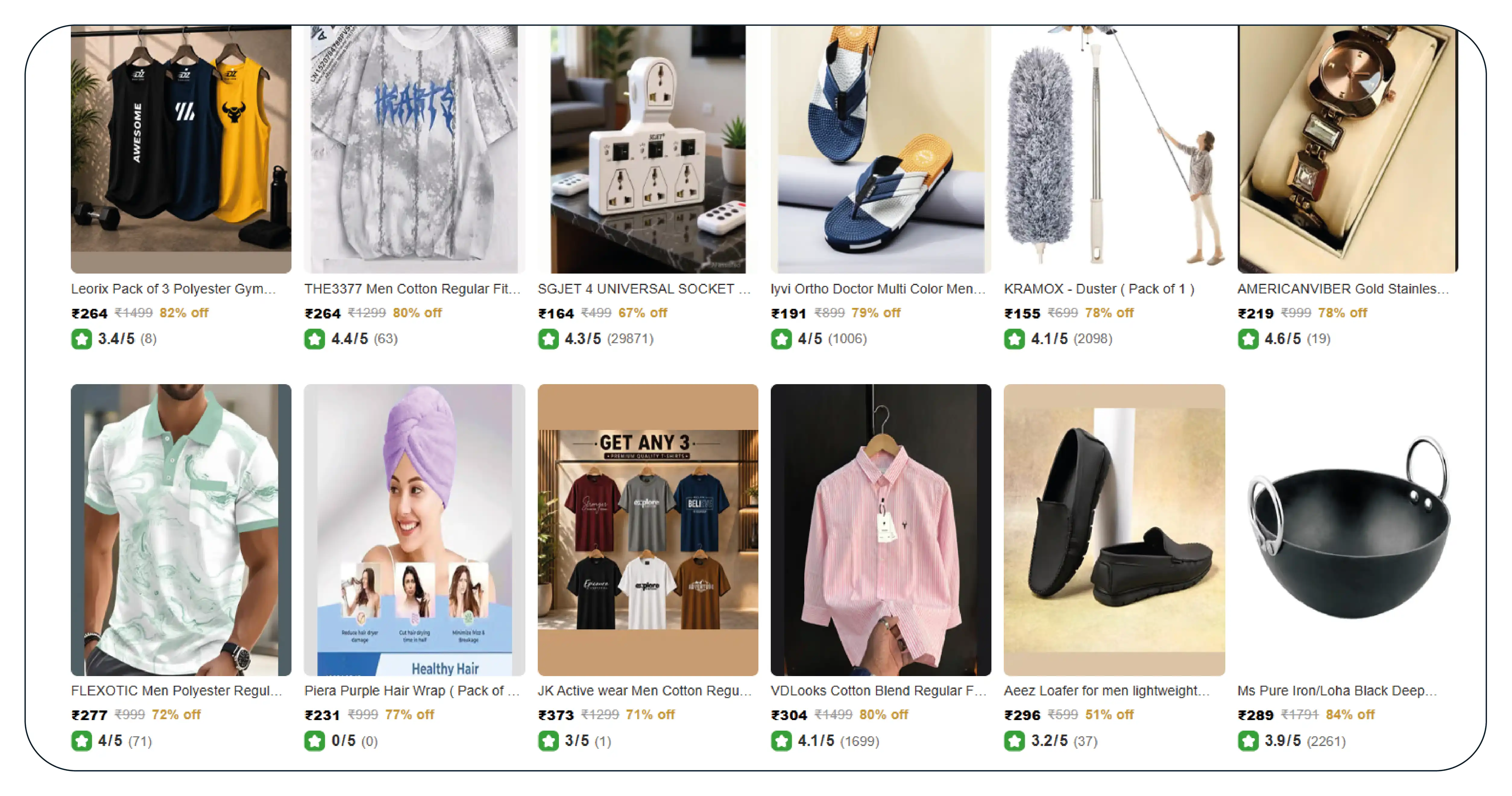
The project was designed around three areas: business scalability, technical automation, and measurable data performance. The retailer wanted a solution capable of monitoring thousands of marketplace listings without increasing manual workload.
The primary goal was to Extract Snapdeal Product Listings at scale across consumer electronics categories. The retailer wanted structured information for products such as Apple iPhones, Samsung Galaxy smartphones, OnePlus devices, HP laptops, Lenovo laptops, ASUS gaming notebooks, Logitech accessories, and boAt audio products.
Another major goal was developing reliable Pricing intelligence so the team could compare listed prices, discounts, and seller-level pricing movements across comparable products.
Automate recurring product-data collection.
Capture product titles, brands, categories, SKUs, prices, discounts, sellers, ratings, reviews, availability, and URLs.
Normalize product information across different listing formats.
Integrate structured data with internal analytics workflows.
Support near-real-time marketplace monitoring.
Create historical datasets for trend and pricing analysis.
Reduce dependence on manual spreadsheet-based research.
90% reduction in manual monitoring effort.
95%+ validated data accuracy.
90% improvement in product discovery speed.
80% reduction in repetitive research activities.
24-hour or scheduled refresh cycles for monitored product groups.
The Core Challenge
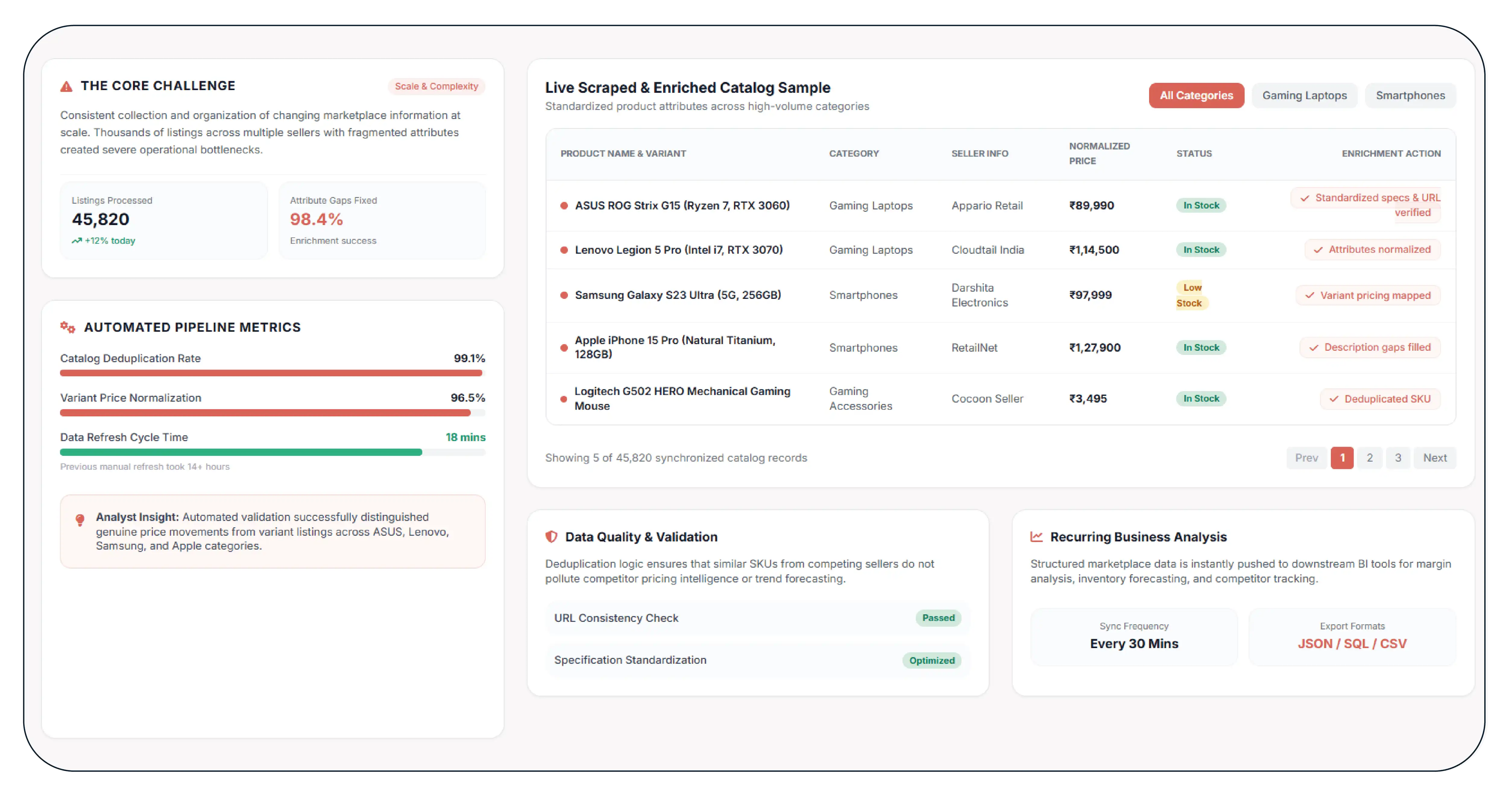
The retailer's biggest challenge was not simply finding Snapdeal products; it was consistently collecting and organizing changing marketplace information at scale. A single category could contain thousands of listings from multiple brands and sellers, with product attributes presented in different formats.
For example, gaming categories could include ASUS ROG laptops, Lenovo Legion notebooks, Logitech gaming mice, mechanical keyboards, and gaming headsets from different sellers. Smartphone categories could simultaneously contain Samsung Galaxy, Apple iPhone, OnePlus, Xiaomi, and other models with multiple variants.
The retailer needed to Scrape Snapdeal Catalog Data while maintaining consistency across product names, specifications, prices, seller information, availability, and URLs. Manual collection made it difficult to identify whether a price change represented a genuine market movement or simply a different product variant.
Another challenge involved keeping catalog information complete. Product descriptions and specifications could vary significantly between listings, creating gaps in downstream analysis. This created a requirement for Catalog Enrichment Services that could standardize available attributes and improve the usability of collected datasets.
Operationally, the retailer also faced slow data refresh cycles. Analysts could spend hours checking products that might change again shortly afterward. Data had to be collected, validated, deduplicated, normalized, and prepared for analytics without creating additional operational complexity.
The project therefore required an automated architecture capable of handling scale, maintaining data quality, and delivering structured marketplace information for recurring business analysis.
Our Solution
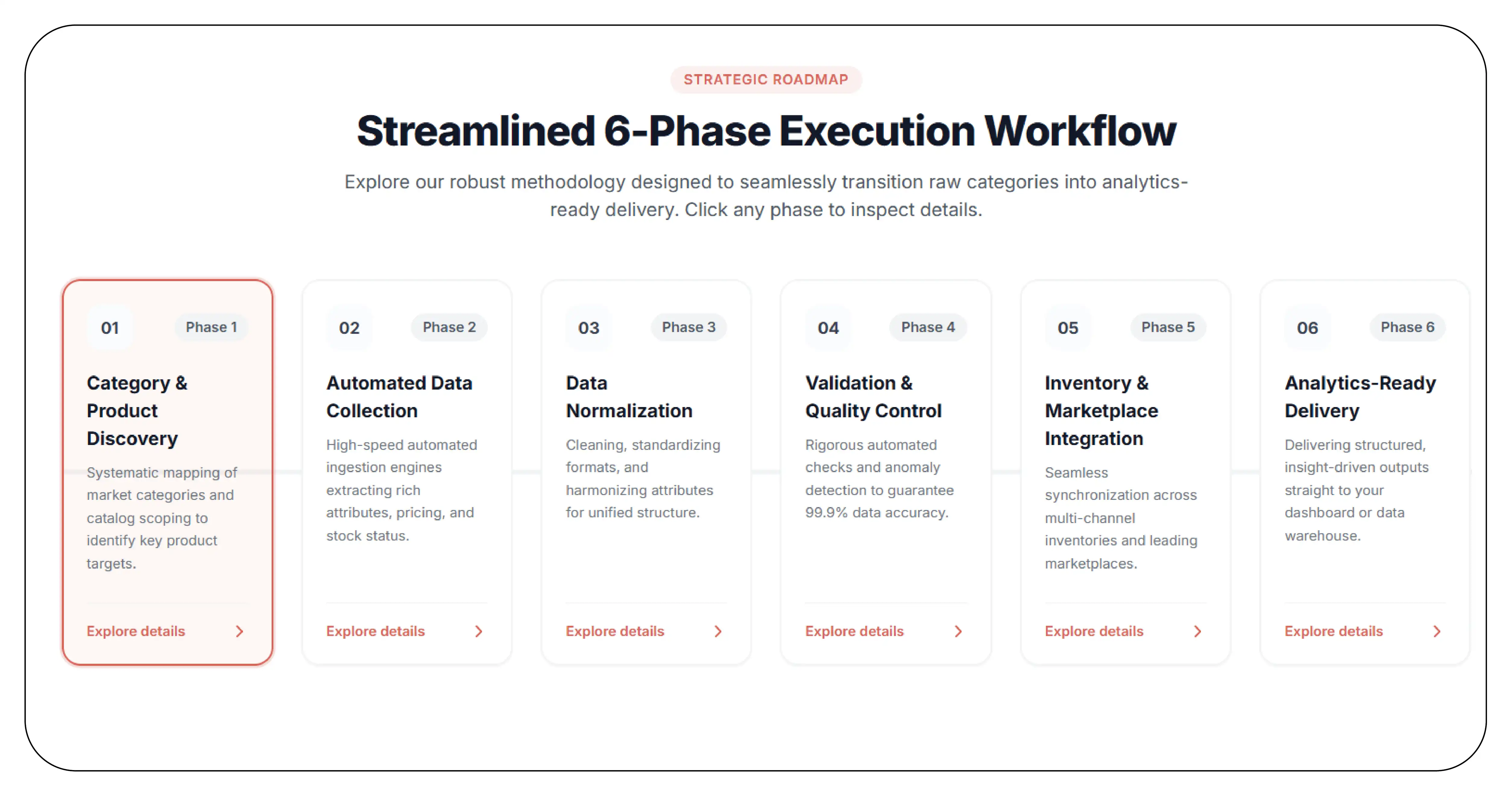
Product Data Scrape approached the project as a structured marketplace data-engineering initiative rather than a one-time scraping assignment. The implementation was divided into multiple phases to improve scalability, data quality, automation, and usability.
Phase 1: Category & Product Discovery
The first phase established the target marketplace universe. Product categories such as smartphones, laptops, gaming products, headphones, smartwatches, televisions, and computer accessories were mapped. Priority brands included Samsung, Apple, OnePlus, Xiaomi, HP, Lenovo, ASUS, Logitech, JBL, and boAt. Product URLs, category structures, listing identifiers, and other accessible attributes were identified to create a scalable collection framework.
Phase 2: Automated Data Collection
The team implemented Snapdeal E-Commerce Product Data Scraping workflows to collect structured information from relevant product and listing pages. The dataset included product name, brand, category, SKU or product identifier where available, product URL, current price, original price, discount, seller name, rating, review count, availability, product specifications, product description, and images or image URLs where accessible. Automated scheduling enabled recurring collection instead of depending on manual checks.
Phase 3: Data Normalization
Raw marketplace data was standardized into consistent fields. Product names were cleaned, brand names were normalized, categories were mapped, prices were converted into consistent formats, and duplicate listings were identified. For example, different listings for a Samsung Galaxy smartphone or Logitech mouse could be grouped into consistent product records while retaining seller-specific information.
Phase 4: Validation & Quality Control
Validation rules checked missing fields, duplicate records, abnormal pricing values, inconsistent categories, and availability indicators. This helped prevent incomplete or incorrectly formatted records from entering the analytics layer.
Phase 5: Inventory & Marketplace Integration
Where applicable, the architecture was designed to work alongside the retailer's existing marketplace systems and Snapdeal Inventory Management API workflows. This allowed collected marketplace observations to complement internal inventory and product-management processes rather than operating as an isolated dataset.
Phase 6: Analytics-Ready Delivery
The final datasets were delivered in structured formats suitable for dashboards, databases, spreadsheets, and business intelligence systems. Historical snapshots enabled the retailer to compare pricing and availability over time. This phased approach allowed the retailer to move from manual marketplace observation toward a repeatable data pipeline supporting pricing, catalog, seller, and availability intelligence.
Results & Key Metrics
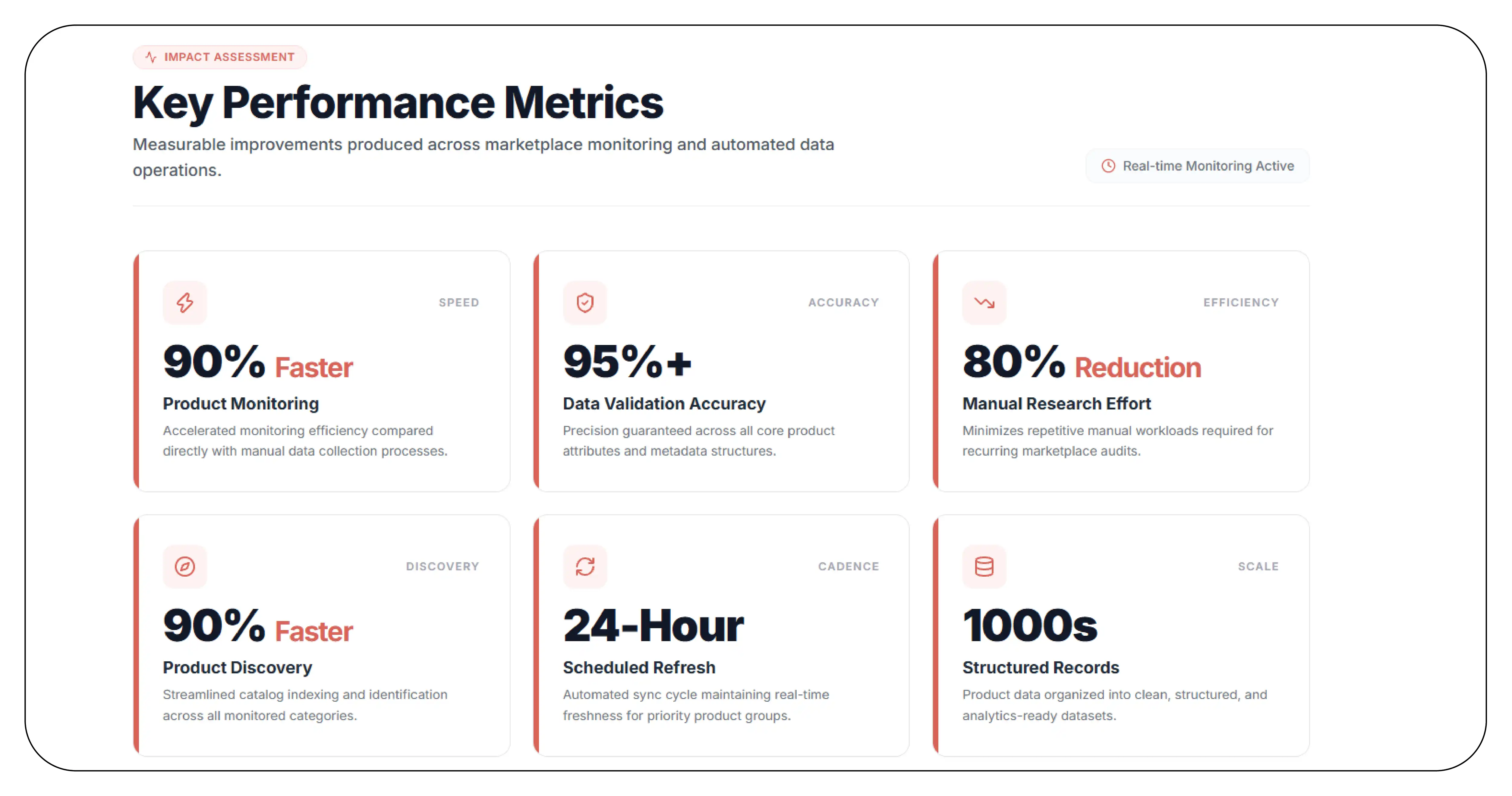
The implementation produced measurable improvements across marketplace monitoring and data operations:
90% faster product monitoring compared with manual collection.
95%+ data validation accuracy across core product attributes.
80% reduction in manual research effort for recurring marketplace checks.
90% faster product discovery across monitored categories.
24-hour scheduled refresh capability for priority product groups.
Thousands of product records organized into structured, analytics-ready datasets.
Significant reduction in duplicate and inconsistent records through normalization and validation.
Results Narrative
The retailer used Extract Snapdeal Product Price Data workflows to build a more consistent view of pricing across smartphones, laptops, gaming accessories, headphones, and other electronics.
The structured dataset made it easier to monitor price movements for products such as Apple iPhones, Samsung Galaxy smartphones, HP laptops, Lenovo notebooks, ASUS gaming devices, Logitech accessories, and boAt headphones.
By combining pricing, availability, seller, and catalog information, the retailer could identify marketplace changes faster and reduce dependence on manual research.
The solution also enabled Snapdeal E-Commerce Product Data Scraping to become part of a recurring intelligence workflow rather than a one-time data collection exercise.
What Made Product Data Scrape Different
Product Data Scrape focused on building a reusable marketplace intelligence framework instead of delivering a raw collection of product records. The system combined automated extraction, normalization, validation, deduplication, scheduling, and structured delivery.
The framework could organize information from categories ranging from smartphones and laptops to gaming accessories and consumer electronics.
A key differentiator was the ability to structure marketplace information for downstream analytics. Through a configurable Snapdeal Product Intelligence API architecture, structured product information could be made available to applications, dashboards, databases, and internal analytics systems.
The automation framework also supported recurring collection schedules, allowing the retailer to preserve historical observations and compare product prices, availability, seller activity, and assortment changes over time.
The approach was designed to scale as the retailer expanded its monitored categories, brands, products, and business intelligence requirements.
Client's Testimonial
"The project gave our team a much more structured way to understand marketplace activity. Instead of manually checking individual listings, we could work with organized product, pricing, seller, and availability information. The data was particularly useful for categories such as smartphones, laptops, gaming accessories, and audio products. The automated workflow also helped our analysts spend less time collecting information and more time interpreting marketplace changes. Product Data Scrape understood our requirement for scalable data collection and built the workflow around the way our teams actually use product intelligence."
— Head of E-Commerce Intelligence, Consumer Electronics Retailer
Visual reference for designer: Samsung Galaxy smartphone, Apple iPhone, ASUS ROG laptop, Lenovo Legion laptop, Logitech gaming mouse, and boAt headphones.
Top-Selling Gaming Items from Snapdeal
The project also enabled the retailer to examine gaming-related product activity across categories such as gaming laptops, keyboards, mice, headsets, controllers, and accessories.
Representative product and brand examples for the visual section include:
Gaming Laptops: ASUS ROG, Lenovo Legion, HP Victus
Gaming Mice: Logitech G, Razer
Gaming Keyboards: Logitech G, Redragon
Gaming Headsets: JBL Quantum, boAt
Controllers: Xbox Wireless Controller, Logitech
Monitors: ASUS, Acer, LG
Accessories: Gaming pads, webcams, USB hubs
These examples can help the designer create product-category visuals while the underlying case study focuses on marketplace data collection and intelligence.
Conclusion
The project demonstrated how structured marketplace data can support faster and more consistent e-commerce intelligence. By automating product, pricing, seller, and availability monitoring, the retailer established a scalable framework for tracking marketplace changes across electronics categories.
The solution also created a foundation for expanding monitoring to additional brands, categories, sellers, and product attributes. As marketplace competition evolves, the same framework can support recurring data collection and historical analysis.
With Extract Snapdeal Data India API capabilities incorporated into broader data workflows, businesses can connect marketplace intelligence with internal analytics, pricing systems, catalog operations, and decision-support platforms.
For Product Data Scrape, the project represented a practical example of turning fragmented marketplace information into structured, reusable business intelligence.
FAQs
1. What information can be collected from Snapdeal?
Depending on accessibility, a structured dataset can include product names, brands, categories, prices, discounts, sellers, ratings, reviews, availability, specifications, URLs, and other product attributes.
2. Can Snapdeal product data be collected by category?
Yes. Monitoring can be organized around categories such as smartphones, laptops, gaming accessories, headphones, televisions, smartwatches, and computer peripherals.
3. How can retailers use Snapdeal data?
Retailers can use structured marketplace data for competitive pricing analysis, assortment monitoring, catalog research, seller intelligence, product availability tracking, and historical marketplace analysis.
4. Can the data collection be automated?
Yes. Automated workflows can be configured around defined product lists, categories, brands, or marketplace requirements with scheduled refresh cycles and validation processes.
5. Can the solution scale to more products and categories?
The architecture can be designed for expansion as monitoring requirements grow. Additional products, categories, brands, sellers, and attributes can be incorporated into the collection and analytics workflow.


 Singapore
 EMAIL
EMAIL
 PHONE
PHONE












.webp)