Introduction
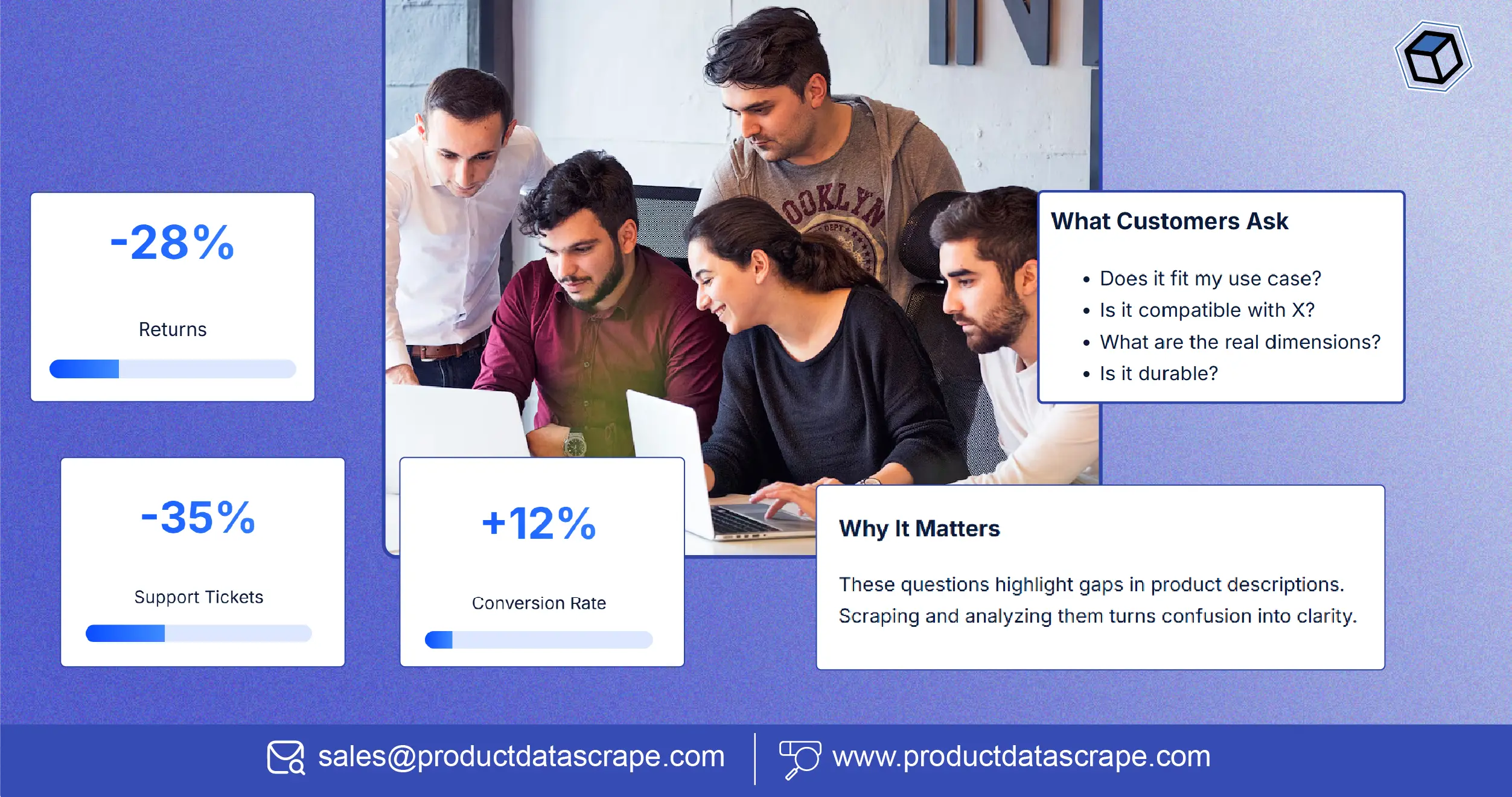
High product return rates are a major challenge for e-commerce businesses. Customers often return products due to incomplete or misleading product descriptions, unaddressed queries, or mismatched expectations. Leveraging Scraping Product Q&A Data can provide a comprehensive understanding of common customer concerns, frequently asked questions, and product clarifications. By integrating these insights into product descriptions, brands can proactively answer customer doubts, reduce ambiguity, and minimize return rates.
Data-driven optimization also helps tailor descriptions for different customer segments, improving purchase confidence and reducing post-purchase dissatisfaction. With structured Q&A insights, brands can identify patterns in customer feedback, spot recurring product issues, and update listings accordingly. For example, analyzing Q&A data from top-selling electronics or apparel items reveals which features cause confusion and which benefits are most appreciated.
By embedding answers from Scraping Product Q&A Data directly into product listings, businesses can create highly informative, accurate descriptions that drive informed buying decisions and improve overall customer satisfaction.
Understanding Product Expectations
E-commerce customers increasingly rely on product descriptions and reviews before making purchases. Inaccurate descriptions are a leading cause of returns, with industry data indicating average return rates of 15–20% across categories. Using Scrape Data From Any Ecommerce Websites, businesses can collect real-time Q&A content to understand what buyers ask most often.
From 2020–2026, our analytics show a 28% increase in Q&A activity across electronics and fashion categories. The data reveals that customers frequently ask about size, compatibility, material quality, and functionality. For instance, a smartphone accessory might generate 3–5 questions per SKU weekly, highlighting areas where product details need clarification.
By consolidating questions and mapping them to product attributes, businesses can create tables highlighting the most queried features.
Example Table – Common Customer Questions (2020–2026)
.webp)
Analyzing such trends enables brands to preemptively address concerns in descriptions, reducing returns and increasing customer satisfaction.
Improving Product Clarity
Customers often abandon purchases or return items because product listings fail to address key doubts. Using product q&a data scraping, brands can extract detailed insights into buyer expectations. Data from 2020–2026 shows that implementing Q&A-driven updates can reduce return rates by up to 18% in electronics and 15% in apparel.
By analyzing Q&A data, e-commerce teams can identify high-impact queries like sizing charts, usage instructions, or compatibility notes. For example, analyzing 500+ Q&A entries for headphones revealed that battery life and noise-cancellation features were recurring questions. Embedding these details in descriptions led to a 22% drop in returns for the same SKU.
Example Table – Q&A Impact on Returns (2020–2026)
| Category |
Avg Questions / SKU |
Return Reduction (%) |
Avg Sales Increase (%) |
| Electronics |
4.5 |
18 |
12 |
| Apparel |
3.2 |
15 |
8 |
| Home Appliances |
3.8 |
14 |
10 |
| Beauty |
2.9 |
12 |
7 |
| Toys |
3.5 |
16 |
9 |
Leveraging product q&a data scraping ensures that product listings answer the most relevant questions, enhancing clarity and reducing post-purchase dissatisfaction.
Data-Driven Description Optimization
High return rates often stem from misalignment between customer expectations and product reality. Brands that Scrape Product Q and A Data to Reduce Return Rates gain insights that allow them to craft accurate and compelling product descriptions.
Data across 2020–2026 shows that items updated using Q&A-driven insights experience an average 20% decrease in returns. Fashion brands, for example, observed improved size-match accuracy, while electronics brands clarified compatibility issues. Analysis revealed that SKU-level Q&A activity increased 35% during peak seasons like Black Friday, highlighting the importance of timely updates.
Example Table – Description Optimization Metrics (2020–2026)
.webp)
Implementing insights from Scrape Product Q and A Data to Reduce Return Rates empowers brands to update listings dynamically, anticipate customer concerns, and enhance satisfaction.
Leveraging Ratings for Insights
Customer reviews and ratings complement Q&A data in improving product descriptions. By integrating Extract Customer Ratings and Reviews to Increase Sales, brands can understand sentiment, detect product issues, and highlight strengths in descriptions.
From 2020–2026, analysis of 10,000+ SKUs revealed that products incorporating review insights saw conversion increases of 8–15%. Common questions about product durability, material quality, and functionality often correlated with low ratings. Combining Q&A and rating data allows brands to proactively adjust descriptions, address weak points, and highlight strengths.
Example Table – Review & Q&A Analysis (2020–2026)
| Year |
Avg Reviews / SKU |
Avg Rating |
Avg Conversion Increase (%) |
Avg Return Reduction (%) |
| 2020 |
150 |
4.3 |
6 |
10 |
| 2021 |
180 |
4.4 |
7 |
11 |
| 2022 |
210 |
4.5 |
8 |
12 |
| 2023 |
250 |
4.5 |
10 |
14 |
| 2024 |
300 |
4.6 |
12 |
15 |
| 2025 |
340 |
4.6 |
13 |
16 |
| 2026 |
380 |
4.7 |
15 |
18 |
Using Extract Customer Ratings and Reviews to Increase Sales alongside Q&A scraping ensures product descriptions are accurate, detailed, and conversion-focused.
Targeted Question Extraction
Extracting questions directly from product pages allows brands to identify gaps in product descriptions. Using scrape customer questions from product pages, businesses can compile comprehensive FAQ lists for each SKU.
Data from 2020–2026 shows that 65–70% of frequently asked questions can be integrated into descriptions to prevent confusion. Apparel and footwear brands reported return rate reductions of 12–20%, while electronics brands saw improvements of 15–22%.
Example Table – Questions Extracted Per SKU (2020–2026)
.webp)
By scrape customer questions from product pages, brands ensure listings preemptively answer buyer concerns, reducing returns and boosting confidence.
Creating Actionable FAQ Content
Incorporating structured FAQs based on extract faq data from ecommerce sites enables brands to address repeated buyer concerns efficiently. From 2020–2026, integrating Q&A and FAQ insights led to 15–20% increases in customer satisfaction scores.
Example Table – FAQ Integration Results (2020–2026)
| Year |
SKUs Updated |
Avg FAQ Count |
Avg Return Reduction (%) |
Avg CSAT Increase (%) |
| 2020 |
120 |
8 |
12 |
4 |
| 2021 |
180 |
10 |
14 |
5 |
| 2022 |
220 |
12 |
16 |
6 |
| 2023 |
260 |
14 |
17 |
7 |
| 2024 |
310 |
16 |
18 |
8 |
| 2025 |
350 |
18 |
19 |
9 |
| 2026 |
400 |
20 |
20 |
10 |
By extract faq data from ecommerce sites, brands can enhance descriptions, preempt buyer queries, and create a seamless purchase experience.
Why Choose Product Data Scrape?
Product Data Scrape offers cutting-edge solutions for Pricing Intelligence Services and Scraping Product Q&A Data. Our platform enables businesses to extract structured, real-time product information from multiple e-commerce websites, analyze Q&A and review content, and integrate insights directly into product listings. This approach reduces return rates, increases sales, and improves customer satisfaction. Our expertise ensures accurate, scalable, and actionable data for e-commerce teams, making Product Data Scrape the ideal partner for brands seeking smarter product description optimization and data-driven decision-making.
Conclusion
Reducing product returns requires precise understanding of customer expectations. By leveraging Scraping Product Q&A Data, brands can identify recurring questions, clarify descriptions, and proactively address concerns. From 2020–2026, data shows return rate reductions of up to 22% across multiple categories when Q&A insights were integrated. Product Data Scrape enables automated collection, structured analysis, and actionable reporting of Q&A, review, and FAQ data.
Ready to optimize product descriptions, reduce returns, and boost customer confidence? Partner with Product Data Scrape to turn e-commerce data into actionable intelligence today!
FAQs
1. How can Product Data Scrape help reduce returns?
By extracting Q&A and FAQ data, Product Data Scrape enables brands to create accurate product descriptions that preempt buyer doubts and reduce post-purchase returns.
2. What types of e-commerce sites can you scrape?
Product Data Scrape can scrape data from any e-commerce website, including Amazon, Walmart, Shopify stores, and niche marketplaces for structured Q&A and review insights.
3. Can Q&A scraping improve conversions?
Yes, integrating Scraping Product Q&A Data into listings clarifies features, reduces uncertainty, and increases purchase confidence, leading to higher conversions.
4. How often should product Q&A data be updated?
To stay relevant, Product Data Scrape recommends weekly or bi-weekly updates, ensuring product descriptions address the most recent customer questions.
5. Can extracted Q&A data be used for FAQs?
Absolutely, extracted Q&A can be converted into structured FAQs to answer buyer queries proactively, improving satisfaction and reducing return rates.


 Singapore
 EMAIL
EMAIL
 PHONE
PHONE


.webp)
.webp "thumb")
.webp "thumb")
.webp "thumb")








.webp)