Quick Overview
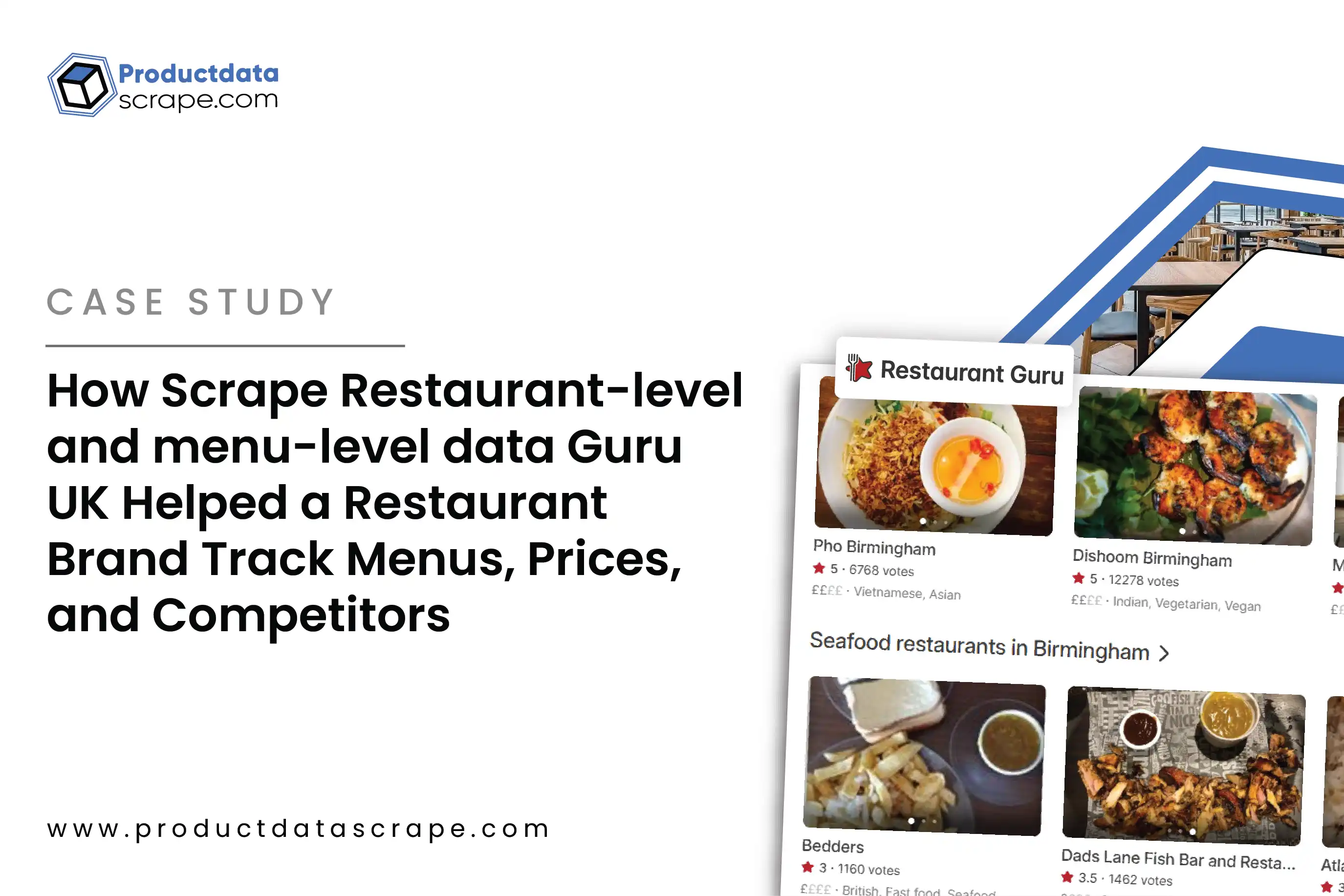
A UK-based restaurant brand partnered with Product Data Scrape to improve visibility into restaurant listings, menus, prices, and competitor movements. The project used Scrape Restaurant-level and menu-level data Guru UK to transform scattered restaurant information into structured, analytics-ready datasets. The solution combined automated collection, normalization, validation, and recurring monitoring to support faster market research. The client achieved a 72% improvement in data processing speed, 96% data accuracy across validated records, and a 64% reduction in manual research effort. The resulting data infrastructure helped the brand benchmark competitors, evaluate menu positioning, and make faster pricing and assortment decisions.
Client Name / Industry: UK Restaurant & Hospitality Brand
Service / Duration: Restaurant & Menu Data Collection / 6 Months
Key Impact Metrics: 72% faster processing | 96% validated accuracy | 64% less manual research
The Client
The client was a growing UK restaurant brand operating in a highly competitive hospitality environment. Its management team needed a broader understanding of how competing restaurants were positioning their menus, pricing dishes, presenting cuisines, and changing offerings across different locations.
The UK restaurant sector is increasingly influenced by digital discovery, consumer reviews, delivery platforms, changing food preferences, and frequent menu updates. Competitors can introduce new dishes, change prices, adjust availability, or reposition their offerings quickly. For restaurant brands, relying on occasional manual research makes it difficult to maintain a current view of the market.
Before partnering with Product Data Scrape, the client depended on manual browsing, spreadsheets, and fragmented research processes. Teams had to visit restaurant pages individually, copy menu information, compare prices, and manually organize competitor records. This created significant delays and made historical comparisons difficult.
The growing need for a structured Track Restaurant Guru menu intelligence report pushed the client toward an automated approach. The brand also wanted reliable Pricing strategy services to support competitor benchmarking and pricing decisions without increasing its internal research workload.
Product Data Scrape developed a structured collection framework that transformed restaurant and menu information into standardized datasets. This gave the client a more consistent foundation for competitive research, menu analysis, and recurring market intelligence.
Goals & Objectives
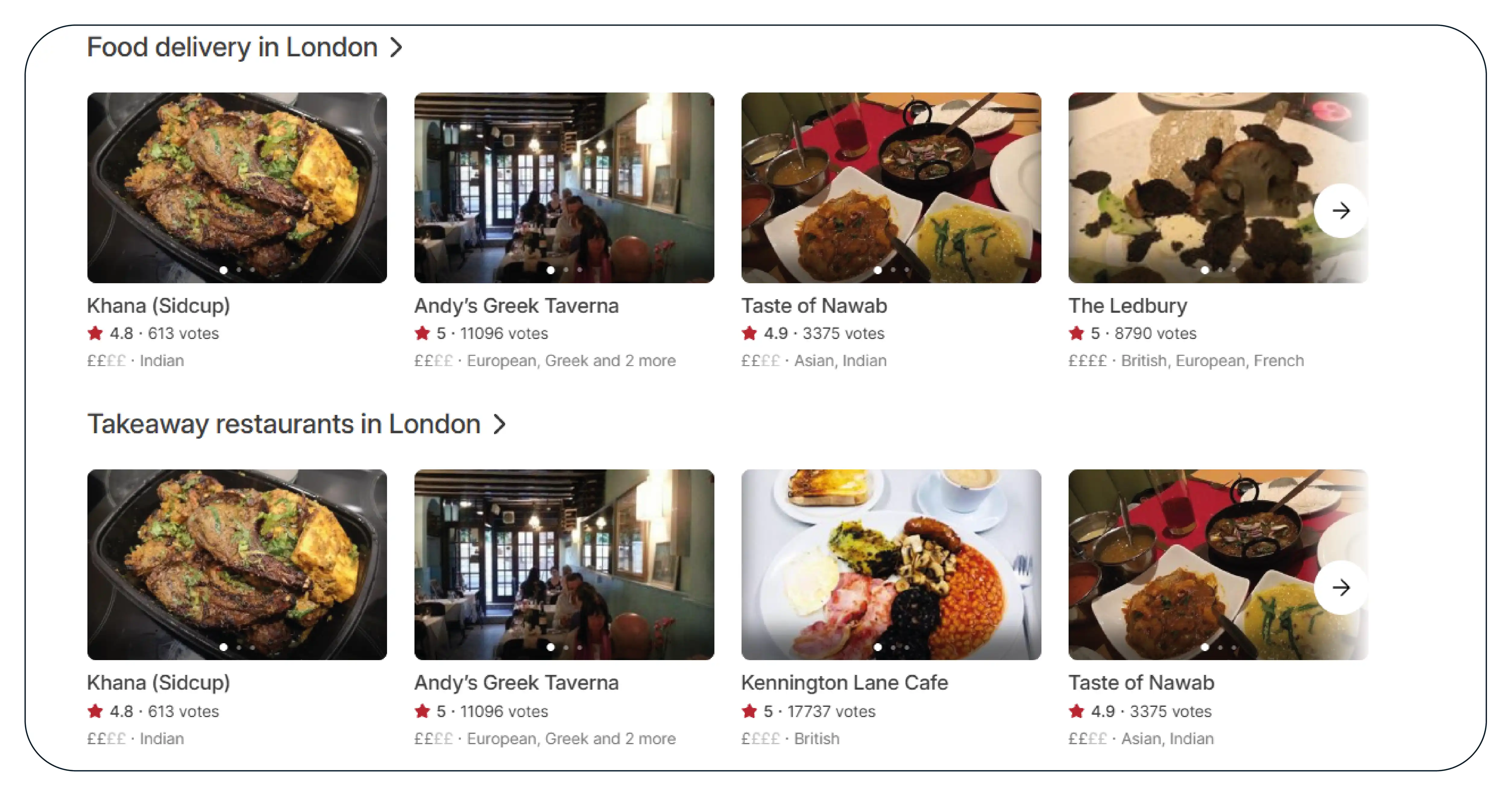
The primary business goal was to create a scalable restaurant intelligence workflow capable of supporting broader UK market coverage while maintaining reliable data quality.
Scale restaurant and menu monitoring across target UK locations.
Improve the speed of competitive research.
Increase consistency and accuracy of collected records.
Reduce repetitive manual data gathering.
Strengthen competitor benchmarking and menu analysis.
Support faster pricing and assortment decisions.
Product Data Scrape designed the technical workflow around automation, structured processing, and analytics readiness.
Automate restaurant and menu data collection.
Standardize restaurant names, locations, cuisines, menu categories, dishes, and prices.
Integrate automated validation and quality checks.
Support recurring data refreshes.
Prepare structured datasets for BI dashboards and analytical systems.
Enable monitor UK restaurant pricing and menus Data through a centralized workflow.
Create a scalable foundation for Scrape Restaurant-level and menu-level data Guru UK requirements.
72% faster data processing.
96% validated accuracy across quality-checked records.
64% reduction in manual research effort.
91%+ completeness across priority menu fields.
Recurring data refreshes aligned with the client's monitoring requirements.
The Core Challenge
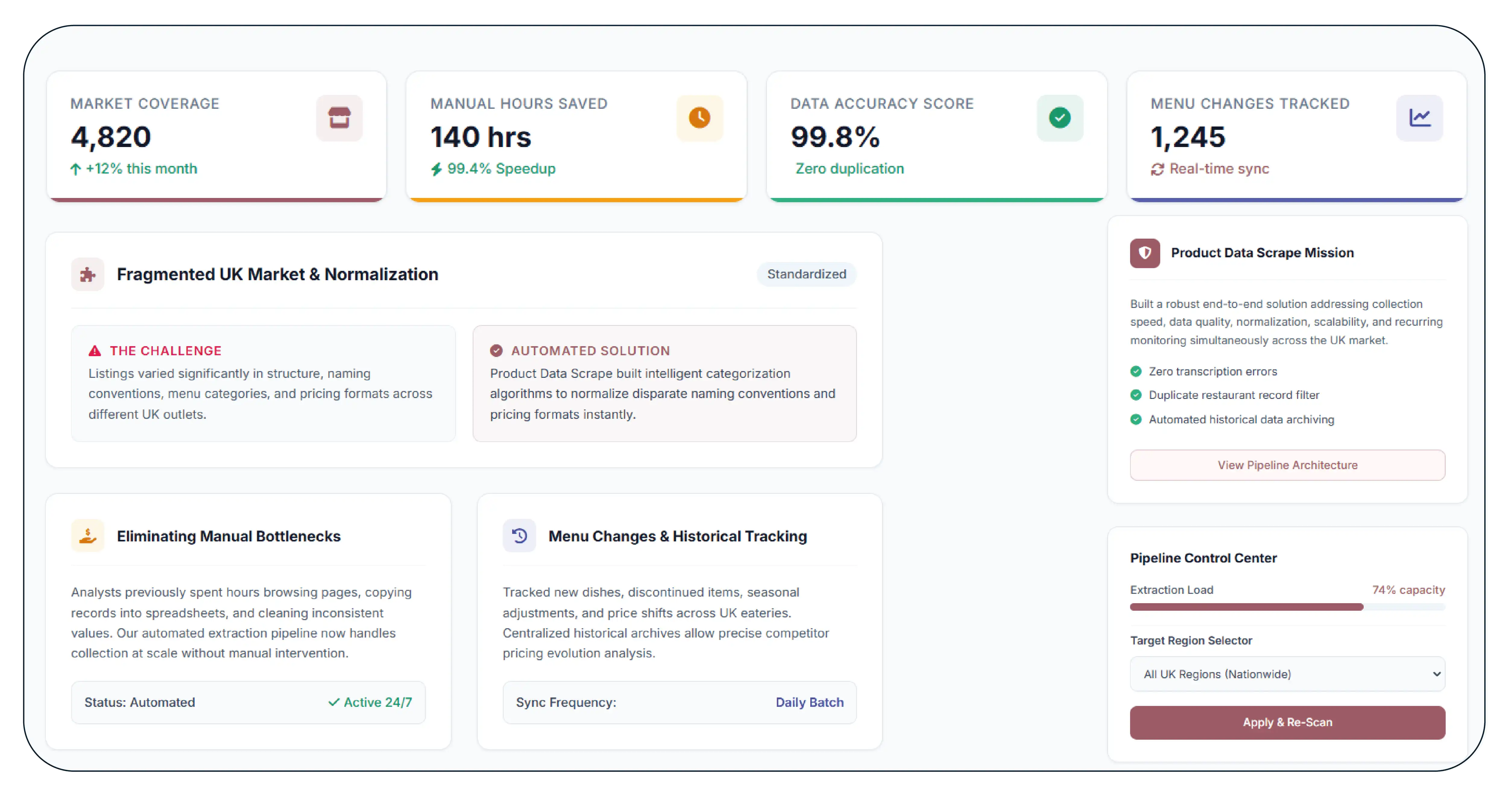
The client's biggest challenge was maintaining accurate and current restaurant and menu intelligence across a fragmented UK market.
Restaurant listings varied significantly in structure. Different restaurants used different naming conventions, menu categories, pricing formats, descriptions, and availability indicators. Some provided detailed menus, while others displayed only limited information. This inconsistency made direct comparisons difficult.
Manual research created another bottleneck. Analysts had to browse restaurant pages, identify relevant menu information, copy records into spreadsheets, clean inconsistent values, and compare competitor offerings. As coverage expanded, the workload increased considerably.
The client also needed a reliable method to Track restaurant menu changes in the UK. New dishes, discontinued items, price changes, seasonal menus, and availability updates could quickly make older datasets less useful.
Data accuracy was another concern. Manual entry increased the risk of transcription errors, duplicate restaurant records, inconsistent prices, and incomplete menu fields. These issues could negatively affect pricing analysis and competitor benchmarking.
The lack of a centralized automated pipeline also limited historical analysis. Without standardized recurring datasets, it was difficult to determine when menu changes occurred or understand how competitor pricing evolved.
Product Data Scrape therefore needed to build a solution that addressed collection speed, data quality, normalization, scalability, and recurring monitoring simultaneously.
Our Solution
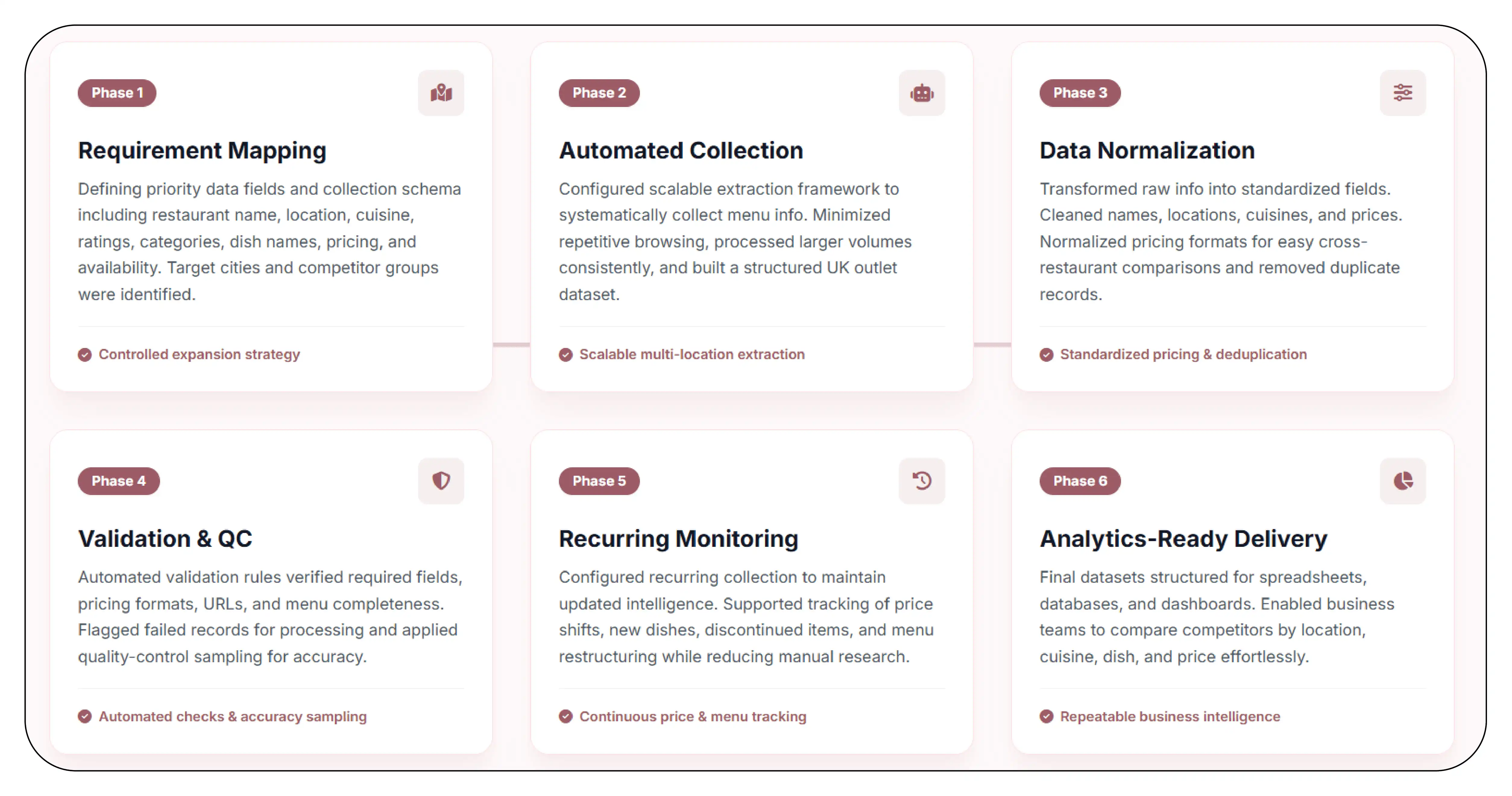
Product Data Scrape implemented a phased restaurant intelligence workflow designed to convert restaurant and menu information into structured, reusable business data.
Phase 1: Requirement Mapping
The project began by defining the client's priority data fields and business requirements. The collection schema included restaurant name, location, cuisine, ratings, menu category, dish name, description, listed price, availability, restaurant URL, and other accessible attributes. Target cities, restaurant categories, and competitor groups were also identified to create a controlled expansion strategy.
Phase 2: Automated Data Collection
A scalable extraction framework was configured to identify relevant restaurant records and collect menu information systematically. Automated workflows reduced repetitive browsing and enabled larger volumes of restaurant data to be processed consistently. The framework was designed to build a structured UK restaurant outlet and menu dataset that could be expanded as the client added new locations and competitors.
Phase 3: Data Normalization
Raw information was transformed into standardized fields. Restaurant names, locations, cuisine types, menu categories, dish names, and prices were cleaned and organized. Pricing formats were normalized to make restaurant-to-restaurant comparisons easier. Duplicate records were also identified to prevent inflated counts.
Phase 4: Validation & Quality Control
Automated validation rules checked required fields, pricing formats, restaurant identifiers, URLs, and menu completeness. Records that failed predefined checks were flagged for additional processing. Quality-control sampling helped measure accuracy and identify areas where extraction rules needed refinement.
Phase 5: Recurring Monitoring
The workflow was configured for recurring collection so the client could maintain updated restaurant and menu intelligence. This supported the identification of price changes, new dishes, discontinued items, and menu restructuring. Recurring automation also reduced dependence on one-time manual research.
Phase 6: Analytics-Ready Delivery
Final datasets were structured for spreadsheets, databases, dashboards, and downstream analytical systems. Product Data Scrape also organized the output so business teams could compare restaurants by location, cuisine, menu category, dish, and price. This phased approach transformed Scrape Restaurant-level and menu-level data Guru UK into a repeatable intelligence workflow rather than a one-time data collection exercise.
Results & Key Metrics
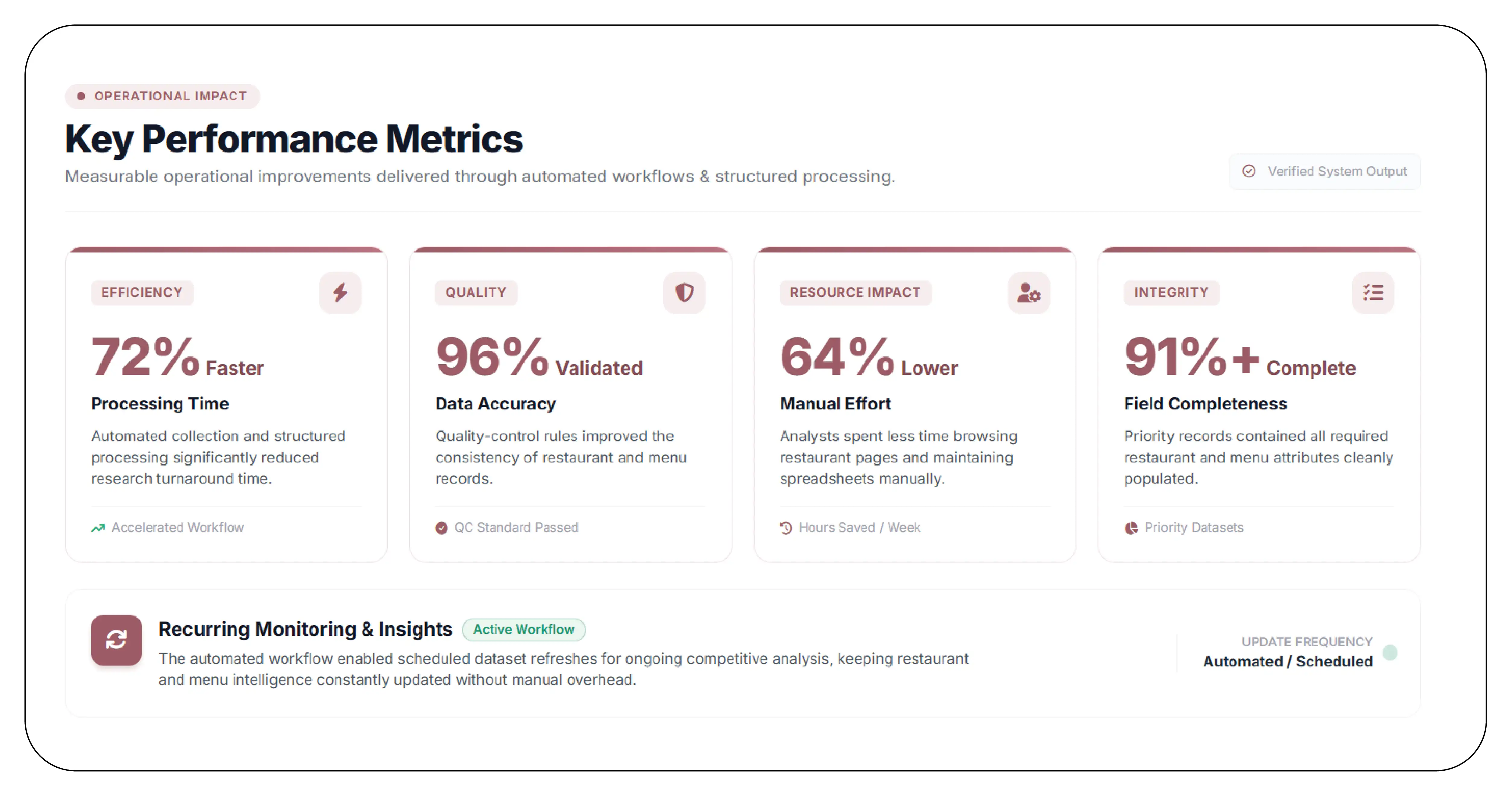
The implementation delivered measurable operational improvements:
72% faster processing: Automated collection and structured processing significantly reduced research turnaround time.
96% validated accuracy: Quality-control rules improved the consistency of restaurant and menu records.
64% lower manual effort: Analysts spent less time browsing restaurant pages and maintaining spreadsheets.
91%+ field completeness: Priority records contained the required restaurant and menu attributes.
Recurring monitoring: The automated workflow enabled scheduled dataset refreshes for ongoing competitive analysis.
Results Narrative
The client transitioned from fragmented manual research to a centralized restaurant intelligence workflow. The resulting Restaurant Guru UK restaurant and menu dataset provided a consistent foundation for competitor comparisons, menu analysis, and pricing research.
The new process made it easier for analysts to identify menu changes, compare dish prices, evaluate assortment differences, and monitor restaurant activity across target UK locations. Data quality improvements also reduced the time required for preparation before analysis.
The combination of automation and recurring monitoring allowed the client to respond faster to market movements while reducing the operational burden on its research team.
What Made Product Data Scrape Different
Product Data Scrape approached the project as an intelligence infrastructure initiative rather than a simple scraping assignment.
Its workflow combined automated extraction, structured schemas, normalization rules, validation frameworks, duplicate detection, and recurring refresh mechanisms. This allowed restaurant and menu information to move through a controlled pipeline from collection to analytics-ready delivery, supporting E-commerce data for restaurant menus.
The solution was also designed to accommodate changing restaurant pages and menu structures without requiring extensive manual intervention.
For broader competitive research, the framework could support E-commerce data scraping for the UK market, enabling the client to extend its data strategy beyond individual restaurant pages and integrate additional food-market sources when required.
Recommended designer visuals: Product Data Scrape dashboard mockup, UK restaurant map, automated data pipeline, restaurant comparison table, menu price tracker, and before/after workflow graphic.
Client's Testimonial
"Product Data Scrape gave our team a much clearer way to understand restaurant menus and competitor pricing across the UK. Previously, our research process depended heavily on manual browsing and spreadsheet updates, which made regular monitoring difficult. The new automated workflow has significantly improved how quickly we can access structured information and compare restaurants. It has also helped our team spend less time collecting data and more time analyzing market movements. The consistency of the datasets has made menu and pricing comparisons much easier to manage."
— Head of Competitive Intelligence, UK Restaurant Brand
Conclusion
The project helped the client establish a scalable foundation for restaurant and menu intelligence across the UK. By combining automated collection, normalization, validation, and recurring monitoring, Product Data Scrape reduced manual research requirements while improving the speed and consistency of market information.
The workflow enabled the brand to compare restaurant pricing, analyze menu assortments, monitor competitor activity, and identify changes more efficiently. It also created an adaptable data infrastructure that could support additional locations, restaurant categories, and analytical requirements, including Delivery fee & time tracking.
With structured Assortment and availability monitoring, restaurant brands can move beyond occasional competitor research toward continuous market visibility.
Product Data Scrape can help hospitality and food brands transform fragmented restaurant information into structured intelligence for faster, more informed commercial decisions.
FAQs
1. What restaurant information can be collected?
Depending on source availability, datasets can include restaurant names, locations, cuisines, ratings, URLs, menu categories, dish names, descriptions, prices, and availability information.
2. How can menu data help restaurant brands?
Menu data can help businesses compare competitor prices, identify popular categories, analyze assortment differences, monitor new dishes, and understand market positioning.
3. Can restaurant data collection be automated?
Yes. Automated workflows can collect, normalize, validate, and organize restaurant and menu information according to defined project requirements.
4. Can the solution monitor menu changes over time?
Yes. Recurring collection can help identify changes in dish names, prices, menu categories, availability, and restaurant listings across selected locations.
5. Can Product Data Scrape support UK-wide restaurant research?
Yes. The data pipeline can be designed to scale across selected cities, regions, restaurant categories, and competitors, depending on source accessibility and project scope.


 Singapore
 EMAIL
EMAIL
 PHONE
PHONE











.webp)