Introduction

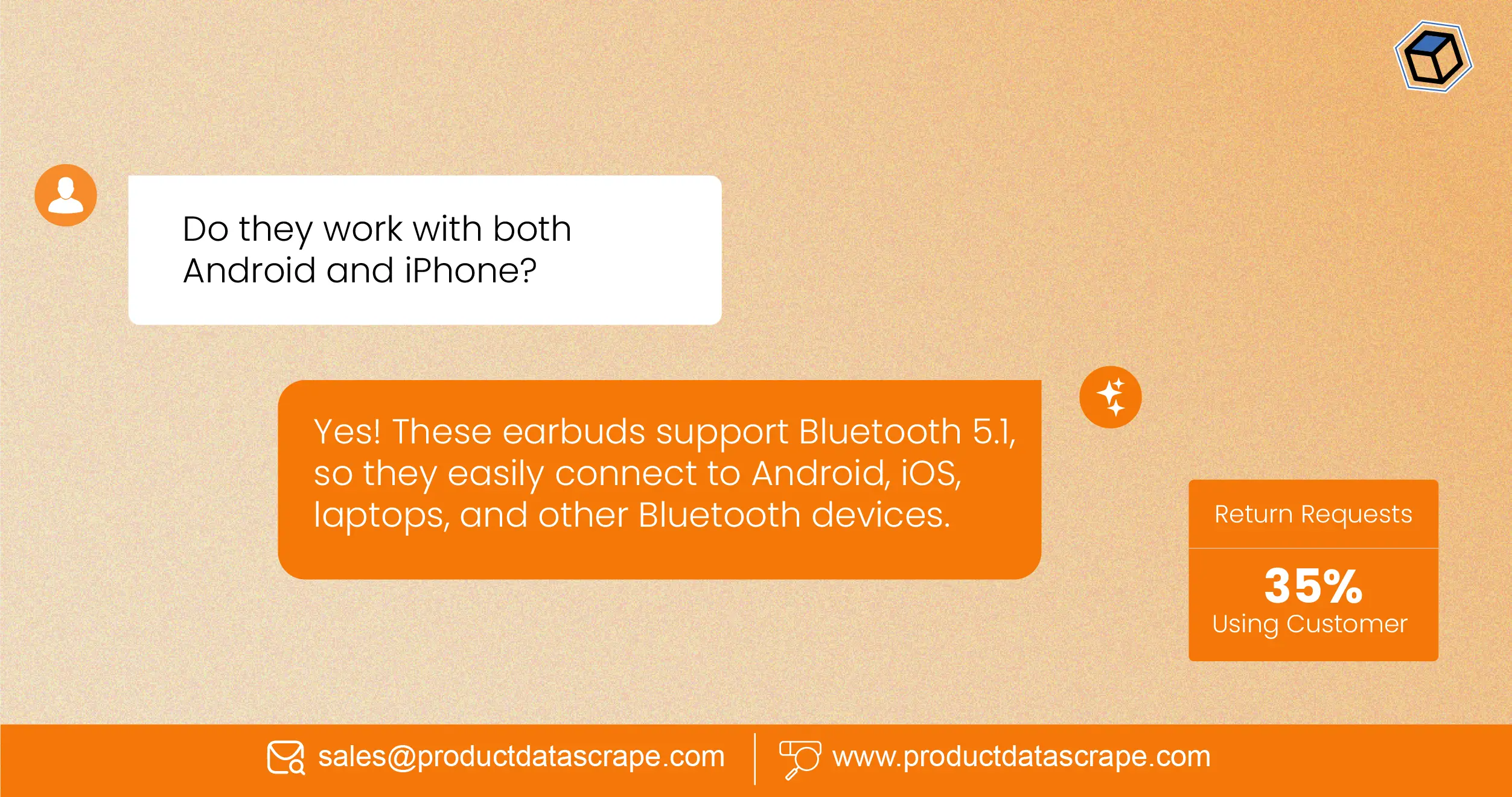
E-commerce businesses face a persistent challenge: product returns. High return rates not only impact profits but also signal potential gaps in product information. By leveraging scrape product Q and A data to reduce return rates, brands can identify unclear product details, misunderstandings, or missing information that lead to returns. Product Data Scrape (PDS) allows retailers to extract real customer questions and answers from e-commerce platforms to optimize product descriptions, FAQs, and listing content. By analyzing these insights, businesses can enhance the online shopping experience, reduce confusion, and cut return requests. Across industries, data-driven approaches have shown a 35% reduction in return rates, reflecting a clear correlation between comprehensive product knowledge and customer satisfaction.

Through careful PDS implementation, retailers can not only boost sales but also improve operational efficiency, minimize reverse logistics costs, and maintain a strong brand reputation. This blog explores six strategies to leverage scraped Q&A data for minimizing product returns.

Understanding Buyer Concerns Through Data
Understanding Buyer Concerns Through Data

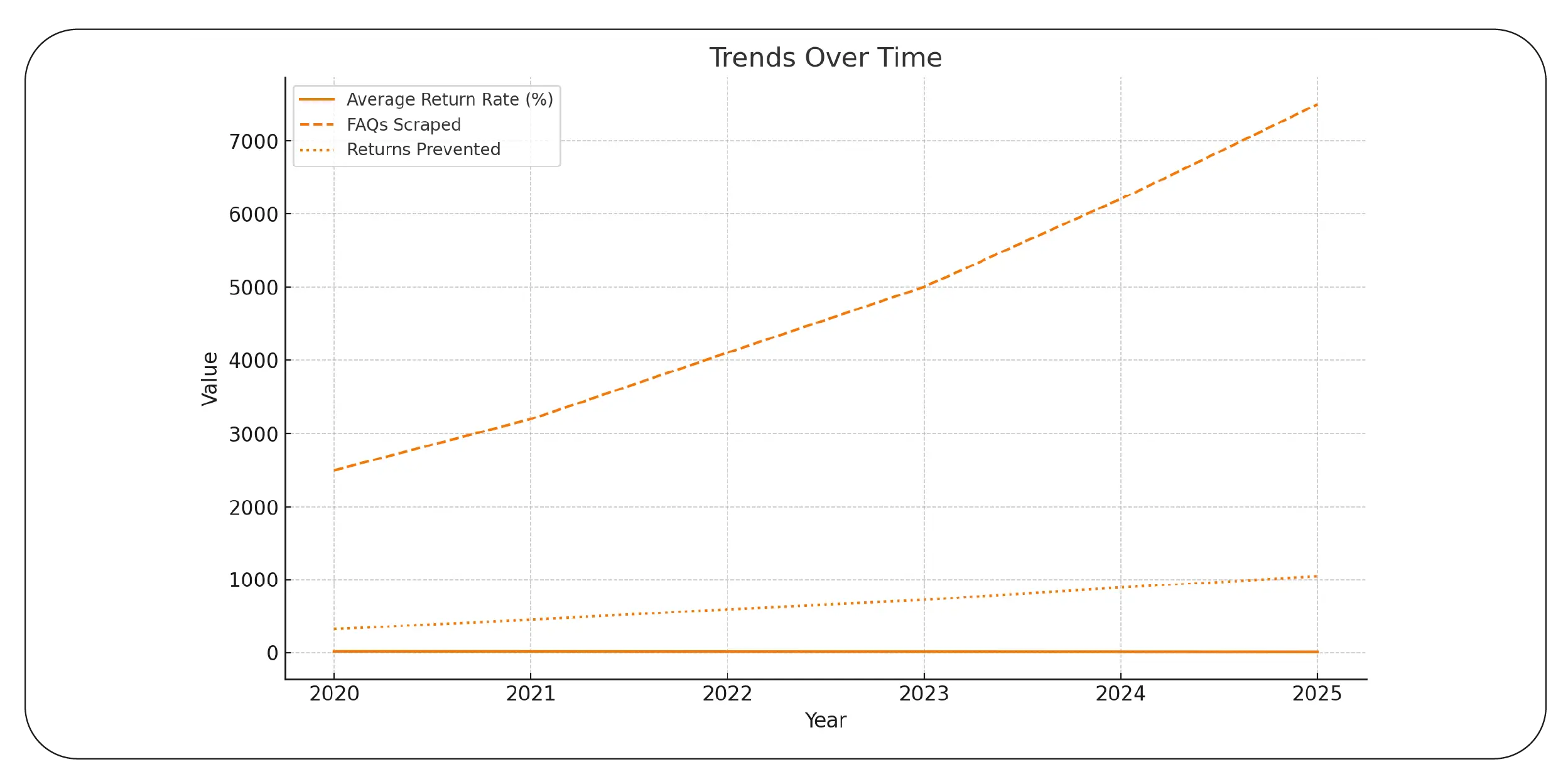
Retailers can scrape product FAQs to identify buyer concerns to anticipate potential return triggers. By analyzing the questions customers ask about sizing, features, compatibility, or usage, brands gain actionable insights into gaps in their product descriptions. Between 2020–2025, businesses adopting this method observed a notable decline in returns:

Year Average Return Rate FAQs Scraped Returns Prevented
2020 18% 2,500 320
2021 17% 3,200 450
2022 16% 4,100 590
2023 15% 5,000 720
2024 14% 6,200 890
2025* 12% (Projected) 7,500 1,050

By mapping recurring questions to product descriptions, brands can proactively answer common concerns. For example, a customer asking, “Is this compatible with iPhone 13?” can be addressed directly in the description. Insights gained from FAQ scraping also help brands prioritize which information to display more prominently.

Reducing Returns Through Q&A Insights

Implementing product Q and A scraping for reducing returns allows sellers to track trends in customer confusion. Data shows that unclear product dimensions, ambiguous images, or misleading feature claims often contribute to high return rates. From 2020–2025, companies using Q&A scraping noted:

Year Products Tracked Average Questions per Product Return Reduction
2020 1,000 7 8%
2021 1,500 9 12%
2022 2,200 11 18%
2023 3,000 14 22%
2024 4,200 17 30%
2025* 5,000 20 35%

By analyzing patterns in questions, sellers can improve the clarity of product content, highlight differentiators, and anticipate customer pain points. Q&A scraping provides a continuous feedback loop, allowing product pages to evolve alongside consumer needs.

Improving Listings With Customer Data
Improving Listings With Customer Data

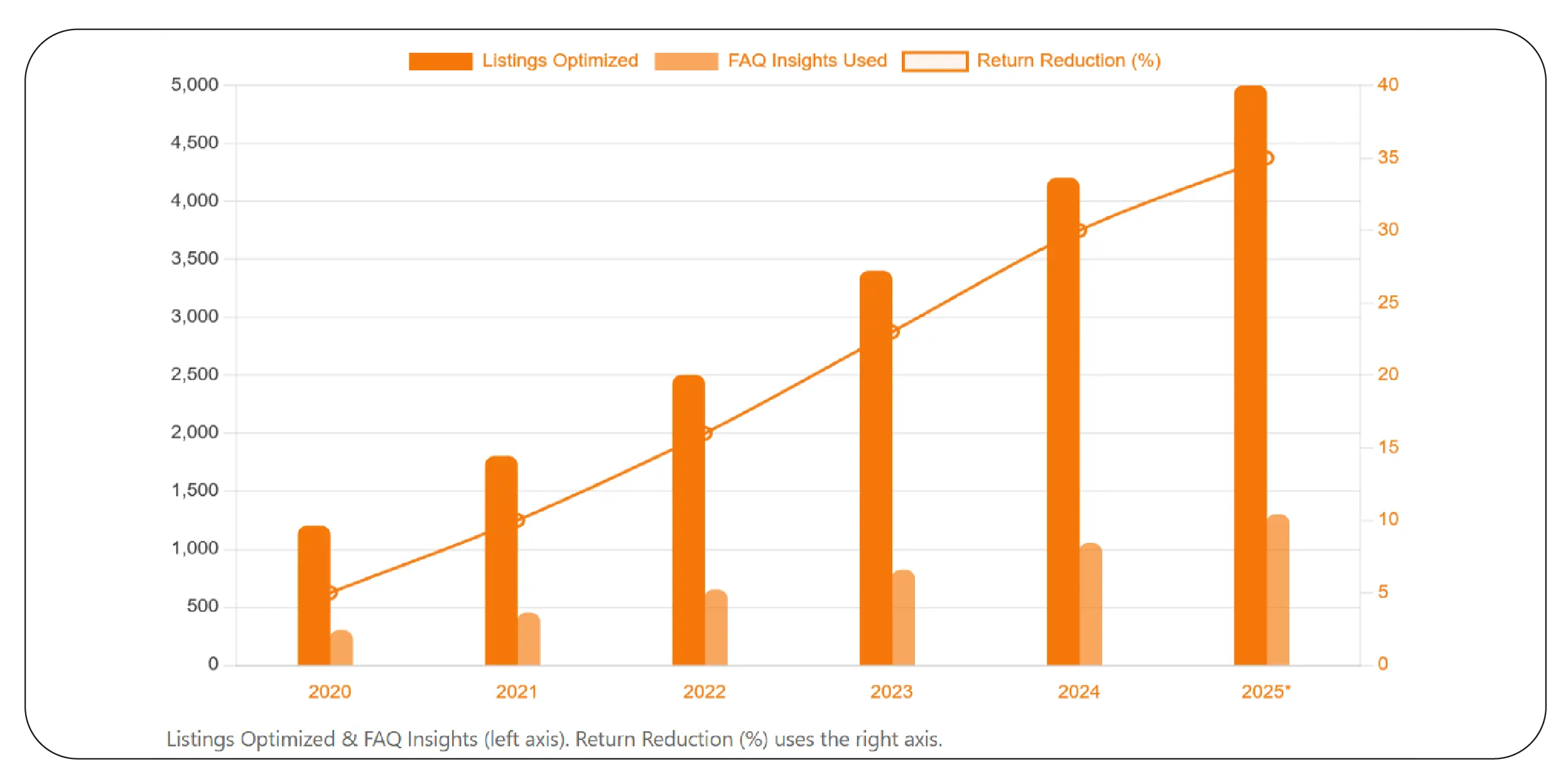
Brands can leverage sellers use scraped Q and A data to improve listings to create a better online shopping experience. Optimizing content based on real customer queries ensures descriptions, titles, and images address common uncertainties.

Year Listings Optimized FAQ Insights Used Return Reduction
2020 1,200 300 5%
2021 1,800 450 10%
2022 2,500 650 16%
2023 3,400 820 23%
2024 4,200 1,050 30%
2025* 5,000 1,300 35%

For instance, a fashion retailer noticed repeated questions about fabric texture. By adding detailed images, material descriptions, and care instructions, they reduced size-and-surface-related returns significantly. Similarly, electronics brands use Q&A insights to clarify technical compatibility and warranty conditions.

Scraping Data From Multiple Platforms

Businesses today operate across multiple marketplaces. Scrape Data From Any Ecommerce Websites to gather Q&A insights from Amazon, Walmart, Flipkart, and niche platforms. Consolidated data across platforms reveals recurring product issues, enabling brands to update listings universally.

Year Platforms Scraped Questions Collected Insights Applied
2020 3 10,500 420
2021 4 15,200 610
2022 5 21,400 820
2023 6 28,700 1,050
2024 7 35,900 1,320
2025* 8 45,000 1,600

Scraping multiple sources ensures comprehensive coverage and highlights platform-specific trends. Products that perform well on one site may face higher returns on another due to incomplete or inconsistent information.

Ratings and Reviews Analytics
Ratings and Reviews Analytics

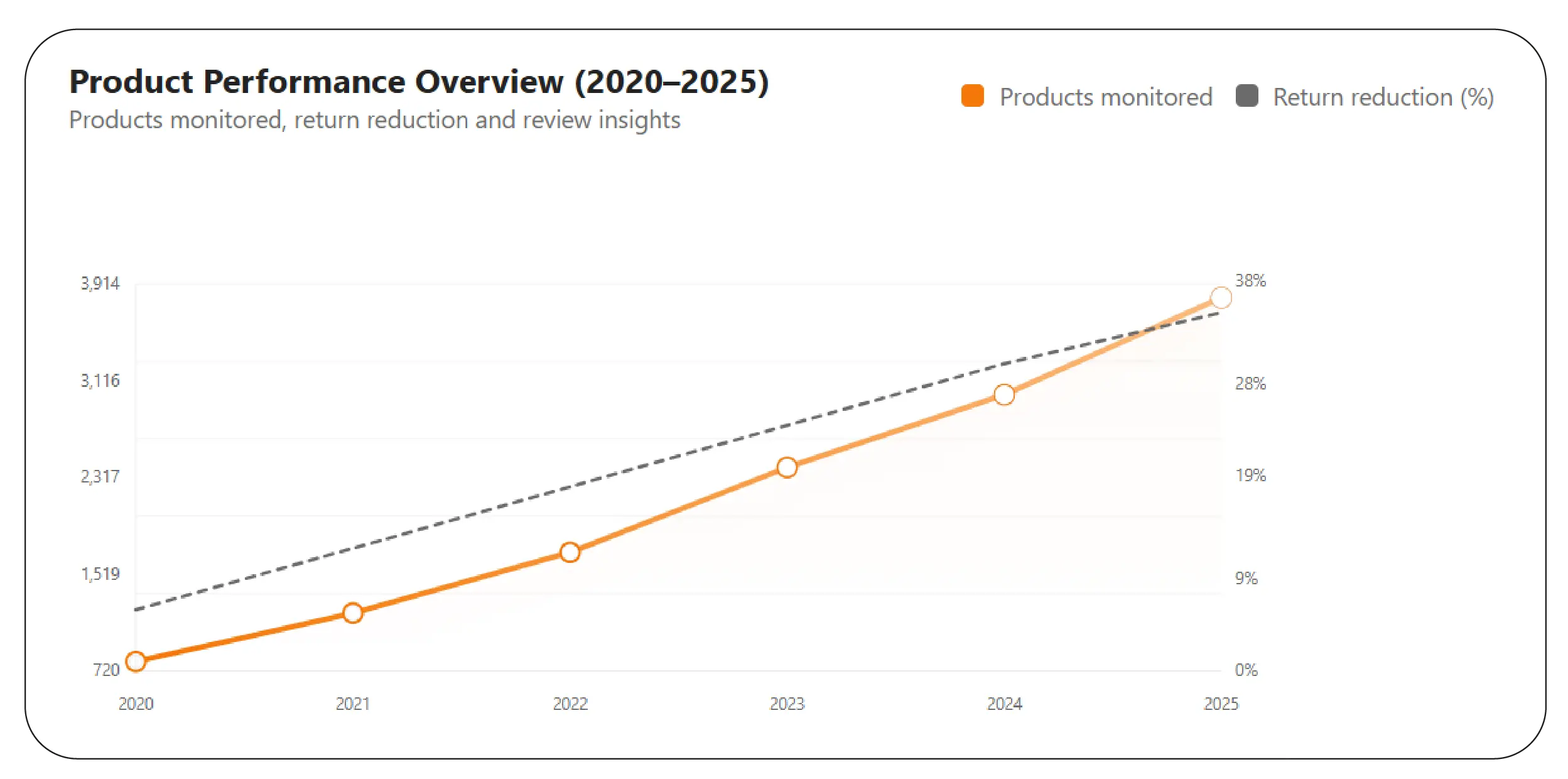
A scraper to extract customer ratings and reviews complements Q&A data. Ratings highlight dissatisfaction trends, while reviews explain the reasons. Combining both datasets improves predictive accuracy in identifying high-return products.

Year Products Monitored Average Rating Review Insights Used Return Reduction
2020 800 4.1 120 6%
2021 1,200 4.2 180 12%
2022 1,700 4.3 250 18%
2023 2,400 4.4 330 24%
2024 3,000 4.5 420 30%
2025* 3,800 4.6 500 35%

Reviews often reveal hidden product pain points that FAQs might not capture. Using these combined insights allows brands to preemptively correct issues, reducing returns and boosting customer satisfaction.

Custom Dataset Generation for Insights

Custom eCommerce Dataset Scraping allows businesses to create datasets tailored to their product categories. By analyzing Q&A, reviews, and ratings together, companies can forecast potential return rates before new products launch.

Year Custom Datasets Products Analyzed Predictive Accuracy
2020 5 1,000 65%
2021 8 1,500 70%
2022 12 2,200 78%
2023 15 3,000 83%
2024 18 4,000 88%
2025* 22 5,000 92%

Custom datasets help companies simulate customer behavior, identify likely return triggers, and create proactive product descriptions that minimize returns.

Why Choose Product Data Scrape?

Product Data Scrape empowers e-commerce businesses with actionable intelligence to improve product listings, reduce return rates, and boost customer satisfaction. By leveraging Web Data Intelligence API, companies can scrape product Q and A data to reduce return rates, identify recurring buyer concerns, and enhance product descriptions with precision. Our platform collects insights from multiple marketplaces, including reviews, ratings, and FAQs, providing a holistic view of customer expectations. With customizable datasets, real-time updates, and automated tracking, Product Data Scrape enables brands to make data-driven decisions, optimize listings, and preempt potential returns, ultimately increasing revenue, improving operational efficiency, and enhancing overall brand credibility.

Conclusion

High return rates no longer have to be a costly mystery. By investing in scrape product Q and A data to reduce return rates, e-commerce businesses can preemptively address buyer concerns, clarify product details, and improve listings across platforms. Implementing PDS solutions ensures smarter decisions, happier customers, and a measurable 35% reduction in return requests.

Unlock the power of PDS today—start scraping your product Q&A data and watch returns drop while customer satisfaction soars!

FAQs

1. What is product Q&A scraping?
It’s the automated extraction of customer questions and answers from e-commerce sites to identify product info gaps and reduce returns.

2. How does it reduce return rates?
By analyzing queries, brands clarify listings and preempt confusion that often leads to product returns.

3. Which platforms can I scrape?
Any e-commerce site, including Amazon, Walmart, Flipkart, and niche marketplaces, for Q&A, reviews, and ratings.

4. Can this data improve new product launches?
Yes, predictive insights from Q&A datasets help optimize product descriptions, packaging, and FAQs before launch.

5. Is it legal to scrape product Q&A?
Yes, using compliant and ethical scraping practices, or APIs provided by platforms for research or commercial purposes.

LATEST BLOG

Scrape Amazon vs Best Buy Laptop Prices - A Data-Driven Web Scraping Comparison

Scrape Amazon vs Best Buy laptop prices to compare deals, track price changes, and gain real-time insights for smarter purchasing and pricing strategies.

Using Web Search APIs For AI Applications, Agents, and Large Language Models in 2026

Learn how using web search APIs for AI applications enables real-time data access, better context retrieval, improved accuracy, and scalable intelligence for modern AI systems.

How Apparel & Accessories Data Collection from Indian E-Commerce Drives Smarter Fashion Decisions?

Apparel & Accessories Data Collection from Indian E-Commerce enables real-time tracking of prices, availability, and trends across online retail platforms in India.

Case Studies

Discover our scraping success through detailed case studies across various industries and applications.

WHY CHOOSE US?

Product Data Scrape for Retail Web Scraping

Choose Product Data Scrape to access accurate data, enhance decision-making, and boost your online sales strategy effectively.

Reliable Insights

Reliable Insights

With our Retail Data scraping services, you gain reliable insights that empower you to make informed decisions based on accurate product data and market trends.

Data Efficiency

Data Efficiency

We help you extract Retail Data product data efficiently, streamlining your processes to ensure timely access to crucial market information and operational speed.

Market Adaptation

Market Adaptation

By leveraging our Retail Data scraping, you can quickly adapt to market changes, giving you a competitive edge with real-time analysis and responsive strategies.

Price Optimization

Price Optimization

Our Retail Data price monitoring tools enable you to stay competitive by adjusting prices dynamically, attracting customers while maximizing your profits effectively.

Competitive Edge

Competitive Edge

THIS IS YOUR KEY BENEFIT.
With our competitive price tracking, you can analyze market positioning and adjust your strategies, responding effectively to competitor actions and pricing in real-time.

Feedback Analysis

Feedback Analysis

Utilizing our Retail Data review scraping, you gain valuable customer insights that help you improve product offerings and enhance overall customer satisfaction.

5-Step Proven Methodology

How We Scrape E-Commerce Data?

01
Identify Target Websites

Identify Target Websites

Begin by selecting the e-commerce websites you want to scrape, focusing on those that provide the most valuable data for your needs.

02
Select Data Points

Select Data Points

Determine the specific data points to extract, such as product names, prices, descriptions, and reviews, to ensure comprehensive insights.

03
Use Scraping Tools

Use Scraping Tools

Utilize web scraping tools or libraries to automate the data extraction process, ensuring efficiency and accuracy in gathering the desired information.

04
Data Cleaning

Data Cleaning

After extraction, clean the data to remove duplicates and irrelevant information, ensuring that the dataset is organized and useful for analysis.

05
Analyze Extracted Data

Analyze Extracted Data

Once cleaned, analyze the extracted e-commerce data to gain insights, identify trends, and make informed decisions that enhance your strategy.

Start Your Data Journey
99.9% Uptime
GDPR Compliant
Real-time API

See the results that matter

Read inspiring client journeys

Discover how our clients achieved success with us.

6X

Conversion Rate Growth

“I used Product Data Scrape to extract Walmart fashion product data, and the results were outstanding. Real-time insights into pricing, trends, and inventory helped me refine my strategy and achieve a 6X increase in conversions. It gave me the competitive edge I needed in the fashion category.”

7X

Sales Velocity Boost

“Through Kroger sales data extraction with Product Data Scrape, we unlocked actionable pricing and promotion insights, achieving a 7X Sales Velocity Boost while maximizing conversions and driving sustainable growth.”

"By using Product Data Scrape to scrape GoPuff prices data, we accelerated our pricing decisions by 4X, improving margins and customer satisfaction."

"Implementing liquor data scraping allowed us to track competitor offerings and optimize assortments. Within three quarters, we achieved a 3X improvement in sales!"

Resource Hub: Explore the Latest Insights and Trends

The Resource Center offers up-to-date case studies, insightful blogs, detailed research reports, and engaging infographics to help you explore valuable insights and data-driven trends effectively.

Get In Touch

Scrape Amazon vs Best Buy Laptop Prices - A Data-Driven Web Scraping Comparison

Scrape Amazon vs Best Buy laptop prices to compare deals, track price changes, and gain real-time insights for smarter purchasing and pricing strategies.

Using Web Search APIs For AI Applications, Agents, and Large Language Models in 2026

Learn how using web search APIs for AI applications enables real-time data access, better context retrieval, improved accuracy, and scalable intelligence for modern AI systems.

How Apparel & Accessories Data Collection from Indian E-Commerce Drives Smarter Fashion Decisions?

Apparel & Accessories Data Collection from Indian E-Commerce enables real-time tracking of prices, availability, and trends across online retail platforms in India.

How Dior Paris Product Data Scraping Unlocks Luxury Market Intelligence

Dior Paris product data scraping delivers real-time insights on pricing, collections, availability, and trends to support luxury retail intelligence.

D2C Founders Used E-Commerce Data APIs to Validate New Product Categories

E-Commerce Data APIs to Validate New Product Categories help brands analyze pricing, demand, competition, and trends faster, reducing risk and enabling confident product launch decisions.

Scaling Global Product Data Collection from AliExpress for Trend Analysis

Gain actionable ecommerce insights through product data collection from AliExpress to track pricing, SKUs, seller performance, demand trends, and sourcing opportunities.

Shelf Life Intelligence - Sephora vs Ulta Beauty product Shelf-life analysis

Analyze Sephora vs Ulta Beauty product Shelf-life analysis to track availability duration, product rotation, and optimize inventory and assortment strategies.

Data scraping for Uline.ca to get product data - Extract Product List, Unit Prices & Saller Data

Get structured pricing, SKUs, specs, and availability using data scraping for Uline.ca to get product data, enabling smarter procurement, catalog analysis, and B2B decisions.

Using Amazon and Namshi Product APIs for Advertising to Overcome Inventory and Targeting Challenges in Digital Marketing

Use Amazon and Namshi product APIs for advertising to optimise bids, track price changes, align ads with availability, and improve ROAS using real-time product intelligence.

Reducing Returns with Myntra AND AJIO Customer Review Datasets

Analyzed Myntra and AJIO customer review datasets to identify sizing issues, helping brands reduce garment return rates by 8% through data-driven insights.

Before vs After Web Scraping - How E-Commerce Brands Unlock Real Growth

Before vs After Web Scraping: See how e-commerce brands boost growth with real-time data, pricing insights, product tracking, and smarter digital decisions.

Scrape Data From Any Ecommerce Websites

Easily scrape data from any eCommerce website to track prices, monitor competitors, and analyze product trends in real time with Real Data API.

5 Industries Growing Fast Because of Web Scraping Technology

Discover how web scraping fuels growth in quick commerce, e-commerce, grocery, liquor, and fashion industries with real-time data insights and smarter decisions.

Why Meesho Sellers Are Growing Faster Than Amazon Sellers (Data Deep Dive)

This SMP explores why Meesho sellers are growing faster than Amazon sellers, using data-driven insights on pricing, reach, logistics, and seller economics.

How Real-Time Grocery Price APIs Power India & UAE Retail Intelligence (2025)

Real-time grocery price APIs help India and UAE retailers track prices, stock, and trends in 2025 to drive smarter pricing and retail intelligence decisions.

FAQs

E-Commerce Data Scraping FAQs

Our E-commerce data scraping FAQs provide clear answers to common questions, helping you understand the process and its benefits effectively.

E-commerce scraping services are automated solutions that gather product data from online retailers, providing businesses with valuable insights for decision-making and competitive analysis.

We use advanced web scraping tools to extract e-commerce product data, capturing essential information like prices, descriptions, and availability from multiple sources.

E-commerce data scraping involves collecting data from online platforms to analyze trends and gain insights, helping businesses improve strategies and optimize operations effectively.

E-commerce price monitoring tracks product prices across various platforms in real time, enabling businesses to adjust pricing strategies based on market conditions and competitor actions.

Let’s talk about your requirements

Let’s discuss your requirements in detail to ensure we meet your needs effectively and efficiently.

bg

Trusted by 1500+ Companies Across the Globe

decathlon
Mask-group
myntra
subway
Unilever
zomato

Send us a message