Introduction
Singapore’s retail sector is increasingly embracing digital transformation to stay competitive. Leveraging Real Time Pricing Strategies for Singapore Retailers, businesses can dynamically adjust product prices based on real-time market intelligence, consumer demand, and competitor activity. Modern retailers are no longer relying on static pricing; instead, they harness insights from multiple platforms to drive profitability and customer satisfaction.
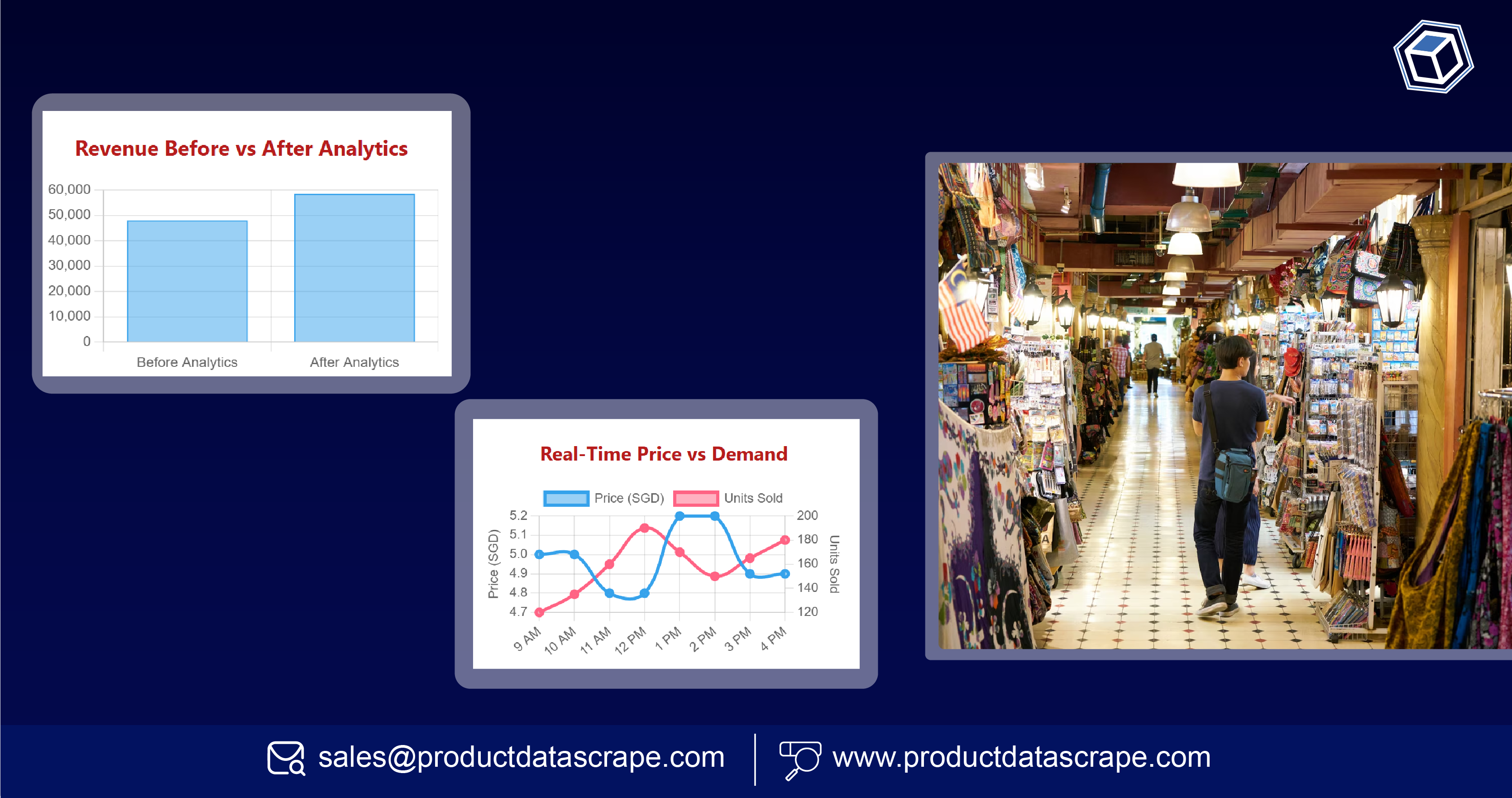
Tools that Scrape Data From Any Ecommerce Websites enable retailers to collect structured pricing, inventory, and product information across marketplaces such as Lazada, Shopee, and Qoo10. By integrating these insights into their pricing engines, retailers can make faster, data-driven decisions, optimize promotions, and respond effectively to market fluctuations. Between 2020 and 2026, studies show that Singapore retailers leveraging data-driven pricing strategies achieved up to 18% revenue growth and 12% improvement in gross margins, highlighting the critical role of analytics in retail strategy.
The Rise of AI in Retail Data Collection
The use of AI-powered web scraping in Singapore is transforming how retailers collect market intelligence. Retailers are adopting machine learning algorithms to automatically identify pricing patterns, detect competitor promotions, and track inventory levels across multiple ecommerce platforms.
Between 2020 and 2026, AI adoption in Singapore retail analytics has grown steadily. In 2020, only 25% of retailers used AI-driven scraping tools, whereas by 2026, projections indicate adoption rates of over 72%. Table 1 below illustrates AI usage trends among top Singapore retail chains:
| Year |
AI-powered Web Scraping Adoption (%) |
Average Products Tracked |
Revenue Uplift (%) |
| 2020 |
25% |
2,500 |
5% |
| 2021 |
32% |
3,200 |
6% |
| 2022 |
40% |
4,000 |
8% |
| 2023 |
50% |
5,000 |
10% |
| 2024 |
60% |
6,200 |
12% |
| 2025 |
68% |
7,500 |
15% |
| 2026 |
72% |
8,000 |
18% |
By integrating AI, retailers can scrape data from competitor websites, identify pricing anomalies, and anticipate market shifts. AI reduces manual monitoring, improves accuracy, and provides actionable insights for real-time pricing decisions.
Emerging Web Scraping Trends in Singapore Retail
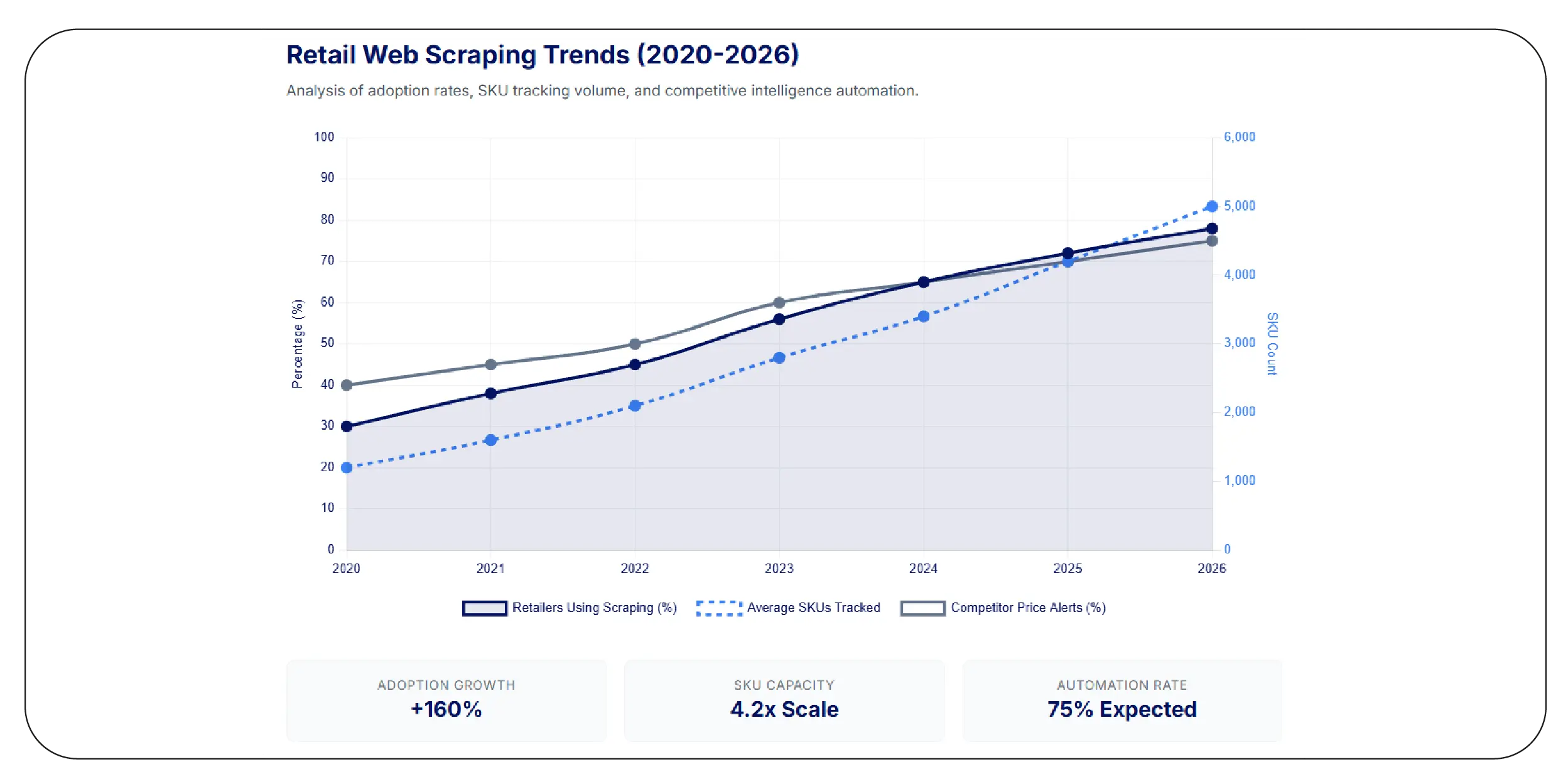
Singapore’s retail landscape has witnessed a surge in web scraping trends, enabling brands to maintain a competitive edge. Retailers increasingly rely on automated tools to gather historical pricing data, product catalogs, and customer reviews to improve decision-making.
Data from 2020 to 2026 shows consistent growth in scraping adoption: in 2020, only 30% of SMEs employed scraping tools, but by 2026, 78% of leading retailers integrate web scraping into their pricing strategies. Table 2 summarizes the average number of SKUs tracked per retailer per year:
| Year |
Retailers Using Scraping (%) |
Average SKUs Tracked |
Competitor Price Alerts (%) |
| 2020 |
30% |
1,200 |
40% |
| 2021 |
38% |
1,600 |
45% |
| 2022 |
45% |
2,100 |
50% |
| 2023 |
56% |
2,800 |
60% |
| 2024 |
65% |
3,400 |
65% |
| 2025 |
72% |
4,200 |
70% |
| 2026 |
78% |
5,000 |
75% |
These trends indicate that Singapore retailers are increasingly using web scraping trends in Singapore retail to enhance price monitoring, promotions tracking, and market responsiveness.
Leveraging Price Intelligence Solutions
Price intelligence solutions in Singapore help retailers adjust pricing dynamically while staying competitive. Platforms aggregate competitor prices, customer demand data, and stock levels to inform Price intelligence solutions for Singapore retail.
From 2020 to 2026, retailers using these solutions observed measurable benefits. For instance, top-tier chains saw revenue growth between 12–18% and gross margin improvements of 8–12%. Table 3 shows average ROI from price intelligence adoption:
| Year |
ROI (%) |
Average Price Adjustments per Month |
Avg. Competitor Prices Monitored |
| 2020 |
6% |
15 |
50 |
| 2021 |
8% |
18 |
75 |
| 2022 |
10% |
22 |
100 |
| 2023 |
12% |
28 |
125 |
| 2024 |
14% |
32 |
150 |
| 2025 |
16% |
38 |
175 |
| 2026 |
18% |
45 |
200 |
By adopting price intelligence solutions, retailers can make timely pricing decisions, optimize promotions, and maintain competitive positioning across Singapore’s crowded ecommerce market.
Real-Time Pricing APIs
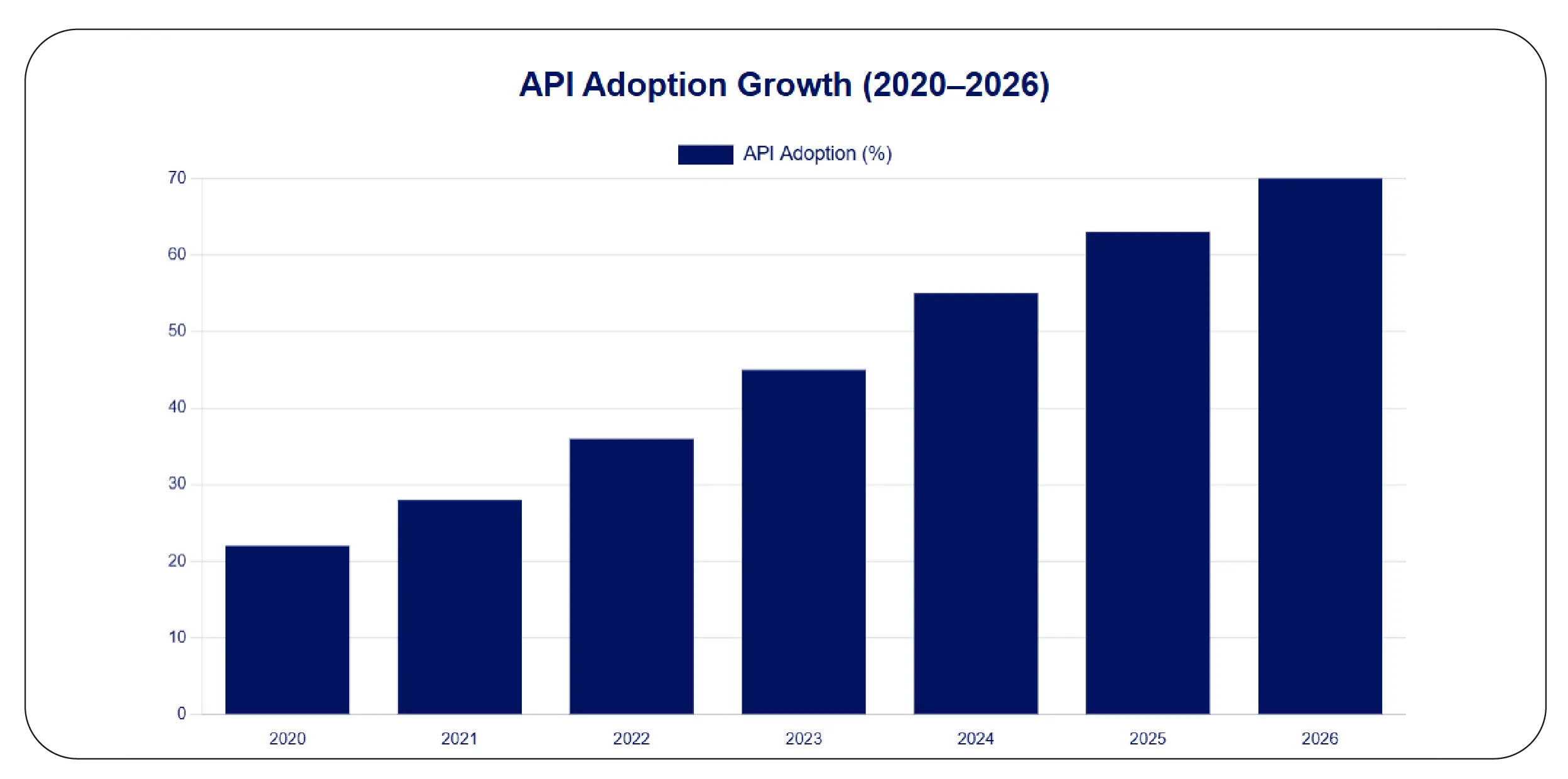
The adoption of Real-Time Singapore Retail Pricing API has revolutionized how retailers react to market changes. APIs allow automated ingestion of competitor pricing, stock levels, and promotional activity directly into pricing engines.
Data from 2020 to 2026 shows that API adoption grew from 22% of retailers in 2020 to 70% in 2026. APIs enable retailers to update hundreds of SKUs within minutes rather than days. Table 4 highlights API adoption and SKU coverage:
| Year |
API Adoption (%) |
SKUs Monitored |
Average Price Changes per Day |
| 2020 |
22% |
1,000 |
10 |
| 2021 |
28% |
1,400 |
14 |
| 2022 |
36% |
2,000 |
18 |
| 2023 |
45% |
2,800 |
22 |
| 2024 |
55% |
3,500 |
28 |
| 2025 |
63% |
4,200 |
32 |
| 2026 |
70% |
5,000 |
40 |
Real-time APIs ensure pricing accuracy, prevent revenue loss, and streamline operational efficiency for Singapore retailers.
Price Optimization Using Live Market Datasets
Live datasets provide actionable intelligence for Price Optimization Using Live Market Datasets. Retailers use historical and real-time sales data to identify optimal price points, understand seasonal trends, and benchmark competitors.
From 2020–2026, top Singapore retailers reported 10–18% increased profitability using dynamic pricing strategies. Table 5 shows average pricing adjustments across major categories:
| Category |
Average Price (2020 USD) |
Average Price (2026 USD) |
Average Discount (%) |
| Power Tools |
85.00 |
95.00 |
12% |
| Kitchen |
40.00 |
47.00 |
10% |
| Garden |
65.00 |
75.00 |
15% |
| Home Accessories |
25.00 |
30.00 |
8% |
| Electronics |
120.00 |
140.00 |
5% |
Retailers implementing live market datasets have better inventory turnover, more competitive pricing, and improved margin performance.
Strategic Product Pricing Services
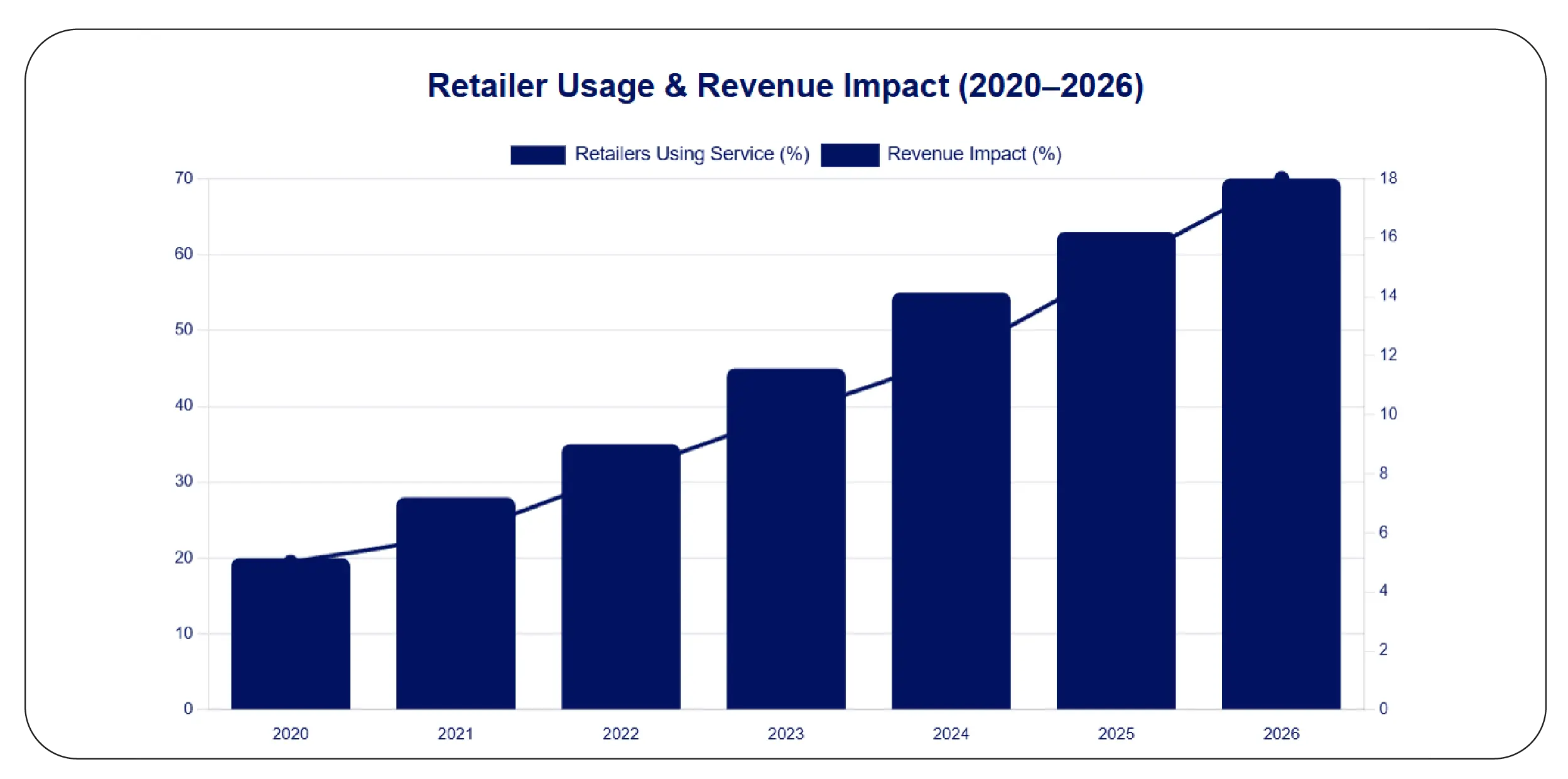
Advanced Product Pricing Strategies Service offerings provide end-to-end pricing insights. From data collection to analytics and recommendation engines, retailers can implement actionable pricing strategies.
Between 2020–2026, retailers using these services increased average pricing adjustments from 12 to 45 per month and achieved consistent margin uplift. Table 6 highlights performance metrics:
| Year |
Retailers Using Service |
Average Price Adjustments |
Revenue Impact (%) |
| 2020 |
20% |
12 |
5% |
| 2021 |
28% |
15 |
6% |
| 2022 |
35% |
20 |
8% |
| 2023 |
45% |
28 |
10% |
| 2024 |
55% |
32 |
12% |
| 2025 |
63% |
38 |
15% |
| 2026 |
70% |
45 |
18% |
These services integrate analytics, competitor insights, and market forecasts to guide strategic product pricing decisions.
Why Choose Product Data Scrape?
Product Data Scrape enables Quick Commerce Data Extraction in Singapore, delivering actionable insights for retail and ecommerce brands. With automated scraping, real-time APIs, and advanced dashboards, businesses can capture competitor pricing, inventory, and promotion data across multiple marketplaces. Our solutions reduce manual effort, improve accuracy, and empower retailers to make data-driven pricing decisions.
Conclusion
By adopting advanced analytics and real-time data solutions, Singapore retailers can optimize pricing, forecast demand, and maintain competitive advantage. Using Web Data Intelligence API, businesses can integrate structured market data into dashboards, pricing engines, and operational workflows. Real-time insights enable faster reactions to market changes, smarter inventory management, and higher profitability. Retailers embracing analytics-driven strategies outperform competitors while delivering better value to customers.
Get started with Product Data Scrape today to transform your pricing strategy and gain a competitive edge in Singapore’s dynamic retail landscape!
FAQs
1. What is Product Data Scrape?
Product Data Scrape is a platform that enables retailers to extract product and pricing data from multiple ecommerce websites in real time.
2. How does Product Data Scrape help pricing strategy?
It provides actionable insights from competitor pricing, stock availability, and promotions, enabling real-time pricing strategies for Singapore retailers.
3. Can I scrape data from any ecommerce website?
Yes, Scrape Data From Any Ecommerce Websites securely and legally, capturing structured pricing, inventory, and product information.
4. How often is the data updated?
Data is refreshed in real time or at configurable intervals using APIs and scraping workflows to ensure current market intelligence.
5. Is Product Data Scrape compliant with website policies?
Yes, it follows ethical scraping standards, complies with terms of service, and provides accurate web data intelligence for analytics.


 Singapore
 EMAIL
EMAIL
 PHONE
PHONE


.webp)
.webp "thumb")
.webp "thumb")
.webp "thumb")









.webp)