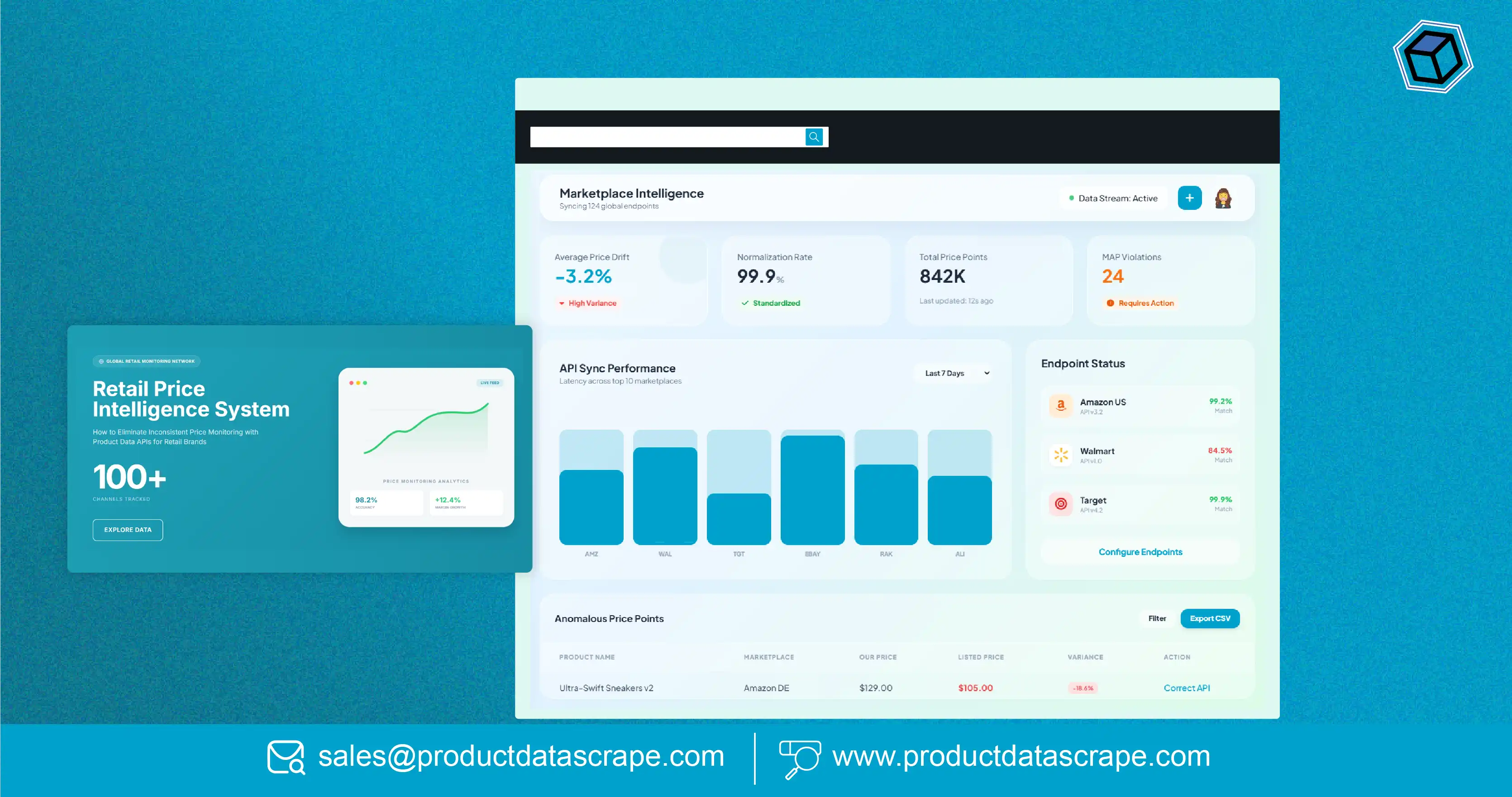
How to Eliminate Inconsistent Price Monitoring Product Data APIs for Retail Brands Marketplace Price Tracking Across 100+ Channels

Introduction

In today’s hyper-competitive eCommerce landscape, inconsistent price monitoring across multiple platforms can significantly impact profitability and brand positioning. Retailers must adopt Product Data APIs for Retail Brands Marketplace Price Tracking to maintain accurate and real-time pricing intelligence. As brands expand their presence Across 100+ Channels, including marketplaces, mobile apps, and aggregator platforms, manual tracking becomes inefficient and error-prone.

Modern Product Marketplace Selling Services demand precise, automated solutions that can track pricing changes instantly, ensuring businesses remain competitive. Between 2020 and 2026, the adoption of API-driven price monitoring has grown rapidly, with over 75% of retail brands shifting toward automated systems. These APIs enable seamless data collection, normalization, and analysis, allowing businesses to identify pricing gaps and optimize strategies.

By leveraging advanced product data APIs, retailers can eliminate inconsistencies, improve decision-making, and enhance customer trust. This blog explores how businesses can build a robust pricing intelligence system using APIs and data scraping technologies.

Building a Unified Pricing Intelligence Framework

To overcome fragmented pricing data, businesses must implement Retail Brands Product Pricing API Marketplace, Web Data Intelligence API solutions. These APIs aggregate data from multiple marketplaces, ensuring consistent and structured pricing information.

From 2020 to 2026, the use of unified pricing APIs increased significantly, enabling brands to manage data from diverse sources efficiently.

API Adoption Trends (2020–2026)

Year API Adoption Rate Data Accuracy Processing Speed
2020 40% 70% Medium
2022 55% 80% High
2024 68% 88% Very High
2026 80% 95% Extremely High

These APIs eliminate data silos by integrating pricing data into a centralized system. Businesses can monitor competitor prices, analyze trends, and make informed decisions without manual intervention.

Achieving Consistency Across Multiple Channels

Maintaining uniform pricing requires Marketplace Product price Tracking Across Channels, Digital Shelf Analytics. With products listed on numerous platforms, inconsistencies can arise due to delays in updates or regional pricing variations.

Between 2020 and 2026, brands operating across multiple channels reported a 35% increase in pricing inconsistencies without automated systems.

Channel Consistency Metrics (2020–2026)

Channel Consistency Metrics (2020–2026)

Digital shelf analytics helps businesses track how products appear across channels, ensuring consistency in pricing, descriptions, and availability. This improves customer experience and strengthens brand credibility.

Leveraging Real-Time Monitoring for Competitive Advantage

Dynamic pricing strategies rely on Real time Retail Brands marketplace Price Tracking API, Price Monitoring Services to stay competitive. Real-time monitoring allows businesses to respond instantly to price changes and demand fluctuations.

From 2020 to 2026, companies using real-time APIs achieved a 30% increase in conversion rates and a 25% improvement in revenue.

Real-Time Monitoring Impact (2020–2026)

Metric Improvement
Conversion Rate +30%
Revenue Growth +25%
Customer Retention +20%
Pricing Accuracy +35%

By implementing real-time tracking, businesses can adjust pricing dynamically, ensuring competitiveness and maximizing profitability.

Structuring and Managing Pricing Datasets

Efficient data management requires Product Dataset for Marketplace Pricing Data,Product Price Data Scraping to create structured and reliable datasets. Raw data collected from multiple sources must be cleaned, normalized, and stored for analysis.

Between 2020 and 2026, structured datasets improved decision-making accuracy by 40%, highlighting their importance in pricing strategies.

Dataset Efficiency Trends (2020–2026)

Dataset Efficiency Trends (2020–2026)

Structured datasets enable businesses to perform advanced analytics, identify trends, and optimize pricing strategies effectively.

Ensuring Accurate Data Extraction at Scale

Large-scale operations require robust Retail Brands Product Price Data Etraction systems to handle vast amounts of pricing data. Automated extraction ensures accuracy and scalability.

From 2020 to 2026, businesses adopting automated extraction reported a 45% reduction in operational costs and a 35% increase in efficiency.

Extraction Efficiency Metrics (2020–2026)

Metric Improvement
Operational Cost -45%
Data Processing Speed +40%
Accuracy Level +30%
Scalability High

By automating data extraction, businesses can handle large datasets without compromising performance, ensuring reliable pricing intelligence.

Implementing Scalable API Solutions for Growth

To support long-term growth, businesses must adopt Marketplace Pricing API for Retailers Brands that can scale with increasing data demands. Scalable APIs ensure seamless integration and high performance.

Between 2020 and 2026, scalable API adoption increased by over 70%, driven by the need for real-time insights and automation.

Scalability Benefits (2020–2026)

Benefit Impact Level
Data Processing Speed Very High
Integration Ease High
System Reliability Very High
Cost Efficiency High

Scalable APIs enable businesses to expand operations without disruptions, ensuring consistent performance and reliability.

Why Choose Product Data Scrape?

Product Data Scrape provides advanced solutions to Scrape Marketplace Retail Brands product Prices data, enabling businesses to gain accurate and real-time insights. With expertise in Product Data APIs for Retail Brands Marketplace Price Tracking, the platform delivers scalable and reliable data solutions tailored to your needs.

By leveraging cutting-edge technologies, we ensure seamless data extraction, integration, and analysis. Businesses benefit from improved pricing accuracy, enhanced decision-making, and increased competitiveness. Whether you operate across multiple channels or manage large datasets, we offer customized solutions to meet your requirements.

Conclusion

Eliminating inconsistent price monitoring is essential for maintaining competitiveness in today’s eCommerce landscape. By leveraging eCommerce Dataset solutions and Product Data APIs for Retail Brands Marketplace Price Tracking, businesses can achieve accurate and real-time pricing intelligence.

From unified data frameworks to scalable APIs, every component plays a crucial role in building an efficient pricing strategy. Automated systems ensure consistency, improve customer trust, and enhance profitability.

Ready to optimize your pricing strategy? Partner with Product Data Scrape today and unlock the full potential of your marketplace data!

FAQs

1. Why is price monitoring important for retail brands?
Price monitoring helps brands stay competitive, optimize pricing strategies, and improve customer trust by ensuring consistent and accurate pricing across multiple channels.

2. How do product data APIs improve price tracking?
Product data APIs automate data collection, provide real-time updates, and ensure accurate pricing insights, enabling businesses to make informed decisions quickly.

3. What challenges do businesses face in multi-channel price tracking?
Common challenges include data inconsistencies, delayed updates, and difficulty managing large datasets across multiple platforms without automation.

4. How does Product Data Scrape help in price monitoring?
Product Data Scrape offers advanced scraping and API solutions to collect, structure, and analyze pricing data efficiently across multiple marketplaces.

5. What are the benefits of using automated pricing solutions?
Automated solutions improve accuracy, reduce manual effort, enable real-time updates, and support scalable data management for growing retail operations.

LATEST BLOG

How Businesses Can Automate Grocery Data Collection and Insights with BigBasket Data Scraping API

BigBasket Data Scraping API helps businesses extract grocery product, pricing, and inventory data to gain real-time retail insights and analytics.

Myntra Fashion & Apparel Data Scraping for Real-Time Trend Analysis and Competitive Intelligence

Myntra Fashion & Apparel Data Scraping helps brands track pricing, trends, inventory, and consumer demand for smarter retail analytics.

AJIO Fashion & Apparel Trend Data Scraping for Real-Time Market Intelligence and Competitive Analysis

AJIO Fashion & Apparel Trend Data Scraping helps brands track pricing, trends, inventory, and customer demand for smarter retail decisions.

Case Studies

Discover our scraping success through detailed case studies across various industries and applications.

WHY CHOOSE US?

Product Data Scrape for Retail Web Scraping

Choose Product Data Scrape to access accurate data, enhance decision-making, and boost your online sales strategy effectively.

Reliable Insights

Reliable Insights

With our Retail Data scraping services, you gain reliable insights that empower you to make informed decisions based on accurate product data and market trends.

Data Efficiency

Data Efficiency

We help you extract Retail Data product data efficiently, streamlining your processes to ensure timely access to crucial market information and operational speed.

Market Adaptation

Market Adaptation

By leveraging our Retail Data scraping, you can quickly adapt to market changes, giving you a competitive edge with real-time analysis and responsive strategies.

Price Optimization

Price Optimization

Our Retail Data price monitoring tools enable you to stay competitive by adjusting prices dynamically, attracting customers while maximizing your profits effectively.

Competitive Edge

Competitive Edge

THIS IS YOUR KEY BENEFIT.
With our competitive price tracking, you can analyze market positioning and adjust your strategies, responding effectively to competitor actions and pricing in real-time.

Feedback Analysis

Feedback Analysis

Utilizing our Retail Data review scraping, you gain valuable customer insights that help you improve product offerings and enhance overall customer satisfaction.

5-Step Proven Methodology

How We Scrape E-Commerce Data?

01
Identify Target Websites

Identify Target Websites

Begin by selecting the e-commerce websites you want to scrape, focusing on those that provide the most valuable data for your needs.

02
Select Data Points

Select Data Points

Determine the specific data points to extract, such as product names, prices, descriptions, and reviews, to ensure comprehensive insights.

03
Use Scraping Tools

Use Scraping Tools

Utilize web scraping tools or libraries to automate the data extraction process, ensuring efficiency and accuracy in gathering the desired information.

04
Data Cleaning

Data Cleaning

After extraction, clean the data to remove duplicates and irrelevant information, ensuring that the dataset is organized and useful for analysis.

05
Analyze Extracted Data

Analyze Extracted Data

Once cleaned, analyze the extracted e-commerce data to gain insights, identify trends, and make informed decisions that enhance your strategy.

Start Your Data Journey
99.9% Uptime
GDPR Compliant
Real-time API

See the results that matter

Read inspiring client journeys

Discover how our clients achieved success with us.

6X

Conversion Rate Growth

“I used Product Data Scrape to extract Walmart fashion product data, and the results were outstanding. Real-time insights into pricing, trends, and inventory helped me refine my strategy and achieve a 6X increase in conversions. It gave me the competitive edge I needed in the fashion category.”

7X

Sales Velocity Boost

“Through Kroger sales data extraction with Product Data Scrape, we unlocked actionable pricing and promotion insights, achieving a 7X Sales Velocity Boost while maximizing conversions and driving sustainable growth.”

"By using Product Data Scrape to scrape GoPuff prices data, we accelerated our pricing decisions by 4X, improving margins and customer satisfaction."

"Implementing liquor data scraping allowed us to track competitor offerings and optimize assortments. Within three quarters, we achieved a 3X improvement in sales!"

Resource Hub: Explore the Latest Insights and Trends

The Resource Center offers up-to-date case studies, insightful blogs, detailed research reports, and engaging infographics to help you explore valuable insights and data-driven trends effectively.

Get In Touch

How Businesses Can Automate Grocery Data Collection and Insights with BigBasket Data Scraping API

BigBasket Data Scraping API helps businesses extract grocery product, pricing, and inventory data to gain real-time retail insights and analytics.

Myntra Fashion & Apparel Data Scraping for Real-Time Trend Analysis and Competitive Intelligence

Myntra Fashion & Apparel Data Scraping helps brands track pricing, trends, inventory, and consumer demand for smarter retail analytics.

AJIO Fashion & Apparel Trend Data Scraping for Real-Time Market Intelligence and Competitive Analysis

AJIO Fashion & Apparel Trend Data Scraping helps brands track pricing, trends, inventory, and customer demand for smarter retail decisions.

How We Helped a Retail Brand Gain Market Visibility with Scrape Weekly Cdiscount New-Product Alerts for Paris Reseller

Scrape Weekly Cdiscount New-Product Alerts for Paris Reseller to discover new launches, track trends, and improve sourcing decisions.

How We Helped a Restaurant Chain Tracked Foodpanda Menu Availability & OOS for Better Marketplace Performance

A restaurant chain tracked Foodpanda Menu Availability & OOS to reduce lost sales, improve inventory visibility, and enhance customer satisfaction.

How We Helped an eCommerce Brand Track Competitor Prices with Price-Comparison Tool with Multi-Platform Scrapers

Price-Comparison Tool with Multi-Platform Scrapers helps brands track competitor pricing, monitor trends, and improve pricing decisions.

Albertsons Grocery Delivery Scraper API - Market Intelligence, Inventory Monitoring, and Grocery Retail Benchmarking

ASDA Grocery Data Scraping helps track grocery prices, promotions, inventory, and competitor trends across the UK retail market.

Costco Alcohol & Liquor Price Data scraping to Track Consumer Buying Trends and Inventory Intelligence

Costco Alcohol & Liquor Price Data scraping helps brands track pricing, promotions, inventory trends, and competitor insights.

B&M Stores Pet Supplies Data Scraping for Market Research and Pet Product Trend Analysis in Retail Chains

B&M Stores Pet Supplies Data Scraping helps businesses collect pricing, stock, and product insights to optimize pet retail strategies.

Reducing Returns with Myntra AND AJIO Customer Review Datasets

Analyzed Myntra and AJIO customer review datasets to identify sizing issues, helping brands reduce garment return rates by 8% through data-driven insights.

Before vs After Web Scraping - How E-Commerce Brands Unlock Real Growth

Before vs After Web Scraping: See how e-commerce brands boost growth with real-time data, pricing insights, product tracking, and smarter digital decisions.

Scrape Data From Any Ecommerce Websites

Easily scrape data from any eCommerce website to track prices, monitor competitors, and analyze product trends in real time with Real Data API.

Fresh Citrus Price Wars - Coles vs Aldi — What Does the Data Say?

Fresh Citrus Price Wars — Coles vs Aldi: data-driven comparison of prices, trends, and savings to see which retailer wins on value for shoppers.

Retail Inflation 2025 – Comparing Grocery Baskets in Dubai vs. Abu Dhabi (Noon)

Retail Inflation 2025 – Comparing Grocery Baskets in Dubai vs. Abu Dhabi (Noon) highlights price differences and real-world grocery costs across UAE cities.

Unlock Winning Products on Pinduoduo - How Scraping Bestseller Data Reveals Top Titles, Prices & Sales Trends

Scrape Pinduoduo bestseller data to analyze top-selling products, pricing trends, sales performance, for smarter eCommerce and intelligence decisions.

FAQs

E-Commerce Data Scraping FAQs

Our E-commerce data scraping FAQs provide clear answers to common questions, helping you understand the process and its benefits effectively.

E-commerce scraping services are automated solutions that gather product data from online retailers, providing businesses with valuable insights for decision-making and competitive analysis.

We use advanced web scraping tools to extract e-commerce product data, capturing essential information like prices, descriptions, and availability from multiple sources.

E-commerce data scraping involves collecting data from online platforms to analyze trends and gain insights, helping businesses improve strategies and optimize operations effectively.

E-commerce price monitoring tracks product prices across various platforms in real time, enabling businesses to adjust pricing strategies based on market conditions and competitor actions.

Get a free sample dataset

See the exact fields, accuracy and format — for your products, on your target sites — before you spend a rupee or a dollar.

  • Sample delivered within 24 hours
  • Scoped to your real use case, not a generic demo
  • No obligation, no long contract

Tell us what you need

A specialist replies within one business day.