Introduction
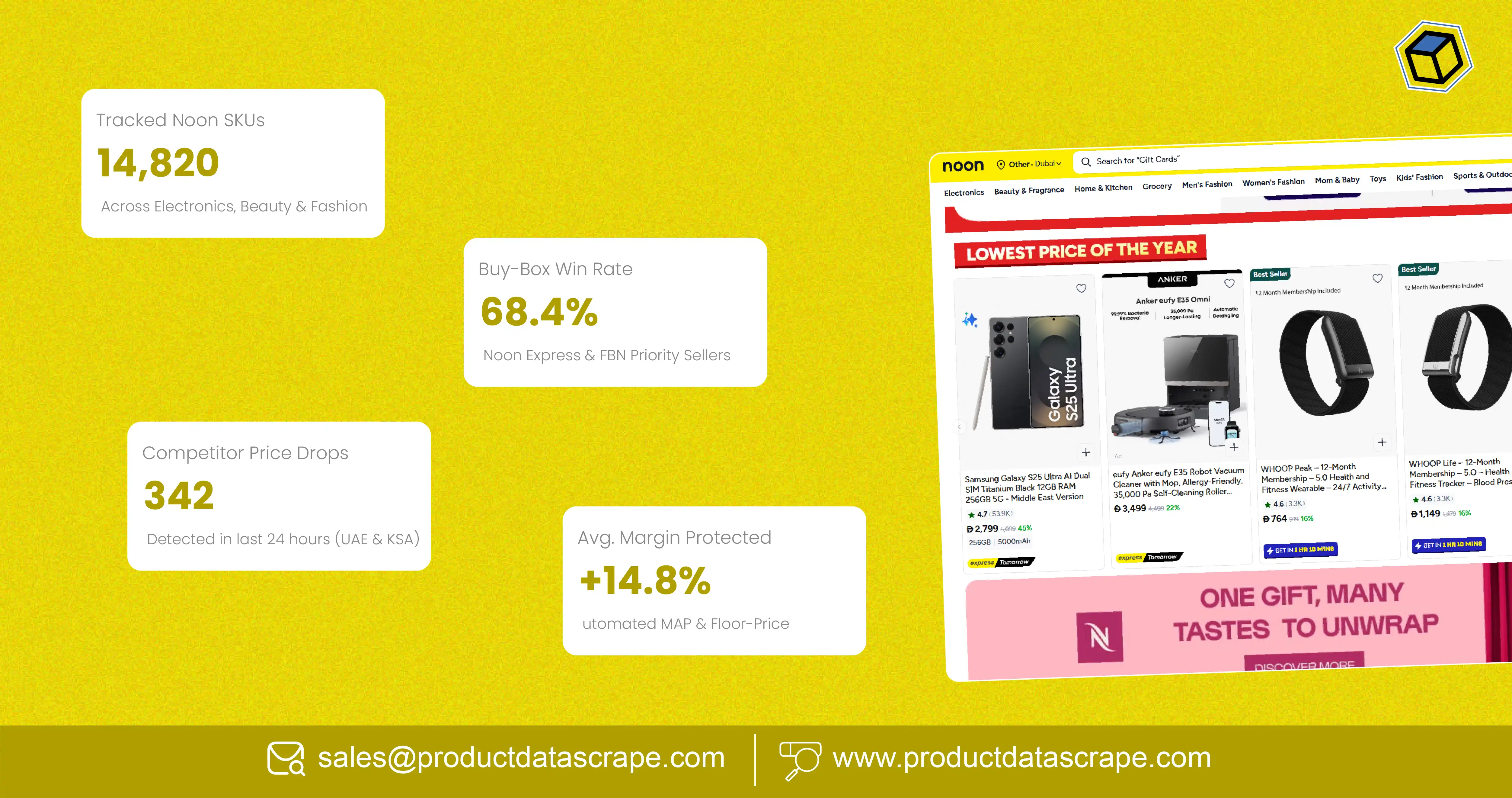
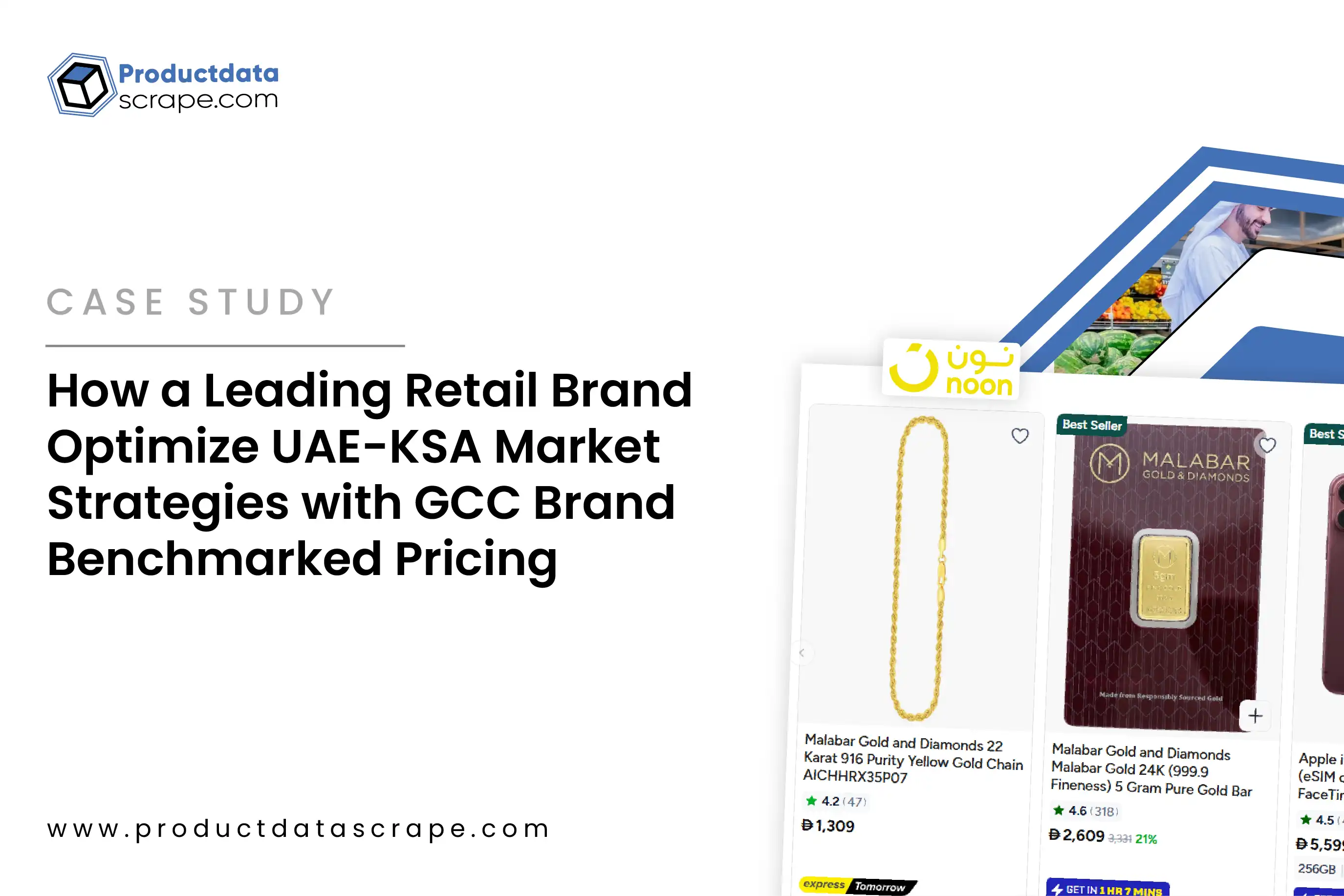
E-commerce brands in the UAE and Saudi Arabia need accurate competitor pricing information to remain competitive, protect profit margins, and respond to changing customer demand. Noon UAE & KSA Product Price Scraping helps retailers collect structured marketplace information, including product prices, discounts, seller offers, product specifications, and stock status. By comparing this information across both markets, businesses can identify pricing gaps, evaluate competitor strategies, and make informed retail decisions.
The growing digital commerce landscape makes marketplace intelligence increasingly important. UAE e-commerce market value reached AED 32.3 billion in 2024, while Saudi Arabia's e-commerce sales through mada cards reached SAR 197 billion in the same year. These figures demonstrate the scale of online commerce, although they measure different market indicators.
A structured Noon Product Data Scraping API can support automated data collection, helping retailers organize product-level information, monitor price movements, and integrate marketplace intelligence into their internal analytics systems.
For retailers, distributors, brands, and marketplace sellers, the objective is not simply to collect prices. It is to understand how products are positioned, how competing sellers adjust their offers, and where opportunities exist to improve pricing and product visibility.
How Can Retailers Build a Consistent View of Marketplace Products?
Understanding the complete product assortment is the first step toward effective competitor monitoring. Retailers need information about product titles, categories, brands, specifications, product identifiers, listed prices, and seller details. Noon GCC Product Catalog Scraping helps organize these attributes into structured datasets that businesses can compare across UAE and KSA marketplace listings.
A standardized catalog is particularly useful when the same product appears under different titles, descriptions, or variations. Product matching using SKU, GTIN, barcode, brand, model number, and product attributes helps reduce incorrect comparisons. Businesses can then distinguish identical products from similar but technically different items.
This process can also support GCC Delivery App Review Databases by enabling businesses to organize publicly available product and service feedback from relevant digital commerce channels. Reviews should be treated as a separate information source and analyzed according to their platform, date, product association, and available rating fields.
The regional opportunity is supported by published market figures. Dubai South and Euromonitor reported that UAE e-commerce market value increased from AED 17.6 billion in 2020 to AED 32.3 billion in 2024.
| Year | UAE e-commerce market value |
|---|
| 2020 | AED 17.6 billion |
| 2021 | Over US$5 billion |
| 2022 | No comparable actual figure cited here |
| 2023 | AED 27.5 billion |
| 2024 | AED 32.3 billion |
| 2025 | AED 42.2 billion |
| 2026 | Full-year actual not yet available |
Source: EZDubai, Euromonitor International, and Emirates News Agency. Figures are reported in their original currencies and are not interchangeable estimates.
For retailers, this growth makes consistent catalog organization important. A clean product dataset helps identify assortment gaps, compare equivalent products, and understand how marketplace competition changes over time.
How Does Stock Visibility Influence Competitive Pricing Decisions?
Product pricing cannot be evaluated independently of availability. A competitor may advertise an attractive price but have limited inventory, while another seller may maintain a higher price with immediate availability. Monitoring both factors gives retailers a more complete picture of marketplace competition.
Noon GCC Stock Availability Monitoring enables businesses to track observable stock indicators, product availability labels, and changes in listing status. Retailers can use these signals to identify products that become unavailable, return to the marketplace, or experience changes in their availability.
This information becomes more useful when combined with Pricing Promotions analysis. Promotional prices, percentage discounts, campaign labels, and displayed offers can influence how consumers compare products. However, businesses should distinguish regular prices from promotional prices and record the collection timestamp to avoid treating temporary discounts as permanent price changes.
Saudi Arabia's digital commerce expansion demonstrates why such monitoring matters. According to Qoyod's analysis of mada e-commerce transactions, online sales increased from SAR 39 billion in 2020 to SAR 197 billion in 2024.
| Year | Saudi e-commerce sales through mada |
|---|
| 2020 | SAR 39 billion |
| 2021 | SAR 74 billion |
| 2022 | SAR 123 billion |
| 2023 | SAR 157 billion |
| 2024 | SAR 197 billion |
| 2025 | No comparable annual figure used |
| 2026 | Full-year actual not yet available |
Source: Qoyod, Saudi consumer spending report, based on mada e-commerce data.
Retailers can use these market signals to establish monitoring priorities. High-demand products, frequently discounted items, and products with changing availability may require more frequent observation. A timestamped historical record also helps distinguish genuine competitor price changes from temporary promotional activity.
Why Is Product-Level Pricing Data Important for KSA Retailers?
Saudi Arabia has a distinct retail environment, with local pricing, VAT, delivery considerations, and marketplace seller competition influencing product positioning. Retailers targeting this market need product-level information rather than broad category averages.
A Noon KSA Product-Level Pricing Dataset can organize individual product records with attributes such as product name, brand, model, SKU, listed price, discounted price, seller, and availability status. This makes it easier to compare competing offers for equivalent products and identify pricing differences between sellers.
A structured Noon Product Data Scraper can also support historical price analysis. Businesses can compare current observations with previously collected records to identify price increases, reductions, promotional patterns, and changes in seller positioning. Product matching is essential because different product variants, pack sizes, storage capacities, and specifications can have different prices.
The following practices help improve dataset quality:
- Product identification: Match listings using product identifiers, brand names, model numbers, and specifications.
- Currency consistency: Store SAR and AED separately and retain the original marketplace currency.
- Price classification: Separate regular prices, discounted prices, and other displayed promotional values.
- Timestamp management: Record when each listing was observed to support accurate historical comparisons.
- Data validation: Flag missing values, duplicate products, unusual price changes, and inconsistent product attributes.
For cross-border retailers, tax treatment is particularly important. Noon explains that its UAE-to-KSA Global Selling pricing process removes applicable UAE VAT, converts the base price, and applies Saudi VAT and relevant import-related charges. Its published example uses 5% UAE VAT and 15% KSA VAT.
Therefore, retailers should avoid assuming that an AED listing and an SAR listing are directly comparable without accounting for the pricing structure and applicable charges.
How Can Seller-Level Information Reveal Competitive Opportunities?
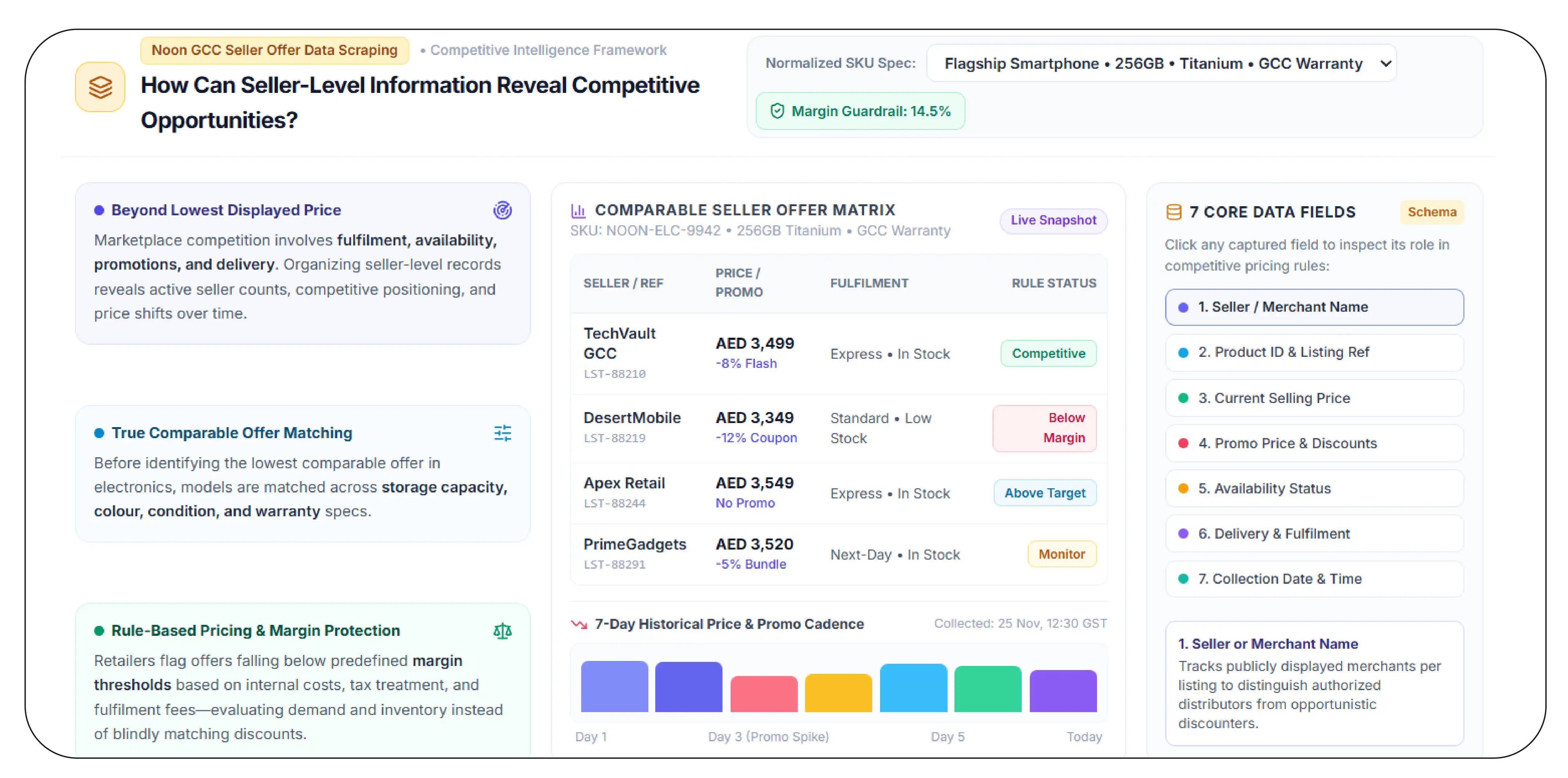
Marketplace competition is not limited to comparing the lowest displayed price. Multiple sellers may offer the same product at different prices, with differences in fulfilment, availability, promotions, and delivery arrangements.
Noon GCC Seller Offer Data Scraping helps retailers organize observable seller-level information alongside product records. This allows businesses to identify how many sellers are competing for a product, which offers are more competitively positioned, and how seller prices change over time.
For example, a retailer monitoring an electronics category may want to compare the displayed prices of the same smartphone model across available sellers. The analysis should account for storage capacity, colour, condition, warranty information, and other product specifications before identifying the lowest comparable offer.
Useful seller-level fields include:
- Seller or merchant name, where publicly displayed.
- Product identifier and listing reference.
- Current displayed selling price.
- Promotional price and discount information.
- Product availability status.
- Observable delivery or fulfilment information.
- Collection date and time.
Historical seller comparisons can help businesses identify recurring promotional activity, changes in price positioning, and products where competition is particularly intense.
Retail teams can also establish internal pricing rules. For example, they may flag products when a comparable competitor offer falls below a predefined margin threshold. Such rules should be based on the retailer's own costs, tax treatment, fulfilment expenses, and pricing policies rather than automatically matching every competitor discount.
The result is a more informed competitive strategy. Instead of reacting to isolated price movements, retailers can evaluate seller behaviour alongside product demand, inventory considerations, and profitability.
How Can UAE Retailers Benchmark Their Product Prices More Effectively?
UAE retailers need to understand how their products compare with competing marketplace offers. Noon UAE Retail Product Benchmarking helps businesses evaluate product-level prices, identify category-level differences, and understand how their offers are positioned against comparable listings.
With Noon UAE & KSA Product Price Scraping, retailers can also compare the UAE and Saudi Arabian marketplace environments while keeping each country's pricing records separate. This is important because currency, taxes, fulfilment costs, and cross-border pricing arrangements can influence final customer-facing prices.
The market data supports the need for careful benchmarking. According to the EZDubai and Euromonitor 2024 report, apparel and footwear, consumer electronics, and home care were among the leading UAE e-commerce categories by value.
These categories provide useful starting points for retailers building competitor monitoring programmes. Electronics businesses can compare model-specific offers, while apparel retailers can evaluate brand, size, colour, and product variation. Home-care businesses can monitor pack sizes, product specifications, and promotional prices.
A practical benchmarking process should include:
- Select comparable products: Use identifiers and specifications to avoid comparing different variants.
- Calculate effective price differences: Consider displayed discounts, taxes, delivery charges, and relevant fees where verifiable.
- Monitor promotional patterns: Separate temporary campaign prices from regular selling prices.
- Evaluate market positioning: Compare a retailer's offer against the available comparable seller offers.
- Review historical movements: Identify recurring price changes and seasonal promotional activity.
Retailers should also define different benchmarks for premium, mid-range, and budget product segments. Comparing products only by category can produce misleading results when specifications and brand positioning differ.
The goal is to establish a reliable pricing reference that supports profitable decisions rather than simply competing for the lowest displayed price.
How Can Marketplace Listing Intelligence Support Better Business Decisions?
Pricing data becomes more valuable when connected with product information, seller details, availability, and listing changes. Noon Marketplace Listing Intelligence helps businesses bring these different data points together to understand marketplace activity.
With Noon UAE & KSA Product Price Scraping, retailers can build a structured view of product listings across both markets. The dataset can support competitor analysis, assortment planning, pricing reviews, product matching, and category-level reporting.
For example, an e-commerce business can use historical observations to identify products that repeatedly receive promotional discounts. It can then compare those patterns with its own pricing calendar and decide whether a similar campaign is commercially justified.
Businesses can also organize marketplace information into dashboards containing:
- Product-level price comparisons.
- Seller-level offer comparisons.
- Discount and promotional history.
- Product availability observations.
- Category and brand coverage.
- New, changed, or unavailable listings.
- Historical price movement reports.
The period from 2020 to 2026 highlights the importance of using properly sourced market indicators rather than assuming that every annual figure measures the same thing. UAE e-commerce market estimates, Saudi mada transaction sales, and industry forecasts represent different measurement approaches.
For 2026 planning, businesses should therefore distinguish between completed annual statistics, published forecasts, and their own live marketplace observations. A forecast should never be presented as a verified actual result.
Data quality is equally important. Retailers should retain collection timestamps, source references, currency information, and product identifiers. They should also validate unusual changes before using them in automated pricing decisions.
A well-organized intelligence system allows commercial teams to move beyond manual competitor checks. It creates a repeatable process for understanding market changes, identifying pricing opportunities, and supporting decisions with traceable evidence.
Why Choose Product Data Scrape?
Choosing the right data partner is essential for reliable marketplace intelligence. Product Data Scrape helps businesses organize structured product information, competitor offers, and marketplace pricing observations into actionable datasets. Its GCC Ecommerce Data Scraping capabilities can support regional research, product benchmarking, and competitor monitoring workflows. Businesses can use Noon UAE & KSA Product Price Scraping to build consistent product records, analyze pricing movements, and identify changes in seller offers and availability. Structured delivery formats, data validation, and customized collection requirements help commercial teams integrate marketplace intelligence into their existing reporting and decision-making processes.
Conclusion
Competitive pricing requires more than occasional marketplace checks. Retailers need consistent product information, comparable seller offers, and historical observations to understand market positioning across the UAE and Saudi Arabia.
By analyzing Noon Category & Marketplace information, businesses can identify pricing differences, monitor promotional activity, and improve product benchmarking. Noon UAE & KSA Product Price Scraping provides a structured approach to collecting marketplace intelligence for better commercial decisions.
Ready to strengthen your regional competitor monitoring strategy? Contact Product Data Scrape to discuss your product data requirements, collection frequency, and customized marketplace intelligence solutions.
FAQs
1. What is Noon product price scraping?
It is the structured collection of publicly accessible marketplace pricing information, including product prices, discounts, seller offers, and availability indicators for competitor analysis.
2. Why should UAE and KSA retailers monitor competitor prices?
Monitoring helps retailers understand market positioning, identify pricing gaps, evaluate promotions, and make informed decisions while protecting their margins and competitiveness.
3. Which information can businesses collect from marketplace listings?
Depending on availability, datasets can include product names, brands, SKUs, prices, discounts, seller information, specifications, ratings, and stock indicators.
4. How frequently should marketplace prices be monitored?
Collection frequency depends on product demand, promotional activity, category volatility, and business requirements. High-priority products may need more frequent observations than stable categories.
5. How can Product Data Scrape support marketplace intelligence?
Product Data Scrape can deliver structured marketplace datasets that help businesses compare product prices, monitor seller offers, evaluate availability, and develop regional pricing strategies.


 Singapore
 EMAIL
 PHONE










.webp)