Quick Overview
The project focuses on helping a leading retail brand improve pricing visibility across the UAE and Saudi Arabia. Through GCC Noon Brand Benchmarked Pricing Data , the initiative addresses fragmented competitor information, marketplace price variations, and inconsistent product comparisons. The proposed data intelligence framework combines product identification, brand-level price monitoring, and marketplace listing analysis. Using GCC market Data, the brand can evaluate regional pricing differences, understand competitor positioning, and improve pricing decisions. The project is designed around three measurable impact areas: data accuracy, monitoring coverage, and reporting speed. Actual results require validation against the client's project records.
Client Name / Industry: [Approved client name] / Retail and e-commerce.
Service / Duration: GCC pricing intelligence and marketplace data extraction / [Verified project duration].
Key Impact Metrics: [Verified data accuracy improvement], [Verified monitoring coverage], and [Verified reporting-time reduction].
The Client
The client profile for this case study represents a retail business operating across the UAE and Saudi Arabia, with product listings distributed through online marketplaces and regional retail channels. Its business requirements included maintaining consistent product positioning, evaluating competing brands, and understanding how regional market conditions influenced selling prices.
The wider GCC retail environment has experienced significant digital expansion. According to the EZDubai and Euromonitor E-Commerce Report in the MENA Region 2024, the UAE e-commerce market reached AED 32.3 billion in 2024, while Saudi Arabia's market reached an estimated USD 9.8 billion. The UAE figure is also equivalent to approximately USD 8.8 billion.
This growth increased the importance of reliable marketplace intelligence. The client needed a structured approach to understanding competing product offers rather than relying on occasional manual price checks.
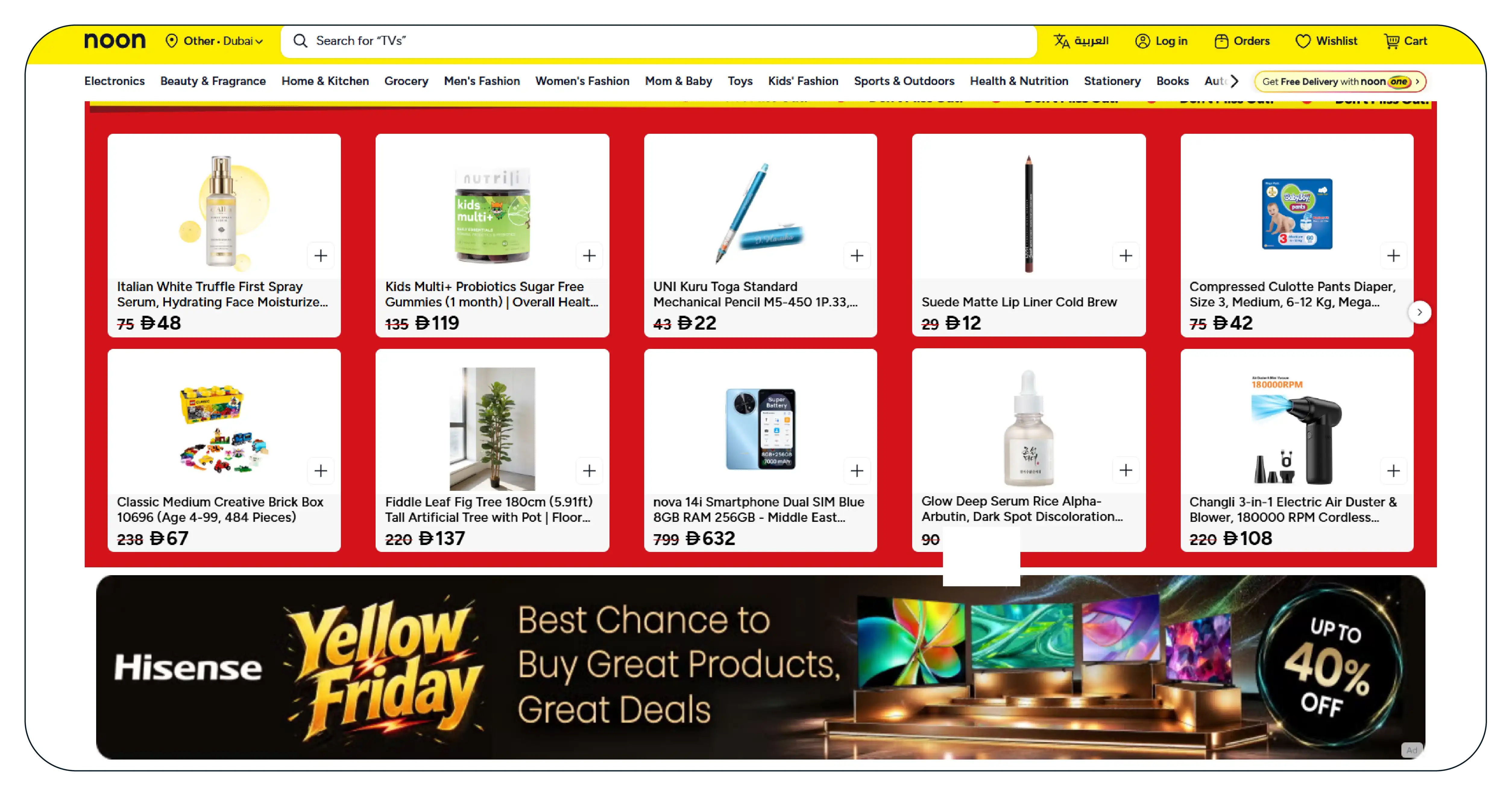
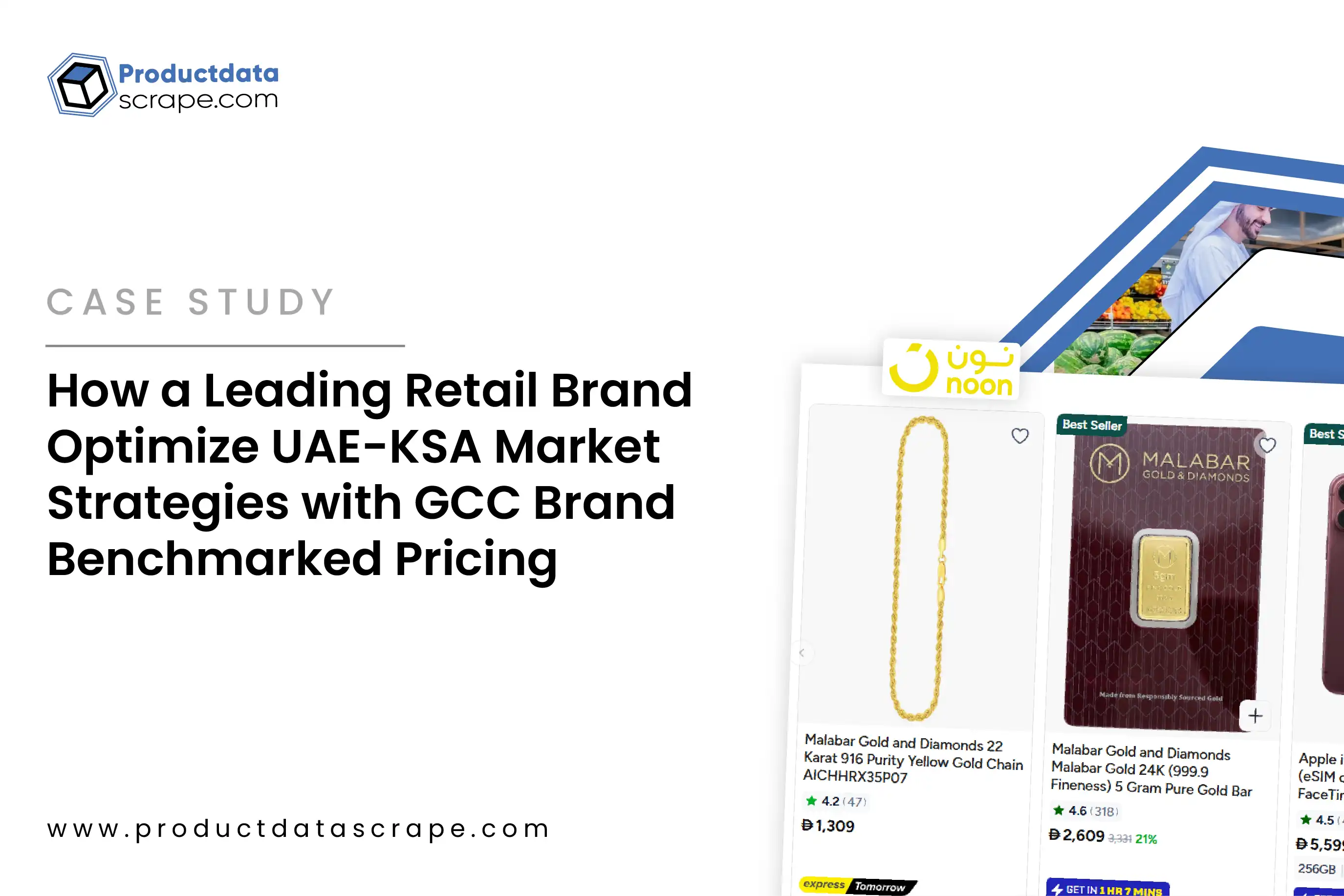
The proposed research framework incorporated Noon Marketplace Price Variation Data Scraping to examine differences in product prices, seller offers, promotional activity, and product availability.
The Noon Product Data Scraper approach also supported product identification and standardized information collection across UAE and KSA marketplace listings.
Before the proposed transformation, the specific client's operational condition, existing software, and data quality issues have not been independently documented. Therefore, the following requirements represent the project scope to be validated rather than confirmed historical client failures:
Difficulty comparing equivalent products across regional listings.
Limited visibility into seller-level price differences.
Inconsistent product attributes across collected records.
Delays associated with manual competitor research.
Limited historical information for evaluating pricing changes.
The transformation mattered because businesses operating across two markets need comparable product information that accounts for regional differences rather than assuming identical prices and selling conditions.
Goals & Objectives
The project objectives focused on creating a repeatable pricing intelligence framework that could support retail decision-making across the UAE and KSA. The intended solution needed to combine reliable product identification, structured data extraction, automated processing, and accessible reporting.
The primary business goals were to establish a consistent competitor-monitoring process and improve regional price visibility.
The GCC Brand Retail Price Intelligence Dataset was planned as the central source for comparing products, brands, sellers, and marketplace prices across both markets.
Key business goals included:
Improve visibility into competing brand prices.
Compare equivalent product offers across UAE and KSA.
Identify promotional and discount movements.
Support product assortment and pricing decisions.
Expand monitoring coverage as product categories grow.
The technical objectives concentrated on developing an automated and scalable collection process.
The solution was designed to organize marketplace information into standardized records while retaining the country, seller, product, and collection-date attributes required for meaningful analysis.
Important objectives included:
Automate publicly accessible product listing collection.
Standardize product titles, identifiers, and brand attributes.
Integrate collected records with analytical dashboards.
Maintain historical pricing snapshots.
Support scheduled updates and exception reporting.
Separate UAE and Saudi Arabia price records.
The GCC Noon Brand Benchmarked Pricing Data framework also needed to account for currency, applicable taxes, delivery charges, and product-condition differences when comparing offers.
The following indicators were selected as proposed measurement criteria. Actual baseline and achieved values must be populated from project monitoring records.
Data accuracy: Percentage of validated product and price records.
Product matching rate: Percentage of correctly matched equivalent products.
Monitoring coverage: Number of brands, products, sellers, and marketplace listings tracked.
Update latency: Time between source observation and dashboard availability.
Duplicate rate: Percentage of duplicate product records.
Reporting time: Time required to generate regional competitor comparisons.
These indicators provide measurable ways to assess whether the implementation improves data reliability, monitoring efficiency, and decision-making.
The Core Challenge
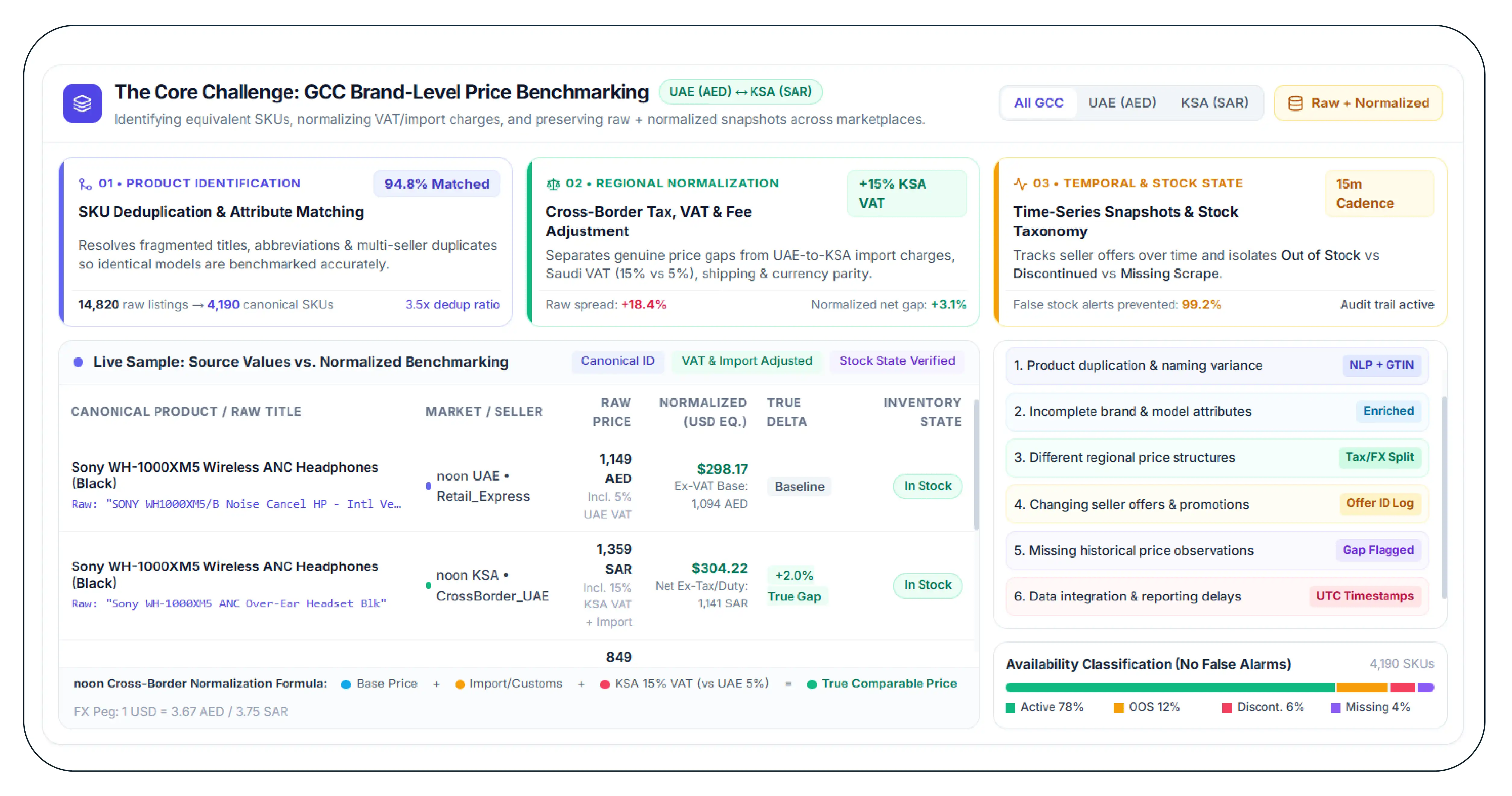
Retail price benchmarking across the UAE and Saudi Arabia requires more than collecting product prices. Businesses must identify equivalent products, recognize different seller offers, preserve regional information, and distinguish genuine price changes from differences caused by taxes, shipping, or product conditions.
The project scope addressed these major technical and operational challenges.
Inconsistent Product Identification
Marketplace listings can contain different product titles, abbreviations, descriptions, and brand references. The same product may appear under multiple seller listings.
Without product matching, businesses risk comparing different models and drawing incorrect conclusions about competitor prices.
Regional Pricing Differences
UAE and KSA listings may have different currencies, taxes, delivery charges, and marketplace-specific pricing arrangements.
For example, noon's official UAE-to-KSA seller documentation explains that its cross-border pricing process can incorporate import-related charges and Saudi VAT when calculating the displayed KSA price.
noon Seller Help Center+1
Consequently, comparing the displayed AED and SAR values without accounting for these differences can produce misleading results.
Marketplace Data Complexity
Seller offers, promotional prices, stock status, and listing details can change over time. Collecting only one snapshot cannot explain whether a price movement is temporary or part of a longer trend.
GCC Brand-Level Marketplace Price Scraping was therefore designed around standardized fields, seller identification, collection timestamps, and historical snapshots.
The main challenges addressed by the framework included:
Product duplication and inconsistent naming.
Incomplete brand and model attributes.
Different regional price structures.
Changing seller offers and promotions.
Missing historical price observations.
Data integration and reporting delays.
A further requirement was to distinguish unavailable products from discontinued listings and temporarily missing records. This prevents incomplete source information from being interpreted as an actual inventory change.
The solution needed to preserve original source values alongside normalized information so analysts could review and validate comparisons.
Our Solution
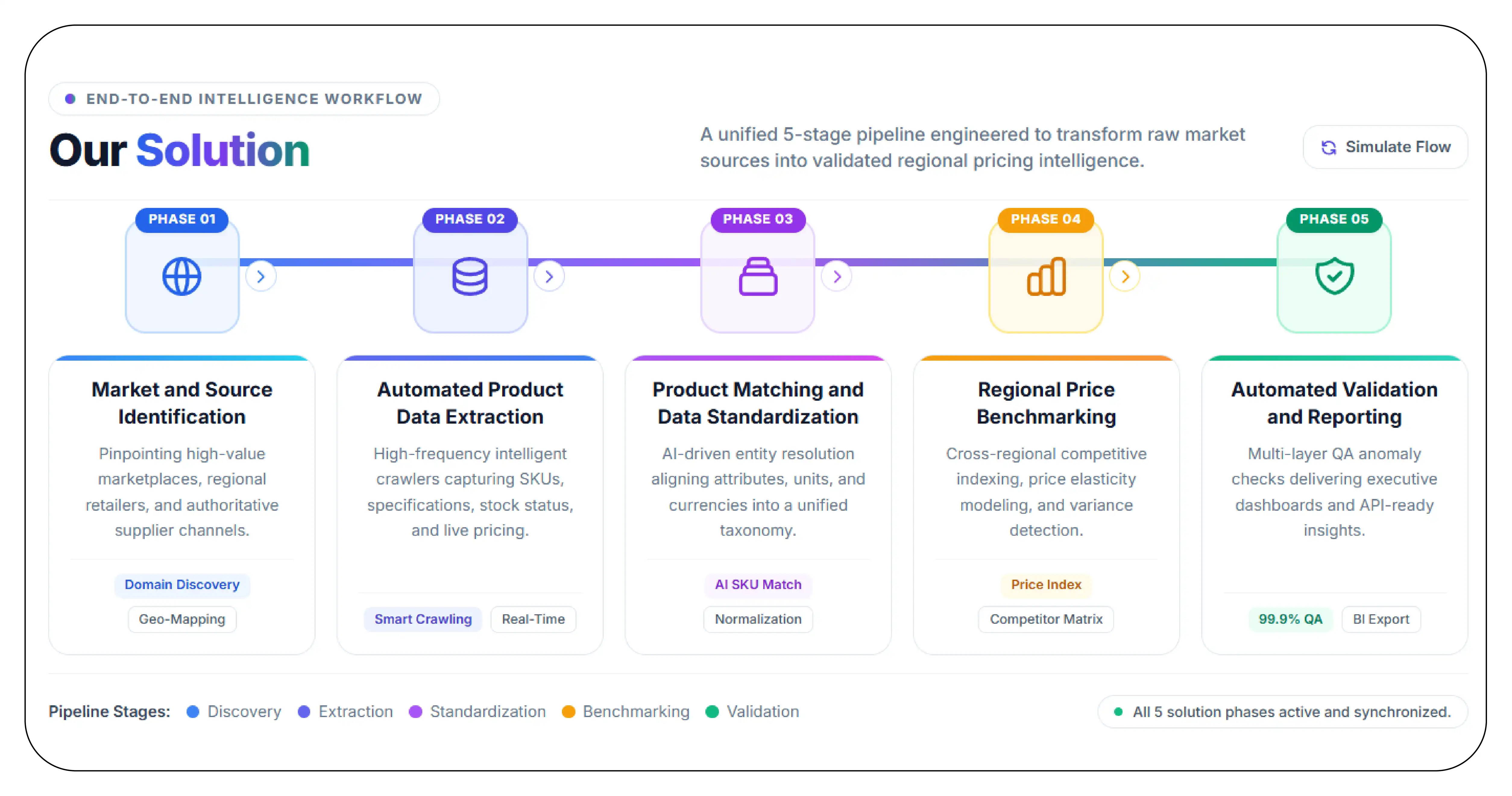
The proposed implementation followed a phased approach to establish a consistent process for collecting, validating, matching, and analyzing marketplace product information.
Phase 1: Market and Source Identification
The first phase focused on defining the relevant retail categories, brand lists, product identifiers, and marketplace sources.
The UAE and KSA marketplace environments were considered separately to avoid mixing regional product records.
The research scope included:
noon UAE product listings.
noon Saudi Arabia product listings.
Brand names and product identifiers.
Product categories and specifications.
Seller information and displayed offers.
Promotional and availability information.
The collection process was designed around publicly accessible information and applicable website terms, permissions, and restrictions.
Phase 2: Automated Product Data Extraction
The second phase focused on collecting structured product information from approved sources.
Noon Seller Performance Data Scraping was included in the broader analytical scope to examine publicly accessible seller and offer information where available. It should not be confused with access to private seller dashboards or confidential performance records.
The extraction framework was designed to capture:
Product title and brand.
Product URL and SKU.
Displayed selling price.
Discount and promotional details.
Seller name and offer information.
Country and currency.
Product availability.
Collection timestamp.
Automated collection reduces dependence on repetitive manual research and creates a consistent foundation for subsequent analysis.
Phase 3: Product Matching and Data Standardization
The third phase focused on resolving inconsistent product information.
Product titles and descriptions were normalized to identify equivalent products. Matching could use brand names, model numbers, manufacturer identifiers, and other available product attributes.
The system was designed to maintain separate fields for original and normalized product values.
For example, a product with the same manufacturer model number appearing in both AED and SAR listings could be linked to a common product record while retaining its individual regional price.
This process helped establish more meaningful comparisons and reduced the risk of duplicate product records.
Phase 4: Regional Price Benchmarking
The next phase concentrated on comparing matched product offers across the two markets.
GCC Noon Brand Benchmarked Pricing Data was designed to support comparisons using:
Original displayed prices.
Currency-specific values.
Discounted selling prices.
Seller-level price differences.
Applicable tax and shipping information, where available.
Product-condition differences.
Historical price observations.
A key implementation principle was to avoid treating currency conversion as a complete landed-price comparison. Tax, shipping, and import-related charges must be separately identified.
Phase 5: Automated Validation and Reporting
The final phase focused on improving the usability of collected information.
Automated validation rules were designed to identify missing identifiers, duplicate listings, invalid prices, inconsistent currencies, and incomplete product attributes.
Reporting outputs could then be organized by country, brand, category, seller, and product.
The intended reporting environment included:
UAE versus KSA price comparison tables.
Brand-level competitor reports.
Product-level price histories.
Promotional activity summaries.
Seller-level offer comparisons.
Data-quality monitoring reports.
This phased methodology provides a repeatable framework for regional retail intelligence while allowing the monitoring scope to expand as additional brands and categories are introduced.
Results & Key Metrics

The project's success should be assessed through measurable data-quality and operational indicators rather than unsupported revenue or cost-saving claims.
The following three primary metrics are recommended for the final client-approved case study:
Product data accuracy: [Insert verified percentage] based on manually validated product records.
Monitoring coverage: [Insert verified number] of brands, products, and seller listings monitored across UAE and KSA.
Reporting efficiency: [Insert verified percentage or time reduction] compared with the documented previous reporting process.
Additional supporting measurements can include product matching accuracy, duplicate-record reduction, collection success rate, and dashboard update latency.
These metrics provide evidence of the solution's effectiveness without attributing unverified financial improvements to the implementation.
The completed implementation should be evaluated according to its ability to create a consistent regional pricing intelligence process.
The Noon Seller-Based Price Benchmarking Intelligence framework provides a basis for comparing matched products, reviewing seller offers, and understanding regional pricing differences.
With GCC Brand Benchmarked Pricing, the intended business outcome is improved visibility into brand positioning across the UAE and KSA. Standardized product records also support historical analysis, promotional monitoring, and more consistent competitor reporting.
The final results narrative should include verified before-and-after measurements, reporting screenshots, and approved client feedback. Until those records are available, these outcomes should be presented as intended capabilities rather than achieved results.
What Made Product Data Scrape Different?
The proposed approach emphasizes product-level accuracy, regional normalization, and structured marketplace intelligence rather than simple price collection.
The Noon Product Data Scraping API approach can support standardized data delivery and integration into business intelligence environments.
Its key differentiators include:
Product matching using available identifiers and specifications.
Separate UAE and KSA marketplace records.
Automated data validation and duplicate detection.
Historical price observation and comparison.
Structured seller and promotional information.
Configurable data delivery and monitoring schedules.
The GCC Brand Benchmarked Pricing framework also distinguishes displayed prices from additional regional charges, helping analysts avoid misleading comparisons. This makes the resulting information more useful for competitive research and retail planning.
Client Testimonial
"Working with Product Data Scrape helped us establish a more structured approach to monitoring brand pricing across the UAE and KSA markets. The organized marketplace data, product-level comparisons, and competitor insights improved our visibility into regional pricing trends. The data intelligence approach also helped our team make more informed decisions about product positioning, promotional activities, and competitive strategies. We value the focus on data accuracy, consistency, and actionable reporting."
— Head of E-commerce & Pricing Strategy,
Conclusion
Regional retail competition requires businesses to understand how brands, products, and sellers position themselves across different markets. UAE Fashion Data Scraping can extend this intelligence into apparel, footwear, accessories, and other consumer categories, helping retailers examine product assortments and regional price differences.
A scalable GCC Noon Brand Benchmarked Pricing Data framework can support ongoing competitor monitoring, product matching, promotional analysis, and historical reporting across UAE and KSA.
For businesses planning regional expansion, structured marketplace data provides a foundation for more informed pricing and assortment decisions.
Ready to strengthen your GCC pricing strategy? Partner with Product Data Scrape to build customized marketplace datasets, automate competitor monitoring, and transform regional product information into actionable retail intelligence!
FAQs
1. What is GCC brand price benchmarking?
GCC brand price benchmarking compares equivalent products across retailers and marketplaces in Gulf countries. It helps businesses evaluate regional pricing differences, competitor positioning, discounts, and product availability.
2. Why compare UAE and KSA marketplace prices?
UAE and KSA prices can differ because of currency, taxes, shipping, import charges, seller strategies, and promotional activities. Comparing both markets helps retailers understand regional positioning.
3. How does noon product data scraping help retailers?
It organizes publicly accessible product information, including titles, brands, prices, seller offers, discounts, and availability, helping retailers conduct structured marketplace research and competitor comparisons.
4. Which metrics should pricing teams monitor?
Pricing teams should monitor product matching accuracy, competitor price differences, discount frequency, seller coverage, collection success rates, historical price movements, and reporting speed.
5. Can regional pricing datasets support multiple retail categories?
Yes. Structured datasets can cover fashion, electronics, beauty, home products, and consumer goods, provided the relevant sources and product information are accessible.


 Singapore
 EMAIL
 PHONE











.webp)