Introduction
Choosing between an API and a custom scraper depends on the type of marketplace information a business needs, its collection frequency, technical resources, and data accuracy requirements. For businesses researching Meesho sellers, products, prices, and catalog changes, Meesho seller data scraping through a properly authorized collection workflow can support competitive analysis, product research, and marketplace intelligence. An API is generally preferable when an approved, documented integration provides the required fields, while a custom scraper can offer more flexibility when authorized data sources do not provide a suitable interface.
A Meesho Scraping API should not automatically be confused with Meesho's official seller-management integrations. Access, permissions, available endpoints, and supported data fields must be verified with the relevant provider. Meesho's official Supplier Panel supports catalog uploads, inventory management, order processing, and payment tracking. Its public seller guidance also explains that sellers can upload catalogs individually or in bulk using spreadsheets.
For retailers, manufacturers, marketplace analysts, and e-commerce data teams, the real decision is not simply which technology is faster. It is which method delivers reliable, relevant, compliant, and maintainable information at a reasonable total cost.
Why Does Marketplace Information Matter for E-commerce Decisions?
Marketplace data helps businesses understand product positioning, seller activity, category competition, and changing customer-facing prices. Meesho operates across multiple consumer product categories, making catalog-level intelligence relevant to brands, distributors, manufacturers, and online retailers.
Businesses looking to Scrape Meesho Seller & Product Data may want to examine product titles, category information, seller identifiers where publicly available, displayed prices, product variations, ratings, review counts, and listing availability. These fields can help teams identify product assortment gaps, compare competing offers, and understand how product information is presented to shoppers. However, the actual availability of each field depends on the permitted source and collection method.
Data quality is equally important. Product titles may contain inconsistent spellings, attributes may be incomplete, and similar products may appear under different names. This is where Catalog Enrichment Services can add value by standardizing product attributes, cleaning text, normalizing categories, and matching duplicate or closely related listings.
Meesho's official seller guidance describes catalog uploads, category selection, product images, pricing information, and catalog quality checks. It also recommends using price recommendations and product-level comparisons when sellers make pricing decisions.
For business users, these details demonstrate why raw extraction alone is insufficient. A usable dataset must be structured, validated, refreshed appropriately, and connected to a specific business question.
How Do the Two Collection Methods Differ?
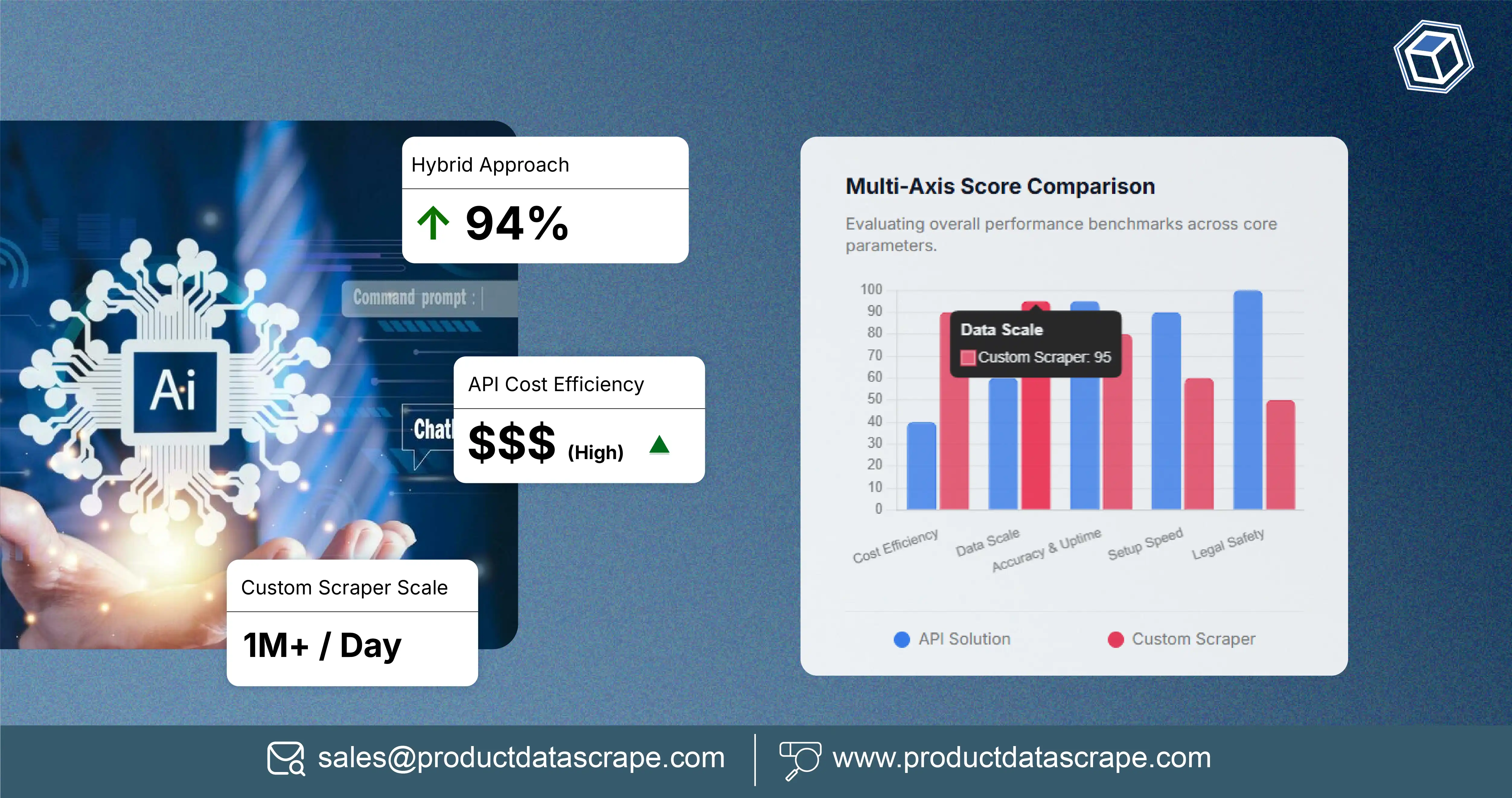
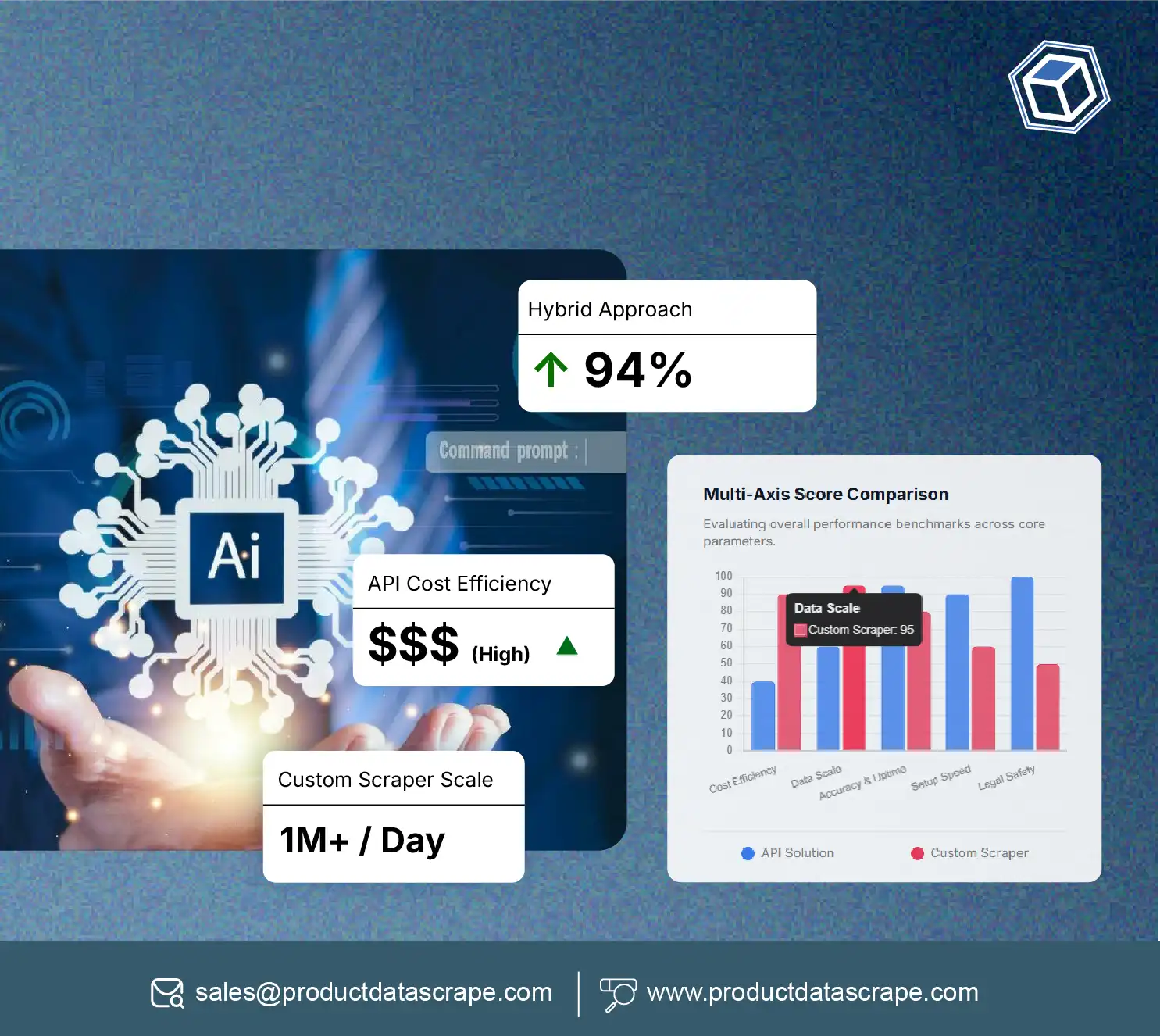
An API and a custom scraper can both support structured data workflows, but their operating models are different. An API retrieves information through defined endpoints and permissions. A custom scraper collects permitted information from accessible web pages and converts it into structured records.
The comparison becomes important when a company needs product-level information across many listings or wants to integrate marketplace intelligence into an existing data warehouse.
| Evaluation factor | API-based collection | Custom scraper |
|---|
| Data access | Depends on documented endpoints and permissions | Depends on accessible, authorized source pages |
| Data structure | Usually follows a predefined schema | Can be designed around required fields |
| Customization | Limited to supported endpoints and parameters | Greater control over extraction logic |
| Maintenance | Depends on API version and provider changes | Requires monitoring for website changes |
| Scalability | Can be efficient when rate limits and access support volume | Depends on infrastructure and page structure |
| Data accuracy | Depends on source quality and endpoint coverage | Depends on parsing, validation, and source consistency |
| Initial investment | Integration and access costs may apply | Development and testing costs may be higher |
| Long-term cost | Depends on usage, licensing, and maintenance | Depends on infrastructure, maintenance, and monitoring |
A Meesho Seller API vs Custom Scraper assessment should begin with access verification rather than assumptions about functionality. Businesses should request API documentation, sample responses, authentication requirements, usage limits, and a clear list of supported fields before selecting a provider.
A Meesho Product Data Scraper may be more appropriate when the business requires customized extraction from permitted product pages and needs fields that are not available through an approved API. Nevertheless, customization does not guarantee uninterrupted access or complete coverage. Both approaches need quality checks, documentation, and ongoing monitoring.
The most practical choice is the method that satisfies the required data specification without creating unnecessary operational or compliance risks.
Which Approach Offers Better Pricing and Operational Control?
Cost is one of the most important considerations when selecting a marketplace data collection method. However, businesses should evaluate total operating costs rather than comparing only the initial development price.
A Meesho Custom Product Scraper can be designed around specific product categories, listing attributes, and collection schedules. This flexibility is useful for businesses that need tailored datasets instead of standard API responses. For example, a manufacturer may need category-level product comparisons, while a retail analyst may prioritize displayed prices, product variations, and listing availability.
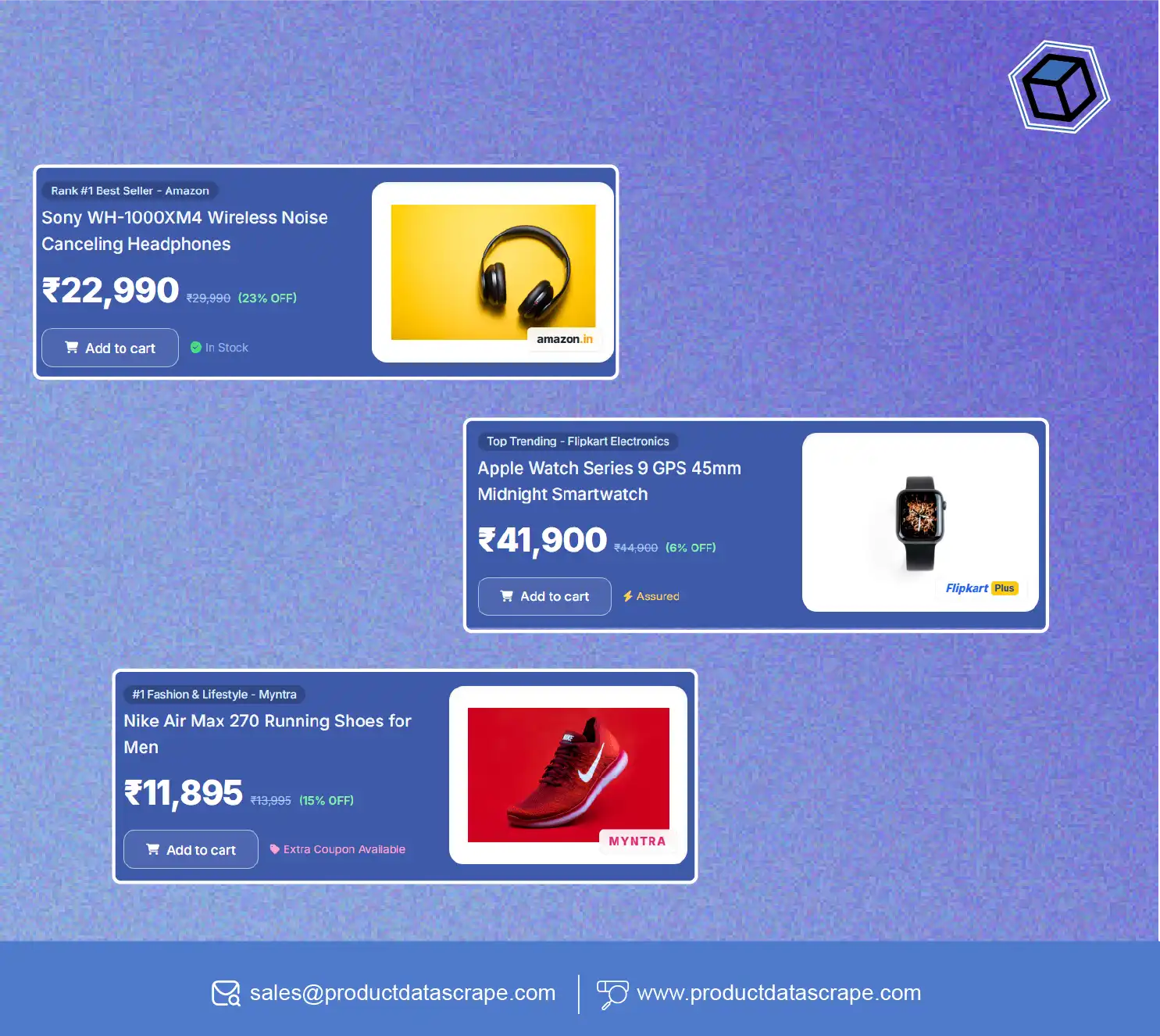
Another important consideration is Competitive pricing data. Businesses can use authorized marketplace information to compare their own product positioning with publicly visible competing offers. Price comparison becomes more meaningful when records include collection timestamps, product identifiers, comparable variants, and consistent measurement units.
Consider these cost factors before choosing a solution:
- Development expenses: API integrations require authentication, endpoint mapping, and testing. Custom scraping requires page analysis, extraction development, and validation.
- Infrastructure expenses: Both approaches may require cloud resources, storage, processing capacity, and monitoring.
- Maintenance expenses: API changes can require integration updates, while website layout changes can require scraper adjustments.
- Data processing expenses: Duplicate removal, category normalization, product matching, and missing-field handling add costs to both methods.
- Operational expenses: Monitoring, reporting, troubleshooting, and scheduled data delivery should be included in the budget.
An inexpensive extraction process may become costly if it repeatedly delivers incomplete or inconsistent records. Therefore, businesses should evaluate cost per validated product record rather than cost per request or page.
The right approach should balance flexibility, access permissions, data quality, and predictable maintenance requirements.
How Can Listing-Level Information Improve Product Research?
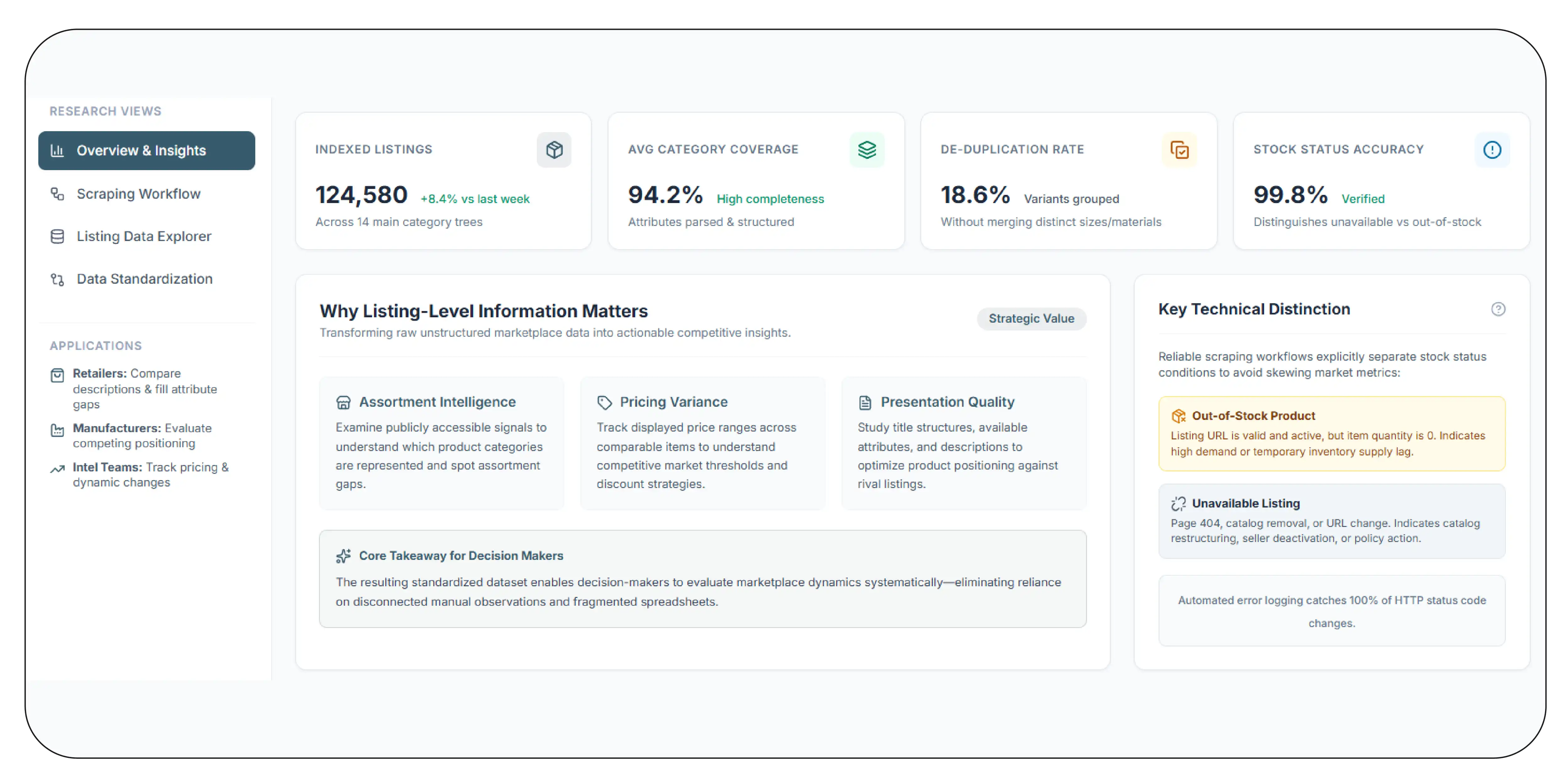
Product listings provide useful signals about assortment, presentation, and competitive positioning. Businesses can examine publicly accessible listing information to understand which product categories are represented, how competing products are described, and how displayed prices vary across comparable items.
A structured Meesho Seller Listing Data Scraping workflow can organize permitted information into fields such as product title, category, displayed price, product URL, available attributes, rating, review count, and collection timestamp. Seller information should only be included when it is publicly available and its collection and use are permitted.
This information can support several business activities. Retailers can compare product descriptions, identify missing attributes, and examine category coverage. Manufacturers can study how similar products are positioned. Marketplace intelligence teams can identify changes in listing availability and product presentation over time.
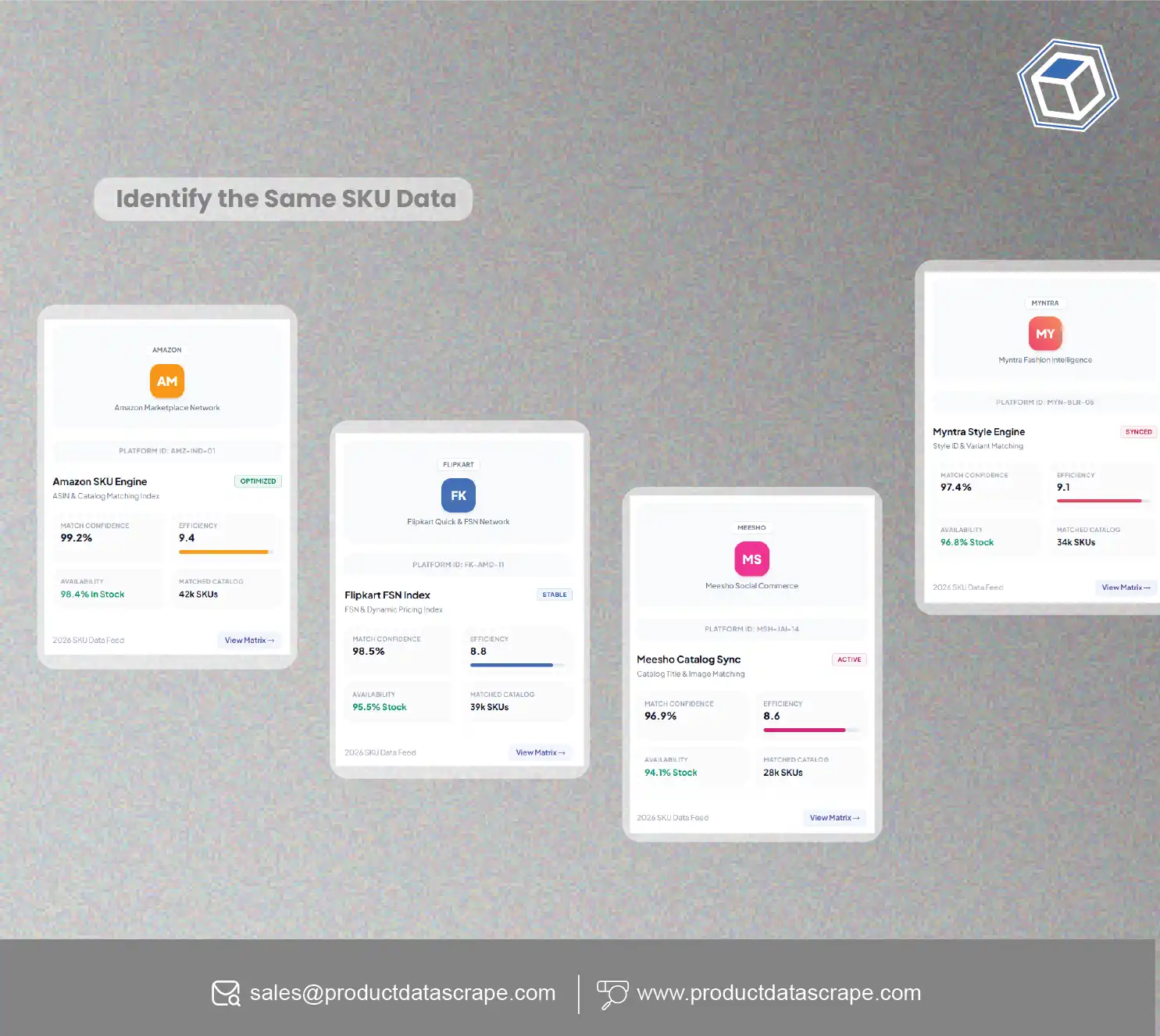
The value of Meesho seller data scraping increases when records are standardized. For example, two listings may describe the same type of product using different title structures. A data pipeline can normalize terminology, identify likely duplicates, and group comparable products without incorrectly merging different sizes, materials, or variants.
A reliable listing workflow should include:
- Source and permission verification before collection.
- Consistent product identifiers wherever available.
- Timestamped records for historical comparison.
- Validation of prices, categories, and product attributes.
- Duplicate detection and variant-level matching.
- Error logs for unavailable or changed pages.
Businesses should also distinguish between an unavailable listing and an out-of-stock product. These conditions are not necessarily equivalent.
The resulting dataset can help decision-makers understand product assortment and marketplace positioning without relying on disconnected manual observations.
What Should Businesses Monitor When Marketplace Catalogs Change?
Marketplace catalogs are dynamic. Product descriptions, displayed prices, images, availability indicators, and category placements may change as sellers update their listings or marketplace conditions evolve.
Meesho Marketplace Catalog Data Monitoring helps businesses organize these changes into a consistent observation process. Rather than collecting information once, teams can compare successive snapshots to identify meaningful differences.
For example, a retailer may want to know whether a product's displayed price has changed, whether a listing is still accessible, or whether new product attributes have appeared. These observations can support product research and internal reporting, provided the underlying data is collected through authorized methods.
A useful monitoring system should capture the original value, newly observed value, collection timestamp, source reference, and validation status. This makes it easier to distinguish actual marketplace changes from extraction errors.
Meesho seller data scraping can contribute to this process when the collection workflow has appropriate access and a stable source. However, collection frequency should reflect the business requirement and applicable access limits. Excessively frequent requests can increase infrastructure costs and create unnecessary pressure on source systems.
The following table outlines a practical monitoring framework.
| Data field | What to monitor | Business application |
|---|
| Product title | Description and naming changes | Product content analysis |
| Displayed price | Price differences over time | Competitive benchmarking |
| Product category | Category or classification changes | Assortment research |
| Listing availability | Accessible, unavailable, or changed status | Catalog monitoring |
| Product attributes | Size, material, color, and other details | Product matching |
| Ratings and reviews | Changes in displayed values | Customer feedback analysis |
| Product images | Image additions or replacements | Catalog quality checks |
A monitoring process should not interpret every missing observation as a genuine product change. Network failures, access restrictions, temporary page errors, and source modifications can all produce incomplete records.
Businesses should therefore maintain validation rules and mark uncertain observations separately. This improves reporting accuracy and helps analysts make decisions based on verified changes rather than technical noise.
How Can an API-Based Workflow Support Reliable Data Extraction?
An API-based workflow can simplify data exchange when an organization has access to suitable, documented endpoints. It provides a structured way to retrieve supported information and integrate it into databases, dashboards, analytics platforms, and internal applications.
Meesho Seller Data Extraction Using API should begin with a clear understanding of the API provider, its relationship with Meesho, authentication requirements, permitted use, and supported data fields. Businesses should not assume that every third-party service advertising Meesho API access is an official Meesho integration.
Meesho's official Supplier Panel documentation describes seller-side functions such as catalog management, inventory management, order processing, and payment tracking. It also explains how sellers can upload catalogs individually or through bulk spreadsheets. These capabilities are relevant to seller operations, but they should not be interpreted as proof that a public competitor-product research API is available.
Meesho seller data scraping can also be part of an authorized custom collection workflow when an approved API does not provide the required public listing information. The two approaches may even complement each other when their permissions, data definitions, and intended uses are clearly separated.
A reliable extraction architecture should include:
- Authentication management: Store credentials securely and follow the provider's access requirements.
- Field mapping: Define how source fields correspond to internal database columns.
- Data validation: Check required fields, formats, duplicates, and unexpected values.
- Timestamp management: Record when each observation was collected.
- Error handling: Identify failed requests, missing records, and incomplete responses.
- Change monitoring: Track API version updates or source structure changes.
- Data governance: Maintain source references, access records, retention policies, and usage restrictions.
Ultimately, the API-versus-scraper decision should be based on the actual information available through approved access channels. A technically sophisticated system is not useful if it cannot deliver the required data consistently and lawfully.
What Do the Available Marketplace Growth Figures Tell Data Buyers?
Meesho's published business figures demonstrate why structured marketplace intelligence is increasingly relevant to e-commerce businesses. The following figures are company-reported operating metrics, not measurements of scraper performance or independently verified product-level price changes.
| Financial year | Annual transacting users | Placed orders | Net merchandise value |
|---|
| FY2020–FY2023 | Not included in the comparable series below | Not included | Not included |
| FY2024 | 156 million | 1,342 million | ₹23,241 crore |
| FY2025 | 199 million | 1,834 million | ₹29,988 crore |
| FY2026 | 264 million | 2,668 million | ₹41,560 crore |
Source: Meesho FY2026 annual-report performance figures. FY2026 figures are company-reported financial-year results.
These figures show substantial growth in marketplace activity. Annual transacting users increased from 156 million in FY2024 to 264 million in FY2026, while placed orders increased from 1,342 million to 2,668 million.
For data buyers, the implication is operational rather than speculative. A growing marketplace creates a greater need to organize product information, standardize attributes, monitor listing changes, and maintain reliable historical observations.
Historical figures for FY2020–FY2023 have deliberately not been estimated or interpolated in this comparison. Businesses should use published reporting periods and consistent definitions when building historical datasets.
How should businesses use these figures?
- Use marketplace growth metrics to understand the broader business environment.
- Use product-level datasets to study category-specific competition.
- Maintain historical snapshots to distinguish long-term trends from short-term changes.
- Separate company-wide marketplace metrics from observations collected from individual product listings.
- Validate the date, source, and definition of every metric before including it in a business report.
The distinction matters because marketplace growth does not automatically prove that a particular product category, seller, or listing has experienced similar growth.
Why Choose Product Data Scrape?
Product Data Scrape helps businesses approach marketplace intelligence with an emphasis on structured information, data consistency, and actionable insights. Its services can support Scraping Meesho Seller Data requirements through customized data collection, product attribute extraction, catalog organization, and quality validation, subject to source permissions and access availability. Businesses can use structured datasets to compare product information, understand category competition, and organize marketplace research. The focus is on delivering usable information rather than simply collecting large volumes of unverified records. From field selection to data formatting, the objective is to support better-informed e-commerce decisions.
Conclusion
The choice between an API and a custom scraper depends on access permissions, required fields, collection frequency, customization, and total operating cost. An API is a practical option when documented endpoints provide the required information. A custom scraper offers flexibility when authorized sources require tailored extraction. Effective Meesho seller data scraping also requires validation, timestamping, duplicate management, and ongoing monitoring. Businesses should compare actual sample datasets before investing in either approach.
Looking to build reliable marketplace intelligence? Connect with Product Data Scrape to discuss your data requirements and explore a suitable collection strategy. A well-planned Web Scraping API or customized extraction workflow can help turn marketplace information into structured business insights.
FAQs
1. What is the difference between an API and a custom scraper?
An API provides structured access through defined endpoints, while a custom scraper extracts permitted information from accessible pages using customized collection and processing rules.
2. Which method is more cost-effective for marketplace research?
The cost depends on access fees, development, infrastructure, maintenance, data volume, and validation requirements. Businesses should compare total costs against usable records delivered.
3. Can businesses monitor Meesho product prices?
Yes, where authorized access permits. A structured monitoring workflow can record displayed prices, timestamps, product identifiers, and historical changes for comparison and analysis.
4. What services does Product Data Scrape provide?
Product Data Scrape supports customized data extraction, catalog structuring, product information collection, data cleaning, and validation to help businesses develop organized e-commerce datasets.
5. How can businesses improve the accuracy of collected marketplace data?
Use consistent product identifiers, field validation, duplicate detection, timestamped records, source verification, and regular quality checks to reduce incomplete or inconsistent marketplace information.


 Singapore
 EMAIL
 PHONE











.webp)