Introduction
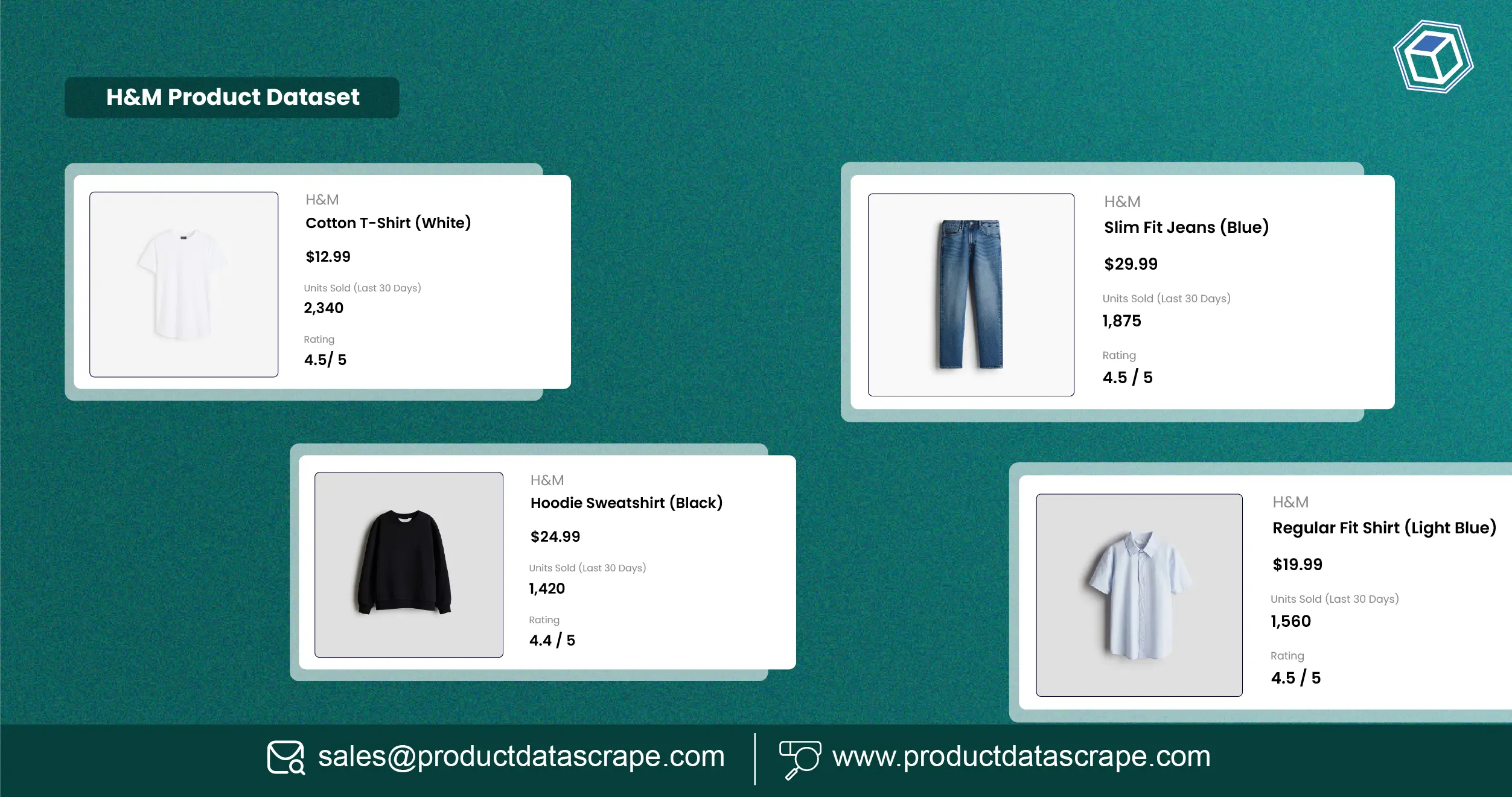
Fashion brands today rely heavily on structured datasets to identify trends, analyze consumer preferences, and forecast demand. Among global apparel retailers, H&M stands out due to its vast online catalog, dynamic pricing, and rapid trend turnover. Understanding how to get h&m product dataset with images is crucial for analysts, retailers, and researchers aiming to extract meaningful fashion intelligence.
The H&M E-commerce Product Dataset offers valuable insights into product categories, pricing strategies, visual merchandising, and seasonal collections. By collecting this data systematically, businesses can track trend evolution, compare pricing across regions, and enhance product planning decisions.
Access to such datasets empowers fashion professionals to conduct data-driven analysis instead of relying on assumptions. From AI-based trend prediction to customer behavior modeling, H&M’s digital storefront provides a rich data foundation for fashion market research when extracted responsibly and ethically.
Visual Intelligence from Digital Catalogs
The demand for fashion image datasets has grown exponentially with the rise of AI-driven design, recommendation engines, and visual trend detection. A H&M Fashion product images dataset small enables brands to analyze colors, silhouettes, patterns, and styling preferences at scale. Product images serve as a visual timeline of evolving fashion aesthetics across seasons.
Between 2020 and 2026, fashion image usage in analytics increased sharply as computer vision adoption expanded.
Image Data Growth Trends (2020–2026)
| Year |
Avg Images per Product |
AI Usage in Fashion (%) |
| 2020 |
3.2 |
28% |
| 2022 |
4.5 |
41% |
| 2024 |
5.8 |
57% |
| 2026 |
6.6 |
72% |
By analyzing product images, businesses can identify recurring visual patterns and correlate them with sales performance. Image datasets also support trend heatmaps, allowing researchers to compare popular designs across geographies. Even a smaller dataset provides high analytical value when paired with metadata like category, gender, and season.
Understanding Consumer Preference Signals
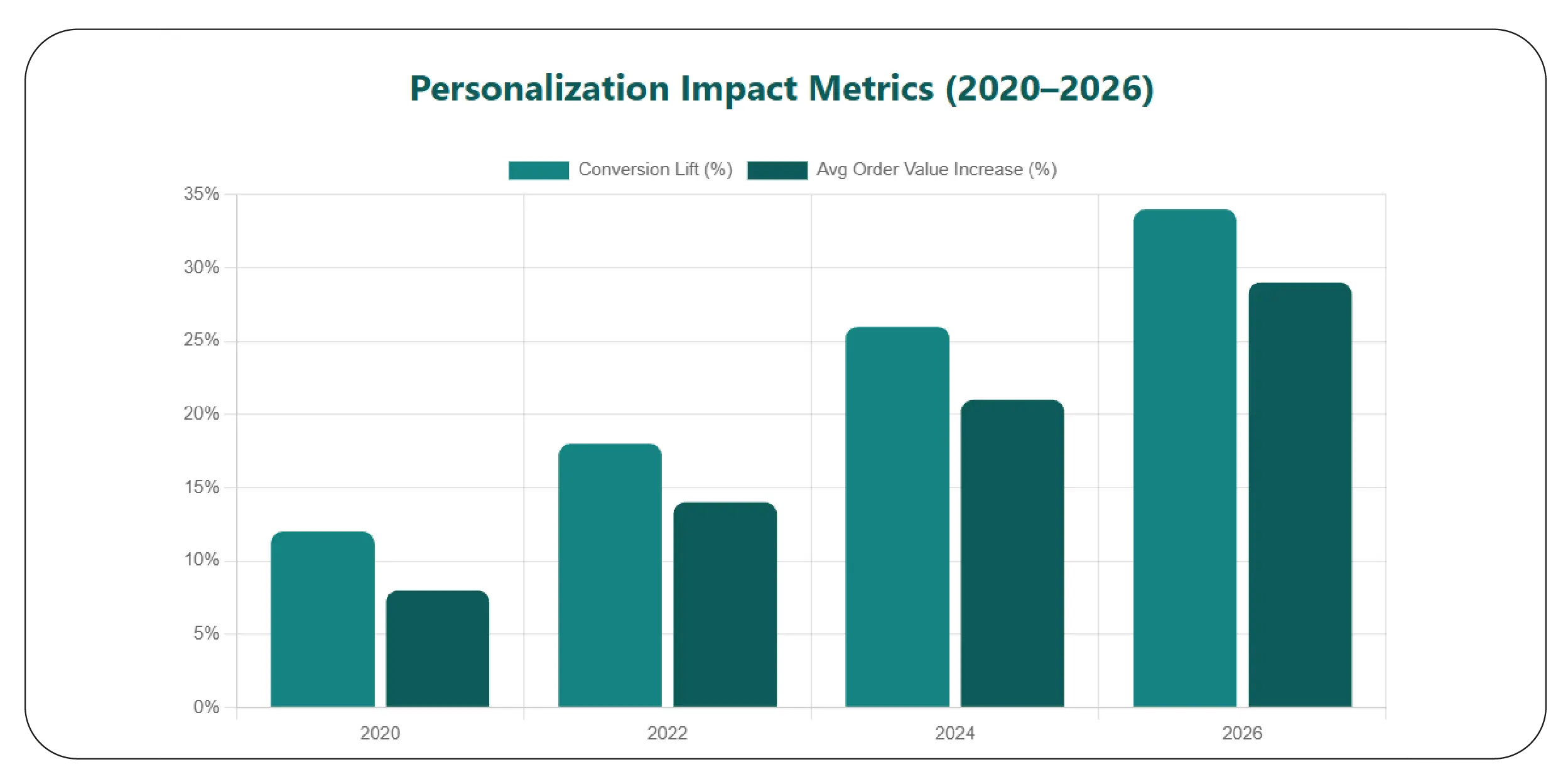
Modern fashion success relies on personalization rather than mass appeal. A H&M personalized fashion recommendations dataset helps decode how product placement, similarity suggestions, and browsing behavior influence purchasing decisions.
Retail personalization systems grew significantly post-2020 due to AI-driven UX investments.
Personalization Impact Metrics (2020–2026)
| Year |
Conversion Lift (%) |
Avg Order Value Increase |
| 2020 |
12% |
8% |
| 2022 |
18% |
14% |
| 2024 |
26% |
21% |
| 2026 |
34% |
29% |
Analyzing recommendation data enables brands to understand cross-category affinities, frequently paired products, and upselling opportunities. Researchers can simulate recommendation logic to improve their own platforms. Over time, this dataset reveals how fashion retailers shift strategies based on consumer behavior, seasonality, and inventory levels.
Tracking Market Price Movements
Price intelligence is one of the most critical factors in fashion competitiveness. A fashion pricing intelligence dataset allows businesses to track how product prices evolve based on seasonality, demand, and promotions.
From 2020 to 2026, fashion pricing volatility increased due to supply chain disruptions and fast-fashion competition.
Pricing Trend Overview (2020–2026)
| Year |
Avg Price Change (%) |
Discount Frequency |
| 2020 |
-6% |
Medium |
| 2022 |
+4% |
High |
| 2024 |
+7% |
High |
| 2026 |
+9% |
Very High |
Such datasets enable comparative pricing analysis across categories like menswear, womenswear, and kidswear. Retailers can benchmark their pricing strategies against market leaders while researchers gain insights into elasticity patterns. Accurate price tracking also supports predictive modeling for future markdown cycles.
Structuring Apparel Information for Analysis
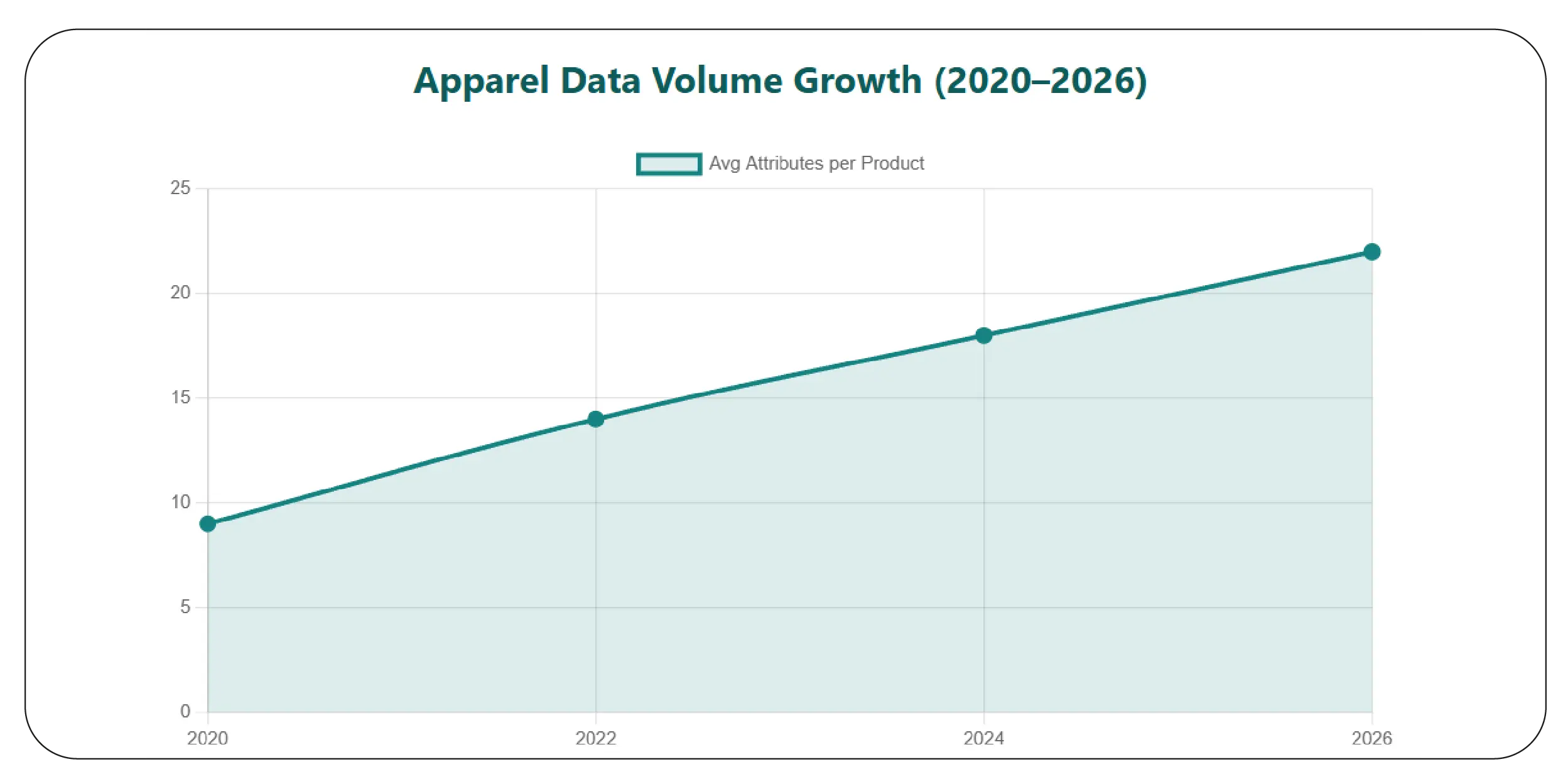
To perform deep market research, it’s essential to systematically collect structured product attributes. When businesses Extract hm Fashion & Apparel Data, they gain access to product descriptions, fabric details, sizes, colors, and availability information.
Apparel Data Volume Growth (2020–2026)
| Year |
Avg Attributes per Product |
Data Usage in Research |
| 2020 |
9 |
Moderate |
| 2022 |
14 |
High |
| 2024 |
18 |
Very High |
| 2026 |
22 |
Extensive |
Structured apparel data supports SKU rationalization, assortment planning, and sustainability analysis. Researchers can map fabric trends, track eco-friendly materials, and evaluate category expansion strategies. Clean, well-organized datasets ensure accurate analytics and better forecasting outcomes.
Evaluating Strategic Discount Patterns
Promotional strategies play a major role in fast fashion. When analysts Scrape H&M's Fashion Pricing Strategy Analysis for Insights, they uncover patterns behind flash sales, seasonal discounts, and clearance cycles.
Discount Strategy Evolution (2020–2026)
| Year |
Avg Discount (%) |
Sale Frequency |
| 2020 |
22% |
Seasonal |
| 2022 |
28% |
Frequent |
| 2024 |
34% |
Very Frequent |
| 2026 |
38% |
Continuous |
Understanding discount timing and depth helps brands optimize inventory turnover and revenue recovery. Market researchers can correlate discounts with product lifecycle stages and consumer demand signals. These insights are crucial for pricing optimization and margin management.
Monitoring Offers and Promotional Cycles
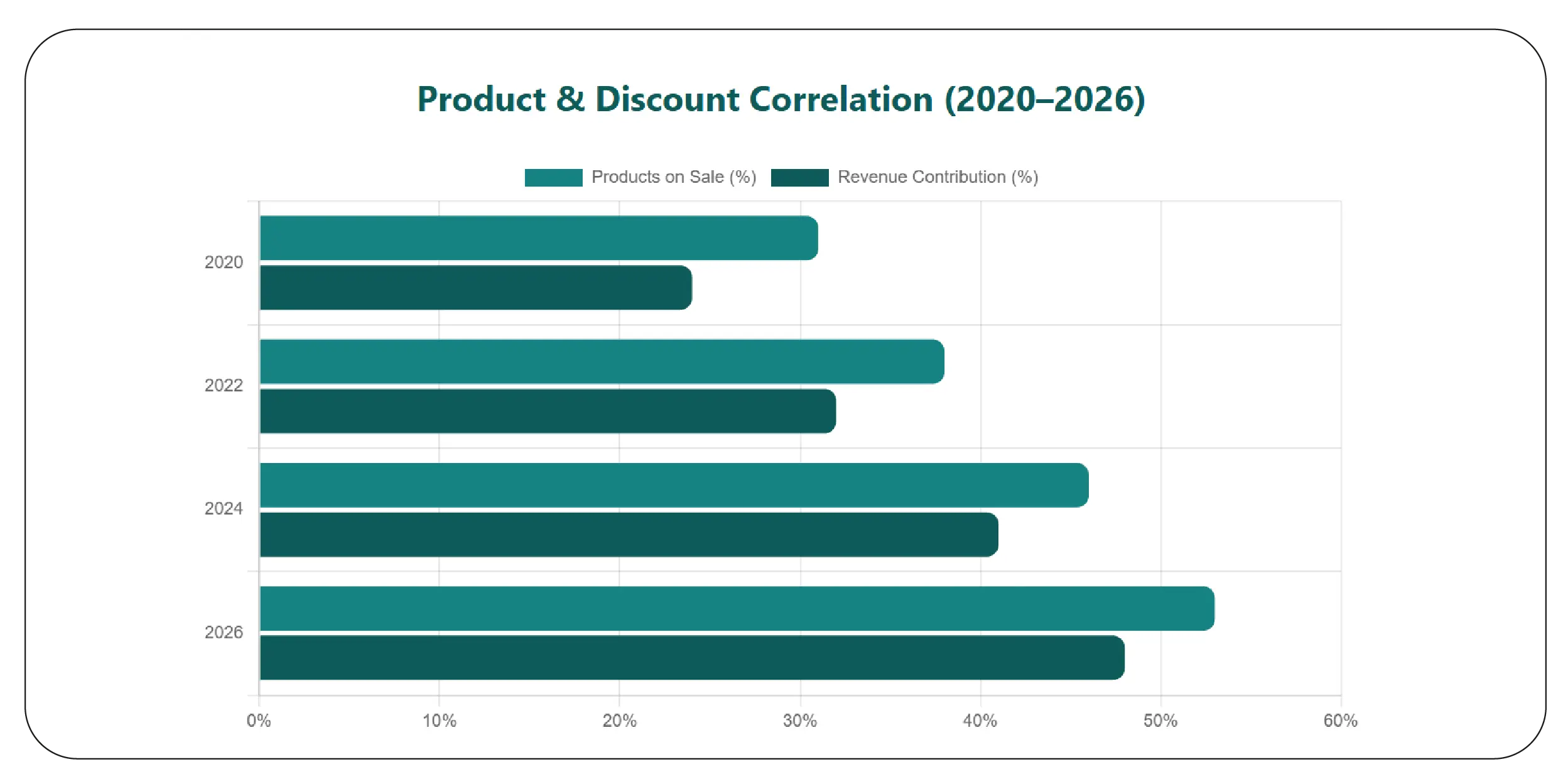
A H&M Fashion Product and Discount Dataset combines product-level information with promotional activity, providing a complete view of merchandising performance.
Product & Discount Correlation (2020–2026)
| Year |
Products on Sale (%) |
Revenue Contribution |
| 2020 |
31% |
24% |
| 2022 |
38% |
32% |
| 2024 |
46% |
41% |
| 2026 |
53% |
48% |
Such datasets reveal how discounts impact demand across categories and seasons. Retailers can identify which products perform best under promotions and which require full-price optimization. For researchers, this data highlights the balance between volume-driven sales and brand value preservation.
Why Choose Product Data Scrape?
Product Data Scrape specializes in delivering accurate, scalable, and compliant fashion datasets tailored for market research and analytics. With expertise in extracting complex e-commerce data, the team ensures high data quality, timely delivery, and customizable outputs. Whether you’re researching trends, pricing, or product performance, Product Data Scrape provides end-to-end solutions that simplify data acquisition while maintaining ethical scraping practices. Their ability to support businesses seeking how to get h&m product dataset with images makes them a trusted partner for fashion intelligence projects.
Conclusion
Access to structured fashion datasets has become essential for brands and researchers navigating a competitive retail landscape. From visual analysis to pricing intelligence, H&M product data offers unmatched insights into global fashion dynamics. By leveraging automated tools and expert services, businesses can turn raw data into actionable intelligence.
If you’re looking to scale your research efficiently, a reliable H&M Fashion Data Scraper can streamline data collection while ensuring accuracy and compliance.
Get started today with Product Data Scrape and transform fashion data into strategic advantage.
FAQs
1. Why is H&M product data valuable for market research?
H&M data reflects global fashion trends, pricing shifts, and consumer preferences, making it ideal for competitive analysis, trend forecasting, and retail strategy development.
2. Can image data improve fashion trend analysis?
Yes, product images enable visual pattern recognition, color analysis, and design trend tracking using AI and computer vision technologies.
3. How often should fashion datasets be updated?
For accurate insights, datasets should be updated weekly or monthly to capture price changes, new arrivals, and seasonal promotions.
4. Is automated data extraction scalable for large catalogs?
Automated extraction efficiently handles thousands of SKUs, ensuring consistent data collection across categories, regions, and time periods.
5. Does Product Data Scrape support customized fashion datasets?
Yes, Product Data Scrape offers tailored datasets based on research goals, including images, pricing, discounts, and product attributes.


 Singapore
 EMAIL
EMAIL
 PHONE
PHONE


.webp)
.webp "thumb")
.webp "thumb")
.webp "thumb")








.webp)