Introduction
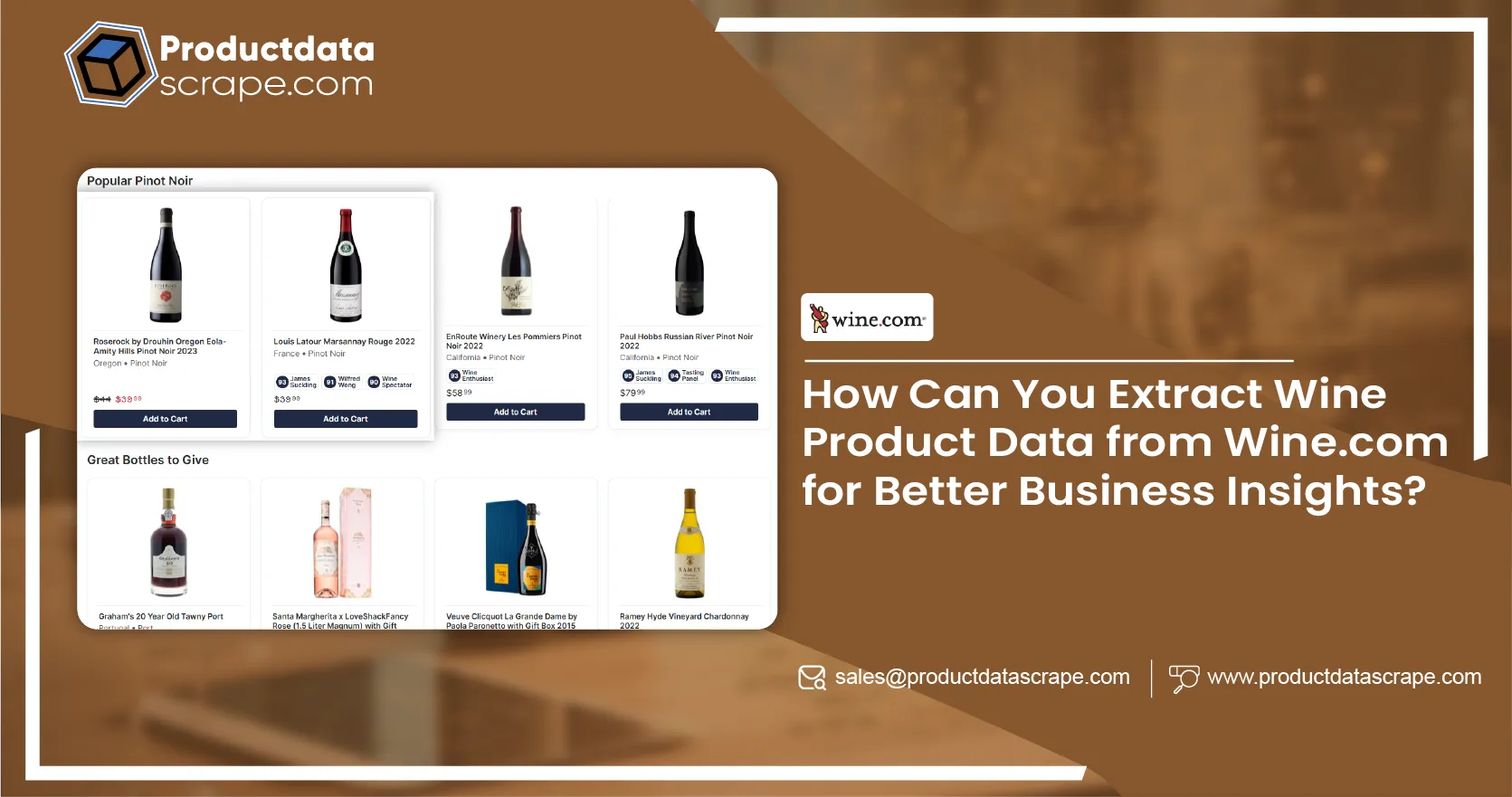
In today's digital age, data is as valuable as the product itself. For the global wine industry,
which is constantly evolving in response to consumer preferences, regional trends, and product
innovation, data-driven strategies are reshaping how businesses operate. Extract Wine Product
Data from Wine.com to help retailers, sommeliers, distributors, and wine-tech startups gain
insights. By leveraging comprehensive datasets, organizations can unlock consumer behavior
patterns, optimize inventories, analyze pricing, and enhance customer experiences.
Extract Wine Bottle Prices and Listings Data from Wine.com to gain valuable insights into
pricing trends, availability, and promotional strategies across thousands of wine labels.
Wine.com, a premier online wine retailer in the United States, offers an extensive inventory
that spans multiple regions, varietals, and price ranges. This makes it a goldmine for
real-time, high-quality wine data. With the help of a Wine.com Product Info and Review Data
Scraper, businesses can collect detailed metadata, customer reviews, and expert ratings—turning
raw information into actionable market intelligence. The ability to extract wine product data
from Wine.com is no longer a luxury but a competitive necessity in this rapidly digitizing
sector.
Why Wine Data Matters?

The world of wine is as diverse as it is complex. Each bottle tells a story, from tasting notes
to terroirs, vintages, and varietals. Understanding these stories—at scale—is vital for
stakeholders in the wine ecosystem. By collecting structured wine data from platforms like
Wine.com, businesses can gain clarity on the following:
- Which wines are trending in specific regions
- Seasonal demand patterns and purchasing behavior
- The price elasticity of specific varietals
- Availability and inventory updates
- Critical product metadata such as alcohol content, origin, vineyard, and
expert reviews
This insight allows wine professionals to move beyond intuition and instead act on real-time
data intelligence.
Business Use Cases of Extracted Wine Product Data
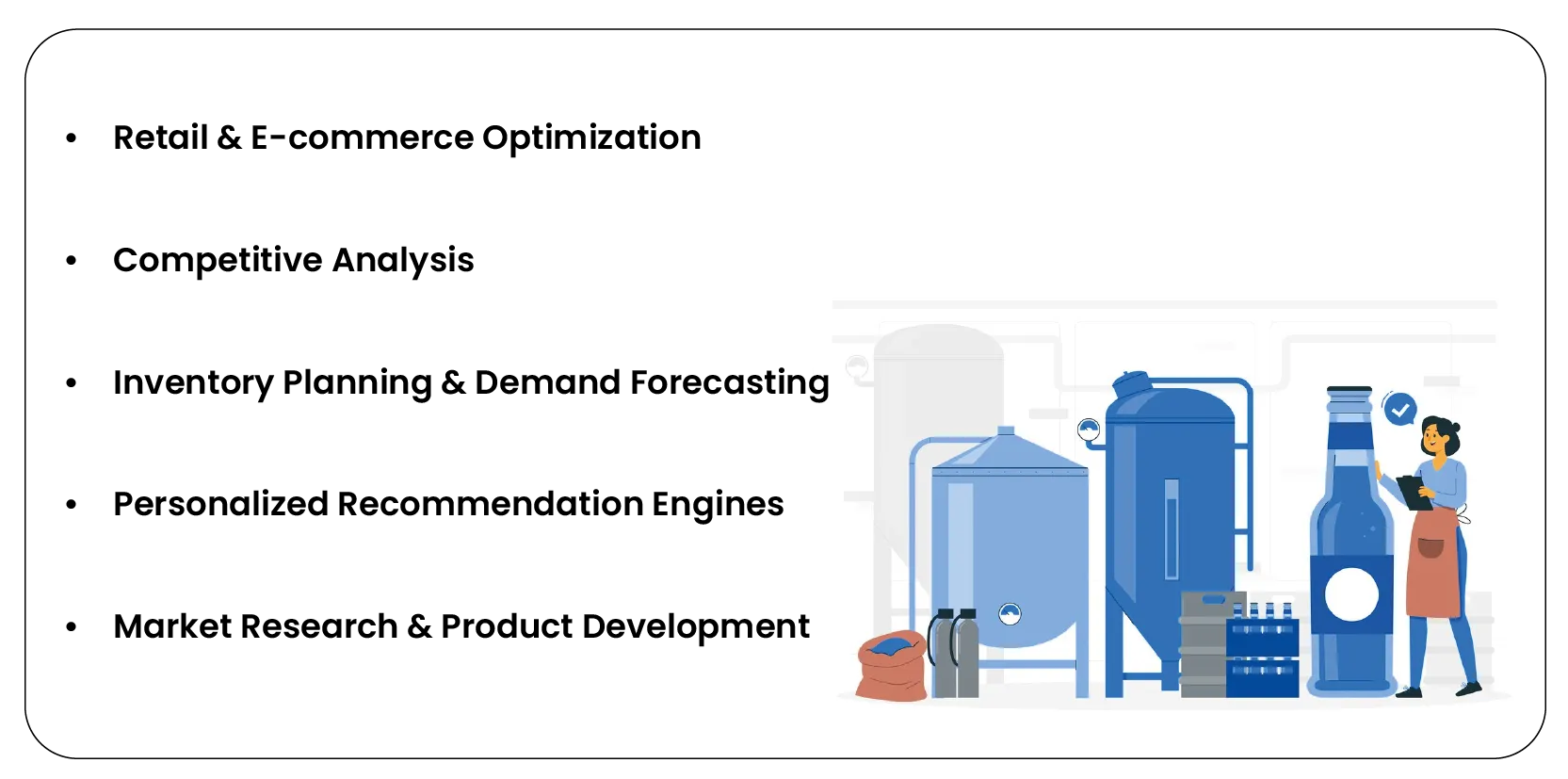
Extracted wine product data serves a variety of use cases across the industry:
- Retail & E-commerce Optimization: Online wine sellers
and liquor retailers rely heavily on accurate product data to populate their platforms.
Extract Wine Inventory Data from Wine.com to expand catalogs with detailed listings,
including product descriptions, pricing, food pairings, and critic scores. This directly
enhances search visibility, SEO rankings, and consumer trust.
- Competitive Analysis: Wine Data Extraction from the
Wine.com Website allows businesses to benchmark their offerings against competitors. By
comparing Wine.com's pricing, availability, and product variety, retailers can identify
pricing gaps, monitor promotions, and implement dynamic pricing strategies aligned with
current market conditions.
- Inventory Planning & Demand Forecasting: Procurement
teams can use a structured Wine Product Dataset from Wine.com to forecast demand by
analyzing sales trends, vintage performance, and seasonal preferences. This helps minimize
overstock, reduce waste, and more effectively align inventory levels with consumer demand.
- Personalized Recommendation Engines: Scrape Wine.com
Liquor Data to access detailed wine attributes like flavor profile, alcohol content, and
reviews. This data fuels intelligent recommendation engines that provide tailored
suggestions based on user preferences, improving personalization and enhancing the customer
experience.
- Market Research & Product Development: Leverage Wine.com
Data Scraping API Services to collect data-driven insights for launching new products or
entering untapped markets. The structured data helps uncover gaps, assess consumer
sentiment, and identify high-potential varietals to inform strategic development and
expansion.
Unlock the power of liquor data—partner with us today to
access accurate, real-time insights that drive smarter decisions and
boost your competitive edge.
Contact Us Today!
What's Included in Wine Product Data?
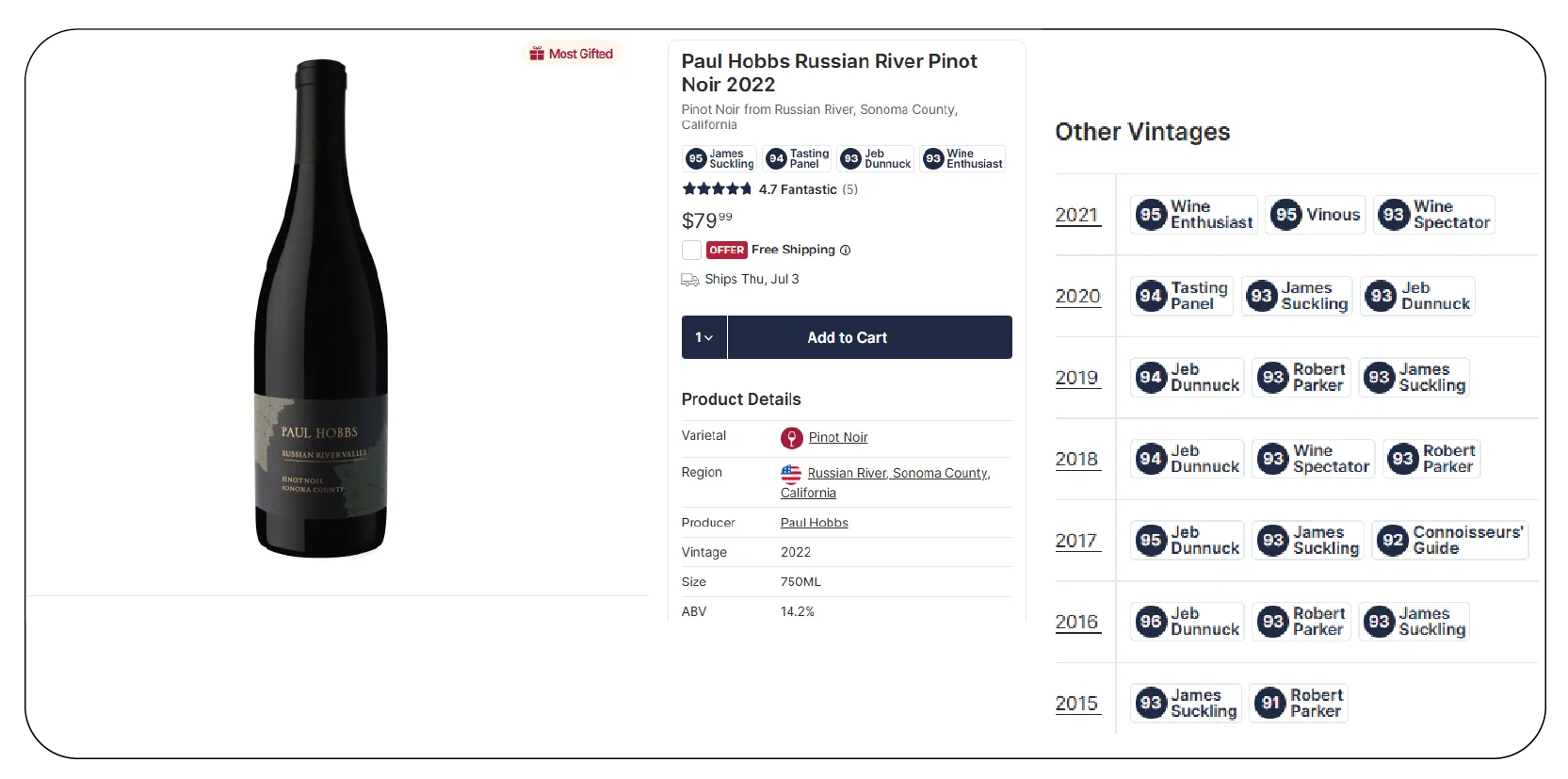
The richness of data available on Wine.com makes it a valuable source for multiple types of
information. Key attributes often extracted include:
- Product Name & ID: The commercial name, SKU, or product
code are used for tracking and reference.
- Wine Type & Varietal: Details on whether the wine is
red, white, rosé, or sparkling, along with the specific grape varietal (e.g., Cabernet
Sauvignon, Pinot Noir, Chardonnay).
- Vintage: The year in which the grapes were harvested—a
crucial indicator of quality and taste.
- Producer & Region: Information about the winery or
producer and its geographical origin (e.g., Napa Valley, Bordeaux, Mendoza).
- Price & Discount: Current pricing, list price,
discounts, and promotional offers.
- Ratings & Reviews: Critic scores from sources like Wine
Spectator or Robert Parker, as well as customer reviews and star ratings.
- Alcohol Content & Volume: Details about alcohol
percentage and bottle size (e.g., 750ml).
- Food Pairing Suggestions: Recommended pairings, such as
cheese, meat, or seafood, to enhance customer decision-making.
- Tasting Notes: Descriptive content highlighting aroma,
palate, finish, and overall flavor profile.
- Availability: Stock levels, shipping options, and
regional availability across the United States.
This data is often structured in JSON or CSV format and fed into business intelligence tools,
dashboards, or product catalogs.
The Role of Wine Data in Consumer Engagement
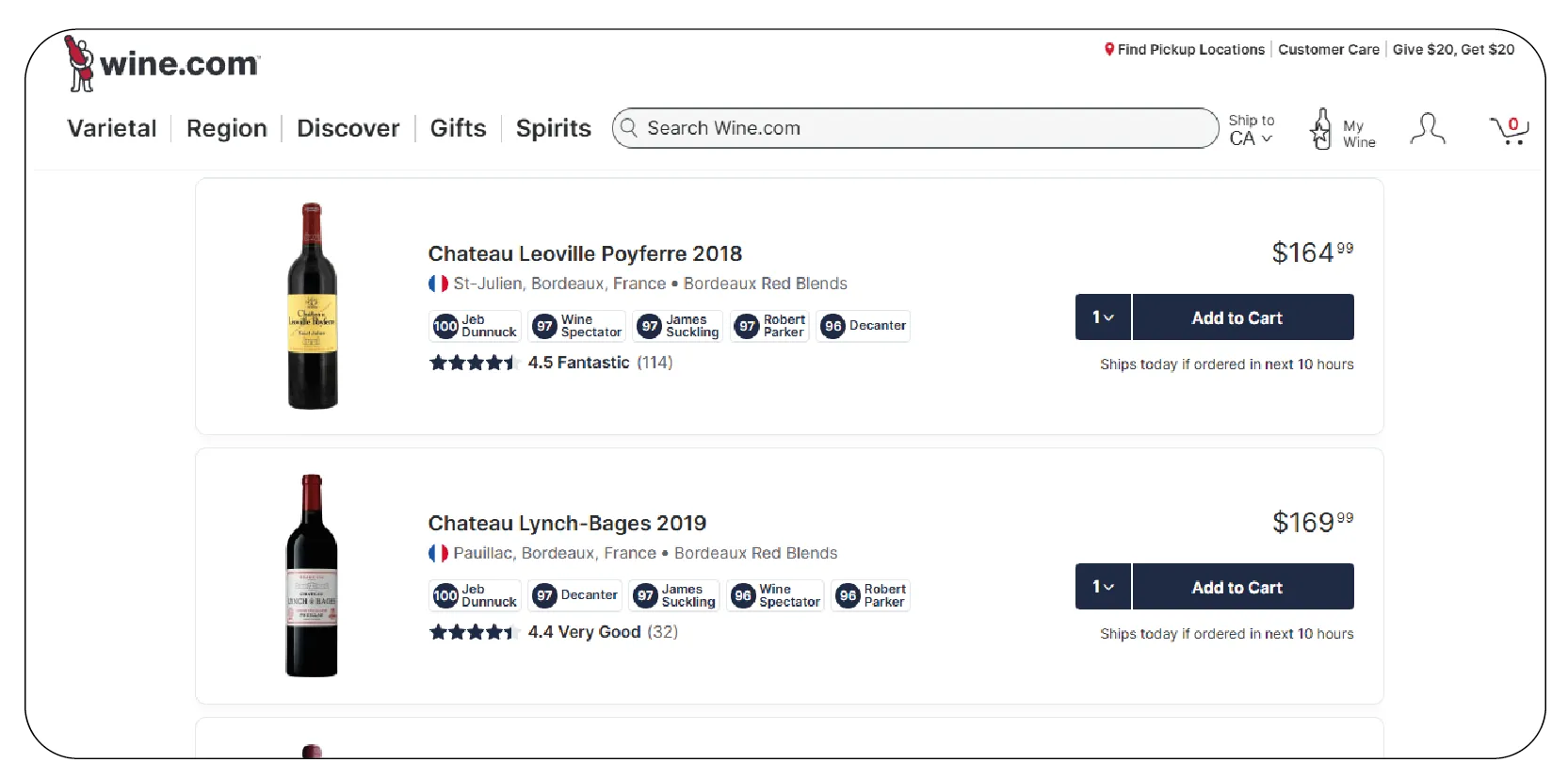
Today's wine consumer is more informed, adventurous, and digital than ever. Extracting and analyzing wine product data allows businesses to meet these expectations by:
- Offering detailed product pages with educational content
- Highlighting award-winning or highly rated wines
- Customizing email campaigns based on past browsing or purchase behavior
- Supporting AI-powered chatbots and sommeliers
- Creating interactive quizzes that suggest wines based on taste preferences
Personalization becomes richer and more precise when grounded in clean, structured product data.
Enabling Smart Pricing and Promotions
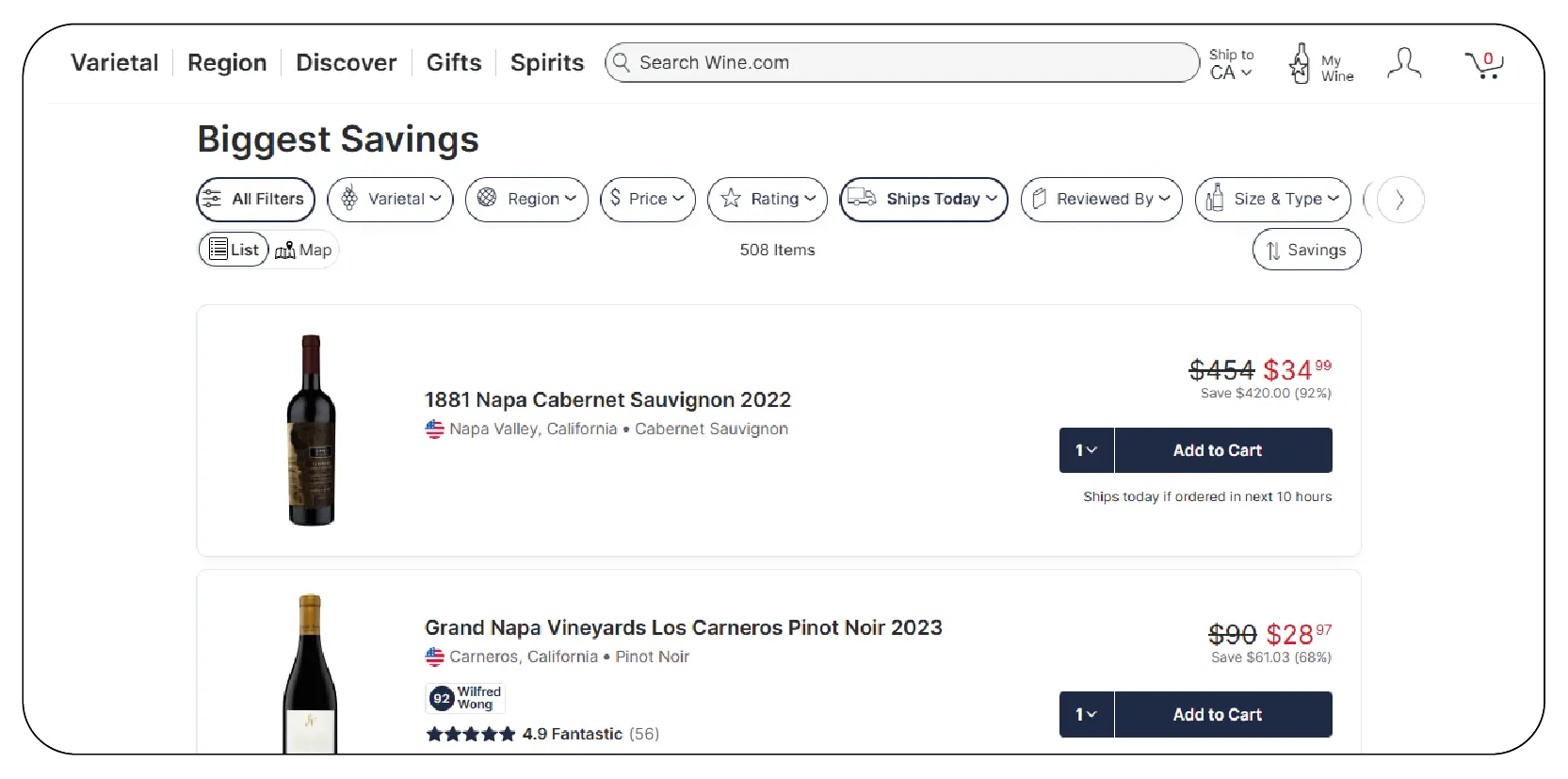
One of the most significant benefits of extracting wine data from Wine.com is the ability to craft dynamic and responsive pricing models. Daily monitoring price shifts, discounts, and seasonal offers allows businesses to stay competitive without undercutting profits. Retailers can also use this data to:
- Launch flash sales that mirror industry trends
- Set pricing tiers for premium, mid-range, and budget wines
- Identify which price points generate the most volume or profit
- Use customer reviews and ratings to justify higher prices
Wine is an emotional and aspirational product. Smart pricing ensures that the perception of quality aligns with consumer expectations and buying behavior.
Data-Driven Wine Marketing
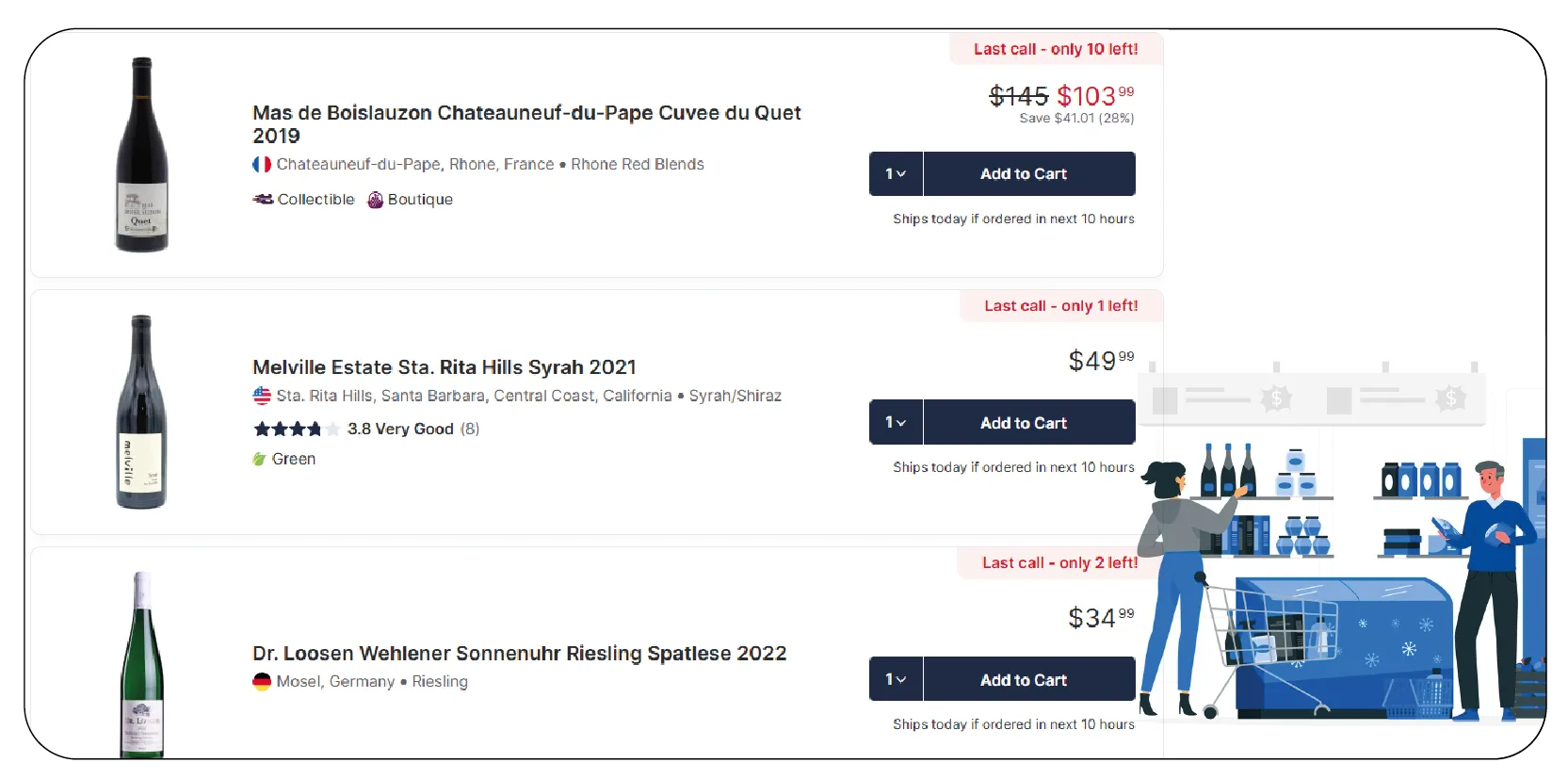
The future of wine marketing lies in precision. Extracted wine data offers insights into segmenting your audience, crafting compelling copy, and running high-conversion campaigns. By leveraging wine.com product data, marketers can:
- Target wine lovers by varietal preference
- Segment email lists based on review scores or wine styles
- Run retargeting campaigns for wines recently viewed
- Highlight "trending" or "back in stock" wines dynamically
- Localize campaigns using regional availability and shipping information
Each piece of data becomes a trigger for engagement, offering personalized value to the user.
Empowering the Wine Tech Ecosystem
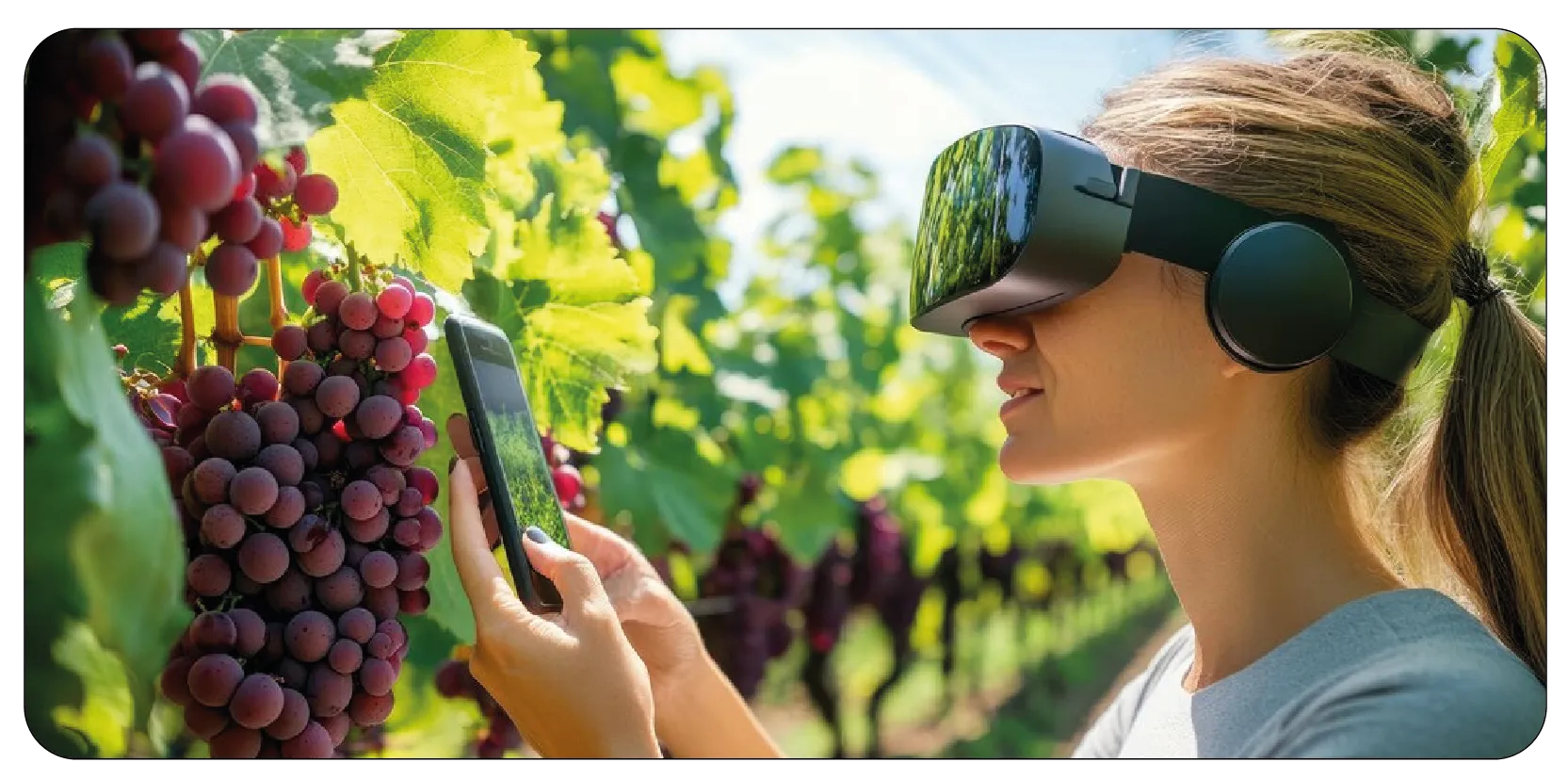
Wine tech startups and mobile app developers also stand to benefit from services meant to Extract Alcohol Prices Data from Wine.com. Access to structured wine product data is fundamental in building a wine pairing app, review aggregator or wine cellar management tool. Features such as barcode scanning, wine comparison, or voice search all require a robust backend powered by reliable datasets.
Wine.com offers a deep and rich database that is the ideal foundation for innovation in the wine-tech sector. With Liquor Price Data Scraping Services , developers can ensure real-time accuracy, seamless integration, and data consistency to support next-generation wine-tech solutions and personalized user experiences.
How Product Data Scrape Can Help You?
1. Multi-Platform Liquor Data Extraction: We provide liquor data scraping solutions from various platforms, such as Wine.com, Total Wine, Drizly, and BevMo, helping clients consolidate diverse datasets into a single, structured source of truth for analysis and integration.
2. Brand-Level Intelligence: We help brands track their product listings, reviews, and pricing across different marketplaces by extracting detailed information that supports brand monitoring, reseller compliance, and pricing strategy enforcement.
3. Geo-Specific Data Collection: Our tools extract region-specific liquor availability, pricing, and inventory data to support businesses with location-based targeting, distribution planning, and hyperlocal marketing strategies.
4. Enriched Product Metadata: Beyond introductory pricing and names, we collect enriched metadata like tasting notes, origin, ingredients, volume, and pairing suggestions to support content-driven commerce and enhanced user experiences.
5. Integration with Analytics Systems: We offer APIs and data delivery pipelines that seamlessly feed scraped liquor data into BI dashboards, CRM systems, or e-commerce platforms, ensuring timely, actionable, and easily visualized insights.
Conclusion
Extracting wine product data from Wine.com is not just about accessing information—it's about transforming the wine industry with actionable insights. Clean, structured, and scalable wine data benefits every facet of the wine business, from retail operations and marketing to consumer engagement and AI development. Leveraging Alcohol and Liquor Datasets enables businesses to develop innovative strategies and gain a competitive edge.
As wine consumption continues to rise globally and e-commerce becomes the dominant channel for discovery and purchase, businesses harnessing data's power will lead the market. With tools and solutions designed to Scrape Liquor Price Data and deliver Wine.com datasets efficiently, companies can now stay ahead of trends, meet customer needs faster, and unlock the full potential of wine intelligence.
If you want to scale your operations, personalize your wine offerings, or launch a data-powered wine venture, now is the time to invest in extracting structured product data from the world's top wine platforms.
At Product Data Scrape, we strongly emphasize
ethical practices across all our services,
including Competitor Price Monitoring and
Mobile App Data Scraping. Our commitment to
transparency and integrity is at the heart of everything we do. With a global presence and a
focus on personalized solutions, we aim to exceed client expectations and drive success in
data
analytics. Our dedication to ethical principles ensures that our operations are both
responsible
and effective.


 Singapore
 EMAIL
EMAIL
 PHONE
PHONE


.webp)
.webp "thumb")
.webp "thumb")
.webp "thumb")








.webp)