Quick Overview
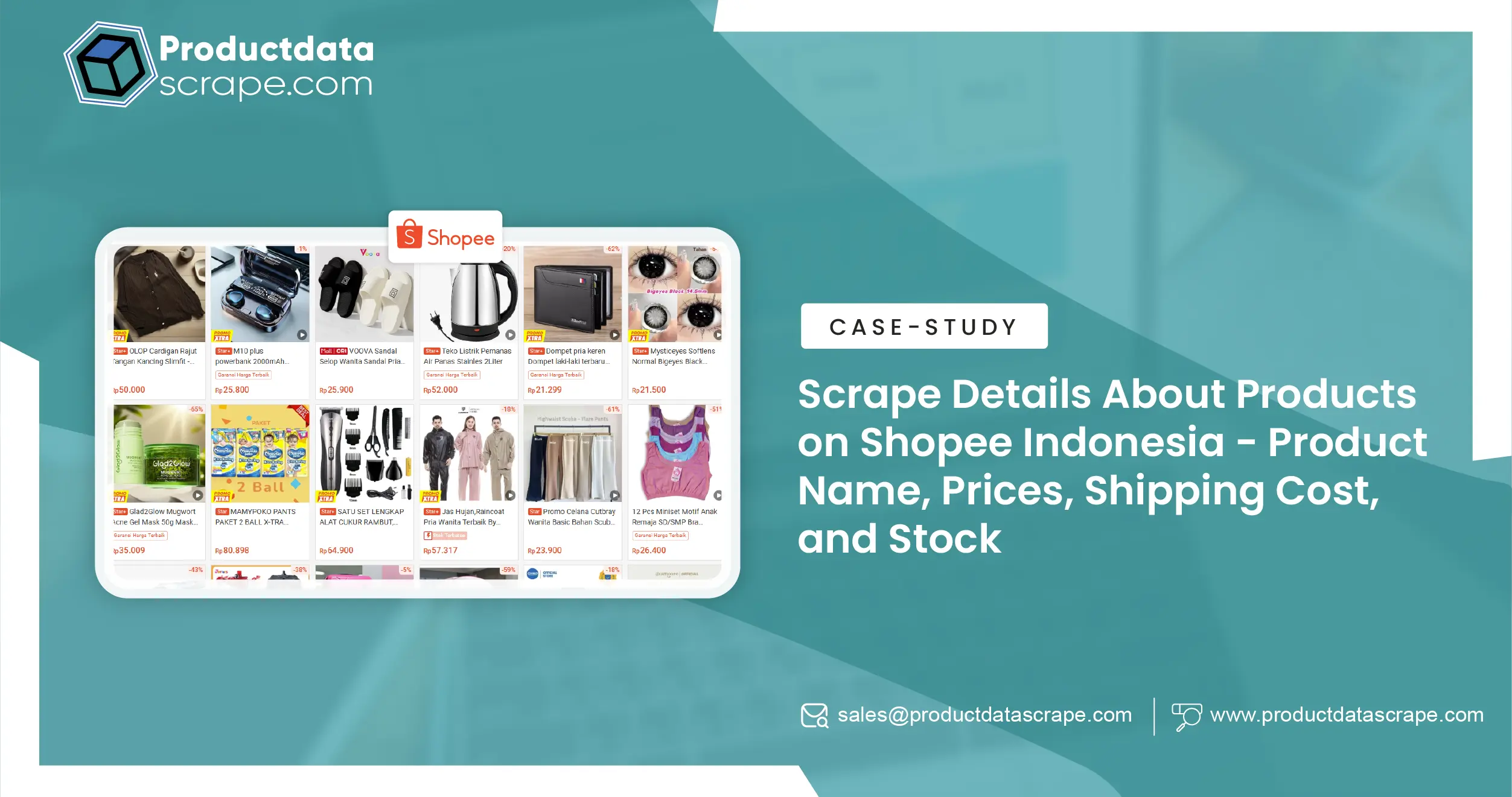
This case study highlights how Product Data Scrape helped a fast-growing e-commerce analytics firm scrape details about products on shopee Indonesia efficiently and at scale. The client operated in the retail intelligence industry and needed reliable access to Shopee product information to power competitive insights. Over a 6-week engagement, we deployed a robust data extraction system to Extract Shopee E-Commerce Product Data with high accuracy. The solution enabled near real-time visibility into pricing, shipping fees, and stock levels. As a result, the client improved data refresh speed, reduced manual dependency, and enhanced decision-making accuracy across multiple business units.
The Client
The client is a Southeast Asia–focused digital commerce intelligence provider serving brands, distributors, and market research firms. Operating in a highly competitive e-commerce landscape, they faced growing pressure to deliver faster and more granular insights to their customers as platforms like Shopee continued to dominate regional online retail.
With increasing SKU counts, frequent price fluctuations, and complex logistics models, traditional data collection methods were no longer sustainable. Before partnering with us, their internal teams relied on semi-manual scripts and inconsistent third-party feeds, which often failed during platform updates or peak traffic hours. This resulted in delayed reports and incomplete datasets.
To remain competitive, the client required a scalable and compliant data pipeline capable of adapting to marketplace changes. They evaluated multiple options but ultimately sought a specialized solution using a Shopee Product Data Extraction API that could be extended across regions. Additionally, their roadmap included cross-market analysis, making compatibility with sources like the Shopee Taiwan Product Data API a strategic requirement. This transformation was essential to support their growth, maintain data reliability, and meet rising customer expectations.
Goals & Objectives
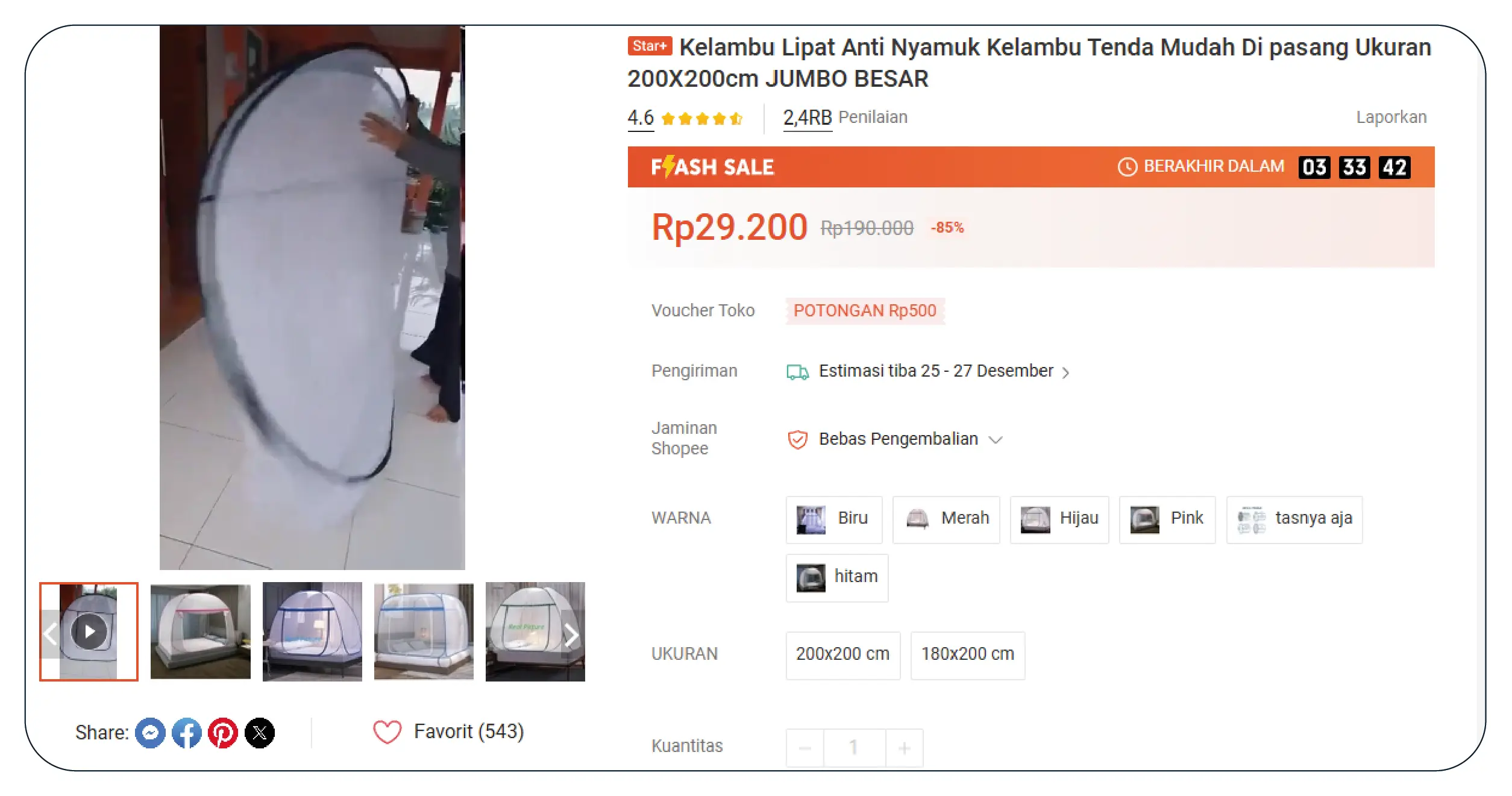
The primary business goal was to establish a dependable system for continuous product data collection without operational disruptions. Scalability was critical, as the client planned to expand coverage across thousands of listings. Accuracy and speed were equally important to ensure insights reflected real market coditions. A core requirement was implementing a Shopee Products & Pricing Data Scraper that could handle frequent price and stock updates efficiently.
From a technical perspective, the objective was full automation with minimal manual intervention. The solution needed to integrate seamlessly with the client’s existing analytics dashboards and support scheduled as well as on-demand data pulls. Real-time or near real-time analytics capabilities were required to power alerts and competitive monitoring tools.
98%+ data accuracy across product attributes
Data refresh cycles reduced from 24 hours to under 2 hours
System uptime exceeding 99% during peak sale events
The Core Challenge
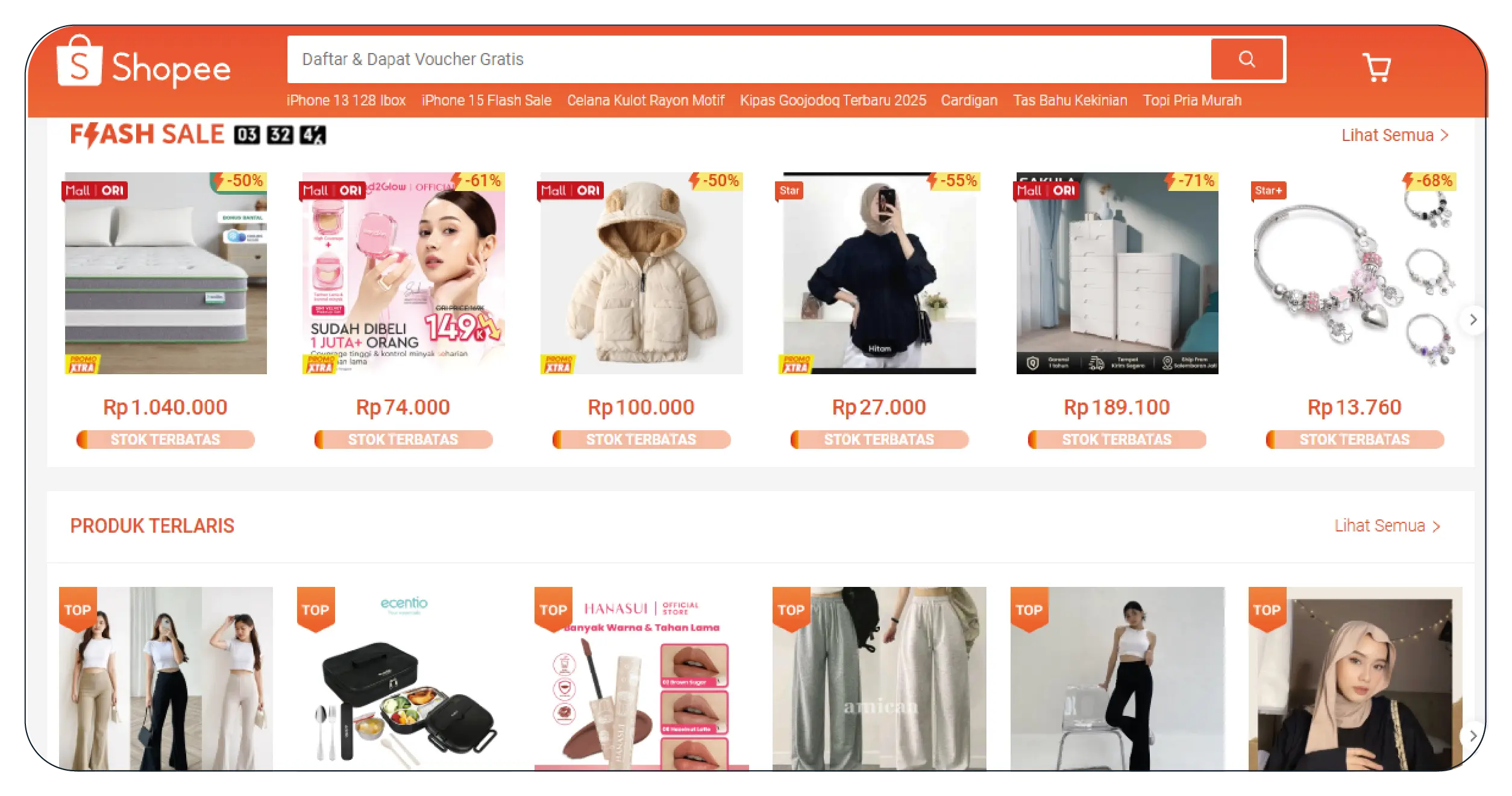
Before implementation, the client faced multiple operational bottlenecks. Shopee’s dynamic front-end behavior and frequent UI updates caused frequent script failures. Shipping costs varied by location, seller, and promotion, making consistent extraction difficult. Stock availability changed rapidly during campaigns, leading to outdated insights.
Performance issues were another major concern. Data extraction jobs often timed out during high-traffic periods, especially on flash sale days. This affected both speed and reliability, causing gaps in reporting. Furthermore, inconsistencies in extracted attributes led to downstream data cleaning efforts, increasing operational overhead.
The lack of a unified system also limited their ability to perform deep Shopee Indonesia marketplace analytics DATA analysis. Without timely and accurate inputs, forecasting models and pricing intelligence tools underperformed. These challenges not only slowed internal teams but also impacted client trust. Solving these issues required a purpose-built approach that addressed scalability, resilience, and data quality simultaneously.
Our Solution
We implemented a phased, end-to-end data extraction strategy designed to handle Shopee’s complexity while ensuring long-term stability. The first phase focused on requirement mapping, where we identified key product attributes, update frequencies, and integration points. This allowed us to design a modular architecture that could adapt as the platform evolved.
In the second phase, we deployed automated crawlers capable of handling dynamic content, location-based shipping calculations, and seller-level stock variations. Our system was built to Scrape Data From Any Ecommerce Websites, ensuring flexibility beyond Shopee if future expansion was required. Advanced request management and retry mechanisms ensured consistent performance during high-demand periods.
The third phase centered on data normalization and validation. Extracted information was standardized into structured formats compatible with the client’s analytics pipelines. This included intelligent handling of promotions, bundled pricing, and shipping tiers. Special attention was given to maintaining accuracy when we scrape details about products on Shopee Indonesia, particularly during flash sales and seasonal events.
Finally, we integrated automated monitoring and alerting. This ensured rapid detection of extraction issues and minimized downtime. The solution was fully documented and handed over with support for ongoing optimization. Each phase addressed a specific pain point, resulting in a resilient and scalable product data scraping ecosystem.
Results & Key Metrics
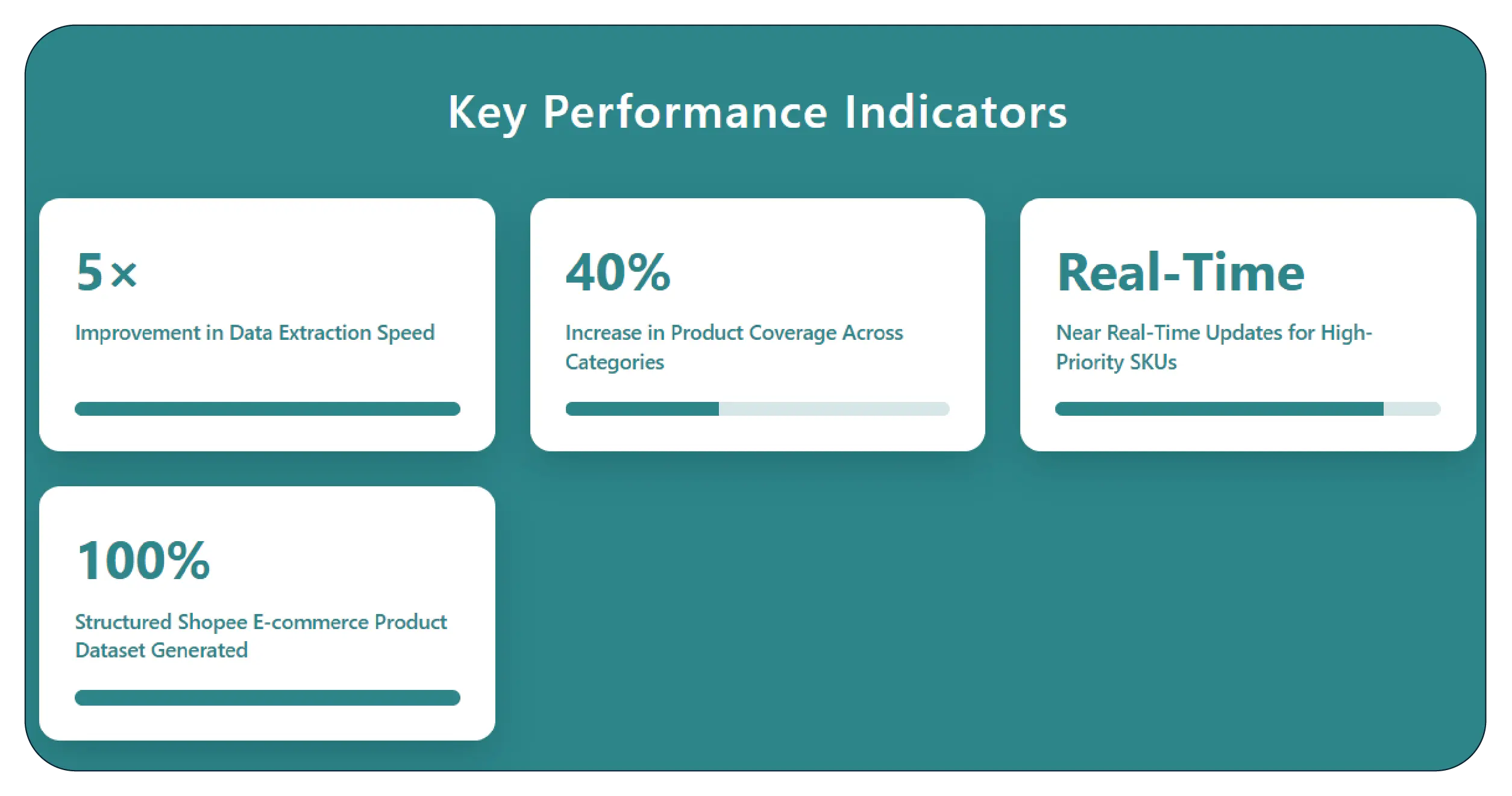
5× improvement in data extraction speed
40% increase in product coverage across categories
Near real-time updates enabled for high-priority SKUs
Consistent generation of a structured Shopee E-commerce Product Dataset
The system reliably handled thousands of concurrent requests without degradation, even during major sale events.
Results Narrative
With the new infrastructure in place, the client transformed how they consumed market intelligence. Automated workflows eliminated manual intervention, while validated pipelines ensured accuracy. The ability to continuously scrape details about products on shopee Indonesia empowered their analytics teams to deliver faster insights and proactive recommendations. End customers reported improved satisfaction due to timely and comprehensive data-driven reports.
What Made Product Data Scrape Different?
Our differentiation lay in combining technical depth with marketplace-specific expertise. Unlike generic tools, our Shopee Product Data Scraping API was engineered to adapt to platform changes without frequent rework. Proprietary logic for handling dynamic shipping rules, seller variations, and promotional pricing ensured stability. Smart automation reduced failure rates, while scalable architecture supported long-term growth. This balance of innovation and reliability set our solution apart.
Client’s Testimonial
“Product Data Scrape delivered exactly what we needed—reliable, scalable Shopee data without operational headaches. Their team understood the marketplace nuances and built a system that performs even during peak sales. Our reporting speed and accuracy have improved dramatically, helping us serve our clients better.”
— Head of Data Analytics, E-commerce Intelligence Firm
Conclusion
This project demonstrates how a tailored data extraction strategy can unlock powerful insights in competitive e-commerce environments. By implementing a scalable solution aligned with business goals, the client gained real-time visibility into product performance and pricing dynamics. The foundation now supports advanced analytics and future expansion. With a robust shopee indonesia price monitoring tool, the client is well-positioned to lead in data-driven retail intelligence and respond quickly to market changes.
FAQs
1. What type of product data was extracted from Shopee Indonesia?
We extracted product names, prices, shipping costs, seller information, and stock availability at scale.
2. How frequently was the data updated?
Depending on priority, updates ranged from near real-time to scheduled hourly refresh cycles.
3. Was the solution scalable for large catalogs?
Yes, the architecture was designed to support tens of thousands of SKUs without performance loss.
4. Could the system handle flash sales and promotions?
Absolutely. The solution dynamically captured price changes and stock fluctuations during peak events.
5. Can this solution be extended to other marketplaces?
Yes, the modular framework allows expansion to additional e-commerce platforms with minimal changes.


 Singapore
 EMAIL
EMAIL
 PHONE
PHONE


.webp)
.webp "thumb")
.webp "thumb")
.webp "thumb")









.webp)